Is Langkawi Worth Visiting?
By TravelguidestipUpdated 7 min readHow we earn
Hotel buttons open Stay22 (Booking.com, Agoda and others) and tour buttons open GetYourGuide. We may earn a commission at no extra cost to you.
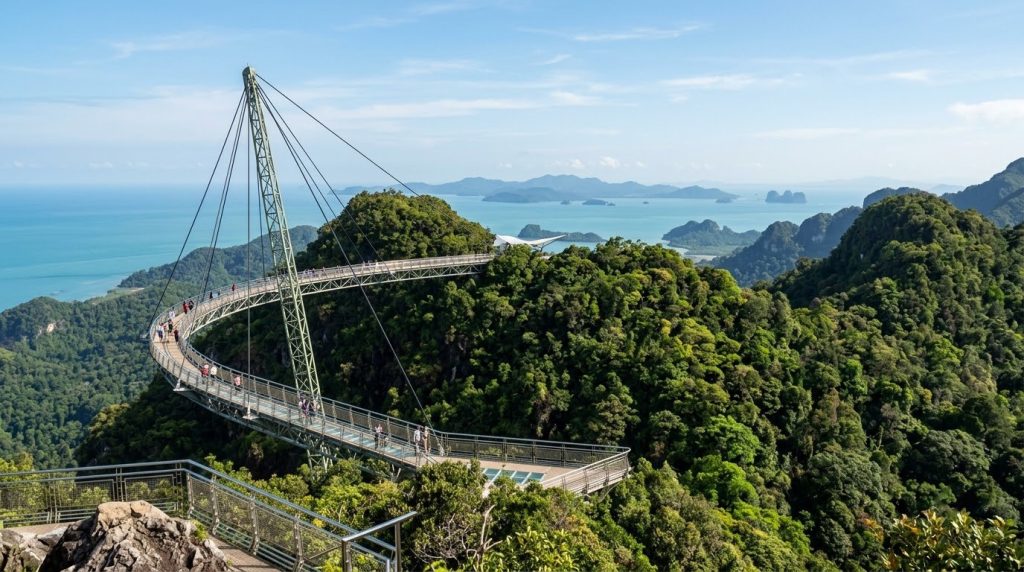
Langkawi is worth visiting. The trip works best for travellers chasing nature, a cable car with real engineering behind it, and cheap alcohol.
What makes it worth the stop
- Duty-free value. Alcohol and chocolate remain the strongest value.
- SkyCab cable car. The cable car covers 2.2km up the eastern cliffs of Gunung Mat Cincang to a top station sitting 708 metres above sea level.
- Good beaches. Pantai Cenang is a genuinely good beach by Southeast Asian standards, calmer and cleaner than Penang’s Batu Ferringhi.
The honest downsides
- Not Maldives-tier. It is not the powder-fine, turquoise-water benchmark set by the Maldives or the best of the Perhentians.
- Average snorkelling. None of it rivals the Perhentian Islands or Tioman for coral or visibility.
- No old town. Langkawi has no equivalent old town and its food scene is resort-and-restaurant based.
Langkawi is worth visiting: a duty-free archipelago of 99 islands with a cable car that climbs to 708 metres, a mangrove park built into limestone karst, and beaches that are genuinely good, if not the flawless, powder-white sand of the Maldives.
The trip works best for travellers chasing nature, a cable car with real engineering behind it, and cheap alcohol, less well for anyone expecting George Town-level street food or world-class reef diving on the same island.
| Draw | What it actually is | Worth it for |
|---|---|---|
| Duty-free status | Alcohol, chocolate and general goods cheaper than mainland Malaysia, in place since 1987 | Budget-conscious travellers, a cheap night out |
| SkyCab cable car + SkyBridge | 2.2km ride to a 708m summit station, curved 125m pedestrian bridge at 660m | View-chasers, first-time visitors |
| Kilim Geoforest Park | Mangrove river cruise through limestone karst, eagle watching, bat and crocodile caves | Nature and wildlife-curious travellers |
| Island-hopping | Pulau Beras Basah’s white sand, Dayang Bunting’s freshwater Pregnant Maiden Lake | A half-day break from the main island |
| Pantai Cenang beach | Long sand strip, reliable sunsets, resort and bar strip | Sunset drinks, easy beach downtime |
| Seven Wells Waterfall | 91m falls feeding seven interconnected pools, 638 steps to the top | Hikers wanting a workout with a payoff |
Duty-free since 1987: the real cost advantage
Langkawi has carried duty-free status since 1987, and it is the one thing about the island that has nothing to do with scenery. Alcohol, chocolate, cigarettes and general imported goods sell noticeably cheaper here than on mainland Malaysia, which is why so many Malaysian and Singaporean visitors come specifically to stock up.
The federal government reimposed duties on cigarettes and tobacco products in 2021, and as of 2026 a proposal to restore full duty-free status for those categories was still under government review, so tobacco savings are smaller than older guides suggest.
Alcohol and chocolate remain the strongest value, and duty-free shops cluster around Kuah town, the ferry terminal and the airport arrivals hall, making it easy to pick up a cheap bottle on the way in rather than treating it as a separate errand.
The SkyCab cable car and SkyBridge
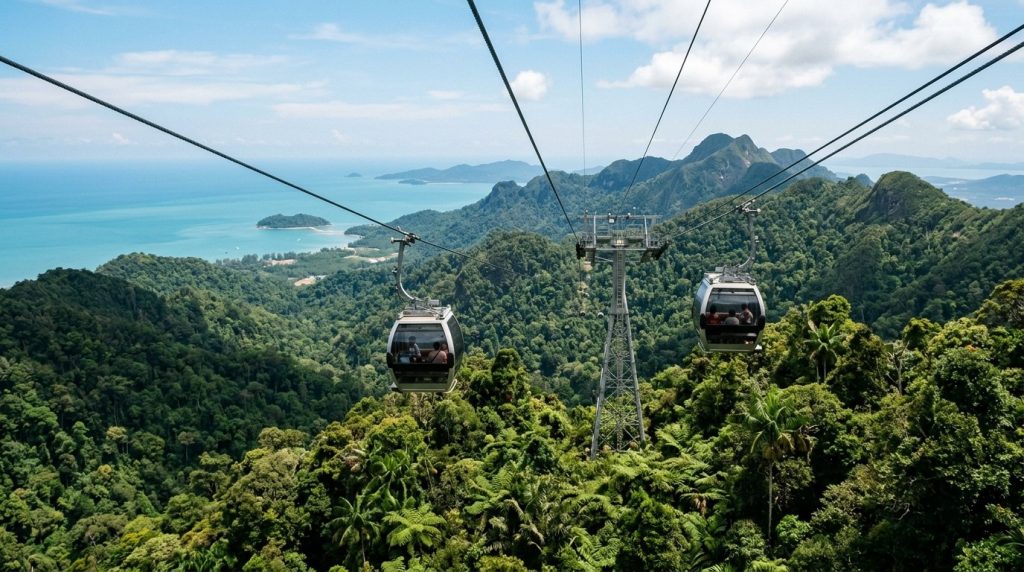
The SkyCab is Langkawi’s standout built attraction, and it earns the title on numbers alone. The cable car covers 2.2km up the eastern cliffs of Gunung Mat Cincang to a top station sitting 708 metres above sea level, making it Malaysia’s highest cable car ride and one of the steepest in the world.
Near the summit, the curved SkyBridge adds a 125-metre pedestrian walkway suspended 660 metres up, with open views back over the Andaman Sea and the geopark below on a clear day. Ticket prices vary by package and gondola type, but a standard international-visitor return runs around AUD 30 · USD 21 (MYR 87), more for a glass-bottom gondola.
Cloud cover can block the summit view entirely, so a morning visit on a clear day gives better odds than an afternoon one. Full details on pacing this alongside the rest of the island sit in our Langkawi itinerary.
Kilim Geoforest Park: mangroves, eagles, and an honest caveat
Kilim Geoforest Park is Langkawi’s other headline draw, a network of mangrove rivers cutting through dramatic limestone karst on the island’s northeast coast, typically covered on a two to three hour boat tour that also stops at a floating fish farm, a bat cave and a crocodile-nursery cave.
A shared boat tour runs around AUD 31 · USD 22 (MYR 90) per person. The honest caveat is eagle feeding, long a highlight of these tours, where operators throw chicken fat or scraps into the water to draw white-bellied sea eagles down for photos.
Conservation groups have documented real damage from the practice: eagles that stopped hunting naturally, altered nutrient profiles linked to lower hatching rates, and boat wakes eroding the mangrove banks the ecosystem depends on.
Some operators, including Dev’s Adventure Tours and JungleWalla, have dropped feeding entirely in favour of education-led wildlife spotting, and booking with one of those over a generic package is the simplest way to see the same eagles without adding to the problem. Our day trips from Langkawi guide covers Kilim alongside the island’s other half-day options.
Island-hopping: Pulau Beras Basah and the Pregnant Maiden Lake
Island-hopping tours fill the gap between the cable car and the mangroves with a half-day on the water, usually built around three stops. Pulau Beras Basah is a small, white-sand island close to Pantai Cenang, good for an hour of swimming and shallow snorkelling rather than a full beach day.
Pulau Dayang Bunting holds the Pregnant Maiden Lake, a freshwater lake inside the island tied to a local legend about a childless woman who drank its water and conceived, and it remains one of the few places on a Langkawi itinerary where you swim in fresh rather than salt water.
A third stop for basic snorkelling over a shallow reef usually rounds out the tour. None of it rivals the Perhentian Islands or Tioman for coral or visibility, and travellers should treat island-hopping as a scenic half-day rather than a dedicated diving trip. Fitting that boat trip in alongside Kilim and the SkyCab is why our Langkawi trip-length verdict lands on 3 to 4 nights.
Beaches: good, not Maldives-tier
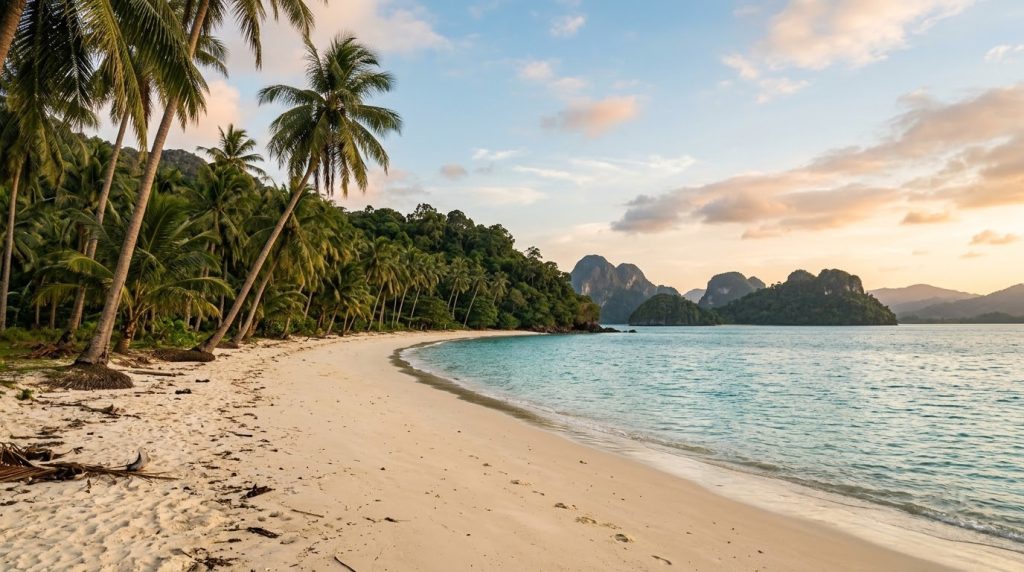
Pantai Cenang is Langkawi’s main beach, a long stretch of sand backed by resorts, bars and restaurants, with reliably strong sunsets over the Andaman Sea most evenings.
It is a genuinely good beach by Southeast Asian standards, calmer and cleaner than Penang’s Batu Ferringhi, but it is not the powder-fine, turquoise-water benchmark set by the Maldives or the best of the Perhentians. Tanjung Rhu, on the island’s quieter north side, has finer sand and fewer crowds but less infrastructure nearby.
Set expectations accordingly: come for a relaxed, resort-adjacent beach with a good sunset, not for the single best beach in Southeast Asia.
Seven Wells Waterfall and the best time to go
Seven Wells Waterfall, known locally as Telaga Tujuh, drops 91 metres down the slopes of Gunung Mat Cincang into seven interconnected natural pools, reached by a climb of roughly 638 steps from the car park.
The lower pools are an easier stop; the full climb to the namesake seven pools is a genuine hike with a payoff at the top, best tackled in the cooler morning hours. Timing the whole trip matters more than any single attraction.
Langkawi’s dry season runs November to April, with the calmest seas for island-hopping and the clearest odds of a cloud-free SkyCab summit, while the wetter months from May to October bring heavier rain and rougher boat conditions. Our best time to visit Malaysia guide breaks the seasonal pattern down month by month.
Who should skip Langkawi
Langkawi is a poor fit for a specific set of travellers, not for cautious planners in general.
Culture-and-food-first travellers who want George Town’s hawker stalls, Peranakan architecture and walkable heritage core should skip Langkawi and go to Penang instead, since Langkawi has no equivalent old town and its food scene is resort-and-restaurant based rather than street-market driven; our Penang vs Langkawi comparison lays out that trade-off in full.
Party-focused travellers chasing a dense nightlife strip will find Langkawi quiet after dark outside a handful of Pantai Cenang bars, better suited to a slower pace than a big night out.
Divers wanting world-class reef and visibility should also skip Langkawi’s shallow, average snorkel stops and look instead to the Perhentian Islands or Thailand’s Similan Islands, both a step up in water clarity and marine life. If none of those apply, Langkawi’s mix of duty-free shopping, a genuinely impressive cable car and decent beaches holds up well.
Getting to Langkawi, and around it once there
One detail trips up travellers following an older guide: the direct passenger ferry between Penang and Langkawi was suspended during the pandemic and has not resumed as of 2026, despite some older listings still advertising it. Anyone planning a Penang-to-Langkawi leg needs one of the current options instead, not the old direct boat.
A direct flight is the fastest of those options, taking roughly 35 to 40 minutes and running AUD 27-84 · USD 19-60 (MYR 80-250) depending on how far ahead it’s booked, with multiple departures most days.
The ferry route still exists, just not direct: it means a bus or taxi first to Kuala Perlis or Kuala Kedah on the mainland, then a separate ferry crossing onto the island.
Via Kuala Perlis, the shorter crossing of the two, the whole trip runs roughly 3.5 to 4 hours door to door including a 75-minute boat leg, at a combined bus-and-ferry cost of around AUD 20-40 · USD 15-29 (MYR 60-120); the Kuala Kedah route runs a little longer, closer to 4 to 4.5 hours with a 105-minute crossing, at a similar combined cost.
Once on the island, a rental car is the simplest way to cover the 15 to 30-minute gaps between the SkyCab, Kilim Geoforest Park and the main beaches already noted above, with typical rates running around AUD 13-17 · USD 10-12 (MYR 40-50) a day before fuel.
Grab also operates across the island for travellers who’d rather not drive, and short point-to-point rides within the main tourist areas generally stay well under the price of a half-day car hire – a reasonable default for anyone staying close to Pantai Cenang and only making the occasional trip out to the cable car or the mangroves.
Choosing where to stay
Most of Langkawi’s accommodation clusters around Pantai Cenang for beach access and nightlife, Kuah for duty-free shopping and the ferry terminal, or the quieter Tanjung Rhu and Datai Bay for higher-end, secluded resorts. A rental car or scooter is worth budgeting for regardless of base, since the SkyCab, Kilim Geoforest Park and the main beaches each sit a 15 to 30 minute drive apart.
Find your Langkawi hotel on the map
Live prices from Booking, Airbnb and more — move the map or change dates to compare stays across Langkawi.