Disclosure: Some links in this guide are affiliate links. If you book or buy through them, we may earn a small commission at no extra cost to you — it helps keep our guides free.
Ghent Travel Guide 2026: A First-Timer’s Handbook
Ghent is the medieval Flemish city most first-timers skip for Bruges, and that mistake is exactly what makes it worth your time. This Ghent travel guide covers the essentials: a moated castle you can climb through, the world-famous Ghent Altarpiece, three canals lined with guild houses, and a student population that keeps the bars and cafes busy long after the day-trippers leave. Ghent University counts roughly 50,000 students, and that youthful weight is the reason the old center still feels lived-in rather than staged.
The city sits almost exactly between Brussels and Bruges, about 28 minutes by train from either the capital or the coast-bound line. That makes it an easy stop, but Ghent rewards an overnight far more than a rushed afternoon. We have spent three separate visits here across different seasons, and the version of the city that appears after 6pm, once the tour groups board their coaches, is the one we keep coming back for. Below, we break down what to see, when to come, how to get here, and where the student energy actually lives. If you already know you want a fuller itinerary, jump to our roundup of the best things to do in Ghent or our neighborhood-by-neighborhood take on where to stay in Ghent.
Key Takeaways
– Gravensteen castle costs 13 EUR for adults (audio guide included), opens daily 10:00 to 18:00, and is free for under-18s (Visit Gent, 2026).
– The Ghent Altarpiece in St Bavo’s Cathedral runs about 12.50 EUR with the augmented-reality experience; pre-book a time slot in high season.
– From Brussels the train takes about 28 minutes (roughly 50 km, from around 9-10 EUR), and from Bruges about 25 minutes (roughly 40 km, from around 7 EUR).
– The CityCard Gent is 42 EUR for 48 hours or 48 EUR for 72 hours and covers 20+ sites, trams, buses, a canal cruise, and one day of bike rental.
– Two nights beats a day trip: the historic core lights up after dark and the crowds thin dramatically once day-trippers leave around 5pm.**** We have visited Ghent three times, most recently on a cold, bright weekend when the Graslei quay was nearly empty by 7pm. We spent two of those mornings walking the canals before the shops opened, and the single best decision we made was staying central instead of treating the city as a Brussels day trip. The late-evening light on the guild houses, with almost no one around, is a memory neither Bruges nor Brussels ever gave us.
What are the must-see sights in Ghent?
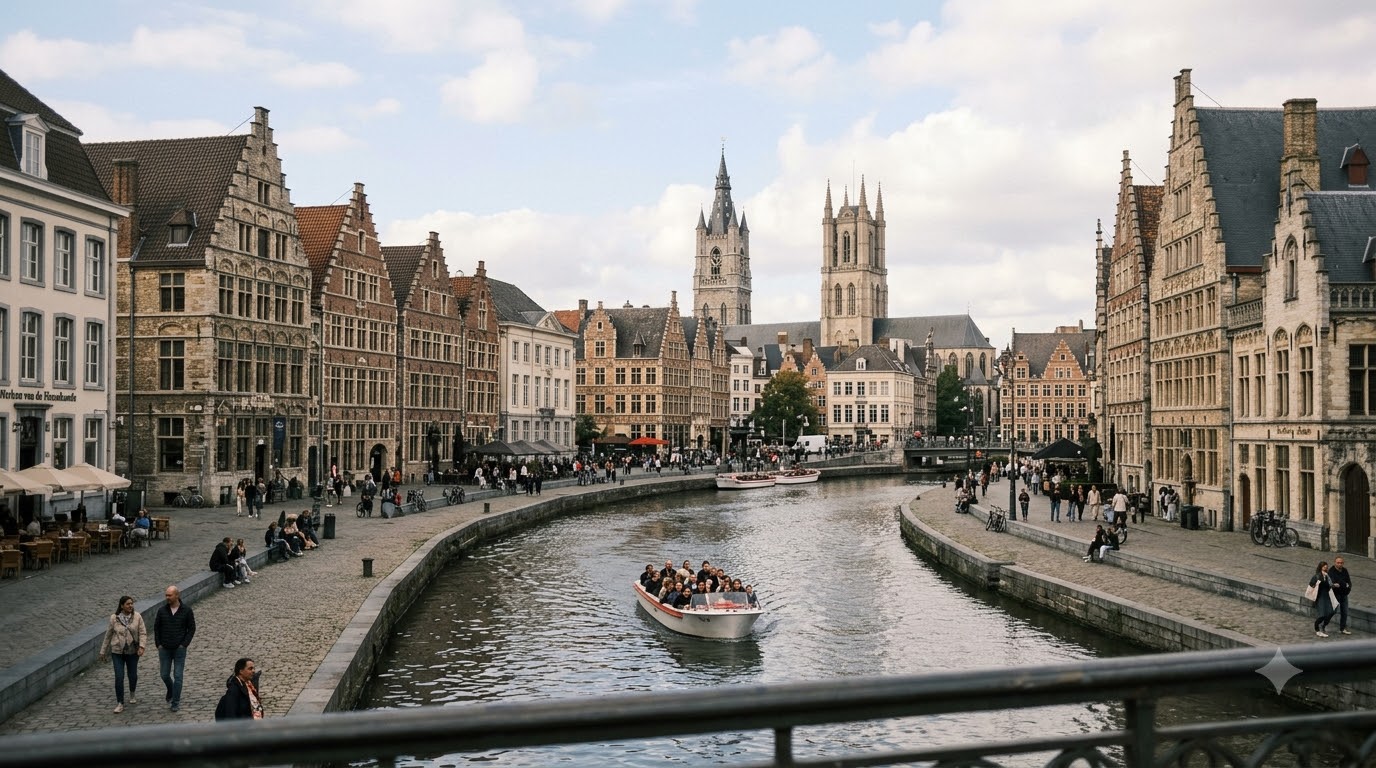
Ghent’s headline sights cluster within a 15-minute walk of each other, so a strong first day needs no transport at all. The medieval core is compact, walkable, and stacked with the kind of landmarks that anchor a first visit. Start with the castle, work through the cathedral and its altarpiece, then let the canals fill whatever time is left.
Here are the sights a first-timer should not miss, each one quotable on its own:
- Gravensteen (Castle of the Counts): a moated 12th-century stone fortress in the city center; 13 EUR adult entry with audio guide, open daily 10:00 to 18:00, closed 24, 25, 31 December and 1 January.
- St Bavo’s Cathedral: free to enter the nave; home to the Ghent Altarpiece, viewed in a separate ticketed visitor center.
- The Ghent Altarpiece (Adoration of the Mystic Lamb): Jan and Hubert van Eyck’s 1432 polyptych, one of the most influential paintings in Western art, shown with augmented-reality glasses for about 12.50 EUR.
- Graslei and Korenlei: two facing quays lined with medieval and Renaissance guild houses, the single most photographed spot in the city.
- St Nicholas’ Church and the Belfry: a Gothic church and a UNESCO-listed 91-meter belfry tower forming the spine of the old skyline.
- The three towers view: stand on St Michael’s Bridge for the classic alignment of St Nicholas’, the Belfry, and St Bavo’s in one frame.
The Gravensteen is the sight we would defend hardest. Its ramparts are open to walk, the audio guide is genuinely funny rather than dry, and the view from the top pulls the whole rooftop-and-canal panorama together. For a deeper list of neighborhoods, museums, and hidden corners beyond these anchors, our companion guide to the best things to do in Ghent goes attraction by attraction.
The 2-Day Ghent Itinerary
The plan we use ourselves — sent straight to your inbox.
- Day-by-day route
- Where to stay
- Real 2026 costs
Free · No spam · Unsubscribe anytime
How do you see the Ghent Altarpiece?
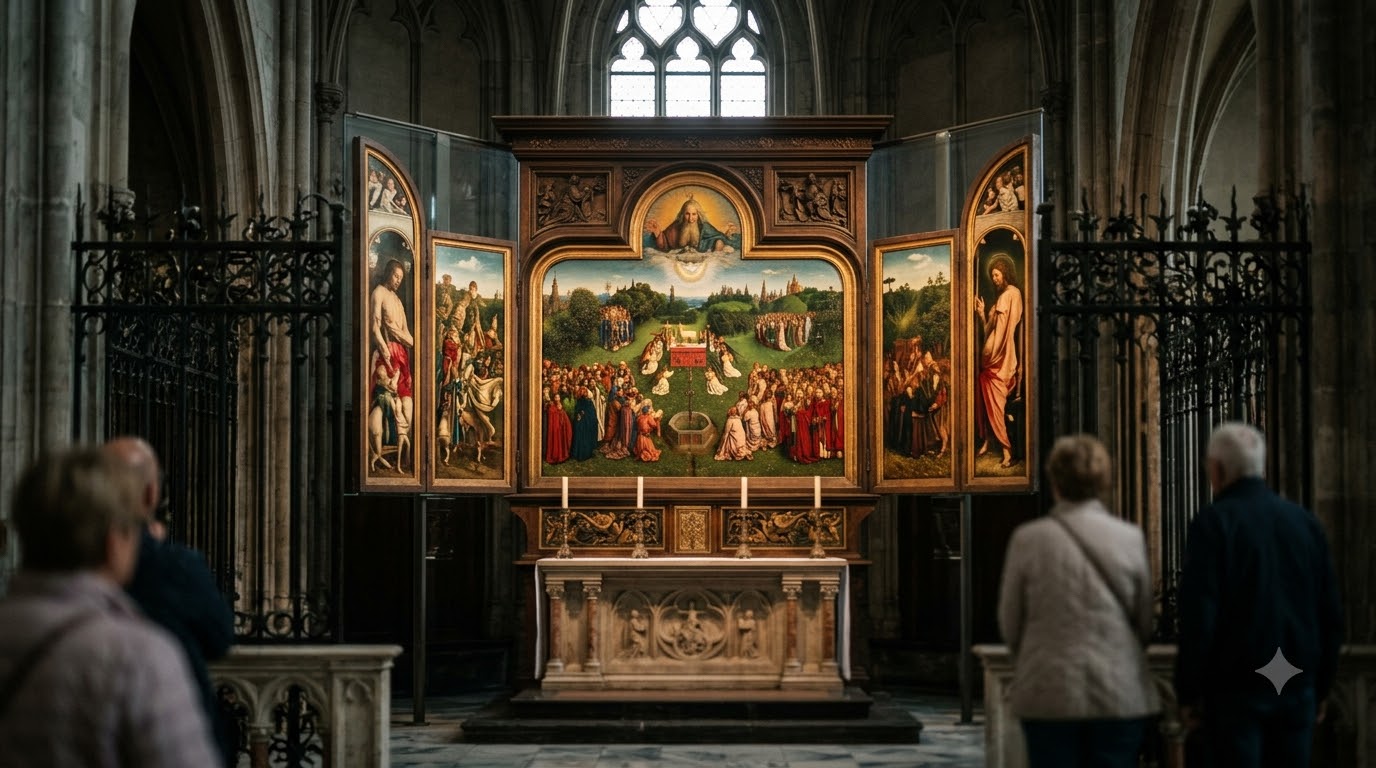
The Ghent Altarpiece is displayed inside a dedicated visitor center at St Bavo’s Cathedral, and you buy a timed ticket separate from entering the cathedral itself. The van Eyck brothers finished the panels in 1432, and after a multi-year restoration the panels now sit behind glass in a purpose-built space, paired with AR glasses that reconstruct the cathedral’s history. The nave of St Bavo’s is free to enter; the altarpiece visit is the paid part.
A few concrete pointers we learned the practical way:
- Book a time slot online in advance during summer and holiday weekends; walk-up slots sell out by midday.
- Budget 45 to 60 minutes for the visitor center, including the AR crypt segment.
- The CityCard Gent gives a 10 EUR discount on the altarpiece ticket, which alone narrows the gap on the card’s cost.
- Photography of the panels is not allowed, so put the phone away and use the AR glasses instead.
On our last visit the mid-morning slots were the calmest; by early afternoon the room filled with coach groups. If you only do one paid interior in Ghent, this is the one.
When is the best time to visit Ghent?
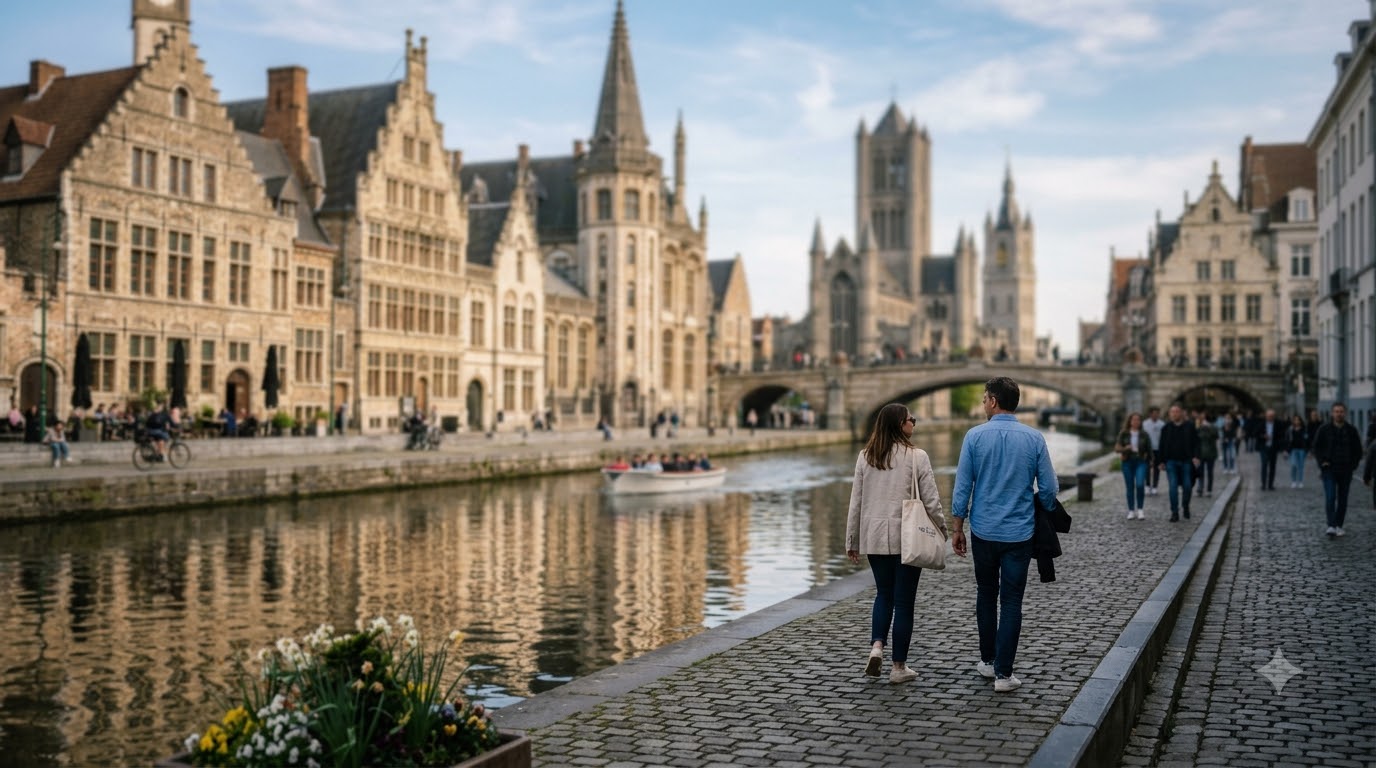
The best time to visit Ghent is late spring (May to June) or early autumn (September), when days are mild, terraces are open, and the summer crowds have not yet peaked. Belgium’s weather is famously changeable, so pack a rain layer in any season. Winter is quiet and atmospheric but cold and short on daylight, while July brings the Gentse Feesten, the city’s huge ten-day street festival, which is thrilling but packs the center.
| Season | Months | Typical daytime feel | Crowds | Best for |
|---|---|---|---|---|
| Spring | Apr-Jun | Mild, changeable, long days | Building | Canal walks, terraces, fewer coaches |
| Summer | Jul-Aug | Warmest, busiest, festival season | Heavy (peak in July) | Gentse Feesten, nightlife, students |
| Autumn | Sep-Oct | Cool, crisp, shorter days | Moderate | Photography, calm mornings, value |
| Winter | Nov-Feb | Cold, dark early, occasional rain | Light | Quiet streets, cozy cafes, low prices |
We came once in deep winter and once in early autumn, and autumn wins on balance: enough daylight to walk the canals, enough chill to justify a long lunch, and hotel rates well below the July spike. If you want the festival energy, aim for the Gentse Feesten in July, but expect the historic core to be shoulder to shoulder.
The 2-Day Ghent Itinerary
Hour-by-hour plan, where to stay and what it really costs — free PDF.
Free · No spam · Unsubscribe anytime
How much does a trip to Ghent cost?
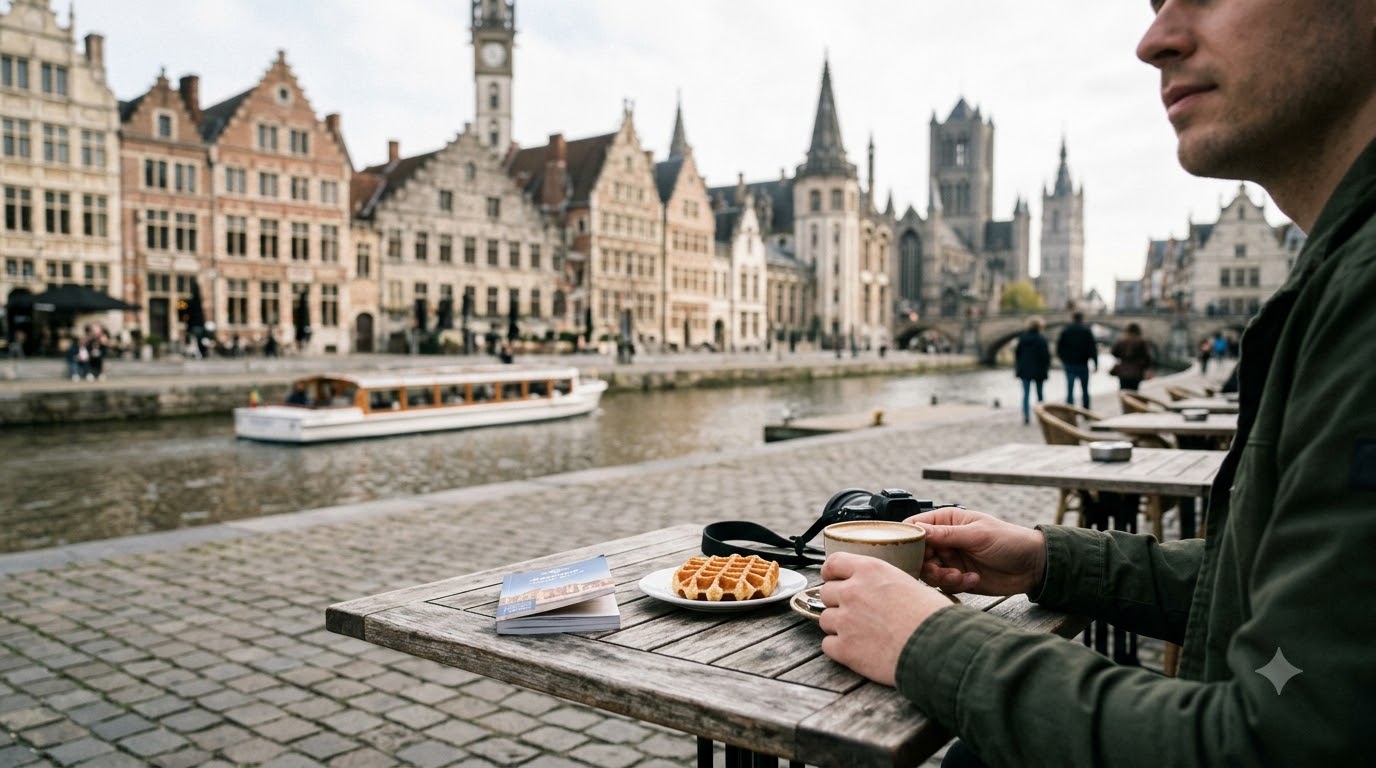
A mid-range day in Ghent runs roughly 90 to 140 EUR per person once you add a couple of paid sights, lunch, dinner, and drinks, before accommodation. The city is cheaper than Brussels for food and noticeably cheaper than Bruges for hotels, partly because the student population keeps casual eating honest. Below are the fixed costs worth knowing before you arrive.
| Item | Price (2026) | Notes |
|---|---|---|
| Gravensteen adult entry | 13 EUR | Audio guide included; under-18 free |
| Ghent Altarpiece | ~12.50 EUR | With AR experience; 10 EUR off with CityCard |
| CityCard Gent (48h) | 42 EUR | 20+ sites, trams/buses, canal cruise, 1-day bike |
| CityCard Gent (72h) | 48 EUR | Same inclusions, one extra day |
| Canal cruise (standalone) | ~10 EUR | Free with CityCard |
| Train from Brussels | from ~9-10 EUR | ~28 min each way |
| Train from Bruges | from ~7 EUR | ~25 min each way |
The CityCard math is simple: if you plan to visit the Gravensteen, the altarpiece, take a canal cruise, and use trams, the 48-hour card typically pays for itself and then some. If you are only doing one or two interiors, buy tickets individually instead. Budget-minded travelers can eat well for far less by leaning on the student cafes around the Overpoort and the food stalls near the Vrijdagmarkt. Accommodation is the biggest single line item, so it is worth reading our guide on where to stay in Ghent before you book.
Where should you stay in Ghent?
Stay inside or immediately beside the historic core, roughly between the Korenmarkt and the Gravensteen, so the canals and main sights are a walk rather than a tram ride away. Ghent is small enough that “central” covers most of what you want, but a few areas have distinct personalities. The station area, Gent-Sint-Pieters, is where trains arrive but sits about a 20-minute tram ride south of the medieval center.
Quick orientation on where to base yourself:
- Historic core (Korenmarkt / Graslei): most walkable, most atmospheric, priciest; best for first-timers.
- Patershol: a tiny medieval quarter of cobbled lanes and restaurants just behind the castle; charming and quiet at night.
- Around Vrijdagmarkt: lively square with markets and bars, still an easy walk to everything.
- Gent-Sint-Pieters (station): cheaper rooms and easy arrivals, but a tram commute into the old town.
We stayed central on our most recent trip and would not do it any other way in a city this compact; the after-dark walk back along the illuminated quays was worth the small premium. For a full breakdown of neighborhoods, hotel types, and booking timing, see our detailed guide on where to stay in Ghent.
How do you get to Ghent from Brussels or Bruges?
Ghent is reached fastest by train, with fast, frequent services from both Brussels and Bruges arriving at Gent-Sint-Pieters station. There is no need for a car; the historic center is largely pedestrianized and parking is restricted. From the airport, direct trains connect Brussels Airport (Zaventem) to Gent-Sint-Pieters in under an hour.
The core connections, each one quotable:
- Brussels to Ghent: about 28 minutes by direct train, roughly 50 km, with something in the order of 78 services a day, from around 9-10 EUR.
- Bruges to Ghent: about 25 minutes by direct train (fastest around 22 minutes), roughly 40 km, with close to 94 services a day, from around 7 EUR.
- Brussels Airport to Ghent: direct trains take under an hour, no change required.
- Within Ghent: trams and buses run by De Lijn connect the station to the center; the CityCard covers them for free.
Because Bruges is so close, many travelers pair the two. If you are building a Flanders loop, our Bruges travel guide sets out how the two cities differ and why doing both in one trip works so well. On our visits we always arrived by train and never once wished for a car.
What is Ghent’s student and nightlife scene like?
Ghent is a genuine university town, and its nightlife is younger, cheaper, and less polished than Bruges, in the best way. With around 50,000 students at Ghent University alone, the bars stay busy on weeknights and the drink prices reflect a student budget rather than a tourist one. The Overpoortstraat is the traditional student nightlife strip, while the historic core leans toward brown cafes and canal-side terraces.
Where the evening energy concentrates:
- Overpoortstraat: the student club-and-bar street, busiest Tuesday through Thursday during term.
- Vrijdagmarkt and around: squares with bars spilling onto the cobbles, good for a relaxed first drink.
- Graslei quay: less a bar strip than a place to sit canal-side with a takeaway drink at dusk.
- Local specialty: try a jenever (Belgian gin) at an old-school bar, and look for the city’s tongue-in-cheek “Ghent nose” (neuzekes) cone sweets sold near the markets.
The contrast with nearby Bruges is stark: where Bruges empties and quiets after dark, Ghent gets going. That single difference is why we push first-timers to spend the night here rather than treating it as a stopover, and it is the main reason our Bruges travel guide recommends sleeping in Ghent when you plan to see both.
Frequently Asked Questions
Is Ghent worth visiting?
Yes. Ghent combines Bruges-level medieval architecture, three canals, a moated castle, and a world-famous van Eyck altarpiece with a living student city that stays busy after dark. It draws far fewer coach tours than Bruges, so the historic core feels authentic rather than staged, especially in the evenings.
How many days do you need in Ghent?
Two days and one night is the sweet spot. One full day covers the Gravensteen, St Bavo’s and the Ghent Altarpiece, and the canals, while a second morning lets you slow down and see the city empty of day-trippers. A single day is doable from Brussels or Bruges but misses the best part, the illuminated evening core.
Is Ghent better than Bruges?
They are different, not ranked. Bruges is more postcard-perfect and more crowded; Ghent is grittier, younger, and livelier at night thanks to its 50,000 students. Since the two are only about 25 minutes apart by train, the honest answer for most first-timers is to visit both and let each play to its strength.
Do you need to book the Ghent Altarpiece in advance?
In high season, yes. The altarpiece is shown in a timed-entry visitor center at St Bavo’s, and slots sell out by midday on summer and holiday weekends. In the low season you can often walk up, but booking a morning slot online is the safest way to avoid a wait.
Is Ghent walkable?
Very. The historic center is compact and largely pedestrianized, with the main sights clustered within a 15-minute walk of each other. You will only need a tram to reach Gent-Sint-Pieters station, about 20 minutes south of the old town, and the CityCard Gent covers those rides for free.
Ghent is the rare European city that photographs like a museum piece but still behaves like a place people actually live. Give it an overnight, walk the quays after the tour groups leave, and let the student city do the rest. Come mild-weather if you can, base yourself in the old core, and treat nearby Bruges as a companion rather than a competitor.