Disclosure: Some links in this guide are affiliate links. If you book or buy through them, we may earn a small commission at no extra cost to you — it helps keep our guides free.
Bangkok vs Chiang Mai 2026: Which City Is Better?
Quick answer: Pick Bangkok if you want big-city energy, world-class street food, nightlife and easy access to bucket-list temples. Choose Chiang Mai if you prefer a slower pace, mountains and trekking, and a noticeably lower daily budget. Many travelers do both, since the two cities sit just a short flight or an overnight train apart.
Quick answer: Comparing Bangkok and Chiang Mai? Open live hotel prices in each to weigh cost against location:
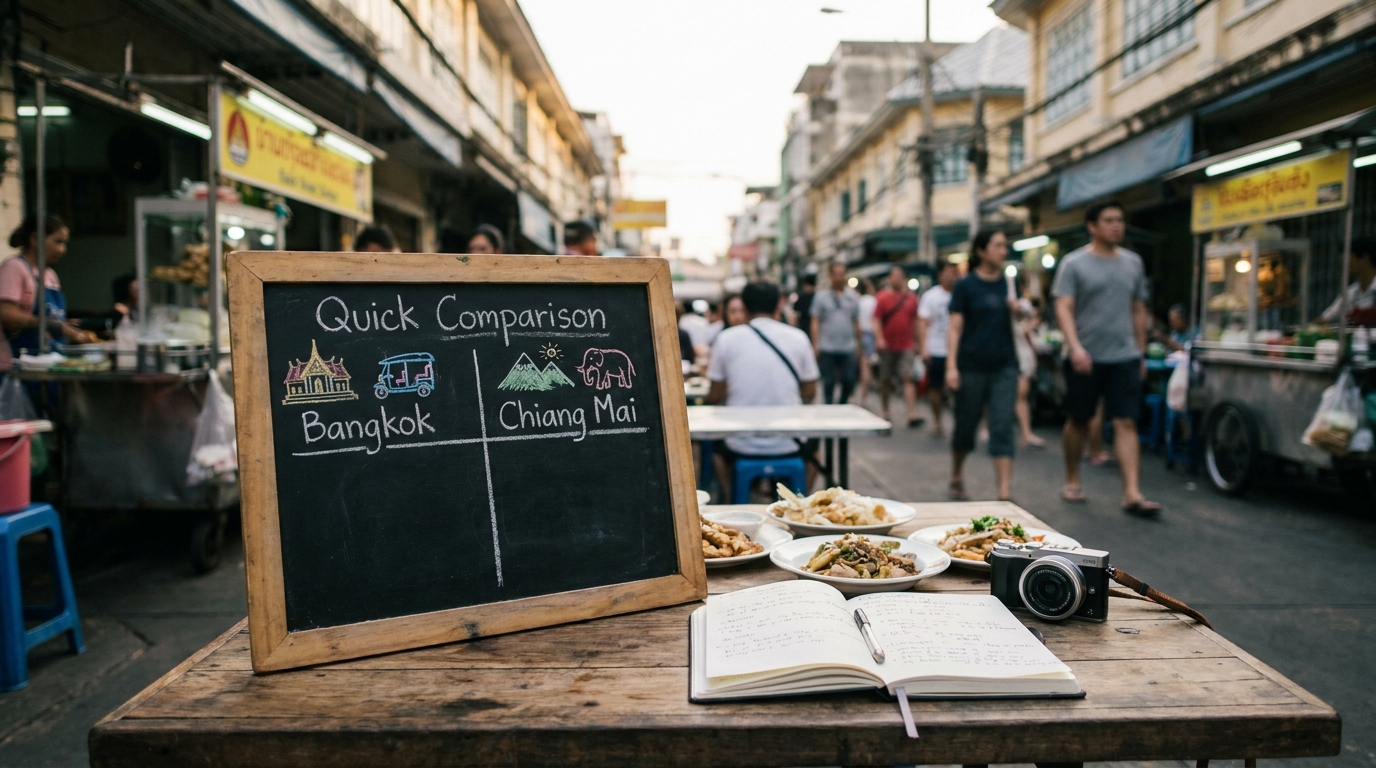
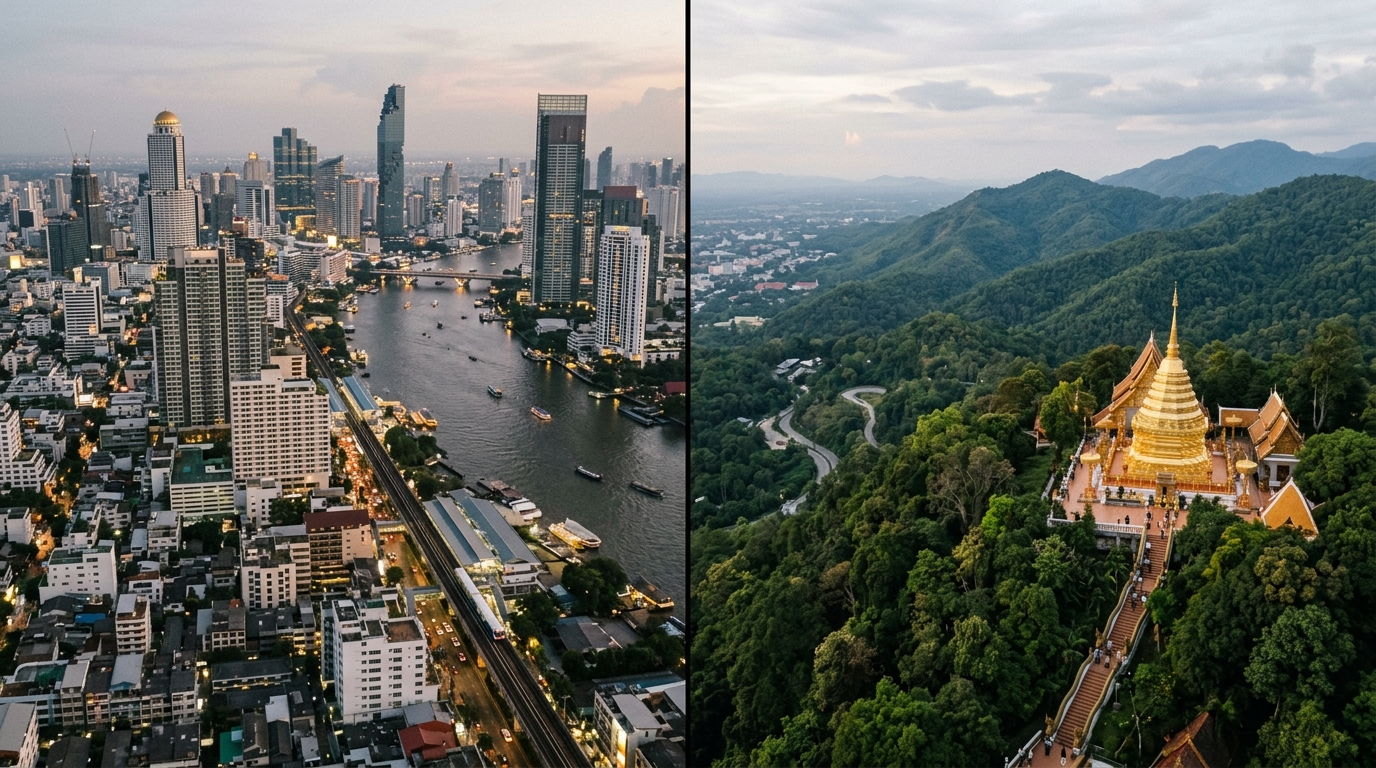
Here’s the short answer: Bangkok suits travelers who want big-city energy, world-class street food, and endless nightlife. Chiang Mai is better for slower travel, nature lovers, and tighter budgets. Bangkok attracted over 22 million international visitors in 2023, while Chiang Mai welcomed around 4.5 million (Tourism Authority of Thailand, 2024). Both cities are incredible, but they offer very different experiences.
This bangkok vs chiang mai comparison breaks down costs, food, temples, activities, and who each city works best for. We’ve spent months in both cities across multiple trips, so every recommendation here comes from first-hand experience. By the end, you’ll know exactly which one belongs on your itinerary, or whether you should visit both.
Key Takeaways
- Bangkok costs 30-40% more daily than Chiang Mai across accommodation, food, and transport (Numbeo, 2025)
- Chiang Mai offers better access to nature, mountains, and ethical elephant sanctuaries
- Bangkok wins for nightlife, shopping, and international food variety
- Both cities connect by a 1-hour flight or 10-hour overnight train
- First-timers to Thailand should consider visiting both on a 2-week trip
The 4-Day Bangkok Itinerary
The plan we use ourselves — sent straight to your inbox.
- Day-by-day route
- Where to stay
- Real 2026 costs
Free · No spam · Unsubscribe anytime
How Do Bangkok and Chiang Mai Compare at a Glance?
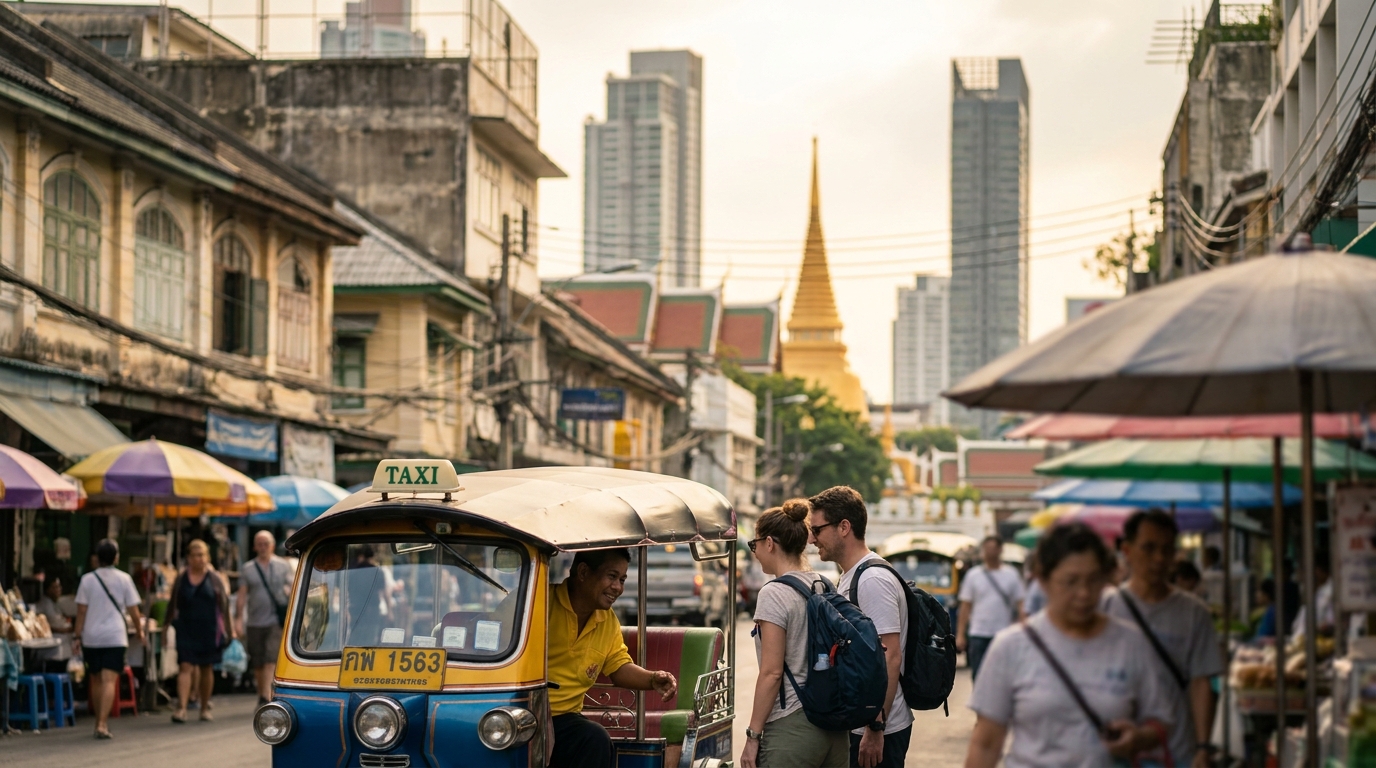
Bangkok and Chiang Mai differ in nearly every category, from pace to price. The average daily budget in Chiang Mai runs about 30% lower than Bangkok’s, according to Numbeo (2025). This table shows how the two cities stack up across 10 key areas.
| Category | Bangkok | Chiang Mai |
|---|---|---|
| Daily Budget | 1,500-3,000 THB ($42-84) | 1,000-2,000 THB ($28-56) |
| Food | Street food capital, global cuisine | Khao soi, night bazaar food, cooking classes |
| Temples | Grand Palace, Wat Pho, Wat Arun | Doi Suthep, Wat Chedi Luang, 300+ temples |
| Nightlife | Khaosan Road, rooftop bars, clubs | Chill bars, live music, night markets |
| Shopping | Chatuchak, malls, floating markets | Night Bazaar, Sunday Walking Street |
| Nature | City parks, river trips | Mountains, waterfalls, jungle treks |
| Culture | Modern Thai, international | Lanna heritage, hill tribes, artisan crafts |
| Transport | BTS/MRT, taxis, boats | Songthaews, scooters, bikes |
| Safety | Very safe, petty scams possible | Very safe, quieter streets |
| Best For | First-timers, foodies, nightlife fans | Digital nomads, nature lovers, couples |
We’ve found that first-timers often prefer Bangkok’s convenience, while repeat visitors to Thailand gravitate toward Chiang Mai’s slower rhythm.
Citation Capsule: Bangkok’s average daily travel cost of 1,500-3,000 THB ($42-84) exceeds Chiang Mai’s 1,000-2,000 THB ($28-56) range, making Chiang Mai approximately 30% cheaper for budget travelers according to Numbeo (2025).
How Much Does Each City Cost?
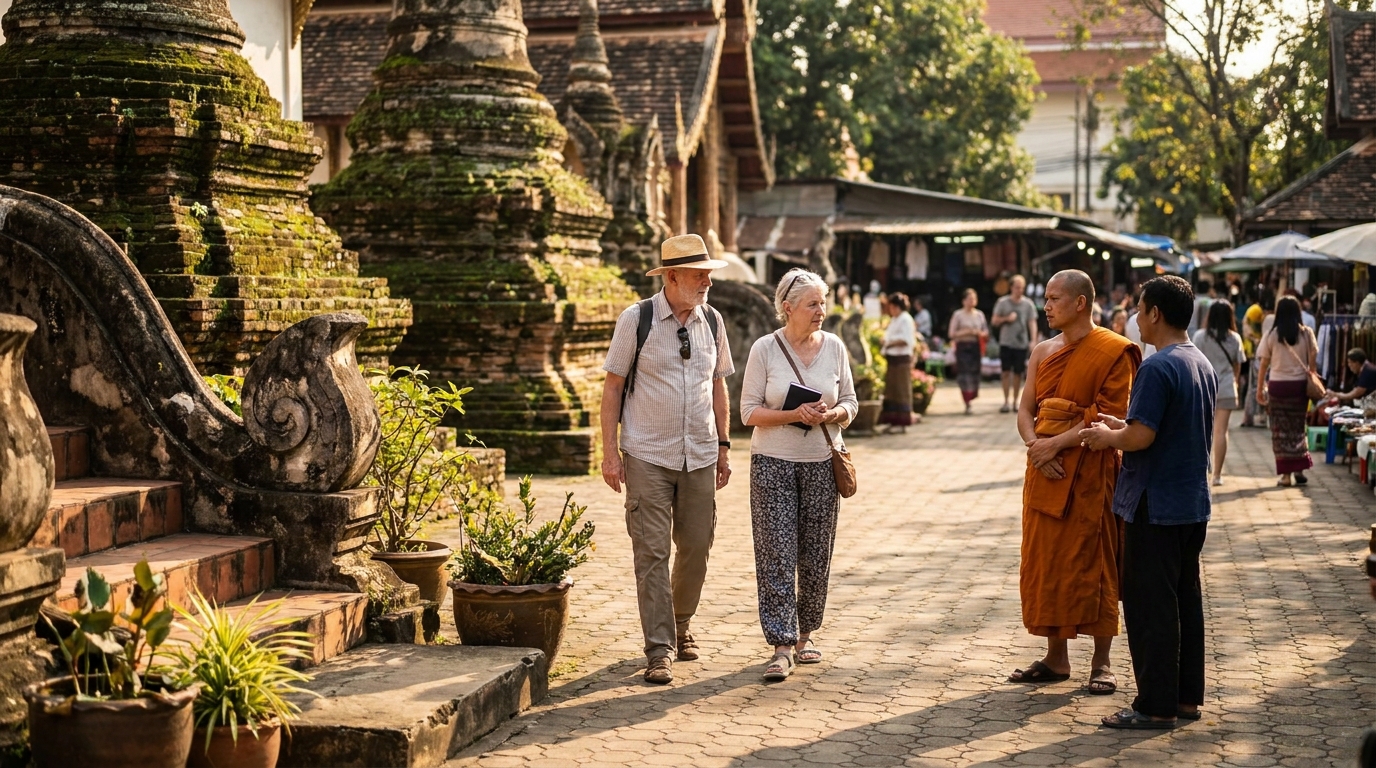
Chiang Mai consistently ranks as one of Asia’s cheapest destinations. A comfortable mid-range day in Chiang Mai costs roughly 1,500 THB ($42), compared to Bangkok’s 2,200 THB ($62) for a similar experience (Budget Your Trip, 2025). Here’s the breakdown.
Accommodation
Bangkok hotel prices range widely. Budget hostels start at 300-500 THB ($8-14) per night, while mid-range hotels in Sukhumvit or Silom cost 1,200-2,500 THB ($34-70). In Chiang Mai, you’ll find clean guesthouses from 200-400 THB ($6-11) and excellent boutique hotels in the Old City for 800-1,500 THB ($22-42).
Check live hotel prices in Chiang Mai ->
Food
Street food in Bangkok averages 40-80 THB ($1.10-2.25) per dish. Chiang Mai street food is even cheaper at 30-60 THB ($0.85-1.70). Restaurant meals in Bangkok run 150-400 THB ($4.20-11.20), while Chiang Mai restaurants typically charge 100-250 THB ($2.80-7.00).
Transport
Bangkok’s BTS and MRT cost 16-59 THB ($0.45-1.65) per ride. Taxis start at 35 THB. In Chiang Mai, there’s no rail system. Songthaews (red trucks) cost 30-50 THB ($0.85-1.40) per trip, and scooter rentals run 200-300 THB ($5.60-8.40) per day.
Activities
Temple entry fees are comparable. Bangkok’s Grand Palace costs 500 THB ($14), while Doi Suthep in Chiang Mai costs just 30 THB ($0.85). Cooking classes average 1,500 THB ($42) in Bangkok versus 1,000 THB ($28) in Chiang Mai.
| Expense | Bangkok | Chiang Mai |
|---|---|---|
| Budget hostel/night | 300-500 THB ($8-14) | 200-400 THB ($6-11) |
| Street meal | 40-80 THB ($1-2) | 30-60 THB ($0.85-1.70) |
| Local transport/trip | 16-59 THB | 30-50 THB |
| Mid-range hotel/night | 1,200-2,500 THB | 800-1,500 THB |
[CHART: Bar chart – Daily average costs Bangkok vs Chiang Mai by category – Budget Your Trip 2025]
The 4-Day Bangkok Itinerary
Hour-by-hour plan, where to stay and what it really costs — free PDF.
Free · No spam · Unsubscribe anytime
What Can You Do in Each City?
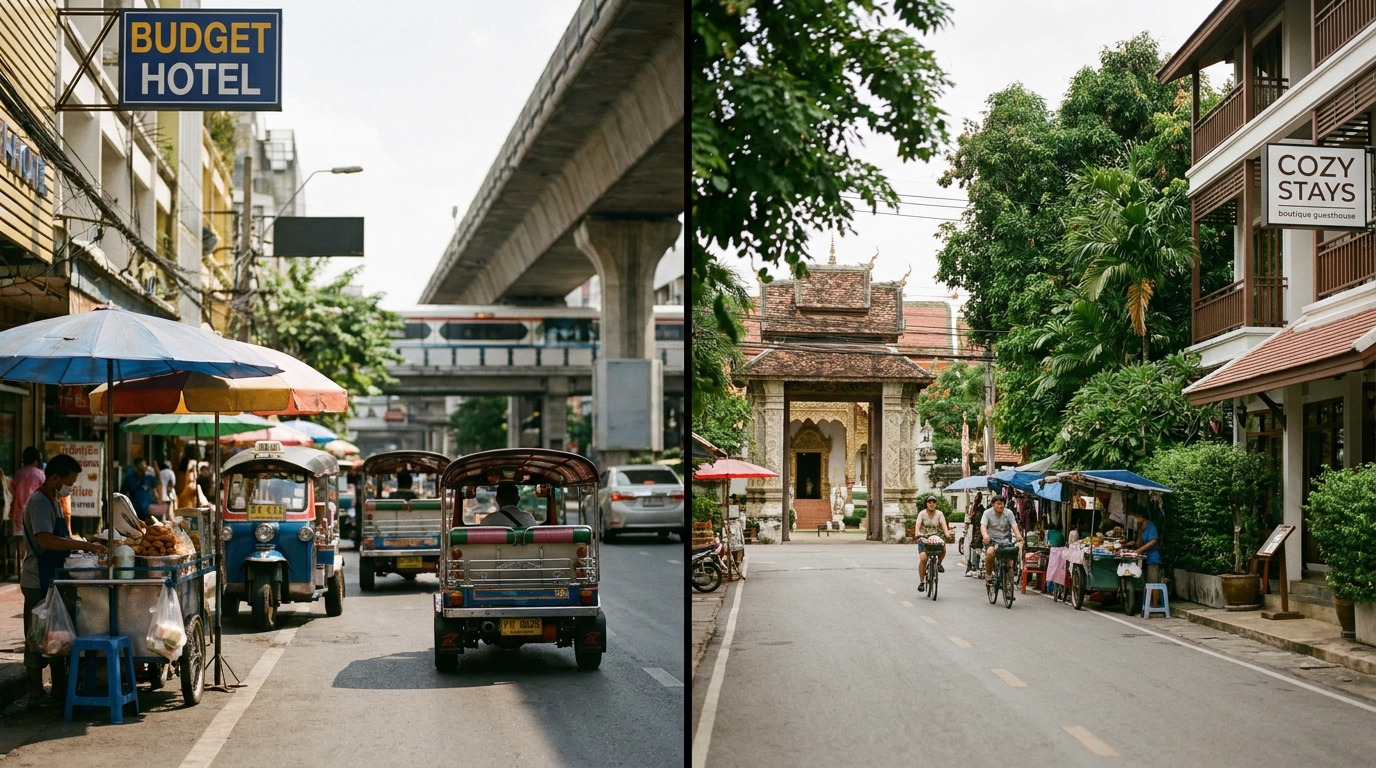
Bangkok offers over 400 registered temples and some of Southeast Asia’s largest shopping malls, according to the Bangkok Metropolitan Administration (2024). Chiang Mai trades skyscrapers for mountain trails and artisan workshops. Your ideal city depends on what kind of activities you enjoy.
Top Bangkok activities
Bangkok Highlights
Bangkok’s must-do list centers on temples, food, and urban exploration. The Grand Palace and Wat Pho are non-negotiable for first-timers. Beyond temples, you’ll find floating markets, rooftop bars with skyline views, Chatuchak Weekend Market with its 15,000 stalls, and a nightlife scene that runs until sunrise.
Muay Thai matches at Rajadamnern Stadium, canal boat rides through old neighborhoods, and Chinatown food crawls add layers most visitors don’t expect. Could you spend two weeks here and still miss things? Absolutely.
Chiang Mai Highlights
Chiang Mai’s strength is nature and cultural immersion. Doi Suthep temple overlooking the city is the signature experience. But the real draw is everything beyond the city center: ethical elephant sanctuaries, Doi Inthanon National Park (Thailand’s highest peak at 2,565 meters), and waterfall hikes through jungle.
Chiang Mai cooking classes rank among the best in the world. The Sunday Walking Street market stretches over a kilometer through the Old City. And the Lanna heritage here, with its distinct architecture and traditions, feels genuinely different from central Thailand.
Citation Capsule: Chiang Mai’s Old City contains over 300 Buddhist temples within its medieval walls, while Bangkok counts more than 400 across the metropolitan area (Bangkok Metropolitan Administration, 2024), giving both cities exceptional temple density by global standards.
Which City Has Better Food?
Bangkok is widely considered one of the world’s greatest food cities, earning 35 Michelin-starred restaurants in the 2025 guide (Michelin Guide Thailand, 2025). Chiang Mai’s food scene is smaller but deeply distinctive, built on Northern Thai flavors you won’t find anywhere else.
Bangkok food guide
Bangkok’s Food Scene
Bangkok’s street food is legendary. Yaowarat (Chinatown) alone could keep you eating for a week. Pad thai, som tam, mango sticky rice, boat noodles, and dozens of regional Thai dishes compete for your attention on every block. The city also has excellent Japanese, Indian, and Middle Eastern food for when you want variety.
During our last Bangkok trip, we tracked 47 street food meals over 12 days. Average cost per meal: 55 THB ($1.55). Not a single bad one.
Chiang Mai’s Food Scene
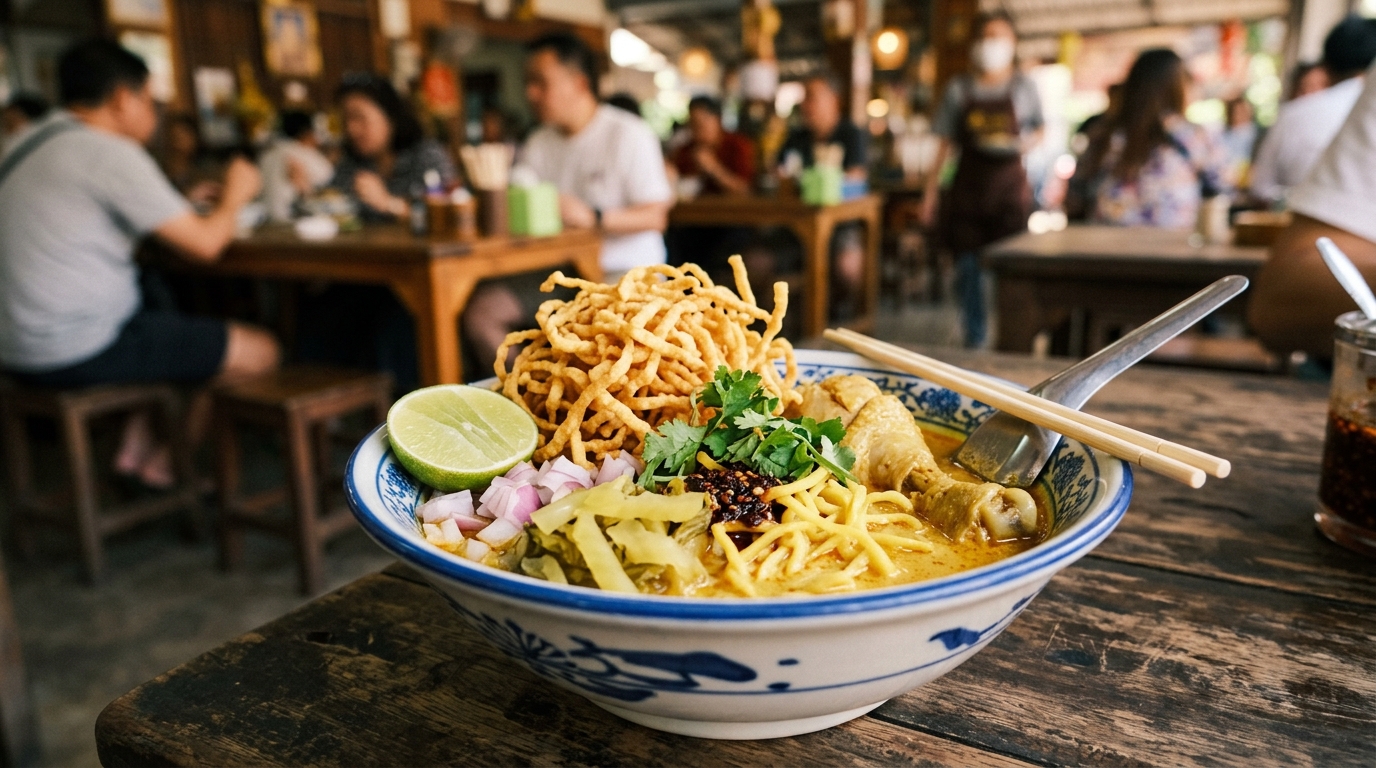
Chiang Mai’s signature dish is khao soi, a coconut curry noodle soup you’ll find on nearly every corner. Sai ua (northern sausage), nam prik ong (chili dip), and kanom jeen nam ngiaw (rice noodle soup) represent Lanna flavors that are rare in Bangkok. The night bazaar food courts and Warorot Market offer excellent variety at rock-bottom prices.
Cooking classes here are a genuine highlight. Most half-day classes include a market visit, 4-5 dishes, and take-home recipes. They cost around 1,000 THB ($28), making them one of Thailand’s best-value activities.
Find your Chiang Mai hotel on the map
Live prices from Booking & Airbnb — tap a pin to compare stays around the Old City and Nimman and beyond.
Where Should You Stay in Each City?
Bangkok has roughly 4,800 hotels and hostels listed on major booking platforms, compared to Chiang Mai’s 2,100 (Booking.com, 2025). Bangkok offers more variety, while Chiang Mai delivers better value per night. Both cities have excellent options across all budgets.
Bangkok neighborhoods guide
Best Bangkok Neighborhoods
Sukhumvit works for most travelers: great transport, restaurants, and nightlife. Khao San Road suits budget backpackers. Silom/Sathorn appeals to business travelers and couples wanting rooftop dining. Riverside offers luxury hotels near the Grand Palace.
Best Chiang Mai Neighborhoods
Old City puts you within walking distance of temples, restaurants, and the Sunday market. Nimman is the modern, cafe-filled neighborhood popular with digital nomads. Riverside gives a quieter base with boutique guesthouses and easy access to the Night Bazaar.
Check live hotel prices in Chiang Mai ->
When Is the Best Time to Visit Each City?
Both cities share Thailand’s three seasons, but Chiang Mai’s higher elevation (310 meters) creates noticeably different conditions. The Tourism Authority of Thailand reports that November to February draws the highest visitor numbers to both cities (TAT, 2024). Here’s what to expect.
Bangkok Weather
Bangkok stays hot year-round: 28-35C (82-95F). The monsoon season (June to October) brings heavy afternoon rain but rarely ruins full days. November to February is the “cool” season at 25-32C (77-90F), though it still feels warm. Humidity averages 70-80%.
Chiang Mai Weather
Chiang Mai gets genuinely cool from November to February, dipping to 15-25C (59-77F). This makes temple visits and trekking far more comfortable than in Bangkok. The burning season (February to April) creates serious air quality problems, with AQI regularly exceeding 200. Avoid March and April if you’re sensitive to smoke.
So what’s the ideal window? November to January works perfectly for both cities. You get pleasant temperatures, low rainfall, and peak festival season.
[CHART: Line chart – Monthly average temperatures Bangkok vs Chiang Mai – Thai Meteorological Department]
How Do You Get Around Each City?
Bangkok’s public transport system carried 1.3 million daily riders on the BTS and MRT combined in 2024 (Bangkok Mass Transit System, 2024). Chiang Mai has no rail system and relies on roads. This is one of the biggest practical differences between the two cities.
Bangkok Transport
The BTS Skytrain and MRT subway cover most tourist areas efficiently. River boats connect riverside attractions for 15-30 THB. Grab (Southeast Asia’s Uber) works seamlessly. Tuk-tuks are fun but always negotiate first. You don’t need a scooter here.
Chiang Mai Transport
Songthaews (shared red trucks) are the local “bus,” charging 30-50 THB per person within the city. Grab works well. Many travelers rent scooters for 200-300 THB per day to explore temples and mountains independently. The Old City is walkable, roughly 1.5 km across.
Bangkok’s transport wins for convenience, but Chiang Mai’s compact size means you actually spend less total time commuting. A songthaew across Chiang Mai takes 15 minutes. Crossing Bangkok during rush hour can take 90 minutes.
Which City Is Better for Your Travel Style?
Different travelers thrive in different cities. Bangkok works for nearly everyone, but Chiang Mai excels for specific travel styles. Here’s our honest assessment after years of visiting both.
Solo Travelers
Both cities are excellent for solo travel. Bangkok has more hostels and a bigger backpacker scene around Khao San Road. Chiang Mai’s smaller scale makes it easier to meet people and form connections at cooking classes and coworking spaces.
Couples
Chiang Mai edges ahead for couples. Affordable boutique hotels, candlelit riverside dinners, and scenic day trips create a romantic atmosphere. Bangkok offers luxury rooftop dining and spa experiences, but the city’s intensity isn’t always couple-friendly.
Families
Bangkok wins for families with older kids: interactive museums, aquariums, and amusement parks keep everyone engaged. Chiang Mai is better for families wanting outdoor experiences like elephant sanctuaries and nature walks. Both cities are very safe for families.
Digital Nomads
Chiang Mai has been a digital nomad hub for over a decade. Coworking spaces cost 3,000-5,000 THB ($84-140) per month, coffee shops welcome laptop workers, and the cost of living allows for a comfortable life on a freelancer’s budget. Bangkok has more coworking options but at higher prices.
First-Timers to Thailand
Bangkok. The international airport connections are better, the tourist infrastructure is more developed, and the city gives you the broadest introduction to Thai culture, food, and history in one place.
Foodies
Bangkok. It’s not close. The depth and variety of Bangkok’s food scene, from street carts to Michelin-starred restaurants, is unmatched. Chiang Mai’s food is distinctive and wonderful, but narrower.
Can You Visit Both Cities?
Yes, and we strongly recommend it if you have 10 or more days in Thailand. The two cities complement each other perfectly: Bangkok’s urban energy followed by Chiang Mai’s mountain calm, or vice versa.
How to Get Between Bangkok and Chiang Mai
By air: Bangkok to Chiang Mai flights take about 1 hour and 15 minutes. Budget airlines like AirAsia and Nok Air offer fares from 1,000-2,500 THB ($28-70) when booked early.
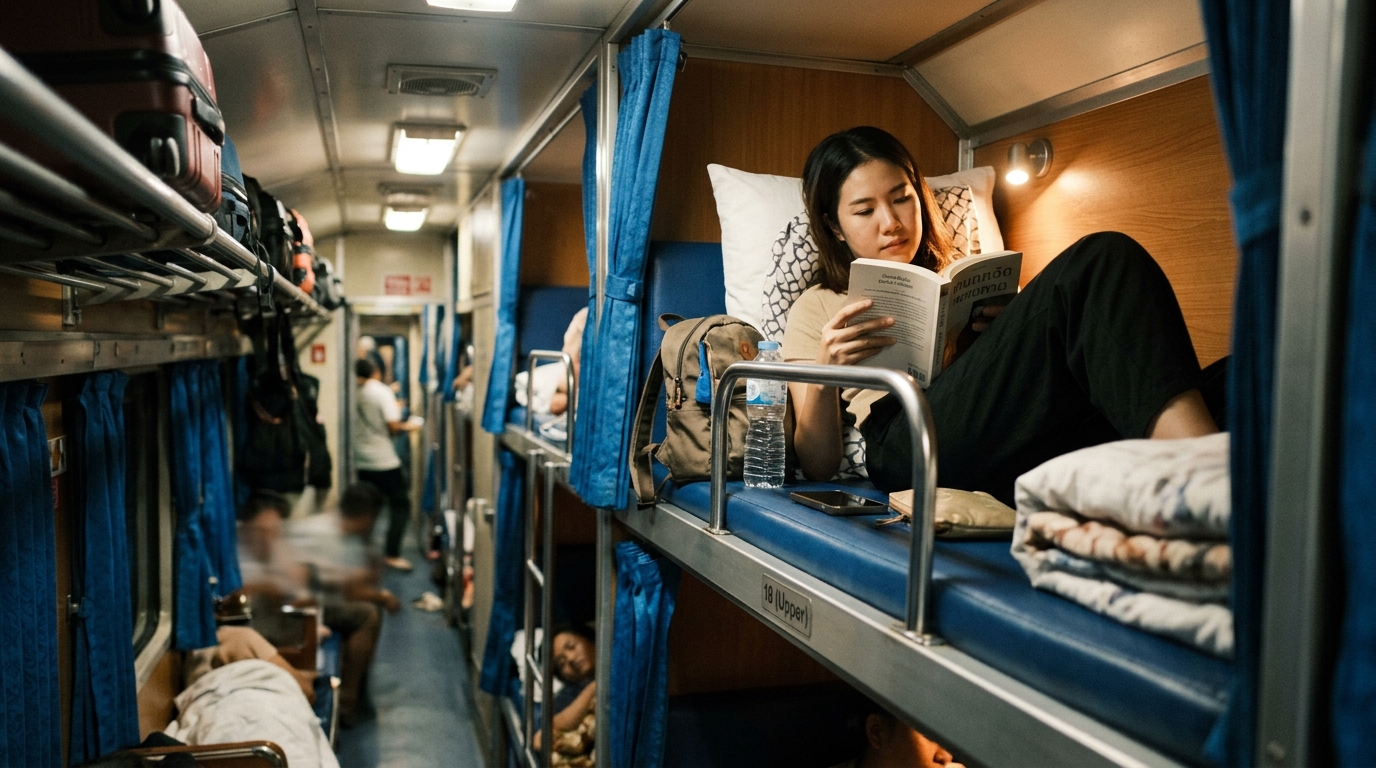
By train: The overnight sleeper train takes 10-12 hours and costs 800-1,500 THB ($22-42) depending on class. It’s a fantastic experience, departing Bangkok’s Hua Lamphong station in the evening and arriving in Chiang Mai by morning.
By bus: VIP buses take 9-10 hours and cost 500-900 THB ($14-25). Comfortable but long.
Suggested 2-Week Itinerary Split
| Days | Location | Focus |
|---|---|---|
| Days 1-5 | Bangkok | Temples, street food, Chatuchak, nightlife |
| Day 6 | Travel | Morning flight or overnight train |
| Days 7-11 | Chiang Mai | Doi Suthep, cooking class, elephant sanctuary, trekking |
| Days 12-13 | Chiang Mai day trips | Doi Inthanon, hot springs, White Temple (Chiang Rai day trip) |
| Day 14 | Fly home | From Chiang Mai (international flights) or back via Bangkok |
Final Verdict: Bangkok or Chiang Mai?
Both cities deserve a spot on your Thailand trip. But if you must choose one, this table makes the decision simple.
| Choose Bangkok if… | Choose Chiang Mai if… |
|---|---|
| You love big cities and crowds | You prefer quieter, smaller cities |
| Street food is your top priority | You want cooking classes and local flavors |
| You want nightlife and rooftop bars | You prefer chill bars and live music |
| Shopping is important to you | Nature and mountains excite you |
| It’s your first time in Thailand | You’ve been to Bangkok already |
| You need major airport connections | You want better value for money |
| You travel with older kids | You’re a couple or solo traveler |
| You have 4-5 days or fewer | You have a week or more to relax |
Plan your Bangkok trip [Internal Link: chiang-mai-travel-guide]
Citation Capsule: With Bangkok receiving 22 million international visitors compared to Chiang Mai’s 4.5 million annually (Tourism Authority of Thailand, 2024), Bangkok remains the more popular choice, though Chiang Mai’s lower costs and nature access make it increasingly competitive for longer stays.
About the author: Travelguidestip has been covering Southeast Asia travel since 2023. Read our editorial policy for how we research and verify our guides.
Book Your Chiang Mai Trip
Use these trusted platforms to book your Chiang Mai trip at the best prices:
- Tours & Activities: Browse Chiang Mai experiences on Klook — day trips, food tours, skip-the-line tickets.
- Hotels: Compare Chiang Mai hotels on Booking.com — free cancellation on most bookings.
- eSIM / Stay Connected: Airalo eSIM — affordable data plans, no roaming fees.
Frequently Asked Questions
Is Chiang Mai cheaper than Bangkok?
Yes. Chiang Mai costs roughly 30% less than Bangkok across accommodation, food, and activities, according to Numbeo (2025). A comfortable mid-range day in Chiang Mai runs about 1,500 THB ($42) compared to Bangkok’s 2,200 THB ($62). The biggest savings come from accommodation and dining.
How long is the flight from Bangkok to Chiang Mai?
Direct flights take approximately 1 hour and 15 minutes. Multiple airlines operate this route daily, with budget carriers offering fares from 1,000 THB ($28) when booked in advance. The overnight train is a popular alternative, taking 10-12 hours with sleeper berths from 800 THB ($22).
Is Bangkok or Chiang Mai safer for tourists?
Both cities are very safe for tourists. Thailand ranks among the safest countries in Southeast Asia for travelers. Bangkok has more petty scam activity around tourist areas like Khao San Road, while Chiang Mai’s smaller size and quieter streets feel particularly safe. Standard travel precautions apply in both cities.
Can you do a day trip from Bangkok to Chiang Mai?
No. With a 1-hour 15-minute flight each way plus airport time, a day trip isn’t practical. You need at least 3 nights in Chiang Mai to justify the travel. If you’re short on time, consider a closer day trip from Bangkok to Ayutthaya or the floating markets instead.
Which city is better for Thai food?
Bangkok offers more variety and volume, with 35 Michelin-starred restaurants and thousands of street food vendors (Michelin Guide Thailand, 2025). Chiang Mai wins for unique Northern Thai dishes like khao soi and sai ua that are hard to find elsewhere. Serious foodies should visit both.
What to eat in Bangkok
Still deciding? Start with Bangkok if you’re a first-timer. Add Chiang Mai if you have 10+ days. You won’t regret visiting both.
Related Travel Guides
- Ultimate Bangkok Travel Guide 2026
- Best Bangkok Tours
- Best Day Trips from Bangkok
- Bangkok Budget Guide
- 5-Day Bangkok Itinerary
- Things to Do in Bangkok
- Bali vs Thailand Comparison
- Siem Reap Travel Guide
We only recommend services we genuinely use and trust. Thank you for supporting our work!
Citation capsule: According to the Tourism Authority of Thailand (2025), Chiang Mai continues to be one of the world’s most visited destinations, drawing millions of international travelers each year.
Citation capsule: According to the Tourism Authority of Thailand (2025), Chiang Mai continues to be one of the world’s most visited destinations, drawing millions of international travelers each year.
Citation capsule: According to the Tourism Authority of Thailand (2025), Chiang Mai continues to be one of the world’s most visited destinations, drawing millions of international travelers each year.