Disclosure: Some links in this guide are affiliate links. If you book or buy through them, we may earn a small commission at no extra cost to you — it helps keep our guides free.
Ultimate Siem Reap Travel Guide 2026: Everything You Need to Know
Siem Reap is one of Southeast Asia’s most rewarding destinations — home to the largest religious monument on earth, a buzzing food scene, and a hospitality culture that genuinely moves visitors. This guide covers every practical detail you need: entry fees, transport options, where to sleep at every budget, which tours are worth booking, and how to handle logistics without stress.
Key Takeaways
– Angkor Archaeological Park received over 1.1 million international visitors in the first 10 months of 2024, a 43% rebound from 2023 levels (APSARA Authority, 2024)
– A 3-day Angkor pass costs $72 USD and covers all major temple complexes including Angkor Wat, Bayon, and Ta Prohm (Angkor Enterprise, 2025)
– Budget travelers can comfortably manage on $45–$60 USD/day including accommodation, food, transport, and a temple pass (Numbeo, 2025)
– Siem Reap International Airport (SAI) reopened in November 2023 with direct connections to Bangkok, Kuala Lumpur, Singapore, and Ho Chi Minh City (Cambodia Airports, 2024)
– Over 70% of travelers rank Angkor Wat as the single most impressive archaeological site they have ever visited (TripAdvisor Travelers’ Choice, 2024)
Why Visit Siem Reap in 2026
Related: best time to visit Siem Reap.
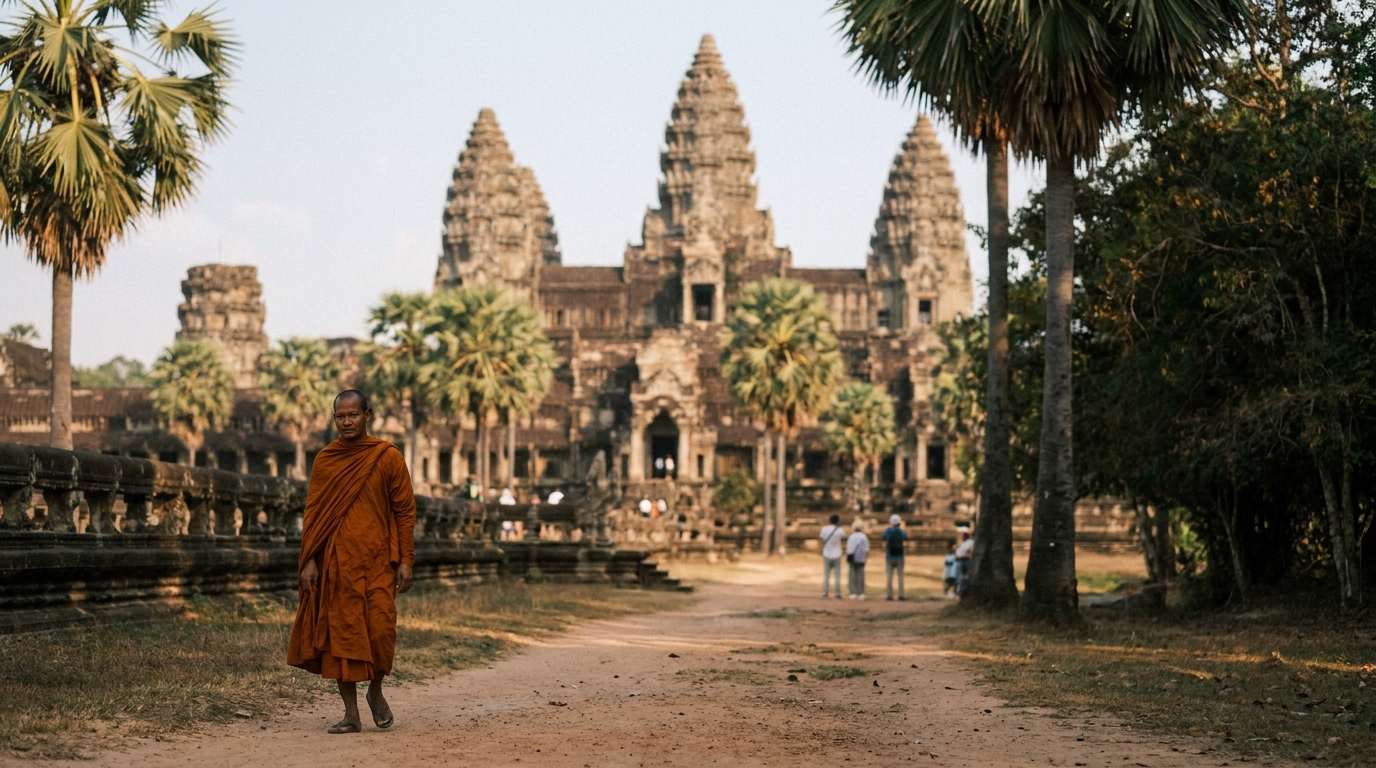
Siem Reap rewards visitors who show up with an open schedule and reasonable expectations — it is far more than a single temple stop. The city sits in northwestern Cambodia’s Siem Reap Province, roughly 314 km from Phnom Penh, and functions as the access point for the Angkor Archaeological Park, a UNESCO World Heritage Site covering 400 square kilometers of temples, hydraulic networks, and ancient urban infrastructure built between the 9th and 15th centuries.
Beyond Angkor, the city itself has expanded rapidly since 2019. The newly developed Old Market Quarter and the Night Market corridor near Pub Street draw visitors with Khmer street food, craft beer bars, and live traditional dance performances. Day trips reach floating villages on Tonle Sap Lake, ox-cart villages, and countryside cycling routes through rice paddies that most tourists skip entirely.
Tourism numbers are climbing again after the COVID-era collapse. The new Siem Reap Angkor International Airport (SAI) — located 51 km from the city center — opened in November 2023 with 12 gates and a handling capacity of 7 million passengers per year (Cambodia Airports, 2023). Budget airlines including AirAsia and VietJet now serve the route alongside full-service carriers, making it cheaper and more direct to reach than at any point in the last decade.
For 2026, the major change for international travelers is the digital arrival card system, which replaced paper forms in 2024 and now integrates with the Cambodia e-Visa portal. If you hold an e-Visa or arrive from a visa-exempt country, immigration processing at SAI now takes under 10 minutes on average (Ministry of Interior, Cambodia, 2025).
The 3-Day Siem Reap Itinerary
The plan we use ourselves — sent straight to your inbox.
- Day-by-day route
- Where to stay
- Real 2026 costs
Free · No spam · Unsubscribe anytime
Getting to Siem Reap: Flights, Buses, and Overland Options
Related: Bali travel guide.
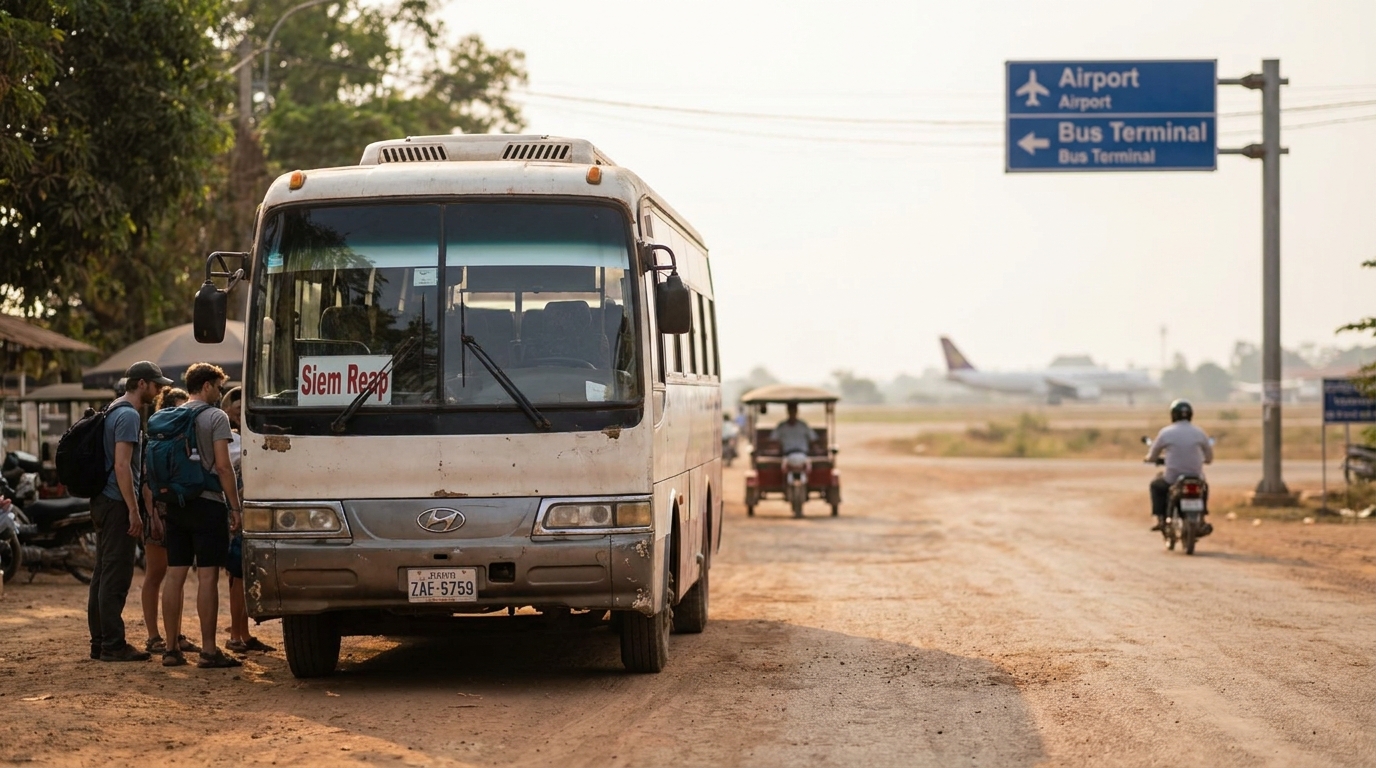
Getting to Siem Reap has never been more straightforward, with multiple transport modes to suit every budget and schedule. The most convenient option for most international travelers is a direct flight into Siem Reap Angkor International Airport (SAI), though overland routes from Bangkok and Ho Chi Minh City remain popular and significantly cheaper.
By Air You can compare flights on Aviasales to find the cheapest dates and routes.
From Bangkok (Don Mueang), budget carriers operate the 75-minute flight for as low as $35–$55 USD one-way when booked 4–6 weeks in advance. Singapore to SAI runs approximately $90–$130 USD on budget airlines. Kuala Lumpur connections start around $60 USD. Full-service carriers including Thai Airways and Cambodia Angkor Air typically charge $130–$220 USD on the same routes but include checked baggage.
By Bus from Bangkok
The overland Bangkok-to-Siem Reap bus takes 10–13 hours total including the Poipet–Aranyaprathet border crossing. Giant Ibis and Mekong Express are the two operators most recommended by long-term travelers for their air-conditioned coaches, reliable schedules, and border crossing assistance. Fares run $25–$35 USD one-way. Book at least 24 hours ahead during high season (November–March).
By Bus or Van from Ho Chi Minh City
The southern route via Moc Bai–Bavet border takes 8–10 hours. Phnom Penh Sorya and Mekong Express both serve this corridor with daily departures. One-way tickets cost $18–$28 USD. Many travelers combine this with a Phnom Penh stopover: HCMC to Phnom Penh (5–6 hrs, $12–$18 USD), then Phnom Penh to Siem Reap (6 hrs, $10–$16 USD by bus or $35–$45 USD for an express van).
From the Airport to City
The new SAI airport sits 51 km from the city center — about 40–50 minutes by car in normal traffic. Official airport taxis charge a fixed $30 USD. Ride-hailing via PassApp (Cambodia’s dominant ride-hailing app) costs $20–$25 USD for a sedan. Some mid-range and upscale hotels offer complimentary airport transfers — worth checking when you book via Booking.com or Agoda.
We strongly recommend picking up an Airalo Cambodia eSIM before landing — a 7-day 3GB plan costs around $5 USD and works the moment you clear immigration.
Angkor Archaeological Park: Tickets, Logistics, and Temple Strategy
Related: Da Nang travel guide.
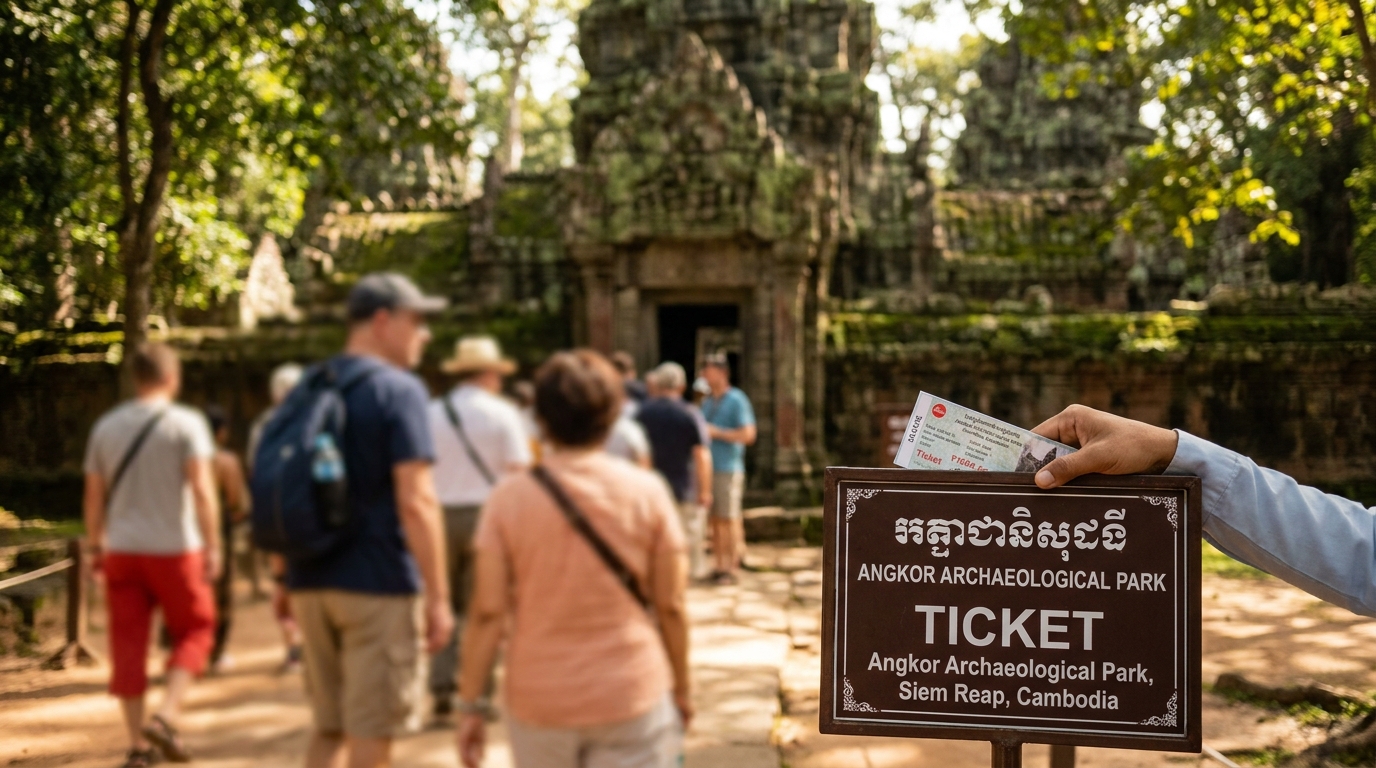
Angkor is the reason most people come to Siem Reap, and planning this part of your trip properly determines whether you leave exhausted or exhilarated. The park operates under a fixed ticket system with no discounts or promotions.
Current Ticket Prices (Angkor Enterprise, 2025)
| Pass Type | Price (USD) | Valid For |
|---|---|---|
| 1-Day Pass | $37 | Any single day within 7 days of purchase |
| 3-Day Pass | $72 | Any 3 days within 10 days of purchase |
| 7-Day Pass | $102 | Any 7 days within 1 month of purchase |
Tickets must be purchased at the official Angkor Enterprise ticketing center on the road into the park — cash (USD or KHR) and credit cards accepted. Passes are not sold inside the park or at temples. Children under 12 enter free.
Which Pass to Buy
We recommend the 3-day pass for most first-time visitors. One day is genuinely not enough to see the main circuit without rushing, and the third day lets you reach outlying temples like Banteay Srei (37 km northeast) or Beng Mealea (68 km east) without sacrificing time at the core sites.
Temple Priority List
The Big Three — Angkor Wat, Angkor Thom/Bayon, and Ta Prohm — deserve at minimum half a day each. Angkor Wat faces west, making early-morning visits (5:30–7:00 AM) ideal for photos when the reflecting pools are calm and tour groups are absent. Bayon’s 216 carved stone faces are best appreciated mid-morning (8:00–10:00 AM) before heat sets in. Ta Prohm, famous for its tree-root-engulfed towers, is most crowded 9:00 AM–1:00 PM; arrive before 8:30 AM or after 3:00 PM.
How to Get Around the Park
Most travelers hire a tuk-tuk driver for the day at $18–$25 USD, which covers the Small Circuit (Angkor Wat, Angkor Thom, Ta Prohm, Banteay Kdei). Tuk-tuk drivers stationed at the Old Market are reliable and know the park well. For the Outer Circuit or outlying temples, negotiate a full-day rate of $30–$40 USD. E-bikes rent for $10–$15 USD/day and are a satisfying option for the Small Circuit if you prefer independence. We also recommend booking a guided sunrise Angkor Wat tour through Klook — these depart at 5:00 AM, include skip-the-line ticket pickup assistance, an English-speaking guide, and cost around $35–$45 USD per person.
For a deep-dive on individual temples, see our Angkor Wat temple guide.
The 3-Day Siem Reap Itinerary
Hour-by-hour plan, where to stay and what it really costs — free PDF.
Free · No spam · Unsubscribe anytime
Find your Siem Reap hotel on the map
Live prices from Booking & Airbnb — tap a pin to compare stays around Pub Street and the Old Market and beyond.
Where to Stay in Siem Reap: Hotels for Every Budget
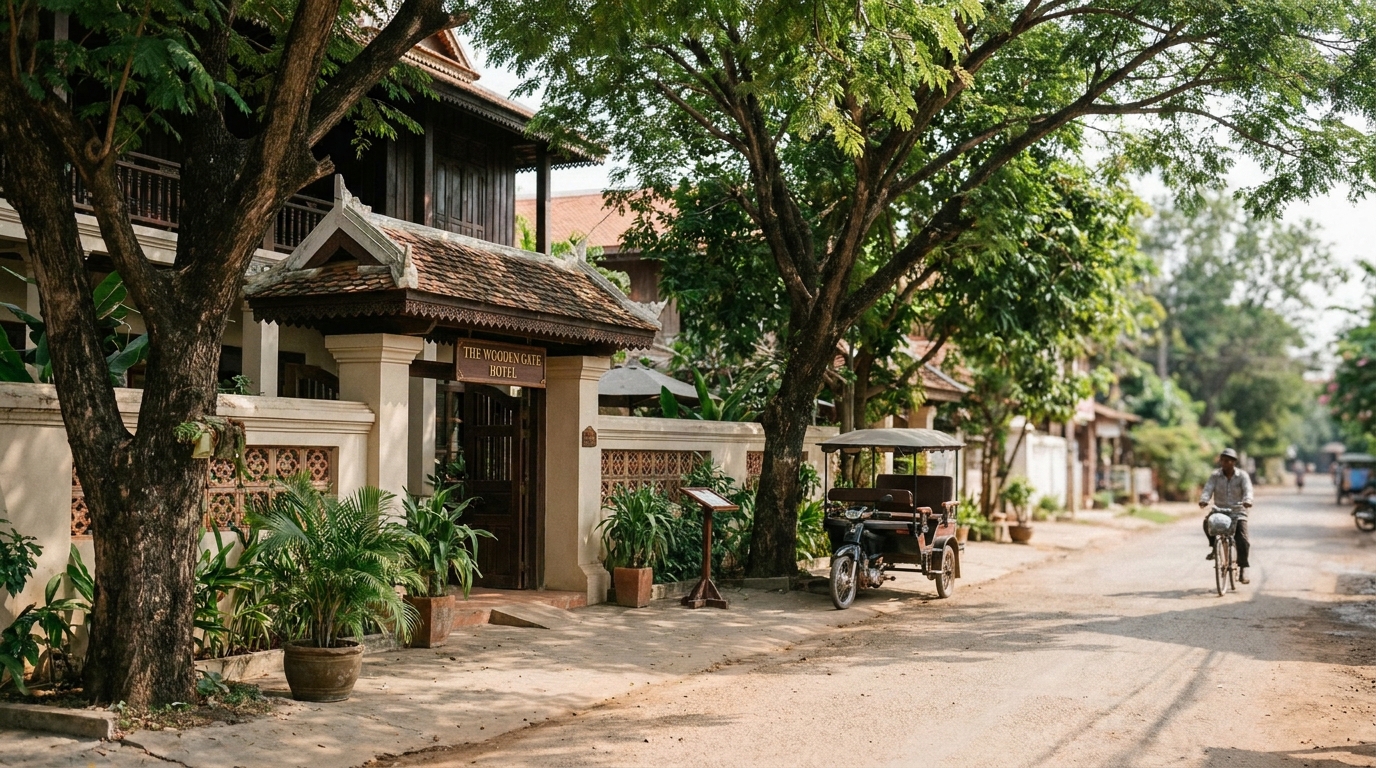
Siem Reap has one of the most diverse accommodation markets in Southeast Asia, ranging from $6 dorm beds to $500-per-night resort villas. The city’s accommodation hub falls within a 3 km radius of the Old Market, putting you within tuk-tuk or cycling distance of Pub Street, the Night Market, and the road leading to Angkor.
Budget (Under $25/night)
Guesthouses and boutique hostels cluster along the streets west of Pub Street. Mad Monkey Hostel Siem Reap runs $8–$15 USD per dorm bed and is one of Southeast Asia’s best-reviewed party hostels. Onederz Hostel targets social travelers with a rooftop pool and dorm beds from $10 USD. Private rooms at quality guesthouses run $18–$25 USD and typically include air conditioning, Wi-Fi, and breakfast.
Mid-Range ($50–$120/night)
This bracket delivers serious value in Siem Reap. Viroth’s Hotel (4-star boutique, pool, spa) consistently earns 9.2+ ratings on Booking.com at $65–$90 USD/night. Shinta Mani Wild’s city sibling, Shinta Mani Angkor, is a stylish colonial-era property at $110–$140 USD. Park Hyatt Siem Reap edges into mid-range during shoulder season (April–June, September–October) at $120–$160 USD.
Luxury ($150+/night)
Amansara — 24 suites in a converted 1960s royal guesthouse — remains the most exclusive option in the country at $900+ USD/night. More accessible luxury properties include Angkor Palace Resort & Spa ($150–$200 USD), Belmond La Résidence d’Angkor ($250–$380 USD), and Rosewood Phnom Penh’s Siem Reap counterpart, due to open its new property in late 2026.
Search and compare current rates on Booking.com or Agoda — both platforms frequently offer member discounts of 10–15% for direct app bookings. For a full neighborhood-by-neighborhood breakdown, read our where to stay in Siem Reap guide.
Food and Nightlife: What to Eat and Where to Go
Related: best food in Siem Reap.
Siem Reap’s food scene punches well above its weight for a city of its size, and eating well here costs almost nothing by Western standards. The Khmer cuisine is distinct from Thai and Vietnamese cooking — less heat, more gentle sweetness from palm sugar and coconut, and a heavy reliance on freshwater fish from Tonle Sap Lake.
Must-Eat Khmer Dishes
Fish Amok is Cambodia’s national dish — a steamed curry mousse of freshwater fish, coconut milk, and kroeung spice paste served in a banana leaf. Expect to pay $3–$6 USD at local restaurants, $8–$12 USD at upscale venues. Lok Lak (stir-fried beef or chicken with lime-pepper dipping sauce over rice) runs $3–$5 USD. Nom Banh Chok — rice noodles in a light green fish-herb broth — is the breakfast staple; vendors sell bowls for $1–$1.50 USD at the Old Market.
Where to Eat
The Old Market (Phsar Chas) and the surrounding streets are ground zero. Marum Restaurant (training restaurant for at-risk youth, mains $6–$10 USD) and Cuisine Wat Damnak (tasting menu, $30–$45 USD, reservations essential) represent opposite ends of the quality spectrum. For street food, the Night Market food stalls near the Siem Reap River offer grilled skewers, fried insects (optional), and fresh fruit for $0.50–$2 USD per item.
Nightlife
Pub Street, a 200-meter strip lined with bars and clubs, drives Siem Reap’s after-dark scene. The Strip, Angkor What? Bar, and Mezz host live music most nights. Happy-hour beer runs $0.75–$1.50 USD at standard bars; cocktails average $4–$6 USD. The scene picks up after 9:00 PM and runs until 2:00–3:00 AM. The Temple Club on Pub Street doubles as a dinner spot with live Apsara dance performances from 7:30 PM — worth the $2–$3 USD cover charge for first-timers.
Day Trips and Tours from Siem Reap
Siem Reap makes an excellent base for day trips into the surrounding countryside — Tonle Sap Lake, remote temples, and village tourism all fall within 1.5 hours of the city.
Tonle Sap Floating Village
Tonle Sap is Southeast Asia’s largest freshwater lake and a UNESCO Biosphere Reserve. Kompong Phluk (35 km southeast of Siem Reap) is the most visited floating village — enhanced wooden stilt houses rise 6–8 meters above the water during dry season, creating an otherworldly landscape. Boat tours depart from Chong Khneas (15 km south) and Kompong Khleang (56 km east, less crowded). Expect to pay $20–$35 USD for a half-day guided tour including transport. Book a vetted Tonle Sap floating village tour on Klook to ensure the experience includes a knowledgeable English guide and respects responsible tourism guidelines.
Banteay Srei Temple
Located 37 km northeast of Siem Reap (about 50 minutes by tuk-tuk), Banteay Srei is regarded by many art historians as the finest example of classical Khmer decorative carving. Built in 967 CE in pink sandstone, it is dramatically smaller than Angkor Wat but far more intricate at close range. Entry is covered by your Angkor pass. Combine this with a visit to the Landmine Museum (2 km away, $5 USD entry) for important historical context.
Beng Mealea Temple
At 68 km east of Siem Reap, Beng Mealea is a 12th-century temple complex the size of Angkor Wat’s outer enclosure — but almost entirely unrestored and covered in jungle vegetation. The experience is atmospheric and physically demanding. Entry is $5 USD (separate from Angkor pass). Guided day trips from the city cost $45–$65 USD per person. See our full best day trips from Siem Reap guide for route planning and additional options.
Countryside Cycling Tour
Half-day cycling tours through the countryside villages southwest of Siem Reap cost $20–$30 USD via operators like Grasshopper Adventures. Routes pass sugar palm farms, silk weaving cooperatives, and irrigation canals built by Angkor-era engineers. This is one of the most recommended activities on Klook’s Siem Reap tour listings for travelers looking beyond temples. For more curated options, our best tours in Siem Reap guide covers all major categories.
Siem Reap Travel Budget: What Things Actually Cost
Related: Siem Reap travel cost.
Siem Reap is one of the most affordable major tourist destinations in Southeast Asia when you understand how money flows in the city. USD is universally accepted alongside Cambodian Riel (KHR) — most prices are quoted in dollars, and change is often given in a mix of both currencies.
| Expense | Budget | Mid-Range | Upscale |
|---|---|---|---|
| Accommodation (per night) | $8–$25 | $50–$120 | $150–$400+ |
| Meals (per day) | $8–$15 | $20–$40 | $50–$100 |
| Tuk-tuk (full day) | $18–$25 | $25–$35 | $40–$60 |
| Angkor pass (3-day) | $72 | $72 | $72 |
| Tours/activities (per day) | $0–$25 | $25–$60 | $60–$200 |
| Daily total (approx.) | $45–$60 | $100–$160 | $200–$500+ |
ATMs in the Old Market area dispense USD directly. ANZ Royal Bank and Canadia Bank charge the lowest withdrawal fees ($4–$5 USD per transaction). Currency exchange booths near the Night Market offer better rates on USD-to-KHR than most hotels. Credit cards are accepted at mid-range hotels, major restaurants, and larger tour operators; small guesthouses, street food vendors, and tuk-tuk drivers operate cash-only.
For a complete breakdown by travel style, our Siem Reap travel budget guide covers daily costs in more detail, including visa fees, SIM cards, and tipping norms.
Practical Information: Visas, Health, and Getting Around
Getting the logistics right before you arrive saves time and avoids unnecessary stress. Here is the current practical reality for visiting Cambodia in 2026.
Visas
Citizens of most Western countries, Australia, and the US can obtain a Cambodia e-Visa online at $30 USD (30-day single entry). Processing takes 3 business days. The e-Visa is accepted at Siem Reap Angkor International Airport, Phnom Penh International Airport, and most major land border crossings. Visa-on-arrival is still available at SAI for nationalities not supported by the e-Visa system, also at $30 USD. ASEAN citizens do not require a visa. Always check the official evisa.gov.kh portal for the latest country-specific rules.
Health Precautions
Malaria risk in Siem Reap city and Angkor park is very low (WHO, 2024) — prophylaxis is not generally recommended for city-and-temple trips. However, dengue fever is present year-round; use DEET-based repellent (30%+ concentration), especially at dawn and dusk. Drink bottled or filtered water only — tap water is not potable. Sun exposure is intense, particularly between April and June when temperatures reach 38–40°C; carry a 1-liter water bottle and reapply SPF 50 every 90 minutes in the park.
Travel insurance is non-negotiable. Costs for emergency evacuation from Cambodia start at $12,000 USD. Policies covering emergency medical repatriation are available from World Nomads and SafetyWing for $3–$6 USD/day. The nearest hospital with international-standard care is Royal Angkor International Hospital in Siem Reap (24-hour emergency), though serious cases may require evacuation to Bangkok.
Connectivity
Cellcard and Metfone offer 4G coverage across Siem Reap and the Angkor park. A local SIM card with 5–10 GB data costs $3–$8 USD and is sold at the airport and throughout the city. Alternatively, an Airalo Cambodia eSIM (no physical SIM required, activates immediately) is a hassle-free option for travelers who prefer to set up connectivity before departure. Airalo eSIM plans for Cambodia start at around $5 USD for 7 days/3 GB.
Getting Around the City
PassApp is the most reliable ride-hailing app for tuk-tuks and cars. Grab also operates in Siem Reap. Fixed-price tuk-tuks for short city trips run $2–$4 USD. Renting a bicycle ($2–$4 USD/day) or e-scooter ($8–$12 USD/day) is feasible for the city and the temple park — traffic is manageable outside of the 7:30–8:30 AM and 4:30–5:30 PM rush windows. For more transport options and tips, see our getting around Siem Reap guide.
Frequently Asked Questions
How many days do I need in Siem Reap?
We recommend a minimum of 3 full days — one day each for the Angkor Small Circuit, Angkor Thom and outlying temples, and a day trip (Tonle Sap, Banteay Srei, or Beng Mealea). Four to five days lets you relax the pace considerably and explore the city’s food scene properly without temple fatigue.
What is the best time of year to visit Siem Reap?
The dry season from November through March is peak season — temperatures stay between 24–32°C, humidity is lower, and skies are generally clear. November and February are the most popular months. April and May are brutally hot (38–40°C) but temples are quiet. June through October is wet season, with afternoon rain showers most days, lush green scenery, and the lowest hotel rates of the year.
Is Siem Reap safe for solo travelers?
Siem Reap is consistently rated one of the safer cities in Southeast Asia for solo travelers, including solo women. Violent crime against tourists is rare. The main concerns are petty theft (pickpocketing at the Night Market, especially), tuk-tuk scams, and commission-driven redirection to specific guesthouses or restaurants. Use PassApp or Grab for transport rather than flagging down random tuk-tuks, and you eliminate most scam exposure.
Do I need to dress modestly at Angkor?
Yes. All major temples at Angkor are active or historically sacred religious sites. Shoulders and knees must be covered to enter. Enforcement is strict at Angkor Wat, Bayon, and Preah Khan. Lightweight long pants and a breathable shirt are the practical solution — cotton or linen performs better than synthetics in 35°C heat. Sarongs can be rented or purchased at stalls outside the main gates for $2–$3 USD.
Can I drink tap water in Siem Reap?
No. Tap water throughout Cambodia is not safe to drink. Bottled water is widely available and cheap at $0.25–$0.50 USD per 1.5-liter bottle. Most mid-range and upscale hotels provide complimentary filtered water in reusable bottles. For environmental impact, consider carrying a filtered water bottle (LifeStraw, GRAYL) to reduce plastic use over a multi-day trip.
How much cash should I bring to Siem Reap?
Budget travelers should carry approximately $100–$150 USD in cash on arrival to cover the first 2 days before withdrawing from local ATMs. USD is universally accepted and prices are quoted in dollars. Keep small bills ($1, $5) for tuk-tuks and street food. ATM limits are typically $200–$300 USD per transaction; ANZ Royal Bank and Canadia Bank charge lower fees than foreign bank ATMs.
Is it worth hiring a private guide at Angkor?
For first-time visitors, a licensed private guide at Angkor is absolutely worth the $30–$50 USD full-day fee. A good guide provides historical context that transforms temples from impressive stone structures into legible narratives about Khmer civilization, religion, and hydraulic engineering. Book through APSARA-licensed guide associations or via your hotel to ensure official accreditation. Alternatively, booking a guided group tour through Klook is a cost-effective option for solo travelers and couples.
Conclusion
Siem Reap in 2026 is genuinely one of Southeast Asia’s best-value destinations — extraordinary history, accessible logistics, and a hospitality culture that rewards travelers who engage with it rather than just pass through. Whether you’re spending three intense temple-focused days or a leisurely week working through day trips and local restaurants, the city delivers a depth that few destinations can match at its price point.
Start with the 3-day Angkor pass, lock in your accommodation early if visiting between November and February, pick up an Airalo eSIM before you fly, and browse Klook’s Siem Reap tour listings for guided sunrise and day-trip options. For accommodation, compare prices across Booking.com and Agoda — both platforms run member-exclusive deals that can cut hotel costs by 10–20%.
If this is your first time in Cambodia, consider extending your trip with a 3-day Siem Reap itinerary or pairing it with the Cambodia 7-day itinerary that connects Siem Reap with Phnom Penh and the southern coast. However you structure your trip, Siem Reap will hold up its end of the bargain.