Bali vs Lombok: Which to Choose
By TravelguidestipUpdated 8 min readHow we earn
Hotel buttons open Stay22 (Booking.com, Agoda and others) and tour buttons open GetYourGuide. We may earn a commission at no extra cost to you.
Pick this if
Bali
You want nightlife, wellness retreats and a wide choice of restaurants.
See hotels in Bali →Pick this if
Lombok
You want to trek Mount Rinjani, surf uncrowded breaks and spend less.
See hotels in Lombok →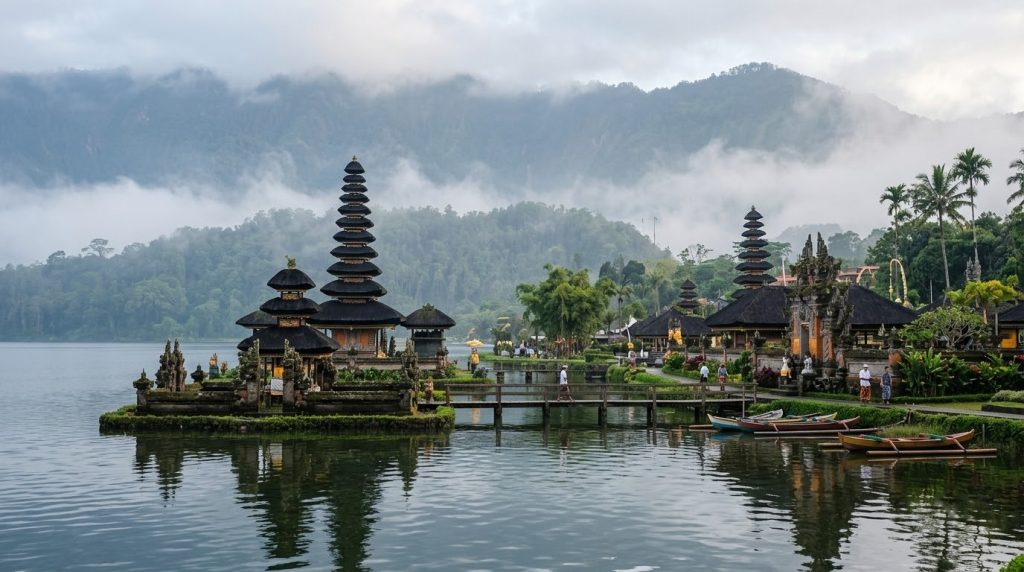
Bali vs Lombok comes down to one gap: Jetstar alone runs 101 direct return flights a week between Australia and Bali, while Lombok gets four, all via Darwin. Bali is the developed, infrastructure-heavy island with the nightlife, the wellness scene and the crowds, while Lombok is the quieter, rawer, and cheaper neighbour with emptier beaches and Mount Rinjani on its skyline.
Quick answer: Comparing Bali and Lombok? Open live hotel prices in each to weigh cost against location:
| Criterion | Bali | Lombok |
|---|---|---|
| Overall vibe | Developed, energetic, full of options | Quiet, raw, far fewer tourists |
| Direct flights from Australia | Multiple cities; Jetstar alone runs 101 return flights a week | Darwin only, via TransNusa, 4 return flights a week |
| Where to base yourself | Ubud, Seminyak, Uluwatu, Canggu | Senggigi, Kuta Lombok, or hop to the Gili Islands |
| Strongest for | Nightlife, wellness retreats, dining, surf schools | Mount Rinjani trekking, quiet beaches, surf breaks |
| Getting to the Gilis | Fast boat from Padang Bai or Sanur, roughly 1.5–2.5 hours | Shorter hop from Bangsal or Lombok’s own harbours |
| Day-to-day cost | Higher, driven by developed tourism infrastructure | Lower, since the tourism scene is thinner |
Bali for choice, ease and nightlife
Bali wins on choice, with four distinct base areas and the only Indonesian island Australians can reach non-stop from multiple cities.
Ubud covers rice-terrace views and yoga retreats, Seminyak covers beach clubs and fine dining, Uluwatu covers clifftop surf and sunset bars, and Canggu covers the digital-nomad cafe scene, so travellers can pick a base that matches the trip rather than compromising.
A full circuit of these areas is mapped out in this 7-day Bali itinerary, and the trade-offs between them are broken down in this guide to where to stay in Bali.
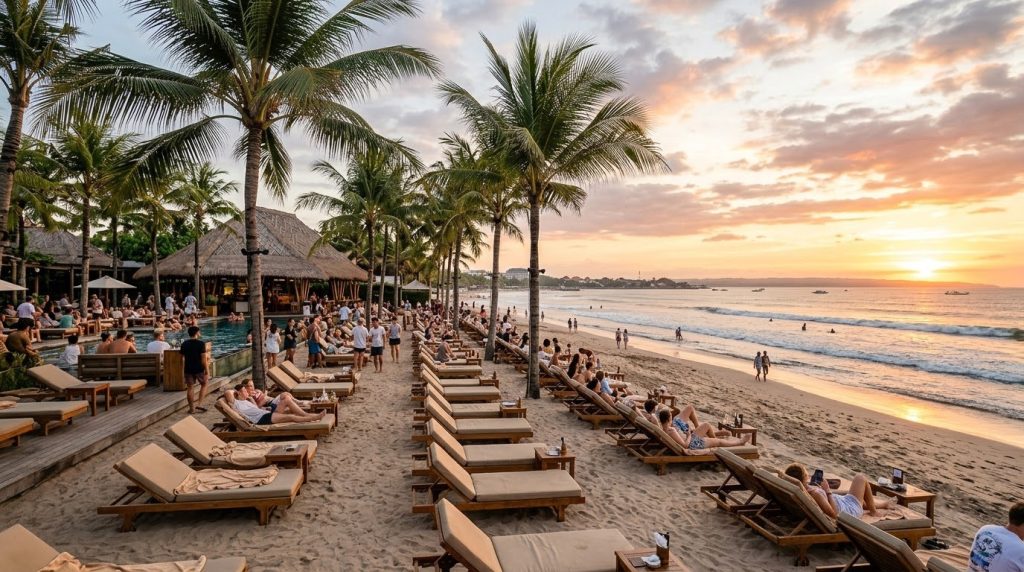
That same maturity is Bali’s downside for anyone chasing quiet. Seminyak and Canggu carry heavy traffic most of the day, Ubud’s central streets are dense with tour groups, and Kuta’s beachfront is built up wall to wall. Bali still has quieter corners, particularly along the Bukit Peninsula and the north coast near Lovina, but the island’s main draw is genuinely having everything close together, not having it to yourself.
The wellness and dining scenes reinforce that same point. Ubud alone carries a dense concentration of yoga studios, spas and healthy-eating cafes built specifically around long-stay wellness travellers, while Seminyak and Canggu hold Bali’s heaviest run of international restaurants, wine bars and beach clubs. Nowhere on Lombok currently matches that density, which is exactly why travellers chasing a packed itinerary of classes, treatments and restaurant bookings default to Bali first.
Lombok for quiet, nature and value
Lombok wins on space, with far fewer visitors sharing beaches that run for kilometres and a volcano most travellers only see from a distance. Mount Rinjani, Indonesia’s second-highest volcano, anchors a two-to-three-day trek that has no real equivalent on Bali, and the south coast around Kuta Lombok holds a string of surf breaks that stay uncrowded even in peak season.
Day-to-day costs also run lower, since Lombok’s tourism infrastructure hasn’t scaled to Bali’s level of package spending. A full route through the island sits in this Lombok itinerary, and the case for and against visiting is weighed properly in is Lombok worth visiting.
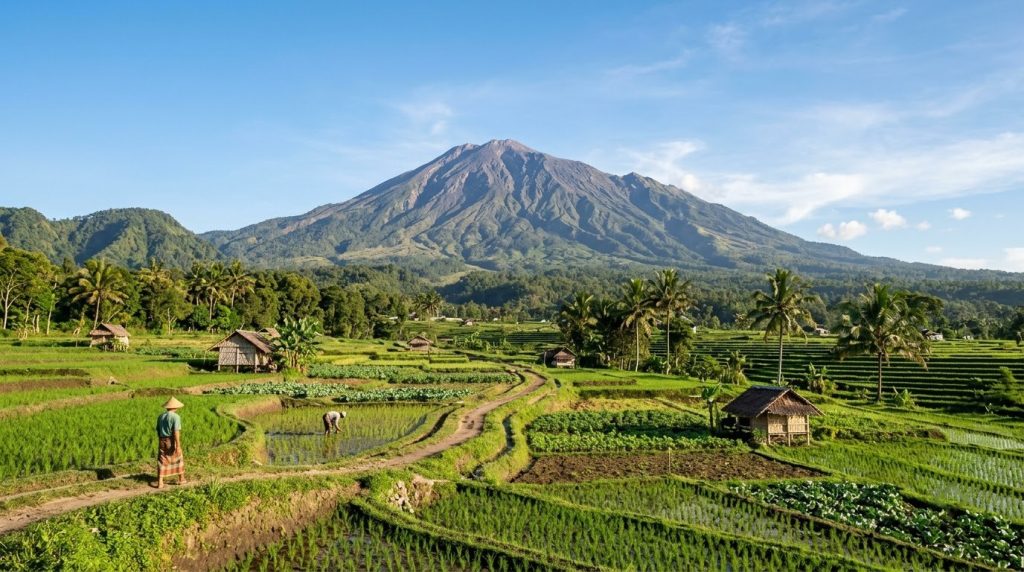
The flip side is thinner infrastructure. Paved roads thin out fast once you leave the main towns, medical facilities are more limited, and Lombok’s own airport has only the one direct Australian route, via Darwin, so most Australians still connect through Bali or another hub. Anyone who wants nightlife, a big restaurant scene, or backup options if a plan falls through will find Lombok noticeably thinner than Bali.
Rinjani itself explains most of Lombok’s pull for hikers. The standard route climbs to the crater rim for sunrise before dropping past hot springs on the way back down, and it draws trekkers who would otherwise have no reason to add an extra flight leg to their trip.
Combined with the surf breaks along the south coast, Lombok gives outdoor-focused travellers a reason to visit on its own terms, not just as an overflow from Bali.
The Gili Islands sit between them
The Gili Islands work as the bridge between the two, sitting just off Lombok’s northwest coast and reachable by fast boat from both islands.
From Bali’s Padang Bai or Sanur harbours, the crossing to Bangsal or the Gilis runs roughly 1.5 to 2.5 hours depending on the boat and conditions, with one-way fares from around AUD 39 · USD 28 (IDR 395,000).
From Lombok’s own harbours, the same crossing is shorter, which is why many travellers treat the Gilis as Lombok’s most accessible highlight rather than a separate destination.
Gili Trawangan, Gili Meno and Gili Air have no motorised vehicles, so getting around means walking, cycling or a horse-drawn cart. Trawangan carries most of the nightlife and dive shops, Meno is the quiet, low-key option, and Air sits between the two.
Because the boat link is so direct, a common pattern is a few days in Bali followed by a few days on the Gilis, using Lombok’s calmer waters as the reset before flying home through Denpasar.
Diving in Bali versus diving in Lombok
Bali’s diving centres on Nusa Penida, off the southeast coast, where Manta Point holds reef mantas at a cleaning station year-round at a beginner-friendly 10 to 12 metres, while Crystal Bay and the north-coast drift sites draw the mola-mola, or oceanic sunfish, between roughly July and October when cooler upwellings move through the area.
That same upwelling brings strong and sometimes unpredictable currents, including tearing and down-currents at several Nusa Penida sites, so Bali’s best diving rewards an experienced guide and, for the deeper or current-heavy sites, a diver with more than an entry-level certification.
The Gili Islands, off Lombok’s northwest coast, run calmer and shallower by comparison, with sites such as Turtle Heaven and Manta Point producing reliable sea turtle sightings most dives and gentler conditions that suit newly certified divers and snorkellers alike.
Lombok does not have a mola-mola season to compete with Nusa Penida, and its reef mantas are less of a guaranteed sighting than Bali’s cleaning-station mantas, but the trade-off is a far more forgiving learning environment, which is why most of the region’s dive schools and open-water certification courses cluster around the Gilis rather than Nusa Penida.
Divers chasing a specific big-animal encounter, mantas with near-certainty or a sunfish in season, lean toward Bali; divers who want an easier, turtle-rich introduction to diving lean toward the Gilis.
Nature and hiking beyond Rinjani
Mount Rinjani is Lombok’s headline hike, but the island’s waterfalls fill out a gentler nature day for anyone not trekking the volcano itself.
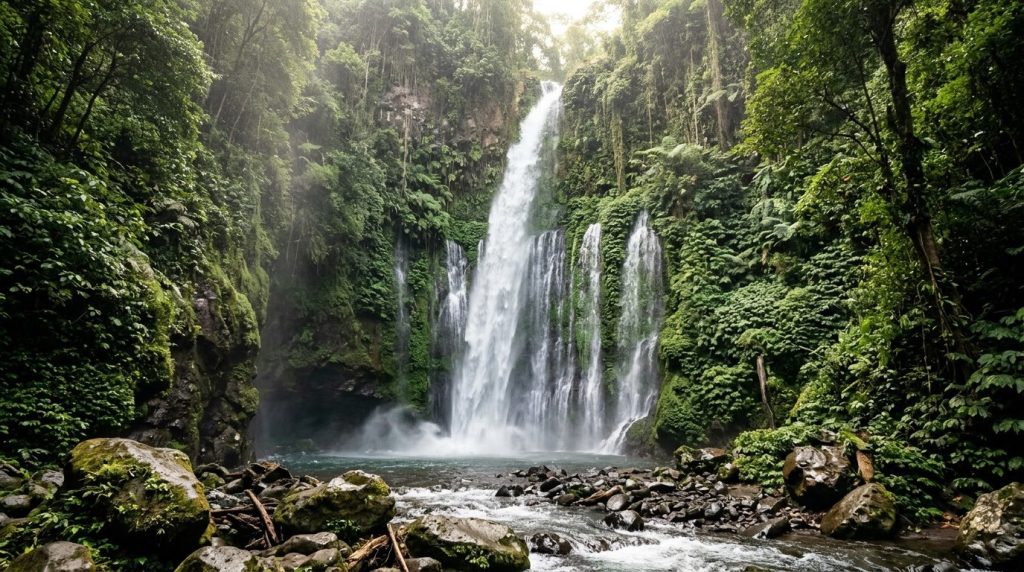
Sendang Gile and Tiu Kelep, both near Senaru on Rinjani’s lower slopes, are reached on the same forest trail and typically visited together, with an entrance fee of around AUD 1.60 · USD 1.15 (IDR 20,000) covering access to both falls; a guide is recommended for the Tiu Kelep leg since the path crosses the river more than once.
Bali has no direct equivalent at this scale, though its own rice-terrace walks around Ubud and Sidemen cover similar gentle, half-day nature territory without the volcano backdrop.
The gap between the two islands is really about scale rather than variety. Bali packs short nature walks, rice terraces and a handful of smaller waterfalls into day trips from any of its main bases, which suits travellers who want nature as one stop among several in a single day.
Lombok’s nature sites sit further apart and reward a traveller willing to dedicate a half or full day to one destination, whether that is the Senaru waterfalls, the Rinjani trek itself, or the south coast surf breaks, which is consistent with Lombok’s broader reputation as the slower, more spread-out of the two islands.
Both waterfalls sit a steep, sometimes slippery walk from the Senaru entrance, with Sendang Gile reached first in about 15 minutes from the entrance, and Tiu Kelep a further 30 to 45 minutes along forest paths and shallow river crossings.
Good shoes matter more here than at almost any other stop on either island, since the trail is wet underfoot year-round from the spray off both falls and the crossings themselves.
Travellers basing in Senggigi or Kuta Lombok should budget most of a day for the round trip from the coast, since the drive up to Senaru alone takes an hour or more depending on the starting point.
Cost and getting there
Getting there is where the two islands diverge most sharply. Australia has direct flights to Bali’s Denpasar airport from several cities, and Jetstar’s 101 weekly return services make it the busiest single carrier on the route. Lombok International Airport has just one direct Australian connection, a four-times-weekly Darwin route launched by TransNusa in 2026, so travellers flying from Sydney, Melbourne, Perth or Brisbane still need to connect, usually through Bali.
That flight gap shapes the rest of the trip. Landing in Bali and adding Lombok or the Gilis by boat is the easier build, since the fast boat crossing from Padang Bai or Sanur is short and runs multiple daily departures.
Flying into Lombok directly only makes sense for Darwin-based travellers or anyone prioritising Rinjani and the south coast surf over Bali’s nightlife and dining scene. Either way, the islands sit close enough that combining both is straightforward rather than a detour.
A domestic flight is the other option for the Bali-to-Lombok leg, and it is the fastest way to cover the gap. Garuda Indonesia, Lion Air, Wings Air, Citilink and TransNusa all fly the route between Denpasar and Lombok International Airport, with the flight itself running around 30 to 45 minutes in the air.
That makes a same-day switch between islands realistic for anyone short on time, though it skips the Gili Islands stopover that the fast boat naturally builds in along the way.
Choose Bali if / choose Lombok if
Choose Bali if the trip is built around nightlife, wellness retreats, a wide choice of restaurants, or flying non-stop from an Australian city other than Darwin. Choose Lombok if the priority is trekking Mount Rinjani, surfing uncrowded breaks, paying less for accommodation and food, or spending time somewhere that feels less built out than Bali’s main tourist strip.
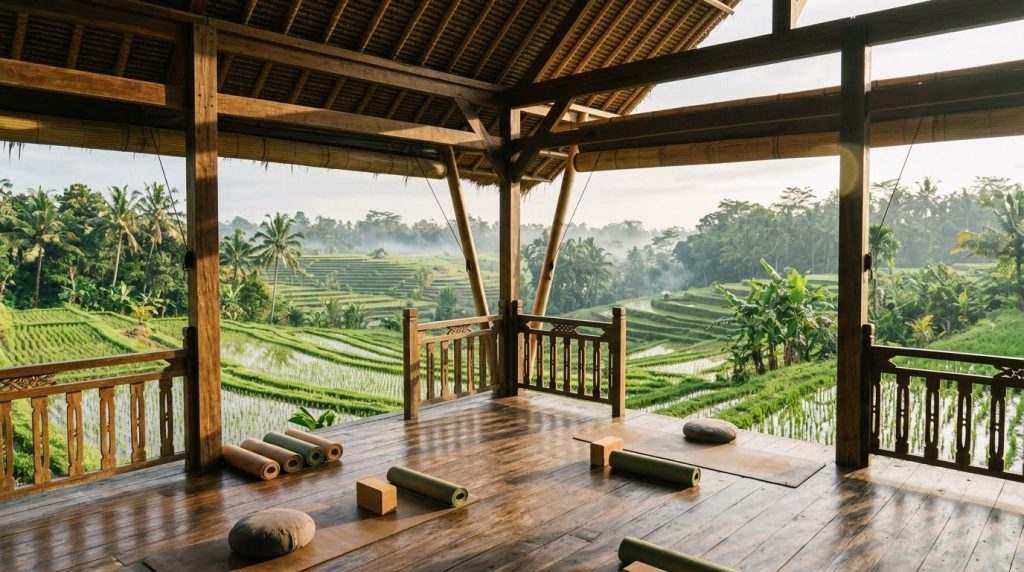
Most travellers who can spare the extra days end up doing both, using the short fast-boat link through the Gili Islands to get the developed base and the quieter one in a single trip.
Compare Bali and Lombok hotels on the map
Live prices from Booking, Airbnb and more — move the map or change dates to compare stays.