Bali vs Fiji: Which Tropical Holiday Suits Australians Better
By TravelguidestipUpdated 10 min readHow we earn
Hotel buttons open Stay22 (Booking.com, Agoda and others) and tour buttons open GetYourGuide. We may earn a commission at no extra cost to you.
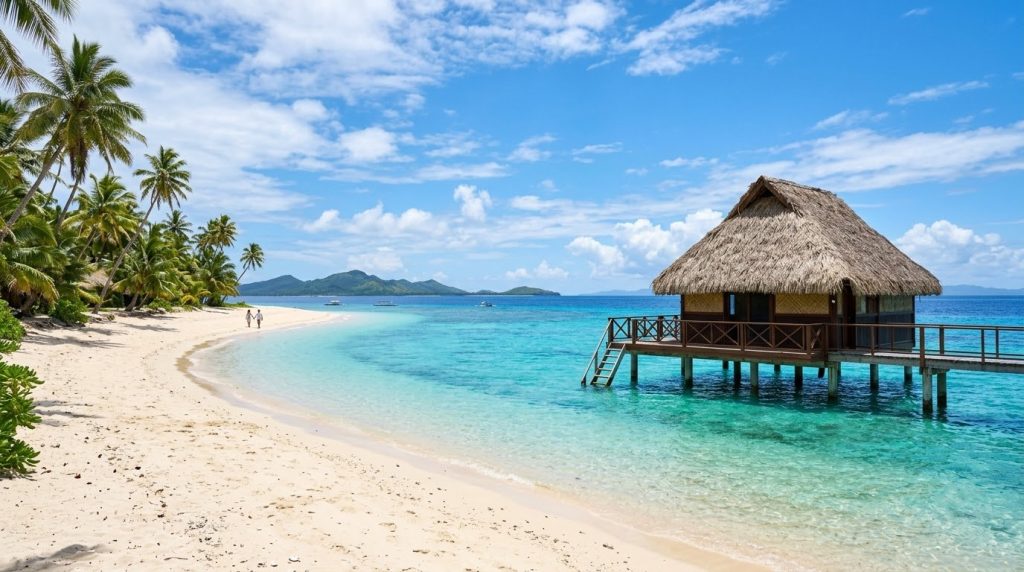
Bali wins for most Australians because a mid-range day costs AUD 110 · USD 79 against AUD 287 · USD 207 in Fiji, while Fiji wins for young families thanks to a 4-hour flight from Sydney instead of 6h15–6h40. Cheapest Jetstar returns from Sydney are almost identical, so the decision comes down to daily spend, flight length with kids, and whether you want temples or a kids club.
| Factor | Bali | Fiji |
|---|---|---|
| Direct flight from Sydney | 6h15–6h40 | About 4 hours |
| Jetstar return from Sydney (lowest listed) | AUD 507 · USD 365 | AUD 527 · USD 380 |
| Mid-range day, per person | AUD 110 · USD 79 | AUD 287 · USD 207 |
| Entry costs | AUD 64 · USD 45 (visa + levy) | Visa issued on arrival |
| Smartraveller level | Level 2, high degree of caution | Level 1, normal precautions |
| Wet season | November to April | November to April (cyclone season) |
| Best for | Couples, foodies, budget, culture | Young families, short breaks, reef lovers |
Flight time and fares from Sydney, Brisbane and Melbourne
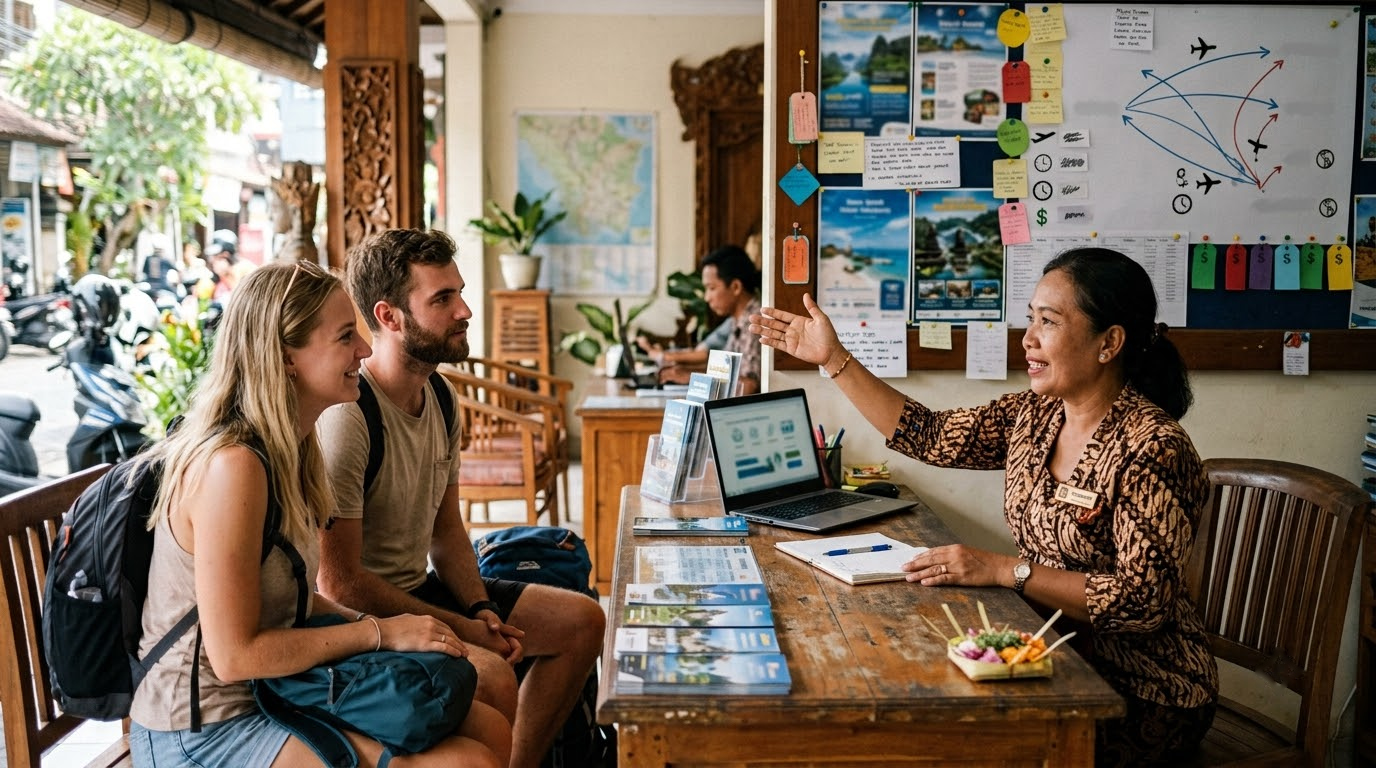
Sydney to Nadi takes about four hours direct, Brisbane is in the 3.5 to 4 hour range, and Melbourne runs 4 to 4h40. Bali is a longer haul: Sydney to Denpasar direct sits between 6h15 and 6h40, Melbourne about 6h20 and Brisbane about 6h30.
The lowest recent Jetstar returns were AUD 507 · USD 365 from Sydney, AUD 416 · USD 300 from Melbourne and AUD 487 · USD 351 from Brisbane to Bali. Sydney to Nadi showed Jetstar from AUD 527 · USD 380 return and Fiji Airways from AUD 579 · USD 417. Jetstar fares are carry-on only.
Cost per day: where your money actually goes
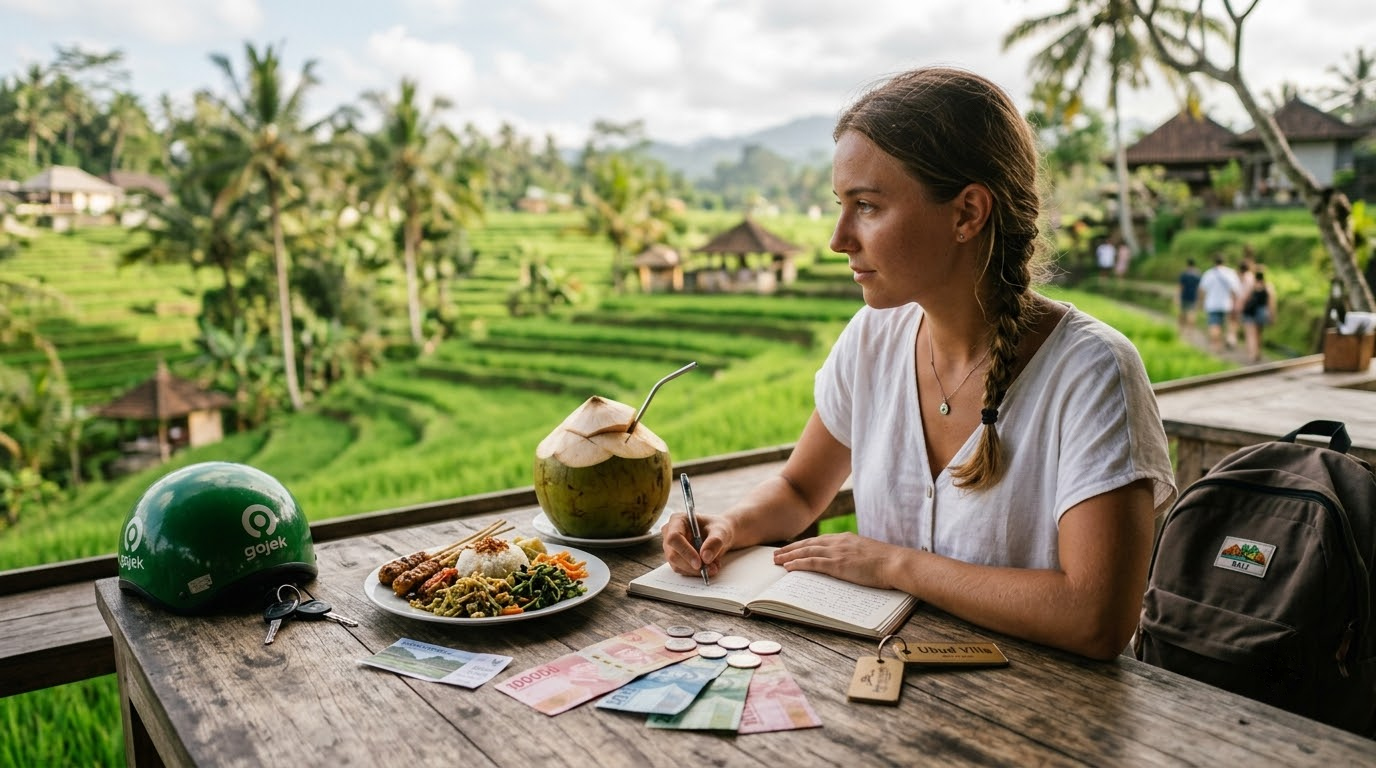
Budget Your Trip puts a mid-range Bali day at AUD 110 · USD 79 per person, against AUD 287 · USD 207 in Fiji. At the budget end it is AUD 40 · USD 29 in Bali versus AUD 122 · USD 88 in Fiji. Over 10 nights for a couple, that gap dwarfs the airfare.
Fiji resorts sit away from towns, so you eat where you sleep: Fiji Pocket Guide lists adult full-board meal plans at AUD 59–174 · USD 43–125 (FJD 95–280) per day, with kids’ full board at AUD 31–100 · USD 22–72 (FJD 50–160).
Bali has one extra entry cost Fiji does not: the e-Visa on Arrival at AUD 50 · USD 35 (IDR 500,000) plus the Bali tourism levy at AUD 14 · USD 10 (IDR 150,000), so AUD 64 · USD 45 per person. Fiji issues Australians a visa on arrival for stays under four months. Our full Bali travel guide breaks down Bali costs by area.
Family resorts or culture: two different holidays
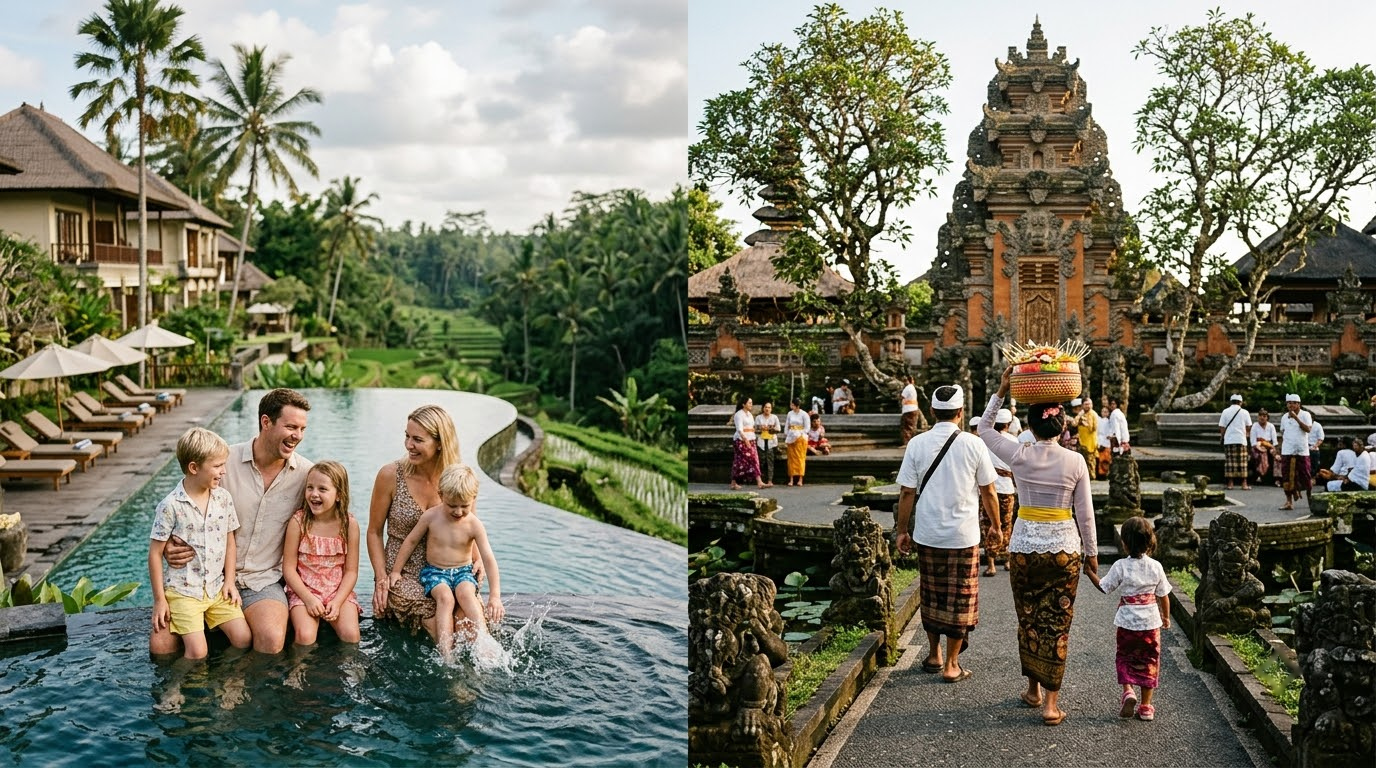
Fiji is built for families. Big resorts on Denarau, the Coral Coast and the Mamanuca islands run kids clubs, and several offer nanny services for under-threes. The default day is pool, beach, kids club, sunset drink.
Bali is a destination holiday. The reason to go is outside the resort gate: Hindu temple ceremonies, rice terraces around Ubud, warungs, markets and day trips. A Fijian village visit with a kava ceremony is a highlight, but there is less to fill a fortnight. Bored of resorts by day four? Choose Bali.
Beaches and snorkelling: Fiji’s reef wins
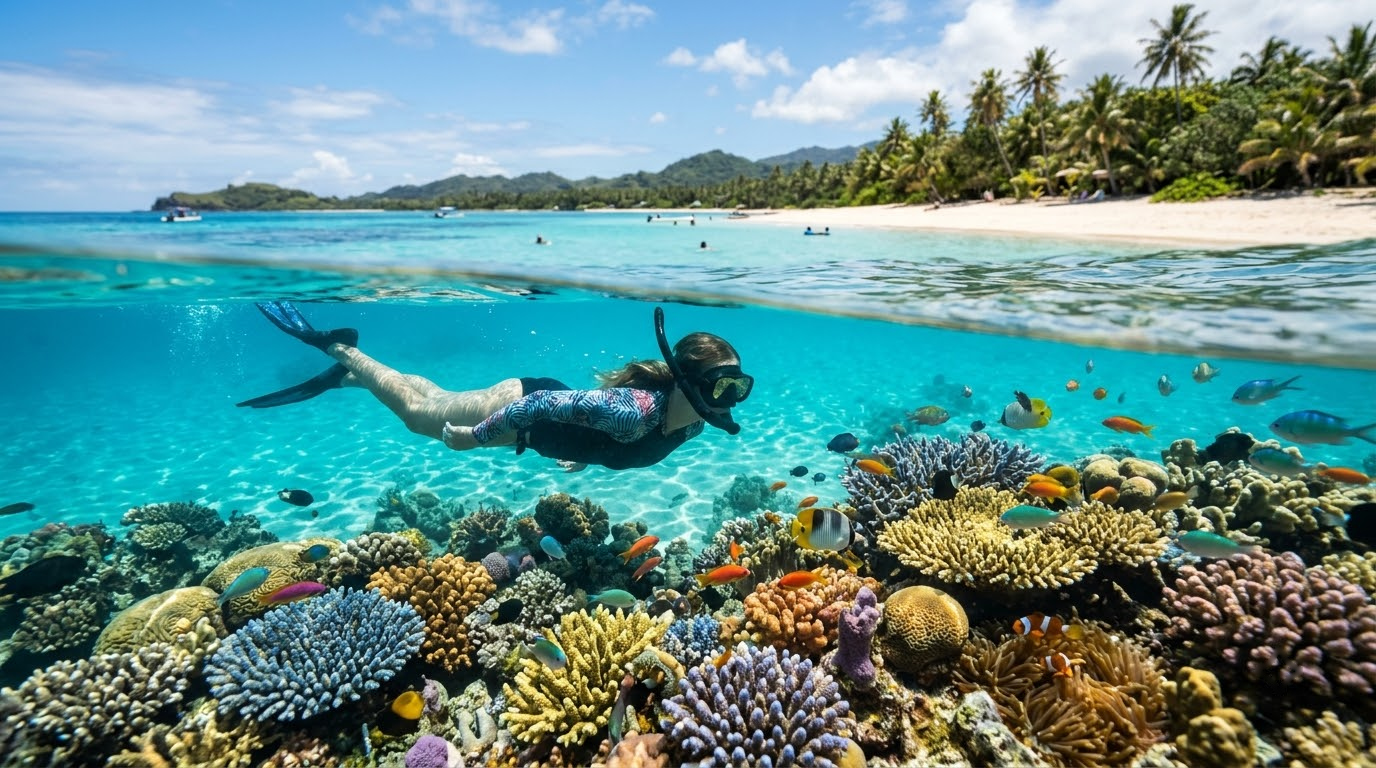
For snorkelling off the sand, Fiji is ahead. Jacques Cousteau called it the soft coral capital of the world, and the Rainbow Reef in the Somosomo Strait off Taveuni is the headline dive site.
Bali’s best snorkelling needs a drive or a boat. Amed and Menjangan Island in West Bali National Park have healthy coral, the Blue Lagoon at Padang Bai is calm enough for kids in a life jacket, and Nusa Penida has manta rays at Manta Point. Kuta, Seminyak and Canggu are surf beaches with strong currents, not swimming lagoons.
Wet seasons: they line up almost exactly
Both wet seasons run roughly November to April. Fiji’s cyclone season officially runs from 1 November to 30 April, peaking January to March. Bali’s wet season brings heavy afternoon downpours, with January usually the wettest month.
Christmas school holidays land in the wet in both places; the June-July holidays land in the dry in both. For month-by-month detail see the best time to visit Bali, and if pairing Bali with Lombok or Komodo, check the best time to visit Indonesia by region.
Safety and health: Smartraveller levels and Bali belly
As of 1 October 2026, Smartraveller’s Indonesia advice rates the country overall at “exercise a high degree of caution” (Level 2), last updated 11 September 2026. The advice flags terrorism risk in tourist areas, drink spiking and methanol poisoning cases in Bali and Lombok, and dengue and measles outbreaks including in Bali.
Smartraveller’s Fiji advice sits at “exercise normal safety precautions” (Level 1), last updated 22 July 2026, with opportunistic crime, an ongoing HIV outbreak declared in 2025, and reported typhoid and leptospirosis cases.
Day to day, Bali’s bigger risk is Bali belly: stick to bottled water, be choosy with ice and street food, and only drink spirits in reputable venues because of methanol. Fiji’s trade-off is the opposite: resort food is safe but repetitive, and outside Nadi and Denarau dinner often means the same resort restaurant all week.
Getting around once you’re there
Bali and Fiji solve local transport very differently. In Bali, the ride-hailing apps Grab and Gojek cover the whole south of the island and are usually cheaper than a hotel taxi, with an airport transfer to Sanur typically under AUD 16 · USD 12 (IDR 200,000). Metered taxis charge a flagfall of roughly AUD 0.40 · USD 0.30 (IDR 5,000) plus the same again per kilometre.
Scooter hire is common for confident riders, from about AUD 4 · USD 2.90 (IDR 50,000) a day, cheaper again by the week. An International Driving Permit is required to ride legally, and Bali’s traffic around Denpasar, Kuta and Canggu is dense enough that building in extra time between stops saves a rushed day.
Fiji works on a slower rhythm. Smaller islands are often compact enough to cover on foot or by bike, and inter-island ferries link the main tourist ports on a daily timetable. Remote resorts beyond that network sometimes run seaplane transfers, trading a half-day boat trip for a short flight at a higher price.
Around Nadi, share-taxis and resort transfers do most of the work: a share-taxi from a Nadi beach resort into town runs about AUD 5.10 · USD 3.70 (FJD 8), and on to the airport about AUD 7.70 · USD 5.50 (FJD 12).
Away from the resort strip, local buses are the cheapest option, with short hops costing a dollar or two in Fijian currency. Neither island relies on ride-hailing apps the way Bali does, so agree a fare with the driver before you get in if no meter is running.
Food and dining: what you’ll actually eat
In Bali, the everyday meal is a warung plate. Look for bebek betutu, a slow-cooked spiced duck, babi guling, suckling pig, and sate, alongside rendang brought over from Sumatra. Family-run warungs keep prices low, and the same dishes at a resort restaurant can cost several times more.
Ubud and the south coast also hold Bali’s higher-end dining scene, where tasting menus and wine lists push a dinner well past the cost of several warung meals combined. Night markets are the cheapest way to try a handful of dishes in one sitting, and a nasi campur plate of rice with several side dishes is the easiest cheap lunch to order anywhere on the island.
Fiji’s food culture centres on the lovo, an underground oven used for special occasions, and kokoda, raw fish marinated in lime juice and coconut cream, similar to a Pacific-style ceviche. Mud crab in coconut curry is a common restaurant dish on the main islands, and cassava and fresh coconut appear throughout the everyday diet.
Because most Fiji resorts sit away from towns, dinner is usually whatever the resort kitchen serves that night. Full-board and half-board meal plans are common for exactly this reason, and a la carte resort restaurants are priced closer to Bali’s upscale dining than to its warungs. If variety across many nights matters to your trip, Bali’s density of independent eateries gives you more choice than Fiji’s resort-centred dining.
Day trips and side excursions
From Bali’s east coast, speedboats to Nusa Penida leave mainly from Sanur and take about 30 minutes, with one-way tickets commonly AUD 10 to 12 · USD 7 to 9 (IDR 125,000 to 150,000). The island’s cliffs at Kelingking Beach and the manta rays near Manta Point are the main draws. Some operators push for more than the advertised fare, so confirm the price before boarding.
Inland, Ubud’s rice terraces, temples and markets make an easy half-day loop from the south coast resorts, and hiring a driver for the day is the simplest way to cover several stops without working out bus connections.
From Fiji’s Port Denarau, catamaran cruises run multiple times a day out to the Mamanuca islands. South Sea Cruises operates three daily departures that also drop guests directly at island resorts along the route, which makes a single island easy to reach without an overnight stay.
The Yasawa Islands, reached by the same style of catamaran service further north, add the Blue Lagoon and the Sawa-i-Lau limestone caves to the list, though the crossing takes longer and is more often booked as an overnight add-on than a single day trip.
Bali’s day trips are cheaper and easier to arrange on short notice, often bookable the evening before. Fiji’s day trips are usually booked ahead through a resort tour desk, and the boat crossing itself tends to be the main event rather than one stop among several.
Culture and etiquette
Visiting a Balinese Hindu temple means covering up. A sarong and sash are required at the entrance, and most temples rent them out for a small fee if you arrive without one. Shoulders should be covered, and women who are menstruating are traditionally asked not to enter.
Ceremony days can close parts of a temple with little notice, and Nyepi, the Balinese Day of Silence, shuts the entire island down once a year, including the airport, so check the date before booking a trip around it.
Fijian etiquette centres on the village rather than the temple. If you are invited into a village, shoulders and knees should be covered for both men and women, and a sulu, the local sarong, is often the easiest way to manage that. Hats and sunglasses are removed before entering a chief’s house.
A sevusevu, traditionally a gift of yaqona, the kava root, is the customary way to ask permission to enter a village, and most resort-run village tours already build this formality into the visit.
Kava itself, a mildly numbing ceremonial drink, is commonly shared with guests as a welcome. It is considered polite to accept at least a small serving rather than decline outright, and locals will usually explain the drinking ritual before it is passed around.
Verdict by traveller type
– Families with kids under 8: Fiji. Four-hour flights, kids clubs, calm lagoons and safe resort food outweigh the higher daily cost. – Families with teens: Bali. Surf lessons, waterparks and rafting beat another day at the pool. – Couples: Bali for villas, food and culture; Fiji only for a well-funded outer-island honeymoon. – Budget travellers: Bali, easily.
Your daily money goes more than twice as far. – First-timers overseas: Fiji for a stress-free week; Bali if you are comfortable with traffic, touts and a busier destination. – Snorkellers and divers: Fiji, for reef straight off the beach.
Where to stay in Bali or Fiji
Our hotel map covers Bali. The three areas worth knowing:
– Nusa Dua: gated resort enclave with calm, reef-protected beaches. The closest Bali gets to a Fiji-style family resort week. – Sanur: quiet, flat beachfront path and gentle water. Good for young kids and older travellers. – Ubud: jungle villas, rice fields and culture in the hills. Best for couples and second-week stays; no beach.
In Fiji, families generally base on Denarau or the Coral Coast for value, and couples head to the Mamanuca or Yasawa islands by boat from Port Denarau.
Find your Bali hotel on the map
Live prices from Booking, Airbnb and more — move the map or change dates to compare stays across Bali.
Frequently Asked Questions
Is Fiji or Bali cheaper for Australians?
Bali is far cheaper on the ground. Return fares are similar, AUD 507 · USD 365 to Bali and AUD 527 · USD 380 to Nadi on Jetstar from Sydney, but a mid-range day costs about AUD 110 · USD 79 per person in Bali against AUD 287 · USD 207 in Fiji.
Is Fiji or Bali better for families?
Fiji is better for families with young children. The flight from Sydney or Brisbane is about four hours instead of six-plus, resorts are built around kids clubs and nanny services, and lagoon beaches are calm. Bali suits families with teenagers.
Is it safer to go to Fiji or Bali?
Smartraveller rates Fiji at Level 1, exercise normal safety precautions, and Indonesia including Bali at Level 2, exercise a high degree of caution. Most Bali problems are stomach bugs, scooter accidents and petty theft. Fiji’s risks are mostly opportunistic crime and health issues such as typhoid and an ongoing HIV outbreak.
When is the best time to visit Bali and Fiji?
May to October is the best window for both, since each has its wet season from about November to April. Fiji’s wet season is also cyclone season, peaking January to March. That means the Australian winter school holidays are the driest time to go to either destination, while Christmas trips mean accepting some rain.