Disclosure: Some links in this guide are affiliate links. If you book or buy through them, we may earn a small commission at no extra cost to you — it helps keep our guides free.
Where to Stay in Lofoten: Best Areas & Rorbuer 2026
Deciding where to stay in Lofoten comes down to one question: do you want the postcard views or the shortest drives? The scenic south around Reine and Hamnoy holds the jagged peaks and red cabins you have seen in every photo, while central Leknes and the northern gateway of Svolvaer keep you closer to the airport, shops and the E10 highway that threads the whole archipelago together. The islands stretch roughly 150 kilometres end to end, and Svolvaer to Reine is 121 km, about two hours of driving, so your base genuinely shapes each day (Rome2rio, 2026).
This guide breaks down the five areas that most visitors choose between, explains what a rorbuer actually is and whether it is worth the premium, and lays out real 2026 nightly rates so you can match a base to your budget. We split our own week here between Hamnoy in the south and Svolvaer in the north, and the difference in daily driving was stark, so we have organised everything by area, by budget and by traveller type.
Key Takeaways
– Reine and Hamnoy (far south) hold the iconic scenery; the famous Eliassen Rorbuer in Hamnoy starts around EUR 180 per night, and Reine hotels start near USD 141 (Tripadvisor, 2026).
– Svolvaer is the practical northern gateway with the widest choice of restaurants and tours; harbourside rorbuer run about USD 150 per night.
– Leknes sits dead centre, roughly one hour from both Svolvaer and Reine, with the biggest supermarkets, an airport and Haukland beach just 15 minutes away.
– Rorbuer cabins are converted fishermen’s huts over the water; expect a two- or three-night minimum in peak summer season.
– Budget range is wide: cheap Lofoten hotels start near USD 85, mid-range rorbuer sit around USD 140 to 160, and hostels or campsite cabins are the cheapest beds on the islands (Tripadvisor, 2026).**** We spent three nights in a stilted rorbuer in Hamnoy and four in Svolvaer, and the split taught us more than any blog could. From Hamnoy the sunrise over Reinefjord was a two-minute walk, but a supermarket run meant a 40-minute drive to Leknes. In Svolvaer we traded the drama for convenience, and honestly slept better knowing the ferry, the airport bus and a dozen restaurants were within walking distance.
Find your Lofoten Islands hotel on the map
Live prices from Booking, Airbnb and more — move the map or change dates to compare stays around Lofoten Islands.
Where should you stay in Lofoten?
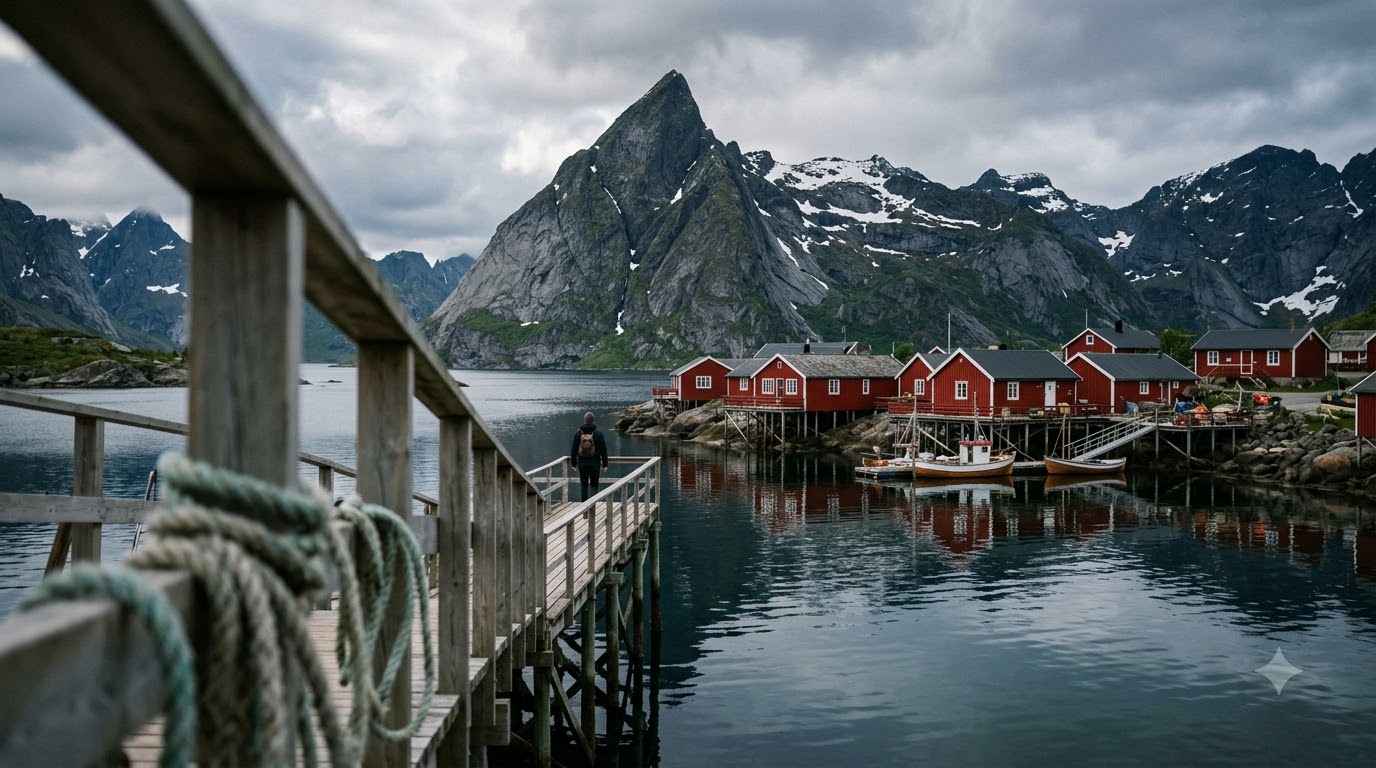
Stay in the south (Reine, Hamnoy, Nusfjord) if scenery is your priority, and in the centre or north (Leknes, Svolvaer) if you value short drives, shops and flexibility. Most first-time visitors on a week-long trip do both: a few nights south for the views, then a few nights north to cut down driving on travel and activity days.
Here is how the main bases compare at a glance:
- Reine / Hamnoy: The most photographed corner of Lofoten; best for hikers and photographers who want peaks and rorbuer outside the window.
- Svolvaer: The largest town and transport hub; best for first-timers, tour-takers and anyone arriving by ferry or plane.
- Henningsvaer: A tiny village strung across islets, nicknamed the “Venice of Lofoten”; best for a characterful one- or two-night stop.
- Leknes: Geographic centre with the most services; best for families and self-caterers who want to minimise driving in every direction.
- Ballstad / Stamsund: Quieter working fishing villages; best for travellers wanting local atmosphere and lower prices.
We link the classic north-south split into our Lofoten Islands itinerary, which pairs each base with the hikes and beaches nearest to it.
The 5-Day Lofoten Itinerary
The plan we use ourselves — sent straight to your inbox.
- Day-by-day route
- Where to stay
- Real 2026 costs
Free · No spam · Unsubscribe anytime
What are rorbuer and are they worth it?
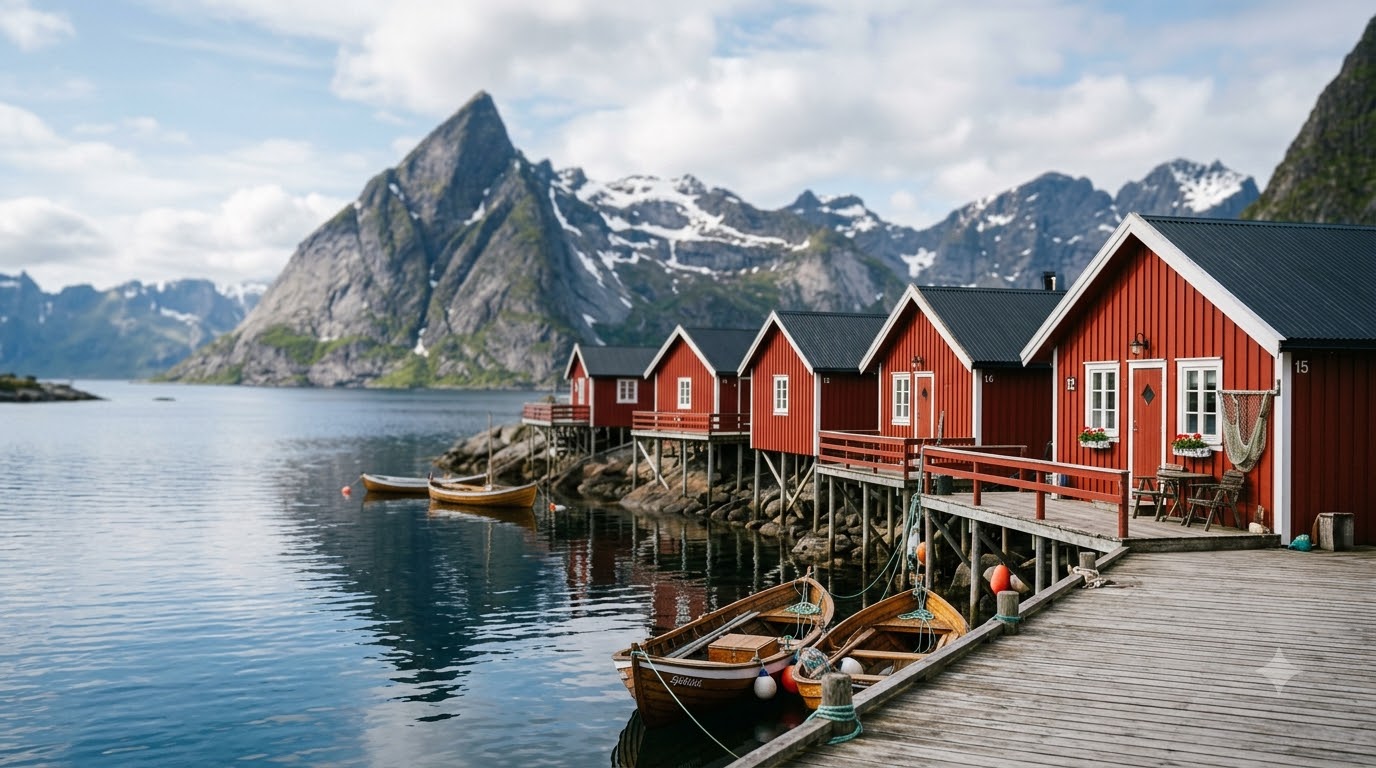
A rorbuer is a traditional fishermen’s cabin, usually painted deep red and built on stilts at the water’s edge, and today most have been converted into self-catering holiday lodging. They are the signature Lofoten stay for good reason: you sleep directly over the harbour, often with a full kitchen, a wood-panelled interior and a view straight onto the fjord. They cost more than a standard hotel room, but the setting is the whole point.
What to know before you book a rorbuer:
- Condition varies widely from rustic huts with original 19th-century timber to fully modernised or newly built units, so read recent reviews and photos carefully.
- Most sleep 4 to 6 people, which makes them strong value for families or two couples splitting the cost.
- Kitchens are standard, a real saving in Norway where a restaurant main easily runs NOK 250 to 400 (roughly USD 24 to 38).
- Minimum stays apply in July and August, commonly two or three nights at the popular clusters.
- Book 6 to 9 months ahead for summer and for the winter aurora season; the best-located cabins in Hamnoy and Reine sell out first.
We think a rorbuer is worth at least a couple of nights of any Lofoten trip, even if you offset the cost with cheaper hostels or campsite cabins elsewhere. On our last visit the shared kitchen and the light off the water at 11pm made the higher rate feel earned rather than wasted.
Reine and Hamnoy: the postcard south
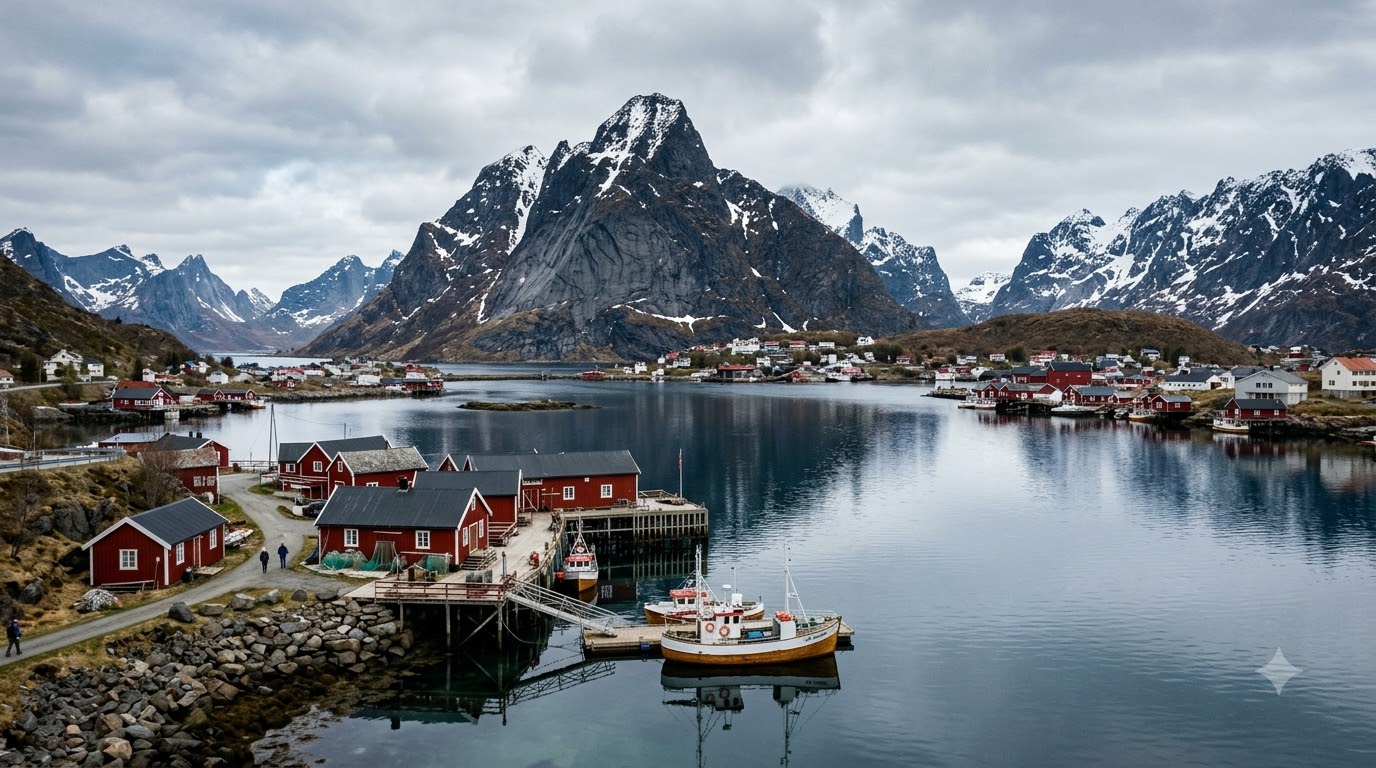
Base yourself in Reine or neighbouring Hamnoy if you came to Lofoten for the scenery above everything else. Reine is regularly voted Norway’s most beautiful village, sitting beneath a wall of granite peaks mirrored in the still water of Reinefjord, and Hamnoy, five minutes north, frames the single most photographed row of red cabins in the country.
This is a base for hikers and photographers. The Reinebringen hike, with its 1,500-plus stone steps to a viewpoint over the fjord, starts near the village, and boat trips into the Reinefjord and out to Bunes and Kvalvika beaches leave from the harbour. The trade-off is services: Reine has a small shop and a couple of restaurants, but the nearest supermarket run and fuel stop is Leknes, 36 km and about 40 minutes away.
Price and stay notes for the far south:
- Eliassen Rorbuer (Hamnoy): the classic stilted cabins, from around EUR 180 per night in season.
- Reine hotels and rorbuer: start near USD 141 per night (Tripadvisor, 2026).
- Nusfjord Arctic Resort: a preserved fishing village 30 minutes north with heritage cabins from about USD 139 per night.
- Minimum stay: typically two to three nights at peak, so build a block of southern nights rather than a single overnight.
For the trails and viewpoints that make this base worthwhile, see our roundup of the best things to do in Lofoten.
The 5-Day Lofoten Itinerary
Hour-by-hour plan, where to stay and what it really costs — free PDF.
Free · No spam · Unsubscribe anytime
Svolvaer: the gateway town
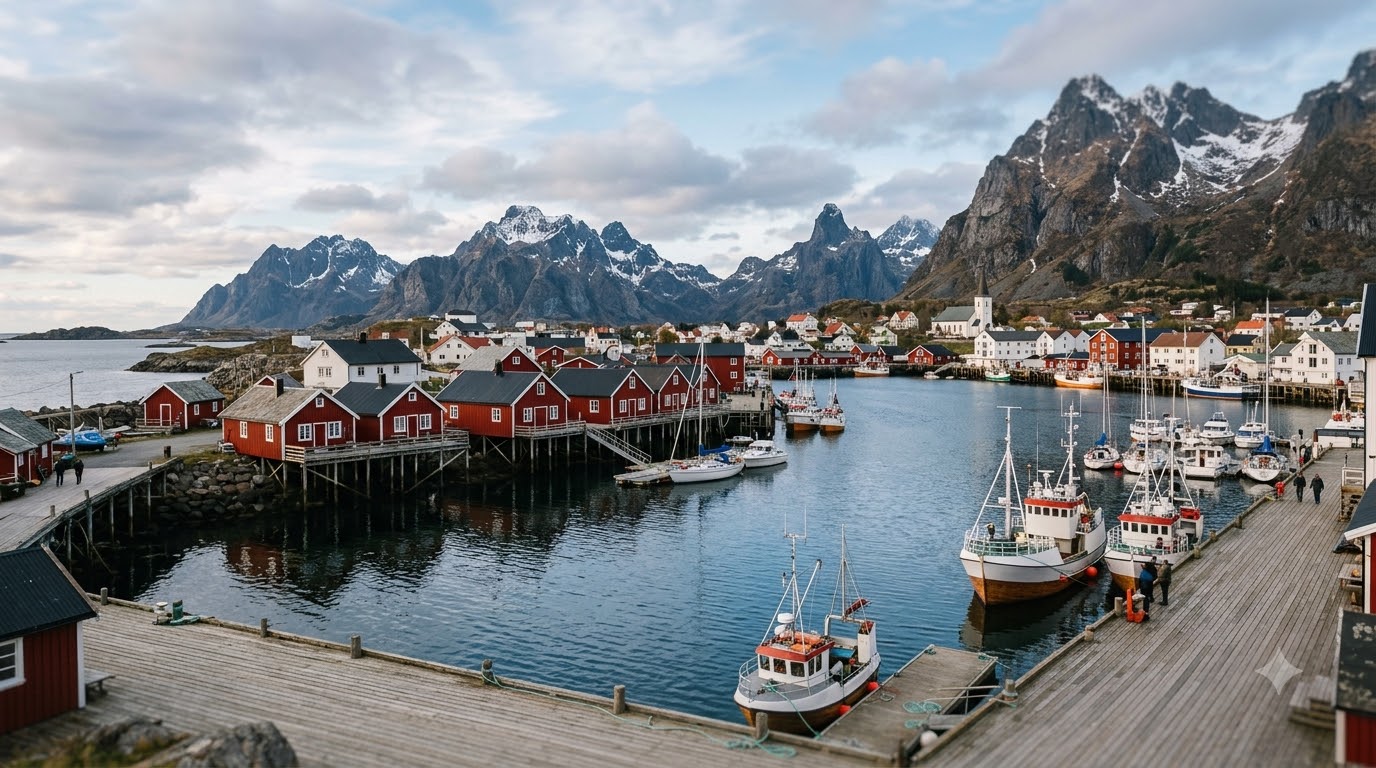
Choose Svolvaer if you want the easiest logistics in Lofoten. It is the largest town, the northern end of the E10 scenic road, and the arrival point for the coastal ferry and the airport bus, which makes it the natural first or last night of most trips. You get the widest choice of restaurants, bars, a proper harbour, galleries and the most tour departures, from sea-eagle safaris in Trollfjord to winter aurora chases.
Svolvaer works well as a northern base because it keeps activity days short: Henningsvaer is 25 minutes away, Kabelvag’s Lofoten museum cluster is 10 minutes, and you avoid the two-hour southern haul on days you are not chasing the Reine views. Harbourside rorbuer here run about USD 150 per night, and because the town is bigger, you will also find standard hotels and apartments that dip below rorbuer rates.
We used Svolvaer as our launch pad for a Trollfjord boat trip and appreciated walking back to the cabin instead of driving tired in low Arctic light. If you are weighing summer versus winter here, our best time to visit Lofoten guide covers how Svolvaer’s tour calendar shifts across the seasons.
Henningsvaer: the arty fishing village
Stay in Henningsvaer for one or two nights if you want the most atmospheric small village on the islands. Built across a scatter of islets connected by bridges, it is walkable, packed with cafes, a well-known bakery, art galleries and the much-photographed football pitch ringed by drying racks and sea. Henningsvaer Rorbuer runs around USD 158 per night, and rooms are limited, so it books out early.
It sits just off the E10 between Svolvaer and Leknes, about 25 minutes from Svolvaer, which makes it easy to fold into a northern base or use as a short characterful stopover. We would not build a whole week around it because it is compact, but a night here is one of the more memorable stays in Lofoten.
Leknes and the central belt: Ballstad and Stamsund
Base yourself around Leknes if minimising daily driving matters more than a fjord-front view. Leknes sits in the geographic centre of Lofoten, so north and south are roughly the same distance, and you can reach the turquoise Haukland and Uttakleiv beaches in about 15 minutes. It is the practical hub: the biggest supermarkets, the most fuel stations, an airport, and a spread of guesthouses and apartments, some within a 10-minute walk of Leknes airport.
Leknes itself is a functional town rather than a scenic one, so many travellers stay in the nearby fishing villages instead. Ballstad and Stamsund, both a short drive away, offer working-harbour atmosphere, rorbuer and hostels at gentler prices than Reine.
Reasons the central belt wins for many trips:
- Balanced driving: roughly one hour to Svolvaer and one hour to Reine, so no single day is dominated by the road.
- Cheapest big shop: the largest supermarkets on the islands are here, key for self-catering families.
- Beach access: Haukland, Uttakleiv and Vik beaches are all within 20 minutes.
- Airport convenience: handy for a first or last night if you fly into Leknes.
Our full Lofoten Islands travel guide explains how the central belt connects to the wider transport network of ferries, flights and the E10.
Where to stay in Lofoten by budget
Lofoten covers every budget, but nothing here is cheap by global standards; Norway is expensive, and a private rorbuer is a splurge, not a default. The cheapest beds are hostel dorms and campsite cabins, mid-range means a modest rorbuer or a standard hotel room, and the top tier is a water-front cabin or design hotel in Reine or Nusfjord.
| Budget tier | Typical nightly rate | What you get | Example base |
|---|---|---|---|
| Budget | USD 40 to 90 | Hostel dorm bed or basic campsite cabin, shared facilities | Stamsund, Kabelvag |
| Mid-range | USD 130 to 165 | Standard rorbuer or hotel room, private kitchen | Svolvaer, Henningsvaer |
| Premium | USD 180 and up | Water-front rorbuer or heritage/design hotel | Reine, Hamnoy, Nusfjord |
Note: rates reflect summer 2026 sampling from Tripadvisor and Booking listings and rise sharply in July, August and the winter aurora peak. Cheap Lofoten hotels have been listed from around USD 85, while premium cabins in Hamnoy start near EUR 180 (Tripadvisor, 2026).
Ways to keep costs down without leaving the islands:
- Self-cater: a rorbuer or hostel kitchen offsets restaurant mains of NOK 250 to 400.
- Split a cabin: four people in a rorbuer often beats two hotel rooms per head.
- Shoulder season: late May, early June and September cut rates and crowds.
- Mix tiers: two premium nights in Reine, the rest in a Stamsund hostel, keeps the average down.
How to choose your base in Lofoten
Match your base to your top priority, then check the drive to everything else. If scenery leads, go south; if convenience leads, go central or north; if you have a full week, split between the two to avoid long daily drives. Use this decision list, then the area table below.
- Photographers and hikers: Reine or Hamnoy, accepting the 40-minute shop runs.
- First-timers and tour-takers: Svolvaer, for services and departures.
- Families and self-caterers: Leknes or Ballstad, for supermarkets and central driving.
- Atmosphere seekers on a short trip: Henningsvaer for a night or two.
- Budget travellers: Stamsund or Kabelvag hostels, with day trips outward.
| Area | Drive to Reine | Vibe | Nightly from | Best for |
|---|---|---|---|---|
| Reine / Hamnoy | 0 to 5 min | Dramatic, quiet | USD 141 | Photographers, hikers |
| Nusfjord | ~30 min | Heritage, secluded | USD 139 | Couples, calm |
| Leknes / Ballstad | ~40 min | Central, practical | USD 90 to 130 | Families, self-caterers |
| Henningsvaer | ~1 hr 15 min | Arty, compact | USD 158 | Short characterful stay |
| Svolvaer | ~2 hr | Lively, connected | USD 150 | First-timers, tours |
Distances follow the E10: Svolvaer to Leknes is 67 km (about 1 hour) and Leknes to Reine is 36 km (about 40 minutes), so a central base halves the longest legs (Rome2rio, 2026). Once you have picked a base, our Lofoten Islands itinerary slots the right hikes, beaches and villages around it day by day.
Frequently Asked Questions
Is it better to stay in Reine or Svolvaer?
Stay in Reine for scenery and Svolvaer for convenience. Reine puts you among the peaks, cabins and southern hikes but is two hours from the airport and 40 minutes from a large supermarket. Svolvaer has the most restaurants, tours and transport links and cuts driving on non-scenic days. On a week-long trip, many visitors do three nights south in Reine or Hamnoy and the rest north in Svolvaer.
How much does a rorbuer cost in Lofoten?
Expect roughly USD 130 to 165 per night for a standard rorbuer and USD 180 or more for a water-front cabin in prime spots like Hamnoy and Reine. The famous Eliassen Rorbuer starts around EUR 180, while Henningsvaer and Svolvaer harbour cabins sit near USD 150 to 158 (Tripadvisor, 2026). Cabins usually sleep four to six, so splitting the cost brings the per-person rate down.
Do you need a car to stay in Lofoten?
A car is strongly recommended for most bases because attractions, beaches and trailheads are spread along the E10 and bus service is limited. Svolvaer is the main exception: its restaurants, harbour and some tour departures are walkable, and it is the easiest base for anyone without a vehicle. Elsewhere, especially in Reine or Leknes, a car turns hour-long logistics into short hops.
When should you book Lofoten accommodation?
Book 6 to 9 months ahead for summer (July to August) and the winter aurora season (roughly December to March), as the best-located rorbuer sell out first. Peak months also carry two- to three-night minimum stays at popular cabin clusters. Late May, early June and September offer more availability, lower rates and thinner crowds.
Where is the cheapest place to stay in Lofoten?
The cheapest beds are hostel dorms and campsite cabins in villages like Stamsund and Kabelvag, well below the rorbuer rate, with cheap hotels listed from around USD 85 (Tripadvisor, 2026). Staying central near Leknes and self-catering also lowers costs by cutting both restaurant bills and daily driving. Mixing one or two premium rorbuer nights with cheaper stays elsewhere keeps the average manageable.
Final thoughts
There is no single best place to stay in Lofoten, only the base that fits how you want to spend your days. If the peaks and red cabins pulled you here, weight your nights toward Reine and Hamnoy and accept the longer drives. If you would rather trade some drama for short hops, a warm restaurant and an easy airport run, centre yourself in Leknes or Svolvaer. For most week-long trips, splitting between south and north gives you the views and the convenience without spending half your holiday behind the wheel.