Disclosure: Some links in this guide are affiliate links. If you book or buy through them, we may earn a small commission at no extra cost to you — it helps keep our guides free.
Best Things to Do in Lofoten Islands: 2026 Guide
The best things to do in Lofoten are the Reinebringen hike above Reine, the red rorbu cabins at Hamnoy, the white-sand arc of Haukland beach, the preserved fishing village of Nusfjord, and a sea kayak paddle through the fjords. These sit within a short drive of each other along the E10, the single road that threads the whole archipelago, so a week here covers a lot without long transfers. This guide walks through each one with current prices, hike distances, and the timing that actually works.
Lofoten’s pull is scale: 448-metre granite peaks rise straight out of the sea, and in summer the light never quits. The midnight sun runs without a break from 28 May to 14 July (Visit Lofoten), which means you can hike at 11pm and still see your feet. Reinebringen alone drew more than 41,000 hikers by June 2024, a jump of over 50 percent on the year before, so the popular spots reward an early or very late start. Below are the activities we rank highest, plus a plan for getting here.
Key Takeaways
– Reinebringen is Lofoten’s signature hike: a 448-metre summit reached by roughly 1,974 Sherpa-built stone steps, about 1.5 to 2 hours round trip, and free to climb.
– Nusfjord charges an entrance fee of around 100 NOK (about USD 9) per adult to enter the preserved fishing village; children and students get discounts.
– Summer temperatures sit near 10 to 15 degrees C, with July the warmest at 12 to 15 degrees C, so pack layers and a rain shell even in July.
– Getting here means the 3-hour Bodo to Moskenes car ferry or a 20-minute Widero flight from Bodo to Leknes, then the E10 road onward.
– The white beaches at Haukland and Uttakleiv look tropical but the sea is only 4 to 6 degrees C in June, warming to about 13 degrees C by August.**** We spent six days driving the E10 between Reine and Svolvaer in early June, and the pattern that worked was hiking late and sightseeing at midday. We climbed Reinebringen at 9pm with the sun still high and had the summit ledge nearly to ourselves, then came down to an empty car park. On our last morning the rain rolled in sideways for three hours, which is exactly why we tell everyone to build slack into the plan.
What are the best things to do in Lofoten?
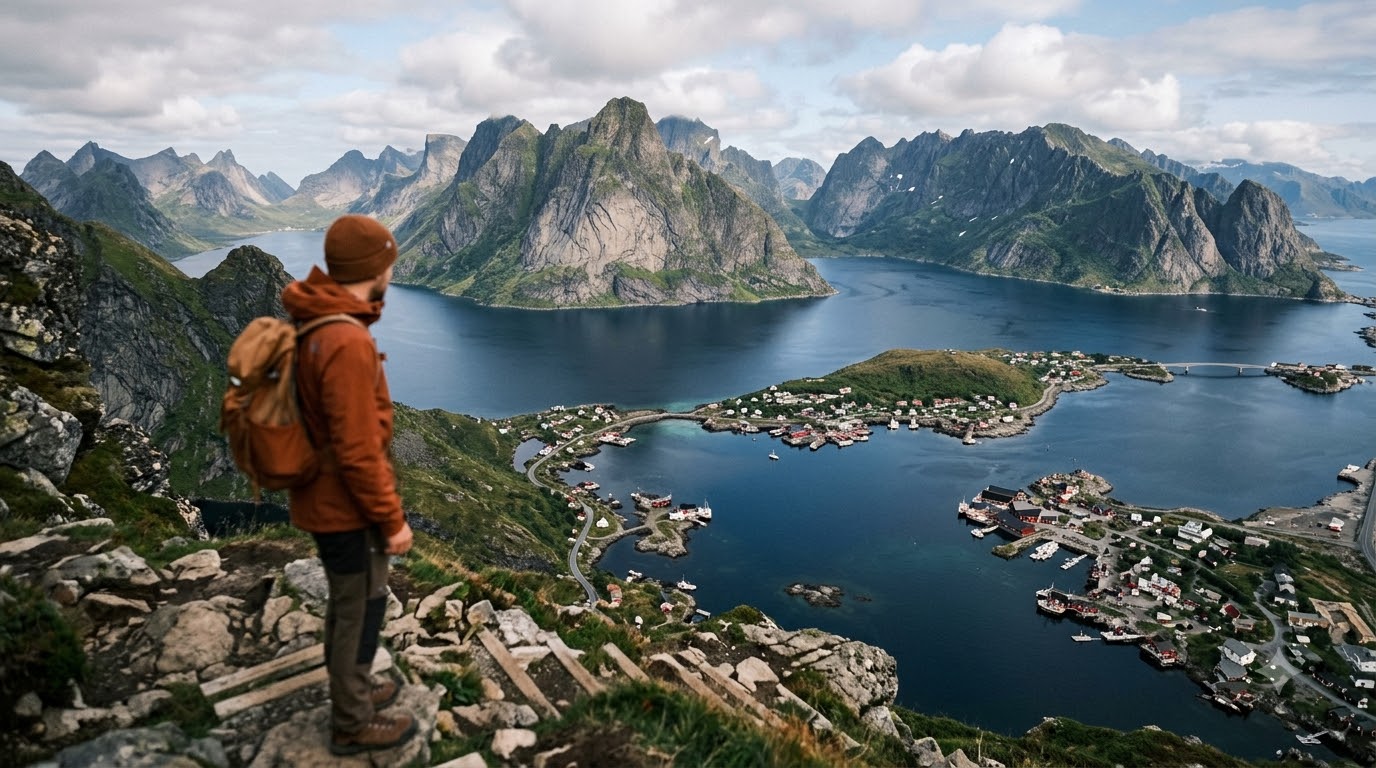
The best things to do in Lofoten mix one big hike, a cluster of fishing villages, a couple of beaches, and time on the water. If you only have a few days, prioritise the western end around Reine and Flakstad, where the peaks are sharpest and the villages are closest together. For a fuller route and day-by-day pacing, our Lofoten islands itinerary breaks the archipelago into manageable driving loops.
Here is the shortlist we’d give a first-time visitor, ranked by how much most people enjoy them:
- Hike Reinebringen for the classic view down onto Reine village and its scattered peninsulas.
- Photograph Hamnoy and Reine at the red-cabin bridges, the images that put Lofoten on every feed.
- Swim or walk at Haukland beach, then cross the headland path to Uttakleiv.
- Visit Nusfjord, one of Norway’s best-preserved fishing villages, tucked in a narrow inlet.
- Sea kayak the sheltered fjords near Reine or Kabelvag for a water-level view of the peaks.
- Drive to the road’s end at A i Lofoten, the village literally named “A”, for the Stockfish Museum and old bakery.
| Activity | Typical time needed | Cost (2026) | Difficulty |
|---|---|---|---|
| Reinebringen hike | 1.5 to 2 hours | Free | Moderate, steep |
| Hamnoy and Reine photo stops | 1 to 2 hours | Free | Easy |
| Haukland and Uttakleiv beaches | 2 to 3 hours | Free (paid parking) | Easy to moderate |
| Nusfjord village | 1.5 to 2 hours | About 100 NOK entry | Easy |
| Guided sea kayaking | 3 to 4 hours | Guided tours vary | Moderate |
The 5-Day Lofoten Itinerary
The plan we use ourselves — sent straight to your inbox.
- Day-by-day route
- Where to stay
- Real 2026 costs
Free · No spam · Unsubscribe anytime
Hike Reinebringen for the iconic Reine view
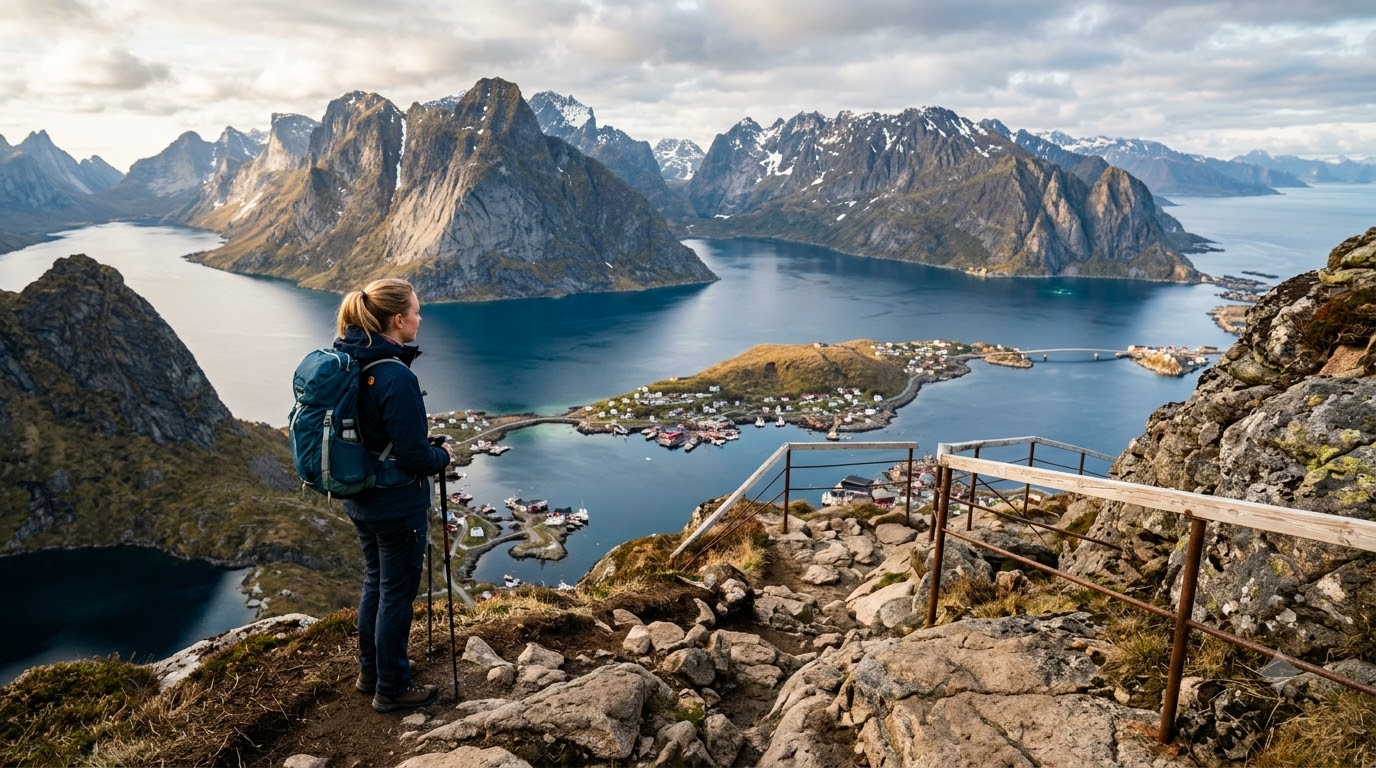
Reinebringen is the one hike almost everyone does, and it delivers the postcard: Reine village spread across its peninsulas far below, with cabins dotting the shoreline. The summit sits at 448 metres, and the route is essentially a staircase of roughly 1,974 stone steps laid by Nepalese Sherpas, finished in late summer 2021 to stop the erosion and rockfall that plagued the old dirt path (Visit Lofoten). Reserve about 1.5 to 2 hours round trip depending on pace.
It is short but genuinely steep, averaging around a 45-degree incline, so it feels more like a stair climb than a stroll. We found the steps slick after rain, so trekking poles and grippy shoes earn their place. Because the trailhead is right on the E10 near Reine, parking fills fast in high summer.
Quick facts before you go:
- Summit height: 448 metres above the sea.
- Steps: roughly 1,974 Sherpa-built stone steps, completed 2021.
- Round-trip time: about 1.5 to 2 hours.
- Cost: free; the only expense is parking near the trailhead.
- Best window: early morning or late evening to dodge the midday crowds; the trail is often closed in winter and early spring for safety.
Explore Reine and Hamnoy, Lofoten’s postcard villages
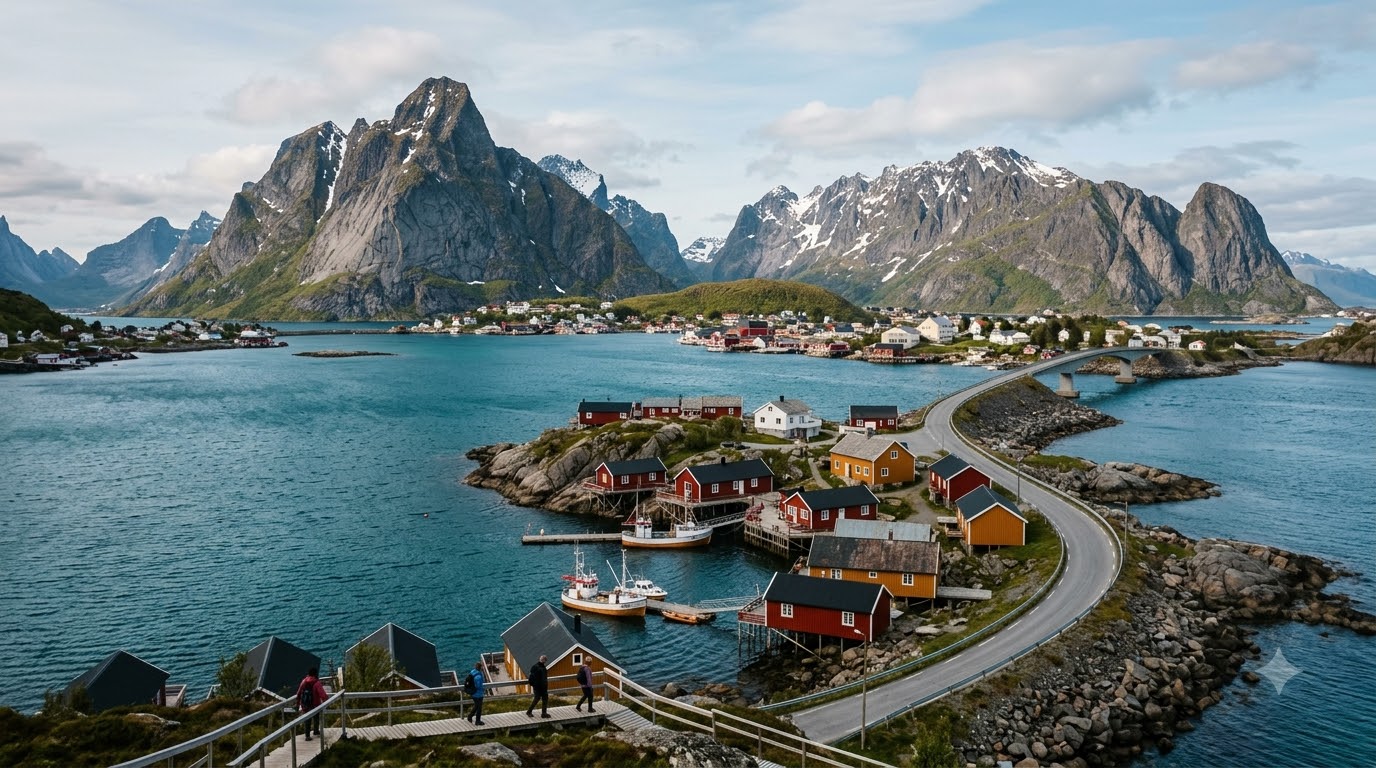
Reine and Hamnoy are the two villages that define the Lofoten image, and both are on the E10 within a couple of minutes of each other. Reine sits on a cluster of small islands linked by bridges, its red and white rorbuer backed by the toothy Reinebringen ridge. Hamnoy, just to the north, is arguably the single most photographed spot in the archipelago, best shot from the road bridge with the cabins in the foreground and the peaks behind.
You don’t need a plan here beyond slowing down. We parked at Reine harbour, walked the bridges, and spent an hour just watching light move across the water. If you want to stay inside one of these classic cabins, our guide on where to stay in Lofoten compares rorbu districts, prices, and what you actually get for the money.
What to see around Reine and Hamnoy:
- Hamnoy bridge viewpoint: the definitive red-cabin shot, good in almost any light.
- Reine harbour: launch point for fjord boat trips and kayak tours.
- Sakrisoy: a tiny island between the two, known for its ochre-yellow cabins and a well-known fish shop.
- Bunes and Kvalvika beaches: reachable by boat or hike for those wanting a bigger day out.
The 5-Day Lofoten Itinerary
Hour-by-hour plan, where to stay and what it really costs — free PDF.
Free · No spam · Unsubscribe anytime
Relax on Haukland and Uttakleiv beaches
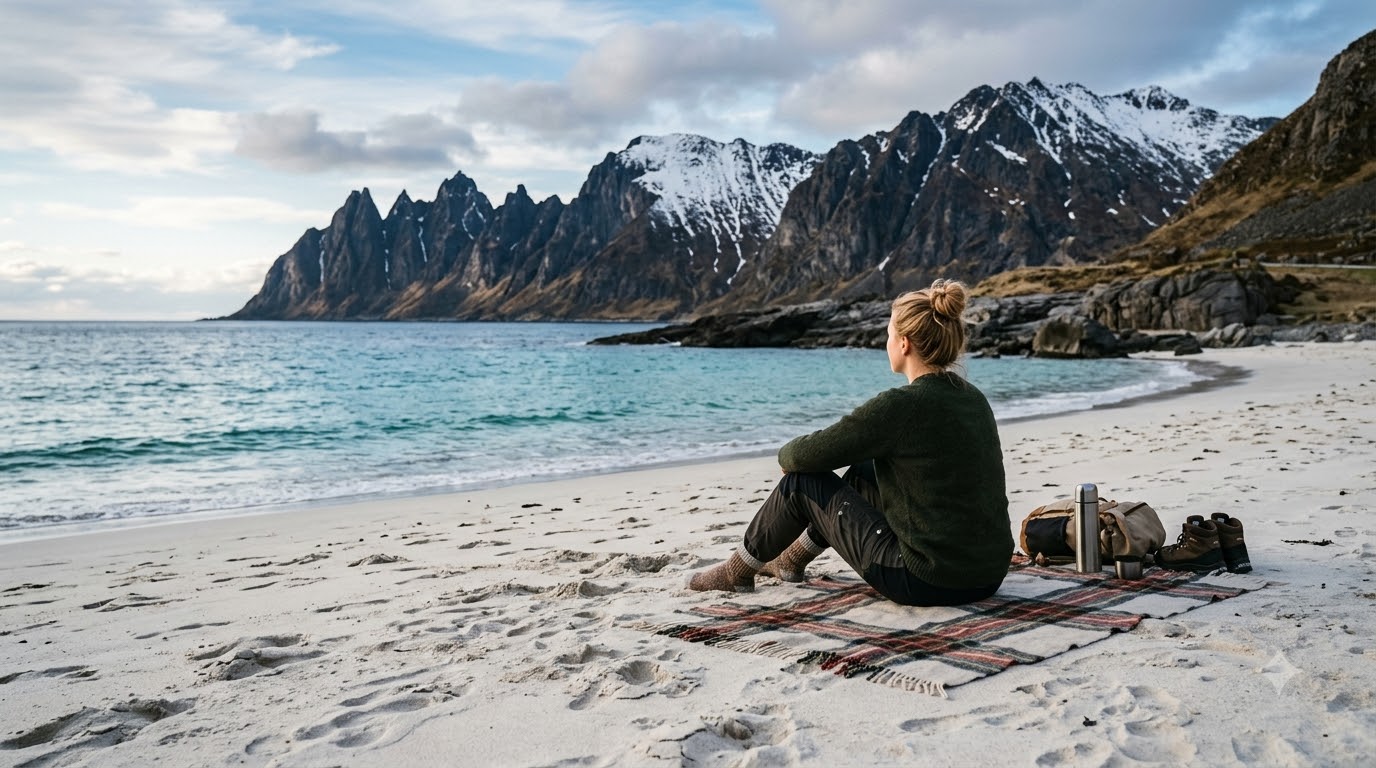
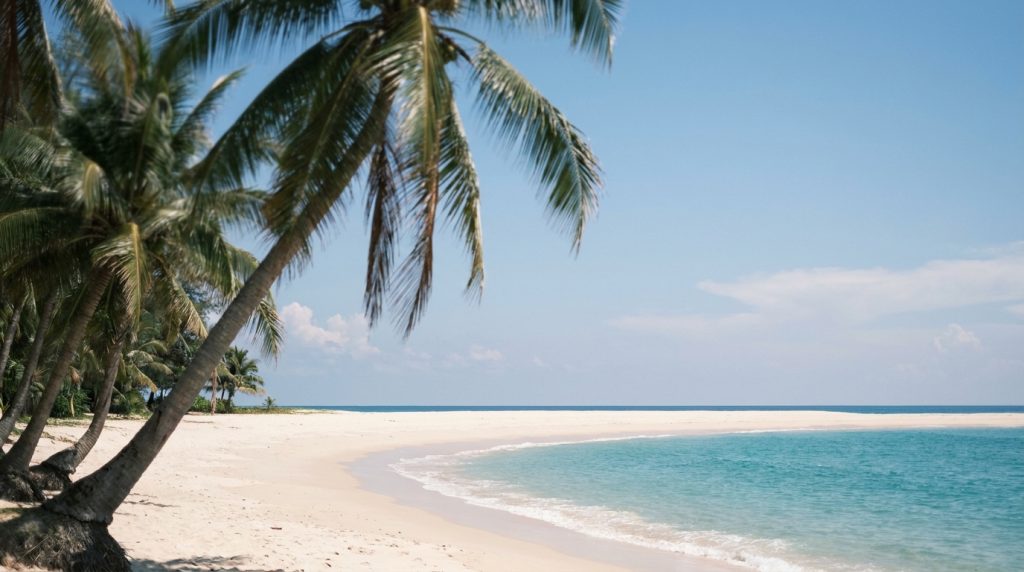
Lofoten’s beaches look Caribbean and feel Arctic. Haukland beach, on Vestvagoy, is a broad white crescent framed by green slopes, regularly named among Norway’s finest strands. A well-worn headland path links it to neighbouring Uttakleiv beach in about 30 to 40 minutes each way, and that walk is the highlight for many visitors.
The catch is the water. In June the sea sits at just 4 to 6 degrees C, warming to around 13 degrees C by August, so wild swimming is a quick, bracing affair. We waded in at Haukland in June and lasted about a minute, which felt like plenty.
Beach notes:
- Haukland beach: easy access, paid parking, toilets in summer; the white sand and turquoise shallows are the draw.
- Uttakleiv beach: reached by the headland path or its own road; famous for foreground rock formations at sunset and midnight sun.
- Kvalvika beach: a wilder option needing a 30 to 45-minute hike over a saddle, no facilities.
- Sea temperature: roughly 4 to 6 degrees C in June, about 13 degrees C by August.
Step back in time at Nusfjord fishing village
Nusfjord is one of the best-preserved traditional fishing villages in Norway, wrapped around a narrow, sheltered inlet on Flakstadoya. At its peak it held more than 150 rorbuer along with a sawmill, a blacksmith, and a cod liver oil factory, and much of that fabric still stands. It is run today as a heritage village, which is why there is an entrance fee.
Expect to pay around 100 NOK (about USD 9) per adult to enter, with discounts for children and students; older sources quote 75 NOK, so the fee has crept up. We thought it was worth it for a quiet hour among the old cabins and the harbour, especially outside peak coach-tour times. The general store and the historic buildings give a real sense of how cod built these islands.
Nusfjord essentials:
- Entrance fee: about 100 NOK per adult in 2026; kids and students discounted.
- Historic scale: once home to 150-plus fishermen’s cabins.
- Getting there: a side road off the E10 near Flakstad, roughly a 15-minute drive from the main route.
- Best time: early or late in the day to beat tour groups.
Go sea kayaking among the fjords
Sea kayaking is the way to see Lofoten from water level, with the granite peaks rising straight up around you. The sheltered fjords near Reine and around Kabelvag and Svolvaer are calm enough for beginners on a guided trip, and in summer the midnight sun makes evening paddles possible. Guided half-day tours typically run 3 to 4 hours including safety briefing and gear.
We did an evening paddle out of Reine and the water was mirror-flat, with the low sun turning the cliffs orange. Book ahead in July, the peak month, because groups are small and slots go early.
Good-to-know for kayaking:
- Where: Reine, Hamnoy, Kabelvag, and the Svolvaer area all have operators.
- Duration: most guided trips run 3 to 4 hours; full-day and multi-day options exist.
- Season: roughly June to August, with midnight-sun evening tours a Lofoten specialty.
- No experience needed: guided beginner trips include drysuits and instruction.
More fishing villages and viewpoints worth your time
Beyond the headline stops, Lofoten rewards slow driving, and the E10 delivers a new view around most bends. The road runs the full length of the archipelago from A in the southwest to the mainland connection in the northeast, so you can string together villages, beaches, and short hikes at your own pace. For the full lay of the land, start with our Lofoten islands travel guide.
Worth building into a longer trip:
- A i Lofoten: the village at the literal end of the road, home to the Norwegian Fishing Village Museum and Stockfish Museum.
- Henningsvaer: the “Venice of Lofoten”, a cluster of islets with cafes, galleries, and the famous cliffside football pitch.
- Nusfjord and Sakrisoy: heritage cabins and photogenic harbours as above.
- Ballstad and Stamsund: working fishing harbours with a less touristed feel.
- Svolvaer: the largest town, a good base for boat trips into the dramatic Trollfjord.
How do you get to Lofoten and plan your trip?
Getting to Lofoten means either a ferry or a short flight, then the E10 road for everything after. The most scenic arrival is the roughly 3-hour car ferry from Bodo to Moskenes in the west, which runs year-round; note the winter Bodo to Svolvaer route was suspended in January 2025 (Guide to Lofoten). The fastest is flying: Widero operates short hops from Bodo to Leknes in about 20 minutes, or to Svolvaer. Once you land or dock, a rental car is the practical way to reach hikes and beaches.
Timing matters as much as transport. Summer temperatures hover around 10 to 15 degrees C, July is the warmest and busiest month, and June is often the driest with the same endless daylight. For a month-by-month breakdown including northern lights season, see our guide to the best time to visit Lofoten.
| Route to Lofoten | Approx. duration | Runs when | Best for |
|---|---|---|---|
| Bodo to Moskenes car ferry | About 3 hours | Year-round | Scenery, bringing a car |
| Bodo to Leknes flight (Widero) | About 20 minutes | Year-round | Speed |
| Bodo to Svolvaer flight (Widero) | Around 25 minutes | Year-round | East Lofoten base |
| E10 road drive (once on islands) | Varies by stop | Year-round | Reaching every village |
If you want a village base to minimise driving, weigh the western hubs near Reine against Leknes or Svolvaer in our where to stay in Lofoten breakdown before you book.
Frequently Asked Questions
What is the number one thing to do in Lofoten?
The Reinebringen hike is the single most popular activity, drawing more than 41,000 hikers by June 2024. It reaches a 448-metre summit by roughly 1,974 Sherpa-built stone steps in about 1.5 to 2 hours round trip, and the payoff is the classic view down onto Reine village. It is free, but arrive early or late to avoid the crowds and full parking.
How many days do you need in Lofoten?
Most visitors are happy with four to six days, which covers Reinebringen, the villages of Reine, Hamnoy, and Nusfjord, the Haukland and Uttakleiv beaches, and a kayak trip, with slack for the weather. Three days works if you focus only on the western end. For a structured route, see our Lofoten islands itinerary.
Is Lofoten expensive to visit?
Norway is pricey, but many of Lofoten’s best things to do are free, including Reinebringen, the beaches, and the village viewpoints. Paid items are modest: Nusfjord entry is about 100 NOK (roughly USD 9) per adult, plus beach parking. The bigger costs are accommodation, the ferry or flight in, and food.
When is the best time to visit Lofoten?
June to August offers the mildest weather and the midnight sun, which runs uninterrupted from 28 May to 14 July. July is warmest at 12 to 15 degrees C but busiest, while June is often drier with fewer people. For northern lights instead, aim for the dark months; our best time to visit Lofoten guide compares every season.
Can you swim at Lofoten’s beaches?
You can, briefly. Haukland and Uttakleiv have clear, shallow, turquoise water, but the sea sits at only 4 to 6 degrees C in June and around 13 degrees C by August. Most people wade or dip rather than swim, and a wetsuit helps if you plan to stay in longer than a minute.
Final Word
Lofoten packs a national park’s worth of scenery into a single road, and the best things to do here are close enough that a few unhurried days go a long way. Climb Reinebringen at a quiet hour, wander the red cabins at Hamnoy and Reine, walk the beach path from Haukland to Uttakleiv, and leave room in the plan for the weather to do its thing. That mix, more than any single stop, is what makes the islands worth the long journey north.