Disclosure: Some links in this guide are affiliate links. If you book or buy through them, we may earn a small commission at no extra cost to you — it helps keep our guides free.
Best Time to Visit Lofoten 2026: Month-by-Month Guide
The best time to visit Lofoten depends entirely on what you want to see. For the northern lights, go between late September and early April, when the nights are dark enough for the aurora to appear over the mountains. For the midnight sun and long hiking days, go between late May and mid-July, when the sun never sets. For the mildest weather and the smallest crowds at once, aim for early June or early September, the two shoulder windows that most travelers overlook.
Lofoten sits above the Arctic Circle at roughly 68 degrees north, yet the Gulf Stream keeps it far milder than its latitude suggests. Summer highs sit around 12-15 degrees C (54-59 F) in July, the warmest month, while winter rarely drops below -3 degrees C (27 F) near the coast (Norwegian Meteorological Institute, 2026). That mild-but-unpredictable climate is the single most important thing to understand before you book. This guide breaks down each season, gives you a full month-by-month table, and tells you exactly when to go for aurora, midnight sun, hiking, or quiet.
Key Takeaways
– Northern lights season runs late September to early April, with the darkest, longest nights from November to February. September-October and February-March add a bonus: snow-free or lightly snowed roads that are far easier to drive at night.
– The midnight sun is continuous from about 28 May to 14 July at Lofoten’s latitude, roughly 47 days of 24-hour daylight (Norwegian Meteorological Institute, 2026).
– July is the warmest and busiest month, averaging 12-15 degrees C (54-59 F), while ferries, car rentals, and rorbuer book out 6-8 months ahead.
– Rorbuer (converted fishing huts) cost 150-300 EUR per night in peak summer and drop to 90-150 EUR in the off-season shoulders, the single biggest lever on your trip budget.
– Early June and early September are the sweet spots: near-peak daylight, mild temperatures, and noticeably thinner crowds than mid-July.**** We have visited Lofoten in both late August and early February, and the two trips felt like different planets. In August we hiked Reinebringen at 8:00 PM under three hours of golden light; in February we stood outside a rorbu in Hamnoy at midnight watching green aurora ripple over the Reinefjorden. If you can only pick one, choose the season that matches the single photo already in your head.
When Is the Best Time to Visit Lofoten?
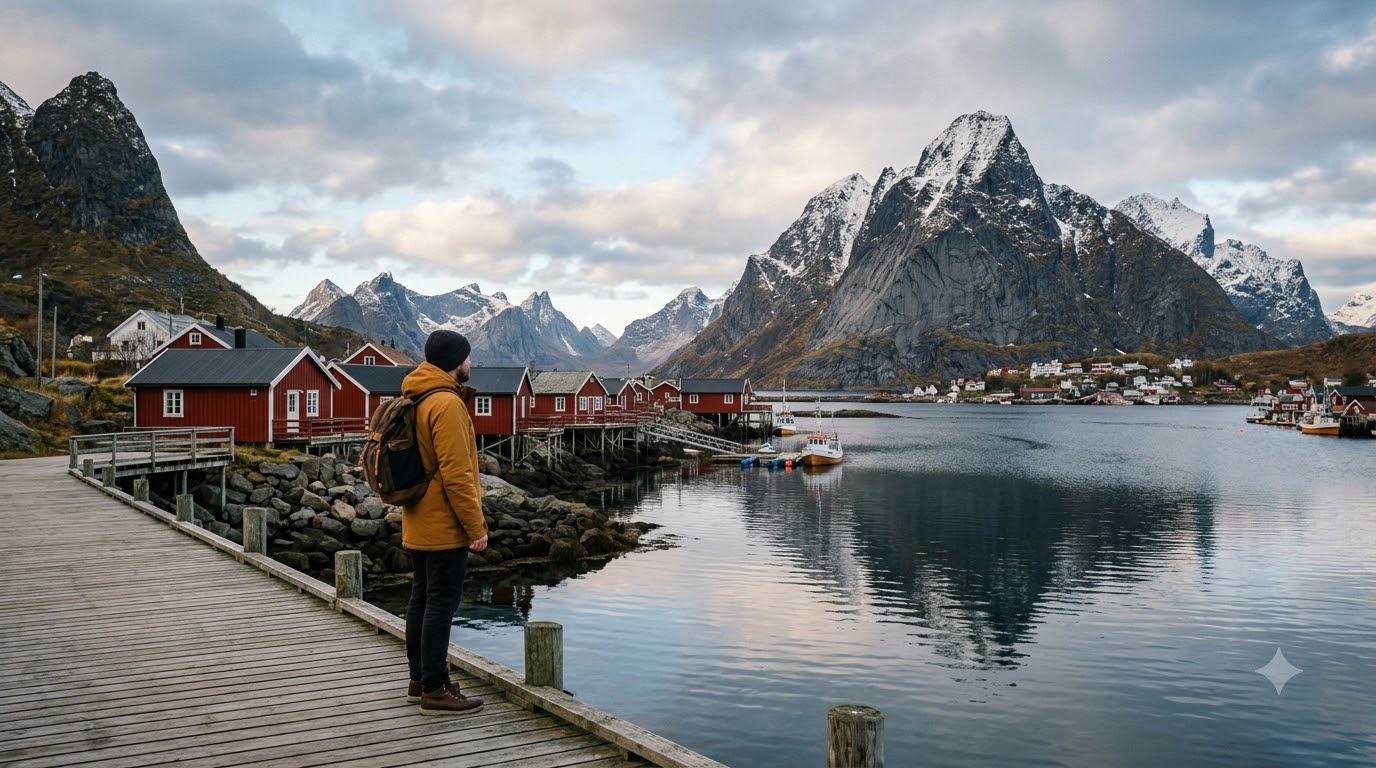
The short answer: late May to mid-July for endless daylight and hiking, or late September to early April for the northern lights. There is no month that delivers both, so the “best” time is really a choice between two completely different experiences of the same islands.
Here is how the goals map to the calendar:
- Northern lights: Late September to early April. Best odds November-February (longest darkness); easiest driving September-October and February-March.
- Midnight sun: Approximately 28 May to 14 July. Peak intensity late June.
- Hiking and mountain trails: Mid-June to mid-September, when trails like Reinebringen and Ryten are clear of snow and ice.
- Fewest crowds with decent weather: Early June and early-to-mid September.
- Lowest prices: October to April, excluding Christmas and New Year.
- Warmest, driest-feeling stretch: June, which statistically brings the least rainfall of the year.
We tell first-time visitors to work backward from the aurora question. If seeing the northern lights is non-negotiable, everything else falls into place around a winter or shoulder-season trip. For a broader orientation to the islands before you lock in dates, our Lofoten Islands travel guide covers geography, villages, and how the E10 road ties it all together.
The 5-Day Lofoten Itinerary
The plan we use ourselves — sent straight to your inbox.
- Day-by-day route
- Where to stay
- Real 2026 costs
Free · No spam · Unsubscribe anytime
Northern Lights Season: September to April
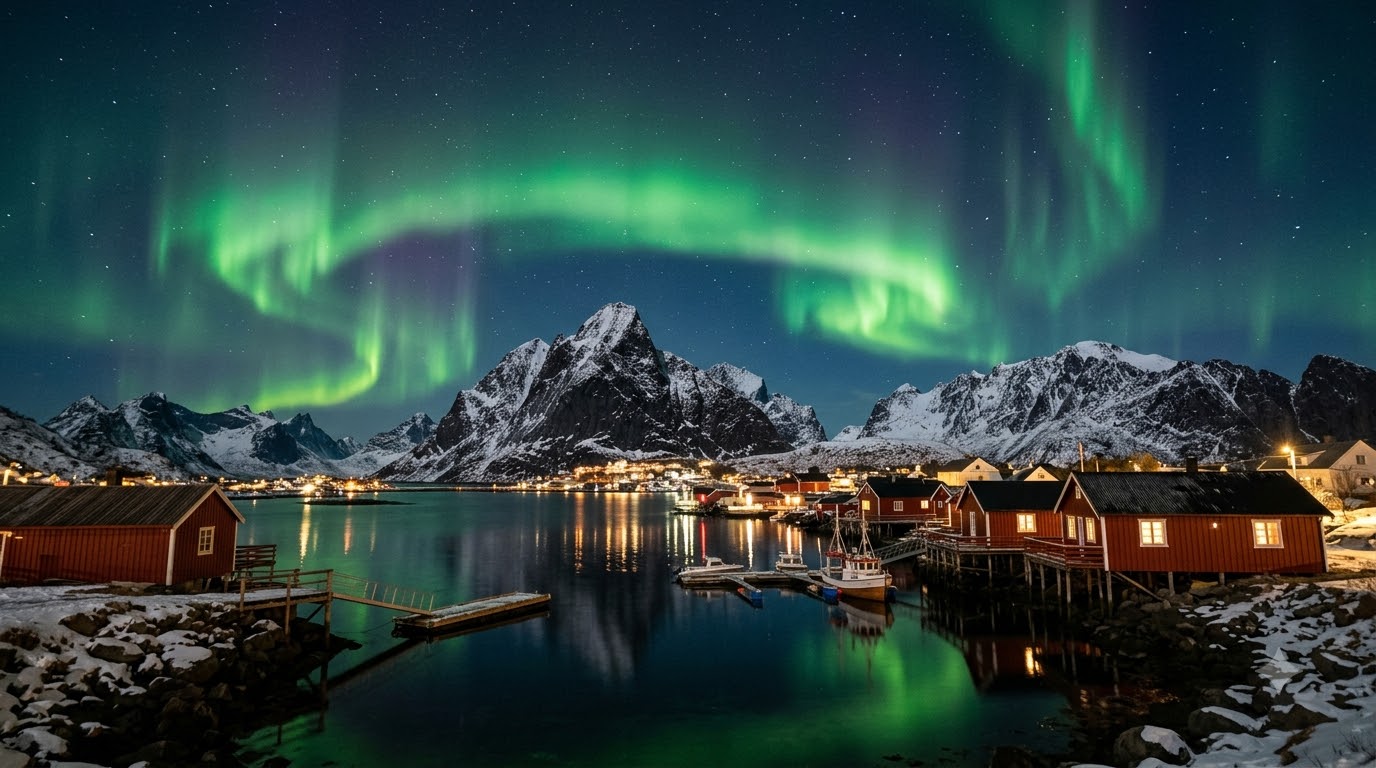
The northern lights are visible in Lofoten from late September to early April, whenever the sky is dark and clear. The aurora itself is present year-round, but you cannot see it under the midnight sun, so darkness is the limiting factor, not solar activity.
Lofoten sits directly under the auroral oval, and the dry Arctic air plus dramatic mountain backdrops make it one of the most photogenic aurora locations on Earth. On our February visit we saw the lights on four of six nights, which matches what local guides quote as typical for a week-long winter stay with patient sky-watching.
| Aurora window | Darkness quality | Road conditions | Crowd level | Our verdict |
|---|---|---|---|---|
| Late Sep – Oct | Good, getting darker | Mostly snow-free, easy | Moderate | Best all-rounder for first-timers |
| Nov – Dec | Excellent, polar night nears | Snowy, icy, short days | Low (except holidays) | Darkest skies, hardest driving |
| Jan – mid-Feb | Excellent | Deep winter, studded tires | Low | Classic aurora-and-snow postcard |
| Late Feb – Mar | Excellent, longer days | Snow easing, more light | Moderate | Aurora plus daytime photography |
| Early Apr | Fading, short window | Melting, variable | Low | Last chance before bright nights |
For aurora hunting, keep these practical points in mind:
- Rent a car with winter tires. The best dark-sky spots (Hamnoy, Skagsanden beach, Uttakleiv) are away from village lights and need private transport in winter.
- Give yourself at least 4-5 nights. Clear skies are the variable you cannot control; more nights means better odds.
- Check the Kp index and cloud forecast nightly. A Kp of 2-3 is enough this far north when skies are clear.
- Face north over water. Reflections off the fjord double the drama in photos.
If you want a night-by-night structure for a winter trip, our Lofoten Islands itinerary sequences aurora spots so you are never scrambling after dark.
Midnight Sun Season: Late May to Mid-July
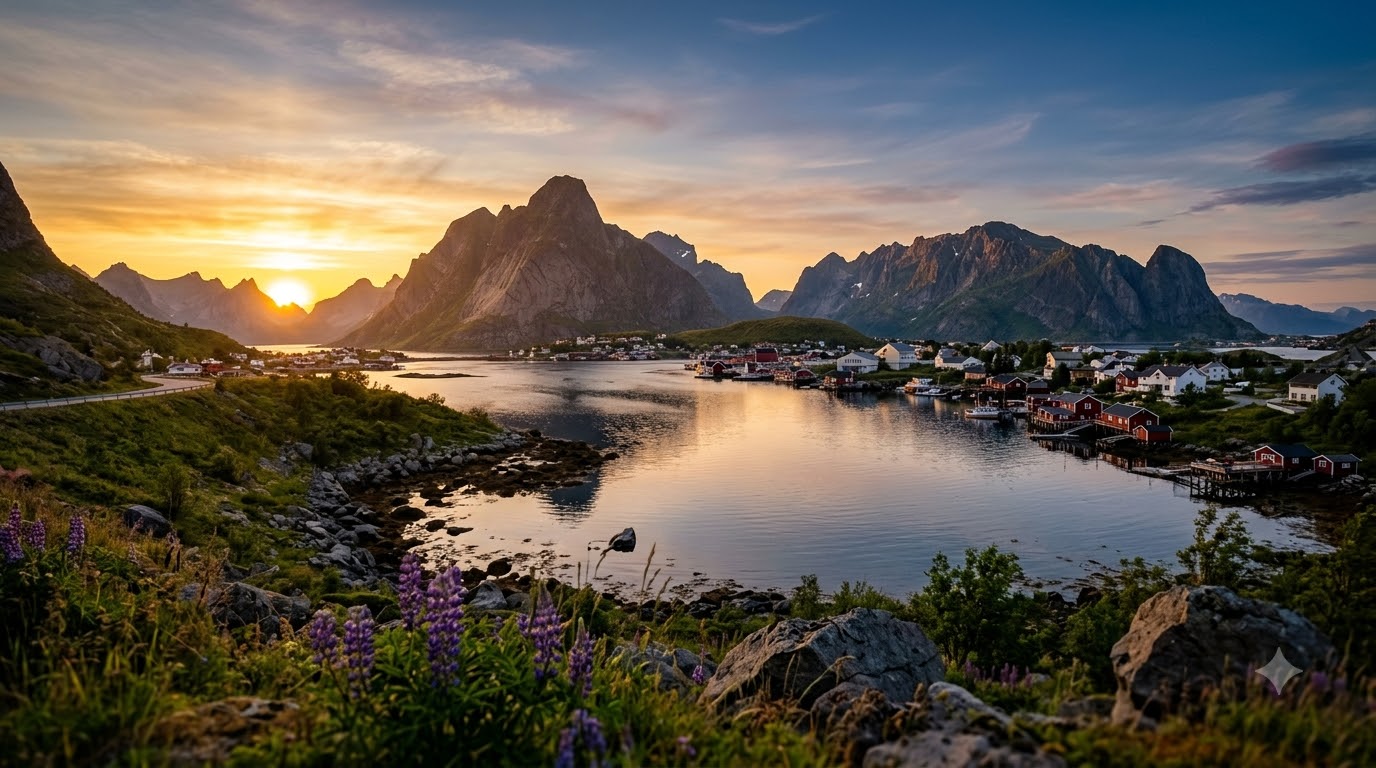
The midnight sun shines continuously over Lofoten from roughly 28 May to 14 July, giving about 47 days when the sun never fully sets (Norwegian Meteorological Institute, 2026). During this window you can hike at midnight, kayak at 2:00 AM, and watch the mountains glow orange for hours as the sun skims the horizon without dipping below it.
This is the season that makes people fall in love with Lofoten. The catch is that “24-hour daylight” also means it can be hard to sleep, so blackout curtains or an eye mask are genuinely useful. We hiked Reinebringen at 10:00 PM in late June and passed dozens of other people doing the same, all chasing the same low, golden light.
What the midnight sun period is best for:
- Photography: Golden-hour light stretches across the middle of the night, roughly 11:00 PM to 2:00 AM.
- Long day hikes: No time pressure; you can summit late and descend in full light.
- Sea kayaking and camping: Calm evenings and warm-enough water (14-16 degrees C in sheltered bays).
- Road trips: Drive the E10 whenever you like without losing daylight.
Because summer is also the busiest and most expensive season, book accommodation and rental cars 6-8 months out. The trade-offs between huts, campsites, and hotels are laid out in our guide to where to stay in Lofoten.
The 5-Day Lofoten Itinerary
Hour-by-hour plan, where to stay and what it really costs — free PDF.
Free · No spam · Unsubscribe anytime
Summer Hiking Window: June to September
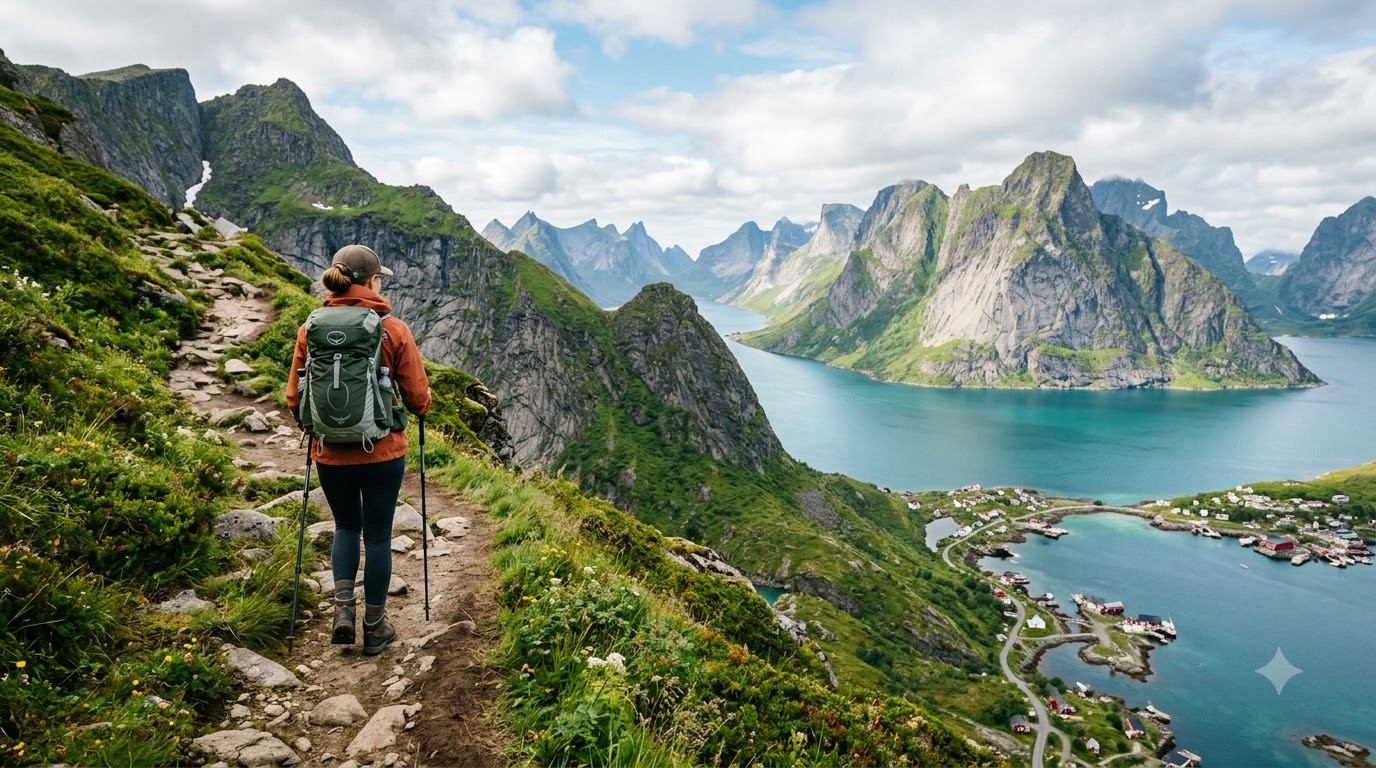
The best hiking in Lofoten runs from mid-June to mid-September, once the higher trails shed their snow. Reinebringen (448 meters, reached by about 1,978 stone steps above Reine) is the signature hike, but Ryten, Munkebu, and the beach walk to Kvalvika are all at their best in this window.
Early summer trails can still hold snow patches on north-facing slopes into mid-June, so if you are set on a specific summit, aim for July or August for the surest footing. We climbed Ryten in early September and had firm, dry trail the whole way, plus autumn color starting to creep into the valleys.
A quick hiking-season cheat sheet:
- June: Long light, some lingering snow up high, fewer people early in the month.
- July: Warmest, driest-feeling, fully clear trails, peak crowds.
- August: Still warm, midnight sun gone but long evenings, slightly cheaper late in the month.
- September: Crisp air, autumn colors, first aurora nights return, trails still open.
For the full list of trails, viewpoints, beaches, and villages worth building a day around, see the best things to do in Lofoten.
Winter in Lofoten: Quiet, Cold, and Dramatic
Winter in Lofoten (November to March) is cold but rarely brutal, hovering between -3 and 3 degrees C (27-37 F) near the coast thanks to the Gulf Stream. What you trade in daylight, you gain in atmosphere: snow-dusted peaks, empty fishing villages, aurora over the fjords, and prices well below summer.
The polar night, when the sun stays below the horizon, is brief at this latitude, roughly the first week of December to the first week of January. Even then, you get several hours of blue and pink twilight around midday, which many photographers prefer to harsh sun. Winter is also the season of skrei, the migrating Arctic cod that has drawn fishermen here for a thousand years and fills local menus from January to April.
Winter travel realities to plan around:
- Daylight is short: Just a few hours of usable light in December, growing quickly through February.
- Driving demands care: Studded or winter tires are essential; roads are cleared but icy.
- Some services close: A number of restaurants and tour operators run reduced hours October to March.
- Prices drop: Rorbuer fall to roughly 90-150 EUR per night outside the Christmas-New Year peak.
Month-by-Month Weather and Daylight in Lofoten
Here is the full year at a glance so you can match your dates to your priorities. Temperatures are typical coastal averages; daylight is approximate for Lofoten’s latitude around 68 degrees north.
| Month | Avg temp (C / F) | Daylight | Northern lights | Midnight sun | Best for |
|---|---|---|---|---|---|
| January | -3 to 1 / 27-34 | ~3-6 hrs | Excellent | No | Aurora, snow, low prices |
| February | -3 to 1 / 27-34 | ~6-9 hrs | Excellent | No | Aurora plus some daylight |
| March | -1 to 3 / 30-37 | ~10-13 hrs | Very good | No | Aurora and photography |
| April | 1 to 6 / 34-43 | ~14-17 hrs | Fading | No | Shoulder, fewer crowds |
| May | 4 to 10 / 39-50 | ~18-22 hrs | No | From ~28 May | Spring hikes, midnight sun starts |
| June | 8 to 14 / 46-57 | 24 hrs | No | Yes | Midnight sun, least rain |
| July | 10 to 15 / 50-59 | 24 hrs to ~14 Jul | No | To ~14 Jul | Warmest, peak season |
| August | 9 to 14 / 48-57 | ~17-20 hrs | Late Aug returns | No | Hiking, long evenings |
| September | 6 to 11 / 43-52 | ~12-15 hrs | Good | No | Autumn color, aurora returns |
| October | 3 to 8 / 37-46 | ~9-11 hrs | Very good | No | Quiet aurora, easy roads |
| November | 0 to 4 / 32-39 | ~5-7 hrs | Excellent | No | Dark skies, low crowds |
| December | -2 to 2 / 28-36 | ~0-3 hrs | Excellent | No | Polar night, holidays |
A few patterns worth pulling out of that table:
- June is the driest-feeling month and pairs full midnight sun with manageable crowds early on.
- February and March give the best balance of strong aurora odds and returning daylight for daytime sightseeing.
- December’s polar night does not mean total darkness; the midday twilight is soft and photogenic.
- May and September are transition months that reward flexible travelers with lower prices and thin crowds.
How Long Should You Stay in Lofoten?
Plan a minimum of four full days, and five to seven if the northern lights are your goal. The islands stretch about 130 kilometers along the E10 from Fiskebol in the north to the village of A in the south, and the driving is slow because you will stop constantly for the views.
Rough length-of-stay guidance:
- 3 days: Enough for the highlights around Reine, Hamnoy, and Henningsvaer if you move efficiently.
- 5 days: The comfortable sweet spot; adds hikes, beaches, and buffer for weather.
- 7+ days: Ideal in winter, when you need extra nights to catch clear aurora skies.
Weather changes fast here, sometimes every 20 minutes, so extra days are insurance against a washout. To turn your dates into a day-by-day plan, our Lofoten Islands itinerary offers routes for both summer and winter trips.
Frequently Asked Questions
What is the best month to visit Lofoten?
June is the best all-round month: you get the full midnight sun, the least rain of the year, mild temperatures around 8-14 degrees C, and crowds that have not yet peaked. If the northern lights are your priority instead, February and March are the strongest months, balancing dark skies with returning daylight for sightseeing.
When can you see the northern lights in Lofoten?
The northern lights are visible in Lofoten from late September to early April, whenever skies are dark and clear. The darkest and most reliable window is November through February. Give yourself at least four to five nights to improve your odds against cloudy weather, and head to dark-sky spots like Hamnoy, Uttakleiv, or Skagsanden away from village lights.
When is the midnight sun in Lofoten?
The midnight sun shines continuously over Lofoten from roughly 28 May to 14 July, about 47 days of 24-hour daylight. Late June is the peak, when the sun stays well above the horizon at midnight and the mountains glow for hours in golden light.
Is Lofoten worth visiting in winter?
Yes, if you want aurora, snow-draped peaks, and low prices. Winter temperatures stay surprisingly mild for the Arctic, between -3 and 3 degrees C near the coast, and rorbuer drop to around 90-150 EUR per night outside the holidays. The trade-offs are short daylight and icy roads that require winter tires and careful driving.
How many days do you need in Lofoten?
Plan at least four days, and five to seven if you are chasing the northern lights. The islands run about 130 kilometers along one main road, and frequent photo stops make driving slow. Extra days also buffer against the fast-changing weather, which can shift from sun to rain to fog within an hour.
Final Thoughts
Lofoten does not have a single best time to visit, it has two: the endless light of late May to mid-July, and the aurora-lit darkness of late September to early April. Pick the season that matches the experience you most want, then build in a few extra days for the weather to cooperate. Whether you come for the midnight sun over Reinebringen or the green glow above a red fishing hut in February, the islands reward travelers who plan around the calendar rather than against it.