Disclosure: Some links in this guide are affiliate links. If you book or buy through them, we may earn a small commission at no extra cost to you — it helps keep our guides free.
Lofoten Islands Itinerary: 5-Day Road Trip Guide 2026
A 4-5 day Lofoten Islands itinerary works best as a single road trip along the E10, the one highway that threads the whole archipelago from Svolvaer in the north to the village of A in the south. You pick up a car, drive west, and stop constantly. The core stretch between Svolvaer and A is only 129 km of the E10’s 880 km total (Statens vegvesen), so distances are short and every fjord, beach, and fishing village sits within a few minutes of the road.
This guide lays out the route day by day, with real 2026 driving times, car rental and fuel costs, and the specific stops worth your hours. It assumes you fly into Leknes or Svolvaer, or drive in from Narvik or Evenes airport. We built this plan around slow driving and long light: in June and July the sun never sets here, which stretches a five-hour route into a full day of viewpoints.
Key Takeaways
– The E10 backbone is short: only 129 km separates Svolvaer and A, drivable in about 2 hours without stops but realistically a full multi-day trip.
– Car rental runs high in summer: expect roughly 1,000 NOK per day (about $95) for a compact, or 7,000-8,000 NOK per week for a small electric car in July-August (souvenirs.vincent.voyage, 2026).
– Fuel is among Europe’s priciest: petrol sat at 20.70 NOK per litre (about $2.15) in August 2026 (GlobalPetrolPrices.com).
– Flying is fast: the Bodo to Leknes flight with Wideroe takes 25 minutes, with 51 flights per week as of July 2026.
– The ferry carries cars: the Bodo to Moskenes ferry costs 605 NOK for a car under 6 metres, or 424 NOK for a prepaid electric vehicle; foot passengers ride free (fergeruter.info, 2026).**** We drove this route over five days in early June, picking up a compact car at Leknes and dropping it at Moskenes before the ferry back to Bodo. What surprised us most was how little actual driving each day required: we spent three mornings entirely on foot at beaches within 20 minutes of our cabin, and the car mostly moved us between short hikes. On our last evening we watched the midnight sun from Reine at 11:40 pm without a headlamp.
How many days do you need for a Lofoten itinerary?
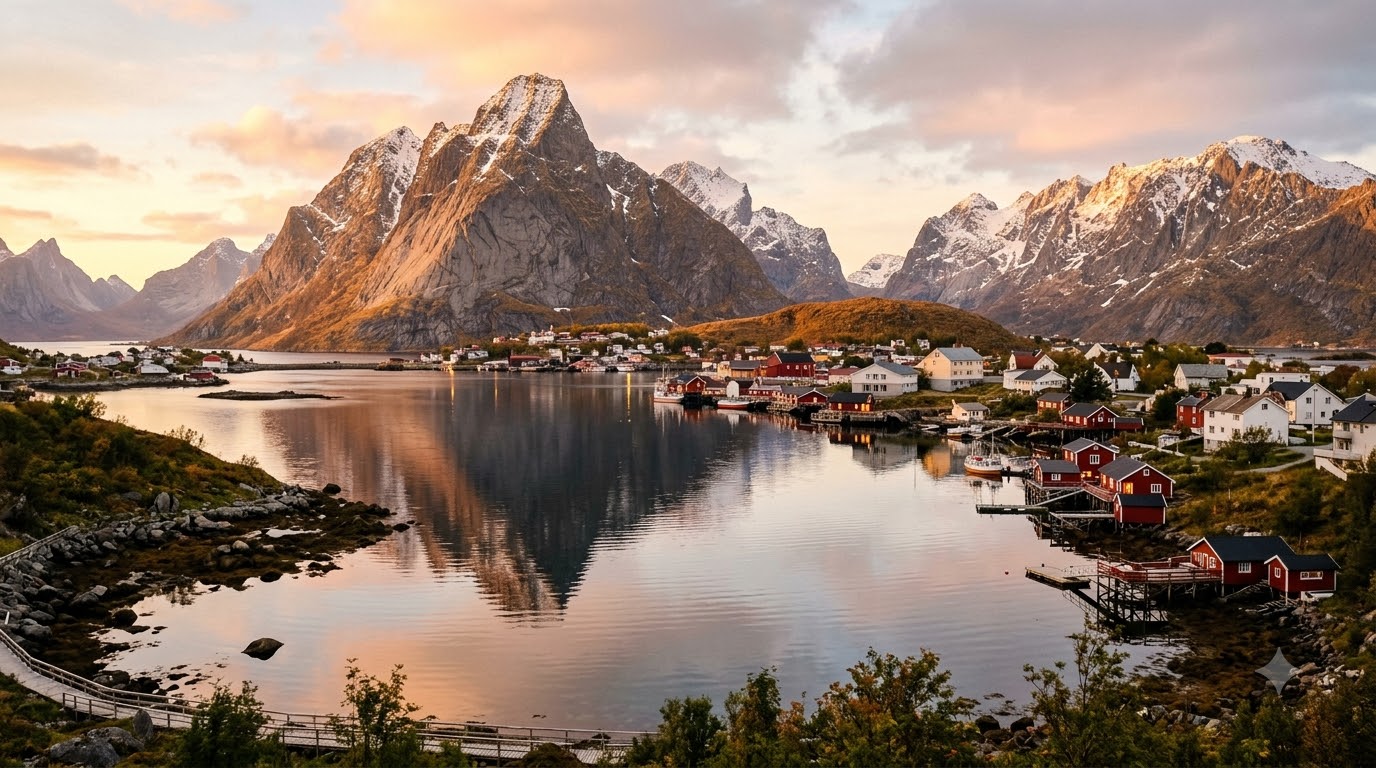
Four to five days is the sweet spot for a Lofoten Islands itinerary that covers the whole E10 without rushing. Three days forces you to choose between the central beaches and the southern villages; five lets you do both plus a signature hike. We would not plan fewer than four nights, because a chunk of any short trip gets eaten by weather waiting and the drive in.
Here is how the length maps to what you can realistically see:
- 3 days: Svolvaer, Henningsvaer, and a single push to Reine and Hamnoy, skipping most beaches.
- 4 days: Adds Haukland and Uttakleiv beaches plus Nusfjord fishing village.
- 5 days: Adds one full hiking day (Reinebringen or Kvalvika) and slack time for rain.
- 6-7 days: Adds the far south village of A, Vaeroy island by ferry, and repeat sunrise visits.
The 5-Day Lofoten Itinerary
The plan we use ourselves — sent straight to your inbox.
- Day-by-day route
- Where to stay
- Real 2026 costs
Free · No spam · Unsubscribe anytime
Getting there: fly to Leknes, or drive from Narvik
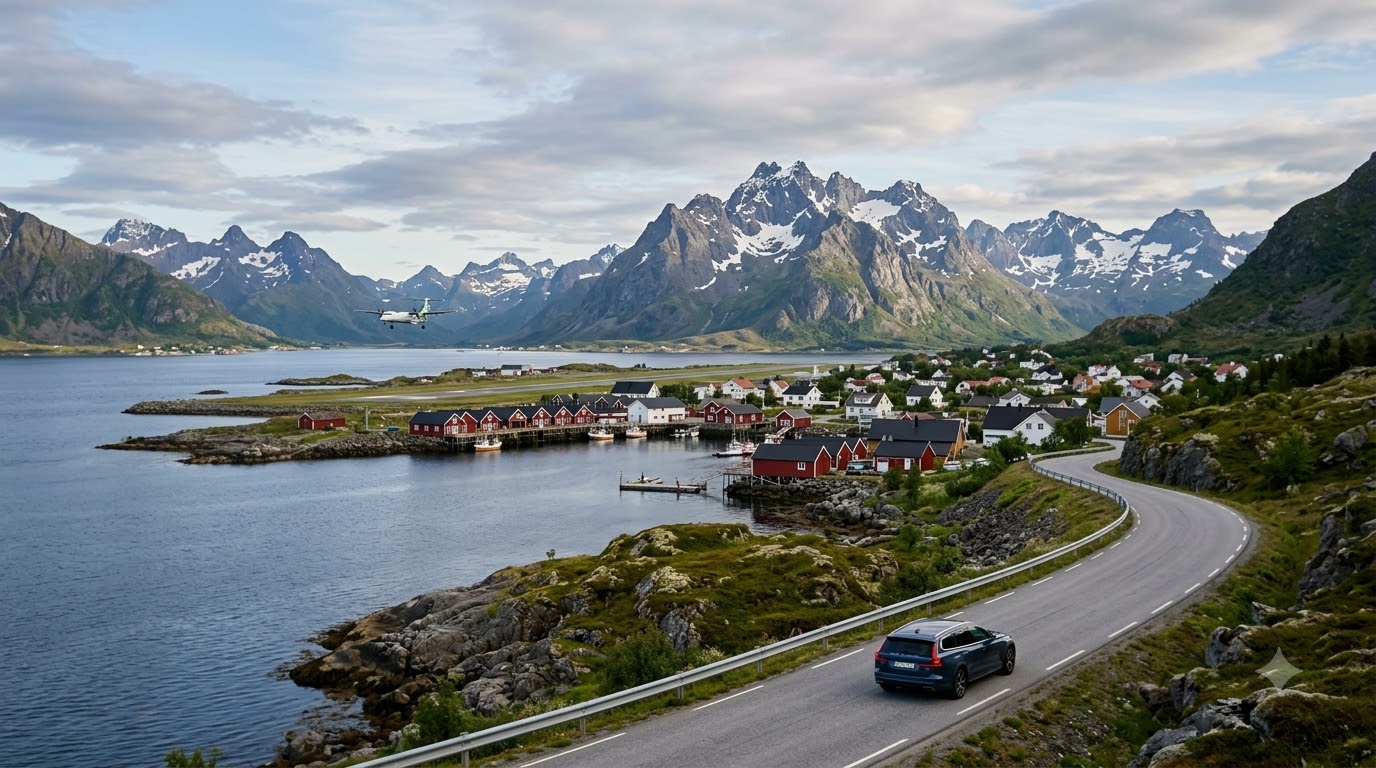
The fastest arrival is a Wideroe flight into Leknes (LKN) or Svolvaer (SVJ), both in the heart of the islands. Leknes is the geographic centre of the archipelago, which makes it the tidiest place to start and end a loop. From Bodo the hop to Leknes is 25 minutes, and Wideroe ran 51 flights per week on that route as of July 2026.
Driving in is the scenic alternative if you want your own car the whole way. The E10 approaches from the mainland past Evenes airport (EVE), which sits between Narvik and Harstad:
- Evenes Airport to Reine: 284 km, about 3.5-4 hours of driving on the E10.
- Narvik to Reine: roughly 358 km, about 5 hours without stops.
- Bodo to Moskenes by ferry: 3-4 hours across open water, then you drive the E10 north.
We flew into Leknes to save the long mainland drive, then took the Moskenes ferry out at the end so we never backtracked the E10. That one-way logic is worth planning around, though it usually adds a one-way car drop fee.
| Arrival method | Route | Time / distance | 2026 cost |
|---|---|---|---|
| Flight | Bodo to Leknes (Wideroe) | 25 min | varies by date |
| Flight | Bodo to Svolvaer (Wideroe) | 25 min | varies by date |
| Ferry (with car) | Bodo to Moskenes, car under 6 m | 3-4 hr | 605 NOK (about $58) |
| Ferry (with EV) | Bodo to Moskenes, prepaid electric | 3-4 hr | 424 NOK (about $40) |
| Drive | Evenes Airport to Reine (E10) | 3.5-4 hr / 284 km | fuel only |
| Drive | Narvik to Reine (E10) | about 5 hr / 358 km | fuel only |
What does a Lofoten car rental cost in 2026?
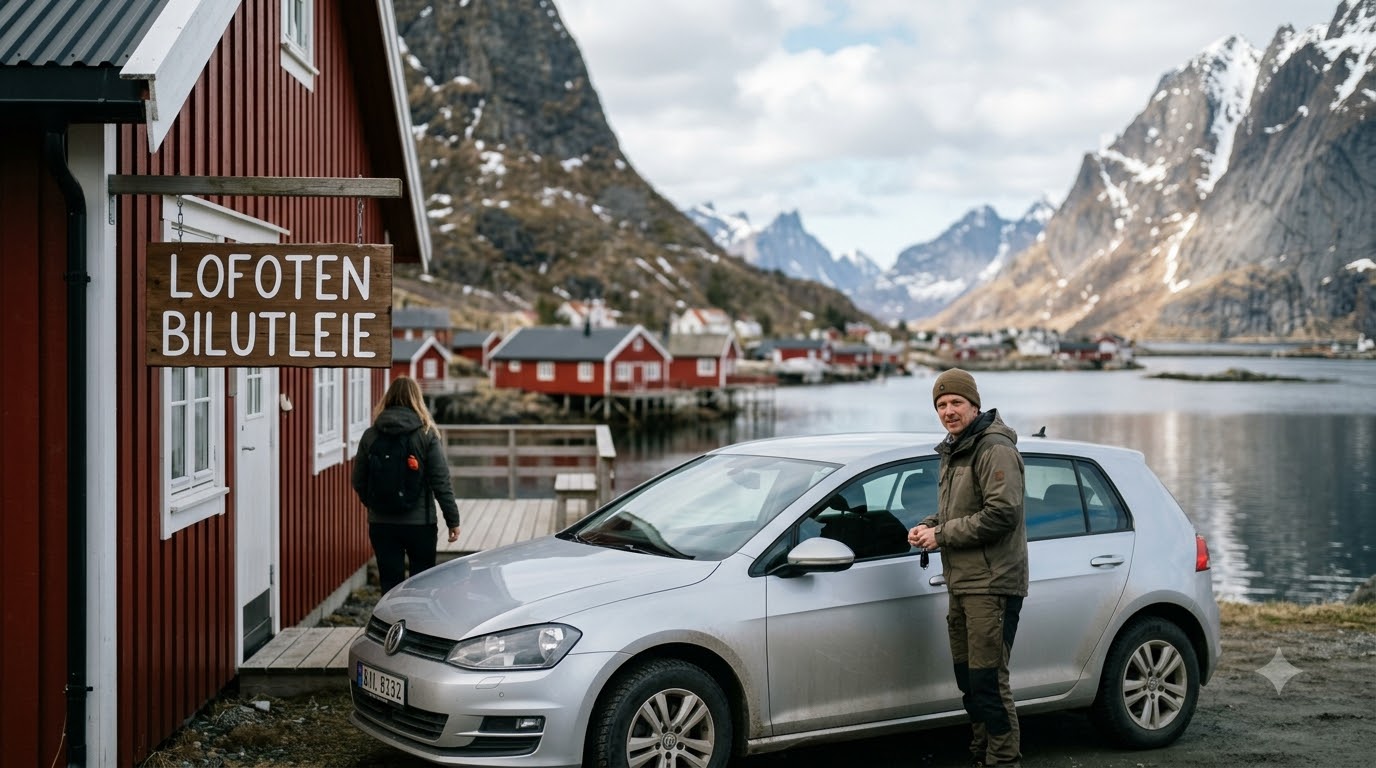
A compact rental car in Lofoten costs around 1,000 NOK per day (about $95) in the July-August high season, with small electric cars running 7,000-8,000 NOK for a week (souvenirs.vincent.voyage, 2026). Supply is the real constraint: the fleet at Svolvaer and Leknes is small, so prices spike and cars sell out. Book months ahead for summer.
Practical cost notes we confirmed on the ground:
- Automatics cost more and sell out first; a manual car is cheaper and far easier to secure in summer.
- Petrol is expensive: 20.70 NOK per litre (about $2.15) in August 2026, among the highest in Europe (GlobalPetrolPrices.com).
- Rental depots cluster in Svolvaer and Leknes, with Lofoten Car Hire also offering Moskenes and Evenes pickup by appointment.
- A one-way drop between Leknes and Moskenes saves backtracking but usually adds a fee, so price both options.
- Total driving is modest: we covered under 500 km across five days, so fuel was a smaller line item than the rental itself.
| Cost item | 2026 price (NOK) | Approx USD |
|---|---|---|
| Compact car rental, per day (summer) | about 1,000 | about $95 |
| Small electric car, per week (summer) | 7,000-8,000 | $670-760 |
| Petrol, per litre (Aug 2026) | 20.70 | about $2.15 |
| Bodo to Moskenes ferry, car under 6 m | 605 | about $58 |
| Bodo to Moskenes ferry, EV prepaid | 424 | about $40 |
The 5-Day Lofoten Itinerary
Hour-by-hour plan, where to stay and what it really costs — free PDF.
Free · No spam · Unsubscribe anytime
Day 1: Arrive in Svolvaer and drive to Henningsvaer
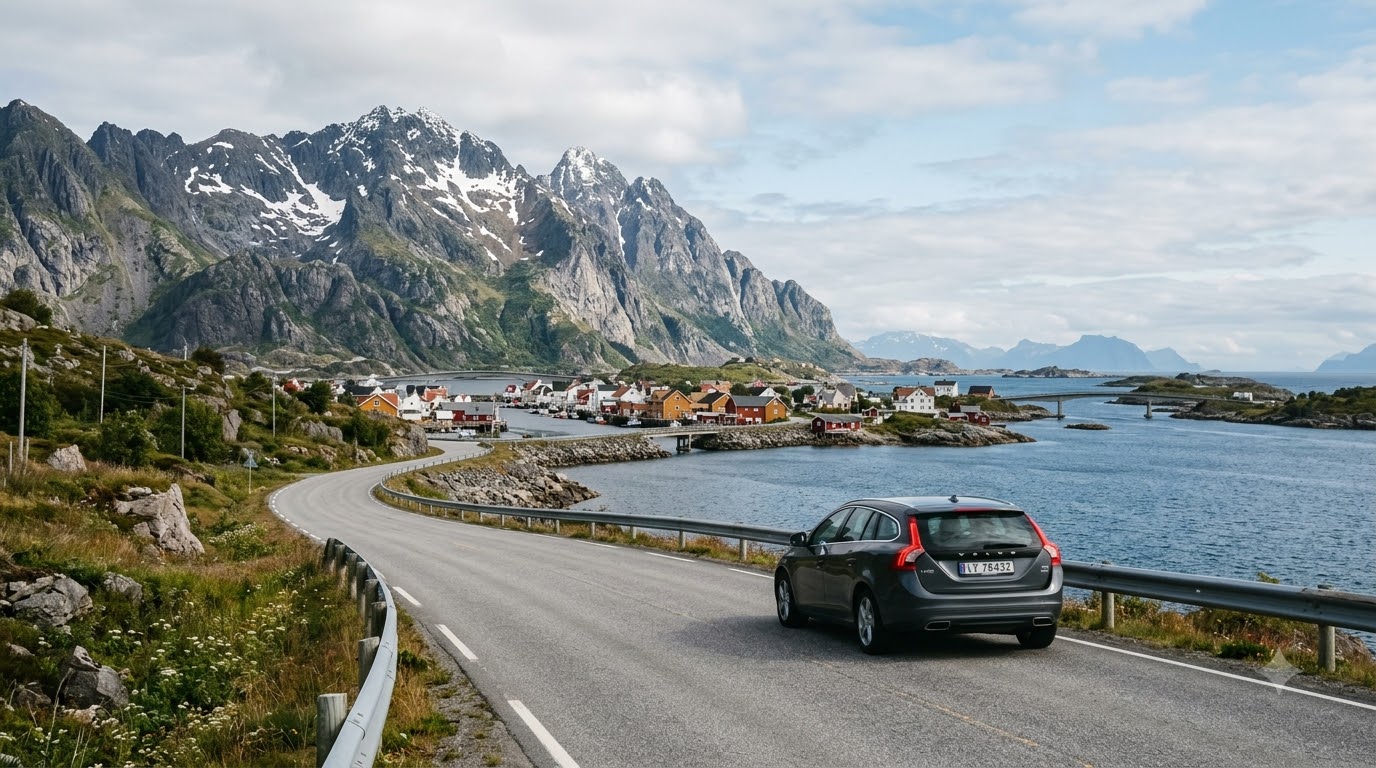
Day one is a light driving day built around your arrival and the first fishing village. Pick up the car, settle in, and reach Henningsvaer for the evening light. The drive from Svolvaer to Henningsvaer is only about 25 km, roughly 35 minutes, ending on a narrow causeway of small islands.
Stops to fit into the afternoon and evening:
- Svolvaer harbour: the largest town in Lofoten and the main services hub, good for a first grocery run before villages thin out.
- Kabelvag: a quieter old town 5 km from Svolvaer, with the outsized wooden Lofoten Cathedral.
- Henningsvaer: a compact village strung across islets, home to the much-photographed football pitch and a cluster of galleries and cafes.
- Festvagtind trailhead: a steep 1-2 hour climb above Henningsvaer for anyone with energy left and clear skies.
For the town itself and where the services are, our Lofoten Islands travel guide breaks down Svolvaer, Leknes, and the smaller hubs. If you land early and want ideas beyond driving, the roundup of things to do across Lofoten covers galleries, sea eagle safaris, and kayaking.
Day 2: Central Lofoten beaches near Leknes
Day two trades villages for white-sand beaches, and it is the day most people underestimate. The best beaches sit a short drive northwest of Leknes on the Vestvagoy coast, roughly 15-25 minutes off the E10. We spent an entire morning here and still felt rushed.
The beach cluster worth the detour:
- Haukland Beach: a broad arc of pale sand backed by green peaks, with parking and a summer cafe; the most accessible swimming beach in Lofoten.
- Uttakleiv Beach: just over the headland from Haukland, known for its round “dragon eye” stones and aurora photography in winter.
- Unstad: a surf beach on the exposed Atlantic side, with a surf school and a small cafe for cold days.
- Vik Beach: quieter sand near Haukland, good for an evening walk when the parking fills up.
A 30-minute coastal path connects Haukland and Uttakleiv over the hill, which is the walk we would prioritise if you only do one. For deciding when the beaches look their best against your own dates, see our notes on the best time to visit Lofoten.
Day 3: Nusfjord, Reine, and Hamnoy
Day three moves you into the dramatic southern section, where the peaks close in and the classic red-cabin views appear. From Leknes it is about an hour to Reine on the E10, but the stops along the way are the point.
The southern highlights, north to south:
- Nusfjord: one of Norway’s oldest preserved fishing villages, set in a tight cove about 20 minutes off the E10; a small entry fee applies in summer.
- Ramberg and Flakstad: a long white beach with a red church, a natural rest stop mid-drive.
- Hamnoy: the postcard shot of red rorbuer cabins under sharp peaks, best photographed from the road bridge.
- Sakrisoy: a tiny yellow-cabin hamlet between Hamnoy and Reine, home to a well-known fishcake and seafood stall.
- Reine: the scenic anchor of the south, spread across islands with mountains rising straight from the water.
This is the densest stretch for photography, and it is where most visitors base themselves. Our where to stay in Lofoten guide compares Reine, Hamnoy, and Svolvaer as bases, since sleeping in the south saves hours of repeat driving.
Day 4: Hike Reinebringen or Kvalvika Beach
Day four is your dedicated hiking day, weather permitting, and Lofoten’s two signature hikes both start near Reine. Keep this day flexible: if the summits are socked in with cloud, swap it with a beach day and hike later.
The two hikes worth building a day around:
- Reinebringen: a stone-stepped climb of about 1,500 steps to a ridge above Reine, roughly 1.5-2 hours up, with the most famous view in Lofoten.
- Kvalvika Beach via Ryten: a 2-3 hour round trip to a hidden beach and the clifftop viewpoint above it, starting from Fredvang.
- Bunes Beach: a longer outing reached by a short ferry from Reine to Vindstad, then a 1-hour walk to a vast empty sand bowl.
- A i Lofoten: the literal end of the E10, a preserved fishing village 15 minutes south of Reine, ideal for a rest day instead of a climb.
We hiked Reinebringen on a clear morning and had the ridge largely to ourselves before 8 am, which is the trick in summer when the midnight sun makes early starts painless.
Day 5: Beaches, A, and the drive out
Day five is a buffer and departure day, which is exactly why five days beats four here. Use the morning for anything weather stole earlier, then position yourself for your flight or ferry.
How to spend the final hours depending on your exit:
- Flying from Leknes: allow an hour’s drive back from Reine, and use spare time on the beaches near Leknes.
- Ferry from Moskenes: the terminal is 10 minutes south of Reine; arrive early in high season (May 18 to September 6) when departures are frequent but full.
- Driving out via the E10: budget 3.5-4 hours to Evenes airport or about 5 hours to Narvik, plus stops.
- Extra village time: if you have not seen A yet, it is the natural last stop before the ferry.
A five-day frame leaves room for the days Lofoten hides behind rain, and it turns the drive out into one more scenic run rather than a dash.
Frequently Asked Questions
Is 5 days enough for Lofoten?
Yes, five days is enough to drive the full E10 from Svolvaer to A, see the main beaches, visit the southern fishing villages, and do one signature hike with slack time for weather. Four days works if you skip a hike, while three days means choosing between the central beaches and the far south.
Do you need a car to visit the Lofoten Islands?
A car is the practical way to follow a Lofoten Islands itinerary, because buses are infrequent and many beaches and trailheads sit off the E10. Public buses connect the main towns but not on a schedule that suits day trips. Renting from Leknes or Svolvaer, or bringing a car on the Bodo-Moskenes ferry, gives you the freedom the islands are built around.
How much does it cost to drive around Lofoten?
Budget roughly 1,000 NOK per day (about $95) for a compact rental car in summer, plus petrol at 20.70 NOK per litre (about $2.15) as of August 2026. Total driving across a five-day trip is modest, often under 500 km, so fuel is a smaller cost than the rental. Bringing a car on the ferry from Bodo adds 605 NOK for a standard car.
Should I fly to Leknes or Svolvaer for a road trip?
Leknes is the better base for a loop because it sits at the geographic centre of the archipelago, so you are never far from either end of the E10. Svolvaer works well if you want to start in the largest town with the most services and rental depots. Both receive 25-minute Wideroe flights from Bodo.
What is the best order to drive the E10 in Lofoten?
Drive north to south, from Svolvaer or Leknes toward Reine and A, so you end at the most dramatic scenery and the Moskenes ferry terminal. This lets you fly into Leknes or Svolvaer, work through the central beaches and Henningsvaer first, then finish in the southern villages before catching the ferry back to Bodo without backtracking.
Lofoten rewards a slow itinerary more than a packed one. The distances are short, the light in summer is long, and the best moments here tend to arrive when you stop the car and walk to the water. Plan the route north to south, leave a spare day for weather, and let the E10 do the rest.