Tulum Travel Guide 2026: Ruins, Cenotes & Beach Zone
By TravelguidestipUpdated 9 min readHow we earn
Hotel buttons open Stay22 (Booking.com, Agoda and others) and tour buttons open GetYourGuide. We may earn a commission at no extra cost to you.
In short
- Ruins entry now runs about 515 pesos ($30) for foreign adults after INAH doubled its archaeological ticket to 209 pesos on January 1, 2026, on top of separate CONANP and Jaguar Park fees.
- The dry season is December through April, with March the driest month at about 37 mm of rain over four rainy days and highs near 28-31 C (82-88 F).
- The ADO airport bus from Cancun costs 445 pesos ($26) direct and takes roughly 2h20 to 2h54, running every 30 to 45 minutes from about 6am to midnight.
- Popular cenotes charge 370 to 500 pesos ($21-$29): Gran Cenote around 500 pesos with a one-hour limit, Dos Ojos 370-450 pesos with a life jacket included.
- Beach-zone hotels cost far more than town stays, so budget travelers sleep in Tulum Pueblo and bike or taxi to the sand.
Quick answer: Plan Tulum as a 3-4 day trip and decide where to sleep first, because that single choice drives your budget more than anything else: the beachfront Zona Hotelera is pricey while Tulum Pueblo (the town) a few kilometers inland is far cheaper. Foreign adults now pay roughly 515 pesos (about $30) to enter the clifftop ruins, and the dry December-to-April season is the easiest window, before sargassum seaweed peaks in the warmer months.
This Tulum travel guide answers the questions first-timers actually ask: what the ruins cost now, how much cenotes charge, whether to sleep in the beach zone or the town, when to visit, and how to get down from Cancun.
The short version is that Tulum sits about 120 km south of Cancun on Mexico’s Caribbean coast, the dry season from December to April is the easiest time to go, and a foreign adult now pays roughly 515 pesos (about $30) in total to enter the clifftop ruins after a fee overhaul that took effect January 1, 2026 (Riviera Maya News, 2026).
We have made this trip several times, most recently splitting five nights between the beach zone and the town, and the biggest lesson is that Tulum is really three places stitched together: the archaeological site, the hotel-lined beach strip (Zona Hotelera), and the working town (Pueblo) a few kilometers inland. Where you stay changes your budget more than anything else.
Costs below use a rate of about 17.2 pesos to the US dollar, the range the peso held in early August 2026 (exchange data via MTFX, 2026).
On our last visit we based ourselves in Tulum Pueblo for the first three nights, then moved to the beach zone for two. The town saved us money and put us next to cheap taquerias, but the beach strip has no ATMs we trusted and card readers failed twice, so we learned to carry pesos in cash. We reached the ruins by 8am on a Wednesday and had the clifftop nearly to ourselves before the tour buses arrived around 10.
Find your Tulum hotel on the map
Live prices from Booking & Airbnb — tap a pin to compare stays around the Beach Zone and beyond.
What Is Tulum and Where Is It?

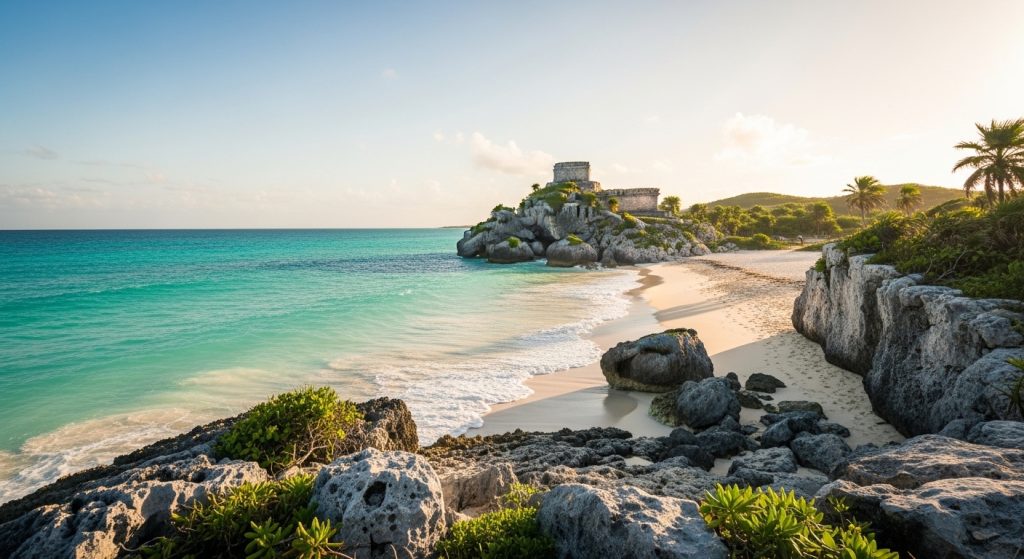
Tulum is a Caribbean beach town in the state of Quintana Roo, on the eastern edge of Mexico’s Yucatan Peninsula, about 120 km (75 miles) south of Cancun and 65 km south of Playa del Carmen. It is best known for a walled Maya port city perched on a limestone cliff above the sea, the only major Maya ruins built right on the coast.
Beyond the ruins, the draw is a mix of jungle cenotes, a long white-sand beach lined with boutique hotels, and easy access to the wider Riviera Maya. A newer international airport, Felipe Carrillo Puerto (TQO), opened south of town in late 2023, though many visitors still fly into Cancun. For activities beyond the archaeological site, see our guide to the best things to do in Tulum.
How Do You Get from Cancun to Tulum?

The cheapest reliable way from Cancun airport to Tulum is the ADO bus, which costs 445 pesos (about $26) direct and takes roughly 2 hours 20 minutes to just under 3 hours (Machu Picchu travel, 2026). ADO’s red airport buses stop at Terminals 2, 3, and 4, run every 30 to 45 minutes from about 6am to nearly midnight, and let you download e-tickets through the app.
Here are your main options from Cancun, cheapest to priciest:
- ADO airport bus (direct): 445 pesos ($26), about 2h20-2h54, comfortable and air-conditioned.
- ADO via Playa del Carmen: 270 pesos to Playa plus 136 pesos onward, about 406 pesos ($24) total if you don’t mind a change.
- Colectivo (shared van): cheapest for short hops along Highway 307, but not a practical airport-to-Tulum option with luggage.
- Private shuttle or taxi: fastest door-to-door, roughly $80-$150 depending on vehicle and season.
- Rental car: frees you to reach far-flung cenotes, but Tulum parking and checkpoints add friction.
| Option | Price (2026) | Time | Best for |
|---|---|---|---|
| ADO bus (direct) | 445 MXN / ~$26 | 2h20-2h54 | Solo and budget travelers |
| ADO via Playa del Carmen | ~406 MXN / ~$24 | ~3h+ | Saving a few pesos |
| Private shuttle | ~$80-$150 | ~1h45-2h | Families, groups, late arrivals |
| Rental car | ~$35-$60/day + fuel | ~1h45 drive | Cenote-hopping road trips |
If you land at the newer Tulum airport (TQO) instead, the drive into town is only about 25 to 40 minutes, and a taxi or pre-booked shuttle is the standard move.
Beach Zone or Tulum Town: Where Should You Stay?
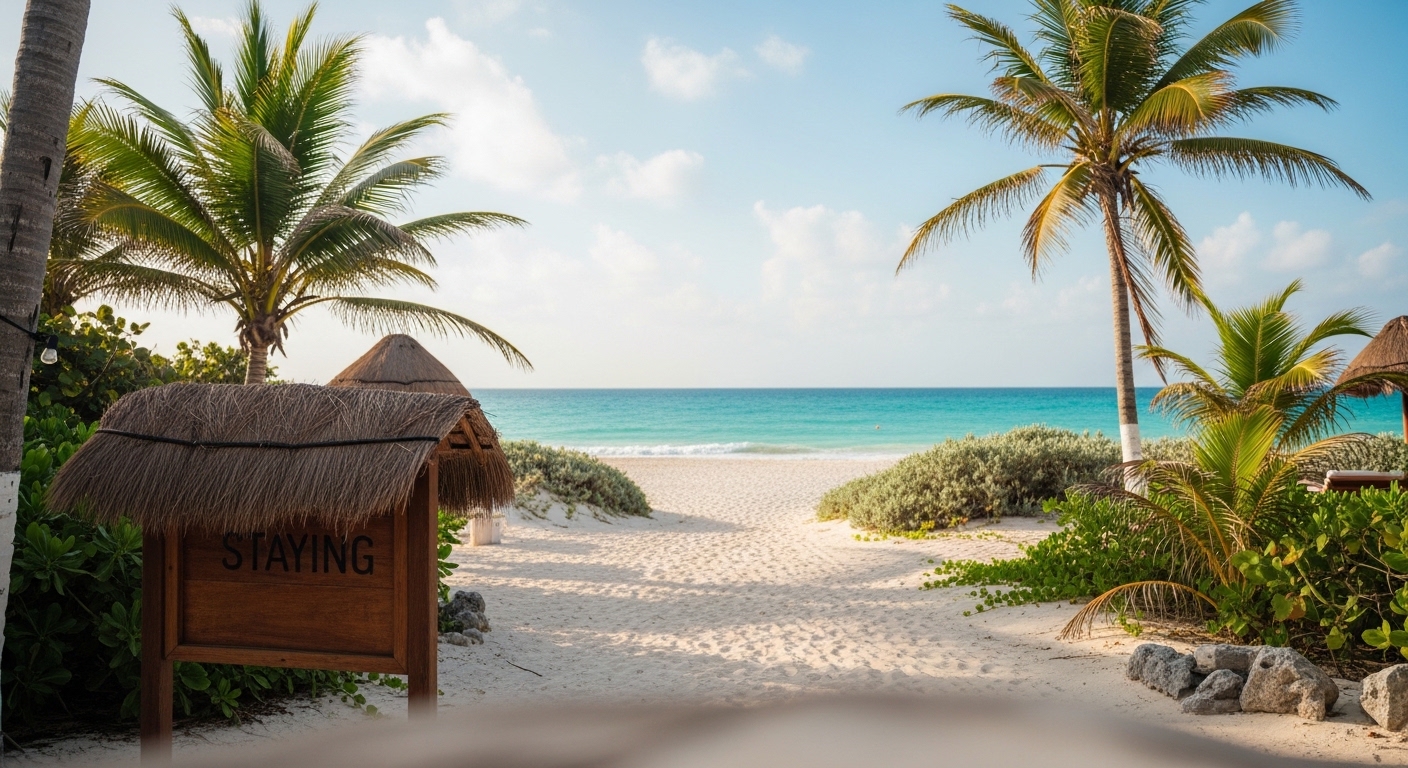
Stay in Tulum Pueblo (the town) if you want value and everyday amenities, and stay in the Zona Hotelera (beach zone) if beachfront access matters more than price. This single decision shapes your daily spend more than any other, because the beach strip carries a heavy premium for its location.
We found the town practical: taquerias, supermarkets, ATMs, the ADO station, and cheaper rooms, all a 10 to 15 minute bike ride from the sand. The beach zone delivers on the postcard, with hotels opening straight onto white sand, but it is expensive and cut off from services.
| Factor | Tulum Town (Pueblo) | Beach Zone (Zona Hotelera) |
|---|---|---|
| Nightly cost | Lower, wide budget range | Much higher premium |
| Beach access | 10-15 min by bike or taxi | Directly on the sand |
| Dining and shops | Abundant, cheap, local | Limited, pricey, resort-style |
| ATMs and services | Reliable, plentiful | Scarce, bring cash |
| Vibe | Working town, lively evenings | Boutique, quiet, scenic |
A practical middle path we have used: sleep in town for value, then spend beach days at a public access point or a beach club with a minimum spend. Our full where to stay in Tulum breakdown compares both areas by budget.
How Much Does the Tulum Ruins Entry Cost in 2026?
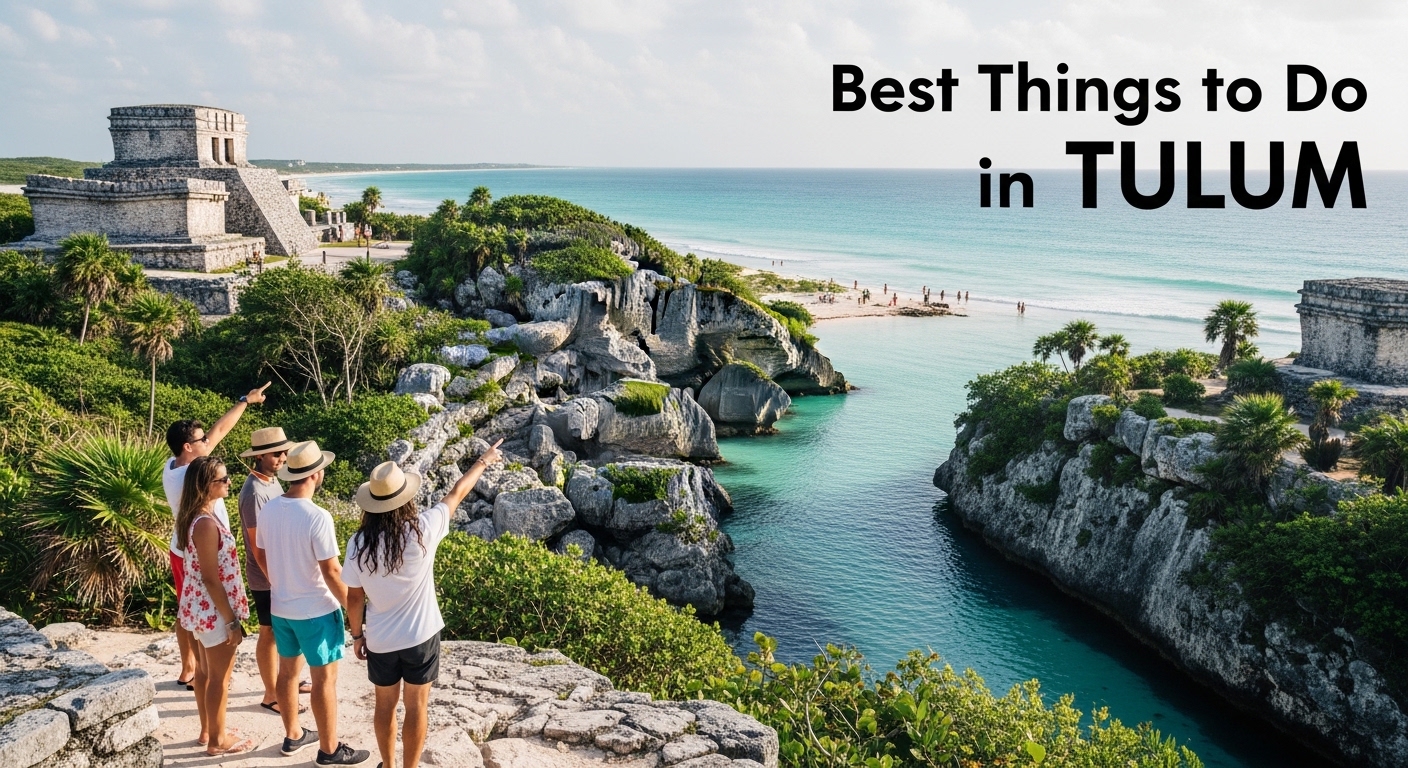
A foreign adult now pays about 515 pesos (roughly $30) in total to enter the Tulum ruins, because the site charges through three separate government entities rather than one ticket (Riviera Maya News, 2026). The core archaeological ticket from INAH doubled from 104 to 209 pesos on January 1, 2026, and the other two charges cover the protected coastal park and the surrounding Jaguar Park zone.
Here is how the total breaks down for a foreign adult in 2026:
- INAH archaeological ticket: 209 pesos (about $12), doubled from 104 pesos on January 1, 2026.
- CONANP bracelet: roughly 120-125 pesos (about $7), mandatory to reach the ruins.
- Jaguar Park access fee: roughly 180-295 pesos ($10-$17), also mandatory.
- Total for a foreign adult: about 515 pesos (~$30).
- Payment tip: carry pesos in cash, since card readers at the jungle gate are unreliable.
We arrived before 9am to beat the heat and the tour buses; by mid-morning the queue for the layered payments was long. Bring water, a hat, and reef-safe sunscreen, because shade on the clifftop is limited.
What Are Tulum’s Cenotes and What Do They Cost?
Cenotes are natural limestone sinkholes filled with clear freshwater, and the ones near Tulum charge roughly 370 to 500 pesos ($21-$29) each in 2026. They are the region’s signature swim, and no two feel alike: some are open pools, others are cathedral-like caverns.
A quick reference to popular options near Tulum:
- Gran Cenote: about 500 pesos (~$29), turtles and snorkeling, often a one-hour visit limit.
- Cenote Dos Ojos: 370-450 pesos ($21-$26), life jacket included, twin pools linked by a cavern.
- Cenote Calavera: a smaller, cheaper “temple of doom” pool close to town, popular at sunrise.
- Cenote Zacil-Ha: a shallow open cenote good for families and first-timers.
- General tips: arrive at opening, shower before entering, and skip regular sunscreen to protect the water.
We spent two mornings cenote-hopping and found early arrival made the difference between a private swim and a crowded one. For the full list, directions, and swim conditions, see our Tulum cenotes guide.
When Is the Best Time to Visit Tulum?
The best time to visit Tulum is December through April, the dry season, when rain is least likely and humidity drops (Climates to Travel, 2026). March is the driest month, averaging about 37 mm of rain across roughly four rainy days, while October is the wettest at about 207 mm over 13 rainy days.
Temperatures stay warm year-round, generally between 20 C (68 F) at night and 33 C (91 F) by day, so the real variable is rain, crowds, and price rather than cold. The trade-off is that the pleasant dry months are also the busiest and most expensive.
| Season | Months | Weather | Notes |
|---|---|---|---|
| Peak dry | Dec-Feb | Highs ~28 C (82 F), low humidity | Busiest, priciest, book early |
| Best value dry | Mar-Apr | Highs ~29-31 C (85-88 F), driest | March = driest month, great swimming |
| Shoulder | May, Nov | Warm, rising or easing rain | Fewer crowds, lower rates |
| Rainy / hurricane | Jun-Oct | Hot, humid, afternoon storms | Sept-Oct wettest; some sargassum |
For a month-by-month planner with crowd and price notes, read our guide on the best time to visit Tulum.
What Does a Tulum Trip Cost Per Day?
A mid-range visitor should budget roughly $80 to $150 a day in Tulum, with the beach zone pushing costs well above that and the town keeping them below. Tulum runs pricier than much of inland Mexico because it caters to international beach tourism, but town-based travelers can still keep it reasonable.
Rough daily budget bands, based on our own spending:
- Budget (town base): about $45-$70/day, cheap eats, a shared room, bike transport, one paid activity.
- Mid-range: about $80-$150/day, private room, sit-down meals, a cenote plus the ruins.
- Beach-zone comfort: $250/day and up, beachfront hotel, beach clubs, private transfers.
- Ruins day: about 515 pesos ($30) entry plus transport and water.
- Cenote day: 370-500 pesos ($21-$29) per cenote plus gear and a taxi.
Cash matters here: beach-zone card readers fail often and ATMs are scarce past the town, so we carried enough pesos for a full day.
Frequently Asked Questions
Is Tulum expensive compared to the rest of Mexico?
Yes, Tulum is one of the pricier destinations in Mexico, especially in the beach zone, where hotels and restaurants carry a strong location premium. Basing yourself in Tulum Pueblo, eating at local taquerias, and using bikes or the ADO bus keeps a trip far more affordable, with budget travelers managing roughly $45-$70 a day.
Do I need a car in Tulum?
No, you do not need a car to see the main sights. The ruins, town, and much of the beach zone are reachable by bike, taxi, or the ADO bus. A rental car helps only if you plan to reach far-flung cenotes or take day trips to sites like Coba or Chichen Itza on your own schedule.
How many days should I spend in Tulum?
Three to four days is enough for most first-timers to cover the ruins, two or three cenotes, and a couple of beach days without rushing. Add a day or two if you want the wider list of things to do in Tulum, day trips into the Riviera Maya, or a slower pace on the sand.
Is the water at the Tulum beach clean, or is there sargassum?
Tulum’s beaches are beautiful but can see sargassum seaweed, mainly from roughly April through August. The dry winter months tend to have clearer water, and conditions vary day to day and beach to beach, so checking recent local reports before you go is worth the effort.
Can I visit the Tulum ruins and a cenote in one day?
Yes, and it is a common plan. We reached the ruins at opening, finished by late morning before the heat peaked, then drove or taxied to a nearby cenote to cool off in the afternoon. Budget about 515 pesos for the ruins and 370-500 pesos for the cenote, plus transport and water.
Final Thoughts
Tulum rewards a little planning, mostly because its costs split across the ruins, the cenotes, the town, and the beach strip. Decide where you will sleep first, carry pesos in cash, aim for the dry months, and reach the ruins early. Do that, and the three-in-one nature of Tulum starts working in your favor.