Best Time to Visit Cebu 2026: Month-by-Month Guide
Key Takeaways: The best time to visit Cebu is January through May (dry season), with March–May offering the most consistently sunny weather. Whale shark watching at Oslob runs year-round, but sea conditions for diving and island hopping are best December–April. The Sinulog Festival (3rd Sunday of January) is the single biggest event in Cebu — plan 3–4 months ahead for accommodation if attending. Avoid typhoon season (October–December) when possible, though Cebu is less typhoon-prone than northern Philippines.
The Philippine Atmospheric, Geophysical and Astronomical Services Administration (PAGASA) classifies Cebu province under Climate Type III — no dry season with a short dry period, and no pronounced maximum rain period. In practice this means Cebu receives rain year-round but has a notably drier period from November through May. Average annual rainfall in Cebu City: approximately 1,500mm. Oslob whale shark interaction: year-round, feeding window 6–10am daily. Sinulog Festival draws an estimated 1–2 million visitors to Cebu City over the festival weekend.
For full trip planning, see Cebu Travel Guide. For what to do during your visit, see Best Things to Do in Cebu.
Cebu’s Two Seasons — Best Time To Visit Cebu

Dry Season (amihan) — November to May
Northeast trade winds bring dry, cooler air. Sea conditions calm. Best visibility for diving and snorkeling. November–December can still see occasional rain; January–May is the reliable core of the dry season.
Wet Season (habagat) — June to October
Southwest monsoon brings increased rainfall and rougher seas. Day trips to Oslob are still possible but choppy seas make island hopping uncomfortable. Typhoon risk is present — Cebu is in the Visayas, which sits in the typhoon corridor but typically receives glancing blows rather than direct hits.
Month-by-Month Breakdown

January — Sinulog Festival (Book Far in Advance)
Weather: Dry, 26–30°C. Low humidity. One of the best months weather-wise.
Key event: Sinulog Festival on the 3rd Sunday of January — the feast of the Santo Niño. One of the Philippines’ largest religious festivals: street dancing, drumming, processions, and millions of visitors. Cebu City becomes impassable by car during the parade days.
Practical: Accommodation books out 3–6 months ahead for festival dates. If attending, reserve a Cebu City hotel within walking distance of the route. If avoiding the festival, skip this weekend and visit the rest of January — excellent weather without the crowds.
Activities: All outdoor activities at peak conditions. Oslob whale sharks, Kawasan canyoneering, Mactan diving — all ideal.
February — Best Value Month
Weather: Dry, 27–31°C. Low humidity, plenty of sun.
Why go: After Sinulog crowds clear, February has excellent weather with lower hotel prices than January peak. Chinese New Year can affect some Cebu City hotels (business travelers), but overall quieter than January.
Activities: Peak conditions for all activities. Moalboal sardine run is particularly good — visibility excellent, schools dense.
March–May — Hottest and Driest
Weather: 29–35°C. Very dry. March–May is mango season across the Philippines — Cebu’s mangoes are particularly good.
Why go: Guaranteed sun. Best conditions for beach time on Mactan, island hopping, and photography. The Kawasan Falls water is most electric-blue (less diluted by rain).
Caution: April–May becomes hot — heat index can reach 38–40°C midday. Plan outdoor activities for early morning. The 3:30am departure for Oslob actually becomes comfortable in this context.
Holy Week (March/April): Domestic tourism peaks significantly. Mactan resorts fill with Manila families. Book accommodation 3–4 weeks ahead for Easter week.
June–August — Start of Wet Season
Weather: 28–32°C, increased humidity, afternoon rain common.
Why go: Fewer tourists. Hotel prices drop 15–25%. Waterfalls (including Tumalog near Oslob) are fuller and more dramatic. Budget travelers find the best deals.
Caution: Seas become rougher for island hopping. Diving visibility can decrease. Oslob whale shark watching is still operational — the sharks are present year-round. Check weather before committing to Moalboal boat trips to Pescador Island.
September–October — Typhoon Risk Period
Weather: 27–31°C but high typhoon risk. Rain can be heavy and persistent.
Recommended? Only for flexible travelers who can adjust plans if a typhoon hits. Cebu is not the highest-risk province — Luzon and Eastern Visayas face more direct hits — but disruptions to flights and sea transport do happen.
If you go: Choose a Mactan resort over Cebu City center (less flooding risk). Keep travel insurance active. South Cebu day trips require weather windows.
November–December — Dry Season Returns
Weather: November sees the dry season beginning — rain decreases but not yet fully dry. December is significantly drier.
Christmas in the Philippines: The Philippines takes Christmas seriously starting in September (Christmas songs in malls from September 1) but December itself is festive — lantern festivals, church events, Simbang Gabi (9-day dawn mass). Cebu City is particularly atmospheric.
Caution: December hotel prices rise for the last 2 weeks as Christmas–New Year travel peaks. Book ahead.
The Cebu diving community considers February and March the single best months for dive visibility across the province — clarity at Moalboal Pescador Island, Mactan reefs, and Malapascua Monad Shoal all peak during this window, coinciding with the driest weather and calmest seas. If underwater photography or dive quality is the primary reason for the trip, aim for this window.
Best Time for Specific Activities

| Activity | Best months | Notes |
|---|---|---|
| Whale shark watching (Oslob) | Year-round, Jan–May best seas | Year-round operation, 6am start |
| Kawasan Falls canyoneering | Jan–May | Water level ideal, not dangerously high |
| Mactan island hopping | Dec–Apr | Calm seas, best snorkel visibility |
| Moalboal sardine run | Year-round | School present year-round |
| Malapascua thresher shark diving | Nov–May | Best viz + calmest dive conditions |
| Sinulog Festival | 3rd Sunday January | Book 3–6 months ahead |
| Bantayan Island beach | Jan–May | Roads accessible, seas calm |
| Budget travel (cheapest) | June–August | 15–25% off accommodation |
Cebu vs. Peak Season Timing for Other Destinations
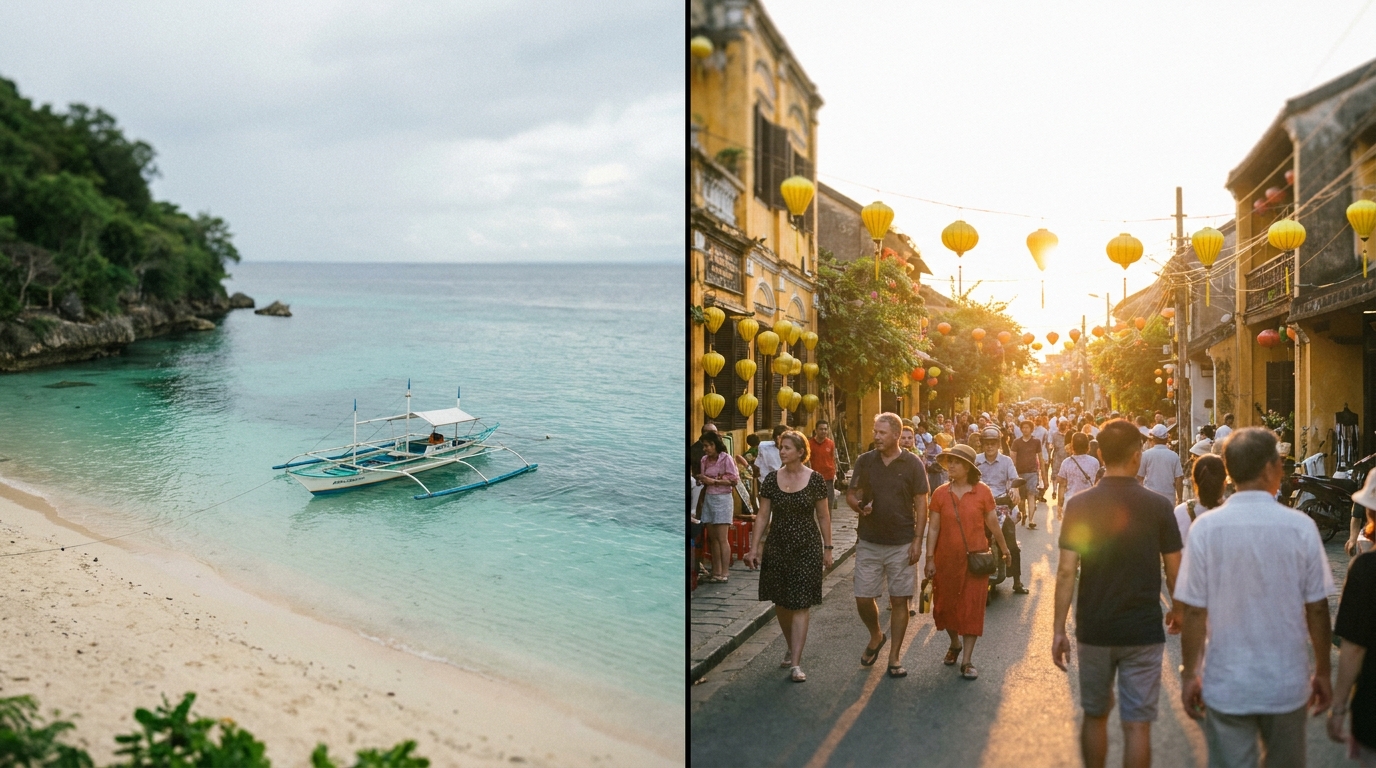
Bali comparison: Bali’s peak season is July–August (when Australians travel). Cebu’s peak is December–April (Philippine domestic travel + international). Traveling Cebu in June–September — Bali’s shoulder season — gets you lower Cebu prices while Bali is crowded.
Bangkok vs Cebu: Bangkok’s best weather is November–February; Cebu’s best is also December–May. The two destinations pair naturally for a Southeast Asia trip in the dry months.
Frequently Asked Questions
What is the best month to visit Cebu?
February or March. Dry season is in full effect, the Sinulog Festival crowds have passed, temperatures are warm but not extreme, and sea conditions are ideal for all water activities. February also offers lower accommodation prices than January or December peak.
Is Cebu worth visiting in the rainy season?
Yes, with adjusted expectations. Oslob whale sharks still run daily. Waterfalls are fuller. Hotel prices are significantly lower. The main limitation is island hopping in rough seas — less reliable June–September.
Can you visit Cebu during Sinulog?
Yes, but prepare thoroughly: book accommodation 3–6 months ahead, expect traffic chaos during parade days, and embrace the festival energy. The Sinulog street dancing and drumming is one of the Philippines’ most impressive events. If you’re not interested in crowds, avoid the festival weekend but January otherwise has excellent weather.
Affiliate Disclosure: This post may contain affiliate links to Klook. We earn a small commission at no extra cost to you if you book through these links.
Sources:
1. PAGASA — Philippine climate data for Cebu province, 2025
2. Cebu Tourism Office — Sinulog Festival information, 2025
3. Philippines Department of Tourism — Cebu seasonal guide, 2025