Best Things to Do in Cebu 2026: 14 Experiences Worth the Trip
By TravelguidestipUpdated 10 min readHow we earn
Hotel buttons open Stay22 (Booking.com, Agoda and others) and tour buttons open GetYourGuide. We may earn a commission at no extra cost to you.
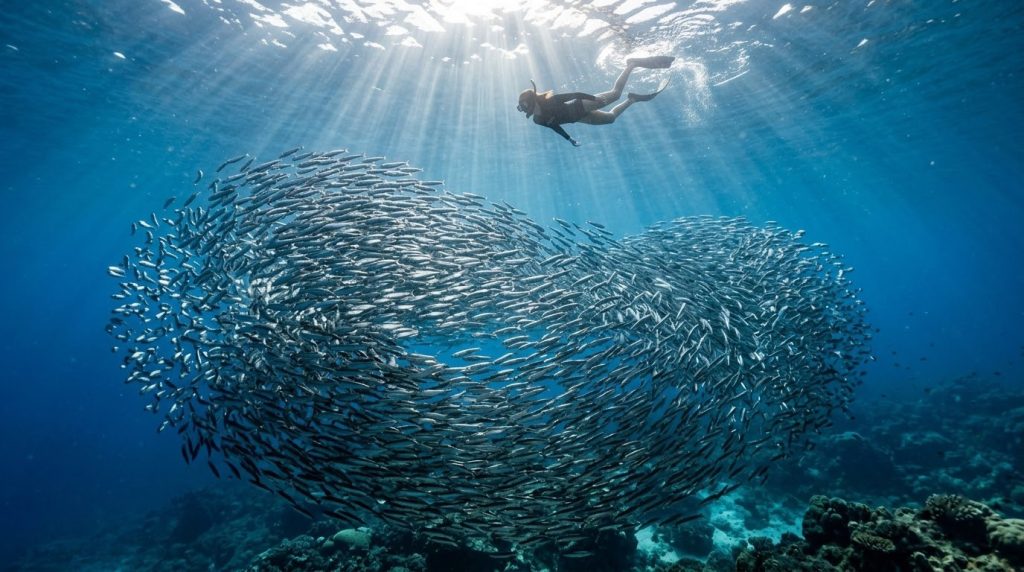
Quick answer: The top things to do in Cebu are snorkeling with whale sharks at Oslob and canyoneering Kawasan Falls, usually combined on one long South Cebu day trip, plus snorkeling the Moalboal sardine run and eating authentic Cebu lechon. City-side, pair Magellan’s Cross and Basilica del Santo Niño with Mactan island hopping, and divers add thresher sharks at Malapascua.
Key Takeaways: The best things to do in Cebu split into two categories: South Cebu adventure (whale sharks, canyoneering, sardines) requiring full-day commitment, and Cebu City/Mactan experiences doable in half a day. Oslob whale shark watching (3.5h south) and Kawasan Falls canyoneering (3.5h south) are often combined on the same long day trip for maximum efficiency.
Don’t skip the lechon — Cebu’s roast pig is a specific culinary identity, not a generic Philippines dish.
Oslob whale shark (Rhincodon typus) interaction began in 2011 after local fishermen started feeding them to keep them from destroying fishing nets. The practice now draws 500,000+ visitors/year and has generated significant scientific controversy about habituation effects. Kawasan Falls canyoneering covers 7km of river with 5 major jumps (up to 9m), slides, and cliff swims.
Moalboal’s sardine run: an estimated 20–30 million sardines form a bait ball that can be snorkeled from shore (no boat needed). Magellan’s Cross was planted April 14, 1521 — the oldest remaining artifact from Spain’s arrival in the Philippines.
For full trip context, see Cebu Travel Guide. For trip planning, see Cebu Itinerary.
1. Whale Shark Watching at Oslob — Best Things To Do In Cebu
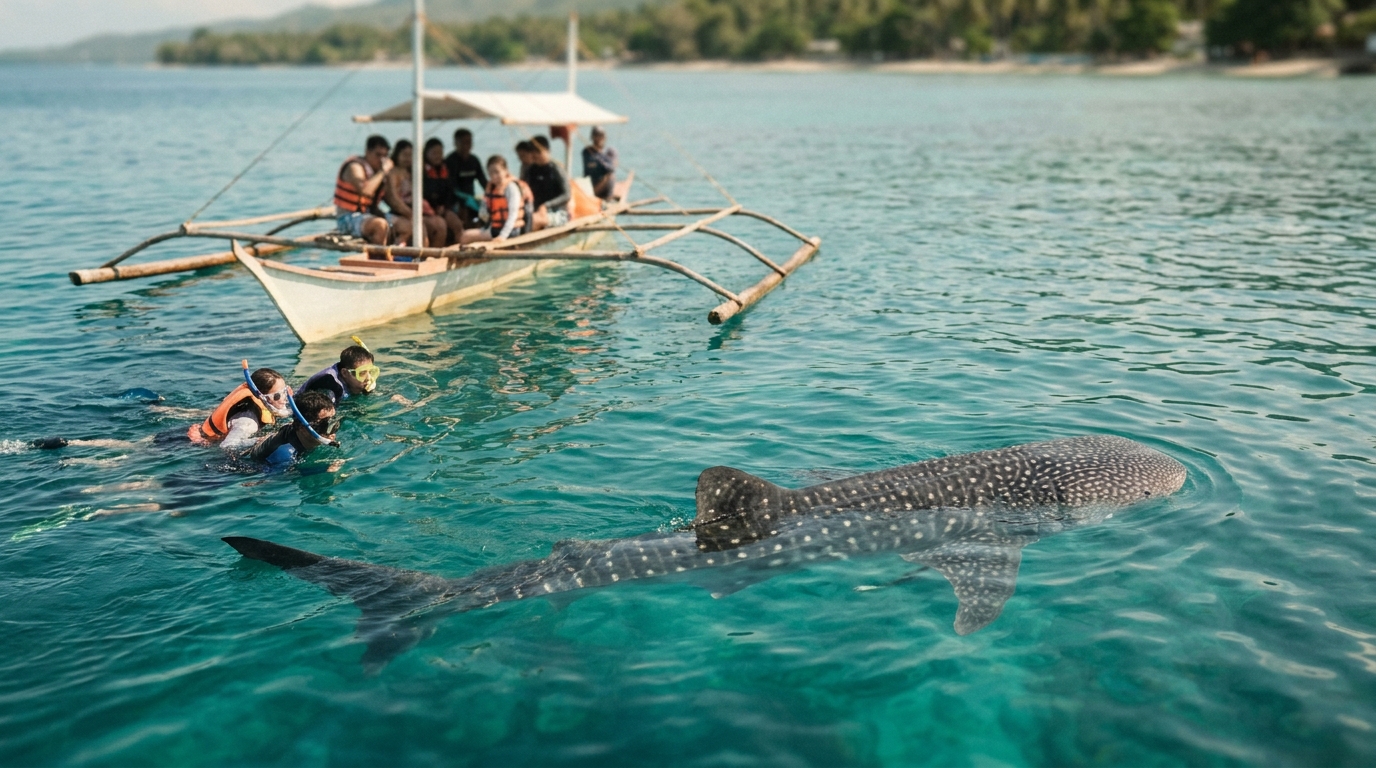
Time: Full day (leave 3:30am from Cebu City) | Cost: 1,000–1,500 PHP interaction fee + transport | Location: Oslob, South Cebu
Oslob is the only place in the world where you can predictably encounter whale sharks in shallow water — 30–40 sharks are fed daily by local fishermen, which draws them to the surface. Interaction is snorkeling only (no scuba allowed within 10m of the sharks); the animals range from 5–8m and are close enough to touch (though you’re not allowed to).
Logistics: The feeding window is 6–10am. Leave Cebu City by 3:30am to arrive for first interaction at 6am. Public van from South Bus Terminal: 180 PHP one-way. Or book a tour that handles transport.
Ethical note: The whale sharks are habituated to human feeding — this is a genuine wildlife controversy. If you’re uncomfortable with the ethics, Moalboal’s sardine run (non-feeding, wild encounter) is an alternative.
2. Kawasan Falls Canyoneering
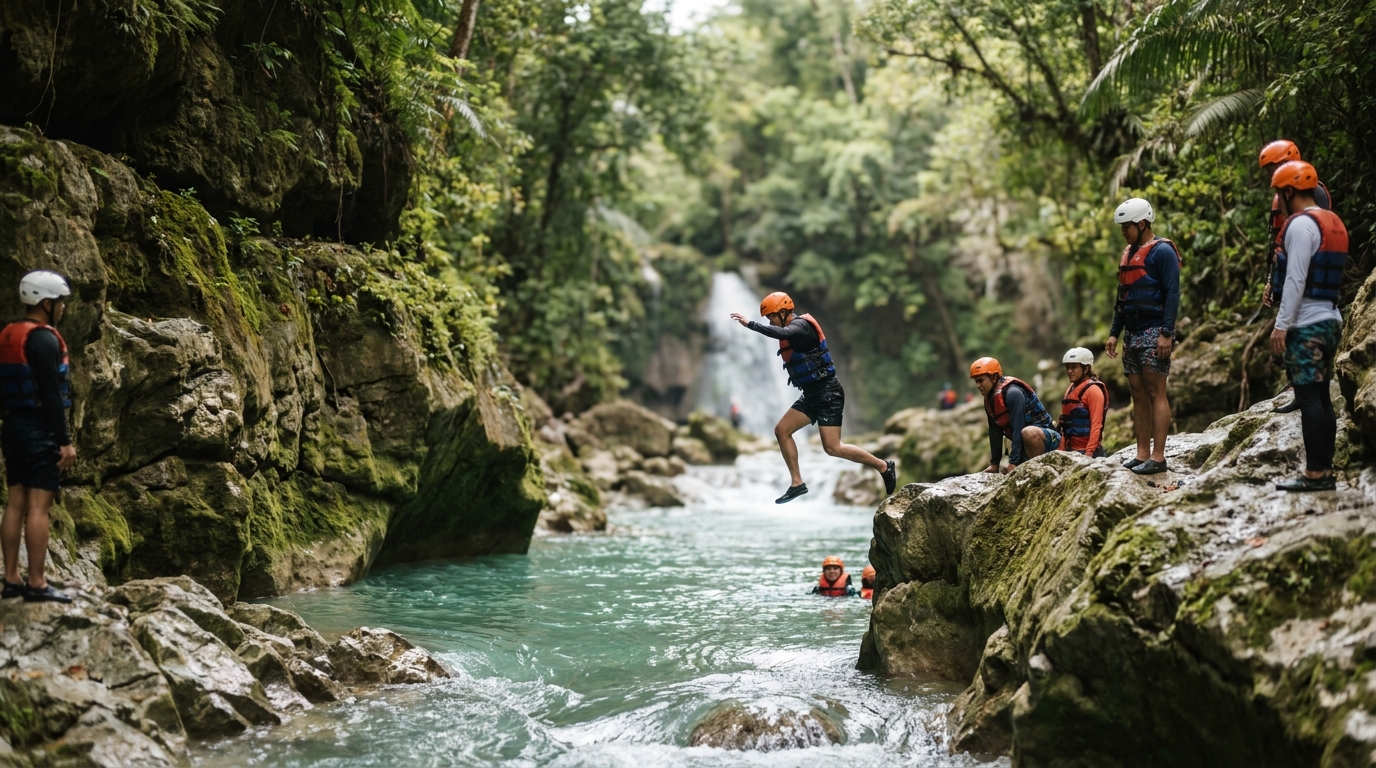
Time: Full day | Cost: 800–1,200 PHP for guided canyoneering | Location: Matutinao, Badian (South Cebu)
A 7km river adventure that ends at the electric-blue Kawasan Falls — you jump, slide, and swim through limestone gorges with jumps reaching up to 9 meters. One of the Philippines’ best adventure activities. The water is intensely turquoise from calcium deposits in the limestone.
Practical: Start at Matutinao village. Guides are mandatory (enforce safety at the jump points). Wear swimwear, bring waterproof sandals. Combination with Oslob is popular: whale sharks at 6am → canyoneering start 10am → back in Cebu City by 7pm. A long day but efficient use of one South Cebu trip.
Don’t confuse: Kawasan Falls (tourist viewing spot, 30 min walk) vs canyoneering (the 7km river trail) — both use the same name. The canyoneering is 5x the price but the worthwhile experience.
3. Snorkel the Moalboal Sardine Run
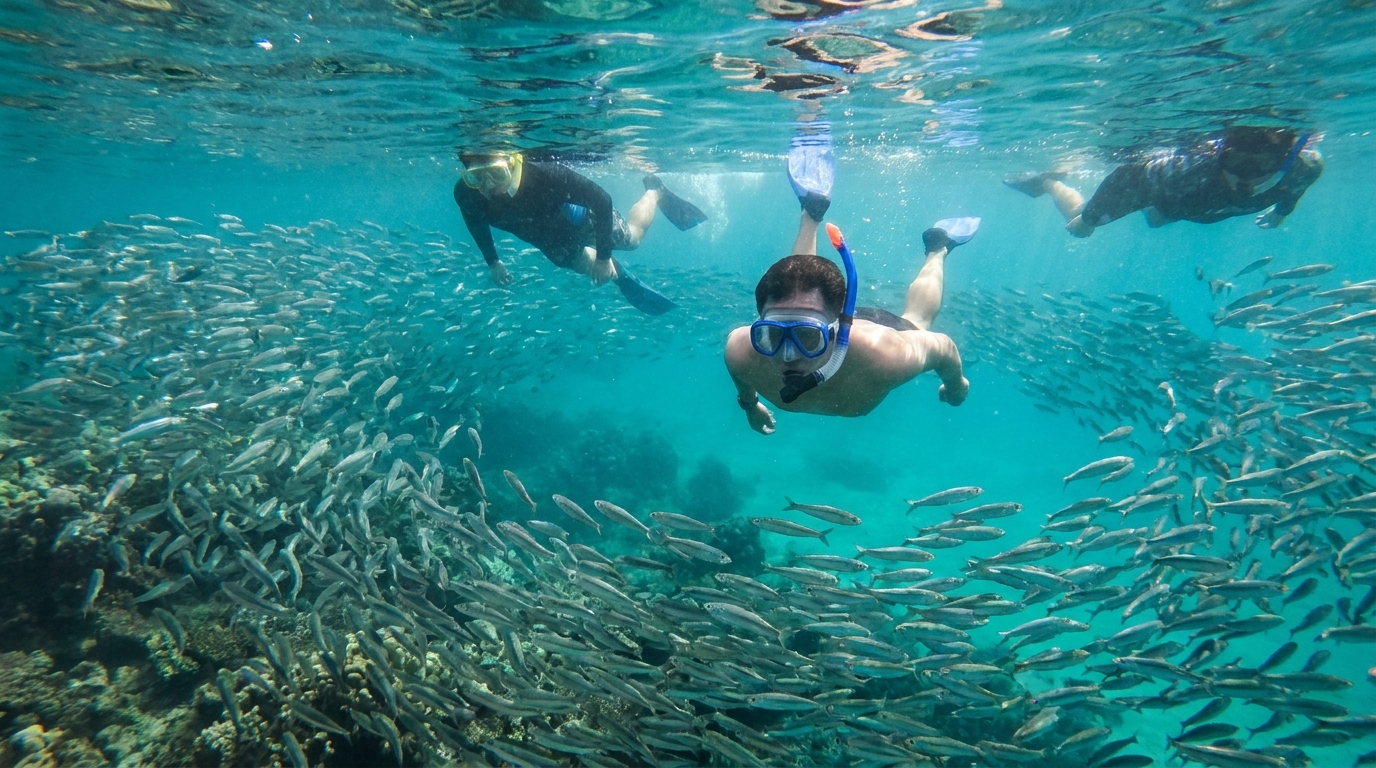
Time: Half day | Cost: 150 PHP beach entry + 300 PHP snorkel gear | Location: Panagsama Beach, Moalboal
20–30 million sardines form a dense bait ball just 10 meters from Panagsama Beach — you walk into the water and you’re surrounded. The school moves as one organism; watching them swirl around you in a cylinder of silver is one of the Philippines’ strangest wildlife encounters. Free-divers dive through the middle.
Also at Moalboal: Pescador Island (15 min by boat) has resident sea turtles, a coral wall, and occasional thresher shark visits. Full dive day: sardines + Pescador Island + sea turtle encounter.
Getting there: 3 hours south by van from South Bus Terminal. Combine with Kawasan Falls as a 2-day South Cebu trip (stay overnight in Moalboal).
4. Eat Lechon at CnT Lechon or Rico’s
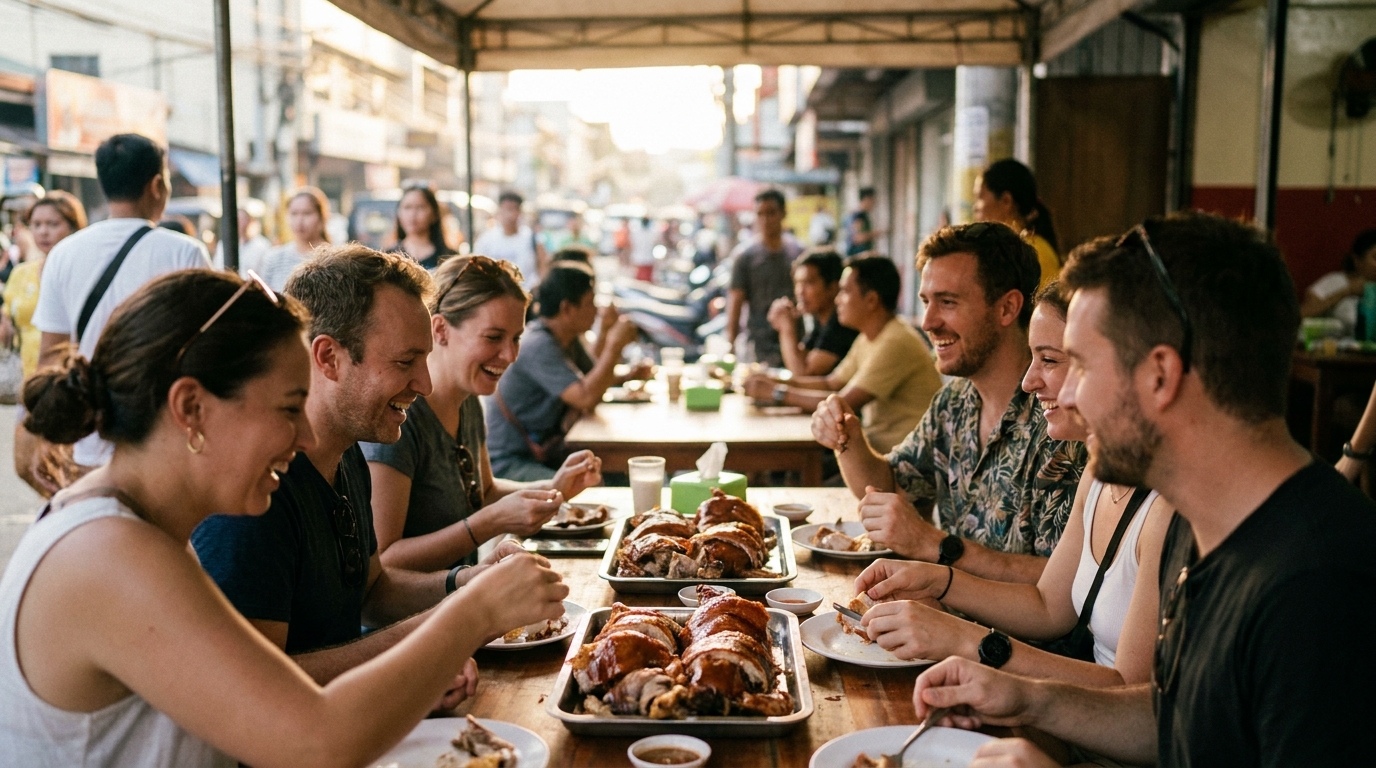
Time: Lunch | Cost: 150–200 PHP for a lechon rice plate | Location: Cebu City
Cebu lechon is a specific thing — the pig is stuffed with lemongrass, garlic, and spices, roasted on a spit for 6–8 hours until the skin is crackling-crisp. The flavor is different from Manila lechon (which uses liver sauce). Anthony Bourdain once called Cebu lechon the best pig he’d ever eaten.
Where: CnT Lechon Restaurant (Carbon area, open 6am–sell out) and Rico’s Lechon (multiple branches, more tourist-friendly) are the two most cited. CnT for authenticity; Rico’s for reliability. Both have whole-pig table service if you book ahead.
Order: Lechon rice (isda plate), skin-on. Get extra crackling. The dipping sauce is coconut vinegar, not the liver sauce common elsewhere.
5. Magellan’s Cross and Basilica del Santo Niño
Time: 1.5 hours | Cost: Free (donation appreciated) | Location: Downtown Cebu City
The two most historically significant sites in the Philippines:
Magellan’s Cross: A wooden cross planted by Ferdinand Magellan on April 14, 1521 — the first Catholic act in the Philippines. The original cross is encased in a hollow tindalo wood replica (to prevent souvenir hunters from chipping it). In the adjacent rotunda, ceiling murals depict the 1521 baptism scene.
Basilica Minore del Santo Niño: 5 minutes walk. Built in 1565 — the Philippines’ oldest Catholic church, on the site where the Santo Niño statue (given by Magellan to the first baptized Filipinos) was found 44 years later. Still housing the original 16th-century statue of the child Jesus. Religious pilgrimage destination year-round.
Combine with: Fort San Pedro (10 min walk) — the oldest triangular fort in the Philippines, built 1565 by Miguel López de Legazpi. Now a museum.
6. Island Hop in Mactan
Time: 4–6 hours | Cost: 800–1,500 PHP for a shared island hopping boat | Location: Mactan Island
Multiple small islands off Mactan’s coast for snorkeling and beach hopping:
- Olango Island: Wildlife sanctuary, large bird population, good snorkeling at the reef flat
- Hilutungan Island: Reef snorkeling, sea turtles visible
- Caohagan Island: Small island with white sand beach, very few visitors
- Nalusuan Island: Marine sanctuary with good coral cover
Island hopping boats depart from various Mactan beachfronts or Maribago. Shared tours 800–1,200 PHP include boat, guide, and snorkel gear. Private boats 2,000–3,500 PHP for groups.
7. Dive with Thresher Sharks at Malapascua
Time: 2-day minimum | Cost: 4,000–6,000 PHP for a 2-day dive package | Location: Malapascua Island (5h north of Cebu City)
Monad Shoal off Malapascua is the world’s most reliable spot for encountering thresher sharks (Alopias vulpinus) — they visit the cleaning station at 20–35m depth every morning at dawn. Four-meter wingspan, unusually long tail fin, entirely harmless. Most dive sites worldwide only see them occasionally; Malapascua guarantees sightings on early-morning dives.
Logistics: Take a bus or van north to Maya pier (5h), then a 30-minute boat to Malapascua. Stay overnight to dive at dawn. Come back via the same route.
8. Sugbo Mercado Night Market
Time: Evening | Cost: 100–400 PHP for a meal | Location: IT Park, Cebu City (Thursdays–Sundays)
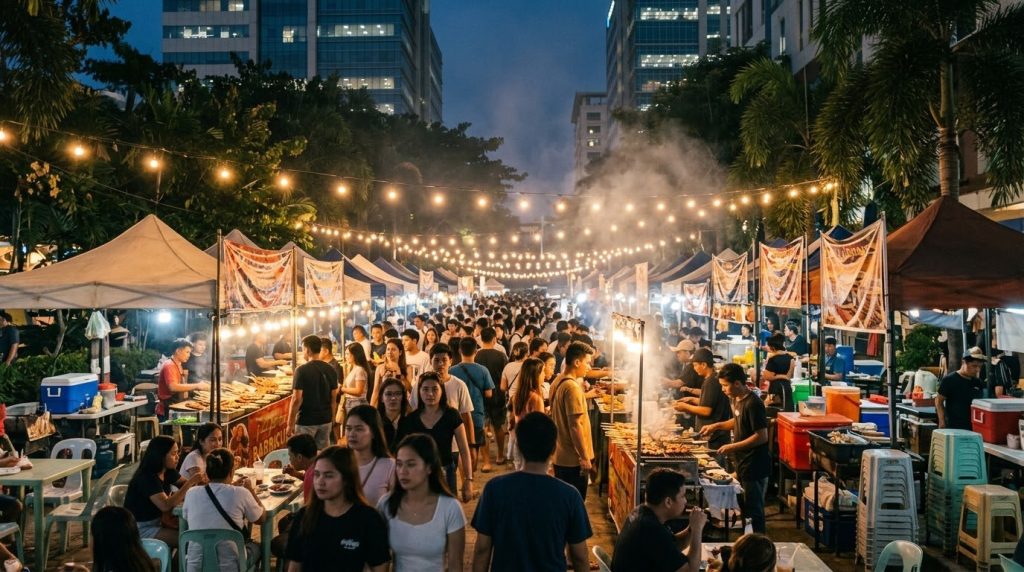
Cebu City’s largest night market: local food stalls serving BBQ pork skewers, seafood, halo-halo (shaved ice dessert), and Filipino street food. Open-air, lively, and primarily for locals — not a tourist trap. A good introduction to Cebu food culture without committing to a restaurant.
9. Visit Tumalog Falls
Time: 1 hour | Cost: 50 PHP entry + 150 PHP motorbike ride from Oslob | Location: Near Oslob, South Cebu
A curtain waterfall 30m high in the middle of the jungle, 20 minutes by motorbike from Oslob. Usually added to the Oslob whale shark itinerary as a second stop. The mist zone under the falls is cold and refreshing.
10. Explore Carcar City Lechon Market
Time: Half day | Cost: 80–150 PHP for lechon | Location: Carcar, South Cebu (1.5h south)
Carcar has a permanent lechon market lining the town plaza — rows of whole roasted pigs, chopped to order in front of you. Different from Cebu City lechon (Carcar style is drier, more charred, with a vinegar dip). Many Cebu locals consider Carcar lechon superior. Add as a lunch stop on the way to or from Oslob.
11. Casa Gorordo Museum
Time: 1 hour | Cost: 100 PHP | Location: Colon Street, Cebu City
Cebu’s best-preserved Spanish colonial house (1850s), converted to a museum. The interior shows how Cebu’s ilustrado (educated elite) class lived — four-poster beds, Chinese porcelain, capiz shell windows, and carved Philippine hardwood furniture. The neighborhood around Colon Street retains several original colonial-era buildings.
12. Swim at Bantayan Island
Time: 2-day minimum | Cost: 5 hours from Cebu City, 50–200 PHP guesthouse | Location: Santa Fe, Bantayan Island
Bantayan is Cebu’s quiet beach alternative — white sand, calm water, local fishing boats, and a fraction of the crowds at Mactan. Not as developed (limited restaurants and resorts), but for travelers wanting a genuine beach experience without resort pricing, Bantayan is the answer.
Nature and the Busay Highlands: Osmeña Peak, Temple of Leah and Sirao Garden
Time: Half day to full day | Cost: varies by stop | Location: Dalaguete (Osmeña Peak) and Busay, Cebu City (Temple of Leah, Sirao Garden)
Osmeña Peak is Cebu’s highest point at 1,013 metres, reached by a 25-minute walk from the parking area across grass ridges that look more like a different country than the tropics. Entry is AUD 3.70 · USD 2.70 (₱150), which includes a mandatory local guide; parking is by donation.
Osmeña Peak sits roughly two to three hours south of Cebu City, which puts it within range of a long day trip but makes an overnight stay in Dalaguete the more comfortable option if you also want the sunrise view from the summit.
Closer to Cebu City, the Busay Highlands pack several short stops into one afternoon without a full day commitment. Temple of Leah is a Roman-style mansion-turned-museum built as a tribute to a late wife, open 7am to 6pm, with entry at AUD 3.00 to 3.70 · USD 2.10 to 2.70 (₱120 weekdays, ₱150 weekends).
Sirao Flower Garden sits five minutes’ drive from Temple of Leah and charges about AUD 2.50 · USD 1.80 (₱100) per garden for its rows of celosia and other flowering displays, each run by a different local family.
Pair both with Tops Lookout, a short drive further up the ridge, for a sunset view over Cebu City and Mactan. A habal-habal (motorbike taxi) or a hired Grab for the afternoon covers all three stops without the hassle of parking at each one separately.
None of these stops need a full South Cebu day trip to reach, which makes the Busay Highlands a good half-day option on an arrival or departure day when you still want to see something beyond the city centre.
Morning visits avoid both the midday heat on the Osmeña Peak walk and the afternoon tour-bus crowds that build up at Temple of Leah once the Busay circuit becomes a standard add-on for city tours.
Sumilon Island and a Bohol Day Trip
Time: Full day for either | Cost: Sumilon from AUD 36.50 · USD 26 | Location: Off Oslob (Sumilon); Tagbilaran, Bohol
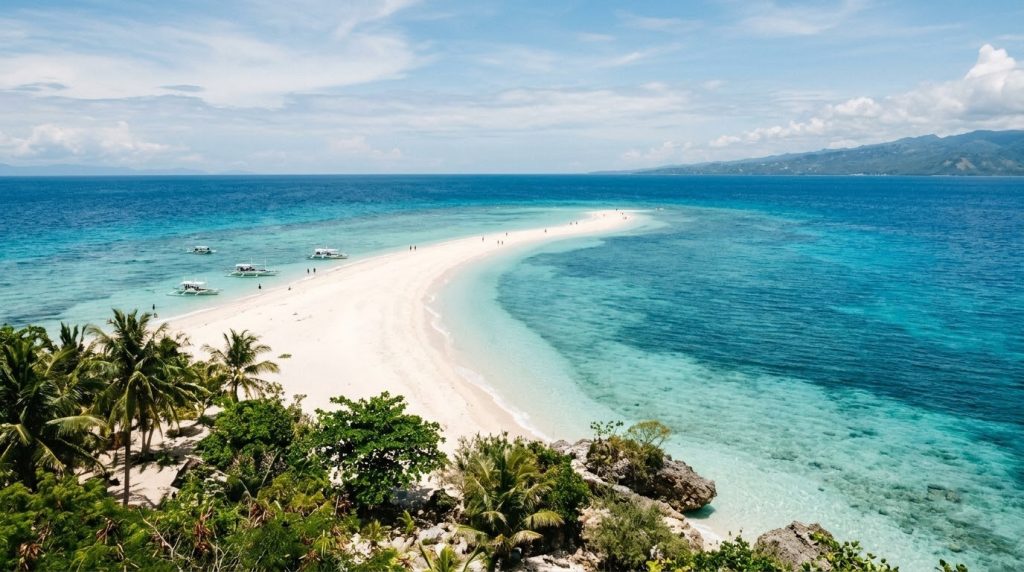
Sumilon Island sits a short boat ride from Oslob and is run as a day-pass destination by Bluewater Sumilon resort, with a sandbar that shifts shape with the tides. A weekday day pass runs AUD 36.50 · USD 26 (₱1,475), rising to about AUD 49.50 · USD 35.70 (₱2,000) on weekends.
Both Sumilon tiers include a buffet lunch and boat transfers, and are best booked online ahead of time rather than arranged on the spot, since daily visitor numbers are managed by the resort.
Pairing Sumilon with the Oslob whale shark interaction makes sense logistically, since both sit on the same stretch of South Cebu coast. It does turn the day into a long one if you also want to fit in Tumalog Falls as well.
Bohol works better as a separate one- or two-day add-on than a same-day combination with South Cebu. The fast ferry from Cebu City pier to Tagbilaran takes around two hours, putting the Chocolate Hills, the Loboc River, and the tarsier sanctuaries within reach.
Most travellers prefer to sleep over in Panglao rather than attempt Bohol’s highlights as a round trip from Cebu in a single day, since the ferry crossing alone takes up roughly four hours of the day in each direction.
If you only have time for one island add-on, weigh the two against your interests: Sumilon suits a relaxed beach and lunch day, while Bohol suits travellers who want a genuinely different landscape from Cebu’s own hills and reefs.
Either add-on sits outside the usual South Cebu adventure loop of Oslob and Kawasan, which makes it a useful way to break up a longer Cebu stay rather than repeating the same southern route twice.
Find your Cebu hotel on the map
Live prices from Booking & Airbnb — tap a pin to compare stays around Cebu City and Mactan and beyond.
Frequently Asked Questions
What is Cebu most known for?
Whale shark watching at Oslob, Kawasan Falls canyoneering, lechon (roast pig), and the historical Spanish colonial landmarks at Magellan’s Cross and Basilica del Santo Niño. The combination makes Cebu one of the Philippines’ most varied destinations.
Is Cebu good for snorkeling?
Yes — Moalboal (sardine run), Mactan island hopping (sea turtles), and Olango Island all offer good snorkeling without needing dive certification. The Gili Islands comparison: Cebu snorkeling has more variety but requires more transport to reach the best sites.
How much time do you need for whale sharks in Cebu?
One full day minimum — you leave Cebu City at 3:30am, swim with whale sharks 6–9am, optionally continue to Kawasan or Tumalog Falls, and return by early evening.
Sources:
1. Philippines Department of Tourism — Cebu activities, 2025
2. Oslob Tourism Office — whale shark interaction guidelines, 2025