Things to Do in Ubud in: 9 Best Experiences and Costs
By TravelguidestipUpdated 10 min readHow we earn
Hotel buttons open Stay22 (Booking.com, Agoda and others) and tour buttons open GetYourGuide. We may earn a commission at no extra cost to you.
In short
- Go early: reach Tegallalang before 10 am for lighter crowds and softer light on the terraces.
- Free sights add up: Campuhan Ridge Walk, Ubud Palace, and the art market cost nothing to enter.
- Tours are cheap: Ubud tours run roughly $13-51 per person (about 210,000-820,000 IDR), and cooking classes start near $20.
- Dry season is peak season: April to October brings the best weather and the biggest crowds.
- Plan a sunrise: Mount Batur is the one big activity that needs a very early start, so book a day you have nothing else planned.
The best things to do in Ubud are walking the Tegallalang rice terraces early, meeting the macaques at the Sacred Monkey Forest, joining a Mount Batur sunrise hike, and rinsing off at a waterfall. Add a Balinese cooking class, a stroll through the art market, and a purification visit to Tirta Empul, and you have a full, well-rounded stay.
Ubud sits in the green, cooler uplands of central Bali, away from the beach clubs. Most of its sights are temples, terraces, and craft villages within 30 to 60 minutes of the center. This guide sticks to Ubud itself and its easy day trips, with approximate costs in Indonesian rupiah (IDR) and US dollars. Prices change, so treat every figure as a guide and confirm before you go.
On our most recent stay, we based ourselves in central Ubud for five nights and tried to do too much in the first two days. The better rhythm turned out to be one big outing each morning, then slow afternoons with coffee and a swim. The terraces felt entirely different at 7 am compared with the tour-bus hours, and that single change made the biggest difference to how the trip felt.
What are the best things to do in Ubud?
The best things to do in Ubud mix nature, ritual, and craft. Tour listings for the area run roughly $13-51 per person (operator pricing, 2026), so most highlights are affordable. If you only have three days, prioritize the terraces, the Monkey Forest, Tirta Empul, and one sunrise outing.
Here is the overview. Use it to match activities to your time and energy.
| Activity | Best time of day | Time needed | Rough cost | Suits |
|---|---|---|---|---|
| Tegallalang Rice Terraces | Before 10 am | 1.5-2 hours | Walking is free apart from small tips and parking | Photographers, everyone |
| Sacred Monkey Forest | Morning or late afternoon | 1-2 hours | Entry fee varies, check on arrival | Families, animal fans |
| Mount Batur sunrise hike | Starts in the middle of the night | 5-7 hours with transfers | Tours roughly $13-51 (210,000-820,000 IDR) | Fit hikers |
| Tirta Empul | Morning | 1-2 hours | Fee varies | Culture seekers |
| Campuhan Ridge Walk | Morning or late afternoon | 1-1.5 hours | Free | Casual walkers |
| Balinese cooking class | Morning with market visit | 3-5 hours | From about $20 (about 320,000 IDR) | Food lovers |
| Ubud Palace and Art Market | Morning | 1-2 hours | Free to enter | Browsers, shoppers |
Source: operator pricing and local tourism listings, 2026
Why start with the Tegallalang Rice Terraces?
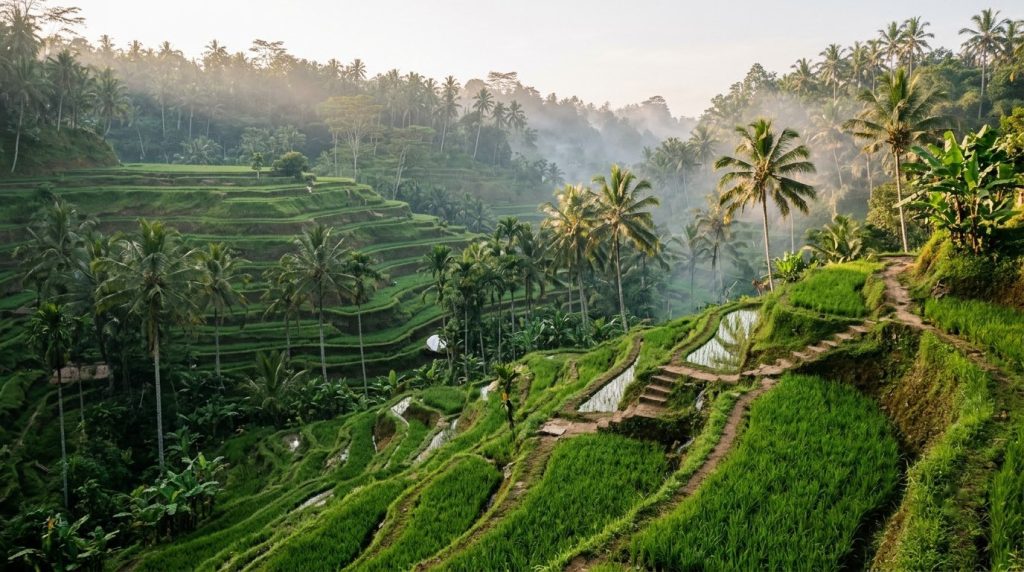
Start with the Tegallalang Rice Terraces because they are at their best in the first hours of the day. The dry season runs April to October, and going before 10 am gives you softer light and fewer people. Walking the paths is free apart from small tips and parking, according to operator listings (2026).
1. Tegallalang Rice Terraces
These tiered fields follow the subak system, Bali’s traditional cooperative water-sharing network, and the steep valley makes for one of the island’s classic views. Swings and photo props crowd the edges nearby, which some visitors love and others skip. Wear shoes with grip, since the steps get slick after rain.
Allow about two hours including the walk down and back up. Tips for the farmers who maintain the paths are customary, so carry small notes in rupiah, such as 10,000-20,000 IDR (about $0.60-1.20). This is a good fit for almost everyone, though the steps can be tiring in heat.
2. Sacred Monkey Forest
The Sacred Monkey Forest is a macaque sanctuary on the south side of town, with shaded paths, moss-covered statues, and temple compounds. It is an easy walk from central Ubud. The entry fee changes, so check the current price at the gate rather than relying on an old blog post.
The macaques are used to people and quick to grab sunglasses, hats, and loose snacks. Keep food out of sight, don’t stare them down, and secure your bag zippers. Go early or late for cooler air and calmer animals. Plan one to two hours.
3. Tirta Empul water temple
Tirta Empul is a Hindu water temple where worshippers and visitors take part in a ritual cleansing. People queue at a series of spouts, rinsing in turn. The entry fee is not something we could verify, so confirm it locally.
Wear a sarong, which is usually provided or rented at the entrance. If you want to join the purification, bring a change of clothes and a towel. Even if you only watch, treat it as a living place of worship, with quiet voices and no flash photography near prayers. Many day tours pair it with terraces and a waterfall.
4. Campuhan Ridge Walk
The Campuhan Ridge Walk is a free, easy path along a grassy ridge just west of central Ubud. The best views come about 2 km in, with green hills on both sides. Go in the morning or late afternoon, when the light is warmer and the heat is lower.
You don’t need special gear, though a hat and water help. It makes a good first-day orientation, since it takes only an hour or so and costs nothing. Several cafes along the route offer a shaded break before the walk back.
5. Mount Batur sunrise trek
The Mount Batur sunrise trek is the best-known early-morning outing from Ubud. Guides collect you in the middle of the night, you hike up in the dark with a headlamp, and you reach the summit area as the sky brightens. The dry season is the better time to go, with clearer skies and firmer trails.
Expect a long day: transfers plus the hike can take most of the morning. Prices vary widely by group size and inclusions, within the roughly $13-51 range for Ubud-area tours (operator pricing, 2026). It suits reasonably fit hikers. Bring a warm layer, because the top is cooler than town.
6. Balinese cooking class
Cooking classes combine a market visit with hands-on cooking. Operator listings show them from about $20 (about 320,000 IDR), and the price rises for private or farm-based options. Most run for several hours, so book a morning slot and skip a big breakfast.
You’ll typically learn spice pastes, satay, and a few classic dishes, then eat what you cook. It is a relaxed, rain-proof activity, so it works well in the wet season. Mention dietary needs when booking, as vegetarian and vegan menus are common in Ubud.
7. Ubud Palace and Art Market
Ubud Palace (Puri Saren) and the Pura Desa Ubud temple compound are free to enter, according to local listings (2026). The art market sits across the street, with sarongs, baskets, paintings, and souvenirs. Go in the morning, when it is calmer and the vendors are friendlier.
Bargaining is expected, so start well below the first price and stay polite. Quality varies a lot, so look closely at stitching and finishes. A short loop through the palace, temple, and market takes one to two hours and ends neatly at a nearby cafe.
8. Waterfalls near Ubud
Several waterfalls sit within a short drive of the center, and Tegenungan Waterfall is the one most full-day private tours include. Expect steps down to the base, slippery rocks, and a swim if the water is calm enough. Fees and parking vary, so keep small cash for both.
Visit in the dry season for safer footing and clearer water. After heavy rain, flows can be strong and muddy, so skip swimming if it looks rough. It is a lovely stop on a day that also covers the terraces and Tirta Empul.
9. Ubud sunrise tours and day trips
If getting up for Mount Batur sounds hard, other sunrise tours around Ubud offer gentler options. Full-day private tours often bundle the Monkey Forest, terraces, Tirta Empul, and Tegenungan Waterfall into one loop. They cost more than a single activity but save planning effort.
A driver with a set route is useful if you don’t ride scooters. Ask what is included, such as entry fees, lunch, and the length of each stop. A tour that crams in too many places can leave you with a blurry memory of each one.
Which season is best for visiting Ubud?
April to October is the best season for visiting Ubud, with drier weather for terraces, hikes, and waterfalls. It is also the high season, so crowds and prices rise. Plan sunrise outings and outdoor walks in the dry months, and keep indoor options ready for rain.
| Season | Months | What works well | Trade-off |
|---|---|---|---|
| Dry / high season | April-October | Mount Batur, terraces, waterfalls, ridge walk | Busier sights, higher prices |
| Wet season | November-March | Cooking classes, spas, markets, quiet temples | Slippery trails, afternoon downpours |
Source: national weather service seasonal guidance and operator notes, 2026
[UNIQUE INSIGHT] The wet season is underrated for Ubud. The rice fields look their greenest, and the mornings are often clear before clouds build later. If you’re visiting now, plan outdoor activities first thing and keep afternoons for cooking classes or museums.
How many days do you need in Ubud?
Three full days is a comfortable minimum for Ubud, and four or five lets you slow down. Tours run roughly $13-51 per person (operator pricing, 2026), so adding extra days doesn’t have to strain a budget. Group nearby sights together to cut driving time.
A simple plan looks like this. Day one covers the Campuhan Ridge Walk, Ubud Palace, and the art market, all close to town. Day two is for Tegallalang, Tirta Empul, and a waterfall. Day three is the Monkey Forest and a cooking class. Add Mount Batur as a separate sunrise day if you’re fit and the weather looks good.
How much should you budget for Ubud activities?
Budget roughly $13-51 per person for each guided outing in Ubud (about 210,000-820,000 IDR), according to operator pricing (2026). Free activities such as the ridge walk, palace, and market keep costs down. Fees at the Monkey Forest and temples vary, so check at the gate.
| Spending style | Typical day | Approximate cost |
|---|---|---|
| Free and low cost | Ridge walk, palace, art market, tips and parking | Mostly small cash for tips |
| Mid-range | One guided half-day tour or a cooking class | From about $20 (about 320,000 IDR) |
| Full-day private | Terraces, Monkey Forest, Tirta Empul, waterfall | Toward the upper end of $13-51 per person, varies by group |
Source: operator pricing, 2026. All figures approximate and subject to change.
We can’t give a firm entrance fee for the Monkey Forest or Tirta Empul because we couldn’t verify them. Check the current price at the ticket booth or on the official site before you travel.
What practical tips make Ubud easier?
Ubud is easiest when you book key outings in advance and wear the right clothes. Dry season brings the busiest crowds, according to operator notes (2026). Carry small rupiah notes, a light scarf or sarong for temples, and a reusable water bottle.
Here are the habits that helped us most:
- Dress modestly at temples: cover shoulders and knees, and use the sarong provided.
- Carry small bills: parking, tips, and market purchases are easier with 10,000 and 20,000 IDR notes.
- Secure your belongings: especially around the macaques.
- Start early: most outdoor sights are calmer before 10 am.
- Ask about inclusions: confirm whether fees, lunch, and water are part of a tour.
Find your Ubud hotel on the map
Live prices from Booking, Airbnb and more — move the map or change dates to compare stays across Ubud.
Frequently Asked Questions
How many days do I need in Ubud?
Three days covers the main highlights, including the terraces, Monkey Forest, Tirta Empul, and a cooking class. Add a fourth or fifth day if you want a Mount Batur sunrise hike, a waterfall stop, and slower afternoons. Ubud rewards a relaxed pace.
What is the best time of year to visit Ubud?
April to October is the dry season and the best weather for hikes, terraces, and waterfalls. It is also high season, so expect more people. The wet season, November to March, is quieter and greener but brings rain and slippery trails.
How much do tours in Ubud cost?
Ubud-area tours run roughly $13-51 per person, or about 210,000-820,000 IDR (operator pricing, 2026). Cooking classes start from about $20. Prices depend on group size, inclusions, and season, so compare what each option includes before booking.
Is the Mount Batur sunrise hike difficult?
It is a moderate hike that suits people with reasonable fitness. You climb in the dark, so a headlamp and sturdy shoes matter. The dry season gives the best chance of clear views. If you’re unsure, ask the operator about pace and difficulty.
Are Ubud’s temples free to enter?
It varies. Ubud Palace and the Pura Desa Ubud compound are free to enter, but the Monkey Forest and Tirta Empul charge fees we couldn’t verify. Check at the entrance. Dress modestly and wear a sarong, which is usually provided.
Ubud works best when you pick a few anchors and leave room for the rest. Start with the terraces at dawn, add one big outing like Mount Batur, and fill the gaps with markets, a cooking class, and long lunches. Confirm fees and tour prices before you go, since they change.