Best Time to Visit Ubud (2026)
By TravelguidestipUpdated 6 min readHow we earn
Hotel buttons open Stay22 (Booking.com, Agoda and others) and tour buttons open GetYourGuide. We may earn a commission at no extra cost to you.
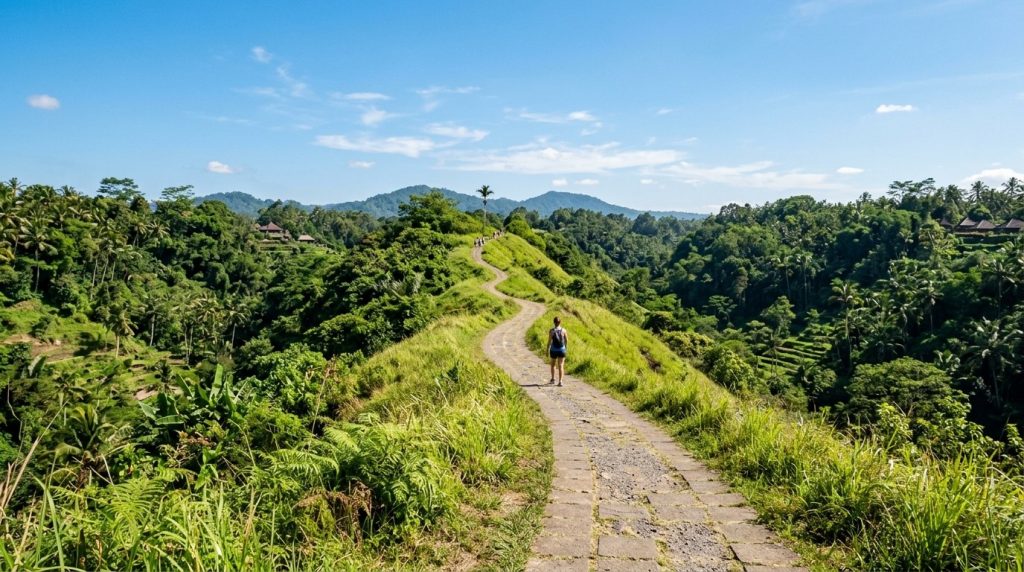
The best time to visit Ubud is during the dry season from April to October, when daytime temperatures hold near 27-30°C and the trails through the rice terraces stay firm underfoot. The exception is the shoulder weeks of early April and late October, when the seasons overlap and a heavy afternoon downpour can still arrive with little warning.
| Month | Temp (day) | Rain | Crowds and prices | Verdict |
|---|---|---|---|---|
| Jan | 27-30°C | Wet season peak | Low crowds, low prices | Quiet and cheap, but trails turn to mud |
| Feb | 26-29°C | Still wet | Low crowds, low prices | Lush jungle, better for spa days than hikes |
| Mar | 26-29°C | Rain easing | Low-medium crowds | Check the Nyepi date before booking |
| Apr | 27-30°C | Drying out | Medium crowds, moderate prices | Strong value as the dry season opens |
| May | 27-30°C | Dry, brief showers | Medium crowds | One of the most reliable months to visit |
| Jun | 27-30°C | Dry | Medium-high crowds | School-holiday season, book ahead |
| Jul | 27-30°C | Driest stretch | High crowds, peak prices | Great weather, worst crowds |
| Aug | 27-30°C | Driest month | High crowds, peak prices | Same as July, arguably busier |
| Sep | 27-30°C | Dry | Medium crowds | The sweet spot most travelers miss |
| Oct | 27-30°C | Rain returning | Medium crowds | Good early in the month, wetter by the end |
| Nov | 26-29°C | Wet season returns | Low crowds, lower prices | Quiet and green, best for retreats |
| Dec | 26-29°C | Wet, holiday rush | High crowds late month | Rain and crowds together, book early |
Nights hold at a fairly consistent 20-23°C year-round regardless of season.
The dry season (April to October) – the reliable window
April through October is Ubud’s dry season, and it is the safest window for building a trip around outdoor plans like walking the Tegallalang Rice Terraces, the Campuhan Ridge Walk, or a sunrise hike up Mount Batur.
The same wet-dry pattern holds across the island, so if you’re pairing Ubud with the coast, our best time to visit Bali guide covers how the season plays out in Seminyak and Canggu – what’s different about Ubud specifically is below.
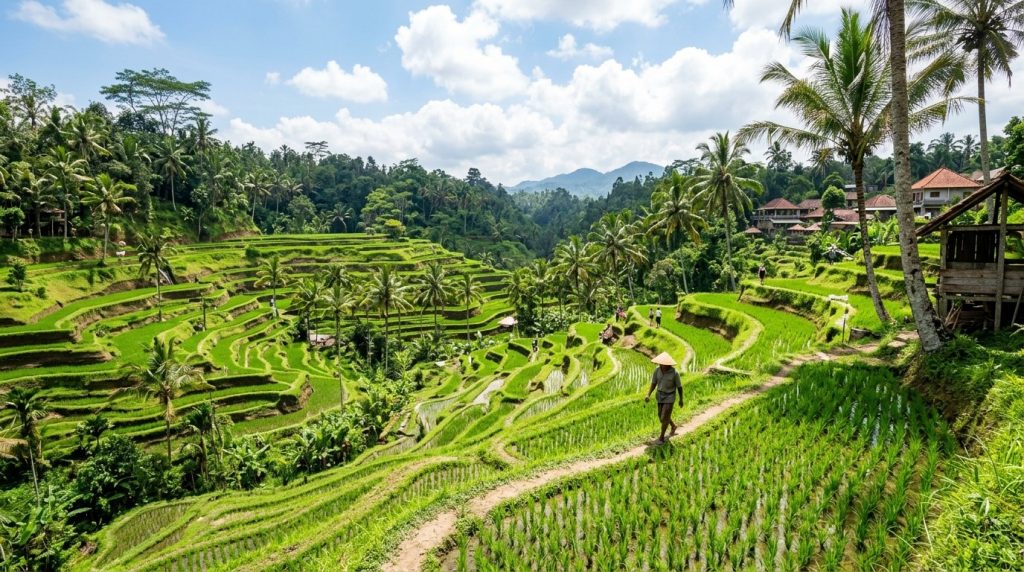
July and August are the driest and busiest stretch of the year. Book accommodation and popular restaurants like Locavore at least two to three months ahead if you’re traveling in either month, since rooms and tables fill up fast once the school-holiday crowds from Australia and Europe arrive.
May, June and September deliver nearly the same dry conditions with noticeably thinner crowds. September in particular tends to get overlooked, because it isn’t a school-holiday month anywhere that sends large numbers of visitors to Bali, yet the weather is nearly indistinguishable from August.
The wet season (November to March) – what it actually ruins
November through March is Ubud’s wet season, and it is the one stretch of the year that genuinely disrupts the two things most people come to Ubud for: walking the rice terraces and hiking the gorges.
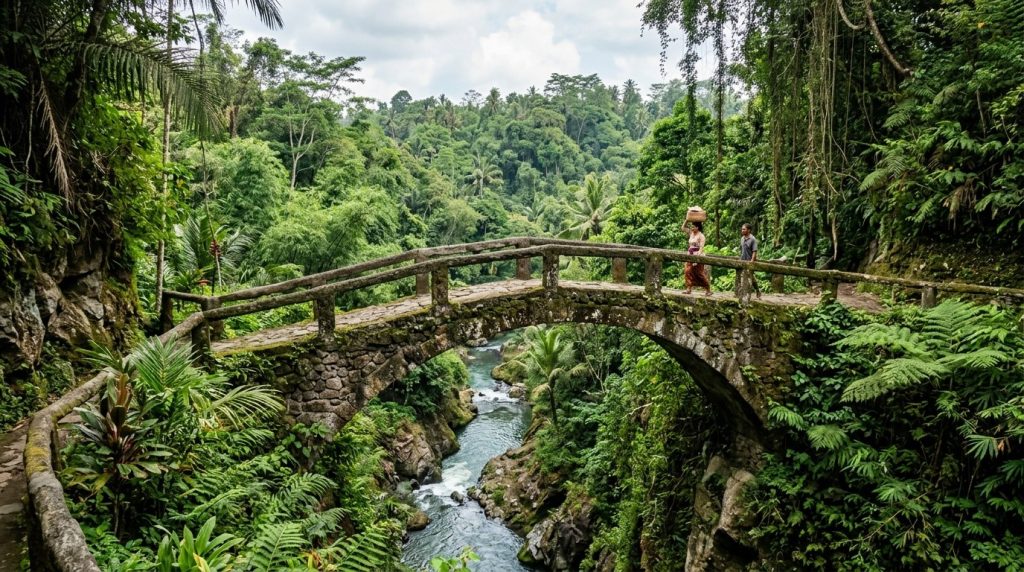
Rain typically falls as a heavy afternoon downpour rather than an all-day drizzle, but that downpour is enough to turn the dirt paths through Tegallalang to mud and to close routes like Tukad Cepung Waterfall when the river rises.
January is the wettest month, and it is also when hotel rates drop the furthest. A mid-range stay like Alaya Resort Ubud can fall toward AUD 97 · USD 70 (IDR 1,234,170) in the quietest wet-season weeks, well below what the same room costs during the August rush.
Mornings are still often clear, so a trip built around cooking classes, spa days and covered temple visits works well even in the wettest months.
The trade-off is real for anyone planning trekking or terrace photography as the main activity. If a gorge walk or a full-day hike is the centerpiece of your trip, the wet season is the wrong window, and you should shift toward April, May or September instead.
Why Ubud’s weather is not Bali’s weather
Ubud sits inland at roughly 200 to 300 metres above sea level, and that elevation is the reason its weather does not match Seminyak’s or Sanur’s, even though both are only about an hour’s drive away. Higher ground means cooler air, more cloud cover, and rain that forms more readily as moist air rises off the surrounding hills.
Nights in Ubud cool to 20-23°C year-round, noticeably lower than the 23.5°C floor recorded across Bali’s beach towns, so evenings call for a light layer that Seminyak’s beachfront rarely requires. Humidity runs 65-80% even during the dry season and climbs to 80-95% once the rains return, a stickiness that coastal areas shed more easily once the afternoon sea breeze picks up.
Rain also falls more often over Ubud than over the coast, because the hills that ring the town push warm, moist air upward until it condenses over the rice terraces rather than the beaches.
That difference matters more here than in a beach town, because Ubud’s two signature activities, walking the terraces and descending into river gorges, are exactly what mud and swollen water ruin. A downpour that clears a Seminyak beach club in twenty minutes can shut an Ubud trail for the rest of the day.
Nyepi, and the one date that stops everything
The next Nyepi, Bali’s Hindu New Year and Day of Silence, falls on 9 March 2027, and it is observed more strictly in Ubud than almost anywhere else on the island. For 24 hours, from 6am to 6am the following morning, the entire island shuts down together.
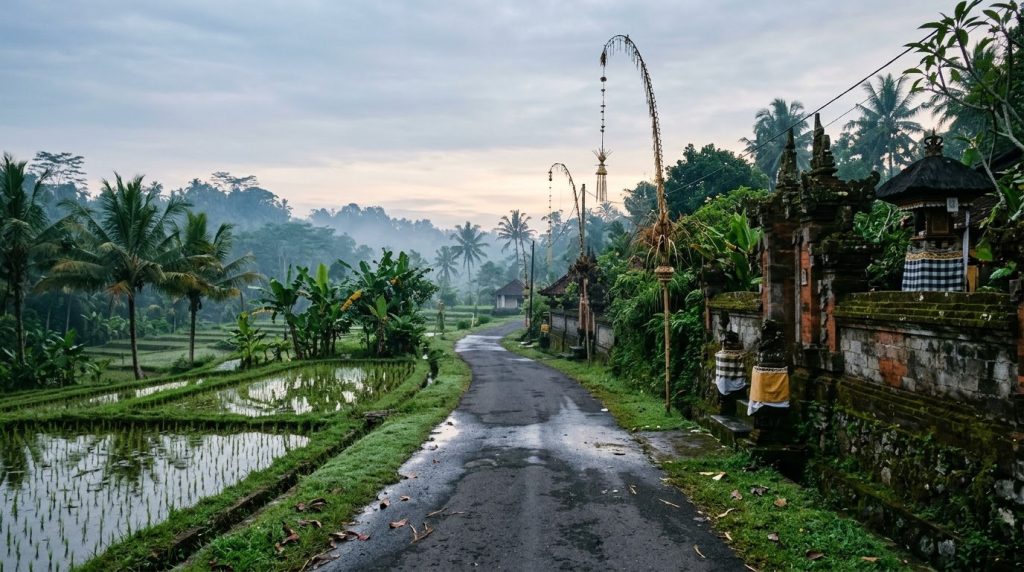
Ngurah Rai International Airport closes completely for the day, so no flights land or depart. Streets and beaches empty, fire and artificial lighting are restricted, and travelers are expected to stay inside their hotel or villa grounds for the full 24 hours. Only emergency vehicles and women in labor are exempt from the restrictions.
Ubud takes the observance seriously because it functions as the island’s cultural and spiritual center, so hotel staff, restaurants and tour operators shut down almost entirely rather than offering a scaled-back service.
If your trip crosses 9 March 2027, plan for a day with no organized activities: book a villa or hotel that can provide meals, stock up the evening before, and treat the day as a forced, peaceful pause rather than lost time.
The Ogoh-ogoh parade the night before, when giant demon effigies are carried through Ubud’s streets to ward off evil spirits, is worth arriving a day early to see.
When NOT to visit Ubud
Skip Ubud in late December and early January if you want to avoid peak-season rates for what is still a wet-season experience, since prices climb hard for the Christmas and New Year rush even though the rain hasn’t let up.
The same Alaya Resort Ubud room that runs AUD 97 · USD 70 (IDR 1,234,170) in a quiet wet-season week can climb toward AUD 174 · USD 125 (IDR 2,203,875) once the holiday crowds arrive.
Avoid July and August if solitude matters more to you than guaranteed sunshine. Both months combine the driest weather with the fullest hotels, and popular spots like the Tegallalang Rice Terraces get genuinely crowded by mid-morning.
Skip a single-day, single-activity plan for November through March. One afternoon downpour can cancel a gorge walk or terrace hike with no backup, so build a buffer day into a longer stay instead, such as the 7-day Bali itinerary that gives Ubud more than a rushed afternoon between beach stops. Our Ubud length-of-stay breakdown shows what 2, 3 to 4 and 5-plus nights each cover, so you can size that buffer properly.
Plan your Ubud trip
Once you’ve settled on a month, the next decision is where to stay. Our best hotels in Ubud guide breaks down picks by budget and location, and the wider where to stay in Bali guide covers how basing yourself in Ubud compares with staying on the coast instead.
Prices above are converted at today’s verified rate of 1 USD = 17,631 IDR and 1 USD = 1.388 AUD.
Find your Ubud hotel on the map
Live prices from Booking, Airbnb and more — move the map or change dates to compare stays around Ubud.