Disclosure: Some links in this guide are affiliate links. If you book or buy through them, we may earn a small commission at no extra cost to you — it helps keep our guides free.
Bangkok Budget Guide 2026: Costs & Saving Tips
Quick answer: Budget travelers spend roughly $25-35 a day in Bangkok, mid-range visitors $50-80, and luxury travelers $150 or more, making it one of Asia’s best-value capitals. Most first-timers settle comfortably into the $50-80 mid-range bracket once accommodation, street food, and BTS fares are tallied up.
Bangkok consistently ranks among the world’s most affordable capital cities for travelers. The Backpacker Index ranked Bangkok the 4th cheapest city globally for budget travelers in 2025, with an average daily cost of $24.51 (Price of Travel, 2025). Whether you’re backpacking Southeast Asia or planning a comfortable mid-range trip, your money stretches remarkably far here. Rates swing with the season, so it is worth checking the best time to visit Bangkok before fixing dates.
See our full disclosure.
I’ve visited Bangkok six times across different budgets, from sleeping in 200 THB dorm beds to splurging on riverside suites. This bangkok budget guide breaks down every cost category with real 2026 prices, so you’ll know exactly how much a Bangkok trip costs before you book anything.
complete Bangkok planning
Key Takeaways
- Backpackers can comfortably spend $25-35/day including accommodation, food, and transport
- Street food meals average 40-80 THB ($1.15-$2.30), making food the easiest category to save on
- BTS/MRT rides cost 16-62 THB ($0.46-$1.77), far cheaper than taxis for most routes
- Mid-range travelers should budget $50-80/day for private rooms, sit-down restaurants, and 2-3 activities (Price of Travel, 2025)
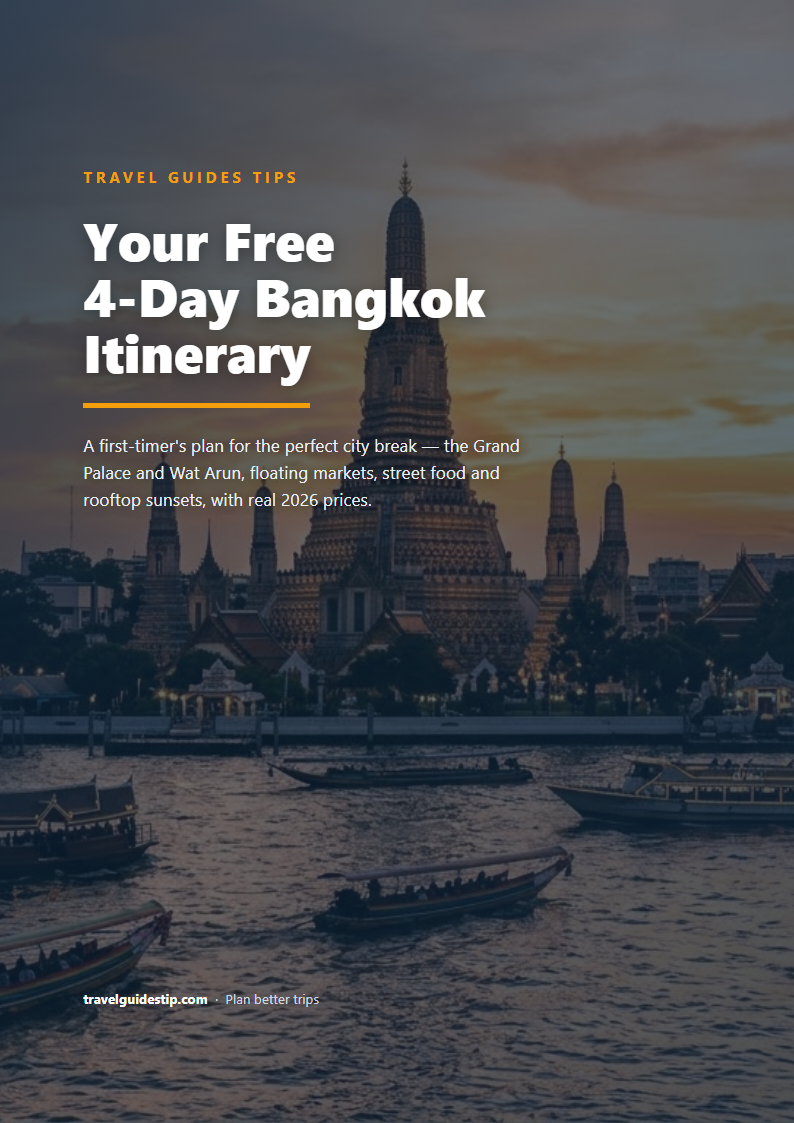
The 4-Day Bangkok Itinerary
The plan we use ourselves — sent straight to your inbox.
- Day-by-day route
- Where to stay
- Real 2026 costs
Free · No spam · Unsubscribe anytime
How Much Does a Bangkok Trip Cost Per Day?
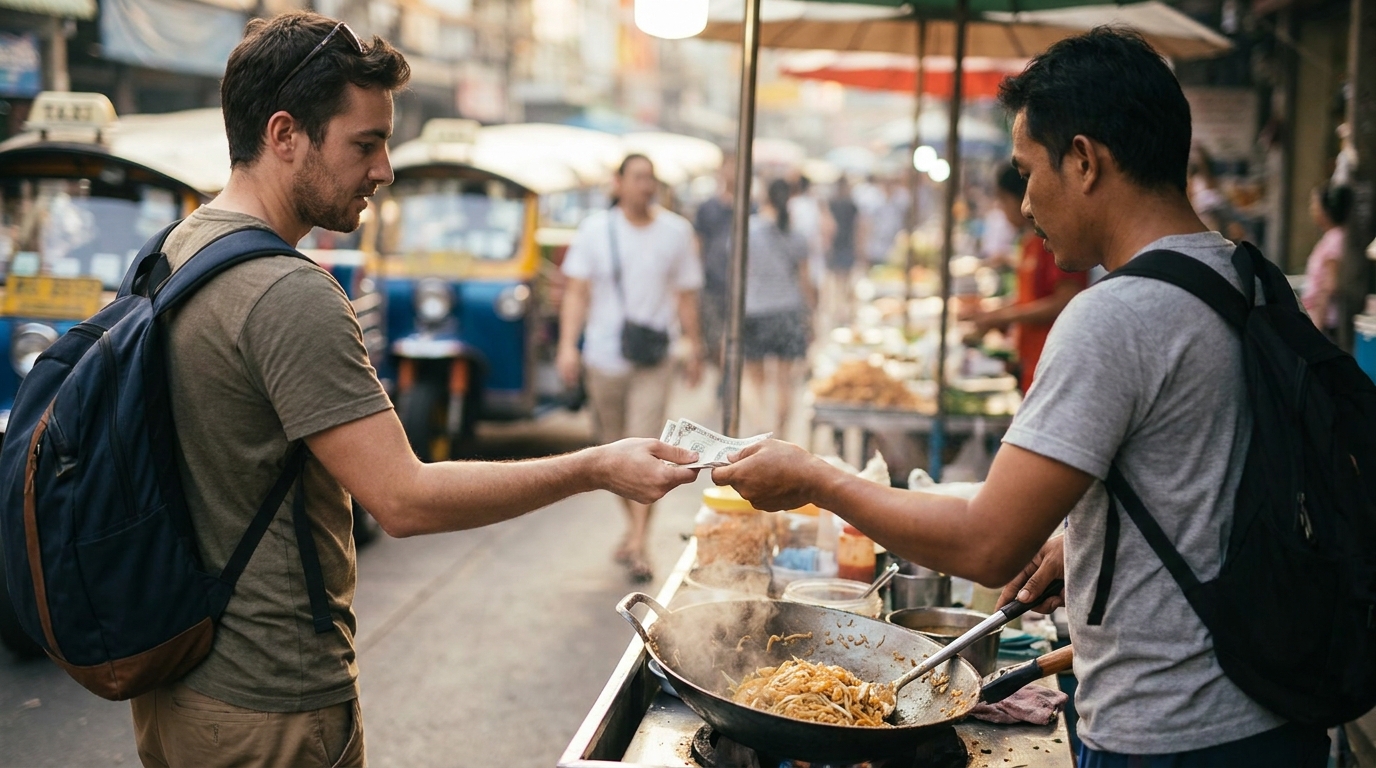
Bangkok’s daily costs range from $25 for backpackers to $150+ for luxury travelers, making it one of Asia’s best-value destinations. According to Numbeo (2025), Bangkok’s cost of living is 60.4% lower than New York City, and restaurant prices are 74.8% cheaper on average.
Bangkok ranks as the 4th cheapest destination for backpackers globally at $24.51/day according to the 2025 Backpacker Index by Price of Travel, with restaurant prices 74.8% lower than New York according to Numbeo’s 2025 cost-of-living data.
Here’s what you can expect to spend daily across three travel styles:
| Category | Budget (THB) | Budget (USD) | Mid-Range (THB) | Mid-Range (USD) | Luxury (THB) | Luxury (USD) |
|---|---|---|---|---|---|---|
| Accommodation | 250-500 | $7-14 | 1,000-2,500 | $29-71 | 5,000-15,000 | $143-429 |
| Food | 200-400 | $6-11 | 600-1,200 | $17-34 | 2,000-5,000 | $57-143 |
| Transport | 100-200 | $3-6 | 200-500 | $6-14 | 500-1,500 | $14-43 |
| Activities | 0-300 | $0-9 | 300-800 | $9-23 | 1,000-3,000 | $29-86 |
| Misc | 100-200 | $3-6 | 200-500 | $6-14 | 500-1,000 | $14-29 |
| Daily Total | 650-1,600 | $19-46 | 2,300-5,500 | $66-157 | 9,000-25,500 | $257-729 |
These ranges reflect real 2026 prices. The sweet spot for most travelers falls in the $50-80/day mid-range bracket.
full trip planning
Find your Bangkok hotel on the map
Live prices from Booking & Airbnb — tap a pin to compare stays around Sukhumvit and the Old City and beyond.
How Much Does Accommodation Cost in Bangkok?
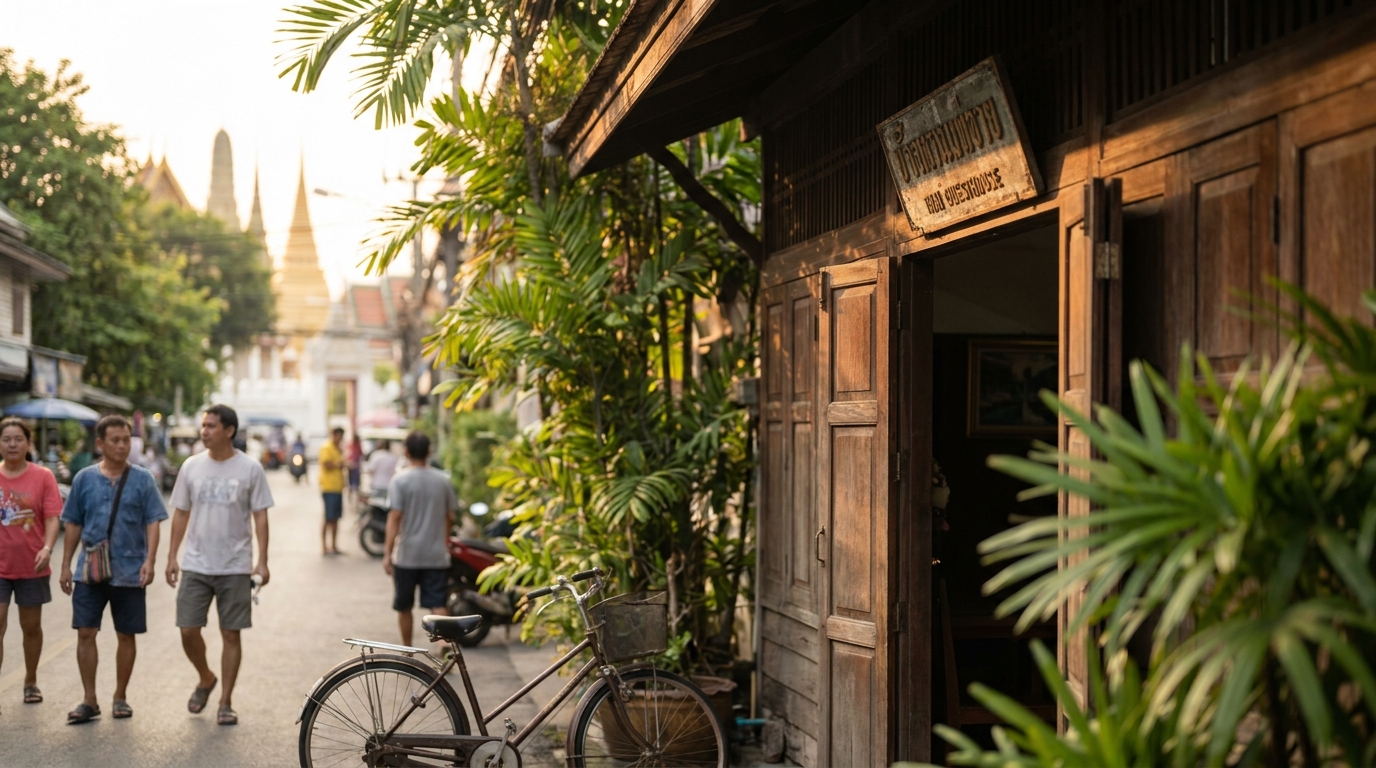
Accommodation is your biggest variable expense. Bangkok offers everything from $6 dorm beds to $400 riverside suites. Agoda’s 2025 hotel pricing data shows Bangkok’s average hotel rate sits at 1,800 THB ($51) per night, though budget options start well below that (Agoda, 2025).
Bangkok hotel rates average 1,800 THB ($51) per night according to Agoda’s 2025 data, but backpacker hostels on Khao San Road start at 200-350 THB ($5.70-$10) for dorm beds, making Bangkok one of Asia’s cheapest accommodation markets.
Hostels and Dorm Beds
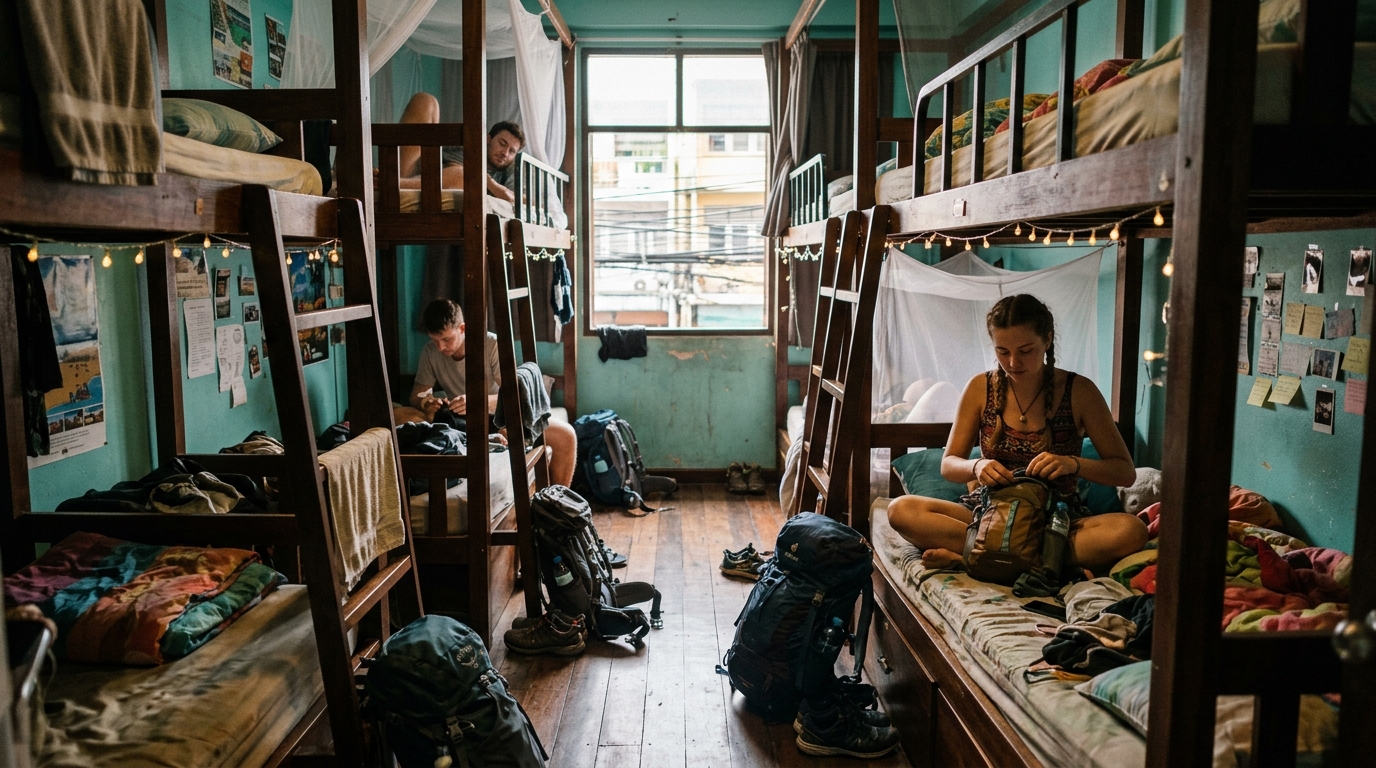
Khao San Road and Silom remain the cheapest hostel zones. Expect to pay 200-350 THB ($5.70-$10) for a dorm bed and 500-800 THB ($14-23) for a private hostel room. Many hostels include free breakfast and decent WiFi. Book at least a week ahead during peak season (November through February).
Mid-Range Hotels
A clean, well-located hotel with air conditioning, a pool, and breakfast runs 1,000-2,500 THB ($29-71) per night. Areas like Sukhumvit (near BTS Nana or Asok) and Silom offer the best value for mid-range stays. You’ll find modern rooms with excellent reviews in this price bracket.
Check live hotel prices in Bangkok ->
Luxury Hotels and Resorts
Bangkok’s luxury scene is world-class and still cheaper than most Western capitals. Five-star riverside hotels like the Mandarin Oriental or Capella Bangkok range from 5,000-15,000 THB ($143-429) per night. That same quality would cost $500-1,000+ in London or Tokyo.
neighborhood breakdown
But what about longer stays? If you’re spending a week or more, serviced apartments on Sukhumvit drop to 15,000-25,000 THB ($429-714) per month for a studio, which is extraordinary value.
The 4-Day Bangkok Itinerary
Hour-by-hour plan, where to stay and what it really costs — free PDF.
Free · No spam · Unsubscribe anytime
What Does Food Cost in Bangkok?
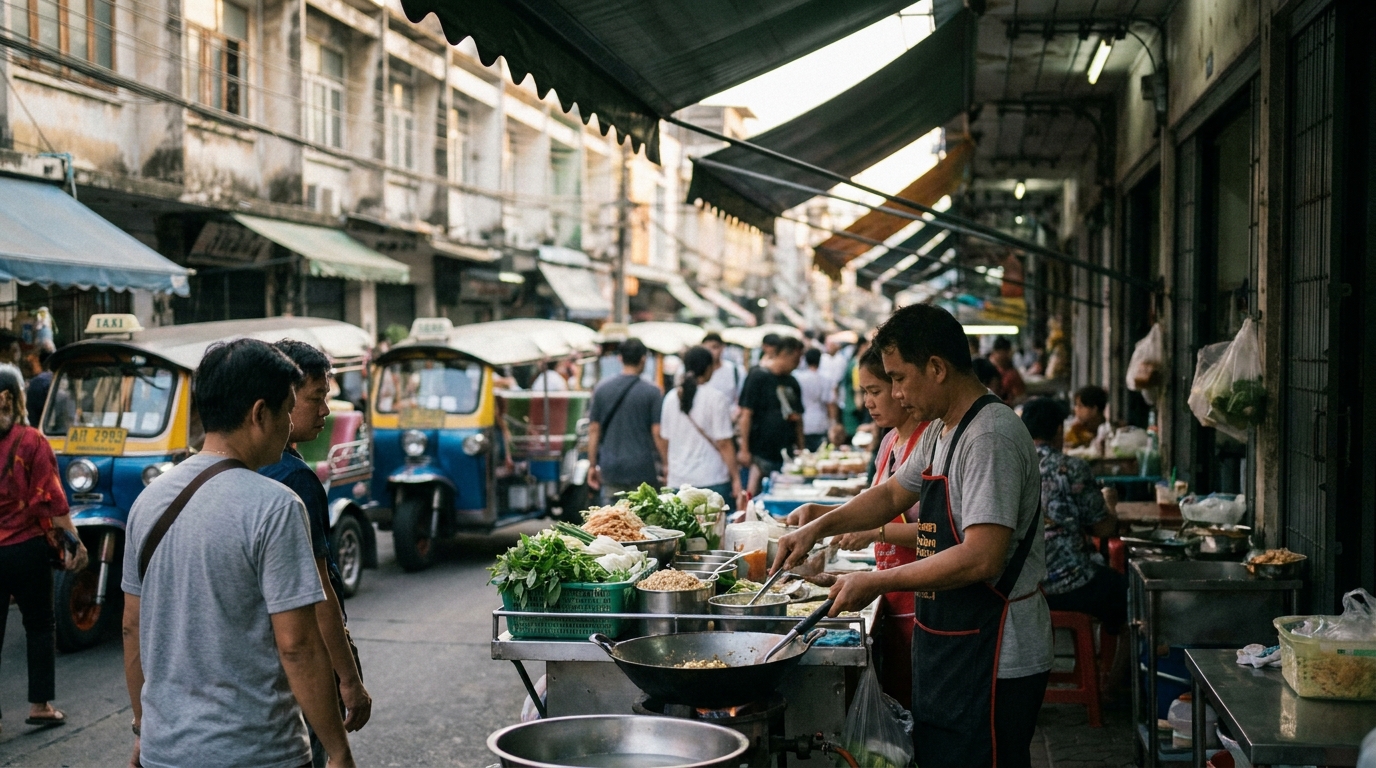
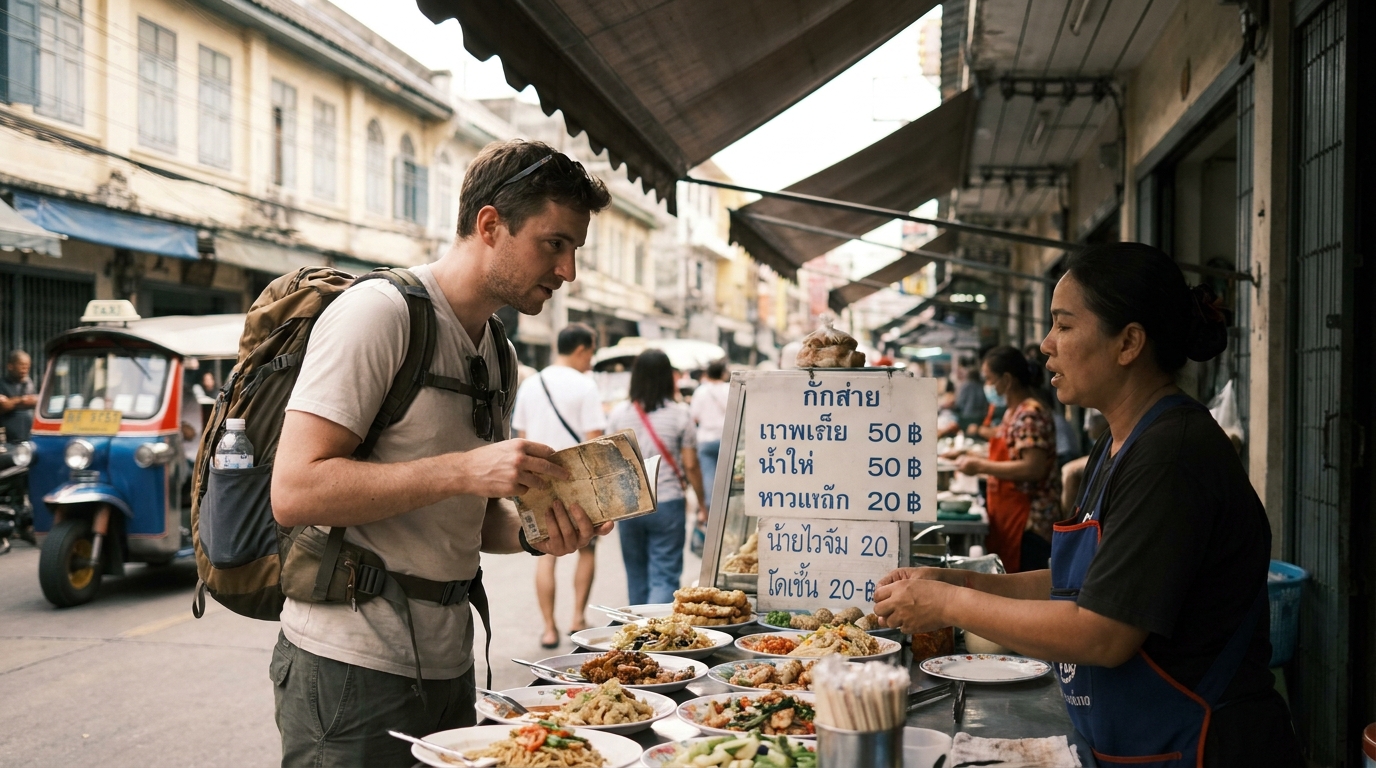
Food is where Bangkok truly shines for budget travelers. Street food meals average 40-80 THB ($1.15-$2.30) per dish, and the city’s 300,000+ street vendors mean you’re never more than a few steps from a cheap, delicious meal (Tourism Authority of Thailand, 2025).
Bangkok’s 300,000+ street food vendors serve meals averaging 40-80 THB ($1.15-$2.30) per dish according to the Tourism Authority of Thailand, and the city earned 35 Michelin stars and Bib Gourmand awards in the 2025 MICHELIN Guide Thailand.
Street Food (40-100 THB / $1.15-$2.85)
Pad Thai from a street cart costs 50-80 THB. A plate of khao man gai (chicken rice) runs 40-50 THB. Boat noodles at Victory Monument are just 15-20 THB per tiny bowl. You can eat three full street food meals daily for under 300 THB ($8.60).
Sit-Down Restaurants (150-500 THB / $4.30-$14.30)
Local Thai restaurants with air conditioning charge 100-200 THB per dish. Western restaurants in tourist areas like Sukhumvit Soi 11 average 250-500 THB per meal. A beer at a restaurant costs 80-150 THB ($2.30-$4.30).
Fine Dining (1,000-8,000+ THB / $29-$229+)
Bangkok has 35 Michelin-starred restaurants and Bib Gourmand spots (MICHELIN Guide, 2025). Jay Fai’s famous crab omelet costs around 1,000 THB. Gaggan Anand’s tasting menu runs 8,000+ THB. Even at these prices, Bangkok fine dining is a fraction of European equivalents.
full food breakdown
How Much Does Transportation Cost in Bangkok?
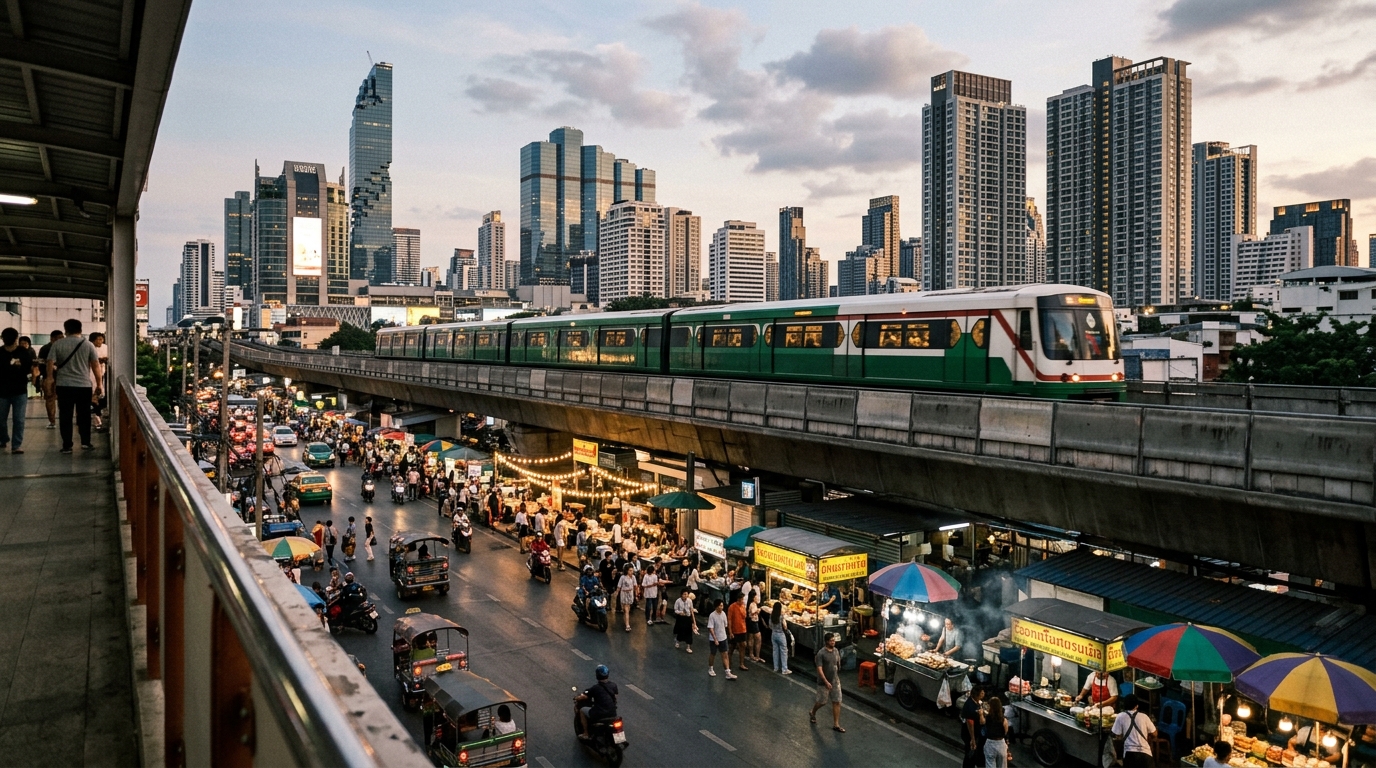
Getting around Bangkok is cheap but can be time-consuming during rush hour. The BTS Skytrain handles over 800,000 passengers daily (BTS Group Holdings, 2024), and it’s the fastest way to cover long distances without sitting in traffic.
Bangkok’s BTS Skytrain carries over 800,000 passengers daily according to BTS Group Holdings 2024 data, with single-journey fares of 16-62 THB ($0.46-$1.77), making it the most cost-effective transport option for tourists.
BTS Skytrain and MRT Subway
Single journey tickets cost 16-62 THB ($0.46-$1.77) depending on distance. A Rabbit card (reloadable transit card) saves time at ticket machines but doesn’t offer fare discounts. The MRT uses separate tokens with similar pricing. Together, these two systems cover most tourist areas.
Taxis
Bangkok taxis are metered and start at 35 THB ($1). Most trips within the city center cost 60-150 THB ($1.70-$4.30). Always insist the driver uses the meter. Grab (Southeast Asia’s ride-hailing app) is often easier and shows the fare upfront, typically 20-30% more than a metered taxi.
Tuk-Tuks and Motorcycle Taxis
Tuk-tuks are a tourist experience, not a budget option. Expect 100-200 THB for short trips. Always negotiate before getting in. Motorcycle taxis (look for orange vests) cost 10-50 THB and are the fastest way through traffic, though they aren’t for the faint-hearted.
Chao Phraya River Boats
Express boats along the river cost 15-32 THB ($0.43-$0.91) and connect major sights like the Grand Palace, Wat Arun, and Chinatown. The tourist boat costs 60 THB for unlimited hops. It’s a scenic and practical alternative to road traffic.
detailed transport options
[CHART: Bar chart – Average cost per trip by transport type in Bangkok (THB) – source: compiled from BTS Group, Grab, TAT 2024-2025]
What Do Activities and Attractions Cost?
Many of Bangkok’s best experiences are free or nearly free. The Grand Palace, Bangkok’s most visited site, attracted 8 million visitors in 2024 (Tourism Authority of Thailand, 2024). Entrance fees at temples and attractions are modest compared to Western museums.
Bangkok’s Grand Palace attracted 8 million visitors in 2024 according to the Tourism Authority of Thailand, with an entrance fee of 500 THB ($14.30), while most other temples charge just 50-200 THB ($1.43-$5.70) or are completely free.
Temple Entrance Fees
- Grand Palace + Wat Phra Kaew: 500 THB ($14.30), Bangkok’s priciest attraction
- Wat Pho: 200 THB ($5.70)
- Wat Arun: 100 THB ($2.85)
- Most neighborhood temples: Free
Free Activities
Walking through Chinatown’s Yaowarat Road costs nothing. Lumpini Park, Chatuchak Weekend Market (browsing), and watching sunset from a riverside pier are all free. Bangkok rewards curious walkers.
Paid Experiences
Muay Thai matches at Rajadamnern Stadium cost 1,000-2,000 THB ($29-57). Cooking classes run 1,000-1,500 THB ($29-43). A traditional Thai massage starts at 200-300 THB ($5.70-$8.60) on Khao San Road.
full activity list
How Much Does a SIM Card or eSIM Cost in Bangkok?
Staying connected in Bangkok is affordable. Thailand’s mobile data prices rank among the cheapest in Southeast Asia, with 4G/5G coverage blanketing 98% of Bangkok according to the NBTC (National Broadcasting and Telecommunications Commission, 2024).
Thailand’s 4G/5G network covers 98% of Bangkok according to the NBTC (2024), and eSIM options like Airalo offer 1GB plans from $4.50, eliminating the need to find a physical SIM shop on arrival.
Physical SIM Cards
AIS, DTAC, and TrueMove H all sell tourist SIM cards at Suvarnabhumi Airport. A 15-day plan with 15GB of data costs 299-599 THB ($8.55-$17.10). You’ll need your passport. Convenience store top-ups are easy if you run out of data.
eSIM (Recommended)
If your phone supports eSIM, it’s the simplest option. Buy before you land and activate when you arrive. Plans start from $4.50 for 1GB and go up to $14 for 5GB covering 7-30 days.
I’ve switched to eSIM for all my Southeast Asia trips. No airport queue, no passport scanning at a SIM counter, and it works the moment you land. The savings in time alone make it worthwhile.
What Are the Best Tips for Solo Travelers and Backpackers?
Solo travel in Bangkok is safe, affordable, and incredibly social. Thailand welcomed 35.5 million international tourists in 2024 (Ministry of Tourism and Sports, 2024), with a significant portion being solo and backpacker travelers. The infrastructure exists to support independent exploration at every price level.
Solo Traveler Budget Tips
Hostels with common areas (like NapPark in Khao San or Lub d on Silom) make meeting people effortless. Expect to pay 250-400 THB ($7-11) for a social hostel dorm. Solo dining is completely normal at street food stalls, and you’ll often share tables with locals.
Backpacker Essentials
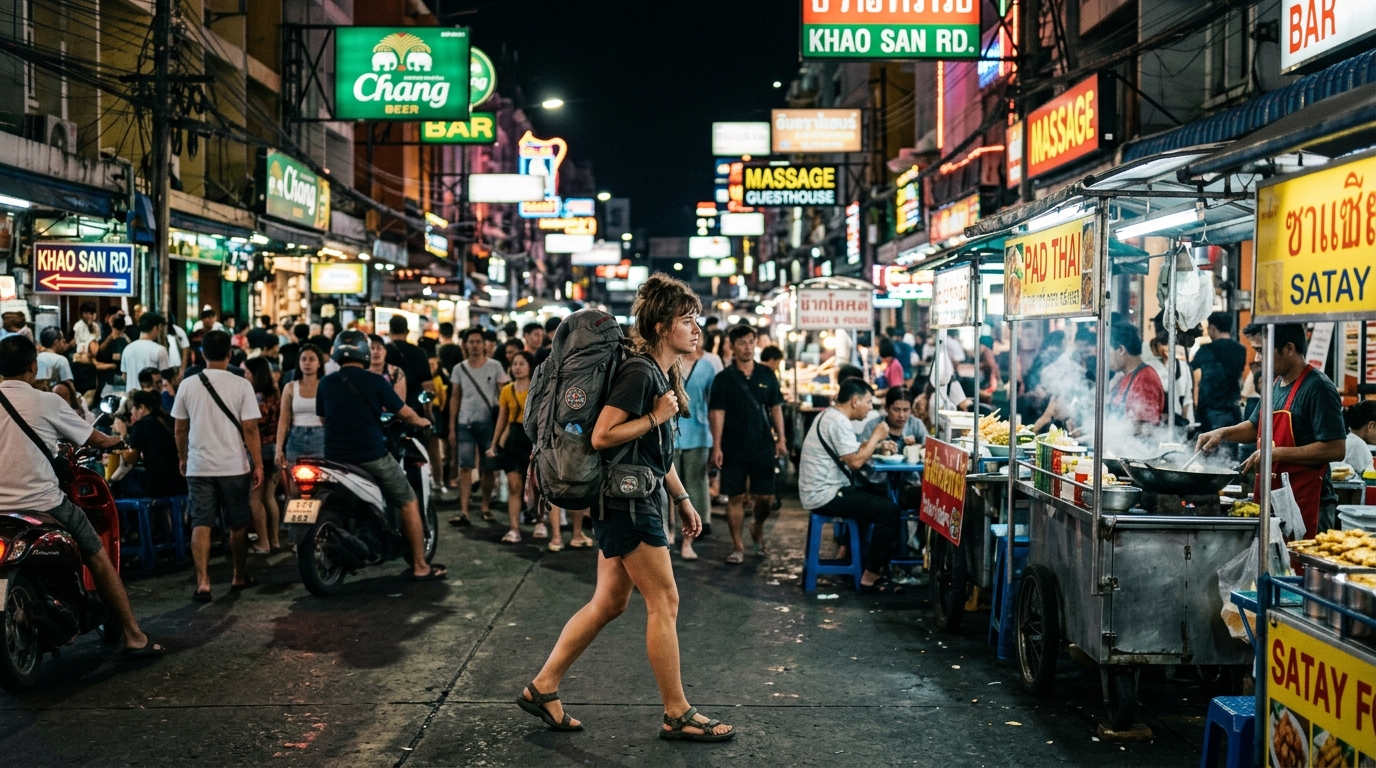
Khao San Road remains the backpacker hub, though Rambutri Street next door offers a quieter alternative. Laundry costs 40-60 THB per kilogram. 7-Eleven meals (sandwiches, rice boxes, instant noodles) run 25-60 THB if you need a break from Thai food.
Is Bangkok safe for solo female travelers? Yes. Standard precautions apply, but Bangkok is widely considered one of Southeast Asia’s safest cities for solo women. Stick to well-lit areas at night and use Grab instead of hailing random taxis after midnight.
The biggest money trap for solo travelers isn’t nightlife or tours. It’s accommodation upgrades. After a few nights in a noisy dorm, many backpackers upgrade to a private room at 2-3x the cost. Budget for at least two private room nights per week to avoid blowing your budget reactively.
What Are the Best Money-Saving Tips for Bangkok?
Smart spending in Bangkok isn’t about deprivation. It’s about knowing where the value is. These eight tips are based on real experience and can save you 30-50% on a typical trip.
1. Eat Where Locals Eat
Street stalls with Thai-language menus are cheaper and often better than tourist-facing restaurants. If you see a long queue of locals, join it.
2. Use BTS/MRT Over Taxis During Rush Hour
Bangkok’s traffic jams are legendary. A 30-minute BTS ride costs 40 THB. The same distance by taxi during rush hour could take 90 minutes and cost 200 THB.
3. Buy a Rabbit Card
The reloadable BTS card saves you from queuing at ticket machines every trip. Load 500 THB and you’re set for several days.
4. Drink Water from 7-Eleven, Not Restaurants
A large water bottle at 7-Eleven costs 7-10 THB. Restaurants charge 40-60 THB for the same thing. Carry a reusable bottle and refill from large jugs.
5. Visit Temples Early Morning
Many temples are free or cheaper before 9 AM, and you’ll avoid the midday heat and tour bus crowds. The Grand Palace is less chaotic right when it opens at 8:30 AM.
6. Book Accommodation in Advance
Walk-in rates at Bangkok hotels are 20-40% higher than online rates. Book through Booking.com at least a week ahead for the best deals.
Check live hotel prices in Bangkok ->
7. Skip Tuk-Tuks for Transport
They’re fun once, but tuk-tuks cost 3-5x more than a metered taxi for the same distance. Take one for the experience, then switch to taxis and BTS.
8. Use Grab Food for Late-Night Meals
After midnight, street food options thin out and remaining vendors sometimes raise prices. Grab Food delivers from restaurants across the city with transparent pricing. Delivery fees are usually just 10-30 THB.
Tracking my own spending across six Bangkok trips, the biggest budget variance came from transportation, not food or accommodation. Travelers who master the BTS/MRT system spend 40-60% less on transport than those relying on taxis and tuk-tuks.
What Does a Full Day in Bangkok Cost? Three Sample Budgets
Here’s what a realistic day looks like at three price levels, based on actual 2026 prices.
Backpacker Budget: 900-1,200 THB ($25-35/day)
- Accommodation: Dorm bed, 300 THB
- Breakfast: 7-Eleven coffee and sandwich, 50 THB
- Lunch: Pad Thai from street cart, 60 THB
- Dinner: Khao San Road street food spread, 150 THB
- Transport: BTS + walking, 100 THB
- Activity: Free temple visit + park, 0 THB
- Misc: Water, snacks, 100 THB
- Total: ~760-1,200 THB ($22-35)
Mid-Range Budget: 1,750-2,800 THB ($50-80/day)
- Accommodation: 3-star hotel, 1,200 THB
- Breakfast: Hotel included or cafe, 0-150 THB
- Lunch: Local restaurant, 150 THB
- Dinner: Sit-down Thai restaurant + beer, 400 THB
- Transport: BTS + one taxi, 200 THB
- Activity: Wat Pho + Thai massage, 500 THB
- Misc: Coffee, snacks, 150 THB
- Total: ~2,600-2,800 THB ($74-80)
Luxury Budget: 5,250+ THB ($150+/day)
- Accommodation: 5-star hotel, 5,000 THB
- Breakfast: Hotel buffet included, 0 THB
- Lunch: Upscale Thai restaurant, 800 THB
- Dinner: Rooftop bar + fine dining, 3,000 THB
- Transport: Grab Premium + hotel transfer, 500 THB
- Activity: Private longtail boat tour, 2,000 THB
- Misc: Cocktails, spa, 1,500 THB
- Total: ~12,800+ THB ($366+)
How long should you stay? Most travelers find 3-5 days ideal for Bangkok. That’s 3,000-6,000 THB ($86-171) total for a backpacker, or $250-400 for mid-range comfort.
day-by-day planning
[CHART: Pie chart – Where your money goes in Bangkok (mid-range traveler breakdown by category) – source: compiled from Numbeo, TAT, Agoda 2025]
About the author: Travelguidestip has been covering Southeast Asia travel since 2023. Read our editorial policy for how we research and verify our guides.
Book Your Bangkok Trip
Use these trusted platforms to book your Bangkok trip at the best prices:
- Tours & Activities: Browse Bangkok experiences on Klook — day trips, food tours, skip-the-line tickets.
- Hotels: Compare Bangkok hotels on Booking.com — free cancellation on most bookings.
- eSIM / Stay Connected: Airalo eSIM — affordable data plans, no roaming fees.
Frequently Asked Questions
How much money do I need per day in Bangkok?
Budget travelers need 650-1,200 THB ($19-35) daily, covering dorm accommodation, street food, and BTS transport. Mid-range visitors should plan for 1,750-2,800 THB ($50-80). These figures come from the 2025 Backpacker Index, which ranked Bangkok 4th cheapest globally (Price of Travel, 2025).
Is Bangkok cheap for tourists in 2026?
Yes. Bangkok remains one of Asia’s most affordable capitals. Numbeo’s 2025 data shows restaurant prices are 74.8% cheaper than New York City (Numbeo, 2025). Street food costs $1-3 per meal. A comfortable mid-range trip runs $50-80/day, well below most European or East Asian destinations.
How much does a week in Bangkok cost?
A week in Bangkok costs roughly $175-245 for backpackers, $350-560 for mid-range, and $1,050+ for luxury travelers. Accommodation and dining style drive the biggest differences. Booking hotels in advance through platforms like Booking.com typically saves 20-40% versus walk-in rates.
Is Bangkok safe for solo budget travelers?
Bangkok is widely considered one of Southeast Asia’s safest cities for solo travelers. Thailand welcomed 35.5 million tourists in 2024 (Ministry of Tourism and Sports, 2024). Standard precautions apply: use Grab at night, avoid gem scams, and keep valuables secure in crowded areas like Chatuchak Market.
Should I bring cash or use cards in Bangkok?
Bring a mix. Street food vendors, tuk-tuks, and small shops accept only cash. Hotels, malls, and chain restaurants take credit cards. ATM withdrawals charge 220 THB ($6.30) per transaction, so withdraw larger amounts less frequently. Exchange money at SuperRich outlets for the best rates in the city.
Planning your full Bangkok trip? Start with our Bangkok travel guide for everything you need to know, from visa requirements to the best neighborhoods.
Related Travel Guides
- Ultimate Bangkok Travel Guide 2026
- Getting Around Bangkok
- Best Bangkok Tours
- Best Day Trips from Bangkok
- Best Areas to Stay in Bangkok
- 5-Day Bangkok Itinerary
- Phuket Travel Budget
- Bali Budget Guide
We only recommend services we genuinely use and trust. Thank you for supporting our work!