Kuala Lumpur Itinerary 3 Days: A Practical Plan for Australians (2026)
By TravelguidestipUpdated 10 min readHow we earn
Hotel buttons open Stay22 (Booking.com, Agoda and others) and tour buttons open GetYourGuide. We may earn a commission at no extra cost to you.
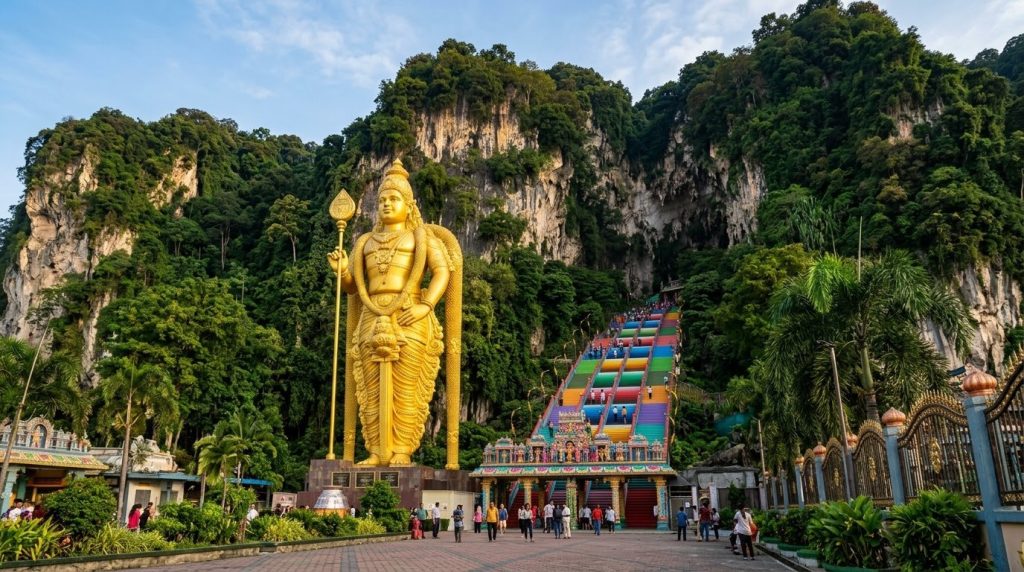
Three days is the right amount of time for Kuala Lumpur: 1 day for the Petronas Towers and Bukit Bintang, 1 for Batu Caves and the old town, and 1 for a day trip to Malacca or Putrajaya. That pace works whether KL is your whole holiday or a stopover on the way to Europe.
Sleep all three nights in one base, ideally Bukit Bintang or KLCC, so you never waste a morning checking out. Australians need to lodge the Malaysia Digital Arrival Card (MDAC) before landing, per Smartraveller.
| Day | Base | Highlights |
|---|---|---|
| Day 1 | Bukit Bintang or KLCC | Petronas Towers, KLCC Park, Jalan Alor dinner |
| Day 2 | Same hotel | Batu Caves early, Merdeka Square, Central Market, Chinatown |
| Day 3 | Same hotel | Malacca by bus, or Putrajaya by train, or Genting by cable car |
Day 1Petronas Towers, KLCC Park and Jalan Alor
Sydney to KL averages about 9 hours non-stop with AirAsia X, Malaysia Airlines, Batik Air or Turkish Airlines, so if you land around midday, treat Day 1 as a half day.
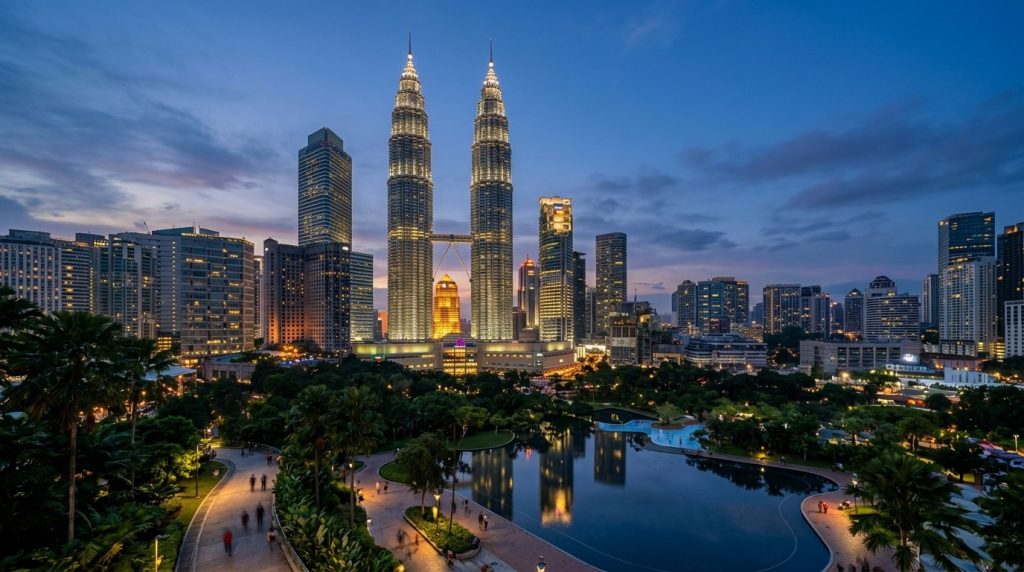
Book the Petronas Twin Towers on the official ticketing page the day before. Foreign adults pay AUD 43 · USD 31 (RM 127) on weekdays and AUD 47 · USD 34 (RM 137) on weekends for the Skybridge and the level 86 deck; the evening slot costs AUD 53 · USD 38 (RM 157) on weekdays.
The towers open 9am to 10.30pm, but on Mondays they only open on the 2nd, 4th and 5th Monday of the month, so check before you plan around it.
Walk out into KLCC Park afterwards, then take the covered walkway or a short Grab to Bukit Bintang. Jalan Alor stalls fire up from about 5pm and the street peaks from 7pm. Go for satay, chilli crab, char kway teow and grilled stingray; check the price of seafood sold by weight first. Jalan Alor is where KL feels cheapest, and our real cost of a day in KL shows how a hawker-and-hostel day lands at roughly AUD 44-51.
Day 2Batu Caves, Merdeka Square and Chinatown
Get to Batu Caves early, before 9am, while the 272 rainbow steps are still in shade. The KTM Komuter from KL Sentral takes 30–40 minutes and costs AUD 0.80–0.90 · USD 0.56–0.64 (RM 2.30–2.60). A Grab from the centre runs AUD 7–10 · USD 5–7 (RM 20–30).
The dress code is enforced at the base of the staircase: shoulders and knees covered, for men and women. Short shorts and singlets get turned back.
If you forget, wraps are sold near the stairs for about AUD 5 · USD 3.70 (RM 15), but there are reports they are not always on sale early in the morning, so pack long pants or a long skirt. Keep food and plastic bags out of sight, because the macaques grab both.
Back in the city by lunchtime, walk Merdeka Square, where Malaysia’s independence was declared in 1957, and the Moorish-style Sultan Abdul Samad Building opposite. From there it is 10 minutes on foot to Central Market (Pasar Seni), an Art Deco hall open 10am to 10pm with the city’s best range of batik and souvenirs. Finish in Chinatown: Petaling Street, the Sri Mahamariamman Temple and the coffee shops along Jalan Sultan.
Day 3Pick One Day Trip
Malacca (best for history and food). Buses leave Terminal Bersepadu Selatan (TBS) every 30–60 minutes from about 7am, take around 2 hours (add 30–45 minutes on weekends) and cost AUD 4–8 · USD 3–5.60 (RM 12–23). Melaka Sentral is 8.5km from the old town, so add a Grab of AUD 3.40–5.10 · USD 2.45–3.70 (RM 10–15).
Leave by 8am and you get six hours around Dutch Square and Jonker Street before the run back.
Putrajaya (best for a short, easy day). The KLIA Transit train from KL Sentral reaches Putrajaya in about 18 minutes for roughly AUD 4.80 · USD 3.40 (RM 14). The pink-domed Putra Mosque and the lake are the draw. It suits a stopover with an evening flight, because Putrajaya sits on the airport line.
Genting Highlands (best for cool air). The Awana SkyWay gondola takes about 10 minutes up to SkyAvenue. It is cooler than KL and fine on a hot day, but it is a casino-and-mall resort, so skip it if you want culture.
What to Cut If You Only Have a 1-Day Stopover
On a long layover, drop the day trip and the Batu Caves detour. Do Petronas and KLCC Park in the afternoon, Merdeka Square and Central Market late, then Jalan Alor for dinner. Leave at least 3 hours for the airport run and check-in. If you have more time in Malaysia, stretch this into our 7-day Malaysia itinerary or the 10-day Malaysia itinerary. For the bigger question of how many nights to book, our KL trip-length guide compares what 1, 2, 3 and 4-plus days each cover.
Getting around KL day to day: LRT, MRT and the Touch ‘n Go card
Beyond the KTM Komuter run to Batu Caves and the airport trains covered elsewhere in this guide, KL’s LRT, MRT and Monorail lines are how you hop between Bukit Bintang, KLCC, Merdeka Square and Chinatown without relying on Grab for every trip.
All of them run on the same Touch ‘n Go card, a tap-on, tap-off stored-value card that also works on RapidKL buses; you will need a minimum balance of about RM5 to travel, and cards are sold and topped up at station ticket counters and most convenience stores.
Pasar Seni station puts you within walking distance of Central Market and Chinatown, and Masjid Jamek is the main interchange if you are connecting between lines on a single-journey basis.
If you expect to take more than three or four rides in a day, a day pass such as the MyRapid Pass, priced at around RM15 for unlimited rides on LRT, MRT, Monorail and RapidKL buses, usually works out cheaper than tapping in on single fares each time.
Trains run from around 6am to midnight and get genuinely crowded during the 8am and 5.30pm commute, which is worth knowing if you are planning the Batu Caves KTM ride or any cross-town trip around those times. Outside peak hours, the network is a faster and cheaper way to move around central KL than traffic-dependent Grab rides, particularly between KLCC and Chinatown.
Getting From KLIA: Train, Grab or Taxi
The KLIA Ekspres takes about 28 minutes to KL Sentral and costs AUD 19 · USD 13.50 (RM 55) one way. From 1 January 2027 the adult fare rises to AUD 22 · USD 16 (RM 65), the first increase since 2016 (Malay Mail, 30 September 2026), so trips in late 2026 still get the old price.
Grab costs AUD 27–34 · USD 20–25 (RM 80–100) off-peak and AUD 37–44 · USD 27–32 (RM 110–130) on Friday evenings and public holidays. The budget coupon taxi from the arrivals hall is about AUD 26 · USD 18 (RM 75). Stick to Grab or the airport train rather than street touts, since our Kuala Lumpur safety guide flags unregistered drivers as one of the few real risks.
For two or more people with luggage going straight to a Bukit Bintang hotel, Grab often makes more sense than the train plus a second Grab from KL Sentral. Travelling solo in peak traffic, take the train. For a full daily budget, see how expensive Malaysia really is.
Is Kuala Lumpur safe for tourists?
Smartraveller’s overall advice for Malaysia, including Kuala Lumpur, sits at “exercise normal safety precautions”, the general-caution level rather than anything higher. That covers the city centre areas on this itinerary, including Bukit Bintang, KLCC and Chinatown. Parts of eastern Sabah carry a stronger warning, but that is a different region entirely and not relevant to a KL-based 3-day trip.
The practical risks in KL are petty crime and scams rather than anything more serious. The most common complaint is unmetered taxis quoting an inflated flat fare, which is why Grab or a prepaid airport coupon taxi are recommended elsewhere in this guide; always confirm the price or use the meter before you get in anything else.
A smaller but recurring scam involves a driver claiming to be your booked Grab who approaches you directly in a car that does not match the plate or model shown in the app; check the plate before getting in, every time.
Away from transport, watch for strangers in robes or temple dress asking for a cash donation, and the odd scratch-and-win card pushed into your hand on the street; both are low-stakes but persistent scams rather than anything dangerous.
Bag-snatching from scooters is an occasional risk on busier roads, so wear a cross-body bag on the side away from traffic and avoid walking with a phone out in your hand near the roadside.
None of this should change your plans: keep the same street sense you would use in any big city, stick to well-lit areas at night around Bukit Bintang and Chinatown, and you are very unlikely to run into anything worse than an inflated taxi quote.
Money, SIM cards and staying connected in KL
Malaysia’s currency is the ringgit (RM/MYR), and cards are widely accepted in malls, chain restaurants and hotels, though small hawker stalls and night market vendors on Jalan Alor often expect cash.
Malaysian banks generally do not add their own surcharge for foreign cards at the ATM, and any fee that does apply should be shown on screen before you confirm the withdrawal; Maybank ATMs are commonly reported as fee-free for international cards, which makes them a reasonable default if you are choosing where to withdraw.
Your home bank’s own international transaction fee is the one you cannot avoid on-site, so it is worth checking that figure before you fly. At the terminal, always choose to be charged in ringgit rather than accepting a conversion to AUD or USD, since that “dynamic currency conversion” option almost always applies a worse rate.
For data, a physical SIM or an eSIM is the easiest way to get Grab, maps and translation apps working from the moment you land; both are sold at KLIA arrivals and at phone shops around Bukit Bintang, and an eSIM can usually be installed before you even leave home if your phone supports it.
Wifi is reliable in hotels and malls, so a local SIM mainly earns its cost on the days you are moving between Batu Caves, Merdeka Square and Jalan Alor.
When to Go and What Weather to Expect
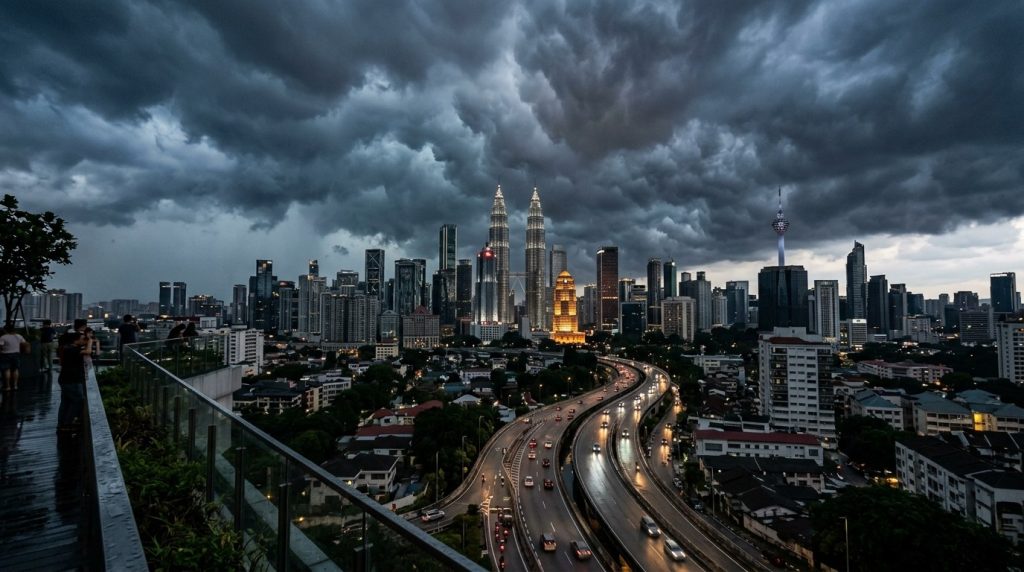
KL is hot and humid all year, with afternoon storms most days in the wetter months. Our guide to the best time to visit Malaysia breaks down the monsoons coast by coast, which matters if you add the islands after KL. That heat is one reason our honest verdict on Kuala Lumpur treats the city as a 2 to 3 night food stopover rather than a week-long destination.
Visiting Kuala Lumpur with kids
KL works well as a family stop, mostly because the biggest attraction on Day 1 comes with a free kids’ add-on: KLCC Park, right next to the Petronas Towers, has a children’s wading pool and playground that most families miss if they only photograph the towers and move on. Build in 30 to 60 minutes there before or after the towers, and bring swimwear for younger kids.
Aquaria KLCC, the aquarium beneath the convention centre, is a solid indoor option for a hot afternoon or a sudden downpour, with an underwater tunnel and touch pools that work for a wide range of ages. It pairs naturally with a KLCC day, since it is a short walk from the towers.
Batu Caves is the one stop on this itinerary to plan around rather than rush. The climb to the main cave is 272 steps in the open with no shade, and the macaques that live on the staircase will take food directly from hands or bags, which can be alarming for small children.
It is still doable with kids who can manage stairs, but budget more time, keep snacks fully zipped away before you start climbing, and consider a mid-morning rather than a midday visit so the heat is not fighting you as well.
For families with a stroller or very young children, the base of the steps and the surrounding temple grounds are worth the visit even if you decide to skip the climb itself.
Where to Stay in Kuala Lumpur
– Bukit Bintang: the best all-round base for first-timers. You get Jalan Alor at your door, a monorail and MRT, and the widest spread of hotels. – KLCC: quieter and more polished, with tower views and walkways into the malls.
It is pricier, and it suits couples and business stopovers. – Chinatown (Pasar Seni): cheaper, more character and walkable to Merdeka Square. It is noisier and older, so it suits budget travellers who don’t mind the bustle.
Find your Kuala Lumpur hotel on the map
Live prices from Booking, Airbnb and more — move the map or change dates to compare stays across Kuala Lumpur.
Frequently Asked Questions
Is 3 days in Kuala Lumpur enough?
Yes. Three days covers the Petronas Towers, Batu Caves, Merdeka Square, Chinatown and Jalan Alor, plus one day trip to Malacca or Putrajaya. You only need a fourth day if you want both day trips or a slower pace. Two days works if you drop the day trip.
What should I wear to Batu Caves?
Cover your shoulders and knees. This applies to men and women and is enforced at the bottom of the 272 steps. Long pants or a midi skirt and a T-shirt are enough. Wraps are sold near the staircase for about RM 15, but they are not always available early, so dress for it from your hotel.
How much is the KLIA Ekspres in 2026?
An adult one-way ticket is RM 55 (AUD 19 · USD 13.50) until 31 December 2026, and the journey to KL Sentral takes about 28 minutes. From 1 January 2027 it rises to RM 65 (AUD 22 · USD 16), and a return ticket will cost RM 118. Children aged 6–15 will pay RM 29 one way.
Is Grab or a taxi better in Kuala Lumpur?
Grab is usually better. The price is fixed in the app before you ride, it is often cheaper than street taxis, and you skip the haggling. For the airport, the coupon taxi at about RM 75 is a fair fallback if your phone has no data on landing. Avoid touts in the arrivals hall offering rides.
Is Malacca or Putrajaya the better day trip from KL?
Malacca, if you have a full day. Its UNESCO-listed old town, Peranakan food and Jonker Street justify the 2-hour bus each way. Choose Putrajaya if you only have half a day or are heading to the airport, because it is about 18 minutes from KL Sentral on the airport train line.