Disclosure: Some links in this guide are affiliate links. If you book or buy through them, we may earn a small commission at no extra cost to you — it helps keep our guides free.
Ho Chi Minh City is safe for tourists, sitting under Vietnam’s Smartraveller Level 1 rating and a Numbeo crime index of 50.46 that still lands in the moderate band. The one exception that changes how you should act here is motorbike phone and bag snatching, a problem sharper in this city than almost anywhere else in Vietnam.
| Risk | How likely | How serious | What actually prevents it |
|---|---|---|---|
| Motorbike phone/bag snatching | Common, concentrated in District 1 | Usually just the item; injury only if you resist or fall | Cross-body bag on the wall side, phone off the kerb |
| Crossing the road | Constant, every block | Rarely serious if you cross correctly | Walk at a steady, predictable pace; never stop or run |
| Taxi meter and fake-taxi scams | Common near tourist strips and terminals | Financial only | Book through the Grab app or a marked Vinasun/Mai Linh car |
| Violent crime against tourists | Rare | Low | Smartraveller’s normal precautions already cover it |
| Petty overcharging and street scams | Common | Low, financial | Confirm the price before agreeing, walk away if pressured |
Phone and bag snatching is the real risk
Phone and bag snatching, not violent crime, is the safety issue tourists in Ho Chi Minh City actually run into.
Numbeo’s Crime Index puts the city at 50.46, classed as Moderate, and the pattern behind that number is consistent across traveller reports: two riders on a motorbike pull alongside a pedestrian or another bike, and the passenger grabs a phone or bag before disappearing into traffic.
District 1 carries the heaviest concentration, especially the Bui Vien and Ben Thanh Market areas where foot traffic, nightlife, and distracted tourists overlap. It also happens to people riding as passengers on their own rented bikes or in cyclos, not just pedestrians, so the risk doesn’t disappear once you’re off the pavement. The fix is mostly habit rather than gear.
Wear cross-body bags on the side away from the road, keep your phone in a pocket rather than your hand while walking near traffic, and avoid scrolling on a phone at the kerb or at open-air café tables facing the street.
If a snatch does happen, let go rather than fight for the item, since most injuries in these incidents come from being dragged or falling, not from the theft itself. Reporting a theft to the tourist police in District 1 rarely recovers the item, but it does generate the paperwork most travel insurers require for a claim.
Crossing the road and traffic
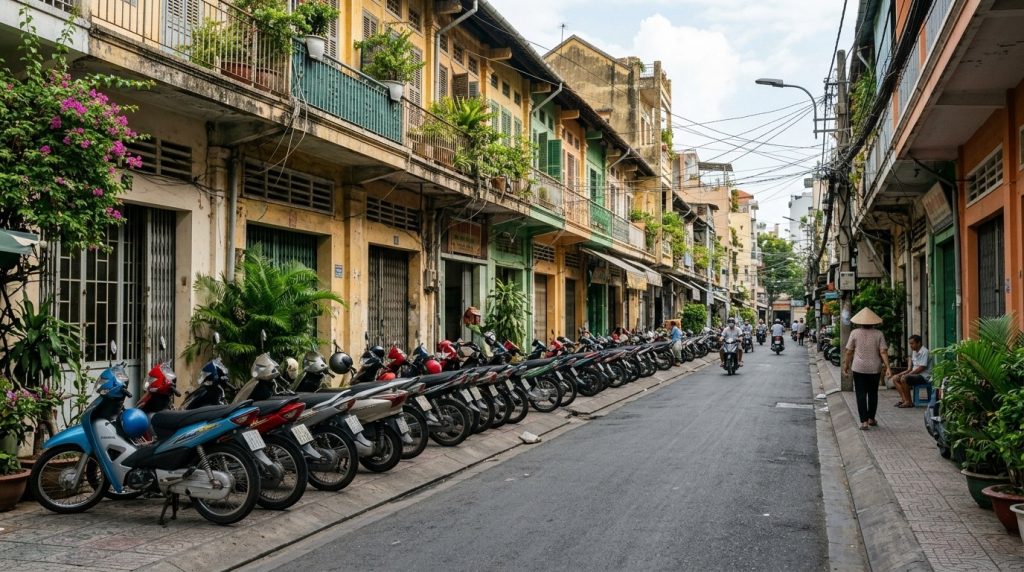
Crossing the road is the daily hazard in Ho Chi Minh City, and it has nothing to do with crime. Motorbikes fill every lane and rarely stop for a stationary pedestrian, so standing at the kerb waiting for a gap that never comes is the mistake first-time visitors make.
The technique that works is to start walking at a steady, predictable pace once you commit, and let the bikes flow around you rather than stopping or breaking into a run. Marked pedestrian crossings help but don’t guarantee right of way, so treat every intersection the same way regardless of paint on the road.
Wide, fast roads like Nguyen Hue and the ring around Ben Thanh Market carry more lanes of traffic than the narrower streets of District 3, so cross those intersections at a designated crossing point where a traffic officer or a crowd of locals is already crossing rather than attempting it alone.
Riders also weave more in heavy rain, so if you’re using our guide to the best time to visit Ho Chi Minh City to plan a trip, treat the wet season as a traffic factor as much as a packing one.
Taxi and scam avoidance
Grab is the safer and cheaper option over hailing a cab on the street in Ho Chi Minh City. The app shows the fare upfront, records the driver’s licence plate, and removes the negotiation that fake-taxi drivers rely on.
The scam to watch for is a car painted to resemble a legitimate brand like Vinasun or Mai Linh, running a meter that ticks over far faster than a genuine one, or a driver who claims the meter is broken and quotes a flat fee once you’re already inside.
Stick to the official Grab app, or a Vinasun or Mai Linh car with the company logo and a printed phone number on the door, and skip unmarked cars waiting outside the airport or Ben Thanh bus terminal.
The same wariness applies to street food stalls that quote one price verbally and charge another at the end, so confirm the price before ordering, particularly at stalls aimed squarely at tourists rather than the busy, fast-turnover spots in our Ho Chi Minh City food guide that locals actually queue for.
How it compares to Hanoi and the rest of Vietnam
Ho Chi Minh City carries a higher everyday risk than Hanoi, though the gap is moderate rather than dramatic. Numbeo rates Ho Chi Minh City at 50.46, Moderate, against Hanoi’s 33.84, which sits in the Low band.
The difference tracks with what travellers report on the ground: Ho Chi Minh City’s larger population, denser backpacker strip around Pham Ngu Lao, and heavier motorbike traffic give opportunist thieves more chances than Hanoi’s smaller, calmer Old Quarter.
Both cities sit under the same Vietnam-wide Smartraveller Level 1 rating, so the national advice doesn’t distinguish between them, and neither city’s risk profile should be treated as a reason to skip Vietnam altogether. It’s a reason to adjust habits, not itineraries.
Travellers splitting a trip between the two, or deciding which to prioritise, are better served treating Hanoi as the lower-vigilance stop and Ho Chi Minh City as the one where District 1 habits matter most, rather than picking one city over the other on safety grounds alone.
Food and water safety
Tap water is not safe to drink anywhere in Ho Chi Minh City, including in mid-range and upscale hotels, so stick to bottled or filtered water for drinking and brushing your teeth, and treat this as a default rather than a worst-case precaution.
Ice in cities is generally made in factories from treated water and is considered safe at most established restaurants and bars, but it is still worth avoiding at the most informal street stalls if you want to be cautious.
Street food itself carries a reputation for risk that is mostly undeserved: the busiest stalls, the ones with a constant queue of locals and high turnover of fresh ingredients, are generally safer than empty tourist-facing restaurants where food sits longer before it reaches you.
Freshly cooked, still-hot dishes such as pho, banh mi made to order, and grilled meats are lower risk than raw herbs, pre-cut fruit or salads that may have been rinsed in tap water, so if your stomach is sensitive, stick to cooked food over raw garnishes for the first few days while you adjust.
Carrying oral rehydration salts or a basic anti-diarrhoeal from home covers the most common travel illness without needing a pharmacy run, though Ho Chi Minh City has plenty of pharmacies if you do need one. Washing your hands before eating street food, where handwashing facilities are not always nearby, matters as much as what you actually order.
Weather and flooding risks
Ho Chi Minh City’s wet season runs roughly from May to November, and heavy downpours during these months can flood low-lying streets within an hour, especially where high tides on the Saigon River coincide with heavy rain.
Flooding is highly localised rather than city-wide: central District 1 and the main tourist core generally drain faster than outer and low-lying areas, while parts of District 4, District 7, District 8, District 12 and Nha Be, along with streets that run close to canals or the river, are the most flood-prone and can leave motorbikes stalled axle-deep in water.
If you are travelling during the wet season, build a little slack into plans that involve crossing town at peak rain times, since a sudden downpour can turn a 20-minute Grab ride into much longer, and riders weave more erratically in heavy rain, adding to the road-crossing hazard covered above.
Heat and humidity are a steadier, less dramatic risk than flooding: temperatures commonly sit in the low-to-mid 30s Celsius year-round with high humidity, so pacing outdoor sightseeing for the morning or late afternoon and resting through the early afternoon heat reduces the risk of heat exhaustion more effectively than any single precaution.
Air quality in Ho Chi Minh City is worse than in most Australian cities, driven largely by motorbike exhaust, and can affect travellers with asthma or other respiratory conditions on high-traffic, low-wind days, so packing any regular medication is worth doing regardless of the season.
Female and solo traveller safety
Ho Chi Minh City has a strong reputation among solo female travellers, with most reporting little to no street harassment compared with other major Asian cities, and many travelling solo here without major incident.
The safety issues that do come up are the same ones covered above, phone and bag snatching and overcharging, rather than anything specific to travelling alone or as a woman, and solo travellers of any gender are not meaningfully more exposed to violent crime than anyone travelling with company.
That said, a few habits reduce risk further for anyone travelling solo. Share your accommodation address and rough daily plan with someone before you head out, particularly for late-night Bui Vien outings, and arrange transport home through the Grab app rather than hailing a cab on the street at night, since the upfront fare and recorded driver details remove the one scenario where a late-night taxi dispute can escalate.
Choosing a centrally located, well-reviewed hotel with a staffed front desk at night, as covered under choosing a safer base below, matters more for a solo traveller’s peace of mind than for any measurable difference in risk.
Dressing modestly around temples and pagodas is a cultural courtesy rather than a safety issue, and most solo travellers find the biggest practical adjustment is simply the traffic and crossing habits already described, not personal safety from other people.
Emergency contacts and what to do if something happens
Vietnam’s national emergency numbers work the same in Ho Chi Minh City as anywhere else in the country: dial 113 for police, 114 for fire, and 115 for an ambulance or medical emergency, all free to call from any phone including an international mobile with no local SIM.
Response times and English-language support vary, so for anything beyond an urgent medical issue, your hotel’s front desk or a nearby hotel’s staff can usually get a faster, clearer response from local services than calling 113 yourself as a non-Vietnamese speaker.
For a lost passport, theft report, or any issue that needs consular support, Australians can contact the Australian Consulate-General in Ho Chi Minh City or the Embassy in Hanoi, and registering your trip with Smartraveller before you travel makes it easier for them to reach you in an emergency affecting the wider country rather than just your own situation.
Travel insurance claims for theft almost always require a police report, so if your phone or bag is snatched, go to the nearest police station, in District 1 this is typically the ward police station closest to where the incident happened, and ask for a written report in English if possible; it will not usually recover the item, but it is the paperwork insurers ask for.
For anything involving a hospital visit, Ho Chi Minh City has several international-standard private hospitals that deal with travellers regularly and can liaise directly with travel insurers, which is generally a faster and more straightforward experience than a public hospital for a short-stay visitor.
Who should think twice
Ho Chi Minh City is a harder trip for a few specific travellers. Solo visitors planning to walk back from Bui Vien late at night after drinking, phone in hand, are the profile most likely to lose something to a snatch theft.
Anyone unwilling to keep a bag worn cross-body on the building side rather than the road side is giving up the one habit that prevents most incidents.
Families with young children who need a free hand for constant hand-holding through unregulated intersections will find the traffic more stressful than relaxing, especially without a clear day-by-day plan; our 4-day Ho Chi Minh City itinerary is built around routes that limit how often you cross the busiest roads.
Digital nomads working from open-air cafes with a laptop visible from the pavement are also a soft target, since the same distraction that makes a table by the window appealing is what a passing snatch thief is looking for.
Anyone with a mobility limit that rules out a fast, steady road crossing should expect the city centre to be genuinely difficult to navigate on foot, and should weigh a driver-and-car arrangement over walking between sights. None of this rules out a visit.
It argues for building specific habits into the trip rather than assuming the general Vietnam safety picture applies equally to a quiet beach town and to downtown Ho Chi Minh City.
Choosing a safer base
Where you stay in Ho Chi Minh City changes your daily exposure to both scams and phone snatching more than almost any other single decision. The District 1 core puts you closest to sights and nightlife but also inside the highest-density snatch-theft zone, particularly near Bui Vien.
District 3 sits one step back with quieter streets and an easy Grab ride to the centre, while District 7’s Phu My Hung and Thao Dien in District 2 trade a longer commute for noticeably calmer pavements and less tourist-targeted crime.
None of these areas are unsafe in an absolute sense, but they differ in how often you’ll be walking past the kind of crowded, distracted foot traffic that snatch thieves target. See the best hotels in Ho Chi Minh City for specific picks across these areas.
Use the map below to compare live prices by neighbourhood and pick a base that fits how much daily exposure you’re comfortable with.
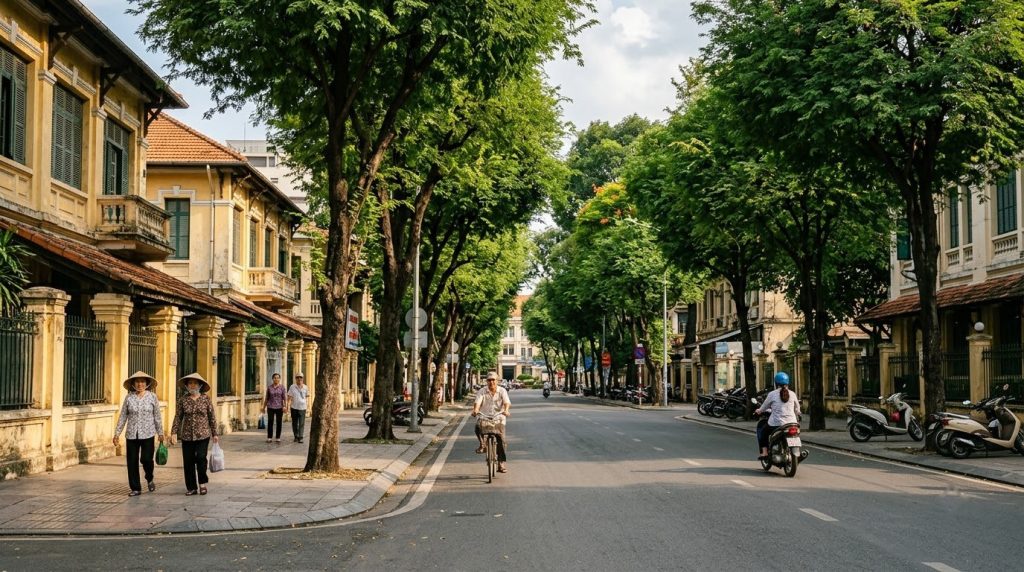
Find your Ho Chi Minh City hotel on the map
Live prices from Booking, Airbnb and more — move the map or change dates to compare stays across Ho Chi Minh City.