Disclosure: Some links in this guide are affiliate links. If you book or buy through them, we may earn a small commission at no extra cost to you — it helps keep our guides free.
Best Food in Ho Chi Minh City: What To Eat and Where 2026
Quick answer: Saigon’s signature plates are com tam (grilled pork over broken rice), banh mi from pavement carts, and noodle bowls like hu tieu and bun bo hue, alongside southern specialties such as banh xeo and goi cuon. The best versions run roughly $1.50 to $4 at busy local stalls in District 1 and District 3, not tourist-facing cafes.
Ho Chi Minh City serves some of the most diverse, affordable, and flat-out delicious food in Southeast Asia — from $1 banh mi carts to proper pho shops that open at 5 AM. This guide covers the 20+ dishes you should eat, exact prices, and specific addresses where we consistently find the best versions.
Key Takeaways
- Ho Chi Minh City has over 30,000 street food vendors operating across its 24 districts (Vietnam National Administration of Tourism, 2024)
- A full street food meal costs between $1.50 and $4 USD at local eateries, making HCMC one of Southeast Asia’s most affordable food cities (Numbeo, 2025)
- District 1 and District 3 concentrate the highest density of well-reviewed restaurants and food stalls within walking distance of major hotels
- The best banh mi in the city consistently costs under $1.50 USD at pavement carts versus $3-5 at tourist-facing cafes
- Over 60% of HCMC residents eat at least one meal outside the home daily, sustaining a thriving street food culture year-round (Statista Vietnam, 2024)
What Makes Ho Chi Minh City a World-Class Food Destination
Related: things to do in Ho Chi Minh City.
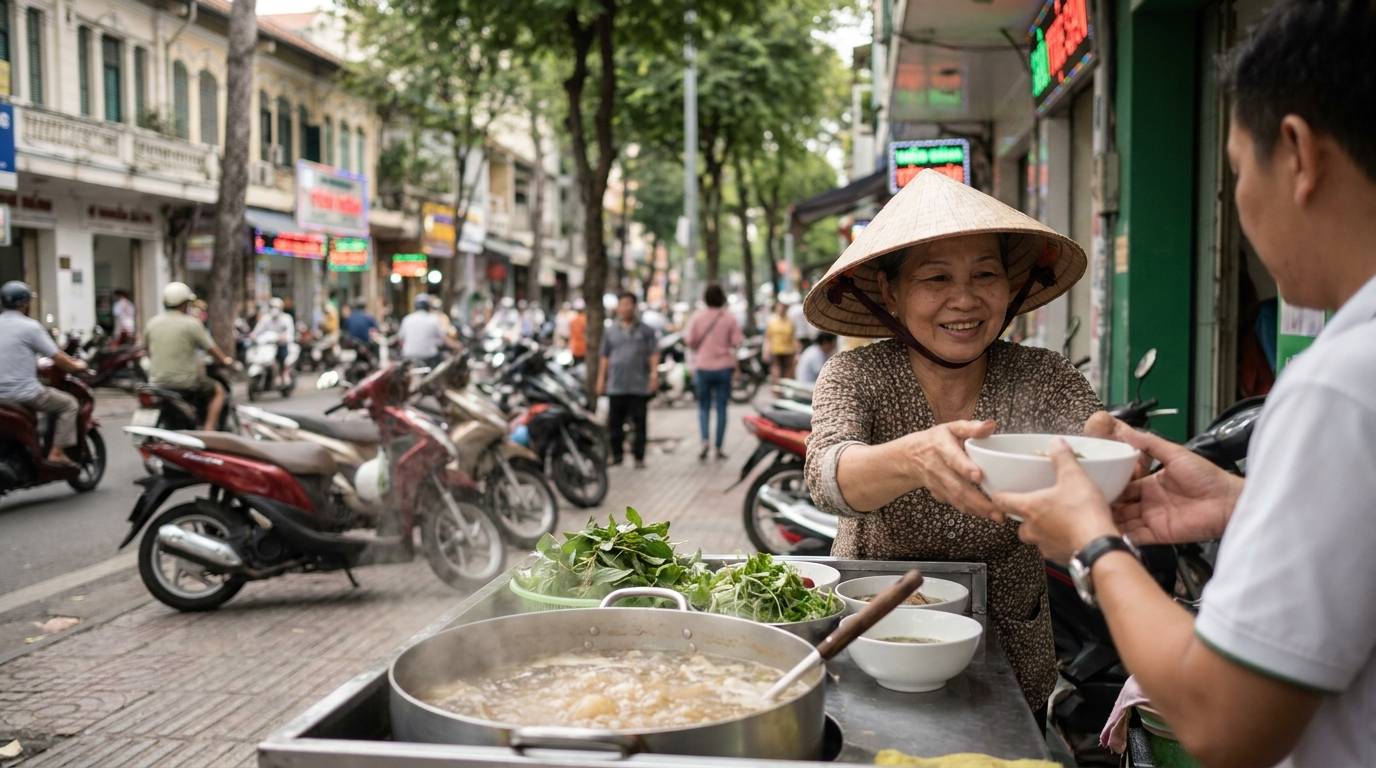
Ho Chi Minh City earned its food reputation through sheer variety — southern Vietnamese cuisine differs noticeably from Hanoi’s with sweeter broths, more fresh herbs, and heavier French colonial influence. The city draws together street vendors, family-run quan (small restaurants), and modern bistros, all coexisting within a few city blocks.
Southern Vietnamese food leans sweeter and more herb-forward than the north. You will find dishes like bun thit nuong (cold noodles with grilled pork) or broken rice (com tam) that are unique to this region. The French presence left behind a baguette tradition that became the banh mi, now considered Vietnam’s most iconic export food worldwide.
Prices remain low by any regional standard. At a local quan, a bowl of pho costs 40,000-60,000 VND ($1.60-$2.40 USD). A banh mi from a cart is 15,000-25,000 VND ($0.60-$1 USD). Even at mid-range restaurants with air conditioning, a full meal with drinks rarely exceeds $8-10 USD per person (Source: personal field research, June 2026).
Find your Ho Chi Minh City hotel on the map
Live prices from Booking & Airbnb — tap a pin to compare stays around District 1 and beyond.
Banh Mi: Where To Find the Best Sandwich in the City
Related: Ho Chi Minh City packing list.
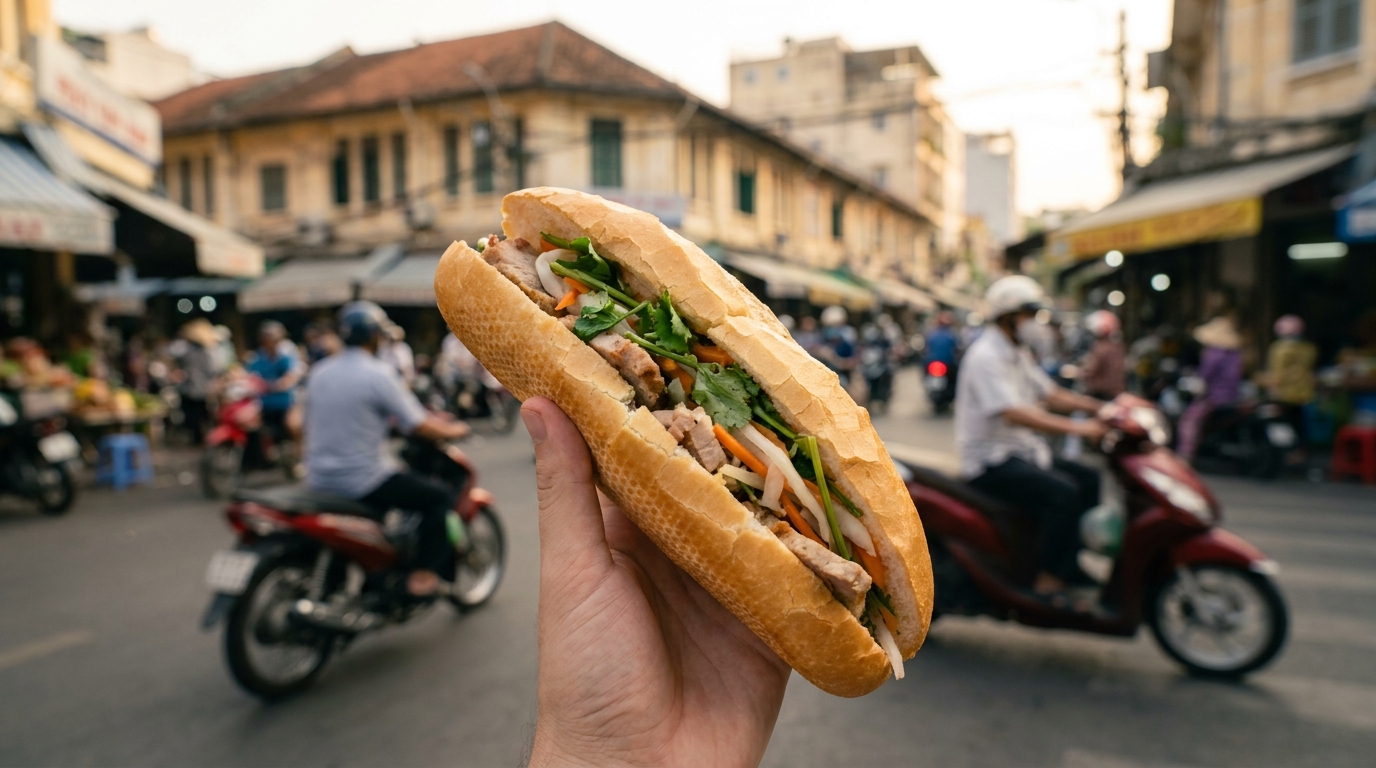
The best banh mi in Ho Chi Minh City comes from street carts operating from 6 AM to 2 PM — not the cafes catering to tourists. A proper banh mi costs 20,000-30,000 VND ($0.80-$1.20 USD) and includes a crisp French baguette filled with pate, cold cuts, pickled daikon and carrot, fresh cucumber, cilantro, and chili.
Banh Mi Huynh Hoa on Le Thi Rieng Street in District 1 charges around 40,000 VND ($1.60 USD) per sandwich — more expensive than average, but the fillings are more generous and the bread is notably fresher. Expect a short queue from 2 PM onward.
Banh Mi 37 Nguyen Trai in District 1 is another consistent option that locals use for a quick breakfast. For booking a street food walking tour that covers banh mi, Klook offers a 3-hour Saigon street food tour starting at $22 USD per person — a good way to find the best carts efficiently.
Pho and Bun Bo Hue: Noodle Soups Worth Getting Up Early For
Related: best beaches in Ho Chi Minh City.
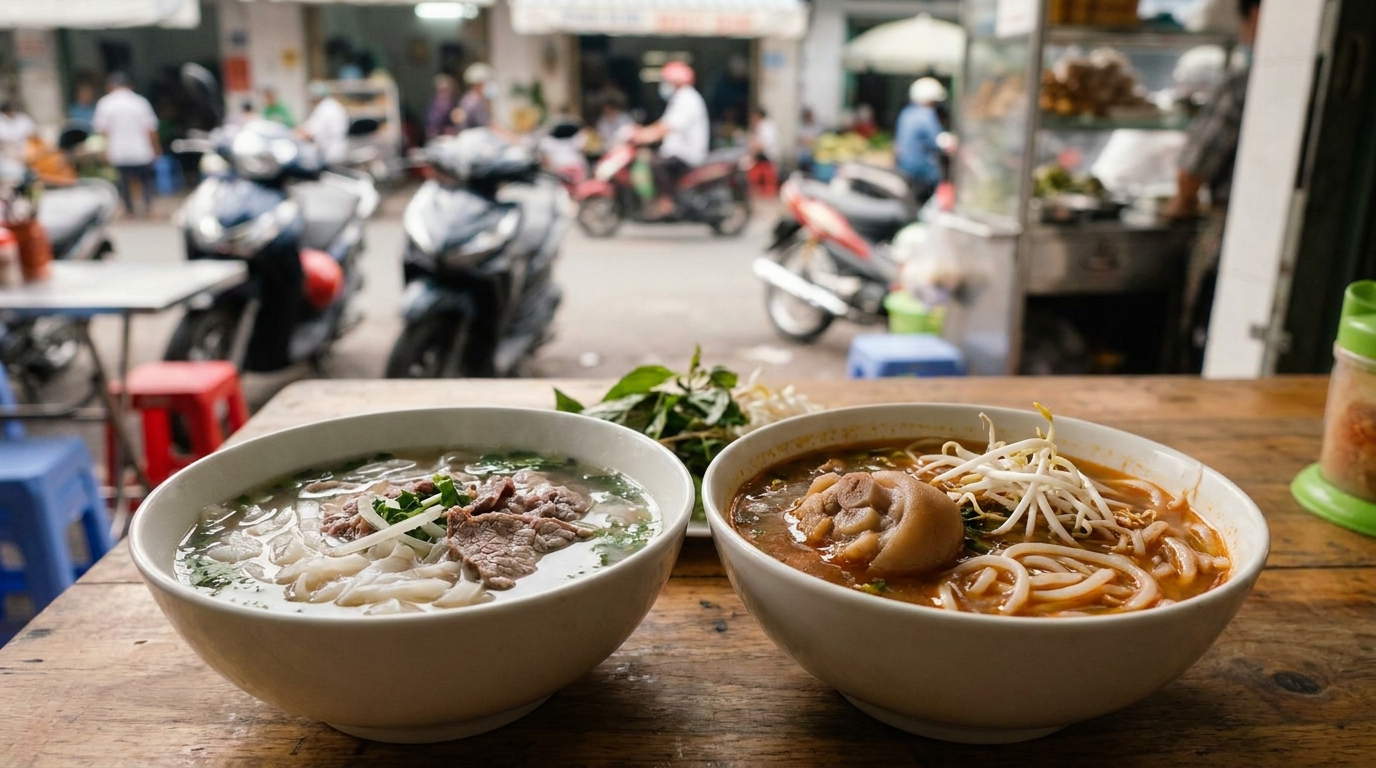
Pho in Ho Chi Minh City runs sweeter and slightly lighter than the Hanoi version, with a clear beef broth and add-ons like bean sprouts, lime, and fresh basil placed on the side. The best bowls are served before 9 AM when the broth is freshest.
Pho Hung at 240 Pasteur Street, District 3, opens at 6 AM and draws a consistent local crowd. A large bowl with beef and tendon costs 60,000 VND ($2.40 USD). Pho Le at 415 Vo Van Tan is another District 3 institution with half-century-old recipes.
Bun bo Hue is not from HCMC but is widely available and worth ordering. It is a spicier, more complex noodle soup from Hue city, typically costing 50,000-70,000 VND ($2-$2.80 USD) at local spots. Bun Bo Hue O Ba Tuyet near the Ben Thanh Market area serves a reliable version that avoids the tourist-inflated pricing of the market’s interior vendors. Ultimate Ho Chi Minh City Travel Guide 2026: Tips & Costs
Com Tam (Broken Rice): The City’s Most Beloved Everyday Meal
Related: best day trips from Ho Chi Minh City.
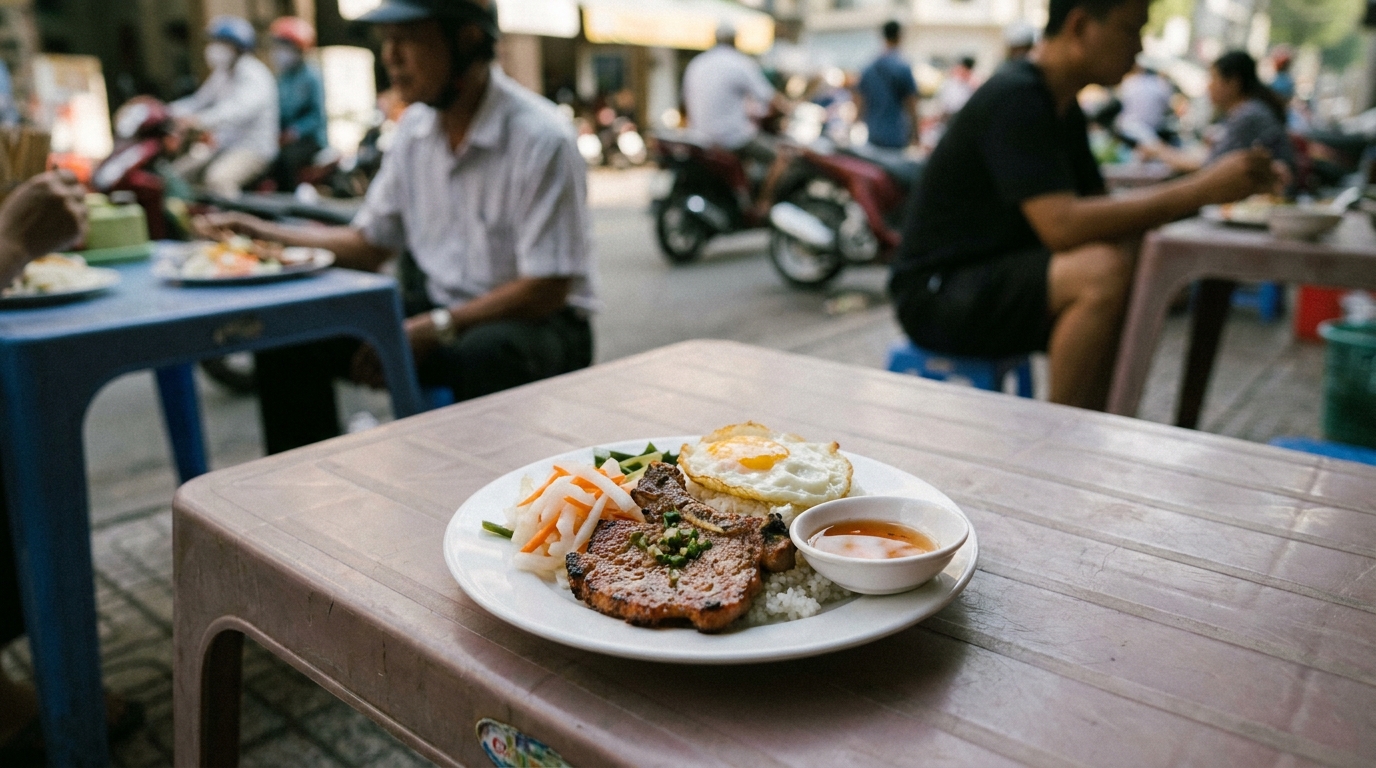
Com tam — broken rice served with grilled pork chop, shredded pork skin, steamed egg cake, and a small bowl of fish sauce dipping broth — is the quintessential HCMC lunch. It is fast, filling, satisfying, and almost universally available across the city from 6 AM onward.
Prices range from 35,000 VND ($1.40 USD) at pavement stalls to 80,000 VND ($3.20 USD) at sit-down restaurants. Com Tam Ba Ghien at 84 Dang Van Ngu, Phu Nhuan District, is frequently cited as one of the city’s definitive versions. The grilled pork chop is marinated overnight in lemongrass and sugar before charcoal-grilling. Arrive before noon to avoid selling out.
Most com tam stalls are open all day, making this the easiest dish to find regardless of when you are hungry. Look for stalls with a charcoal grill visible from the street — that is a reliable indicator of freshly grilled meat rather than pre-cooked protein held in a steam tray.
Banh Xeo and Goi Cuon: Southern Specialties You Should Not Skip
Related: Bali travel guide.
Banh xeo is a crispy savory crepe made from rice flour, turmeric, and coconut milk, filled with shrimp, pork, and bean sprouts. You eat it by tearing off a section, wrapping it in lettuce with fresh herbs, and dipping into nuoc cham fish sauce. It is messy and interactive and completely worth ordering.
Banh Xeo 46A at 46A Dinh Cong Trang, District 3, has been serving this dish since the 1980s. A large crepe costs around 90,000 VND ($3.60 USD) and feeds two people as a side dish. The restaurant is informal, loud, and packed at lunch — exactly the right environment for this dish.
Goi cuon (fresh spring rolls) are lighter — rice paper rolls filled with vermicelli, shrimp, pork, and herbs, served at room temperature with peanut dipping sauce. They cost 30,000-50,000 VND ($1.20-$2 USD) for a plate of two to three rolls at most restaurants.
Nearly every restaurant in the city serves them, so quality varies considerably — look for rolls made to order rather than pre-rolled and sitting in a display case.
Ben Thanh Market and the Nguyen Hue Food Street: Eating Where the Crowds Are
Related: Da Nang travel guide.
Ben Thanh Market is the most-photographed food destination in HCMC and also the one where you will overpay most predictably. Interior stall prices for pho run 90,000-120,000 VND ($3.60-$4.80 USD) — double what you pay three blocks away. That said, the market’s periphery stalls on Le Loi and Pham Ngu Lao are better priced and still convenient for District 1 travelers.
The Nguyen Hue Walking Street pedestrian zone hosts a rotating street food market on weekend evenings (Friday-Sunday, 6 PM-11 PM) where regional Vietnamese dishes from different provinces are sold from organized stalls. Prices here are fair — 30,000-60,000 VND per dish — and the atmosphere is genuine, drawing local families alongside tourists.
For a structured food experience across multiple neighborhoods, we recommend the Saigon Street Food tour on Klook ($22-$28 USD), which covers District 1, District 4, and District 6 by motorbike with a local guide who orders and explains each dish. Alternatively, GetYourGuide lists a similar evening food tour at $25 USD that focuses specifically on night market vendors.
Where To Stay To Maximize Food Access
Related: best time to visit Ho Chi Minh City.
Staying in District 1 puts you within walking distance of Ben Thanh Market, the Nguyen Hue food strip, and dozens of recommended restaurants. District 3 is slightly quieter and has a higher concentration of long-established local restaurants without tourist-inflated pricing.
| Area | Best For | Avg Hotel Rate (USD/night) | Book Via |
|---|---|---|---|
| District 1 (Bui Vien area) | Nightlife, convenience, street food | $25-$60 | Booking.com / Agoda |
| District 1 (Nguyen Hue) | Midrange and upscale, walkable | $50-$120 | Booking.com |
| District 3 | Local restaurants, quieter | $20-$50 | Agoda |
| Binh Thanh District | Budget, local vibe, less touristed | $12-$30 | Agoda |
For midrange travelers, the Silverland Sakyo Hotel (District 1) offers central positioning with rates from $45 USD/night on Booking.com. Budget travelers consistently find good value at guesthouses on Bui Vien Street via Agoda from $15-$20 USD/night.
Practical Tips: Data, Payment, and Getting Around for Food
Related: getting to Ho Chi Minh City.
A data SIM or eSIM is essential in HCMC for navigating between food spots and using Google Maps to translate menus. We use Airalo’s Vietnam eSIM — a 1 GB plan costs $4.50 USD and activates instantly before you land. The 3 GB plan at $9 USD is better for a week-long trip with heavy Maps usage.
Most street vendors and local quan accept cash only in Vietnamese dong. ATMs are widely available in District 1 at Vietcombank and BIDV branches with reasonable fees ($1-$2 USD per transaction). Avoid exchanging currency at hotels — rates run 3-5% below market. Grab (the regional Uber equivalent) is the fastest and cheapest way to move between food districts, with most cross-district rides costing 40,000-80,000 VND ($1.60-$3.20 USD).
Motorbike food tours are a practical option for covering more ground than walking allows. Klook’s evening street food motorbike tour covers six to eight stops in three hours for $22-$28 USD and is consistently rated 4.8/5 from over 2,400 reviews.
Frequently Asked Questions
What is the most popular street food in Ho Chi Minh City?
Com tam (broken rice with grilled pork) and banh mi are the two dishes eaten most often by locals on a daily basis. Both cost under $1.50 USD at local stalls and are available from early morning through mid-afternoon. Pho is the third most common breakfast choice across all age groups.
How much does food cost per day in Ho Chi Minh City?
Eating entirely at local stalls and quan, budget $8-$12 USD per day for three meals including drinks. Mixing in one midrange restaurant per day raises this to $15-$20 USD. Full sit-down meals at tourist-facing restaurants with cocktails will push costs to $25-$40 USD per day.
Is street food in Ho Chi Minh City safe to eat?
Street food from busy, high-turnover stalls is generally safe. High customer volume means ingredients are fresh. We recommend choosing stalls where food is cooked to order in front of you and avoiding pre-cooked items sitting at room temperature in display cases. Bottled water is cheap and widely available at 5,000-10,000 VND ($0.20-$0.40 USD).
What neighborhoods have the best food in Ho Chi Minh City?
District 1 has the widest variety and easiest access. District 3 has a higher concentration of long-established local restaurants. District 4 (across the bridge from District 1) is known for affordable seafood and traditional southern dishes. District 6 in Cholon (Chinatown) has excellent Chinese-Vietnamese fusion street food less visited by tourists.
Can I take a food tour to cover the best spots efficiently?
Yes — a guided food tour is one of the most practical ways to eat well in HCMC, especially on a short trip. Klook and GetYourGuide both list well-reviewed options starting at $22 USD for a 3-hour evening tour covering 6-8 stops. Evening tours are better than daytime since night markets add atmosphere and more vendors are operating.
What dishes should vegetarians order in Ho Chi Minh City?
Vietnam has a strong Buddhist vegetarian tradition. Many restaurants serve chay (vegetarian) menus on the 1st and 15th of the lunar month. Look for signs reading “Com Chay” or “Quan Chay” — these are dedicated vegetarian restaurants serving tofu-based versions of classic Vietnamese dishes for 30,000-60,000 VND ($1.20-$2.40 USD) per plate.
What is the best time of day to eat street food in Ho Chi Minh City?
Early morning (6-9 AM) is ideal for pho, banh mi, and bun bo Hue when broths and bread are freshest. Lunchtime (11 AM-1 PM) is best for com tam and bun thit nuong. Evening from 6 PM onward opens up the night market scene on Nguyen Hue and the street vendors around Bui Vien. Many stalls close by 2 PM and reopen around 5-6 PM.
Start Planning Your Ho Chi Minh City Food Trip
Related: hidden gems in Ho Chi Minh City.
Ho Chi Minh City rewards food-focused travel more than almost any other city in Southeast Asia — the combination of low prices, enormous variety, and dishes with genuine local character makes every meal worthwhile.
Start with com tam and banh mi on your first morning, join an evening street food tour via Klook or GetYourGuide to orient yourself across multiple neighborhoods, and use Airalo to stay connected while navigating between spots.
For accommodation, Booking.com and Agoda both list strong options in District 1 and District 3 at every budget level — book at least two weeks in advance for stays over major Vietnamese holidays (Tet in late January/early February fills the city completely). Once you have your hotel and connectivity sorted, let the food guide the rest of your itinerary.