Disclosure: Some links in this guide are affiliate links. If you book or buy through them, we may earn a small commission at no extra cost to you — it helps keep our guides free.
Ultimate Ho Chi Minh City Travel Guide 2026: Tips & Costs
Quick answer: Plan 3-4 days in Ho Chi Minh City and base yourself in District 1, the central hub within walking distance of most major sights. Book a Grab car from Tan Son Nhat airport (around 180,000-260,000 VND / $7-10) instead of a street taxi, and budget roughly $30-50 a day on the low end up to $200+ for luxury. Aim for the December-April dry season to avoid wet-season afternoon storms.
This Ho Chi Minh City travel guide covers everything first-time visitors need to plan a smooth 2026 trip to Vietnam’s busiest city. Saigon (the city’s older name still used by locals) welcomed 6.2 million international visitors in 2024 (Vietnam National Authority of Tourism, 2025) and continues to break arrival records.
I’ve spent more than 30 days in Ho Chi Minh City across four trips, from a $20-a-night hostel in District 1 to a riverside hotel in Thu Thiem. Saigon mixes French colonial architecture with motorbike-choked boulevards, rooftop bars, and some of Southeast Asia’s best street food. This guide breaks down every planning question with real 2026 prices, route timings, and the small mistakes I made so you don’t repeat them.
For deeper dives, see our Ho Chi Minh City things to do list and where to stay in Ho Chi Minh City guide.
- 3-4 days is the sweet spot for first-time Ho Chi Minh City trips (Vietnam Tourism, 2025)
- Dry season runs December to April; wet season May to November with afternoon storms
- Tan Son Nhat (SGN) is 7 km from District 1; Grab car costs 180,000-260,000 VND ($7-$10)
- Budget travelers spend $30-50/day; mid-range $80-130; luxury $200+
- District 1 is the safest first-stay area and walks to most major sights
Why Visit Ho Chi Minh City in 2026? — Ho Chi Minh City Travel Guide
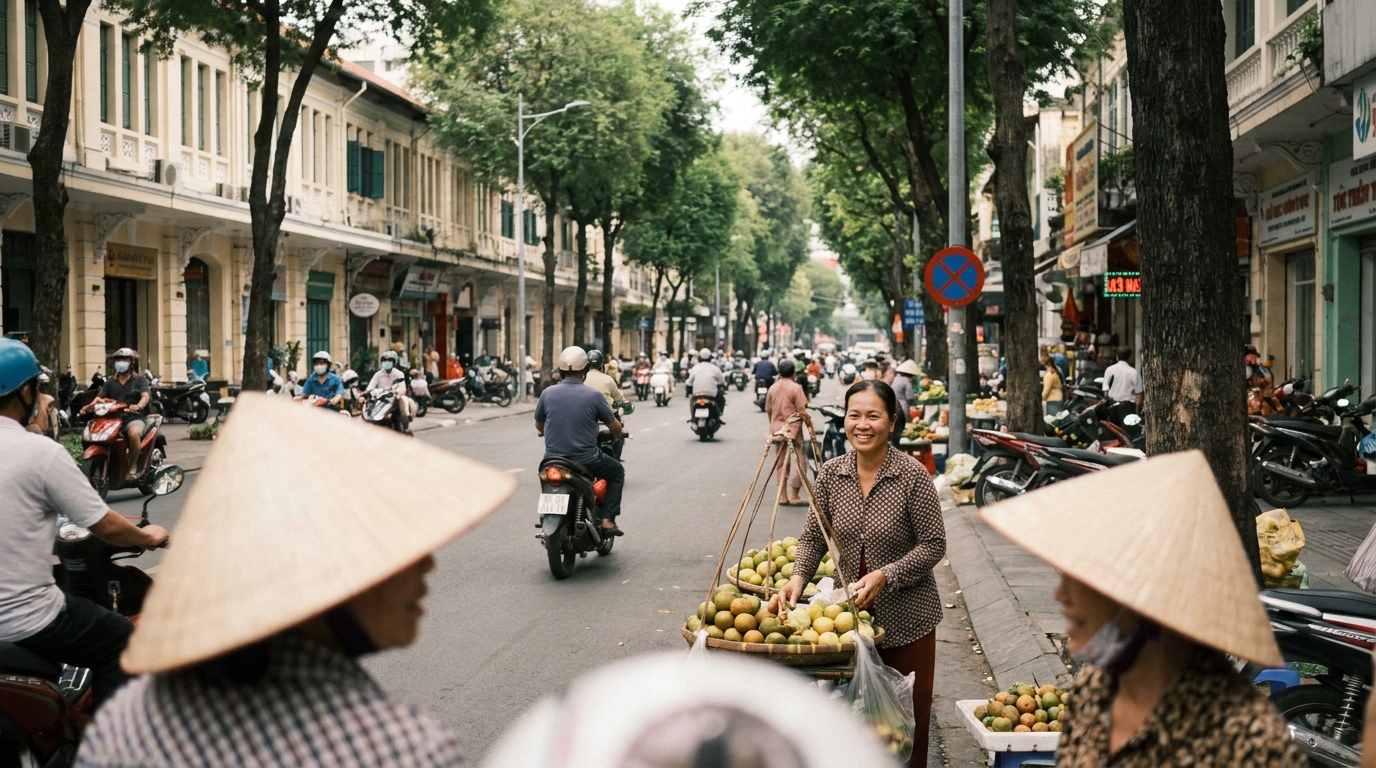
Ho Chi Minh City is Vietnam’s economic engine and its most accessible introduction to Vietnamese culture. The city’s population passed 9.4 million in 2024 (General Statistics Office of Vietnam, 2024), making it the largest urban area in the country. International arrivals to Vietnam grew 39% year-over-year in 2024, with Saigon the top entry point.
Three reasons travelers keep returning: low costs (a banh mi sandwich costs 25,000 VND or about $1), strong air connections (direct flights from 50+ international cities), and a food scene that punches well above its tourism profile. Bloomberg named Ho Chi Minh City a 2025 “must-visit” Asian capital for street food, and Lonely Planet ranked Vietnam #11 on its 2026 Best in Travel list (Lonely Planet, 2025).
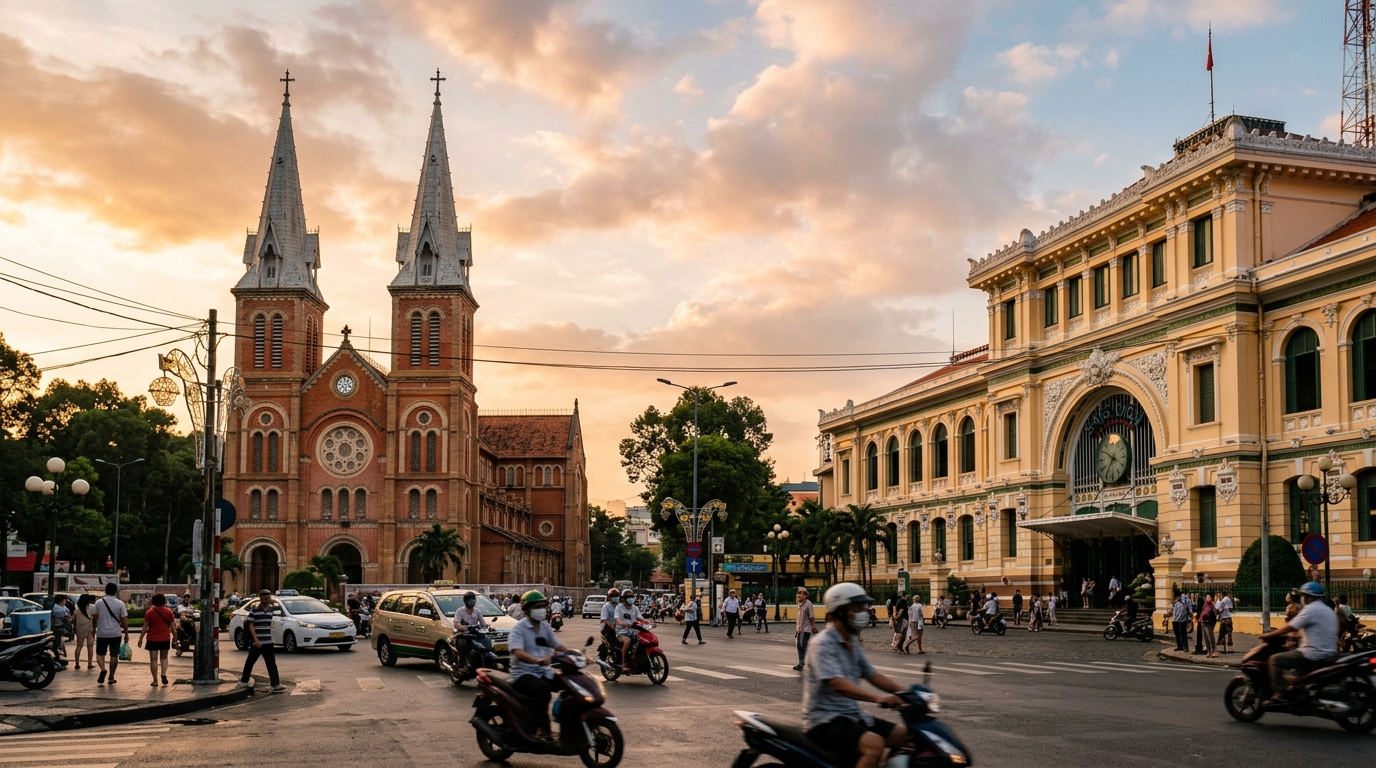
What surprised me most was how compact the historic core feels. You can walk between Notre Dame Cathedral, the Central Post Office, the Reunification Palace, and Ben Thanh Market in under 90 minutes. That’s rare for a Southeast Asian megacity.
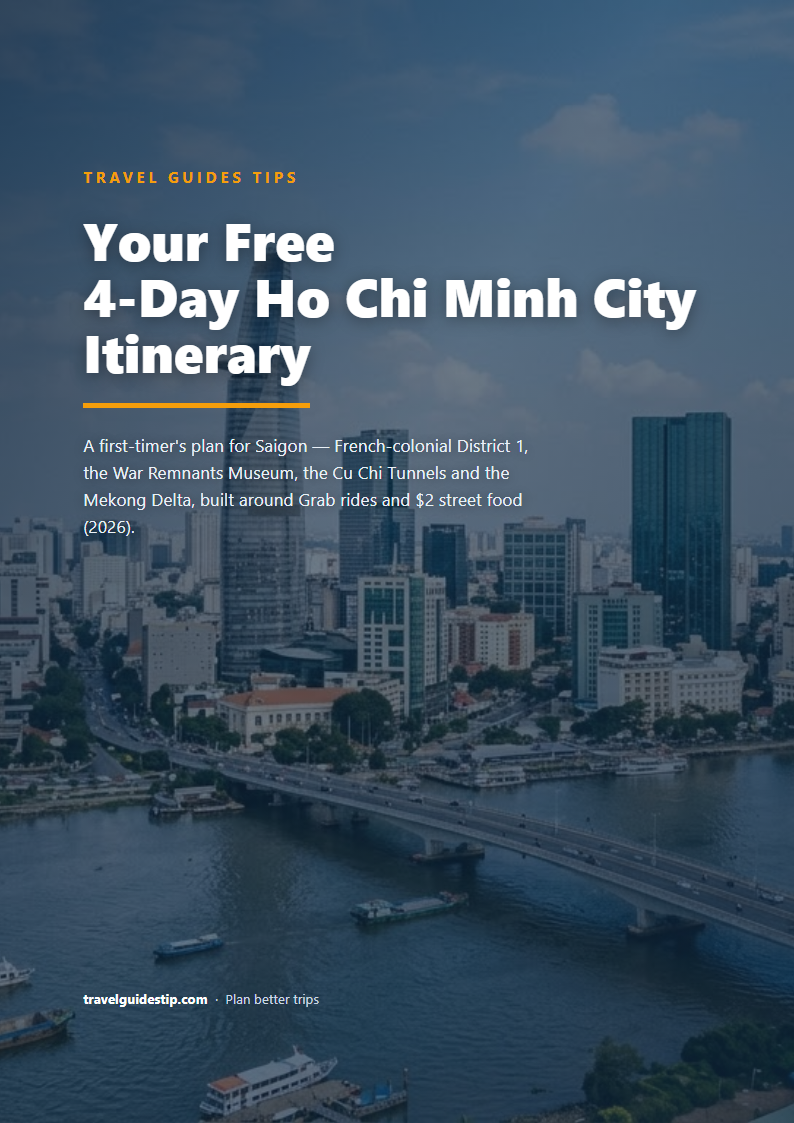
The 4-Day Ho Chi Minh City Itinerary
The plan we use ourselves — sent straight to your inbox.
- Day-by-day route
- Where to stay
- Real 2026 costs
Free · No spam · Unsubscribe anytime
Best Time to Visit Ho Chi Minh City
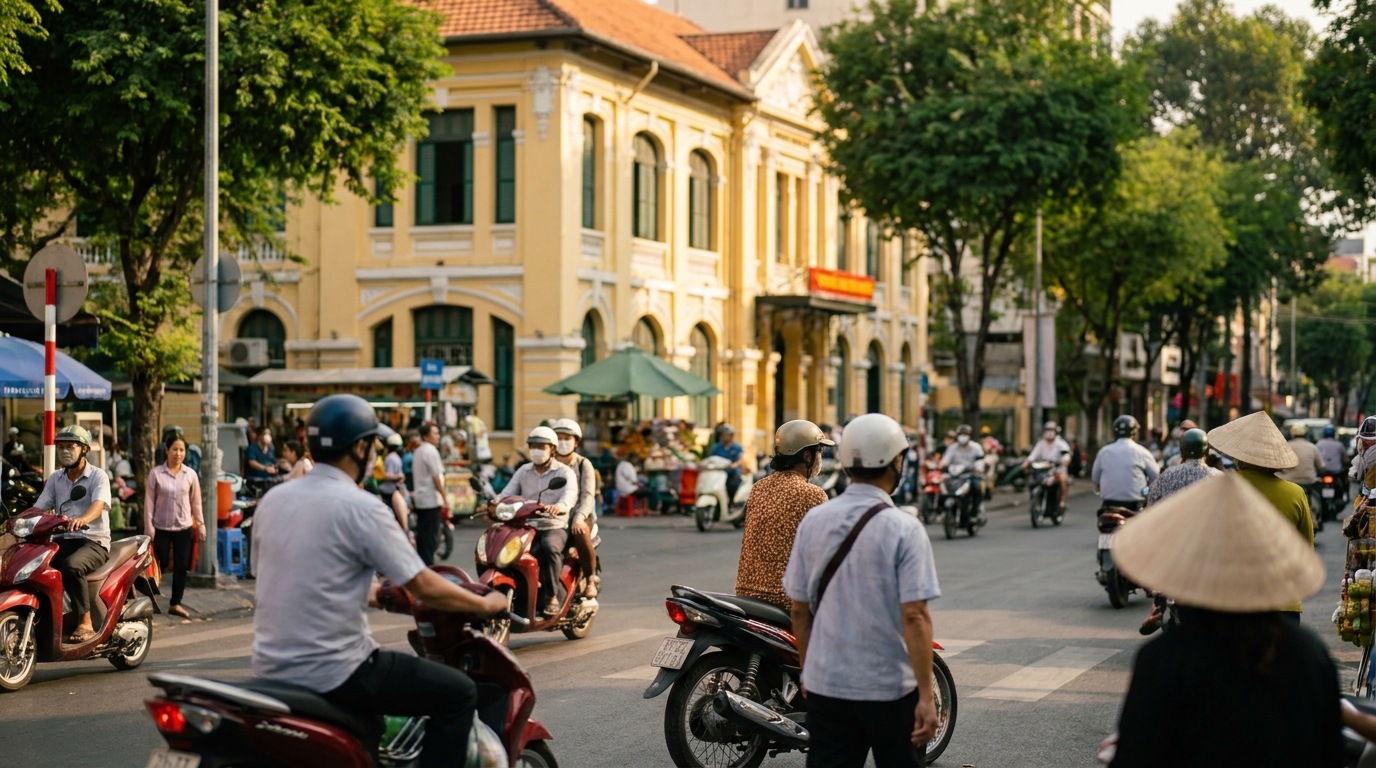
Ho Chi Minh City has a tropical monsoon climate with two seasons: dry (December to April) and wet (May to November). Temperatures stay between 24°C and 35°C (75°F-95°F) year-round.
Dry Season (December – April)
The dry months are the most comfortable for sightseeing. December through February sees lows around 22°C (71°F), perfect for walking tours and rooftop bars. March and April get hotter, with daily highs above 34°C (93°F) and high humidity. February to April is also peak season for international travelers, so book hotels 4-6 weeks ahead.
Wet Season (May – November)
Wet season scares some travelers away, but it’s actually a great window for budget trips. Hotel prices drop 15-30% versus dry season (Booking.com market data, 2025). Rain typically falls in 30-60 minute afternoon downpours, leaving mornings and evenings clear. September and October bring the heaviest rainfall, with monthly totals over 280 mm.
Vietnam’s tropical south stays warm year-round — Saigon has never recorded a temperature below 13.8°C (Vietnam Meteorological Administration, 2024). The city’s main weather risk is rainy-season afternoon storms, not cold or extreme heat.
Compare with another popular city – bangkok travel guide
How to Get to Ho Chi Minh City
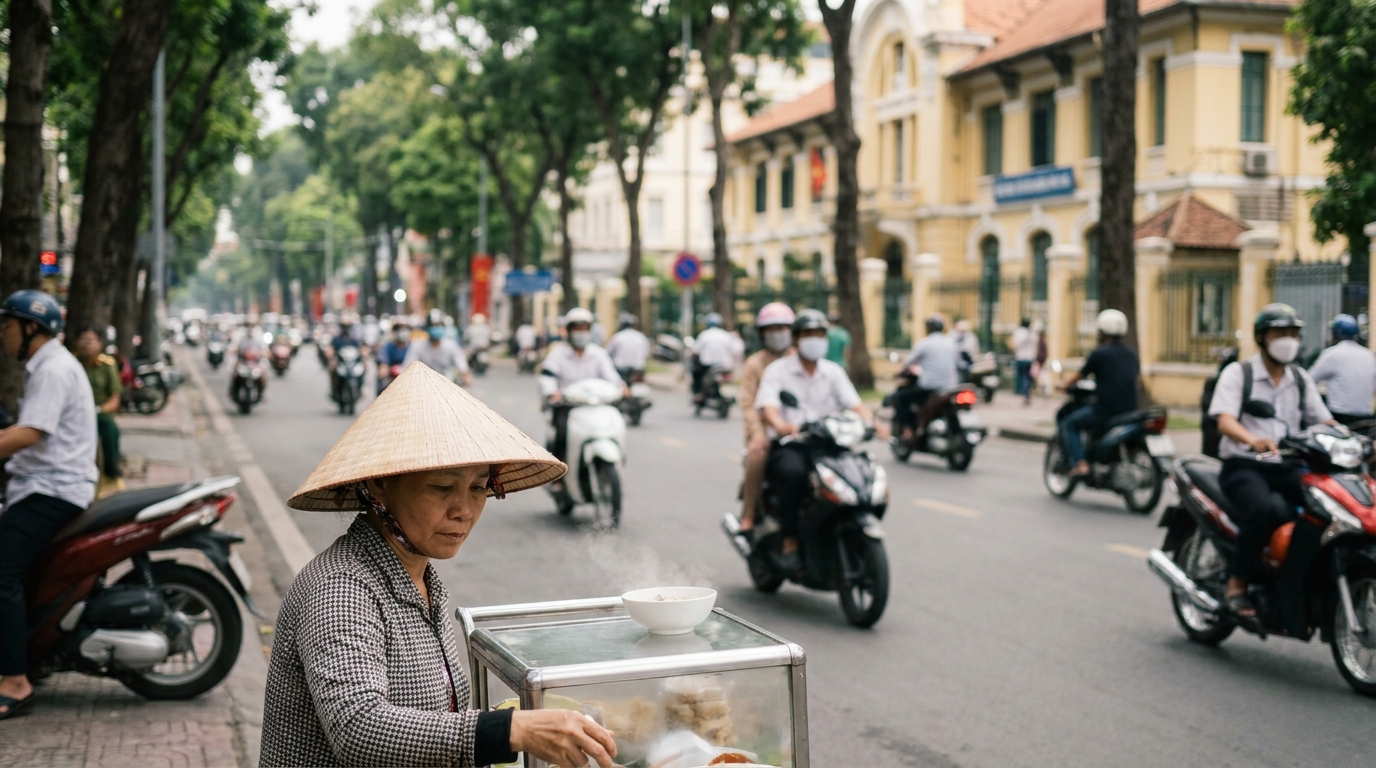
Tan Son Nhat International Airport (SGN) is the main entry point and sits just 7 km northwest of District 1. The airport handled 41 million passengers in 2024 (Civil Aviation Authority of Vietnam, 2024), making it Vietnam’s busiest airport.
From the Airport to the City
You have four main transport options from SGN to central Saigon:
- Grab car — 180,000-260,000 VND ($7-$10), 20-40 minutes. Most reliable and the option I always use.
- Vinasun metered taxi — 220,000-320,000 VND ($8-$12). Make sure the meter starts running.
- Airport shuttle bus 109 — 20,000 VND ($0.80), 50-70 minutes to Ben Thanh.
- Hotel shuttle — Many District 1 hotels offer free pickup with a 2-night booking.
Avoid unmarked taxis at the curb. Walk to the official Vinasun or Mai Linh queue, or open the Grab app inside the terminal.
From Other Vietnamese Cities
Vietnam Airlines, Bamboo Airways, and VietJet run hourly flights from Hanoi (~2 hours, $40-$120). Sleeper trains from Hanoi take 30-34 hours and cost $30-$60. The bus from Phnom Penh, Cambodia takes 6-7 hours and costs $15-$25 with companies like Giant Ibis.
For onward travel, Klook offers private transfers to Mui Ne, Da Lat, and the Mekong Delta starting around $35.
The 4-Day Ho Chi Minh City Itinerary
Hour-by-hour plan, where to stay and what it really costs — free PDF.
Free · No spam · Unsubscribe anytime
Find your Ho Chi Minh City hotel on the map
Live prices from Booking & Airbnb — tap a pin to compare stays around District 1 and beyond.
Where to Stay in Ho Chi Minh City
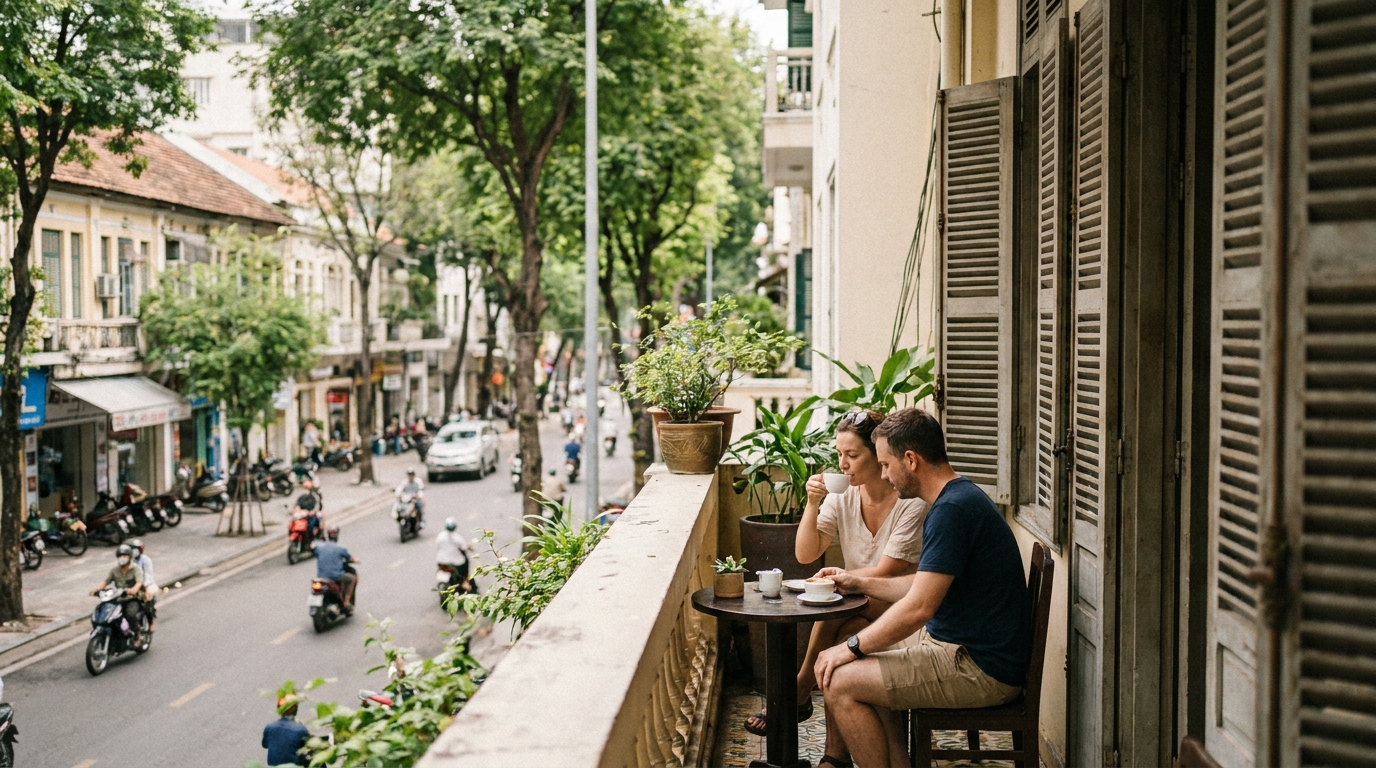
Most first-time visitors stay in District 1 (Quan 1), and for good reason. It’s central, walkable, and packed with restaurants, bars, and major sights. District 1 had 187 four-star-plus hotels in 2024 (Saigon Tourist Department, 2024), giving you plenty of choice across price points.
Best Areas to Stay
- District 1 (Dong Khoi / Ben Thanh) — The classic first-time choice. Walk to Notre Dame, Ben Thanh Market, and the Saigon Opera House. Hotel range: $25-$300/night.
- District 1 (Pham Ngu Lao) — Backpacker zone with hostels from $8/night, lively bars on Bui Vien Street, and easy day-trip pickups.
- District 3 — Quieter, leafy boulevards, more local restaurants. 10-minute Grab to District 1.
- District 2 (Thao Dien) — Expat enclave with international cafes and craft breweries. Best for longer stays.
- District 7 (Phu My Hung) — Modern, planned area near the convention center. Quiet but car-dependent.
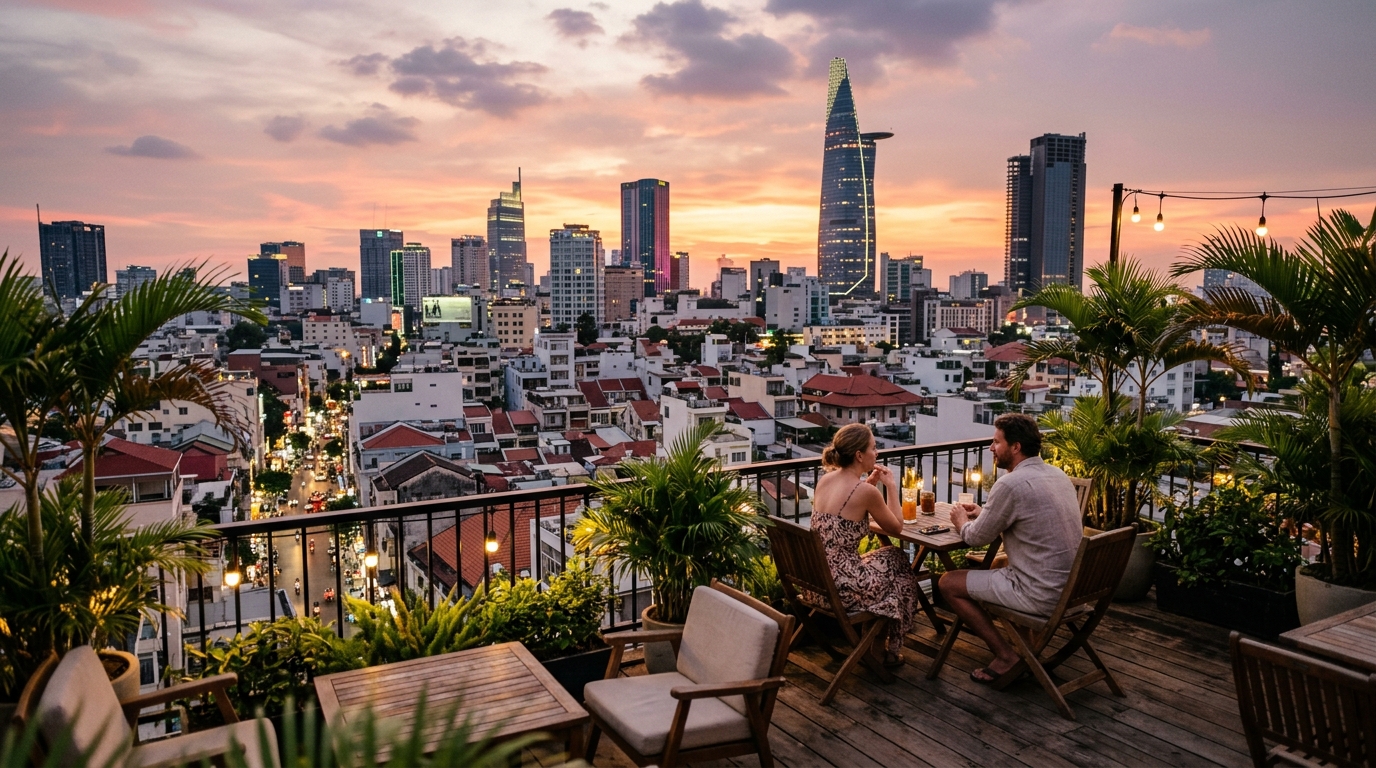
My favorite mid-range pick after four stays is anywhere on Ly Tu Trong or Le Thanh Ton in District 1. You’re a 5-minute walk from Notre Dame, the food scene is excellent, and the area is far quieter at night than Bui Vien.
For a complete area breakdown with hotel picks, see our Ho Chi Minh City where to stay guide.
Best Things to Do in Ho Chi Minh City
You can hit Saigon’s signature sights in 2-3 days. Here are the experiences I recommend for every first-time visitor.
Top Sights in Central Saigon
- War Remnants Museum — Powerful, sometimes graphic war history exhibits. Plan 2 hours. Entry 40,000 VND ($1.60).
- Independence (Reunification) Palace — Frozen-in-time 1975 presidential palace. Entry 65,000 VND ($2.60).
- Notre Dame Cathedral and Saigon Central Post Office — Two French-colonial landmarks across the street from each other. Free.
- Ben Thanh Market — Tourist-leaning but fun for a souvenir hunt and a quick lunch at the food stalls.
- Bui Vien Walking Street — Saigon’s nightlife corridor. Buy a 50,000 VND ($2) Bia Saigon and people-watch.
Day Trip Highlights
- Cu Chi Tunnels — Half-day trip to the Vietnam War tunnel network 70 km from the city. Klook half-day tours from $20.
- Mekong Delta — Full-day boat trips to floating markets, coconut workshops, and rice paddies. From $30 with hotel pickup.
- Mui Ne — Beach and sand dunes 4 hours away. Good for an overnight extension.
For the full activity list with bookable tours, see our Ho Chi Minh City things to do guide.
Best Food in Ho Chi Minh City
Saigon’s street food scene is the reason many travelers return. Bloomberg estimated the city has 130,000+ active street food vendors in 2024 (Bloomberg Asia, 2024). Here’s what to eat first.
5 Dishes You Can’t Miss
- Pho — Beef noodle soup, the national dish. Best at Pho Hoa Pasteur (District 3). 75,000 VND ($3).
- Banh mi — French-Vietnamese baguette sandwich. Banh Mi Huynh Hoa is the cult favorite. 60,000 VND ($2.40).
- Com tam — Broken rice with grilled pork. Look for Com Tam Ba Ghien (District 3). 65,000 VND ($2.60).
- Bun bo Hue — Spicy beef noodle soup with lemongrass. Try Bun Bo Hue 14B in District 3. 85,000 VND ($3.40).
- Goi cuon — Fresh spring rolls. Found everywhere; 25,000-40,000 VND ($1-$1.60) for two.
Where to Eat
District 1’s Le Thanh Ton and District 3’s Vo Van Tan area both have dense clusters of well-reviewed local restaurants. For a guided experience, Klook offers evening street food tours by motorbike starting around $40 — easily my favorite first-night activity.
Ho Chi Minh City Travel Costs and Budget
Saigon is one of the most affordable Asian capitals for travelers in 2026. Numbeo’s cost-of-living index ranks Ho Chi Minh City 67% cheaper than New York City (Numbeo, 2025).
Daily Budget Breakdown
| Style | Per Day | Hotel | Food | Activities | Transport |
|---|---|---|---|---|---|
| Budget | $30-$50 | $10-$25 (hostel/guesthouse) | $10-$15 | $5-$10 | $3-$5 |
| Mid-range | $80-$130 | $40-$80 (3-star) | $20-$30 | $15-$25 | $5-$10 |
| Luxury | $200+ | $120+ (4-5 star) | $50+ | $40+ | $15+ |
Across my four trips averaging 8 days each, my actual mid-range spend came out to $84/day including a $55 hotel, two restaurant meals, one street-food meal, two coffee stops, and one paid attraction.
How to Save Money
- Eat at street stalls and com tam restaurants — local meals run $2-$4
- Book hotels 4-6 weeks out for dry-season trips
- Use Grab for transport instead of unmarked taxis — same price, no scams
- Skip the airport taxi queue and walk to the Grab pickup zone (saves 30-40%)
- Buy an Airalo Vietnam eSIM for $5-$15 instead of paying $10/day for hotel WiFi extras or roaming
Plan another popular Southeast Asia destination – bangkok budget guide 2
Getting Around Ho Chi Minh City
Public transit in Saigon is improving fast. The first metro line (Line 1) opened in December 2024, connecting Ben Thanh to Suoi Tien with 14 stations and 19 km of track (Vietnam Ministry of Transport, 2024). For now, most travelers stick to a mix of Grab, walking, and the occasional bus.
Best Transport Options
- Grab — The single most useful app for a Saigon trip. Cars and motorbikes from 25,000 VND ($1) for short rides. Download before you arrive.
- Walking — District 1’s tourist core is walkable in 30-45 minutes end to end.
- Metro Line 1 — Single ride 6,000-20,000 VND ($0.25-$0.80). Useful for District 1 to District 2 (Thao Dien).
- Buses — 7,000-12,000 VND ($0.30-$0.50). Good for budget travelers; routes are confusing without a translator app.
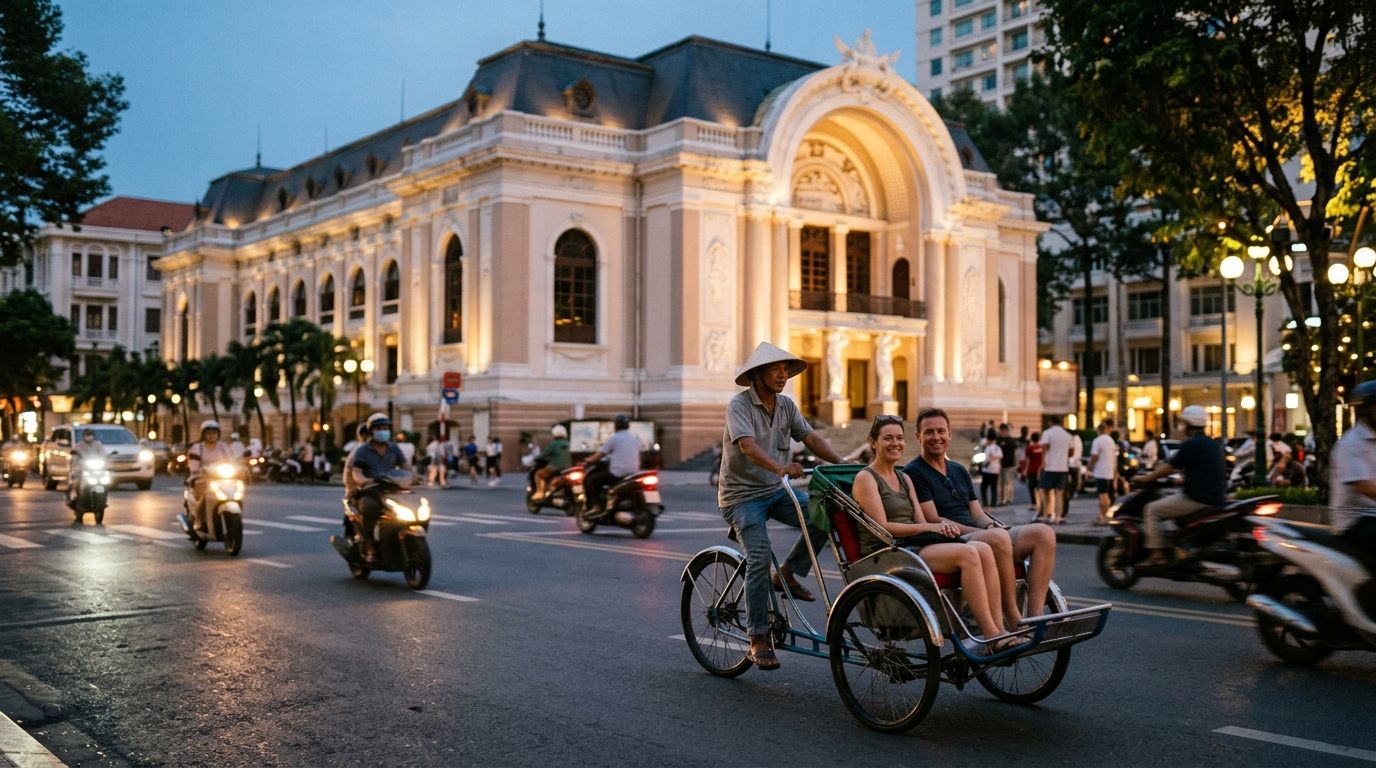
- Cyclo / xe om — Old-school pedal-rickshaws and motorbike taxis. Photogenic but tourist-priced; agree on the fare in advance.
Saigon’s first metro line carried over 8 million passengers in its first three months of operation (Vietnam News, 2025), well above projections. Expansion to nine total lines is scheduled through 2035.
Safety Tips for Ho Chi Minh City
Saigon ranks as a generally safe city for tourists. The Global Peace Index ranked Vietnam #41 of 163 countries in 2024 (Institute for Economics & Peace, 2024), ahead of Thailand and the Philippines. Violent crime against tourists is rare. The main risks are petty theft and traffic.
Practical Safety Rules
- Watch your phone and bag in Districts 1 and 5 — drive-by motorbike snatches happen, especially on Pham Ngu Lao and along the Saigon River walk
- Use Grab, not unmarked taxis — fixed app pricing prevents the most common scam
- Cross streets slowly and predictably — never run; motorbikes will weave around you if you walk at a steady pace
- Carry small denominations — 50,000-100,000 VND notes are easier than handing over a 500,000 VND bill ($20)
- Drink bottled water only — tap water is not potable; refill stations exist at hostels and many coffee shops
A travel insurance policy is worth the $30-$60. World Nomads and SafetyWing both cover Vietnam at standard rates.
Frequently Asked Questions
How many days do you need in Ho Chi Minh City?
Most travelers find 3-4 days is enough to cover the major sights, eat well, and run one day trip (Cu Chi Tunnels or the Mekong Delta). If you want to extend to Mui Ne or Phu Quoc, plan 6-8 days for a full southern Vietnam trip.
Is Ho Chi Minh City safe for solo travelers?
Yes, Ho Chi Minh City is one of the safer megacities in Southeast Asia for solo travel. Stick to District 1 at night, use Grab for transport, and watch your phone in crowded markets and on the riverside walk.
Do I need a visa to visit Ho Chi Minh City?
Citizens of 25+ countries (including the UK, Germany, France, Spain, Italy, Japan, and South Korea) get visa-free entry for 45 days. US, Canadian, and Australian travelers can apply for an e-visa online for $25 — it processes in 3 working days (Vietnam Immigration Department, 2025).
What is the best month to visit Ho Chi Minh City?
January and February are the most comfortable months — warm but not hot, almost no rain, low humidity. December and March are also strong choices. Avoid mid-September to mid-October if you dislike daily afternoon storms.
Is Ho Chi Minh City worth visiting?
Yes, especially if it’s your first stop in Vietnam. The city offers a strong introduction to Vietnamese food, history, and modern culture, with excellent flight connections and a wide hotel range from $10 hostels to $400+ luxury suites.
Final Planning Tips
Ho Chi Minh City rewards travelers who plan around its rhythm. Mornings are for sightseeing and coffee. Afternoons are for indoor museums or hotel pool time, especially in wet season. Evenings are for street food and rooftop bars. Mid-day equator-strength sun makes 1pm-3pm walking tours brutal — plan accordingly.
If this is your first time in Southeast Asia, pair Saigon with another nearby city. Bangkok is a 75-minute flight, Phnom Penh is 50 minutes, and Hanoi is 2 hours. Our Bangkok travel guide and Hanoi travel guide cover the most popular pairings.
For specific cluster topics, jump to:
- Where to Stay in Ho Chi Minh City
- Best Things to Do in Ho Chi Minh City
- How Many Days in Ho Chi Minh City
- Best Hotels in Ho Chi Minh City