Porto Food and Wine Guide 2026: Francesinha & Port
By TravelguidestipUpdated 10 min readHow we earn
Hotel buttons open Stay22 (Booking.com, Agoda and others) and tour buttons open GetYourGuide. We may earn a commission at no extra cost to you.
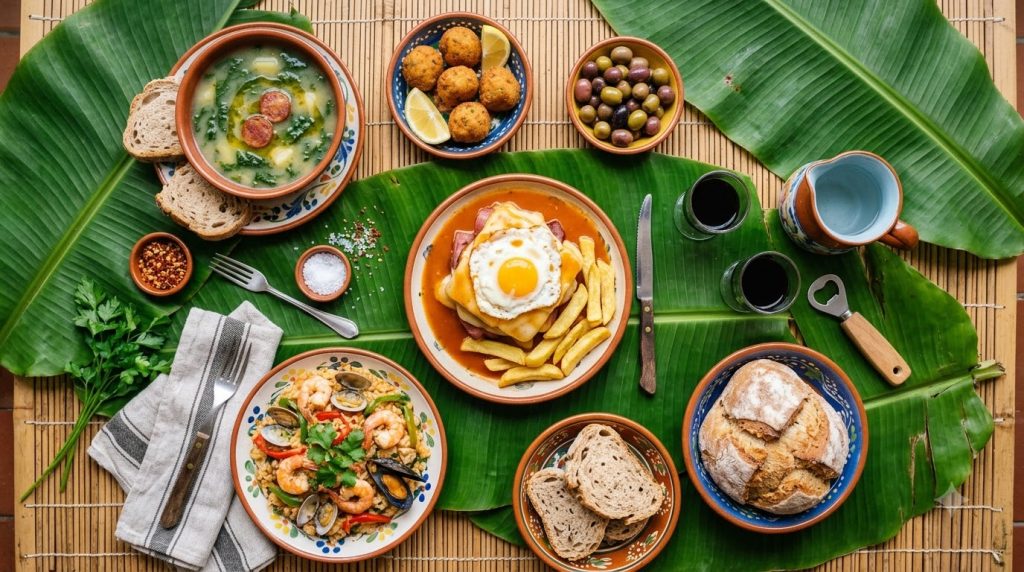
In short
- The francesinha at Café Santiago (Rua de Passos Manuel 226, serving since 1959) costs about 11 EUR; budget 12-16 EUR with fries and a beer.
- Port wine cellar tours in Vila Nova de Gaia run roughly 10-22 EUR for a guided visit with a 2-3 wine tasting, with premium tastings climbing to 35 EUR and beyond.
- Tawny port ages at least 7 years in small oak casks (nutty, caramel); ruby port ages just 2-3 years in large tanks (fresh, fruity); vintage port spends only 2 years in oak but can improve for decades in bottle.
- Bacalhau (salt cod) has more than 365 traditional recipes in Portugal, one for each day of the year, plus tripas a moda do Porto, the tripe-and-white-bean stew that gave locals their nickname, tripeiros.
- Most Gaia cellars sit within a 10-minute walk of the Dom Luis I bridge, so you can tour two or three houses in an afternoon on foot.
Porto food and wine centers on two things: the francesinha, a knife-and-fork sandwich drowned in beer-and-tomato sauce, and port, the fortified wine aged in the cellars of Vila Nova de Gaia across the river. Both were essentially invented here. The francesinha appeared in Porto in the 1950s, and port has been shipped from the Gaia waterfront for more than three centuries.
If you eat one dish and drink one glass in this city, those are the two.
This guide covers what to order, how port styles differ (tawny vs ruby vs vintage vs white), which Gaia cellars to tour and what tastings cost in 2026, plus where locals actually eat. Port wine is made only from grapes grown in the Douro Valley, a demarcated region protected since 1756, one of the oldest wine appellations in the world.
Riverfront cellars (Cálem, Sandeman) run slick, crowded tours; the houses up the hill (Taylor’s, Graham’s) trade a steeper walk for quieter rooms and better views. Café Santiago serves a francesinha with a notably darker, beerier sauce than most.
What food is Porto famous for?
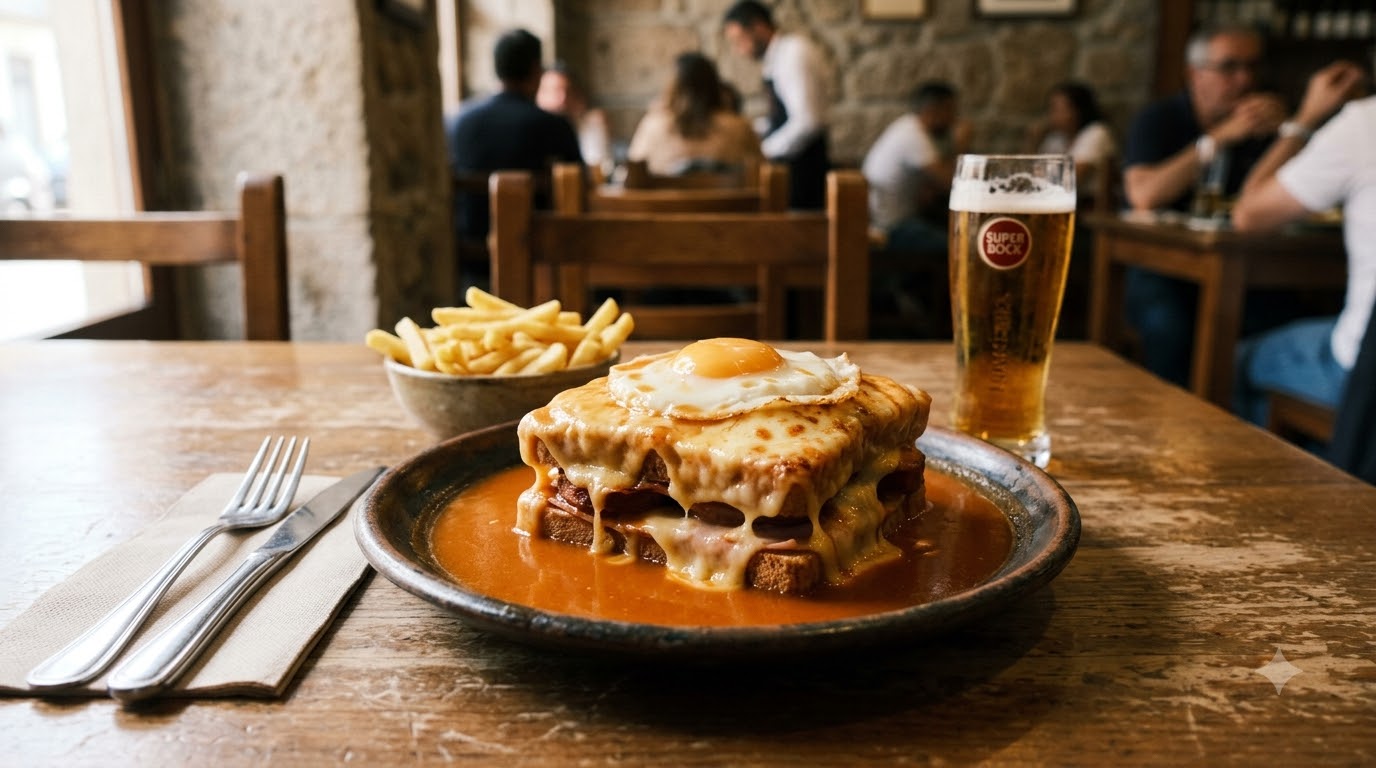
Porto’s signature dishes are hearty, meat-and-cod heavy, and built for cold Atlantic afternoons. This is not delicate cuisine. The city’s food identity revolves around a handful of plates you will see on nearly every traditional menu, and knowing them saves you from ordering blind.
Here is the short list worth trying, each a standalone dish you can order by name:
- Francesinha: layered sandwich of ham, fresh sausage, and steak, sealed in melted cheese and covered in a beer-tomato sauce; the definitive Porto plate.
- Tripas a moda do Porto: slow-cooked tripe with white beans, chouriço, and carrot; the city’s oldest signature dish, tied by legend to the year 1415.
- Bacalhau a Bras: shredded salt cod folded with matchstick fried potatoes, onion, and scrambled egg, topped with olives and parsley.
- Bolinhos de bacalhau: deep-fried salt-cod-and-potato croquettes, sold everywhere as a snack or starter.
- Bifana: thin marinated pork in a soft roll, the classic cheap counter lunch, usually 3-5 EUR.
- Pastel de nata: the custard tart, best warm from the oven with a dusting of cinnamon.
For where these fit into a wider trip, see our full Porto travel guide, which maps neighborhoods, transport, and timing around the food.
Where can I eat the best francesinha in Porto?
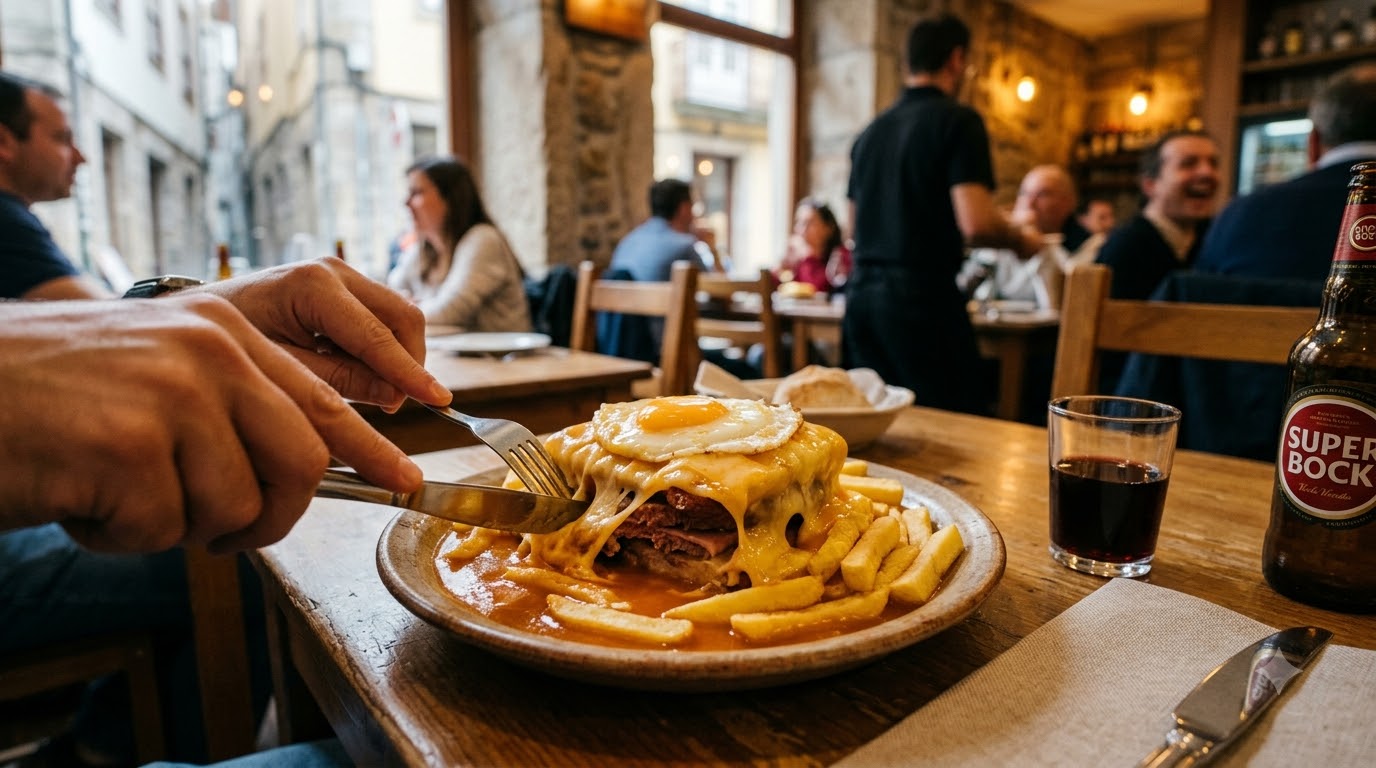
The most consistently recommended francesinha in Porto is at Café Santiago, on Rua de Passos Manuel in the city center, which has served the sandwich since 1959. The dish was invented in Porto in the 1950s, adapted from the French croque monsieur by a returning emigrant who decided the sandwich needed meat, cheese, and a spicy sauce. The result barely resembles its ancestor.
The sauce is the whole argument. A proper francesinha sauce is built from tomato, beer, and often a splash of port, simmered with herbs and a mild chili heat that builds slowly rather than hitting up front. Every house guards its own recipe, which is why locals have strong, unshakeable opinions.
What to expect:
- Café Santiago (Rua de Passos Manuel 226) — the consensus first-timer’s pick; francesinha around 11 EUR, thick hand-cut fries, darker and richer sauce than most.
- Order it “com ovo”: topped with a fried egg, the standard way locals take it.
- Pair it with a cold Super Bock or Sagres: the local lagers cut the richness better than wine.
- Budget 12-16 EUR total: sandwich plus fries plus a beer at a traditional cafe.
- Skip it for lunch if you have plans: one francesinha is a full, heavy meal; most people need nothing else that day.
Francesinha is not the only reason to sit down, though. Porto’s cafes and tascas (small family restaurants) are woven through the historic center you will walk on any list of things to do in Porto.
Bacalhau and the salt cod tradition
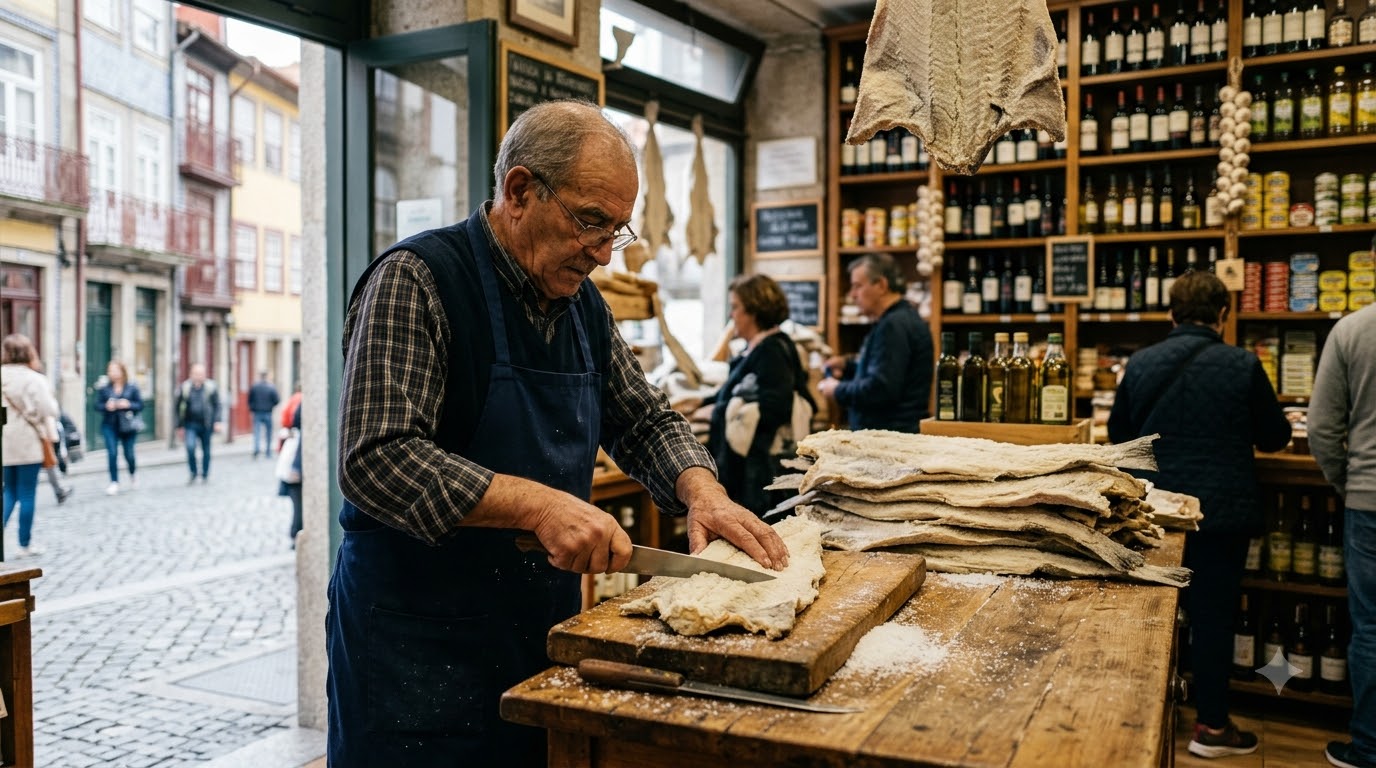
Bacalhau, or salted dried cod, is the backbone of Portuguese home cooking, and Portugal is said to have more than 365 bacalhau recipes, one for every day of the year. The fish itself is not local; it was brought back salted from the North Atlantic centuries ago and became a national staple because it kept without refrigeration. In Porto, it is everywhere.
The versions you will meet most often, each worth ordering on its own:
- Bacalhau a Bras: shredded cod, egg, and shoestring potatoes; creamy, comforting, hard to get wrong.
- Bacalhau a Ze do Pipo: oven-baked cod under a blanket of mashed potato and mayonnaise.
- Bacalhau com natas: cod baked in cream and potato, rich and casserole-like.
- Bolinhos de bacalhau: the fried croquettes, ideal with a glass of white port before dinner.
Beyond cod, Porto’s true civic dish is tripas a moda do Porto, the tripe stew that earned locals the affectionate nickname tripeiros, “tripe eaters.” Legend traces it to 1415, when the city reportedly gave up its good meat to provision ships and kept only the offal for itself. It is an acquired taste; order a small portion first.
Understanding port wine: tawny vs ruby vs vintage
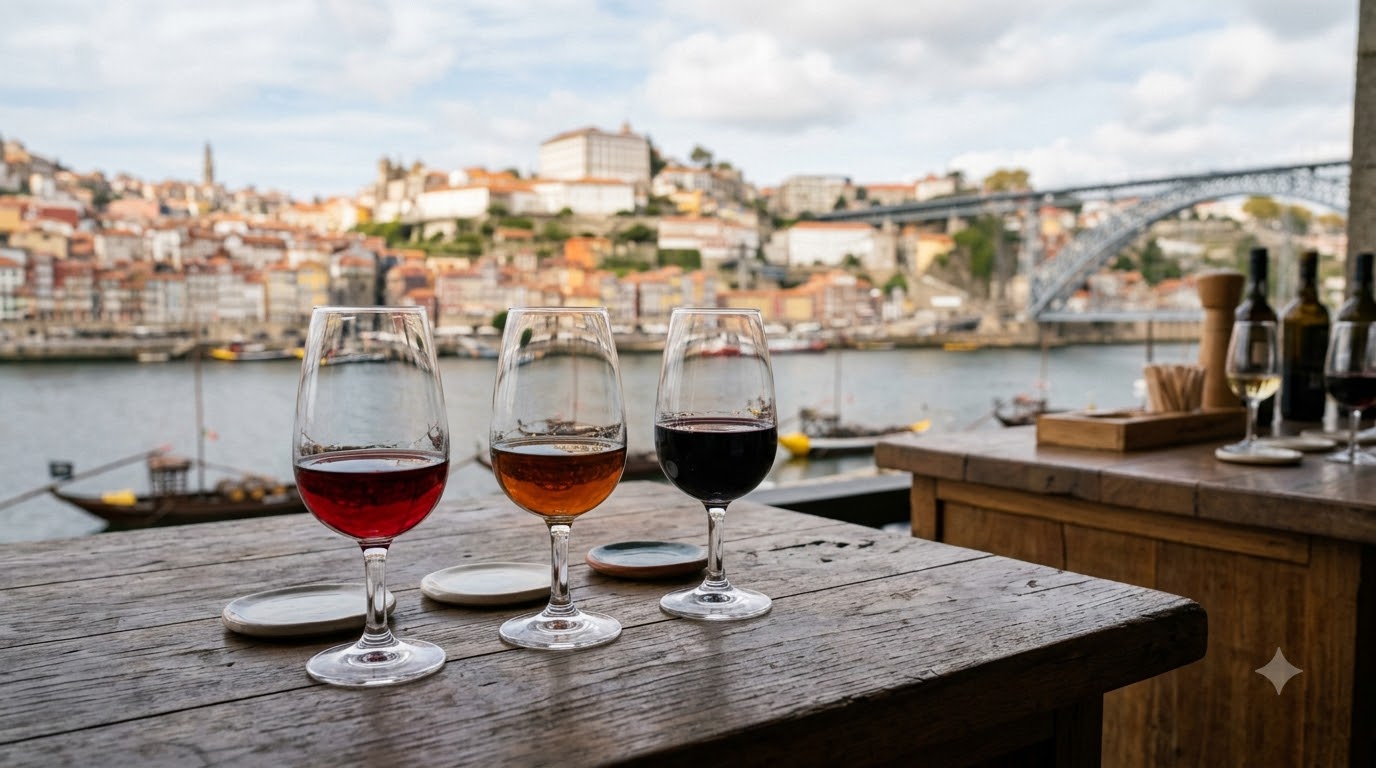
Port is a fortified wine, meaning grape spirit is added mid-fermentation to stop it and leave natural sweetness, which pushes the alcohol to roughly 19-22 percent. Every true port comes from the Douro Valley and is aged downriver in Gaia. The confusion for most visitors is the style names, so here is the practical breakdown before you book a tasting.
The key split is oxidative aging (in cask, exposed slowly to air) versus reductive aging (in bottle, sealed). Tawny is the classic cask-aged style; vintage is the classic bottle-aged one.
| Port style | Aging | Flavor profile | Serve |
|---|---|---|---|
| Ruby | 2-3 years in large tanks | Fresh, bold red fruit (cherry, blackberry) | Slightly cool, after dinner |
| Tawny | 7+ years in small oak casks (10/20/30/40 year labels) | Nutty, caramel, dried fig, amber color | Cool, with dessert or cheese |
| Vintage | ~2 years in oak, then decades in bottle | Concentrated, structured, needs age | Room temp, decant, special occasion |
| White | Made from white grapes, aged short or long | Floral to nutty; dry to sweet | Chilled, as an aperitif |
A few standalone facts that clear up the usual questions:
- Tawny port with an age statement (10, 20, 30, 40 years) shows the average age of the wines blended in, not a single vintage.
- Ruby port is the entry point: cheapest, youngest, fruitiest, and the base for the sauce in your francesinha.
- Vintage port is declared only in exceptional years, typically two or three times a decade, and can improve in bottle for 20 years or more.
- White port and tonic (porto tonico) is the local summer aperitif, served long and chilled over ice with a lemon twist.
- Colheita is a tawny from a single harvest year, cask-aged for years and dated on the label.
Port wine cellar tours in Vila Nova de Gaia
The port cellars are not in Porto proper; they are across the Douro in Vila Nova de Gaia, a five-to-ten-minute walk over the lower deck of the Dom Luis I bridge. This is where the wine has been aged and shipped since the 1700s, and touring at least one cellar is the single best thing to do for anyone curious about where to stay in Porto near the food-and-wine action.
Most tours follow the same shape: a guided walk through the cool, barrel-lined aging rooms, an explanation of the grape-to-bottle process, and a tasting of two or three ports at the end. Book ahead in summer; the riverfront houses sell out.
The cellars worth knowing, by character:
- Cálem: the most visited, right on the Gaia waterfront, with an interactive museum and optional fado shows; easy for first-timers.
- Sandeman: the famous caped-figure logo, guides in period costume, slick and central.
- Taylor’s: up the hill, self-guided audio tour, generous tasting, and one of the best free terraces over the river.
- Graham’s: a steeper climb, refined tour, excellent aged tawnies, panoramic tasting room.
- Ferreira: the historic Portuguese-owned house, strong on the story of Dona Antonia Ferreira.
| Tour type | Typical 2026 price | What you get |
|---|---|---|
| Basic guided tour + 2-3 tastes | 10-22 EUR | Cellar walk, standard ruby/tawny/white tasting |
| Premium tasting | 30-50 EUR | Aged tawnies or vintage, longer session |
| Vintage or reserve flight | 50 EUR and up | Rare bottles, sommelier-led |
| Riverfront cellar with show | 25-40 EUR | Tour plus fado or museum experience |
On our last visit we paired a mid-range Taylor’s tour with its free terrace, which gave us the best value: a proper tasting indoors, then a second glass bought at the bar to drink over the rooftops. Expect to pay no more than 22 EUR for the guided portion.
How to taste and pair port like a local
The local move is to treat port as a bookend to the meal, not something you drink with the main course. White port opens the evening as an aperitif; tawny or vintage closes it with dessert or cheese. Getting the pairing right makes cheaper bottles taste better.
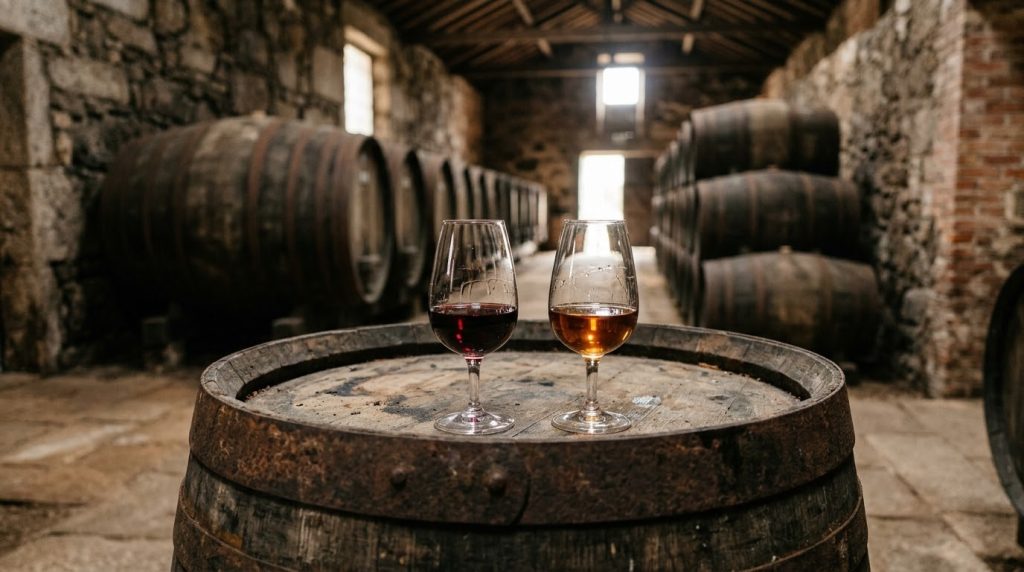
Simple, quotable pairing rules we follow:
- White port + tonic + ice: the summer aperitif, light and bitter, served in a tall glass.
- Tawny port + almond tart or crème brûlée: the nutty, caramel notes mirror the dessert.
- Vintage or ruby port + strong cheese: Serra da Estrela or a blue cheese balances the sweetness.
- Tawny port + dark chocolate: the classic after-dinner pairing, hard to beat.
- Serve tawny and white slightly chilled; serve vintage at room temperature and decant it.
Beyond port, do not miss vinho verde, the light, faintly fizzy young white from the Minho region just north of Porto. It is cheap, low in alcohol, and the perfect lunch wine with bacalhau or grilled fish, often under 3 EUR a glass in a tasca.
Where to eat and drink: neighborhoods and budget
Porto’s food scene splits cleanly by area, and matching the neighborhood to your mood saves time. The Ribeira riverfront is scenic but touristy and pricier; the streets around Rua de Santa Catarina and Bolhão are where locals actually eat. It helps to line these up against the rest of your itinerary of things to do in Porto so meals sit near the sights.
Where we point friends, by purpose:
- Traditional francesinha and tascas: the blocks around Rua de Passos Manuel and Santa Catarina.
- Market snacking: the renovated Mercado do Bolhao for cheese, cod cakes, and produce.
- Port bars with a view: the Gaia riverfront terraces after a cellar tour.
- Small-plate and modern Portuguese: the Cedofeita and Miguel Bombarda gallery district.
- Cheap, fast lunch: any counter selling bifanas and a small beer for under 6 EUR.
A rough daily food-and-wine budget, based on how we actually spend:
- Budget: 25-35 EUR (tasca lunch, bifana snack, one house wine, one cellar tour).
- Mid-range: 45-70 EUR (sit-down francesinha, a proper dinner, a mid-tier tasting).
- Splurge: 90 EUR and up (tasting-menu dinner plus a premium vintage flight).
Frequently Asked Questions
What food is Porto known for?
Porto is known for the francesinha (a layered meat sandwich in beer-tomato sauce), bacalhau (salt cod, prepared in hundreds of ways), and tripas a moda do Porto (a tripe-and-white-bean stew). It is also the home of port wine, aged across the river in Vila Nova de Gaia. These four define the city’s food and wine identity.
How much does a port wine cellar tour cost in 2026?
A standard guided cellar tour with a tasting of two or three ports costs roughly 10-22 EUR per person in Vila Nova de Gaia in 2026. Premium tastings with aged tawnies or vintage ports run 30-50 EUR and up. Booking ahead is recommended for the riverfront houses in summer.
What is the difference between tawny and ruby port?
Ruby port is aged just 2-3 years in large tanks, keeping it fresh and fruity with bright red-berry flavors. Tawny port is aged at least 7 years in small oak casks, where slow oxidation turns it amber and adds nutty, caramel, and dried-fruit notes. Ruby is the cheaper entry point; aged tawny is more complex.
Do I need to book port cellar tours in advance?
For the popular riverfront cellars like Cálem and Sandeman, booking a day or two ahead is wise in high season (roughly May to September). Smaller or hillside houses like Taylor’s and Graham’s are usually easier to walk into, and Taylor’s offers a self-guided audio tour that rarely sells out.
Is Porto expensive for food and wine?
No, Porto is one of Western Europe’s better-value food cities. A francesinha with fries and a beer runs 12-16 EUR, a tasca lunch under 15 EUR, a glass of vinho verde often under 3 EUR, and a full cellar tour with tasting from about 10 EUR. A comfortable food-and-wine day sits around 45-70 EUR.
Find your Porto hotel on the map
Live prices from Booking, Airbnb and more — move the map or change dates to compare stays around Porto.
Final thoughts
Porto rewards eating and drinking slowly. Give yourself one francesinha, one plate of bacalhau, at least one cellar tour in Gaia, and a white-port aperitif at sunset, and you will have tasted the city properly. The dishes are old, the wine is older, and both are cheaper here than almost anywhere else in Western Europe.
Cross the bridge, order by name, and let the sauce and the tawny do the rest. When you are ready to plan the trip around these meals, our Porto travel guide and notes on where to stay in Porto tie the food map to lodging and transport.