Best Things to Do in Porto in 2026: A Local Guide
By TravelguidestipUpdated 10 min readHow we earn
Hotel buttons open Stay22 (Booking.com, Agoda and others) and tour buttons open GetYourGuide. We may earn a commission at no extra cost to you.
In short
- Livraria Lello charges an 8 EUR timed-entry ticket that is deducted in full from any book you buy, so the visit can effectively cost nothing.
- Clerigos Tower is 75 meters tall with 240 spiral steps; the 8 EUR ticket also covers the church and museum, and a 5 EUR evening-only ticket runs 7pm to 11pm in summer.
- Sao Bento station holds roughly 20,000 painted azulejo tiles, installed between 1905 and 1916, and it is free to walk in and photograph.
- The Dom Luis I bridge is 45 meters above the river; the upper deck carries the metro plus a pedestrian walkway with the best free view in the city.
- A Gaia port cellar tour with a three-wine tasting typically costs around 18 to 22 EUR and lasts 45 to 60 minutes.
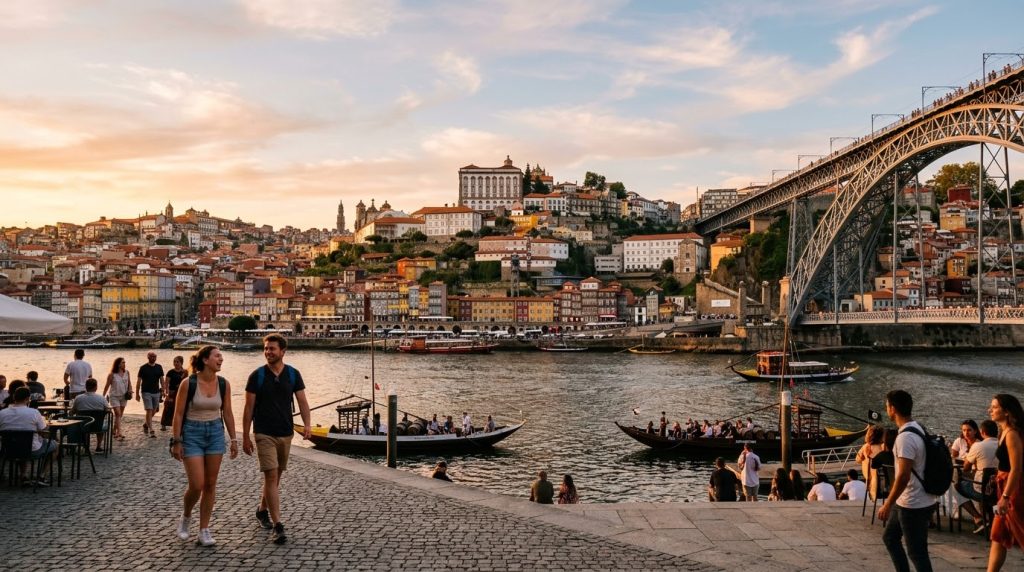
The best things to do in Porto in 2026 cluster along the Douro river: walk the Ribeira waterfront, cross the Dom Luis I bridge on foot, read the tiled walls of Sao Bento station, climb the 240 steps of Clerigos Tower, and taste port wine in the Gaia cellars across the water.
Almost all of it sits inside a compact historic core that was added to the UNESCO World Heritage List in 1996, so you can cover the headline sights in two full days on foot.
This guide covers the specific attractions worth your time, what each one costs in 2026, and how to sequence them so you are not backtracking across steep granite hills all day. The timing and pricing notes below reflect what actually works on the ground. For trip logistics beyond the sights, see our full Porto travel guide.
Staying near Sao Bento usually means walking everywhere, so expect a climb on the way back to the hotel. Arriving at 9:30am without a ticket can still mean a twenty-minute queue; buying the timed ticket for the first 9:30 slot online lets you walk straight in. Porto rewards early starts more than any European city we have covered recently.
What are the top things to do in Porto?
The top things to do in Porto are a short, walkable set of landmarks, and you can rank them by how much time each realistically needs. We ordered the list below by the sequence that kept us moving downhill toward the river rather than repeatedly climbing back up.
- Ribeira waterfront: Free. Allow 1 to 2 hours to wander the arcades and riverfront squares.
- Sao Bento station: Free. 15 to 20 minutes to see the tile hall, longer if photographing.
- Livraria Lello bookshop: 8 EUR timed ticket, deducted from any book purchase. Allow 30 to 45 minutes.
- Clerigos Tower: 8 EUR including church and museum. Allow 45 minutes with the climb.
- Dom Luis I bridge: Free. 30 minutes to cross the upper deck and back.
- Gaia port cellars: 18 to 22 EUR per cellar tour with tasting. Allow half a day for two.
- Douro six-bridges cruise: Around 18 EUR for a 50-minute loop.
That single day of headliners leaves the second day for slower neighborhoods, markets, and a longer meal. If food is your priority, plan it alongside our Porto food and wine guide so you are eating near the sights rather than crossing town hungry.
Why is the Ribeira district the heart of Porto?
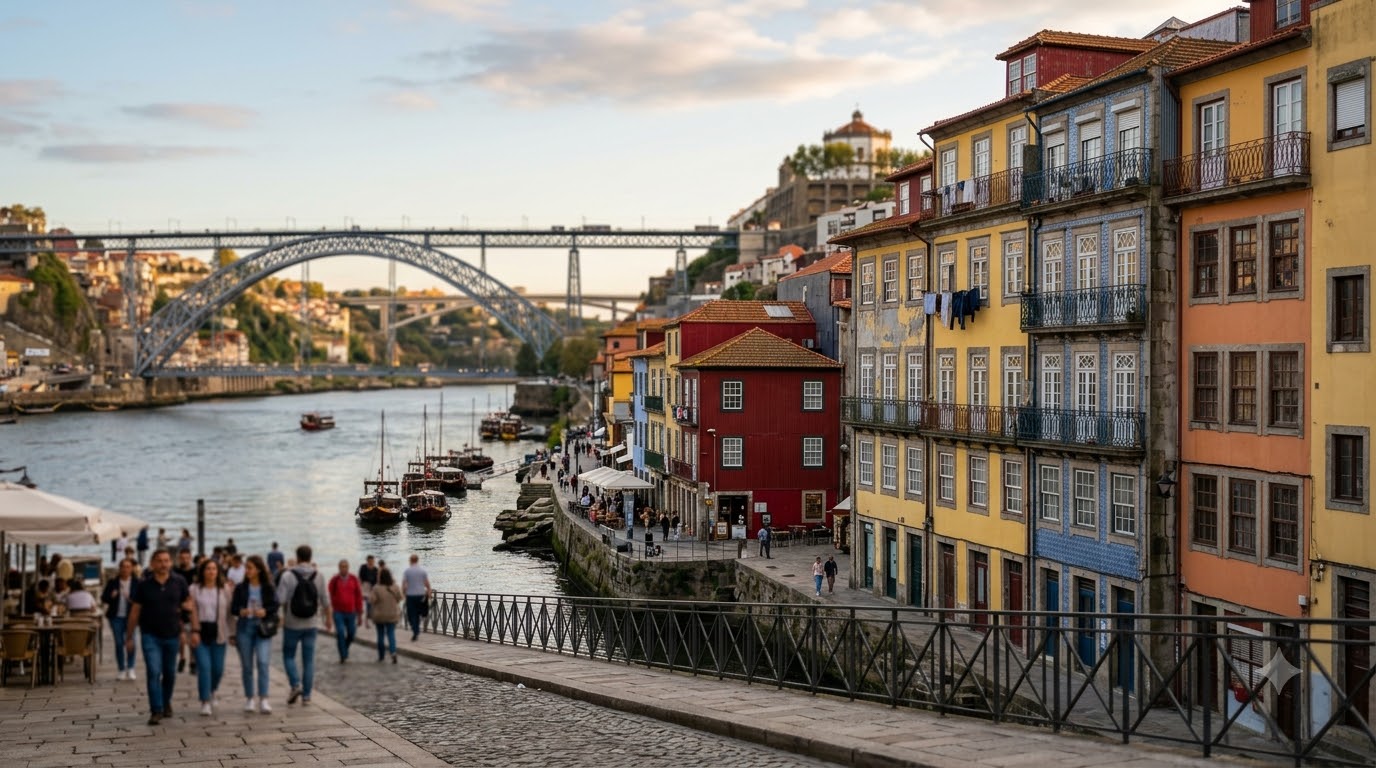
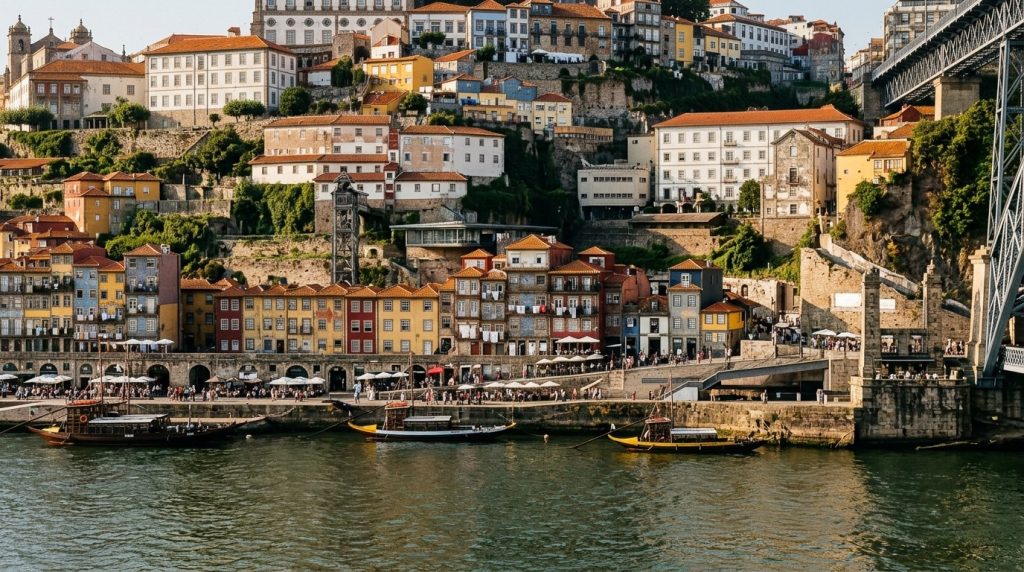
The Ribeira is the heart of Porto because it is the oldest riverfront quarter and the anchor of the UNESCO-listed historic center inscribed in 1996. Narrow medieval lanes climb from the Douro waterfront into stacked houses painted ochre, blue, and terracotta, and the riverside Cais da Ribeira is where most first walks begin.
The light here is best in the last hour before sunset, when the far Gaia bank glows and the rabelo boats sit still on the water. It is touristy and the riverside restaurants are priced accordingly, but the square itself, Praca da Ribeira, and the arcaded lanes behind it stay genuinely atmospheric.
From the waterfront you are a two-minute walk from the lower deck of the Dom Luis I bridge, which makes Ribeira the natural base for a river-focused day. For where to sleep within walking distance of all this, compare neighborhoods in our where to stay in Porto breakdown.
Is Livraria Lello worth visiting in 2026?
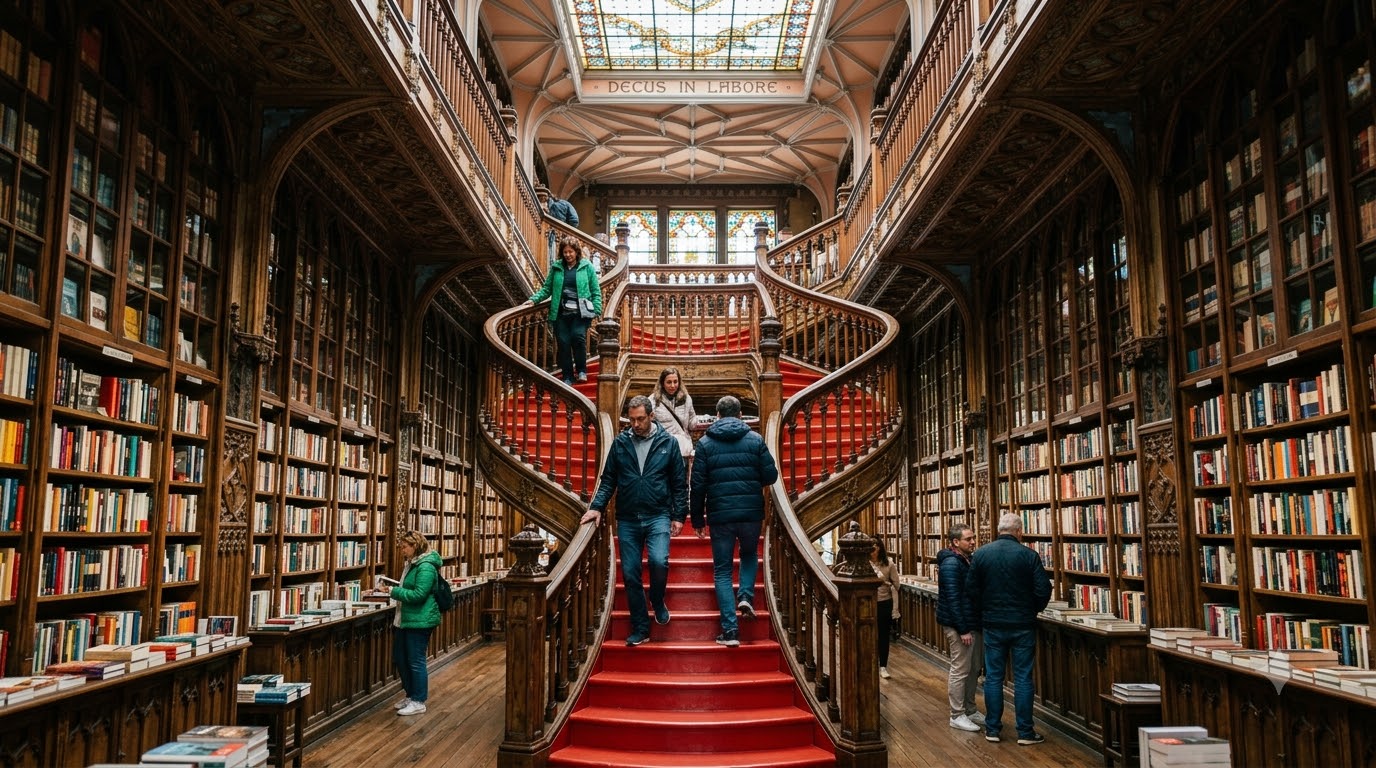
Livraria Lello is worth visiting if you value the architecture over the crowds, and if you plan to buy a book. The 1906 bookshop is famous for its curved crimson staircase and stained-glass ceiling, and it now runs on timed-entry tickets to manage the volume of visitors.
Here is how the 2026 ticketing works, which trips up a lot of first-timers:
- Silver ticket (8 EUR): Timed 30-minute entry window; the full 8 EUR is deducted from any book you buy inside.
- Gold ticket (around 15.90 EUR): Priority skip-the-line entry, and it includes a book from the Lello Edition.
- Buy online in advance: Same price, but you choose a fixed slot instead of queuing twice.
- Go for the first morning slot: the 9:30am opening is by far the least crowded window.
Booking the 9:30am silver slot online means walking straight past the queue, and the 8 EUR credit can be used against a Portuguese-language edition on the way out, making the visit effectively free. If you have no intention of buying a book, the 8 EUR is simply an entry fee for a very crowded room, and you should weigh that honestly.
What makes Sao Bento station special?
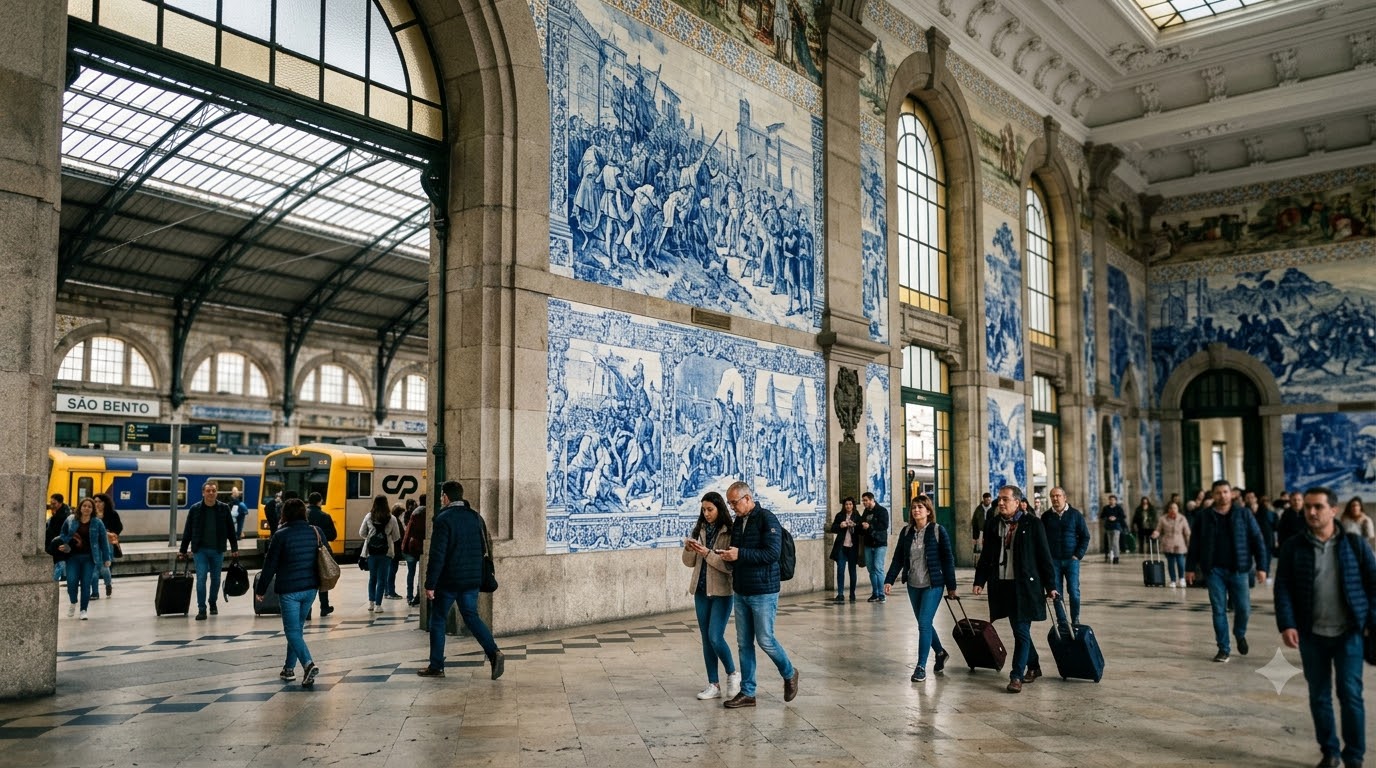
Sao Bento station is special because its entrance hall is lined with roughly 20,000 hand-painted azulejo tiles, and unlike most Porto landmarks it is completely free to enter. The tile panels were installed between 1905 and 1916 by the artist Jorge Colaco, and they depict scenes from Portuguese history and the evolution of transport.
| Porto landmark | 2026 entry price | Time needed | Best visited |
|---|---|---|---|
| Ribeira waterfront | Free | 1-2 hours | Late afternoon |
| Sao Bento station | Free | 15-20 min | Early morning |
| Livraria Lello | 8 EUR (book credit) | 30-45 min | 9:30am slot |
| Clerigos Tower | 8 EUR | 45 min | Sunset or evening |
| Dom Luis I bridge | Free | 30 min | Golden hour |
| Gaia port cellar tour | 18-22 EUR | 45-60 min | Midday |
| Six-bridges cruise | ~18 EUR | 50 min | Afternoon |
Because it is a working commuter station a five-minute walk from the cathedral, we treated Sao Bento as a free stop between other sights rather than a destination in itself. Arrive before 9am and you can photograph the hall almost empty; by late morning it fills with tour groups and rail passengers together.
How do you cross the Dom Luis I bridge?
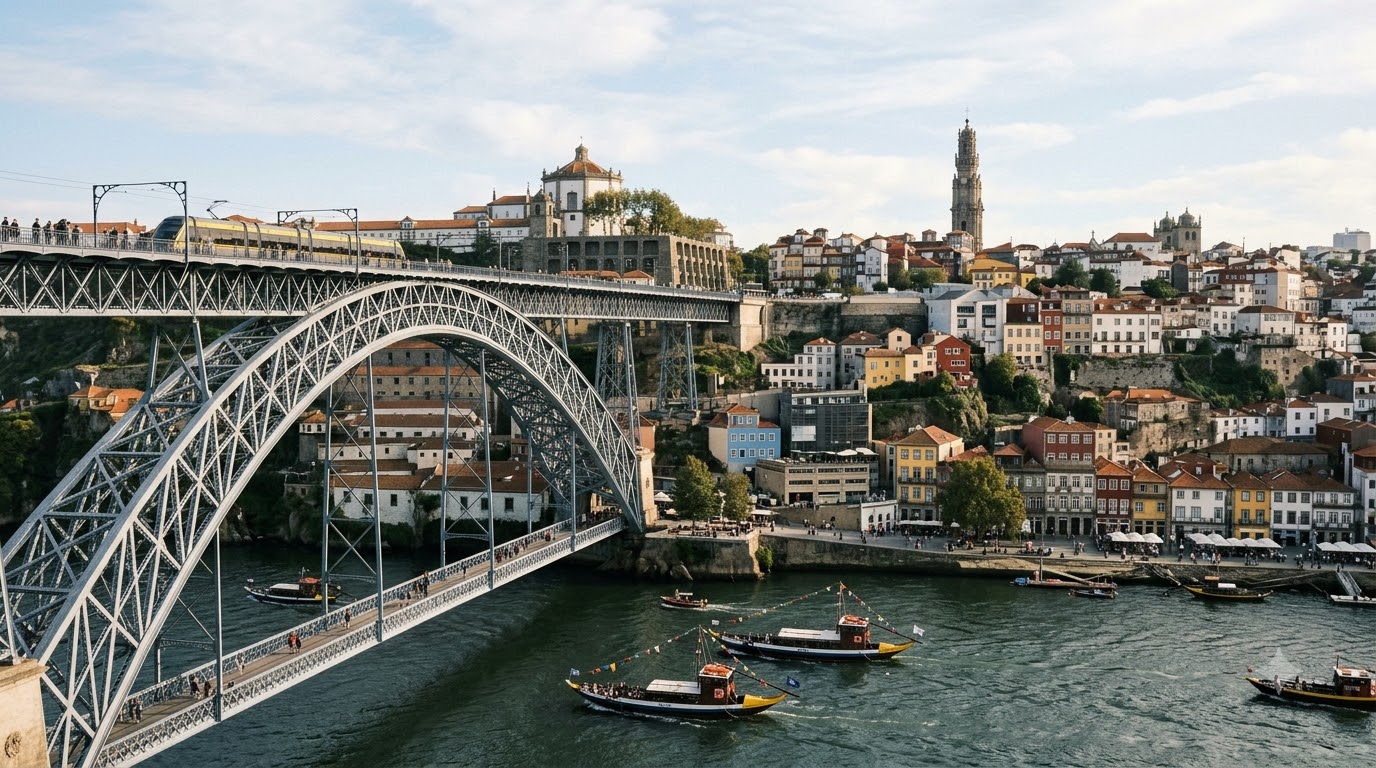
You cross the Dom Luis I bridge on two separate levels, and choosing the right one changes the experience entirely. The double-deck iron bridge stands 45 meters above the Douro, was built between 1881 and 1886, and was designed by Theophile Seyrig, a former partner of Gustave Eiffel.
- Upper deck: Carries the Metro do Porto plus a pedestrian walkway; this is the level with the panoramic view over Ribeira and Gaia.
- Lower deck: Carries road traffic and pedestrians at river level, connecting the Ribeira waterfront directly to the Gaia cellars.
- Walk up, cellars down: We crossed the upper deck from the Ribeira side for the view, then descended to Gaia for the port houses.
- Mind the metro: On the upper deck, trams share the walkway edge, so keep children close.
Timing the upper-deck crossing for golden hour makes it one of the best free things to do. The view back at the stacked Ribeira houses, with the river turning copper below, needs no ticket and no booking.
Should you climb Clerigos Tower?
You should climb Clerigos Tower if you want the highest central viewpoint and do not mind a tight spiral staircase. The baroque tower is 75 meters tall with 240 granite steps, and the standard 8 EUR ticket also covers the Igreja dos Clerigos church and the Clerigos museum.
A few practical notes from our climb:
- The 8 EUR ticket bundles the tower, church, and museum; the church alone is free if you skip the climb.
- The ascent takes roughly 10 to 15 minutes at a moderate pace, and the top platform is narrow.
- A summer evening ticket of 5 EUR covers the tower only, valid 7pm to 11pm, with free entry for children under 10.
- The 360-degree view takes in Sao Bento, the cathedral, the river, and the Gaia bank in one turn.
Going up on a summer evening near closing means paying the reduced 5 EUR rate, with the platform nearly empty as the city lights come on. If you are choosing between viewpoints, the tower gives you height and the bridge gives you the river; do both, they cost 8 EUR combined.
How much does a port wine tasting in Gaia cost?
A guided port cellar tour in Vila Nova de Gaia with a three-wine tasting typically costs around 18 to 22 EUR and runs 45 to 60 minutes in 2026. The cellars line the south bank of the Douro directly across from Ribeira, a short walk over either deck of the Dom Luis I bridge.
| Tasting option | Typical 2026 price | Duration | Includes |
|---|---|---|---|
| Standard cellar tour + 3 wines | 18-22 EUR | 45-60 min | Guided walk, aging rooms, tasting |
| Entry-level tasting only | 15-18 EUR | 30-40 min | 2-3 pours, no full tour |
| Premium reserve tastings | 25-35 EUR | 60-90 min | Aged tawny, vintage pours |
| Six-bridges Douro cruise | ~18 EUR | 50 min | River loop past 6 bridges |
Here is how we approached a Gaia afternoon without overpaying:
- Book one full tour, not three: The winemaking explanation repeats between houses, so one guided tour plus one walk-in tasting is plenty.
- Compare tawny versus ruby: A three-wine flight usually pairs a white, a ruby, and a tawny so you can taste the difference.
- Walk between cellars: The houses sit within a few minutes of each other on the Gaia hillside.
- Add the cruise midweek: The 50-minute six-bridges cruise costs around 18 EUR and passes under all six Douro bridges, from Dom Luis I out to Arrabida.
We took one Gaia cellar tour at midday, tasted three ports, then walked the riverside back toward the cruise dock. The pairing of a cellar visit and a short cruise filled an afternoon without either feeling rushed. For deeper tasting notes and where to eat around the cellars, our Porto food and wine guide goes cellar by cellar.
How many days do you need in Porto?
You need two full days to see Porto’s headline sights without rushing, and three if you want the Gaia cellars, a Douro cruise, and a slower food-focused day. The compact center means walking distances are short, but the hills are steep enough that we averaged fewer sights per hour than a flat city would allow.
A workable two-day frame looks like this:
- Day 1, historic core: Sao Bento at opening, Livraria Lello at 9:30am, Clerigos Tower, then downhill to Ribeira for sunset.
- Day 2, river and Gaia: Cross the Dom Luis I upper deck, tour a Gaia cellar, take the six-bridges cruise, return for dinner in Ribeira.
- Optional Day 3: Bolhao market, the Bolsa Palace, and a longer lunch, or a Douro Valley day trip by train.
For a full day-by-day plan and transport tips between these stops, our Porto travel guide lays out the routing, and the where to stay in Porto guide helps you pick a base that keeps the walking downhill.
Where to stay in Porto: compare live prices and availability before you lock in dates.
Find your Porto hotel on the map
Live prices from Booking, Airbnb and more — move the map or change dates to compare stays around Porto.
Frequently Asked Questions
Do you need to book Livraria Lello tickets in advance?
You do not have to, but booking online for the 9:30am opening slot is the difference between walking in and queuing twice. The 8 EUR silver ticket costs the same online as at the kiosk, and the amount is deducted from any book you buy, so advance booking mainly saves time rather than money.
Is Porto walkable, or do you need transport?
Porto’s historic center is walkable, and we covered every headline sight on foot, but the hills are steep. The Metro do Porto runs across the upper deck of the Dom Luis I bridge and is useful for reaching the Gaia cellars or the coast, while a funicular links the Ribeira riverfront up toward the bridge for those who want to skip the climb.
What is the best free thing to do in Porto?
Walking the upper deck of the Dom Luis I bridge at golden hour is the best free experience in Porto, giving a 45-meter-high panorama over Ribeira, the river, and Gaia. Sao Bento station and the Ribeira waterfront are also free and rank close behind.
When is the best time to climb Clerigos Tower?
Late afternoon into evening is the best time to climb Clerigos Tower, both for the light and the smaller crowds. In summer a reduced 5 EUR evening ticket covers the tower alone from 7pm to 11pm, letting you watch the city lights come on from 75 meters up.
How do you get from Porto to the Gaia port cellars?
You walk. The Gaia cellars sit directly across the Douro from Ribeira, reachable in about ten minutes over either deck of the Dom Luis I bridge. The lower deck connects the two waterfronts at river level, while the upper deck adds the panoramic view on the way over.
Porto packs an unusual amount into a small, steep center, and the sights reward walking more than any itinerary trick. Start early, cross the bridge on foot, taste the port that the city is named for, and let the Douro set the pace for the rest of your trip.