Is Nusa Dua Worth Visiting? (2026)
By TravelguidestipUpdated 10 min readHow we earn
Hotel buttons open Stay22 (Booking.com, Agoda and others) and tour buttons open GetYourGuide. We may earn a commission at no extra cost to you.
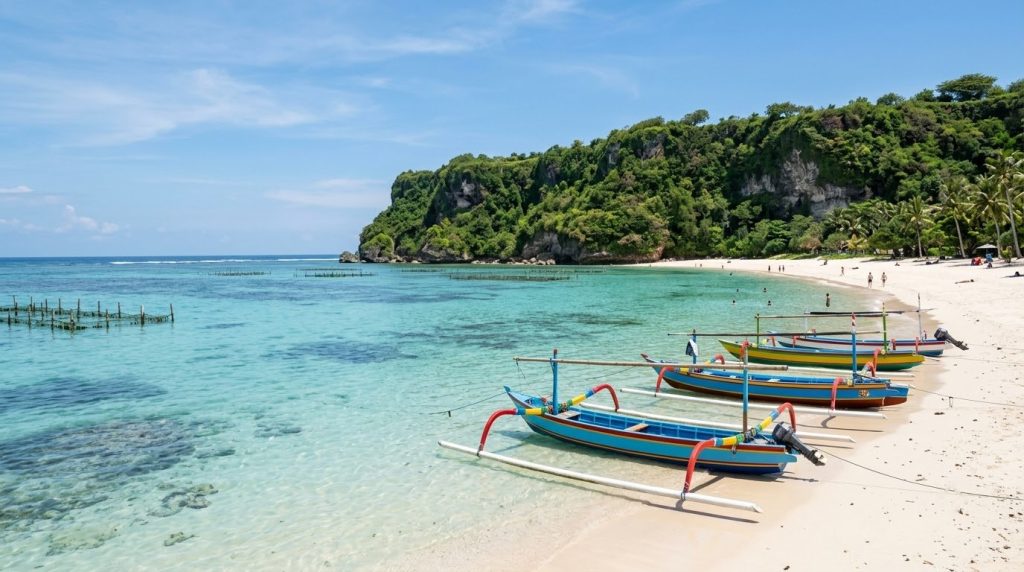
Yes, Nusa Dua is worth visiting if you want a reef-protected beach 15 to 30 minutes from Ngurah Rai Airport and you don’t mind resort dinners running AUD 47 · USD 34 (IDR 588,000) or more a head. It is not worth visiting if you came to Bali for temples, warungs, and street life you can walk to, because Nusa Dua’s gated enclave has almost none of that.
Quick verdict
| Traveller type | Worth it? | Nights to give it | Why |
|---|---|---|---|
| Families with young children | Yes | 3-4 nights | Reef-protected lagoon, kids clubs, wide flat sidewalks |
| Honeymooners wanting polish | Yes | 3-5 nights | Five-star consistency and a calm setting, minimal hassle |
| First-timers nervous about Bali | Yes | 2-3 nights | Gated, predictable, an easy landing before you explore |
| Older travellers and retirees | Yes | 4-5 nights | Flat walkways, quiet nights, low-stress logistics |
| Surfers | No | 0 nights | Reef breaks are advanced-only, no beginner waves |
| Budget backpackers | No | 0 nights | No dorm or hostel tier, everything priced at resort rates |
| Digital nomads and culture-seekers | No | 0-1 nights | Dead after dark, minimal street life or workspaces |
Who Nusa Dua is genuinely right for
Nusa Dua earns its keep for four traveller types: families with young children, honeymooners who want polish over grit, older travellers, and first-timers nervous about Bali’s chaos. Families get a reef-protected lagoon calm enough for toddlers, plus kids clubs and multiple pools inside resorts like Sofitel Bali Nusa Dua and The Mulia.
Honeymooners get five-star consistency without hunting for it, because BTDC zoning keeps every property in the enclave built and maintained to a similar standard. First-timers get a soft landing 15 to 20 minutes from Ngurah Rai Airport, which matters if the idea of Denpasar traffic or unfamiliar scooter lanes feels intimidating on day one.
Older travellers and retirees do well here too, because the sidewalks are wide, flat, and shaded, unlike Ubud’s steep lanes or Uluwatu’s cliff staircases. None of these travellers need Nusa Dua to feel like the “real” Bali. They need it to feel safe, comfortable, and easy to navigate, and on those terms it delivers consistently.
If your trip is built around relaxing rather than exploring, Nusa Dua does that job better than almost anywhere else on the island’s south coast. Compare it against Bali’s other resort areas before booking, because the trade-offs below apply to Nusa Dua specifically, not to Bali as a whole.
The gated-enclave trade-off
Nusa Dua trades local texture for predictability, and once you’re inside the BTDC gates you could be in any five-star resort zone in Southeast Asia. The complex was purpose-built by the Bali Tourism Development Corporation, with manicured grounds, security patrols at every entrance, and wide sidewalks that exist mainly to connect one resort lobby to the next.
There is little walkable street life outside the resorts themselves, no cluster of independent warungs, and none of the scooter-and-motorbike chaos that defines Kuta or Canggu. That calm comes at a price.
Dinner at a resort restaurant inside the enclave, such as the Westin Resort Nusa Dua’s Bai Yun, starts around AUD 47 · USD 34 (IDR 588,000) a person, while a plate at a warung a short drive away in Seminyak or Canggu can cost under USD 2. You’re not just paying for the food.
You’re paying for the gate, the grounds maintenance, and the absence of competition inside the complex. If daily food cost matters to your trip, work through the numbers in our Bali travel budget breakdown before you commit to a Nusa Dua base. Travellers who want Bali’s chaos softened, not eliminated, tend to do better in Sanur or Jimbaran instead.
The beach, and what reef protection means
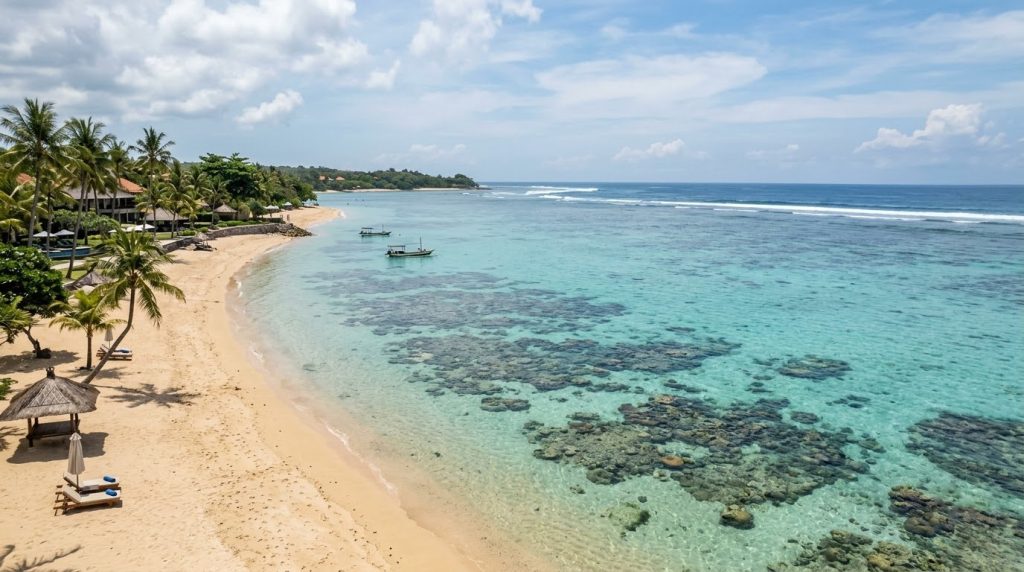
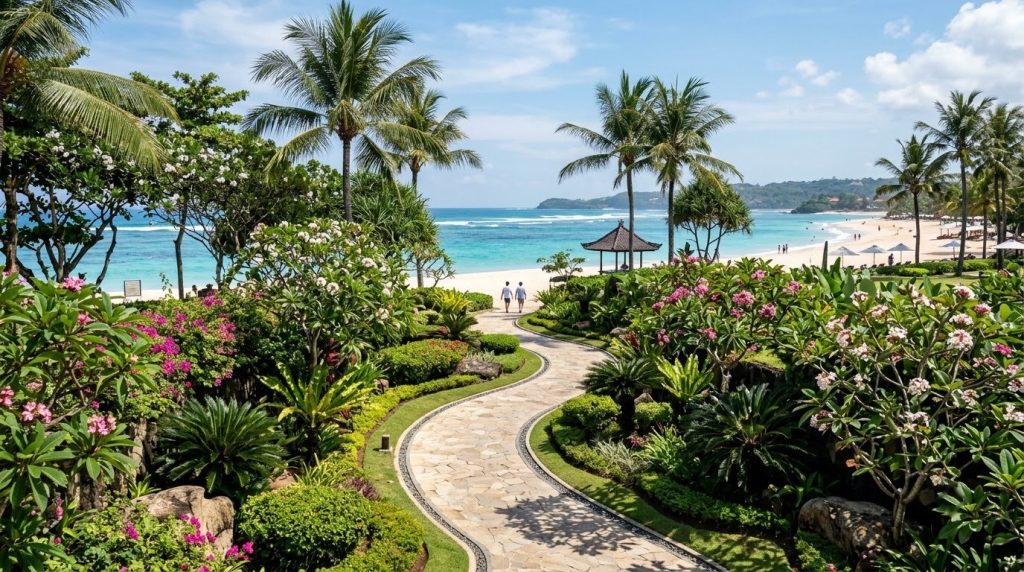
The beach is Nusa Dua’s best asset and its most limiting one. A protective reef sits offshore, which keeps the water inside the lagoon calm and shallow enough for toddlers to swim safely without a strong current pulling them out. That same reef kills the surf.
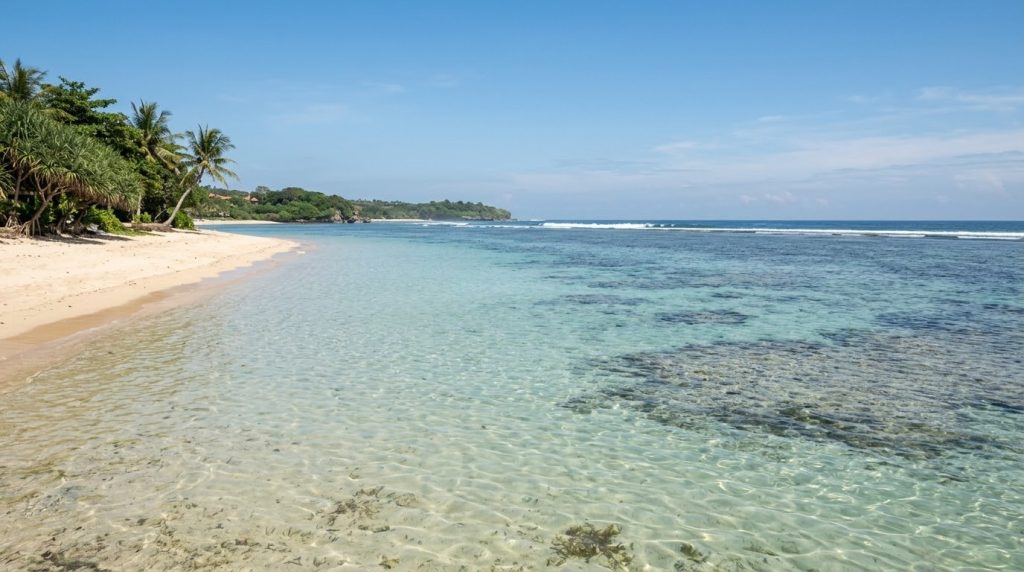
There is no beginner-friendly whitewash here the way there is at Kuta or Canggu, and the breaks that exist past the reef are advanced-only, used by experienced surfers rather than people learning to stand up for the first time.
You also won’t get the wave noise and open-ocean energy that draws people to Bali’s other coastlines, because the reef flattens the water almost year-round. If you’re bringing small children and want a beach where you’re not watching for rip currents every few minutes, that trade-off is worth making.
If you came to Bali to surf or to hear waves from your balcony, it is not.
Getting out – drive times that decide your days
Day trips from Nusa Dua are a commitment, not a whim, because nothing else worth seeing is close. Seminyak’s restaurant strip and beach clubs sit roughly 20 to 30 minutes away in light traffic, stretching toward an hour during the evening sunset rush.
Uluwatu’s cliffs and surf breaks are 35 to 45 minutes south, shorter after 9:30 PM but rarely fast before dark. Ubud’s rice terraces and temples sit 90 to 120 minutes north, which rules out a casual half-day visit and turns it into a full-day excursion. That geography changes how you should plan a trip based in Nusa Dua.
A spontaneous dinner in Seminyak becomes a round trip of an hour or more on top of the meal itself, and a sunrise walk through Ubud’s rice terraces means leaving before dawn.
Travellers who want to cover Bali’s south coast in one trip are usually better served splitting their stay, spending part of it in Nusa Dua and part somewhere central, using our roundup of Bali’s best hotels island-wide to plan the split.
Who should skip Nusa Dua
Skip Nusa Dua if you want to feel like you’re in Bali rather than in a resort compound that could be anywhere from Phuket to Cancun.
Backpackers and budget travellers get nothing here, because the enclave has no dorm or hostel tier, and even a basic guesthouse outside the gates runs well above what Kuta or Ubud charges for the same room. Surfers should book Uluwatu or Canggu instead, since Nusa Dua’s reef breaks are advanced-only and the beach itself has no learner-friendly whitewash.
Digital nomads and long-stay travellers will find little to work with, because the co-working scene, fast wifi cafes, and social hubs that define Canggu simply don’t exist inside a gated resort zone.
Culture-seekers looking for temples, ceremonies, and local markets within walking distance will find Nusa Dua manufactured by comparison to Ubud or Sanur, both of which kept their pre-tourism street life intact. Anyone on a tight food budget will also struggle, because restaurants inside the complex charge two to three times what the same meal costs a short drive away.
If any of that describes your trip, Nusa Dua is the wrong base even if the hotel photos look tempting.
Best time to visit Nusa Dua
Nusa Dua’s dry season, roughly April through October, brings the most reliable sun and the calmest lagoon swimming of the year, which matters most for the families and older travellers this area suits best.
The wet season, November through March, brings heavier rain concentrated in short overnight bursts rather than all-day washouts, with January the hottest month at an average of roughly 28C and also the wettest, while July is the coolest month at an average of roughly 26C.
The reef that keeps the lagoon calm also keeps most rain showers from disrupting a beach day the way open-coast swells do elsewhere in Bali, so even a wet-season booking usually still delivers swimmable mornings with the afternoon showers clearing by evening.
July and August, plus the Christmas and New Year fortnight, are Nusa Dua’s busiest and most expensive weeks, filling the lagoon’s calm swimming area with more families and pushing resort rates toward the top of the ranges quoted below.
May, June, and September offer a similar dry-season climate with noticeably thinner crowds and easier booking, making them the better value window for travellers without school-holiday constraints. Humidity stays high year-round regardless of season, so packing light, breathable fabric matters more than packing for rain alone, even during the wettest months.
Travelers timing a trip around specific activities should note that reef conditions inside the lagoon stay fairly stable across the year precisely because the barrier reef blocks the swell that drives seasonal surf elsewhere in Bali, so a family trip built around calm swimming is far less weather-dependent here than a surf or dive trip planned for Uluwatu or Nusa Lembongan.
Day-tour operators running snorkelling and water-sport trips from Nusa Dua’s beachfront tend to run a full schedule year-round for the same reason.
Shoulder months such as June and September also line up well with school-holiday calendars in several source markets, so a family travelling outside the July-August and Christmas-New Year windows above often finds both lower rates and a shorter line for the kids clubs and pools that are part of the appeal in the first place.
Eating beyond the resort gates
Just outside the BTDC gates, the streets around Jalan Pratama and Bualu village carry a cluster of local warungs charging a fraction of in-resort menus, with a plate of nasi campur or grilled fish typically running AUD 14-28 · USD 10-20, compared with the AUD 47 · USD 34 resort dinner described above.
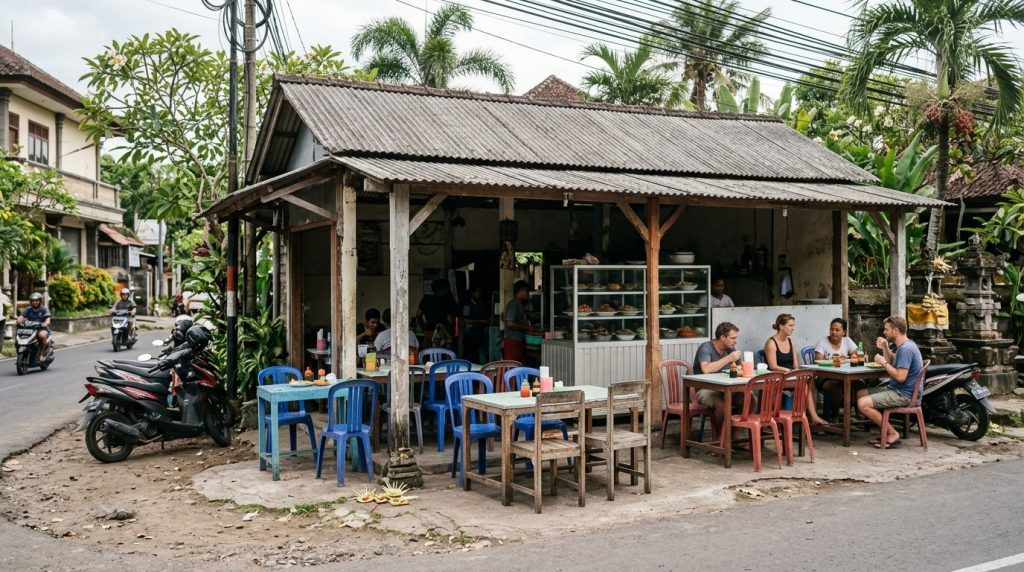
These places have no beach view and no air-conditioned dining room, just plastic chairs and a kitchen a few metres from the table, but the food is often better than the price suggests, and portions tend to be generous by resort standards.
A short drive north, the seafood warungs around Tanjung Benoa serve fresh catch by weight at tables close enough to the water to watch the boats come in, a cheaper and more local alternative to booking a resort seafood night, with the fish typically grilled over coconut husks rather than on a gas grill.
Travellers who want to stay inside the enclave entirely still have a wide spread of choice, from Chinese and Italian kitchens to beach clubs, but pairing at least one meal a day outside the gates is the easiest way to see a different side of Nusa Dua without changing where the trip is based.
A taxi or resort shuttle out to Jalan Pratama typically costs very little given the short distance, making it an easy add rather than a planning burden.
Breakfast is the one meal most travellers end up eating inside the resort regardless, since it is commonly included in the room rate and the convenience of starting the day without a taxi is hard to beat.
Treating dinner as the meal to take outside the gates, once or twice across a multi-night stay, is usually enough to feel the price difference without turning the trip into a daily commute for food.
Tap water is not safe to drink anywhere in Nusa Dua, resort or warung alike, so bottled or filtered water is standard practice regardless of where a meal is eaten, and most accommodation provides at least a basic in-room supply.
Spice levels at local warungs tend to run hotter by default than the toned-down versions served in resort restaurants, worth mentioning to staff in advance for travellers with young children or a low tolerance for chilli.
Related guides: all-inclusive resorts in Bali.
FAQs about Nusa Dua
Is Nusa Dua safe?
Yes. The gated BTDC enclave runs its own security patrols at every entrance, and petty theft or scams are rare inside the complex compared with busier, open tourist strips elsewhere in Bali. Standard travel precautions still apply once outside the gates, as they would anywhere else on the island.
Is Nusa Dua walkable?
Inside the gates, yes: the sidewalks are wide, flat, and shaded between resorts, making it one of the easiest areas in Bali to get around on foot. Outside the gates, walkable options thin out fast, and most trips to Jalan Pratama’s warungs or Tanjung Benoa happen by taxi or resort shuttle rather than on foot.
Is Nusa Dua good for a honeymoon?
Yes, and it is one of the traveller types this area suits best, thanks to five-star consistency across the enclave and a calm setting with minimal day-to-day hassle, though couples wanting nightlife or a livelier social scene should look elsewhere on the island.
Does Nusa Dua have nightlife?
Only in a limited sense. Evenings centre on resort bars and the occasional beach club event, with none of the open street-level nightlife found in Seminyak or Kuta, and most of the enclave is quiet well before midnight.
How far is Nusa Dua from the airport?
About 15 to 20 minutes in light traffic, one of the shortest airport transfers of any resort area in Bali, which is part of why it works well for a first or last night before a flight.
Does Nusa Dua suit solo travellers?
Less well than it suits the four traveller types above. The enclave’s pricing and pacing are built around couples, families, and groups, so a solo traveller often finds better value and more social opportunity staying in Seminyak, Canggu, or Ubud instead.
Where to stay if you decide to go
If Nusa Dua’s trade-offs work for your trip, book inside the BTDC zone rather than at a guesthouse outside it, since the calm beach and gated security are the whole point of staying here.
Mid-range resorts run roughly AUD 111–347 · USD 80–250 (IDR 1,400,000–4,375,000) a night, based on April 2026 Booking.com and Agoda listings converted at a verified September 2026 rate of 1 USD = 17,500 IDR, with five-star compounds running well above that. For a full breakdown of specific properties across every budget tier, see our Nusa Dua hotel guide.
Find your Nusa Dua hotel on the map
Live prices from Booking, Airbnb and more — move the map or change dates to compare stays around Nusa Dua.