
Disclosure: Some links in this guide are affiliate links. If you book or buy through them, we may earn a small commission at no extra cost to you — it helps keep our guides free.
Best Things To Do in Hoi An 2026: The Complete Activity Guide
Hoi An is one of Southeast Asia’s most rewarding destinations, packing 2,000 years of trading-port history into a walkable old town that draws over 5 million visitors each year. This guide covers every worthwhile activity — from cycling rice paddies at dawn to getting a custom suit stitched in 24 hours — with current prices and honest advice so you can plan without guesswork.
Key Takeaways – Hoi An Ancient Town is a UNESCO World Heritage Site covering 30 hectares with 1,360 protected historic buildings (UNESCO, 2024) – A combined Ancient Town ticket costs 120,000 VND (~$4.80 USD) and covers entry to 5 heritage sites (Hoi An Tourism Authority, 2025) – The Hoi An Full Moon Lantern Festival runs every 14th of the lunar month; attendance peaked at 18,000 visitors in one evening in 2024 (Quang Nam Province, 2024) – Cooking classes in Hoi An start at $18 USD per person and include a market tour with most reputable operators (Klook, 2025) – An Airalo Vietnam eSIM costs from $4.50 for 1 GB/7 days, covering 4G across all of Hoi An (Airalo, 2025)
Explore the Ancient Town on Foot
Related: Bali travel guide.
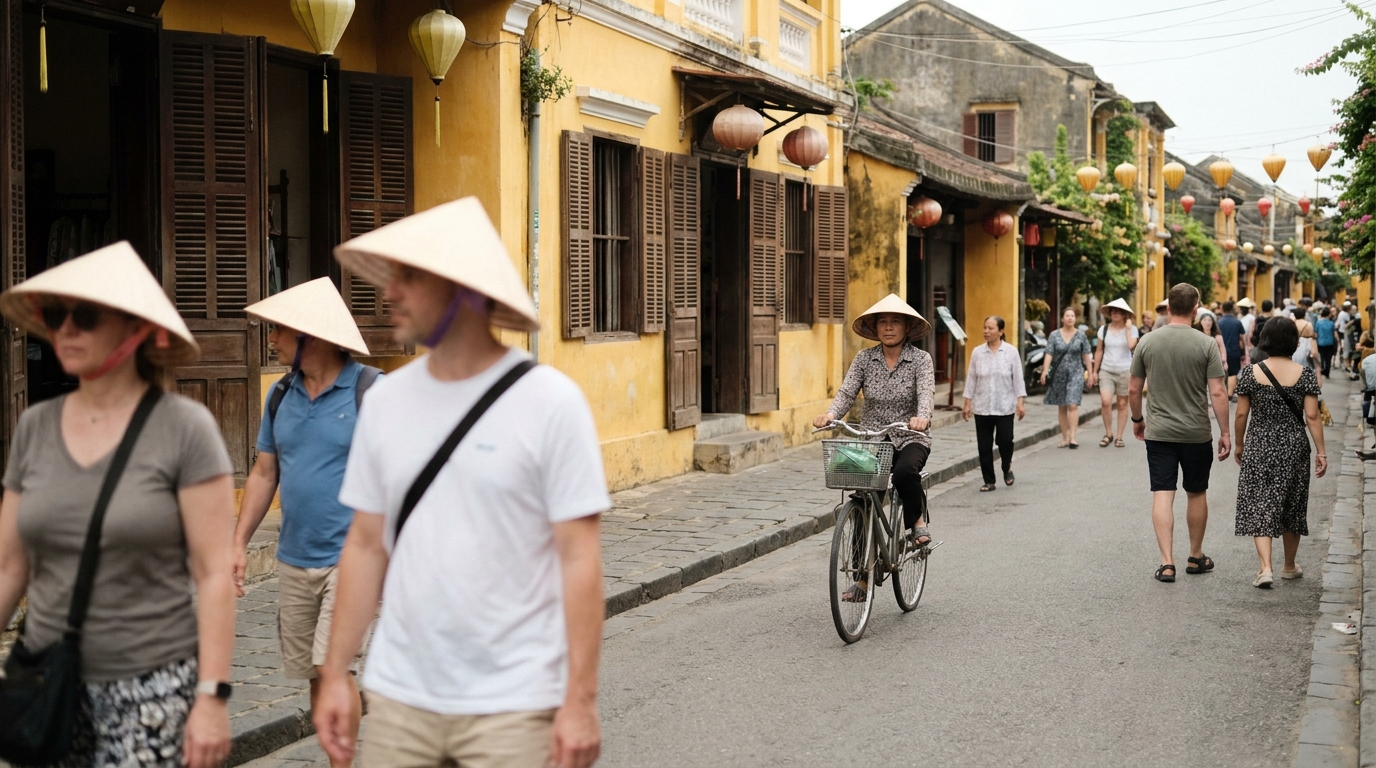
Walking the Ancient Town is the single best free activity in Hoi An, and it belongs at the top of your itinerary. The 30-hectare UNESCO-listed core contains Japanese merchant houses, Chinese assembly halls, and French colonial shopfronts within a 10-minute walk of each other. Buy your combined ticket (120,000 VND / ~$4.80 USD) at any ticket booth on Tran Phu Street; it covers five heritage sites including Tan Ky Old House, the Japanese Covered Bridge, and Phuc Kien Assembly Hall.
Tan Ky Old House at 101 Nguyen Thai Hoc Street is a 200-year-old family merchant home still occupied by the eighth generation of the Tan Ky family. Entry is included in the combined ticket. Phuc Kien Assembly Hall on Tran Phu Street, built by Fujian Chinese immigrants in 1697, is the most ornate of the five assembly halls — carved wooden altars, ceramic roof dragons, and a courtyard fountain make it one of the most photogenic spots in town. The Japanese Covered Bridge (Chua Cau) at the western end of Tran Phu Street is Hoi An’s most iconic structure; arrive before 8 AM to photograph it without crowds.
We recommend pairing your Ancient Town walk with a cycling route through the surrounding villages for a half-day that covers both the historic core and the agricultural landscape outside it.
The 3-Day Hoi An Itinerary
The plan we use ourselves — sent straight to your inbox.
- Day-by-day route
- Where to stay
- Real 2026 costs
Free · No spam · Unsubscribe anytime
Take a Cooking Class with a Market Tour
Related: Da Nang travel guide.
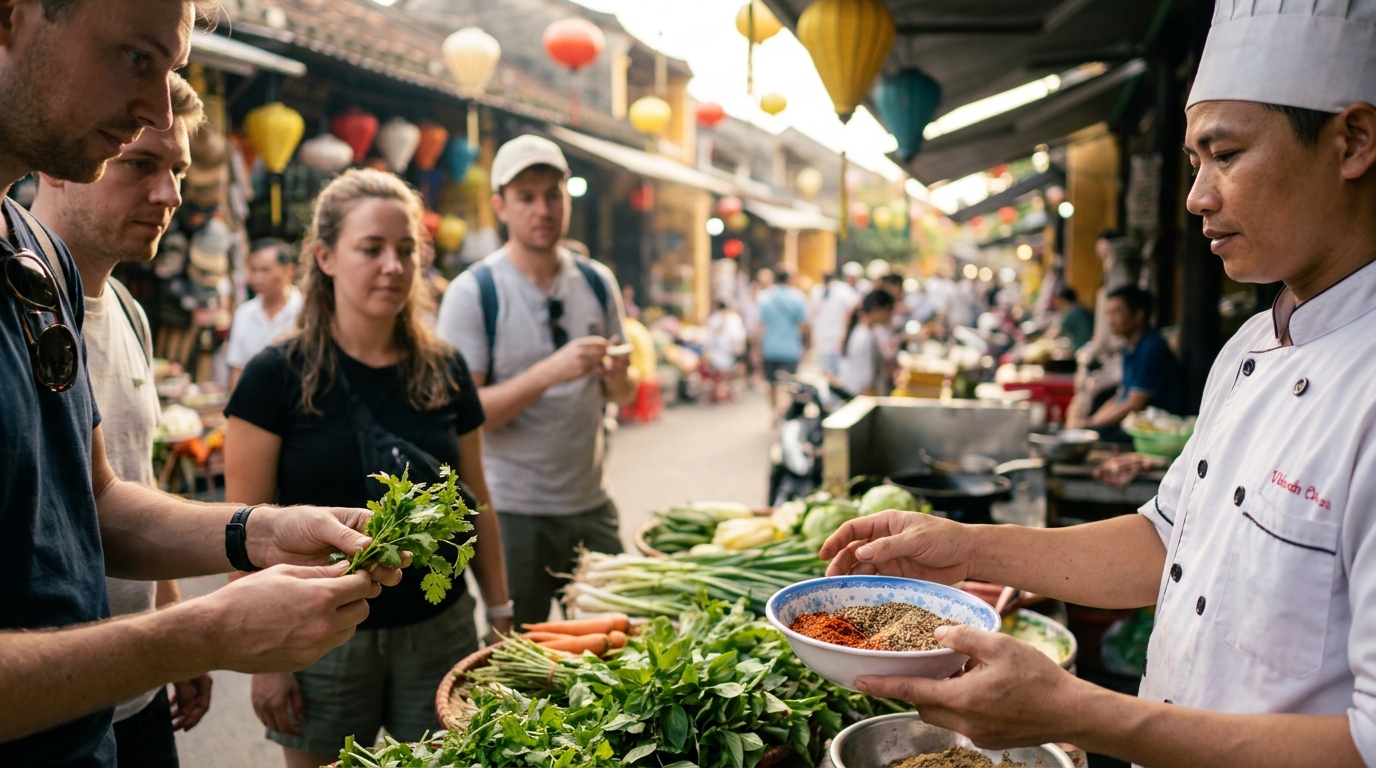
Hoi An has earned a reputation as Vietnam’s best city for food, and a hands-on cooking class is the most efficient way to understand why. The best classes start at the Hoi An Central Market at 6:30 AM, where instructors walk you through ingredient selection — dried shrimp, turmeric root, fresh herbs — before heading to a kitchen to cook three to five dishes.
Expect to pay $18–$35 USD per person for a half-day class. Book a Hoi An cooking class on Klook to compare options; the Red Bridge Cooking School (4 km from town, reached by boat) and Morning Glory Cooking School on Nguyen Thai Hoc Street are consistently highest-rated. Both include the market tour, all ingredients, recipe cards, and a full meal of your creations. Dishes typically include white rose dumplings (Banh Bao Vac), Cao Lau noodles, and fresh spring rolls — all regional specialties you will not find in the same form elsewhere in Vietnam. Classes run mornings only; afternoons are reserved for private bookings.
Rent a Bicycle and Ride to Tra Que Vegetable Village
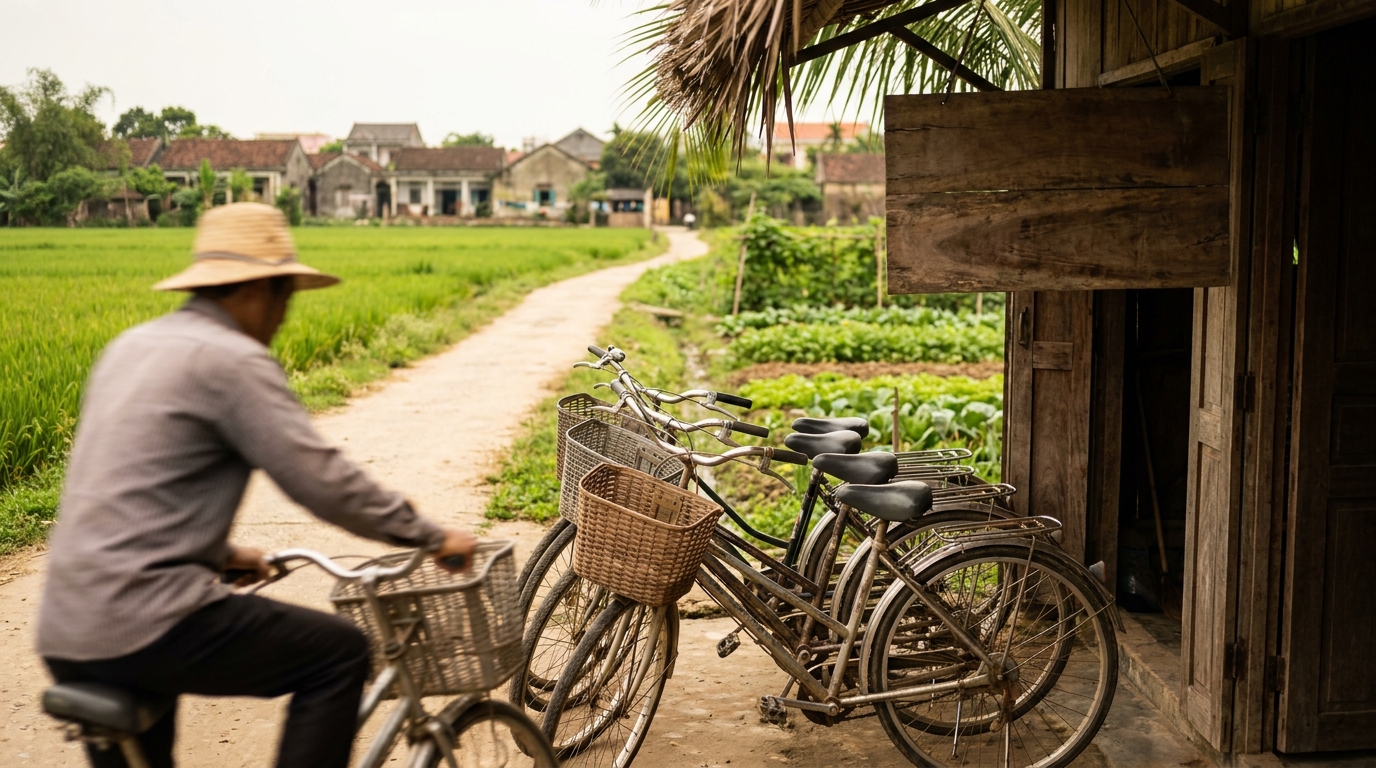
Tra Que is a 3-hectare organic herb and vegetable farm on the Thu Bon River, 3 km north of the Ancient Town. Farmers here have supplied Hoi An’s restaurants for over 400 years using water drawn directly from the Tra Que lagoon. A bicycle rental from any guesthouse or shop in town costs 30,000–50,000 VND ($1.20–$2.00 USD) per day; the ride to Tra Que takes under 15 minutes on flat riverside paths.
You can join a 90-minute farming experience at the village for 150,000 VND (~$6.00 USD) per person — this includes tilling soil with a traditional hand hoe, planting seedlings, and harvesting vegetables before a cooking demonstration. Several family farms in Tra Que offer the experience directly; no advance booking is required for groups under six. For a longer rural loop, continue past Tra Que to Kim Bong Carpentry Village, another 4 km north, where woodcarvers produce the lacquerware sold throughout Hoi An’s shops. See our Hoi An cycling itinerary for the full route with GPS waypoints.
The 3-Day Hoi An Itinerary
Hour-by-hour plan, where to stay and what it really costs — free PDF.
Free · No spam · Unsubscribe anytime
Get Custom Clothing Made by a Hoi An Tailor
Related: best food in Hoi An.

Hoi An has over 400 tailoring shops, and getting something custom-made is one of the most popular things to do in Hoi An for first-time visitors. Quality varies enormously. Budget 24–48 hours minimum for at least one fitting; anything promised faster is likely cutting corners on construction. Prices for a well-made item: ao dai (traditional Vietnamese dress) from $35–$60 USD, a linen suit from $90–$180 USD, a silk blouse from $25–$45 USD.
Yaly Couture on Nguyen Thai Hoc Street and A Dong Silk on Le Loi Street are two of the most established workshops with English-speaking staff and a track record with international customers. Bring a reference photo. If you are ordering a suit, insist on a canvas or half-canvas construction (not full fusible interlining) — ask directly; reputable tailors will not be offended. Allow at least two fittings. Collect your finished garment in person and try it on before paying the balance.
Join a Lantern-Making Workshop
Paper lanterns are the defining visual of Hoi An, and a lantern-making workshop is a hands-on way to engage with the craft rather than just buying the finished product. Workshops run 60–90 minutes and cost 80,000–120,000 VND ($3.20–$4.80 USD) per person at studios on Le Loi Street and inside the Ancient Town. You select a bamboo frame shape (round, hexagonal, or star), choose silk or rice paper, pick your colors, and assemble and glue the lantern yourself under a craftsperson’s guidance.
The best time to attend is late afternoon so you can carry your finished lantern to the river at dusk for the evening atmosphere. On the 14th day of each lunar month, the Ancient Town goes fully electric-free from 5 PM onward — all illumination comes from lanterns — and the lantern-making workshops are booked out weeks in advance. If you are planning around the Full Moon Lantern Festival, book your workshop slot at least 10 days ahead.
Release a Flower Lantern on the Thu Bon River
Releasing a floating flower lantern (hoa dang) on the Thu Bon River at night is one of the most atmospheric things to do in Hoi An, and it costs almost nothing. Small paper lotus lanterns with a candle insert are sold along Bach Dang Street for 10,000–20,000 VND (under $1.00 USD) each. You light the candle, make a wish, and set the lantern on the water from the riverside walkway or from a rowboat.
For a more immersive experience, hire a small rowboat from the Bach Dang wharf — rates are 100,000–150,000 VND ($4.00–$6.00 USD) for a 30-minute ride covering the lantern-lit stretch of the river. Boatwomen in traditional non la (conical hats) are stationed at the wharf from around 5:30 PM. The river is at its most beautiful between 6:30 PM and 8:30 PM when the Ancient Town lights reflect on the water. On Full Moon nights this scene scales up dramatically; arrive by 5 PM to secure a boat. Combine this with a sunset dinner at one of the riverside restaurants on Bach Dang Street — a table with a river view runs $8–$15 USD per person for a full meal.
Day Trip to My Son Sanctuary
Related: Hoi An itinerary.
My Son is a cluster of Hindu temples built by the Cham civilization between the 4th and 14th centuries, located 40 km southwest of Hoi An in a jungle valley. It is Vietnam’s most significant Cham archaeological site and a UNESCO World Heritage Site since 1999. Entry costs 150,000 VND ($6.00 USD); the site opens at 6 AM and is best visited early before midday heat.
Getting there independently: rent a motorbike in Hoi An (from 100,000–150,000 VND / ~$4–$6 USD/day) and follow Highway 1A south then turn inland via DT610 road — the drive takes about 1 hour. Alternatively, book a My Son Sanctuary guided tour on Klook or GetYourGuide for $12–$20 USD including transport; these typically depart at 7 AM and return by noon, leaving your afternoon free. Many tours combine My Son with a boat trip on the Thu Bon River. Group B and C temple clusters are the most intact; Group A was heavily bombed during the Vietnam War and only foundations remain.
We have a full breakdown of getting from Hoi An to My Son with solo and tour options.
Visit An Bang Beach and Cua Dai Beach
Hoi An sits 4 km from the South China Sea, and two beaches bookend the coastline nearest to town. An Bang Beach, 5 km from the Ancient Town, is the more developed of the two — beach bars, sunbed rentals (~50,000 VND/$2 per day), seafood shacks, and a handful of mid-range beach clubs. Soul Kitchen and An Bang Beach Bar are the most popular hangouts, charging $3–$5 USD for a cold beer. Book a beachfront hotel on Agoda near An Bang for easy beach access without the Ancient Town crowds.
Cua Dai Beach, 3.5 km from the center, has lost significant sand to erosion since 2015 and the beach itself is now narrow, but the water is calmer and there are fewer tourists. Bicycle to either beach via the flat coastal road; the ride from the Ancient Town takes 20–25 minutes. Avoid both beaches from October through March when the northeast monsoon makes swimming dangerous and the water turns rough. The safe swimming season runs April through September. Jellyfish warnings are periodic in July and August — check with your hotel before entering the water.
Find your Hoi An hotel on the map
Live prices from Booking & Airbnb — tap a pin to compare stays around the Ancient Town and An Bang Beach and beyond.
Where to Stay in Hoi An
Related: best day trips from Hoi An.
Hoi An accommodates every budget, from $8 USD dorm beds to $400/night heritage boutique hotels. The Ancient Town itself is the most atmospheric place to stay — you are within walking distance of everything — but vehicle restrictions inside the old quarter mean you cannot drive to your front door after certain hours.
| Budget | Hotel | Price/Night (USD) | Location |
|---|---|---|---|
| Budget | Hoi An Backpackers Hostel | $8–$15 | Ancient Town fringe |
| Mid-range | Anantara Hoi An Resort | $90–$140 | Thu Bon Riverfront |
| Mid-range | Hoi An Historic Hotel | $65–$110 | Walking distance to Ancient Town |
| Luxury | Four Seasons The Nam Hai | $350–$600 | Ha My Beach, 18 km from town |
| Luxury | Rosewood Hoi An | $280–$500 | Cua Dai Beachfront |
Search current Hoi An hotel rates on Booking.com or compare on Agoda — prices fluctuate significantly around the Full Moon Festival and Vietnamese public holidays (April 30, September 2). Book at least three weeks ahead if traveling during these periods. For families, villa rentals outside the Ancient Town via Booking.com offer private pools from $120–$200/night.
Practical Tips: Getting Around and Staying Connected
Hoi An’s Ancient Town is vehicle-restricted during peak hours (7 AM–11 PM on main heritage streets), so walking and cycling are the primary ways to navigate the core. Grab (Vietnam’s ride-hailing app) operates in Hoi An for trips to the beaches, My Son, and Da Nang airport (45 km north); a Grab car to Da Nang airport runs $12–$18 USD depending on traffic.
For connectivity, pick up an Airalo Vietnam eSIM before you land — a 1 GB/7-day plan costs $4.50 USD and covers 4G across all of central Vietnam including Hoi An, Da Nang, and Hue. No SIM swap needed; activate from your phone before boarding. Local SIM cards from Viettel or Vietnamobile are available at Da Nang airport for 100,000–150,000 VND (~$4–$6 USD) with 5–10 GB data if you prefer a physical card.
Currency: ATMs are available on Le Loi and Tran Phu streets. Most shops and mid-range restaurants accept USD, but you will get a worse exchange rate than paying in VND. Exchange cash at Agribank or Vietcombank branches for the official rate; airport exchanges and hotel desks typically add a 2–4% margin.
See our complete Hoi An travel guide for transport, visas, and a suggested 3-day itinerary.
Frequently Asked Questions
How many days do you need in Hoi An?
Three full days is the sweet spot for most travelers. Day 1 covers the Ancient Town on foot with a cooking class. Day 2 works well for a bicycle trip to Tra Que and An Bang Beach. Day 3 is ideal for a My Son day trip. Five days lets you add tailoring, day trips to Da Nang, and a slower pace overall.
Is Hoi An safe for solo travelers?
Yes. Hoi An has one of the lowest crime rates of any tourist city in Southeast Asia. Petty theft (phone snatching from motorbikes) is the most reported issue; keep bags on the side away from the road. The Ancient Town is well-lit and busy until midnight. Solo female travelers consistently rate it among Vietnam’s safest destinations (TripAdvisor Safety Index, 2024).
What is the best time of year to visit Hoi An?
February through April offers the driest weather and mild temperatures (24–28°C / 75–82°F). The lantern festival (held monthly) is most crowded in January and February around Tet. October and November bring the heaviest rainfall and occasional flooding in the Ancient Town — check flood risk before booking if traveling in these months.
Do I need a visa to visit Vietnam?
Citizens of the United States, United Kingdom, Australia, Canada, and most EU countries receive a 45-day visa-free entry as of 2023. An e-visa ($25 USD, valid 90 days, single or multiple entry) is available at evisa.xuatnhapcanh.gov.vn. Always confirm the latest policy at your nearest Vietnamese embassy 4–6 weeks before travel. See our Vietnam visa guide for step-by-step instructions.
How much does a trip to Hoi An cost per day?
Budget travelers spending on dorm beds, street food, and free/low-cost sights manage on $25–$35 USD/day. Mid-range travelers staying in a 3-star hotel, eating at sit-down restaurants, and booking one or two tours average $70–$110 USD/day. Luxury travelers at boutique hotels with spa days and private guides can spend $250 USD/day or more. Hoi An is significantly cheaper than Bangkok or Bali for equivalent quality.
Can you swim at the beaches near Hoi An?
Yes, from April through September. The safe swimming season aligns with the southwest monsoon, which keeps Central Vietnam dry while the south gets rain. October through March brings the northeast monsoon — seas become rough, rip currents are common, and beach bars close for the season. An Bang Beach has a lifeguard on duty from April to September; Cua Dai does not.
Is it worth booking tours in advance for Hoi An?
For standard activities like cooking classes and My Son day trips, booking 3–5 days ahead is usually sufficient outside of peak season. During the Full Moon Lantern Festival (especially November–February), popular cooking classes and boat tours sell out 2–3 weeks ahead. Tailoring orders need at minimum 24–48 hours in town — you cannot pre-book these from abroad.
Plan Your Hoi An Trip Now
Related: Hoi An travel cost.
Hoi An rewards travelers who slow down. The Ancient Town is compact enough that you will cover the main sights in a morning, but the city reveals more layers with each extra day — a different cooking class, a further cycling route, a longer conversation with your tailor. Start with the Ancient Town ticket and a cooking class on your first day, add the river lanterns at night, and build outward from there.
Compare hotel rates on Booking.com or Agoda for the best deal on your dates. Browse our Vietnam destination guides for more itinerary ideas across Central Vietnam.