Disclosure: Some links in this guide are affiliate links. If you book or buy through them, we may earn a small commission at no extra cost to you — it helps keep our guides free.
12 Best Things to Do in Ghent in 2026: Local Guide
The best things to do in Ghent center on a compact medieval core you can cross on foot in 20 minutes: climb the moated Gravensteen castle, stand in front of the restored Ghent Altarpiece inside St Bavo’s Cathedral, walk the guild-house waterfront at Graslei, and ride the lift up the UNESCO-listed Belfry. Ghent’s historic center is car-free, and the three towers of St Nicholas’ Church, the Belfry, and St Bavo’s line up in a row you can photograph from a single spot on St Michael’s Bridge.
This guide covers the 12 attractions worth your time, with 2026 opening hours, entry prices in euros, and the order we’d walk them in a single day. Ghent draws a fraction of the crowds that neighboring Bruges does, which is exactly why it rewards a slower visit. If you want the full logistics, our Ghent travel guide has transport, day-trip, and neighborhood detail, and our Ghent hotel guide breaks down where to sleep.
Key Takeaways
– Gravensteen castle costs 13 EUR per adult (audio guide included), open daily 10am to 6pm, last entry 4:40pm.
– The Ghent Altarpiece at St Bavo’s Cathedral costs around 12.50 EUR with an augmented-reality tour; entry to the cathedral itself is free.
– A canal boat tour from Graslei or Korenlei runs about 9.50 EUR and lasts roughly 45 minutes.
– The CityCard Gent costs 42 EUR (48 hours) or 48 EUR (72 hours) and covers 15+ attractions, a boat tour, and all city trams and buses.
– Best time to visit is May to September, with July highs near 22 C (72 F) and up to 16 hours of daylight.**** We spent two full days in Ghent in the shoulder season and covered the whole medieval core on foot without a single tram ride. On our first morning we climbed the Gravensteen ramparts before the tour groups arrived, and by mid-afternoon we were eating cuberdon sweets on a bench at Graslei watching the boats turn. The city is small enough that you keep circling back to the same three towers from different angles.
What are the top things to do in Ghent?
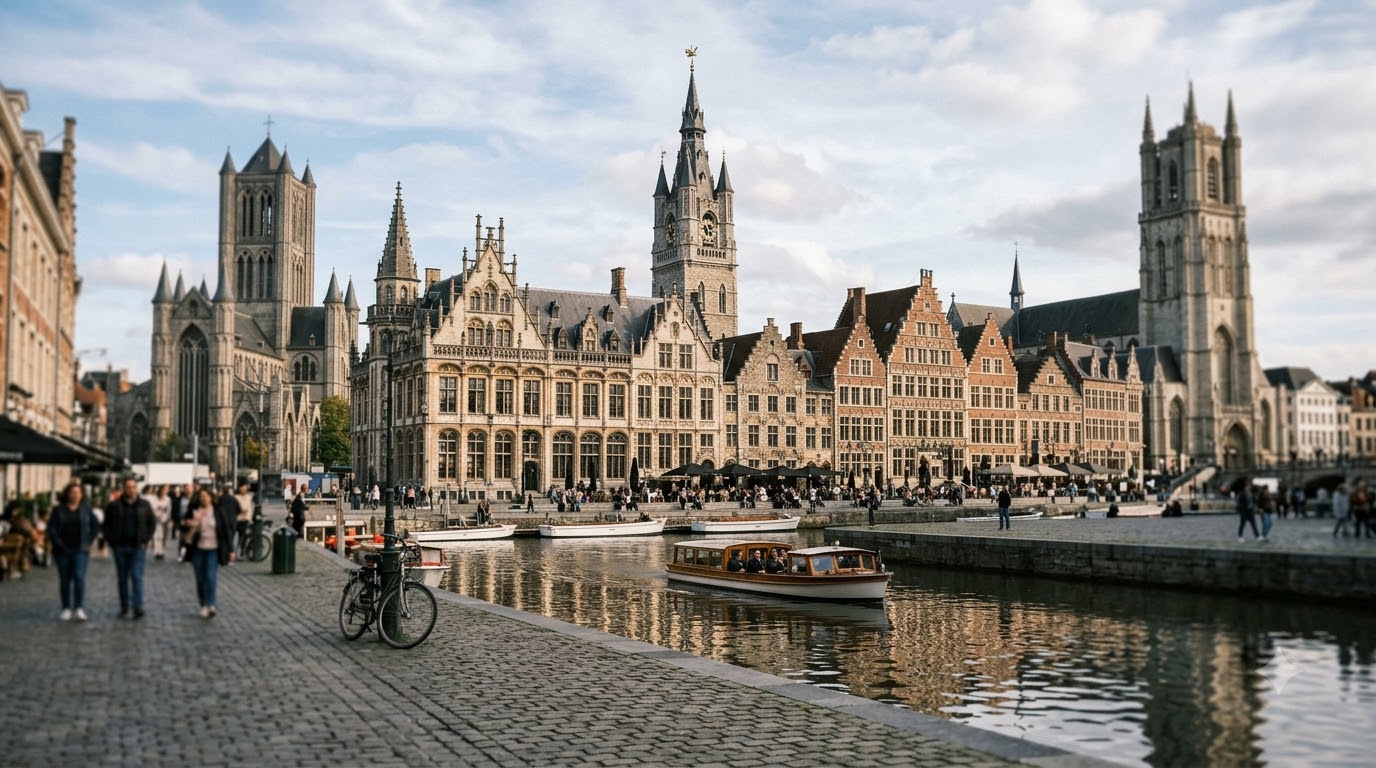
The top things to do in Ghent are the Gravensteen castle, the Ghent Altarpiece at St Bavo’s Cathedral, the Graslei and Korenlei waterfront, the Belfry, and a canal boat tour, all within a 15-minute walk of each other. Below is how the headline sights compare on price and time, so you can build a route before you arrive.
| Attraction | Adult price (2026) | Time needed | Best for |
|---|---|---|---|
| Gravensteen castle | 13 EUR | 60-90 min | Medieval history, ramparts view |
| Ghent Altarpiece (St Bavo’s) | ~12.50 EUR | 45-60 min | Art, the Van Eyck masterpiece |
| Belfry (Belfort) | ~8-10 EUR | 45 min | Panoramic city view |
| Canal boat tour | ~9.50 EUR | 45 min | Rest, waterfront facades |
| St Bavo’s Cathedral (nave only) | Free | 20 min | Gothic interior |
| Graslei / Korenlei walk | Free | 30 min | Photography, atmosphere |
Prices verified against Visit Gent and Ghent attraction operators for 2026. On our last visit we found buying single tickets added up fast, so if you plan four or more paid sights in two days the CityCard Gent pays for itself.
The 2-Day Ghent Itinerary
The plan we use ourselves — sent straight to your inbox.
- Day-by-day route
- Where to stay
- Real 2026 costs
Free · No spam · Unsubscribe anytime
Climb the Gravensteen: Ghent’s moated castle
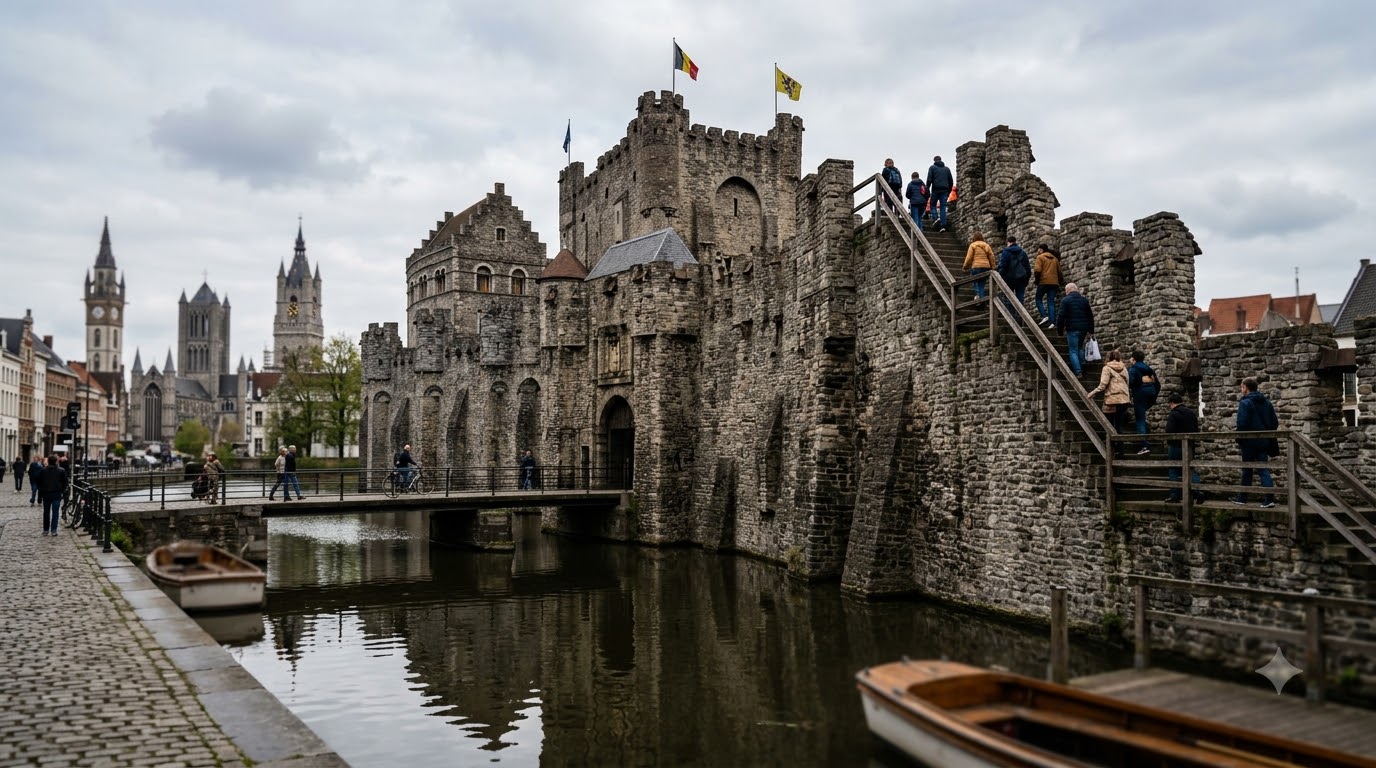
The Gravensteen, or Castle of the Counts, is a 12th-century moated stone fortress in the middle of Ghent, and it is the single most recognizable thing to do in the city. Built in 1180 by Count Philip of Alsace, it once housed a courthouse, a mint, and a prison, and its torture museum still displays the grim tools of that history.
- Gravensteen entry: 13 EUR adult, 6 EUR ages 19-25, 7.50 EUR over-65s and teachers, free under 18.
- Opening hours: daily 10am to 6pm, closed 24, 25, 31 December and 1 January; last admission 4:40pm.
- The audio guide is included in the price and is genuinely funny, narrated as a comic tour of the castle’s bloody past.
- Book a 20-minute timeslot online in advance; walk-up entry is not guaranteed and can sell out in summer.
- Climb to the rampart walk for a free 360-degree view over the rooftops and the three towers.
We spent about 80 minutes inside, most of it on the upper walls. Wear flat shoes, the medieval spiral stairs are steep and worn smooth.
Stand before the Ghent Altarpiece at St Bavo’s Cathedral
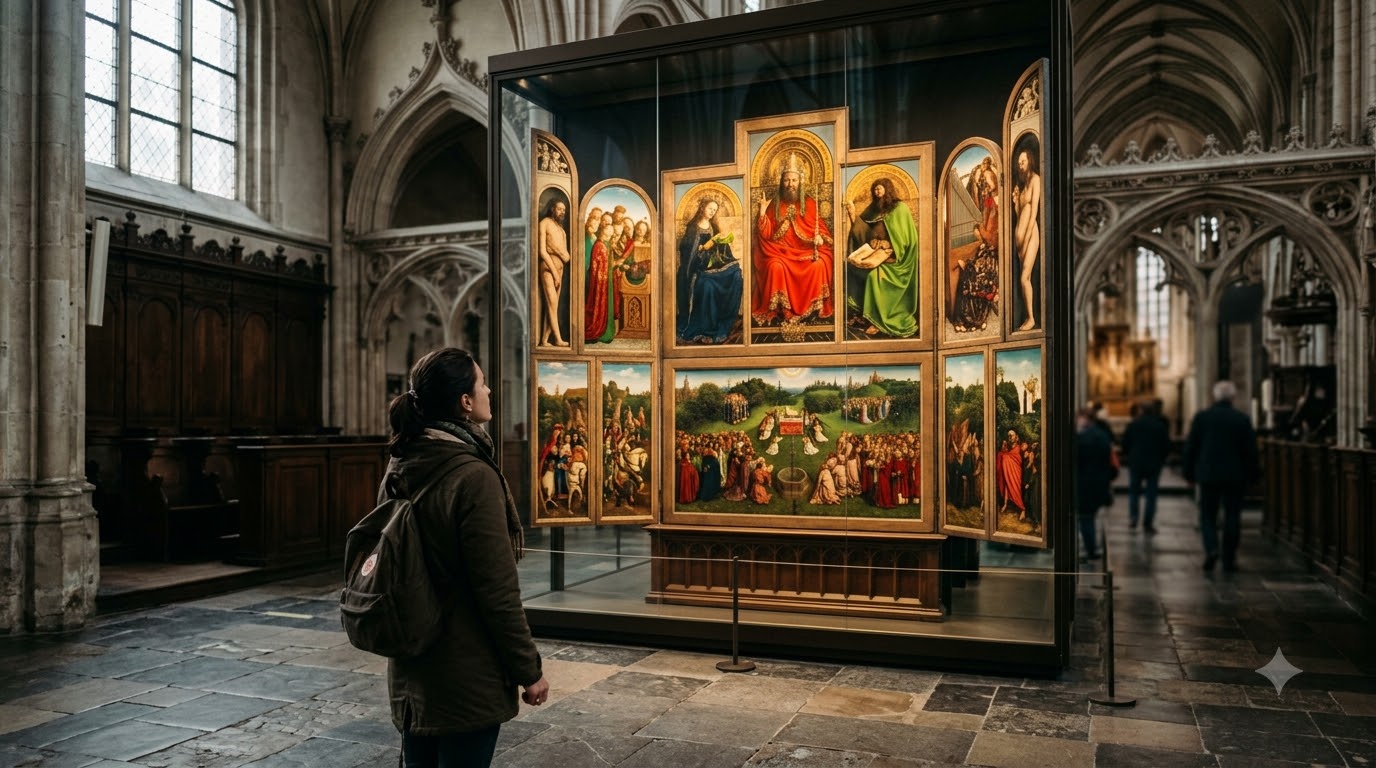
The Ghent Altarpiece, also called the Adoration of the Mystic Lamb, is a 1432 polyptych by Hubert and Jan van Eyck, and it is one of the most influential paintings in Western art. It now sits in a purpose-built visitors’ center inside St Bavo’s Cathedral, where a decade-long restoration returned the panels to their original colors.
Entry to the cathedral nave is free, but viewing the altarpiece requires a separate ticket of around 12.50 EUR, which includes an augmented-reality tour available in English, Dutch, French, German, Spanish, Portuguese, Japanese, and Russian. CityCard Gent holders get a 10 EUR discount on the altarpiece ticket, one of the card’s strongest single savings.
- The altarpiece has 12 panels; the restored lamb’s forward-facing gaze became an internet sensation after the 2020 cleaning.
- The AR headset walks you panel by panel through the symbolism and the wartime theft of the Righteous Judges panel, still missing since 1934.
- Book a timed slot in peak season; the visitors’ center caps numbers and slots fill by late morning.
- The whole cathedral, visitors’ center, and altarpiece are fully wheelchair accessible.
We booked the first slot of the day and had ten quiet minutes with the open polyptych before the next group filed in.
The 2-Day Ghent Itinerary
Hour-by-hour plan, where to stay and what it really costs — free PDF.
Free · No spam · Unsubscribe anytime
Walk the Graslei and Korenlei waterfront
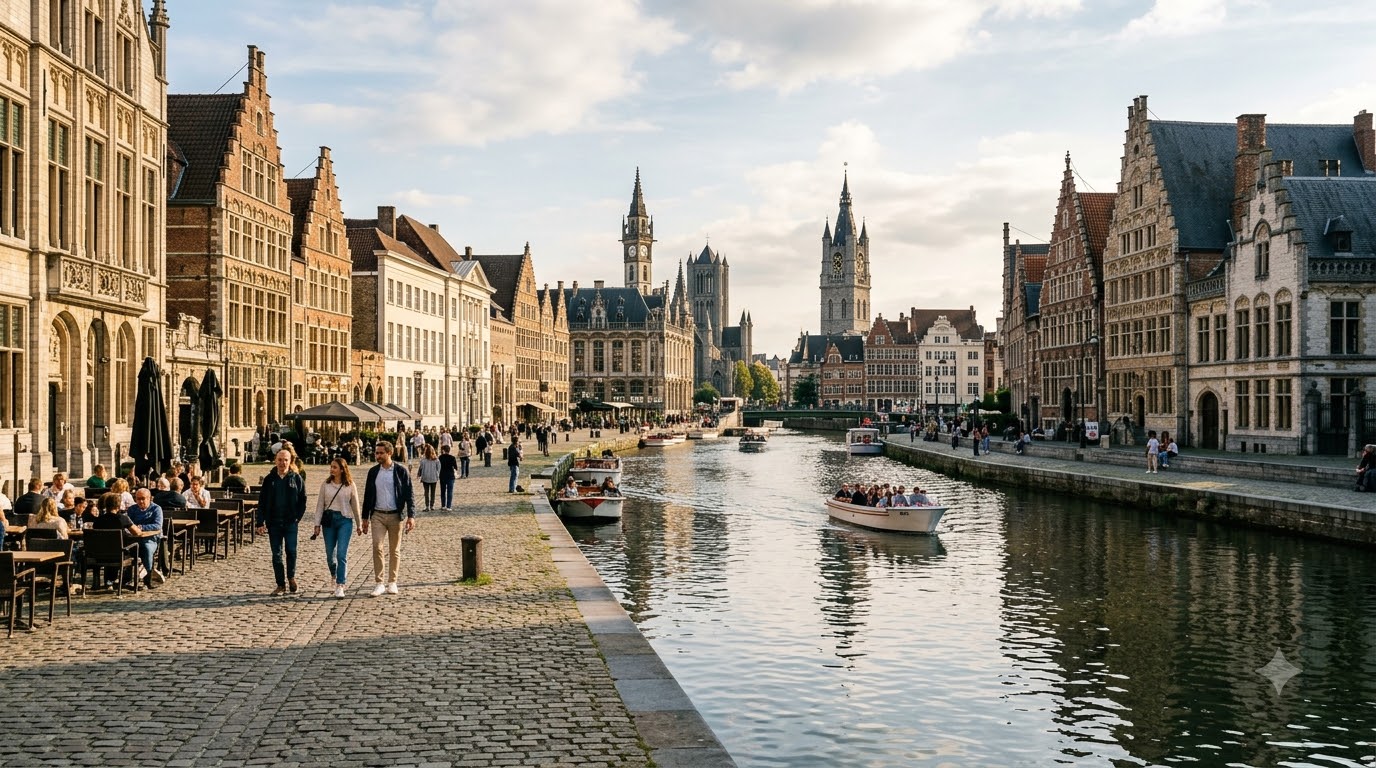
The Graslei and Korenlei are the two facing quays of the old Ghent harbor, lined with guild houses dating from the 12th to the 17th century, and the walk between them is free and unmissable. This medieval port was the commercial heart of the city, and the stepped-gable facades reflected in the Leie river make it Ghent’s most photographed spot.
Come back after dark. From roughly sunset, Ghent’s award-winning lighting plan illuminates the guild houses and the water, and the crowds thin out to almost nothing. The stretch is also where the best-value Ghent hotels cluster, so many visitors are a two-minute walk from this view.
- Sit on the Graslei steps at golden hour; locals gather here with drinks from the nearby bars.
- The Korenlei side has the better vantage for photographing the guild houses across the water.
- Look for the tiny Tussen Bruggen (“between the bridges”) landing where the canal boats depart.
- This is a short walk from Bruges by train, 25 minutes, if you are also planning our Bruges travel guide itinerary.
Take a canal boat tour of the old harbor
A canal boat tour is the easiest way to see Ghent’s waterfront from the angle its builders intended, and it costs about 9.50 EUR for a roughly 45-minute open-boat trip. Boats depart from the Graslei and Korenlei landings throughout the day, with live commentary as you glide past the guild houses, the old fish market, and the back of the Gravensteen.
The tour is included free with the CityCard Gent, which is one reason the card adds up quickly. On a warm afternoon it doubles as a rest for tired feet, and the low waterline view of the Vleeshuis (old meat hall) and the castle is one you cannot get on land.
Climb the Belfry for the best city view
The Belfry of Ghent (Belfort) is a 91-meter medieval tower and a UNESCO World Heritage Site, and it offers the highest public viewpoint in the historic center. Built in the 14th century as a symbol of the city’s independence, it houses a 54-bell carillon and the gilded dragon weathervane that has watched over Ghent since 1377.
- Belfry entry: roughly 8-10 EUR adult; a glass lift carries you most of the way up.
- From the top you get a clear line on the three towers, the red rooftops, and the Gravensteen.
- Time your climb for the carillon; the bells ring on the quarter-hour.
- Entry is included with the CityCard Gent.
See the three towers from St Michael’s Bridge
St Michael’s Bridge (Sint-Michielsbrug) is the single best free viewpoint in Ghent, a stone arch bridge that lines up the three medieval towers of St Nicholas’ Church, the Belfry, and St Bavo’s Cathedral in one frame. The view runs the length of the old city, with the Graslei guild houses falling away to the north.
This is the shot that defines Ghent postcards, and it costs nothing. We came back three times, at midday, at sunset, and after the lights came on, and the illuminated version was the clear winner.
Explore Patershol, the old medieval quarter
Patershol is a small tangle of cobbled streets behind the Gravensteen, and it is Ghent’s oldest surviving residential quarter and its best dining neighborhood. Once home to leather workers and later a red-light district, it is now a protected zone of 16th- and 17th-century houses packed with restaurants.
- Patershol has the highest concentration of restaurants in Ghent, from Flemish stew (stoverij) to modern bistros.
- The streets are pedestrian and lantern-lit, ideal for an after-dinner wander.
- It sits directly behind the castle, so pair it with your Gravensteen visit.
- Book a table for Friday or Saturday night; the small dining rooms fill fast.
More things to do in Ghent
If you have a second day, these round out the city beyond the headline sights. Ghent has a strong contemporary side that most day-trippers never see.
- St Nicholas’ Church (Sint-Niklaaskerk): a free-entry Scheldt Gothic church, the westernmost of the three towers, often quieter than St Bavo’s.
- STAM city museum: Ghent’s history museum in a former abbey, with a giant walkable aerial photo of the city on the floor.
- Design Museum Gent: newly expanded, covering Art Nouveau to contemporary design.
- Vrijdagmarkt: the “Friday Market” square, home to a market since the 13th century and now ringed with cafe terraces.
- Werregarenstraat (Graffiti Alley): a legal street-art lane repainted constantly, a sharp contrast to the medieval core.
When is the best time to visit Ghent?
The best time to visit Ghent is May through September, when highs sit around 18-22 C (64-72 F) and daylight stretches to 16 hours in midsummer. Ghent’s weather is mild and changeable year-round, so a light rain jacket earns its place in any season.
| Season | Avg high | What to expect |
|---|---|---|
| Spring (Apr-May) | 13-18 C (55-64 F) | Fewer crowds, fresh greenery, some rain |
| Summer (Jun-Aug) | 20-22 C (68-72 F) | Peak daylight, warmest, Gentse Feesten in July |
| Autumn (Sep-Oct) | 14-18 C (57-64 F) | Golden light, thinner crowds, our pick |
| Winter (Nov-Feb) | 6-8 C (43-46 F) | Cold, short days, Christmas market atmosphere |
The single biggest date to know is the Gentse Feesten, a ten-day street festival that in 2026 runs roughly 17-26 July. It fills the squares with music and street theater and packs the city, so book accommodation months ahead if you want the party, or steer clear if you want the quiet Ghent.
Frequently Asked Questions
How many days do you need in Ghent?
Two days is ideal for Ghent. One full day covers the headline sights, the Gravensteen, the Ghent Altarpiece, the Belfry, Graslei, and a boat tour, since they all sit within a 15-minute walk. A second day lets you slow down for the museums, Patershol dining, and a relaxed evening walk along the illuminated canals without rushing.
Is Ghent or Bruges better to visit?
Ghent is the livelier, more local city; Bruges is the more polished, more crowded one. Ghent has a university, a working center, and fewer tour buses, while Bruges is smaller and more picture-perfect but busier. Many visitors do both, they are 25 minutes apart by train, and pairing them with our Bruges travel guide is a common Belgium itinerary.
Is the CityCard Gent worth buying?
The CityCard Gent (42 EUR for 48 hours) is worth it if you plan to visit four or more paid attractions and take a boat tour. It covers the Belfry, most museums, a canal cruise, and all city trams and buses, plus a 10 EUR discount on the Ghent Altarpiece. If you only want the Gravensteen and the altarpiece, buying single tickets is cheaper.
Do you need to book Ghent attractions in advance?
Yes for the Gravensteen and the Ghent Altarpiece, especially in summer. Both use timed-entry slots that sell out by late morning in peak season, and walk-up entry to the castle is not guaranteed. The Belfry, boat tours, and free sights like St Michael’s Bridge and Graslei rarely need advance booking.
Is Ghent walkable without public transport?
Yes, Ghent’s historic center is almost entirely car-free and walkable end to end in about 20 minutes. The Gravensteen, St Bavo’s, the Belfry, Graslei, and Patershol all sit within a compact core, so most visitors never need a tram. Our full Ghent travel guide covers the trams you would only want for reaching the train station or outer museums.
Final thoughts
Ghent packs an unusual amount into a walkable medieval core: a genuine moated castle, one of the most important paintings in Europe, a UNESCO belfry, and a guild-house waterfront that turns golden at dusk. Give it two unhurried days, book the Gravensteen and the altarpiece ahead, and let the three towers pull you back to St Michael’s Bridge one more time after the lights come on.