Chiang Mai vs Chiang Rai: Which to Base Yourself In
By TravelguidestipUpdated 10 min readHow we earn
Hotel buttons open Stay22 (Booking.com, Agoda and others) and tour buttons open GetYourGuide. We may earn a commission at no extra cost to you.
Pick this if
Chiang Mai
You want the old city, food, elephant sanctuaries and more flights.
See hotels in Chiang Mai →Pick this if
Chiang Rai
You want the White Temple, Blue Temple and Golden Triangle.
See hotels in Chiang Rai →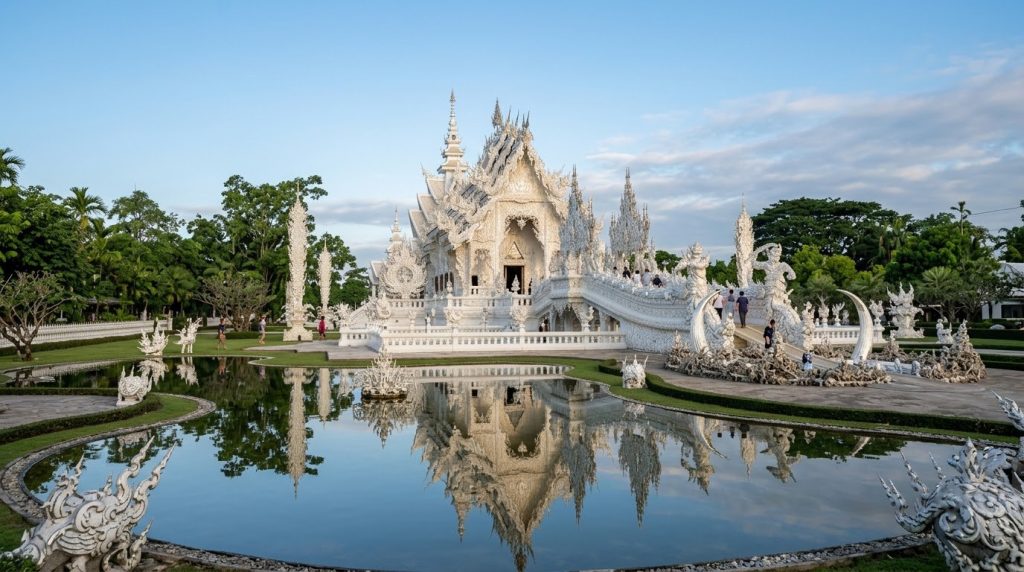
Chiang Mai wins as your base for 4–5 nights, and Chiang Rai earns 1 overnight rather than a 12-hour day tour. Chiang Mai has the old city, the food, the best ethical elephant sanctuaries and far more flights.
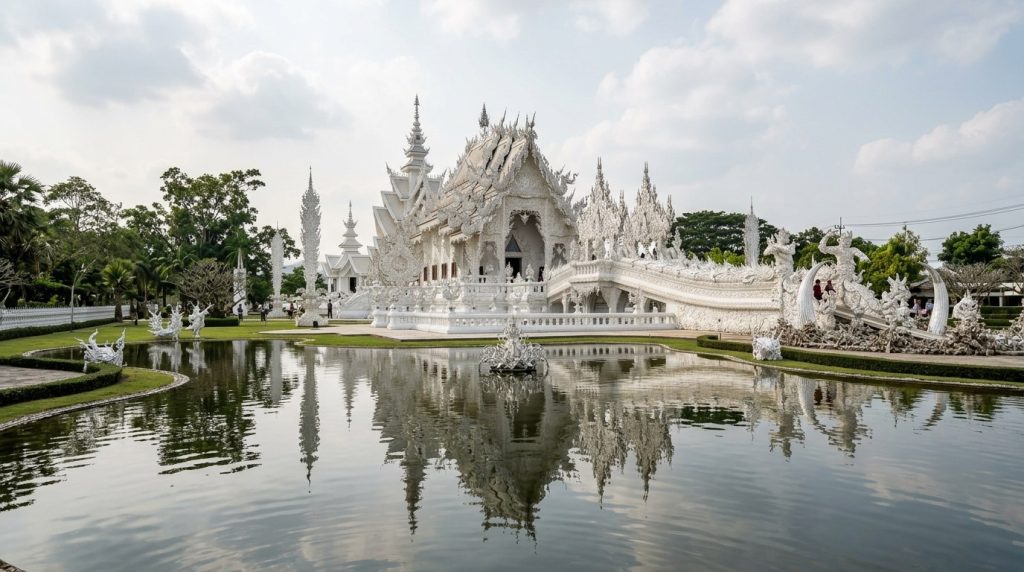
Chiang Rai has three standout sights (the White Temple, the Blue Temple and the Golden Triangle) that fit comfortably into one unhurried day and a half. Go between them on the Greenbus, roughly 3.5 hours each way.
| Factor | Chiang Mai | Chiang Rai |
|---|---|---|
| Best role | Main base, 4–5 nights | Side trip, 1–2 nights |
| Signature sights | Old city temples, Doi Suthep, elephant sanctuaries | White Temple, Blue Temple, Black House, Golden Triangle |
| Food and nightlife | Big, varied, late | Small night bazaar, quiet by 10pm |
| Getting there from Australia | One stop via Bangkok or another Asian hub | Usually two hops, or bus from Chiang Mai |
| Transfer between them | Greenbus 3h20–3h45, AUD 11–17 · USD 8–12 (THB 260–400) | Same bus in reverse |
| Smoke season (Feb–Apr) | Bad, worst in March | Also affected |
Why Chiang Mai makes the better base
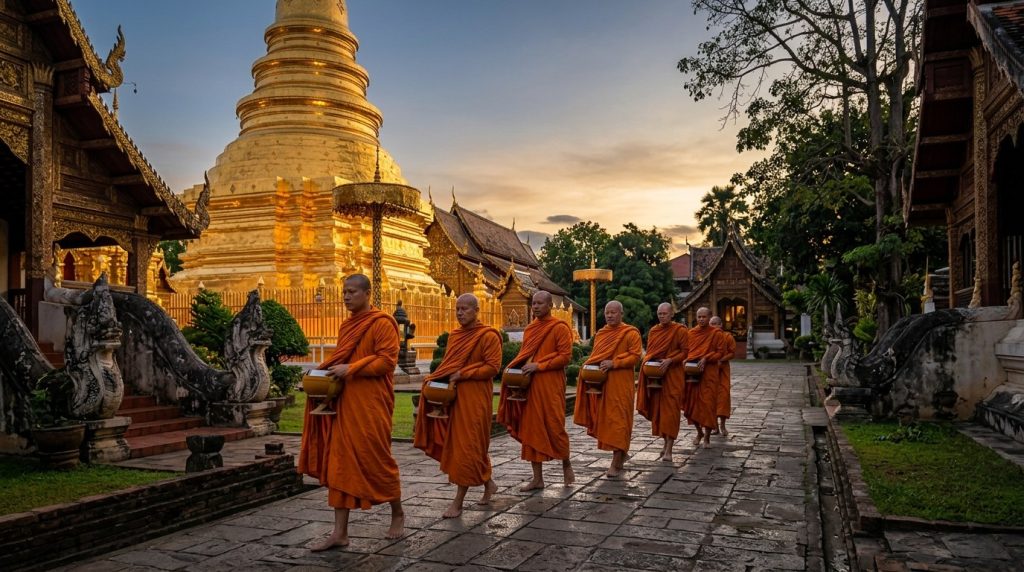
The moated old city packs dozens of temples into a walkable grid, Sunday Walking Street turns Ratchadamnoen Road into a giant market, and the food runs from khao soi stalls to tasting menus. Doi Suthep, the gold-spired temple on the mountain west of town, has a 306-step naga staircase that is free if you skip the tram. What you do not get is a beach, which is why our Chiang Mai worth-it check sends sand-and-swim travellers to the islands instead.
The other big draw is ethical elephant time. Elephant Nature Park, the best-known no-riding sanctuary, runs half-day visits for AUD 107 · USD 77 (THB 2,500) and full-day programs such as SkyWalk for AUD 150 · USD 108 (THB 3,500), with hotel pick-up. Check current programs on the Elephant Nature Park booking page. Chiang Rai has nothing of that scale.
Our complete Chiang Mai travel guide covers neighbourhoods, cooking schools and day trips in more depth.
What Chiang Rai actually offers
Chiang Rai is smaller and calmer, with its appeal concentrated in four sights:
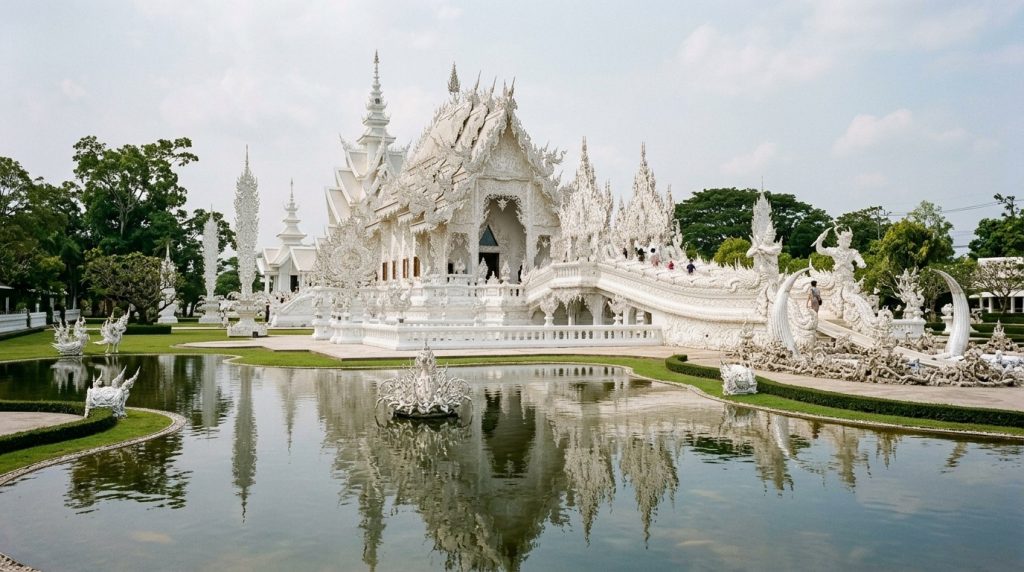
– White Temple (Wat Rong Khun): the all-white, mirror-studded temple about 13–15 km south of town. Foreign visitors now pay AUD 8.60 · USD 6.20 (THB 200), double the old rate, after a fee rise that took effect on 1 January 2026, as Khaosod English reported.
Open 8am to 5.30pm. – Blue Temple (Wat Rong Suea Ten): sapphire-blue interior, free entry, open until 8pm, so it works well in the late afternoon. – Black House (Baan Dam): a dark, slightly unsettling museum of timber halls, AUD 3.50 · USD 2.50 (THB 80).
Open daily 9am to 5pm, but it shuts for lunch from noon to 1pm. – Golden Triangle: the Mekong viewpoint at Sop Ruak where Thailand, Laos and Myanmar meet, about 60 km north of the city, a 1–1.5 hour drive.
It is a strong list, but one you finish in two relaxed days, which is why it suits an overnight rather than a base.
More things to do in Chiang Mai
Beyond the old city temples and the elephant sanctuaries, a few activities are worth building a half-day around if you are basing yourself in Chiang Mai for several nights.
Thai cooking class. Half-day farm-based cooking schools around Chiang Mai typically charge AUD 43–64 · USD 31–46 (THB 1,000–1,500), including a market or farm visit, 4 to 5 dishes cooked from scratch, and hotel pick-up. Book a day ahead in high season, since the better-reviewed schools cap class sizes.
Sunday Walking Street. On top of the daily night bazaar, Ratchadamnoen Road inside the old city closes to traffic every Sunday afternoon for a market that runs roughly from mid-afternoon until somewhere between 10pm and midnight, depending on the week, and stretches more than a kilometre past temple courtyards used as food courts.
It gets genuinely packed between about 6pm and 8pm, so arrive earlier if you want room to move.
Thai massage. Chiang Mai is known for training traditional Thai massage therapists, and a one or two-hour session at a reputable studio is one of the better-value things to do after a day of temple-hopping. Look for studios linked to established training schools rather than the cheapest storefront.
Muay Thai. Several stadiums run evening fight cards most weeks, mixing visiting amateurs with local professionals; it is loud, a little rough around the edges, and a different side of the city from the temples and cafes.
Art and design districts. Nimman, west of the moat, has grown into a cluster of independent galleries, design shops and specialty coffee roasters, and it is a reasonable half-day on its own for travellers who have already done the old-city temple circuit and want something that is not another wat.
None of this needs more than an extra day or two folded into the 4 to 5 nights already recommended for Chiang Mai, and most pair naturally with a rainy afternoon when outdoor sightseeing loses its appeal.
Bus vs day tour vs overnight: getting between them
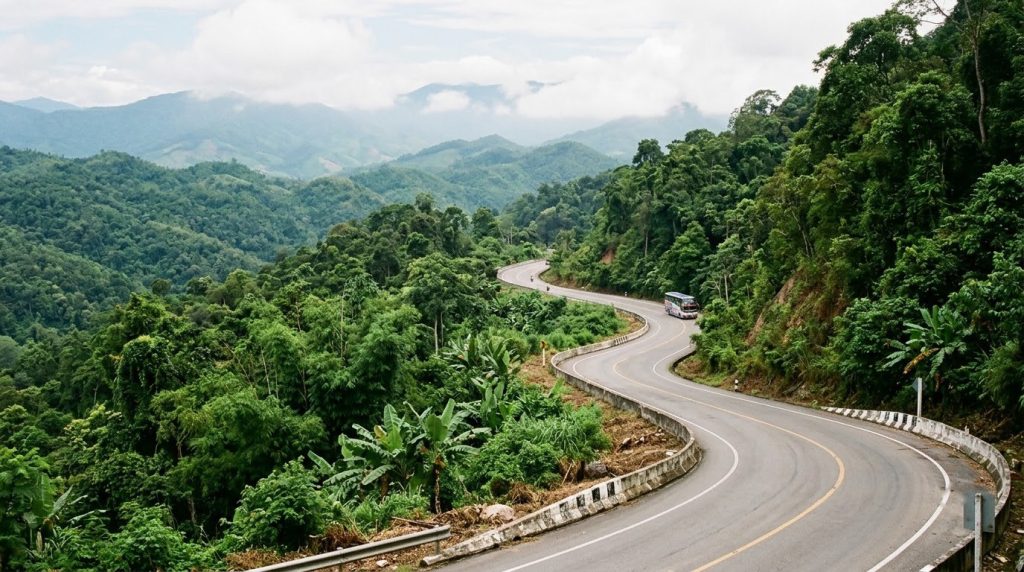
Greenbus. Greenbus runs 13 departures a day from Chiang Mai Bus Terminal 3 (Arcade) between 7am and 6pm. Express class takes about 3h45 and costs THB 260–290; VIP takes about 3h20 for THB 360–400. The counter is cheaper than booking sites, and VIP’s three-across seats are worth it. Buses do not stop at the White Temple, so come back out by local bus or Grab.
Day tour. Group tours cost AUD 43–69 · USD 31–50 (THB 1,000–1,600) with pick-up and lunch, and last 12–13 hours, roughly seven of them in a minivan. You hit the White Temple at peak crowd time. Only worth it if you have one spare day.
Private car. A car and driver runs AUD 107–150 · USD 77–108 (THB 2,500–3,500) per vehicle. Split four ways, it beats the tour and lets you reach the White Temple after the coaches leave.
Overnight (our pick). Morning Greenbus, Blue Temple and night bazaar on day one, White Temple at 8am opening and the Golden Triangle on day two, then a late bus back.
A sample day in Chiang Rai
If you take the overnight option, a loose schedule gets more out of the one full day than rushing between all four sights.
Morning. Start at the Blue Temple (Wat Rong Suea Ten) before the day heats up; it is free, quieter early, and close enough to the town centre to walk or take a short songthaew ride. From there, head to the Black House (Baan Dam), remembering it closes for lunch from noon to 1pm, so time your visit for either side of that gap.
Midday. Eat where the locals do rather than at a sight’s attached cafe; the market streets near the clock tower have noodle and rice stalls that turn over fast and cost a fraction of a tourist-menu lunch.
Afternoon. Visit the White Temple (Wat Rong Khun) once the midday tour-bus crush has thinned slightly, ideally a couple of hours before its 5.30pm closing, so you are not rushed through the mirrored interior. If the Golden Triangle is on your list, it works better as a separate half-day than squeezed in after the temples, since the drive north runs about 1 to 1.5 hours each way.
Evening. The night bazaar near the clock tower is low-key compared with Chiang Mai’s, with a food court, live music and simple souvenir stalls, and most of it winds down well before midnight, so do not expect a late night out.
Travellers with only one full day should treat the Golden Triangle as optional and keep the White Temple, Blue Temple and Black House as the core plan; adding the Golden Triangle really needs a second overnight to avoid a rushed finish.
Pack for a day of walking between sights in the heat: the Black House and White Temple both involve fairly long walks from the car park to the entrance, and shade is limited in the open courtyards, so a hat and water bottle matter more than a guidebook once the sun is up.
When to go: smoke season and Yi Peng
Timing matters more than which city you pick. The burning season runs roughly February to April, with March the worst: smoke from crop and forest fires gets trapped in the basin and PM2.5 readings regularly hit hazardous levels. Chiang Rai is no clean-air escape. Asthmatics should avoid March and pack P2 masks either side of it. Rain after Songkran (13–15 April) usually clears the air.
The high point is Yi Peng, the lantern festival held with Loy Krathong on the November full moon. Ticketed mass lantern releases for 2026 are listed for 24 and 25 November, with seats from AUD 211 · USD 152 (THB 4,900). Private release outside authorised venues is restricted for aviation safety, so book a ticketed event if lanterns are the point.
Our month-by-month guide to the best time to visit Chiang Mai covers the cool, dry November to January window in more detail.
Verdict by traveller type
– First-timers: Chiang Mai base for 4 nights, one Chiang Rai overnight. – Families with kids: Chiang Mai only, or a private car to Chiang Rai.
A 13-hour group tour is brutal for under-10s, and the elephants are the bigger hit anyway. – Couples: Chiang Mai for food and nightlife, then two quiet nights in Chiang Rai with the White Temple at opening. – Budget travellers: Greenbus Express plus a Chiang Rai guesthouse beats a day tour on value. – Short on time (3 nights or fewer): Skip Chiang Rai. Doi Suthep and a sanctuary day beat a rushed temple dash.
Still deciding whether northern Thailand fits at all? Compare Bali vs Thailand for Australians, or weigh up Thailand vs Cambodia if temples are the main draw.
Total cost breakdown for the Chiang Mai and Chiang Rai combo
Rough per-person numbers for 4 nights in Chiang Mai plus 1 night in Chiang Rai, excluding international flights and whichever specific sights and transfers you choose from the sections above:
| Cost item | Per person | Notes |
|---|---|---|
| Accommodation, Chiang Mai (4 nights, double share) | AUD 120–340 · USD 86–246 (THB 2,800–8,000) | Budget guesthouse to simple 3-star in or near the old city |
| Accommodation, Chiang Rai (1 night, double share) | AUD 21–64 · USD 15–46 (THB 500–1,500) | Guesthouse to mid-range hotel near the night bazaar |
| Food, 5 days | AUD 120–175 · USD 85–125 (THB 3,000–4,500) | Mostly street food and hawker-style meals, a few sit-down dinners |
| Local transport (songthaew hops, a day or two of scooter hire) | AUD 40–70 · USD 29–50 (THB 1,000–1,750) | In-town songthaew rides run about THB 30–40; scooter hire about THB 150–250 a day |
| Tourist SIM or eSIM, 8 days | AUD 17–21 · USD 12–15 (THB 400–500) | AIS or True tourist packages, available at the airport on arrival |
Add the Greenbus fare, the elephant sanctuary or Golden Triangle trip, and the temple entry fees already covered above, and a frugal traveller can do the 5-night combo for well under what a single all-inclusive resort night costs elsewhere in Thailand, while a mid-range traveller who upgrades hotels and adds a private car for the Chiang Rai leg should expect the total to roughly double.
Where to stay in Chiang Mai or Chiang Rai
– Chiang Mai Old City: walkable to temples, Sunday Walking Street and dozens of cafes. Best for first-timers and anyone without a scooter. – Nimman (Nimmanhaemin): west of the moat, newer hotels, specialty coffee and bars. Suits couples and longer stays. – Riverside (Ping River): quieter, more upmarket, close to the Night Bazaar. Good for families wanting space and a pool.
In Chiang Rai, stay within walking distance of the night bazaar and clock tower; Terminal 1 bus station is right there.
Find your Chiang Mai hotel on the map
Live prices from Booking, Airbnb and more — move the map or change dates to compare stays across Chiang Mai.
Frequently Asked Questions
Is Chiang Rai worth it if I’m already in Chiang Mai?
Yes, if you can give it one night. The White Temple, Blue Temple and Golden Triangle are unlike anything in Chiang Mai. Squeezed into a 12–13 hour tour, much of the day is spent in a van and the White Temple is at its most crowded. With 3 nights or fewer in the north, skip it.
How long is the bus from Chiang Mai to Chiang Rai?
The Greenbus takes about 3 hours 20 minutes in VIP class and 3 hours 45 minutes in Express, covering roughly 180 km. There are 13 daily departures from Chiang Mai Bus Terminal 3 between 7am and 6pm, with fares of THB 260–400. Buy at the counter for the lowest price.
Can you do Chiang Rai as a day trip from Chiang Mai?
You can, but expect a 12–13 hour day with around seven hours of driving. Group tours cost THB 1,000–1,600 with lunch and pick-up. A private car shared by three or four people gives you control over timing for not much more per head.
When is the worst time to visit Chiang Mai and Chiang Rai?
March is the worst month because of smoke from seasonal burning, and the haze often runs from February into mid-April, with hazardous readings in both cities. The best window is November to January, when it is cool, dry and clear, though that is also peak season.
When is Yi Peng in 2026?
Ticketed Yi Peng lantern releases in Chiang Mai are listed for 24 and 25 November 2026, timed with Loy Krathong on the November full moon. Book a ticketed event early, confirm the dates closer to the time, and lock in your hotel well ahead, because festival week is one of the busiest of the year in Chiang Mai.