Best Food in Bangkok 2026: Street Food & Restaurants
Bangkok is one of the best food cities on the planet. With over 300,000 street food vendors serving everything from smoky pad Thai to coconut-rich curries, finding the best food in Bangkok can feel overwhelming for first-time visitors. The city earned 35 Michelin stars and Bib Gourmand awards in the 2025 MICHELIN Guide Thailand (MICHELIN Guide, 2025), proving that world-class food here doesn’t require a reservation or a big budget.
This post contains affiliate links. If you book through our links, we earn a small commission at no extra cost to you. See our full disclosure. Check our complete Bangkok travel guide for more tips.
I’ve eaten my way through Bangkok on multiple trips, from $0.50 boat noodles at Victory Monument to a splurge at Jay Fai’s legendary crab omelet counter. This guide breaks down exactly what to eat, where to find it, and how much you’ll spend, organized by dish, neighborhood, and budget level.
Bangkok travel basics → Ultimate Bangkok Travel Guide (/bangkok travel guide/)
Key Takeaways
- Bangkok’s 10 must-try dishes cost between 30-80 THB ($0.85-$2.30) from street vendors
- Yaowarat (Chinatown) and Jodd Fairs are the top food destinations for variety and atmosphere
- Fine dining ranges from Jay Fai’s 1,000 THB crab omelet to Gaggan’s 8,000+ THB tasting menu
- Food tours through Klook start around $25 and cover 8-10 tastings per session (MICHELIN Guide, 2025)
Affiliate Disclosure: Some links in this guide are affiliate links. If you book through them, we earn a small commission at no extra cost to you. We only recommend services we genuinely trust. Learn more.
What Are the Must-Try Thai Dishes in Bangkok?
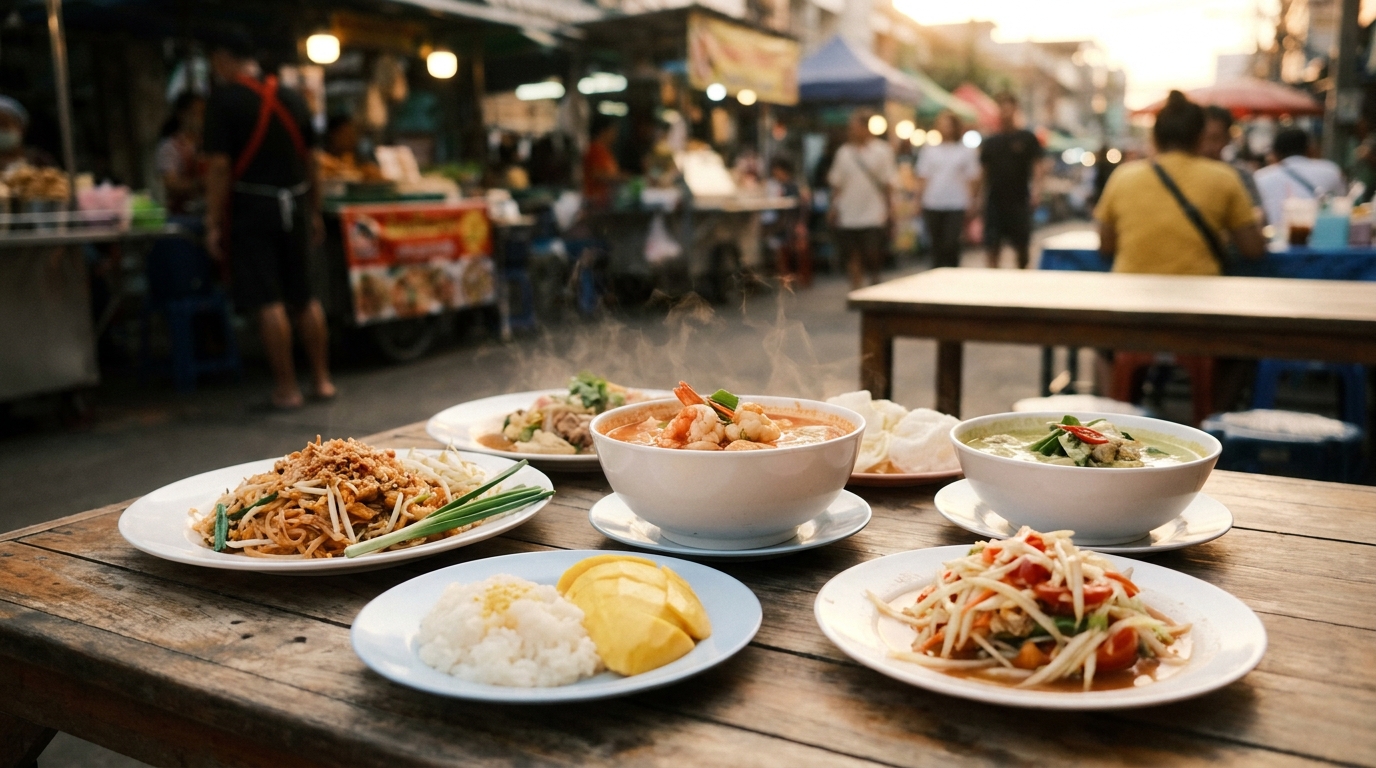
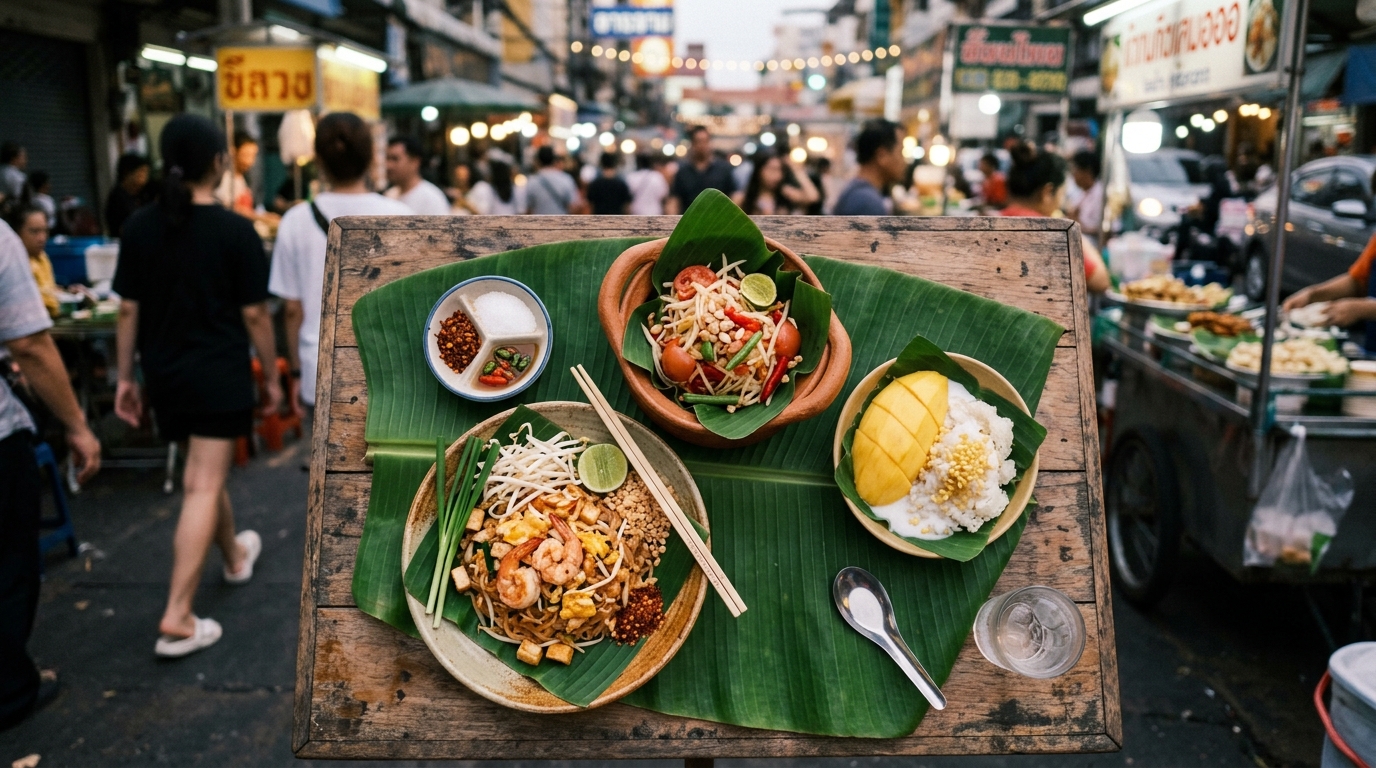
Bangkok’s top 10 dishes represent the full spectrum of Thai cooking, from fiery salads to sweet coconut desserts. Street food prices in Bangkok average 40-80 THB ($1.15-$2.30) per dish according to the Tourism Authority of Thailand (TAT, 2025), making it possible to eat extraordinarily well for under $10 a day.
Citation capsule: Bangkok street food averages 40-80 THB ($1.15-$2.30) per dish, and the city’s 300,000+ vendors earned 35 combined Michelin stars and Bib Gourmand recognitions in 2025 according to the MICHELIN Guide Thailand.
daily food budget details → Bangkok Budget Guide (/bangkok budget guide/)
1. Pad Thai
Thailand’s most famous stir-fried noodle dish combines rice noodles, egg, tofu, dried shrimp, bean sprouts, and crushed peanuts in a tamarind-based sauce. The best version in Bangkok comes from Thip Samai on Maha Chai Road, where queues stretch down the block nightly. Expect to pay 60-100 THB ($1.70-$2.85). Order the “superb” version wrapped in a thin egg crepe.
2. Tom Yum Goong
This hot-and-sour shrimp soup is Thailand’s signature broth. Lemongrass, galangal, kaffir lime leaves, and bird’s-eye chilies create a flavor punch that’s become one of the most recognizable soups worldwide. P’Aor on Phetchaburi Road serves a creamy tom yum (nam khon style) that earned a Michelin Bib Gourmand. Budget 120-180 THB ($3.40-$5.15).
3. Som Tum (Green Papaya Salad)
Shredded green papaya pounded with lime, fish sauce, chilies, tomatoes, and peanuts. The Isan (northeastern Thai) version hits every flavor note. Find excellent som tum at any street cart, but Som Tum Jay So near the Grand Palace is consistently outstanding. Prices run 40-60 THB ($1.15-$1.70). Ask for “mai pet” if you want less heat.
4. Mango Sticky Rice (Khao Niao Mamuang)
Sweet glutinous rice drenched in warm coconut cream, served alongside ripe mango slices. It’s Thailand’s most beloved dessert. Mae Varee near Thong Lo BTS station is the gold standard, open until they sell out. Expect 80-120 THB ($2.30-$3.40) per serving. Best during mango season from March through June.
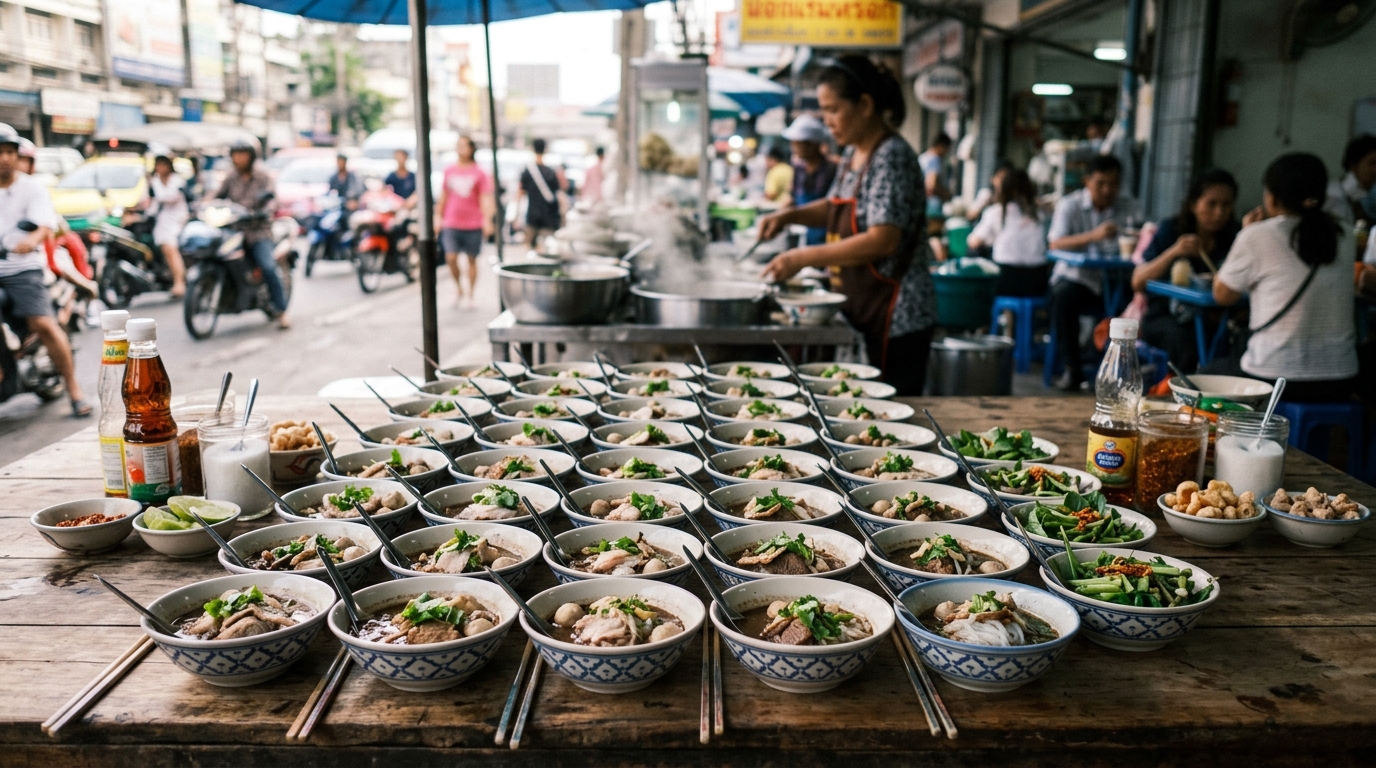
5. Boat Noodles (Kuay Teow Reua)
Named after the canal boats that originally served them, boat noodles come in tiny bowls with rich, dark broth. The fun is ordering five or six bowls at once. Head to Victory Monument where multiple stalls specialize in boat noodles at just 15-20 THB ($0.43-$0.57) per bowl. That’s roughly $2-3 for a full meal.
6. Khao Man Gai (Chicken Rice)
Poached chicken over fragrant rice cooked in chicken fat, served with a ginger-chili dipping sauce. Simple but addictive. Go-Ang Pratunam Chicken Rice near Pratunam has served this dish for decades, and the queue is always long. A plate costs 40-50 THB ($1.15-$1.43). It’s Bangkok’s best cheap lunch.
7. Massaman Curry
This southern Thai curry blends coconut milk with warm spices like cardamom, cinnamon, and star anise, along with potatoes and slow-cooked beef. It’s the mildest Thai curry and deeply comforting. CNN Travel named it the world’s best food in their global survey (CNN Travel, 2024). Try it at Krua Apsorn for 80-120 THB.
8. Pad Krapow Moo Sai Kai Dao (Basil Pork with Fried Egg)
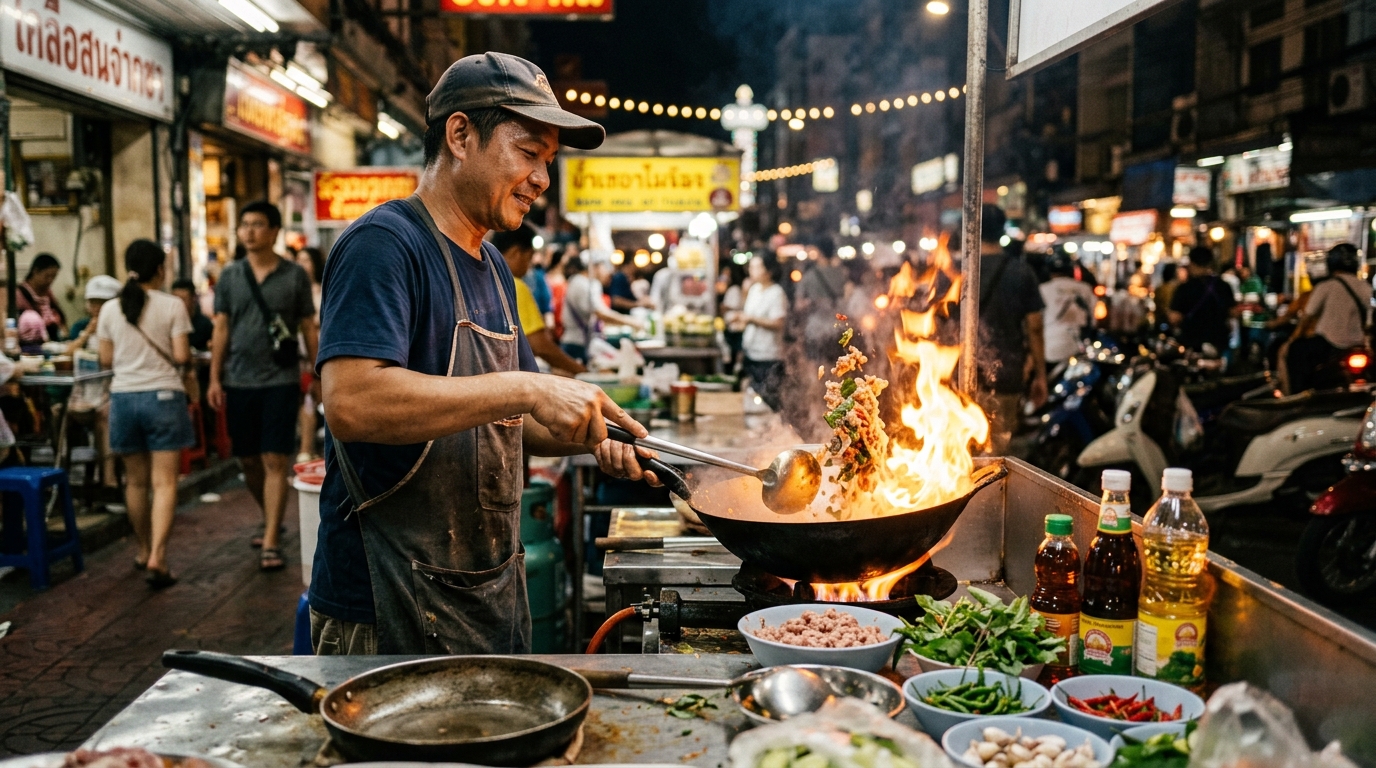
Holy basil stir-fried with minced pork, garlic, and chilies, served over rice with a crispy fried egg on top. It’s Thailand’s everyday lunch. Almost every street stall makes it. Look for vendors using a scorching hot wok for the best smoky flavor. Prices hover around 50-60 THB ($1.43-$1.70).
9. Satay
Marinated pork or chicken skewers grilled over charcoal and served with peanut dipping sauce and cucumber relish. Street vendors sell them for 10-15 THB per stick ($0.29-$0.43). The best satay vendors set up near Lumpini Park in the evenings. Order 5-10 sticks for a satisfying snack.
10. Roti
Thai-style roti is a flaky flatbread cooked on a griddle, served with sweetened condensed milk, banana, or egg. It’s a beloved street dessert with roots in Muslim Thai cuisine. Find excellent roti vendors along Phra Athit Road and throughout the Banglamphu area. A piece costs 30-50 THB ($0.85-$1.43).
[CHART: Bar chart – Average price per dish in THB for all 10 must-try dishes – source: Tourism Authority of Thailand 2025 data and on-site research]
Where Are the Best Street Food Areas in Bangkok?
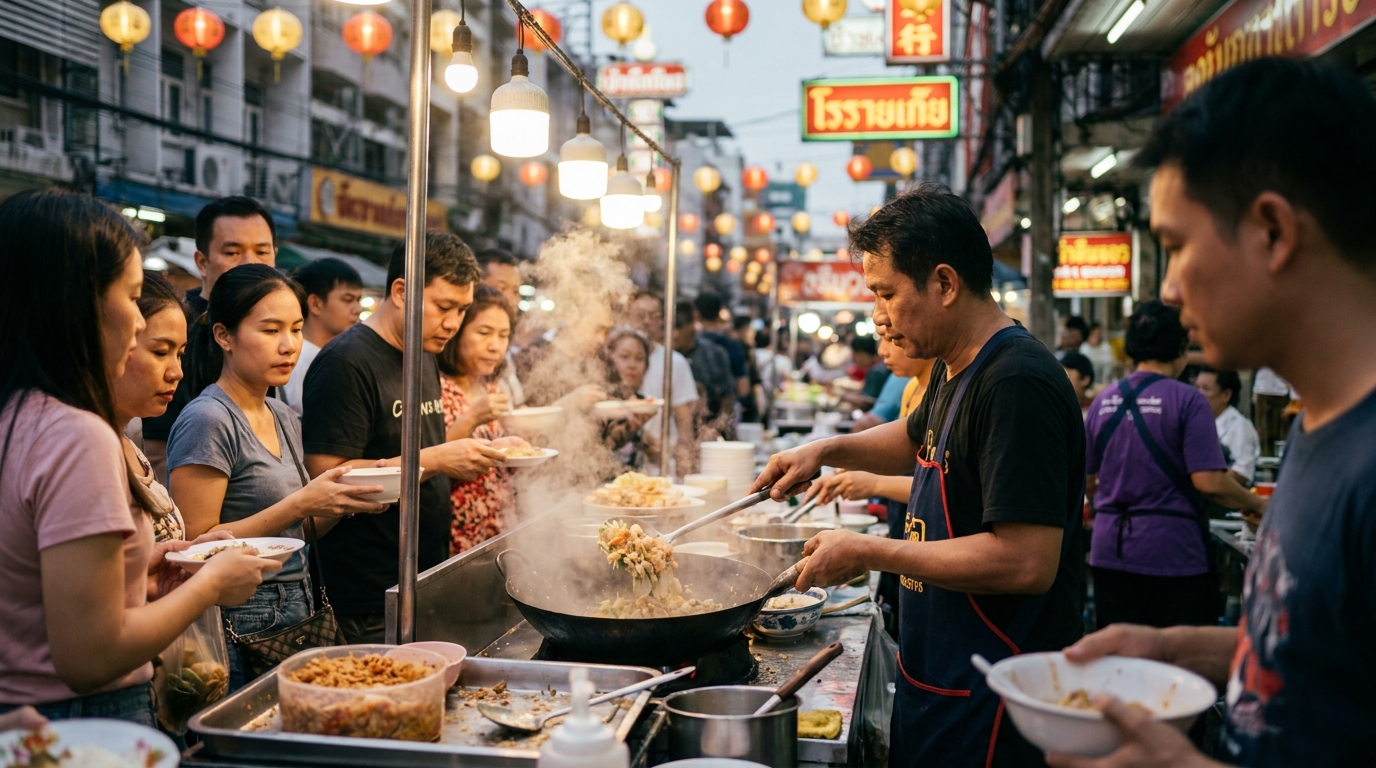
Bangkok’s street food culture spans every neighborhood, but five areas stand out for concentration, quality, and variety. A 2024 survey by the Bangkok Metropolitan Administration found that the city’s street food sector generates over 240 billion THB ($6.9 billion) annually (Bangkok Post, 2024), underscoring just how central street food is to Bangkok’s identity and economy.
Citation capsule: Bangkok’s street food sector generates over 240 billion THB ($6.9 billion) in annual revenue according to Bangkok Metropolitan Administration data reported by Bangkok Post, with five neighborhoods, including Yaowarat and Bang Rak, concentrating the highest density of vendors.
I’ve spent full evenings wandering each of these neighborhoods. My honest recommendation: start with Yaowarat if you have only one night.
Yaowarat (Chinatown)
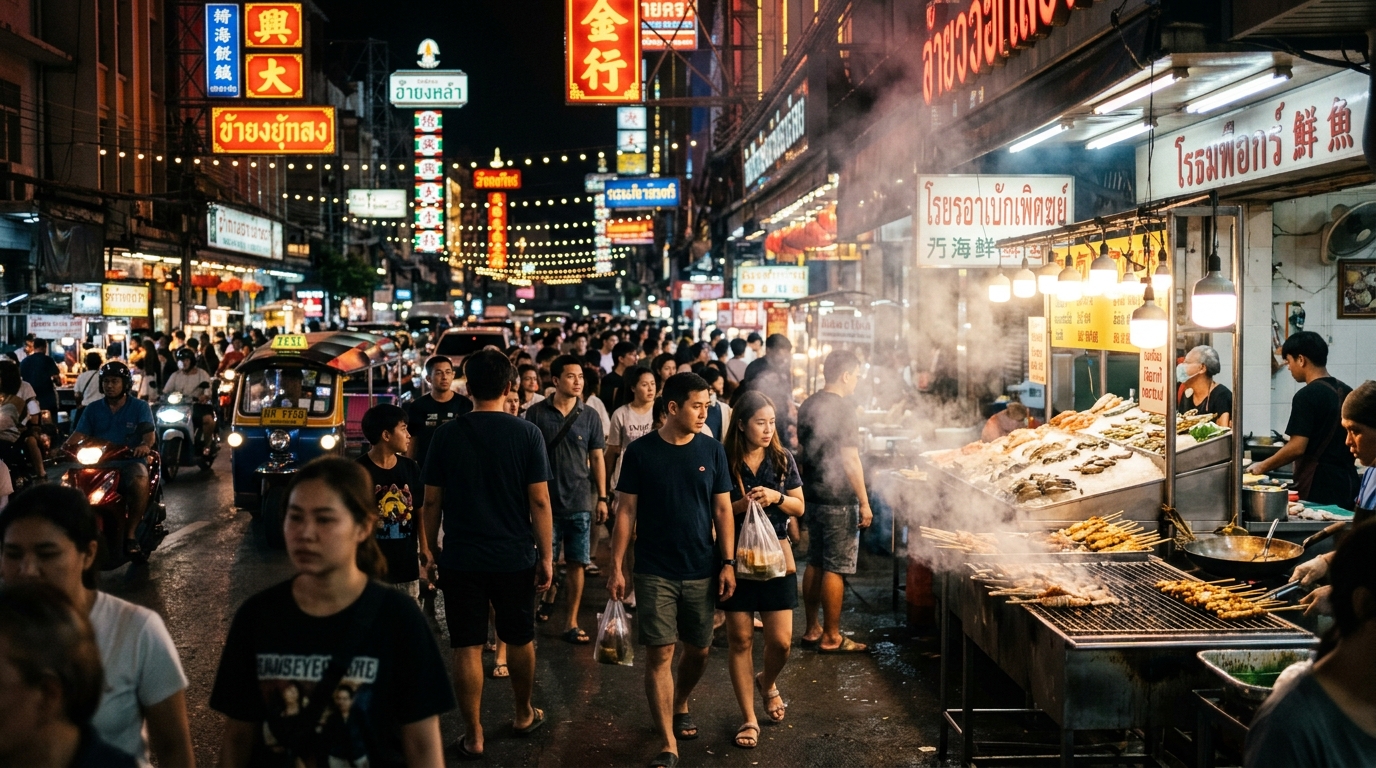
Yaowarat is Bangkok’s most famous street food destination. The entire road transforms into an open-air dining hall after dark. Seafood stalls grill massive prawns and squid right on the sidewalk. Charcoal-roasted duck, fish maw soup, and crispy pork line the alley stalls.
What to eat: Grilled seafood at T&K Seafood, oyster omelet from any Yaowarat cart, roasted chestnuts, mango sticky rice from the corner vendors.
Price range: 50-200 THB ($1.43-$5.70) per dish. Seafood runs higher.
Best time: 6pm to 11pm. Arrive by 7pm to beat the biggest crowds.
Khao San Road
Khao San caters to backpackers but still delivers genuine Thai flavors alongside quirky snacks like fried scorpions. The pad Thai vendors here are solid, and the smoothie stands offer excellent mango shakes for 40 THB.
What to eat: Pad Thai, fresh fruit smoothies, spring rolls, grilled corn.
Price range: 40-100 THB ($1.15-$2.85). Slightly higher than local neighborhoods due to tourist traffic.
Best time: 5pm to midnight. The atmosphere peaks around 9pm.
Sukhumvit Soi 38
Though smaller than it once was, this soi still hosts several excellent food carts serving pad see ew, grilled pork skewers, and noodle soups. It’s convenient if you’re staying in the Sukhumvit area.
What to eat: Pad see ew, wonton noodles, grilled pork neck.
Price range: 40-80 THB ($1.15-$2.30).
Best time: 6pm to 10pm.
Victory Monument
The area around Victory Monument BTS station is a working-class food hub. Boat noodle alley is the star attraction, but you’ll also find excellent kanom jeen (rice noodles with curry) and cheap rice-and-curry shops.
What to eat: Boat noodles (15-20 THB per bowl), minced pork omelets, som tum.
Price range: 15-60 THB ($0.43-$1.70). One of Bangkok’s cheapest food areas.
Best time: 11am to 9pm.
Bang Rak
This riverside neighborhood is a quieter alternative to Yaowarat. The food here leans toward old-school Bangkok cuisine. Narrow alleys hide family-run noodle shops that have been open for generations.
What to eat: Hainanese chicken rice, duck noodles, Thai iced tea.
Price range: 40-80 THB ($1.15-$2.30).
Best time: 10am to 3pm for lunch spots. Some vendors open at dinner.
Which Night Markets Have the Best Food in Bangkok?
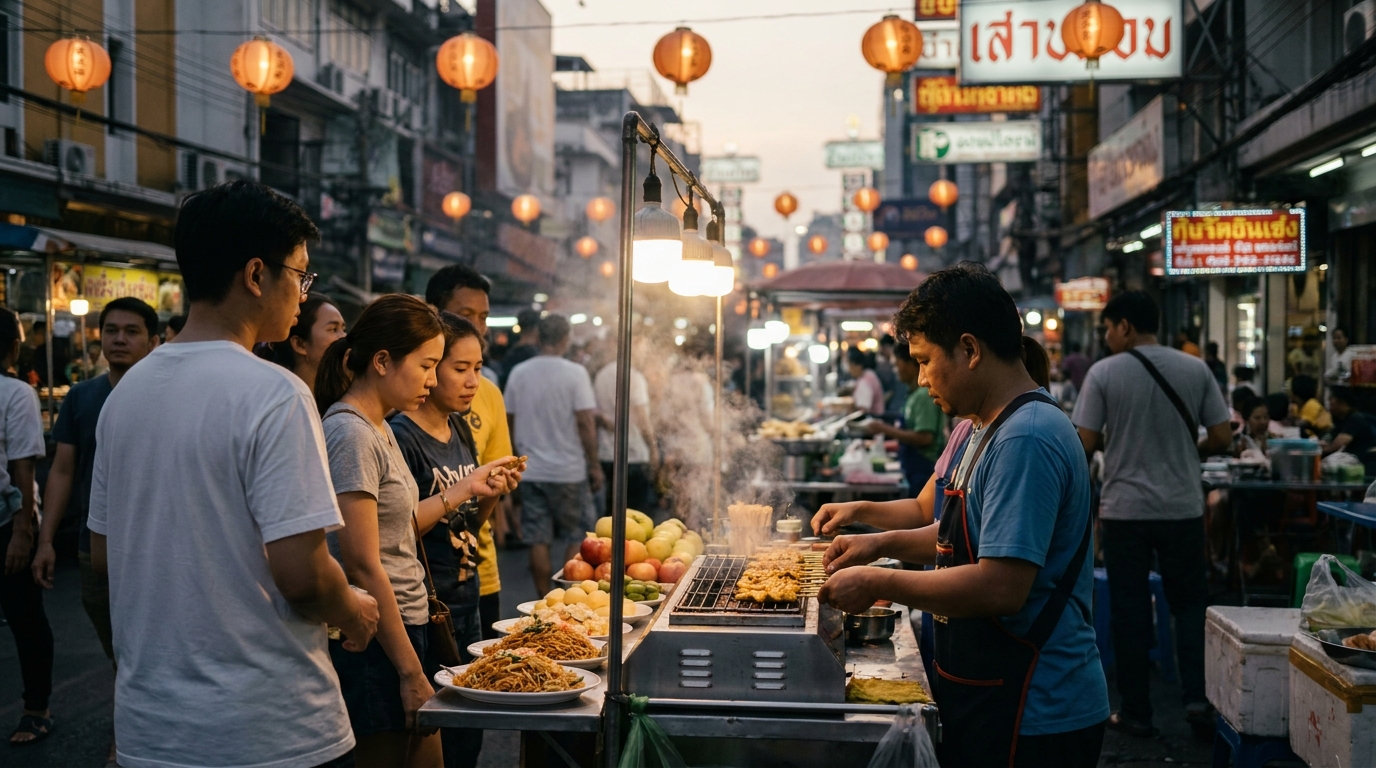
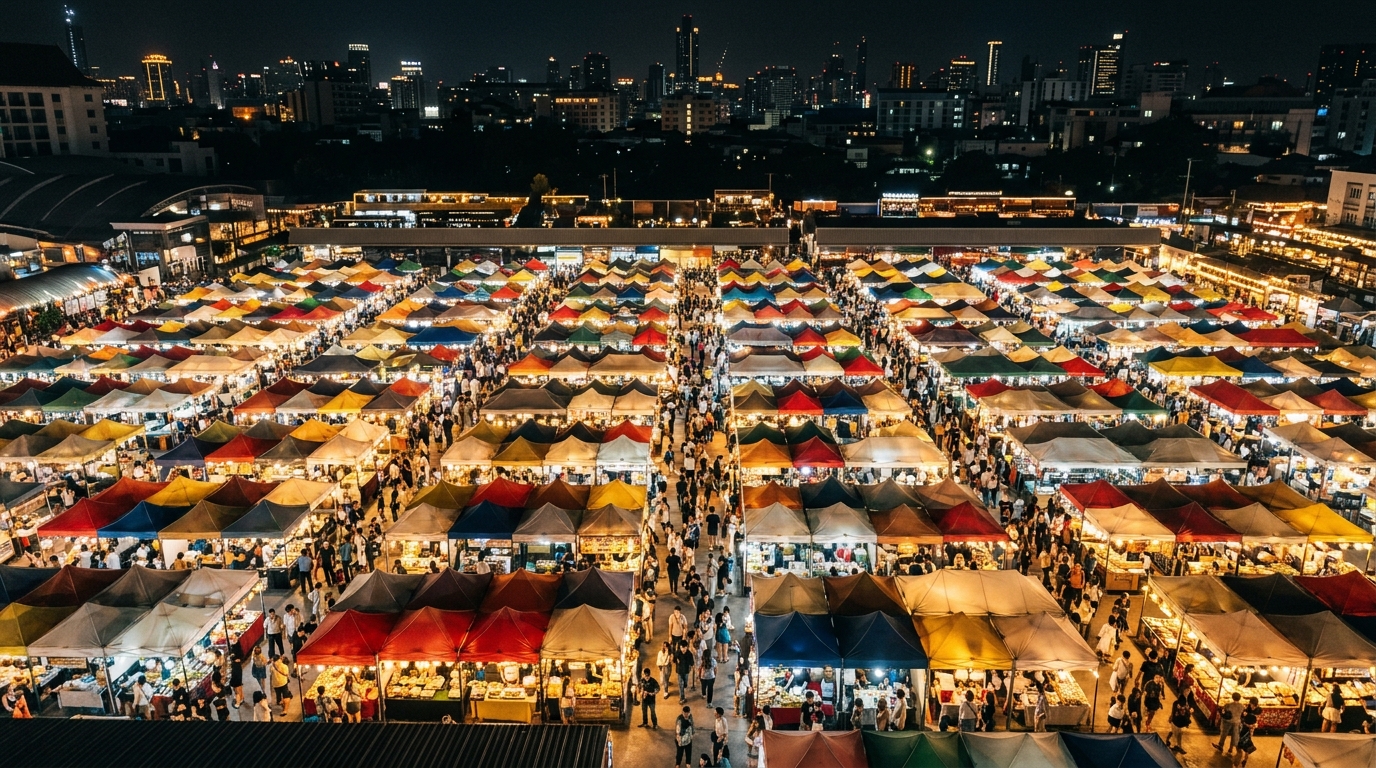
Bangkok’s night markets combine food, shopping, and atmosphere into single destinations perfect for evening outings. Jodd Fairs alone attracts over 50,000 visitors per weekend according to estimates from The Nation Thailand (The Nation Thailand, 2025), making it the city’s most popular market for both locals and tourists.
Citation capsule: Jodd Fairs attracts an estimated 50,000+ visitors per weekend according to The Nation Thailand, positioning it as Bangkok’s most visited night market. The market concentrates over 200 food stalls offering Thai and international street food between 100-300 THB per item.
evening activities → Best Things to Do in Bangkok (/bangkok things to do/)
Jodd Fairs (Dan Neramit)
Jodd Fairs is Bangkok’s hottest night market. The food section dominates, with stalls selling everything from massive king crab legs to rainbow desserts. It’s become an Instagram sensation. The atmosphere feels like a festival.
Must-eat: Grilled giant river prawns, flame-grilled steak skewers, coconut ice cream, Thai milk tea.
Price range: 100-500 THB ($2.85-$14.30) for food.
Rot Fai Ratchada (Train Night Market)
A sprawling market with a dedicated food zone. The variety here is outstanding. You’ll find Isan sausages, seafood platters, Japanese-Thai fusion creations, and craft cocktails.
Must-eat: Sai krok Isan (fermented sausages), fried chicken wings, seafood buckets.
Price range: 60-300 THB ($1.70-$8.55).
Asiatique the Riverfront
Asiatique is more polished than other markets but still has a solid food court and riverside restaurants. The sunset views from the Chao Phraya River are a bonus.
Must-eat: Tom yum pizza (yes, it works), grilled squid, Thai pancakes.
Price range: 80-300 THB ($2.30-$8.55). Sit-down restaurants run higher.
Talat Noi
A smaller, more local market in the Talat Noi neighborhood near Chinatown. It’s become a favorite among Bangkok food bloggers for its no-frills authenticity. Fewer tourists means better prices.
Must-eat: Kuay jab (rolled noodle soup), Chinese-Thai desserts, iced coffee.
Price range: 40-100 THB ($1.15-$2.85).
Wang Lang Market
Located across the river from the Grand Palace, Wang Lang is where hospital workers and university students eat lunch. That alone tells you the prices are fair and the food is legit.
Must-eat: Moo ping (grilled pork skewers), coconut pancakes, yen ta fo (pink noodle soup).
Price range: 30-80 THB ($0.85-$2.30).
What Are the Best Restaurants in Bangkok for Every Budget?
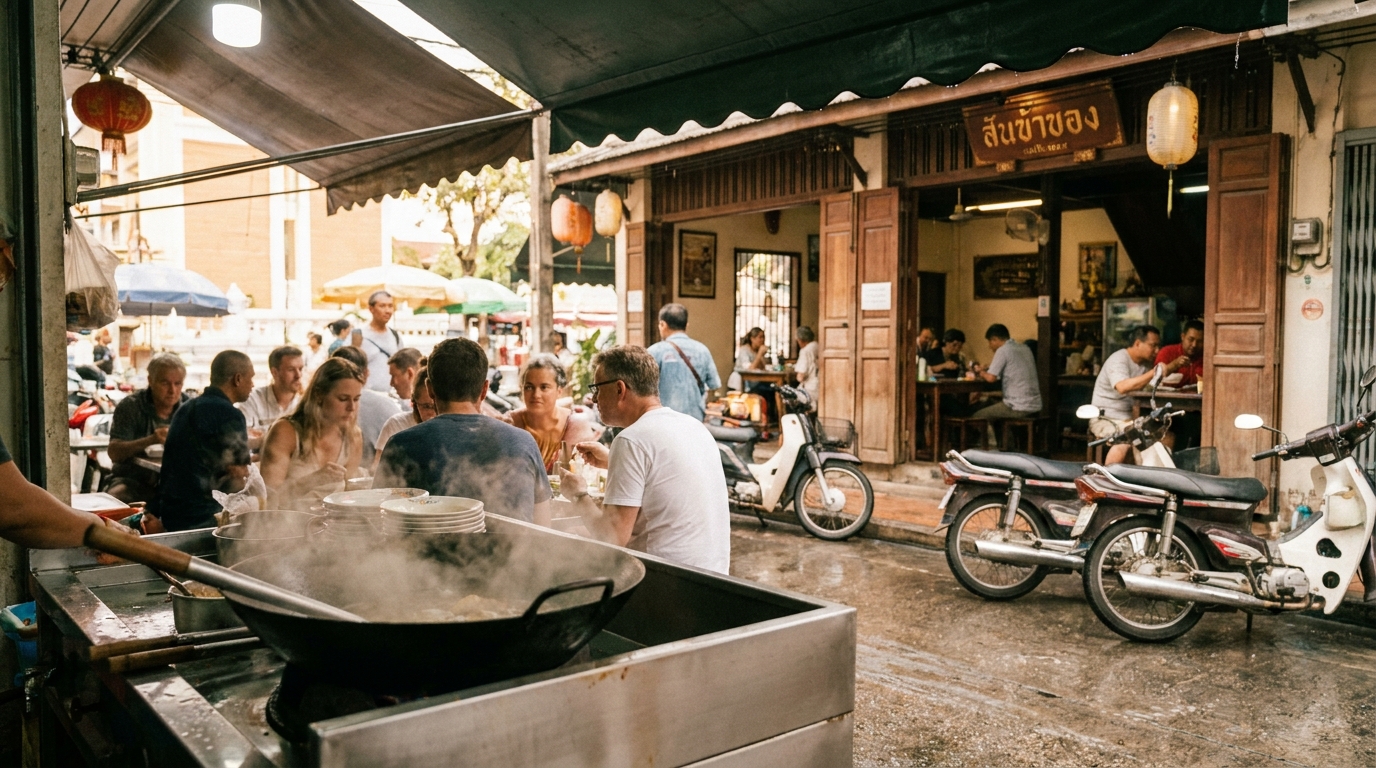
Bangkok’s restaurant scene spans from $1 sidewalk meals to $200+ tasting menus, and the quality at every level is remarkable. The 2025 MICHELIN Guide Thailand awarded stars to 36 Bangkok restaurants across fine dining and street food categories (MICHELIN Guide, 2025), confirming that budget doesn’t determine quality in this city.
Citation capsule: The 2025 MICHELIN Guide Thailand recognized 36 Bangkok restaurants with stars or Bib Gourmand distinctions, ranging from Jay Fai’s 1,000 THB crab omelet to multi-course tasting menus at Gaggan exceeding 8,000 THB per person.
What makes Bangkok different from other food cities is that Michelin-starred meals can cost less than a fast-food combo in most Western countries. Jay Fai holds a Michelin star while cooking from a street-side wok. That just doesn’t happen anywhere else.
Street Food ($1-3 / 35-100 THB)
Thip Samai (Pad Thai): The most famous pad Thai in Bangkok. The “superb” version with egg wrap is worth the wait. Open evenings only. Located on Maha Chai Road.
Go-Ang Pratunam (Chicken Rice): Perfectly poached chicken over fragrant rice. No frills, no fuss. Near Pratunam Market. Open from early morning to late afternoon.
Raan Jay Fai (Crab Omelet): Technically a street stall. Jay Fai is the only street food vendor in the world with a Michelin star. Her crab omelet costs 1,000 THB ($28.50), which is pricey for street food but worth it for the experience. Book ahead. Way ahead.
Local Restaurants ($5-15 / 175-525 THB)
Krua Apsorn: A longtime local favorite near the Democracy Monument. Their crab curry (poo pad pong karee) is outstanding. Most dishes cost 80-180 THB. Cash only.
Soei Restaurant: Known for spicy southern Thai cooking. The stir-fried stink beans with shrimp paste will test your heat tolerance. Dishes run 100-250 THB. Reservations recommended.
Baan Ice: Modern Thai cooking from a chef who trained in fine dining but opened a casual neighborhood spot. The menu changes seasonally. Mains cost 150-350 THB.
Fine Dining ($30+ / 1,050+ THB)
Gaggan Anand: Regularly ranked among Asia’s top restaurants. Gaggan’s progressive Indian cuisine uses 25+ courses to tell a story through flavor. Expect to spend 8,000-12,000 THB ($228-$342) per person. Book months in advance.
Nusara (formerly Nahm): Refined Thai cuisine using heritage recipes. The flavors are intense and the presentation is beautiful. Tasting menus start around 4,500 THB ($128).
Le Du: Chef Ton’s seasonal Thai tasting menu highlights regional ingredients most visitors never encounter. Two Michelin stars. Tasting menus run 3,500-5,500 THB ($100-$157).
[CHART: Price comparison table – three budget tiers showing average meal cost, best dishes, and Michelin status for each restaurant – source: MICHELIN Guide Thailand 2025 and on-site pricing]
What Are the Best Bangkok Food Tours and Cooking Classes?
Guided food tours cover more ground and more dishes than most solo eaters manage in a week. According to Klook booking data, Bangkok food tours rank among the platform’s top 5 most-booked experiences in Southeast Asia, with an average rating of 4.7 out of 5 stars across thousands of reviews (Klook, 2025).
Citation capsule: Bangkok food tours rank among Klook’s top 5 most-booked Southeast Asia experiences with a 4.7/5 average rating. Guided tours typically cover 8-10 tastings across 3-4 neighborhoods over 3-4 hours, starting from approximately $25 per person.
Based on comparing self-guided eating versus organized tours across three Bangkok trips, I’ve found that tours consistently introduce dishes and stalls I’d never find on my own, particularly in Chinatown’s back alleys.
Chinatown Evening Food Tour
This is the most popular Bangkok food tour for good reason. A local guide walks you through Yaowarat’s back alleys, stopping at 8-10 stalls for tastings. You’ll try dishes you’d walk right past on your own, including lesser-known Chinese-Thai specialties. Most tours last 3-4 hours and run in the evening when Chinatown comes alive.
Why book it: The alleys are genuinely confusing without a guide. Portions are tasting-sized, so you can try everything without getting full after two stops.
Book a Chinatown food tour on Klook to lock in your spot. Evening tours sell out during peak season (November through February).
Thai Cooking Class with Market Visit
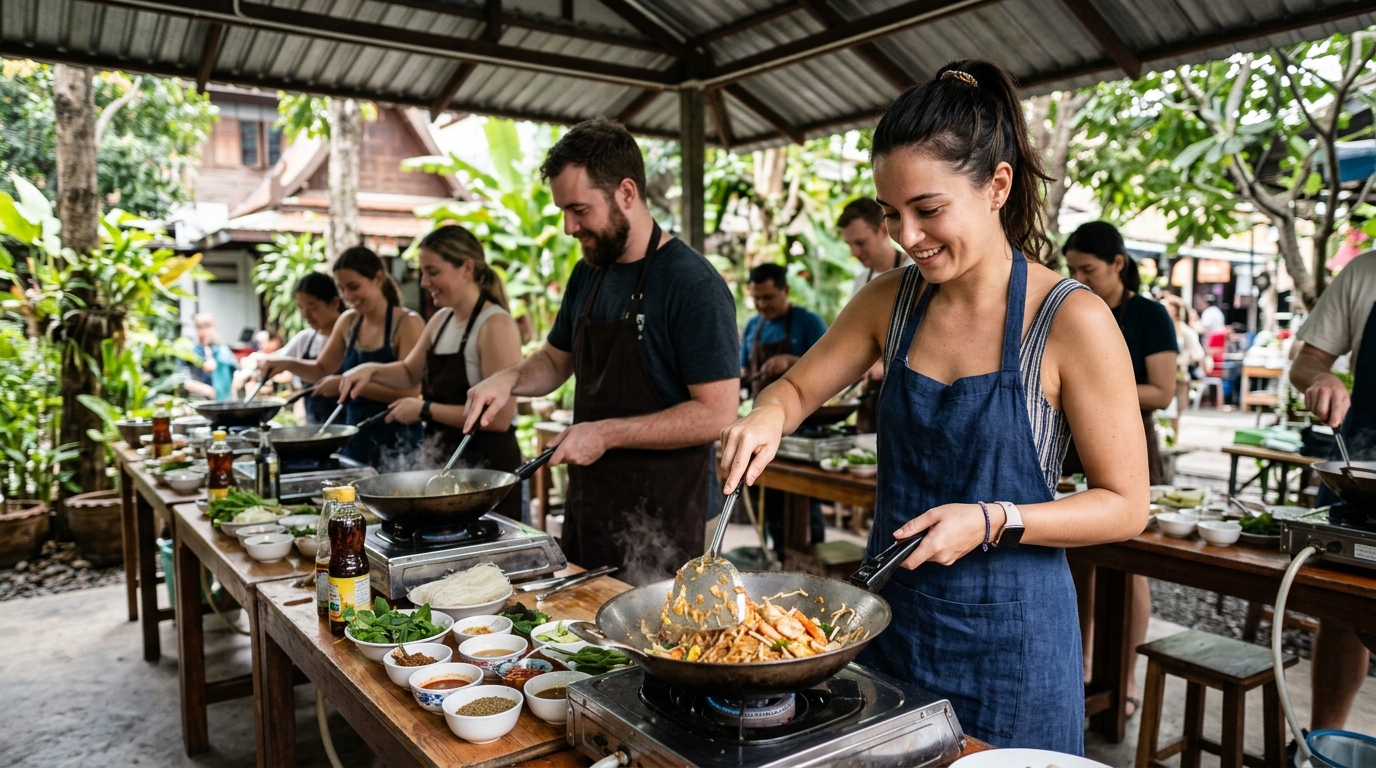
A half-day cooking class starts with a morning visit to a local wet market where you’ll pick ingredients with your instructor. Then you’ll cook 3-4 dishes from scratch: typically pad Thai, green curry, tom yum soup, and mango sticky rice. You take the recipes home.
Why book it: You leave Bangkok with a skill, not just a memory. The market visit alone is worth it for understanding Thai ingredients.
This highly-rated cooking class on Klook includes a market visit, all ingredients, and a recipe booklet.
Floating Market and Food Tour
Combine a visit to Damnoen Saduak or Amphawa floating market with a guided food experience. You’ll eat from boats, try coconut sugar candies made riverside, and sample grilled seafood. It’s touristy at Damnoen Saduak but genuinely charming at Amphawa.
Why book it: Transport to floating markets is complicated by public transit. A guided tour handles logistics and finds the best vendors.
add floating market to your itinerary → 5 Day Bangkok Itinerary (/bangkok itinerary/)
What Should First-Time Visitors Know About Bangkok Food?
Bangkok’s street food is safe, affordable, and delicious, but a few practical tips will improve your experience significantly. The World Health Organization notes that Thailand’s food safety standards for street vendors have improved through government certification programs, with over 70% of Bangkok vendors now meeting national hygiene standards (WHO Thailand, 2024).
Citation capsule: Over 70% of Bangkok’s street food vendors now meet national hygiene standards according to WHO Thailand data, and the city’s food poisoning rates among tourists have declined as certification programs expanded across all 50 districts.
In six trips to Bangkok over four years, I’ve never gotten sick from street food. The one time my stomach protested was from a hotel buffet, not a street stall. Go figure.
Spice Levels
Thai food is spicy. What locals call “a little spicy” will light up most Western palates. Say “mai pet” (not spicy) if you want mild. Say “pet nit noi” for a little spicy. Don’t be embarrassed. Vendors adjust without judgment. You can always add chili flakes from the condiment tray.
Food Safety Tips
Eat where the crowds are. High turnover means fresh food. Look for vendors cooking to order rather than from pre-made trays. Avoid raw vegetables at stalls where you can’t see the washing process. Ice is generally safe in Bangkok; most comes from commercial ice factories.
Vegetarian and Vegan Options
Look for “jay” (vegan) restaurants marked with a yellow flag and red text. They’re everywhere during the Vegetarian Festival in October but operate year-round in most neighborhoods. Pad Thai, som tum, and many curry dishes can be made vegetarian on request. Say “mai sai neua sat” (no meat).
Tipping
Tipping isn’t expected at street food stalls. At sit-down restaurants, rounding up the bill or leaving 20-50 THB is appreciated. Fine dining restaurants typically add a 10% service charge.
Best Times to Eat Street Food
Morning markets open at 6am for porridge and coffee. Lunch carts appear around 11am. The best street food action happens between 5pm and 10pm, when the night stalls fire up their grills. Yaowarat and Jodd Fairs are strictly evening destinations.
Allergies and Dietary Restrictions
Communicate allergies clearly. The phrase “pom/chan pae [ingredient]” means “I’m allergic to [ingredient].” Peanuts, shellfish, and fish sauce are in almost everything. If you have a severe allergy, carry a translated allergy card. Several apps, including Google Translate’s camera feature, can help you read menus and ingredients in real time.
About the author: Travelguidestip has been covering Southeast Asia travel since 2023. Read our editorial policy for how we research and verify our guides.
Frequently Asked Questions About Bangkok Food
Is Bangkok street food safe to eat?
Yes. Bangkok street food is generally safe. Over 70% of vendors meet national hygiene certification standards according to WHO Thailand (2024). Eat at busy stalls with high turnover. Cooked-to-order dishes are the safest bet. In millions of tourist visits annually, serious food-borne illness remains uncommon.
How much does food cost in Bangkok per day?
Budget eaters spend 300-500 THB ($8.55-$14.30) per day eating exclusively from street stalls and food courts. Mid-range diners spending on local restaurants average 800-1,500 THB ($22.85-$42.85). Fine dining can cost 3,000-10,000+ THB ($85.70-$285+) for a single meal. The Tourism Authority of Thailand reports that food is the largest value-for-money category for visitors.
full daily cost breakdown → Bangkok Budget Guide (/bangkok budget guide/)
What is the most famous food in Bangkok?
Pad Thai is Bangkok’s most internationally recognized dish, but locals consider pad krapow moo sai kai dao (basil pork with fried egg) the true everyday Bangkok meal. Tom yum goong and mango sticky rice round out the top tier of iconic Bangkok foods.
Where is the best street food area in Bangkok?
Yaowarat (Chinatown) is widely considered Bangkok’s top street food destination. It offers the highest concentration of stalls, the broadest variety of dishes, and an electric atmosphere after dark. The Bangkok Metropolitan Administration has designated Yaowarat as a protected street food heritage zone.
Do I need to speak Thai to order street food?
No. Most vendors in tourist-friendly areas understand basic English food orders and pointing. Numbers are usually displayed on signs. However, learning a few Thai phrases helps: “ao an nee” (I want this one), “mai pet” (not spicy), and “check bin” (the bill). A smile goes a long way.
more Bangkok travel tips → Ultimate Bangkok Travel Guide (/bangkok travel guide/)
Start Planning Your Bangkok Food Adventure
Bangkok rewards the hungry traveler like few cities can. From 20 THB boat noodles to Michelin-starred tasting menus, the range of flavors and experiences packed into this city is staggering. The 10 must-try dishes listed above will give you a strong foundation, and the neighborhood guides will help you eat with purpose rather than wandering aimlessly.
If you’re visiting for the first time, I’d recommend starting with a guided food tour to get oriented. After that, explore Yaowarat and Jodd Fairs on your own. Budget at least three full evenings for food exploration. Bangkok is a city where the best meal of your trip might come from a cart with no sign and three plastic stools.
plan your full trip → 5 Day Bangkok Itinerary (/bangkok itinerary/)
complete Bangkok planning → Ultimate Bangkok Travel Guide (/bangkok travel guide/)
Related: Getting Around Bangkok 2026: Ultimate Transport Guide | Where to Stay in Bangkok 2026: Best Areas & Hotels | Hanoi vs Bangkok 2026: Which City Should You Visit First?