3-Day Malta Itinerary 2026: Valletta, Mdina & Gozo
By TravelguidestipUpdated 10 min readHow we earn
Hotel buttons open Stay22 (Booking.com, Agoda and others) and tour buttons open GetYourGuide. We may earn a commission at no extra cost to you.
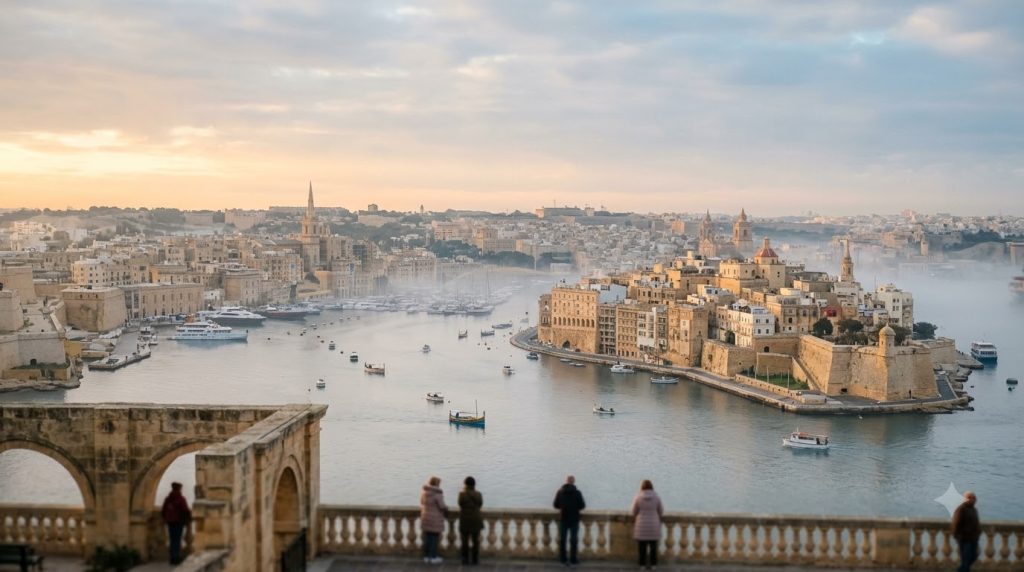
In short
- Budget the transport first: a summer single bus ticket is 2.00 EUR and the 7-day Explore Card is 25.00 EUR of unlimited travel (Malta Public Transport, 2026).
- Day 3 needs the ferry: the Cirkewwa car ferry to Gozo is 4.65 EUR return per foot passenger and 15.70 EUR return for a car with driver (Gozo Channel, 2026).
- St John’s Co-Cathedral costs 15 EUR per adult and needs about 1 hour 45 minutes; the Caravaggio in the Oratory is the reason to go.
- The Blue Grotto boat is roughly 10 EUR per adult, cash only, and works best between 9am and noon on a sunny day.
- Total for three days, transport plus main entries, lands around 90-110 EUR per person before food and hotels.
Three days is enough to see the best of the Maltese archipelago if you split the time cleanly: one day for Valletta and the Three Cities, one day for the old capital Mdina plus the Blue Grotto, and one full day for the sister island of Gozo.
This Malta itinerary is built around that split, with the exact buses, ferries, and prices you will actually pay in 2026. Malta is small, roughly 316 square kilometres for the whole country (Malta Tourism Authority), so distances are short and a tight three-day plan is realistic rather than rushed.
We put this route together after several trips, most recently in spring, timing each leg by public bus and the Gozo ferry. Below you will find a day-by-day breakdown, a cost table, and an honest comparison of getting around by bus versus renting a car.
If Valletta is your base, pair this with our Valletta travel guide for neighbourhood detail and our roundup of the best things to do in Valletta for the capital’s individual sights.
We ran this exact three-day loop out of a small guesthouse in Valletta, using buses on Days 1 and 2 and the Cirkewwa ferry on Day 3. The bus to Cirkewwa takes just over an hour from the capital, so leave by 8am to protect your Gozo day. Everything else moved faster than we expected.
How much does a 3-day Malta itinerary cost?
Plan on roughly 90 to 110 EUR per person for three days if you cover transport and the headline paid sights, before food and accommodation. Transport is the cheap part in Malta; the paid attractions add up faster. The table below shows the fixed costs, so you can see where the money goes and where you can trim.
| Item | 2026 price | Notes |
|---|---|---|
| Bus single ticket (summer) | 2.00 EUR | Valid 2 hours, unlimited transfers |
| Bus single ticket (winter) | 1.50 EUR | Mid-October to mid-June |
| Explore Card (7 days unlimited) | 25.00 EUR | Breaks even after ~10 summer rides |
| 12-trip bus card | 19.00 EUR | Non-personalised tallinja card |
| St John’s Co-Cathedral | 15.00 EUR | Belfry tour +5.00 EUR |
| Blue Grotto boat trip | ~10.00 EUR | Cash only, 20-25 min |
| Gozo ferry (foot passenger return) | 4.65 EUR | Cirkewwa to Mgarr |
| Ggantija Temples, Gozo | 10.00 EUR | Includes Ta’ Kola Windmill |
Prices from Malta Public Transport, Gozo Channel, St John’s Co-Cathedral, and Heritage Malta, all current for 2026. If you are a heavy user across all three days, the 25.00 EUR Explore Card is usually the smart buy because it also covers the two-euro summer singles that stack up quickly.
Day 1: Valletta and the Three Cities
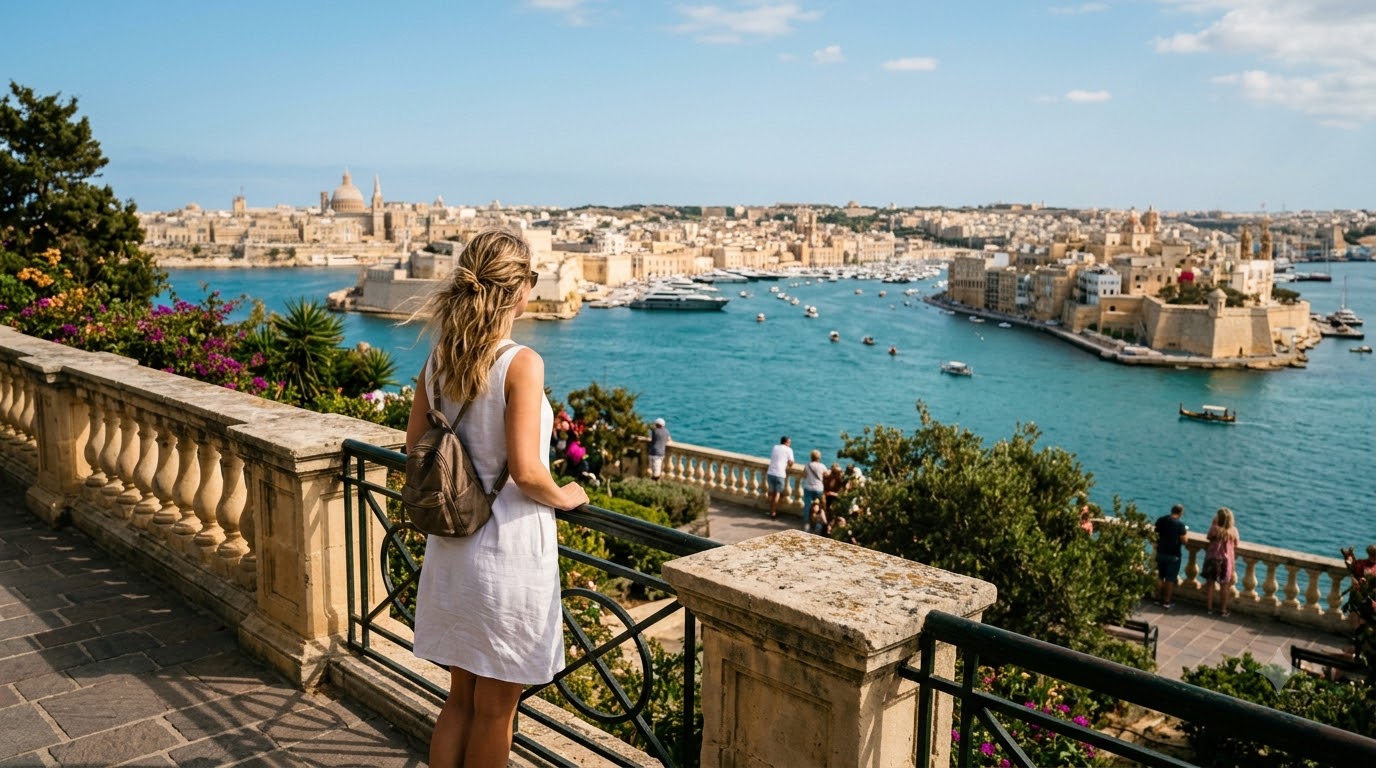
Spend the first day inside Valletta and finish across the water in the Three Cities, because both sit on Grand Harbour and connect by a short, cheap ferry. Valletta is compact enough to walk end to end in about 20 minutes, so you lose no time to transit. Start early at the fortified gate and work downhill toward the water.
A focused Day 1 looks like this:
- St John’s Co-Cathedral: 15.00 EUR entry, roughly 1 hour 45 minutes; see Caravaggio’s The Beheading of Saint John the Baptist in the Oratory.
- Upper Barrakka Gardens: free, with the best Grand Harbour panorama; the saluting battery fires at noon and 4pm.
- Republic Street: the main pedestrian spine for lunch and Maltese pastizzi from a hole-in-the-wall bakery, about 1.00 EUR each.
- Grand Master’s Palace and the State Rooms: worth an hour if you like armoury and tapestry halls.
- Three Cities crossing: take the traditional dghajsa water taxi or the passenger ferry from the Valletta waterfront to Birgu (Vittoriosa).
Spend the first morning between the cathedral and the Barrakka Gardens without feeling rushed, then cross to Birgu after 3pm when the marina light softens. For a deeper list of what to prioritise inside the walls, our guide to the best things to do in Valletta breaks the sights down by time budget.
Birgu’s waterfront and the narrow Collachio lanes make a quiet contrast to the busier capital, and the harbour views back toward Valletta at dusk are the reason to end the day there.
Day 2: Mdina, Rabat, and the Blue Grotto
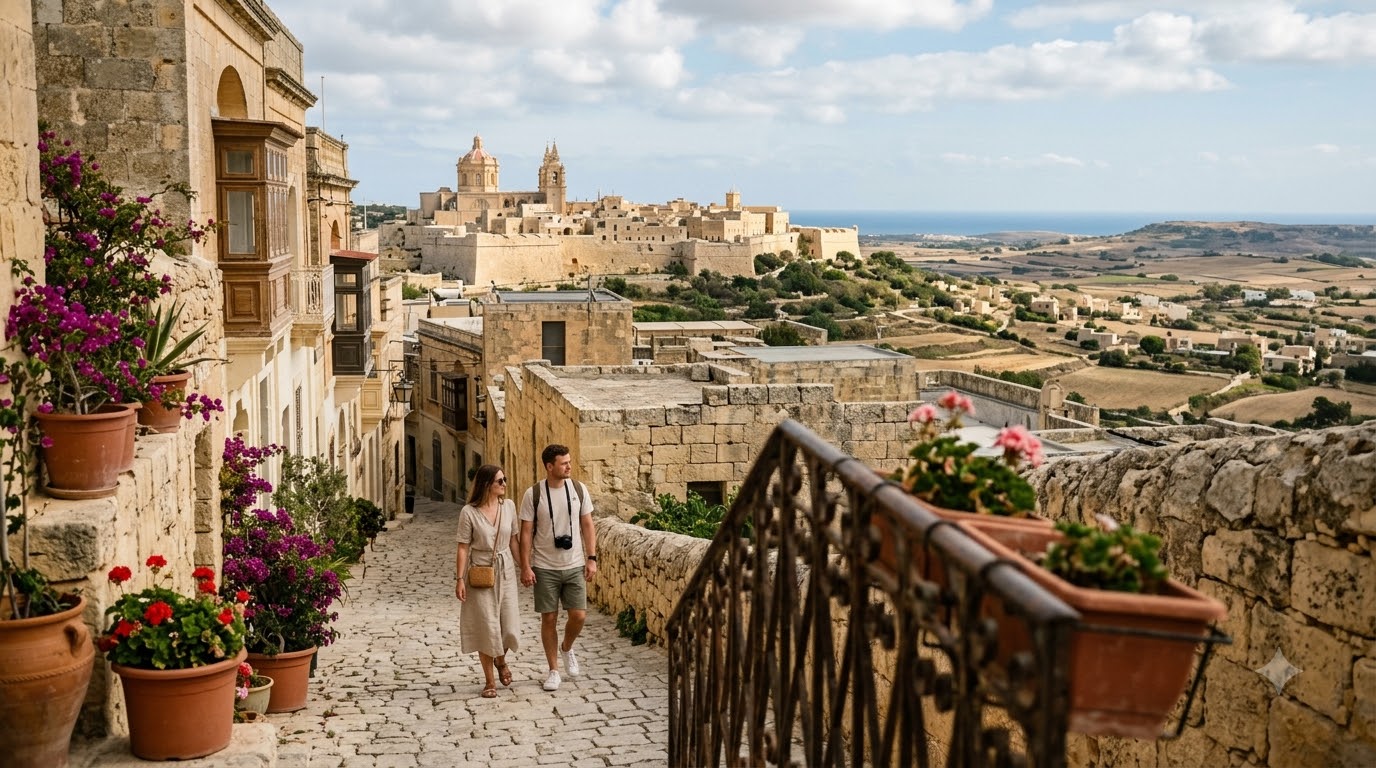
Give Day 2 to the interior and the south coast: the walled silent city of Mdina, neighbouring Rabat, and the Blue Grotto sea caves. Mdina was Malta’s capital before Valletta and sits inland on high ground, so the bus ride from Valletta takes about 35 to 45 minutes on routes toward Rabat. The two towns share a wall, so you visit them together on foot.
Here is a workable order for the day:
- Mdina Gate and the main square: free to wander the honey-coloured lanes; go early before the tour groups arrive around 10am.
- St Paul’s Cathedral, Mdina: modest entry, quieter than Valletta’s co-cathedral.
- Bastion viewpoint: free panorama over central Malta all the way to the coast.
- Rabat and St Paul’s Catacombs: an early Christian underground burial network just outside the walls.
- Blue Grotto boat trip: about 10.00 EUR per adult, cash only, 20-25 minutes, best light 9am to noon.
The Blue Grotto sits at Wied iz-Zurrieq on the south coast, reachable by bus from Rabat with a change, or directly from Valletta if you flip the order and do the caves first.
Doing Mdina in the morning and the boats after lunch works well, but the water can turn choppy by 2pm, which is why the earlier slot matters. If the sea is rough the boatmen suspend trips, so keep the cathedral and catacombs as your weatherproof backup.
Day 3: Gozo by ferry (Victoria, Dwejra, Ramla Bay)
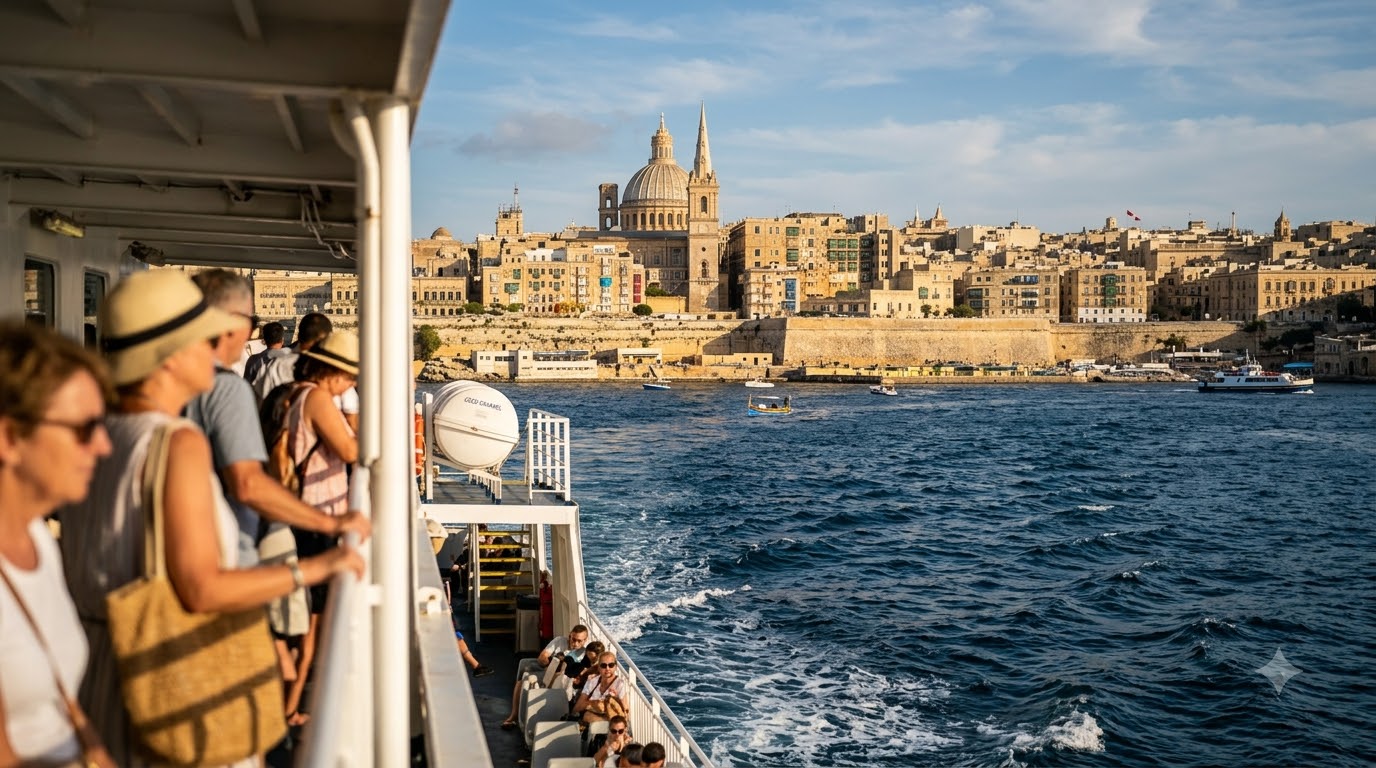
Dedicate the entire third day to Gozo, because the ferry crossing plus the island’s spread-out sights fill the hours. There are two ways across: the traditional Cirkewwa car ferry at the north tip of Malta, or the newer Valletta fast ferry direct from the capital. The table compares both so you can pick by where you are staying.
| Route | Fare (return) | Crossing time | Best for |
|---|---|---|---|
| Cirkewwa to Mgarr (foot) | 4.65 EUR | ~25 min | Cheapest; pay on the way back at Mgarr |
| Cirkewwa to Mgarr (car + driver) | 15.70 EUR | ~25 min | Drivers touring Gozo by car |
| Valletta fast ferry | 11.00 EUR | ~45 min | Staying in Valletta, no car |
Data from Gozo Channel and Gozo Highspeed, 2026. One quirk worth knowing: on the Cirkewwa route you board without paying and settle the fare only at the Mgarr toll booth on your return, so keep cash or a card ready on the way back, not the way out.
What to see on Gozo in one day
Build the Gozo day around three anchors, all reachable by the island’s local buses that meet the ferry at Mgarr:
- Victoria (Rabat) and the Cittadella: the hilltop citadel is free to enter, with paid museums inside; the ramparts give a 360-degree view over the whole island.
- Dwejra and the Azure Window site: the famous stone arch collapsed on 8 March 2017 (Heritage Malta), but Dwejra Bay, the Inland Sea, and Fungus Rock remain a dramatic, free coastal stop.
- Ggantija Temples, Xaghra: 10.00 EUR, open daily 10:00 to 18:00, older than Stonehenge and the Egyptian pyramids; the ticket includes the nearby Ta’ Kola Windmill.
- Ramla Bay: Gozo’s red-sand beach, a good final stop for a swim before the last ferries back.
We caught the 8:15 crossing from Cirkewwa, took the local bus to Victoria first, then looped Ggantija and Ramla before returning to Dwejra for sunset. Buses on Gozo are less frequent than on Malta, so we checked return times before committing to Ramla, which sits at the end of a slower route. If you value flexibility here, a car makes the Gozo day noticeably smoother.
Buses vs car: how to get around Malta
Choose buses if you are based in Valletta and want the cheapest option, and a rental car if you plan to cover Gozo or the north beaches independently. Malta’s bus network reaches almost every sight in this itinerary, and the flat fares make it hard to beat on price.
A car buys you time and range, especially on Day 3, at the cost of narrow roads, left-hand driving, and paid parking in the towns.
| Factor | Public bus | Rental car |
|---|---|---|
| Day cost | 2.00 EUR per single, 25.00 EUR weekly | ~30-45 EUR/day plus fuel |
| Reaches all 3 days’ sights | Yes, with transfers | Yes, more directly |
| Gozo convenience | Local buses meet the ferry | Best option, car ferry 15.70 EUR return |
| Parking | Not your problem | Tight in Mdina, Valletta is pedestrian |
| Driving side | N/A | Left-hand, narrow rural roads |
For most three-day visitors without a car, the 25.00 EUR Explore Card covers all the day-route travel in this plan and removes the need to carry change. We used buses for Days 1 and 2 with zero issues; the only day we wished for a car was Gozo, where the sights are spread out and the local timetable is thinner.
A middle path is buses in Malta and a car hired just for the Gozo day, picked up on the island near Mgarr.
When to visit and how to base yourself
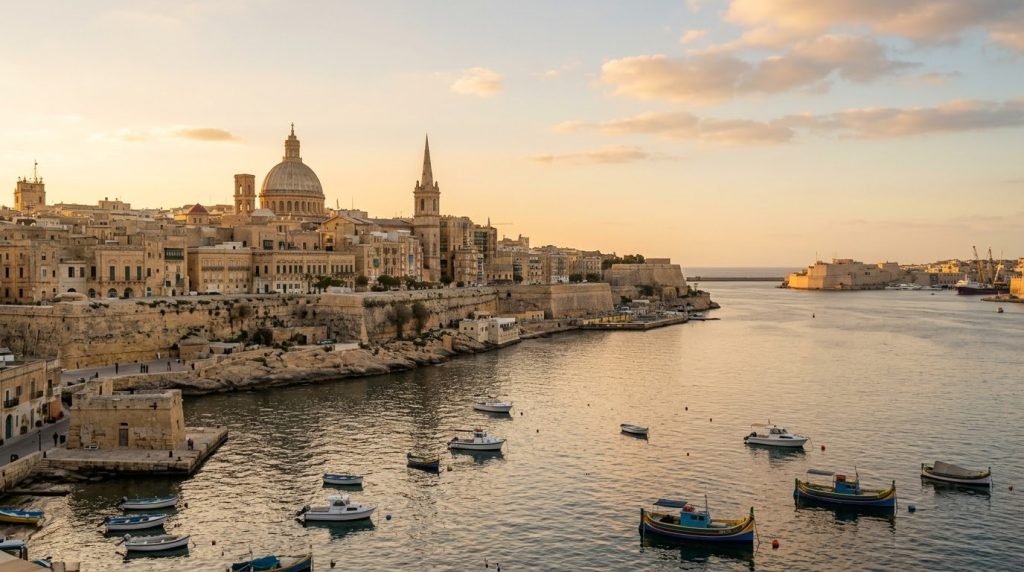
Come in spring or autumn for the best balance of warm sea and thin crowds. Malta’s summers are hot and busy, with July and August the peak, while the shoulder months of April, May, September, and October stay warm enough to swim and far easier for walking the old towns at midday. Winter is mild but some boat trips pause when the sea turns rough.
A few basing notes from running this loop:
- Stay in or near Valletta if you are relying on buses; it is the hub where most routes converge.
- Sliema or St Julian’s suit travellers who want more nightlife and a ferry link into Valletta.
- Book the Gozo day for good weather and keep Mdina or the museums as your rainy-day swap.
- Carry cash for the Blue Grotto boats and small bakeries; cards are common but not universal at kiosks.
For where to stay, eat, and walk inside the capital across your first two nights, our Valletta travel guide covers neighbourhoods and practical logistics in more depth than a three-day overview can.
Find your Malta hotel on the map
Live prices from Booking, Airbnb and more — move the map or change dates to compare stays around Malta.
Frequently Asked Questions
Is 3 days enough for Malta?
Yes, three days covers the highlights if you split them cleanly: Valletta and the Three Cities, Mdina and the Blue Grotto, then a full day on Gozo. Malta is only about 316 square kilometres, so travel times between sights are short. You will miss the Blue Lagoon on Comino and some smaller villages, but the core of the archipelago fits comfortably into a tight three-day Malta itinerary.
How do I get from Malta to Gozo?
Take the Gozo Channel car ferry from Cirkewwa at Malta’s north tip to Mgarr, a 25-minute crossing costing 4.65 EUR return for foot passengers or 15.70 EUR return for a car with driver. Alternatively, the Valletta fast ferry runs direct from the capital in about 45 minutes for 11.00 EUR return, which suits car-free travellers staying in Valletta.
Do I need a car in Malta for 3 days?
No, buses reach every sight in this itinerary, and a 25.00 EUR Explore Card gives seven days of unlimited travel. A car mainly helps on the Gozo day, where the attractions are spread out and local buses run less often. Many visitors use buses on Malta and hire a car only for Gozo, or skip driving entirely if they are based in Valletta.
How much does the Blue Grotto boat trip cost?
The Blue Grotto boat trip costs around 10.00 EUR per adult and 5.00 EUR per child, paid in cash at the kiosk in Wied iz-Zurrieq. The ride lasts 20 to 25 minutes and runs best between 9am and noon on calm, sunny days, when the light turns the sea caves a deep blue. Trips are suspended when the water is too rough.
What is the best time of year for a Malta itinerary?
Spring and autumn are the best times, roughly April to May and September to October, with warm water, swimmable beaches, and thinner crowds than the July-August peak. Summer is hot and busy, while winter stays mild but can interrupt boat trips when the sea is rough. Shoulder-season weather also makes walking Mdina and Valletta far more comfortable at midday.
Three days moves quickly in Malta, but the small distances work in your favour. Anchor each day around one region, buy the transport pass that matches how much you will move, and keep the Gozo trip for a clear-weather morning.
Do that and you leave having seen the capital, the old walled towns, the south coast caves, and the quieter sister island, all on a plan you can walk, ride, and sail without a single wasted afternoon.