Valletta Travel Guide 2026: First-Timer Malta Tips
By TravelguidestipUpdated 2 min readHow we earn
Hotel buttons open Stay22 (Booking.com, Agoda and others) and tour buttons open GetYourGuide. We may earn a commission at no extra cost to you.
In short
- St John’s Co-Cathedral costs €15 for adults, €12 for students and seniors, and is free for children under 12, open Monday to Saturday 9:00 to 16:45 (last admission 16:00), closed Sundays.
- Upper Barrakka Gardens are free, and the Saluting Battery below fires its cannon daily at 12:00 and 16:00, with commentary starting around 11:45.
- Getting from the airport on Tallinja bus X4 takes about 25 minutes and costs €2.50 per single trip; a Bolt ride is usually cheaper than a white taxi.
- Best months to visit are April to June and September to October, when daytime highs sit between 15°C and 25°C rather than August’s 30.7°C average high.
- The ferry to the Three Cities takes about 10 minutes and runs roughly every 30 minutes from the waterfront below Upper Barrakka Gardens.
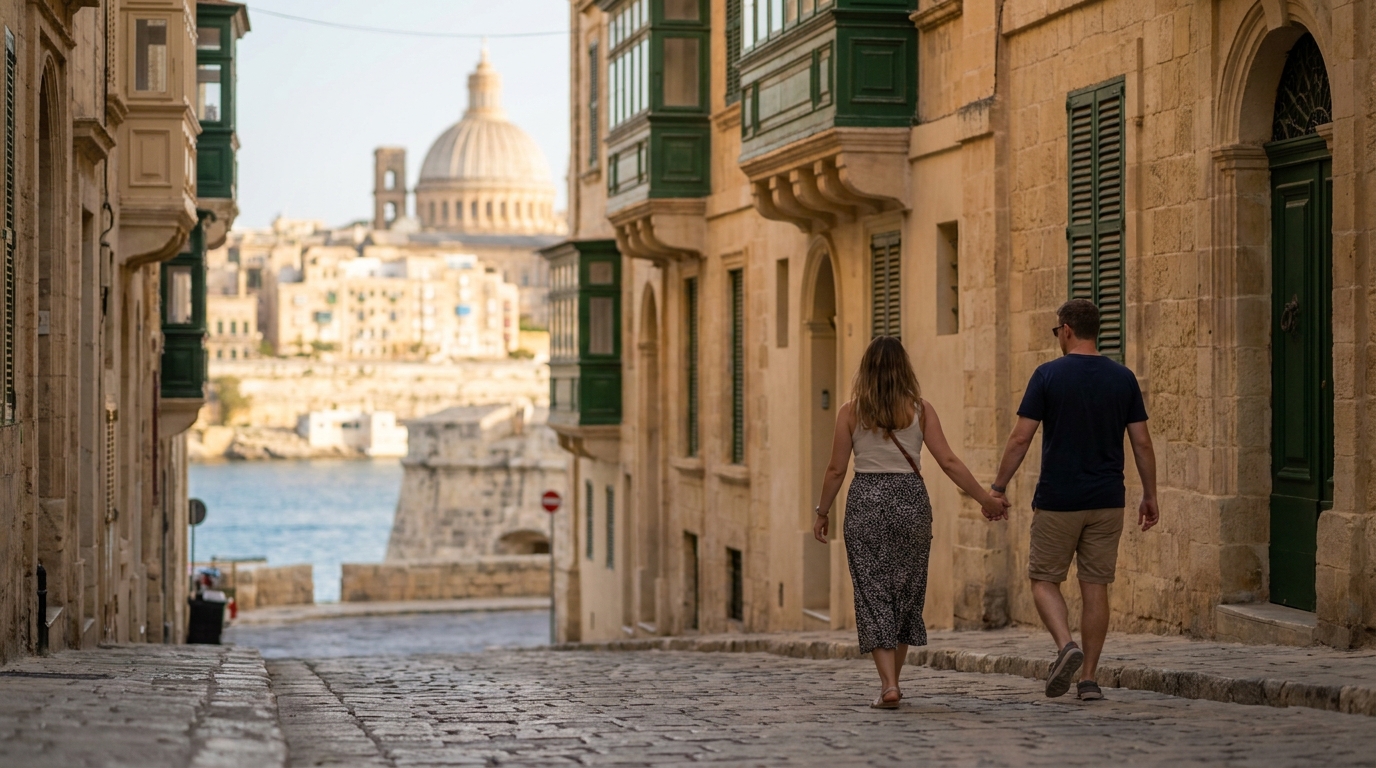
Valletta is small enough to cross on foot in about 20 minutes, which makes it one of the easiest European capitals to visit for the first time.
This Valletta travel guide walks you through the walled city built by the Knights of St John in the 1560s: the must-see sights, how to get in from the airport, what things cost in euros, and the months worth planning around.
Malta had a record year in 2025 with 4,022,310 inbound tourists, up 12.9 percent on 2024 (National Statistics Office, February 2026), so a little planning goes a long way.
The whole peninsula is a UNESCO World Heritage Site, and the honey-colored limestone grid of streets packs cathedrals, gardens, harbor viewpoints, and cannon batteries into roughly 0.8 square kilometers. Below we cover St John’s Co-Cathedral, Upper Barrakka Gardens, the Grand Harbour, and a quick hop to the Three Cities, plus the practical numbers first-timers actually ask about.
The city rewards early risers. Arrive at St John’s Co-Cathedral before 09:15 for a quiet Caravaggio room, then head up to Upper Barrakka for the noon gun. The steep steps down to the waterfront caught us off guard on day one, so we started timing the Barrakka Lift instead.
What are the must-see sights in Valletta?

The three sights no first-timer should skip are St John’s Co-Cathedral, Upper Barrakka Gardens, and the Grand Harbour waterfront, and all three sit within a 15-minute walk of each other. Valletta was designed as a fortress city, so almost every street ends at either a church, a bastion wall, or a harbor view. You can see the headline sights in a single full day, though most people give it two.
Here is the short list we recommend building a first day around:
- St John’s Co-Cathedral: home to Caravaggio’s “The Beheading of Saint John the Baptist,” the largest canvas the artist ever painted, admission €15.
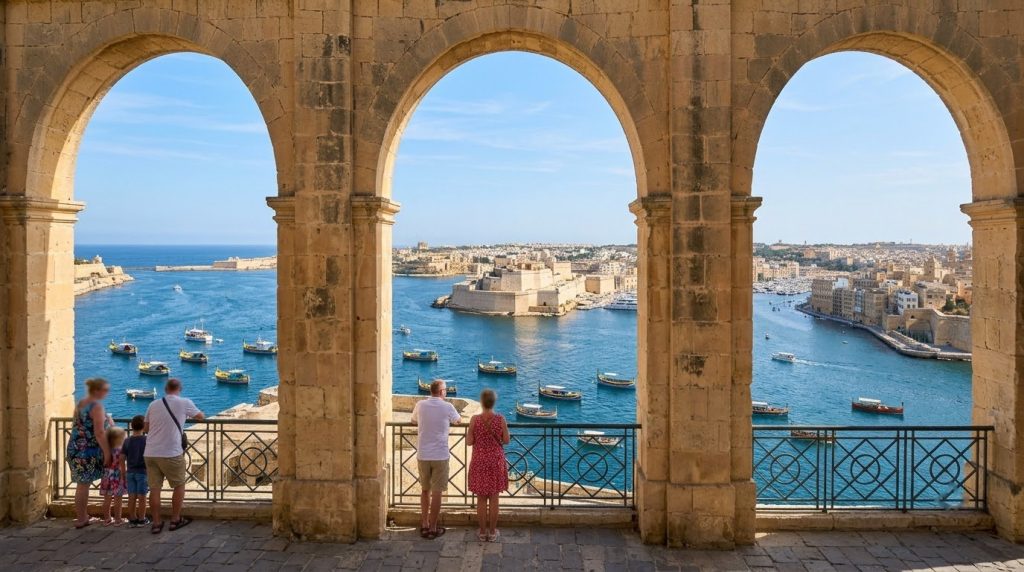
- Upper Barrakka Gardens: free hilltop terrace with the best panorama over the Grand Harbour and the Three Cities.
- The Saluting Battery: below Upper Barrakka, daily cannon firings at 12:00 and 16:00.
- Grand Master’s Palace and State Rooms: the former seat of the Knights, now housing the Office of the President and the Palace Armoury.
- Republic Street (Triq ir-Repubblika): the main pedestrian spine running the length of the peninsula, lined with cafes, shops, and the National Museum of Archaeology.
- Fort St Elmo and the National War Museum: at the tip of the peninsula, telling the story of the 1565 Great Siege and WWII.
For a deeper breakdown of opening times, ticket lines, and the smaller sights we skipped here, see our guide to the best things to do in Valletta for first-time visitors.
Is St John’s Co-Cathedral worth the entrance fee?
Yes, St John’s Co-Cathedral is worth the €15 entrance for the Caravaggio room and the marble-tombstone floor alone. Built between 1573 and 1578, its plain exterior hides an interior so heavily gilded that it is often called one of the finest examples of high Baroque anywhere in Europe. The floor is paved with around 400 inlaid marble tomb-slabs of the Knights.
| Ticket type | Price (2026) | Notes |
|---|---|---|
| Adult | €15 | Includes 20-stop audio guide |
| Student / Senior | €12 | Valid ID required |
| Child under 12 | Free | Must be with a paying adult |
| Belfry tour add-on | €5 | Sold at the entrance, limited slots |
A few practical rules we learned the hard way:
- Opening hours are Monday to Saturday, 09:00 to 16:45, with last admission at 16:00; it is closed on Sundays and public holidays.
- The audio guide is included in the ticket and covers 20 numbered stops in several languages.
- Flat shoes are required and no stilettos, because sharp heels damage the marble tomb floor.
- Shoulders and knees must be covered, as this is an active place of worship.
- Photography is allowed in most areas but not in the Oratory, where the two Caravaggio paintings hang.
Visiting right at opening, expect to spend about 75 minutes inside. By late morning the queue at the door stretched down Triq San Gwann, so early or late in the day is the smart move.
How do I get from Malta Airport to Valletta?
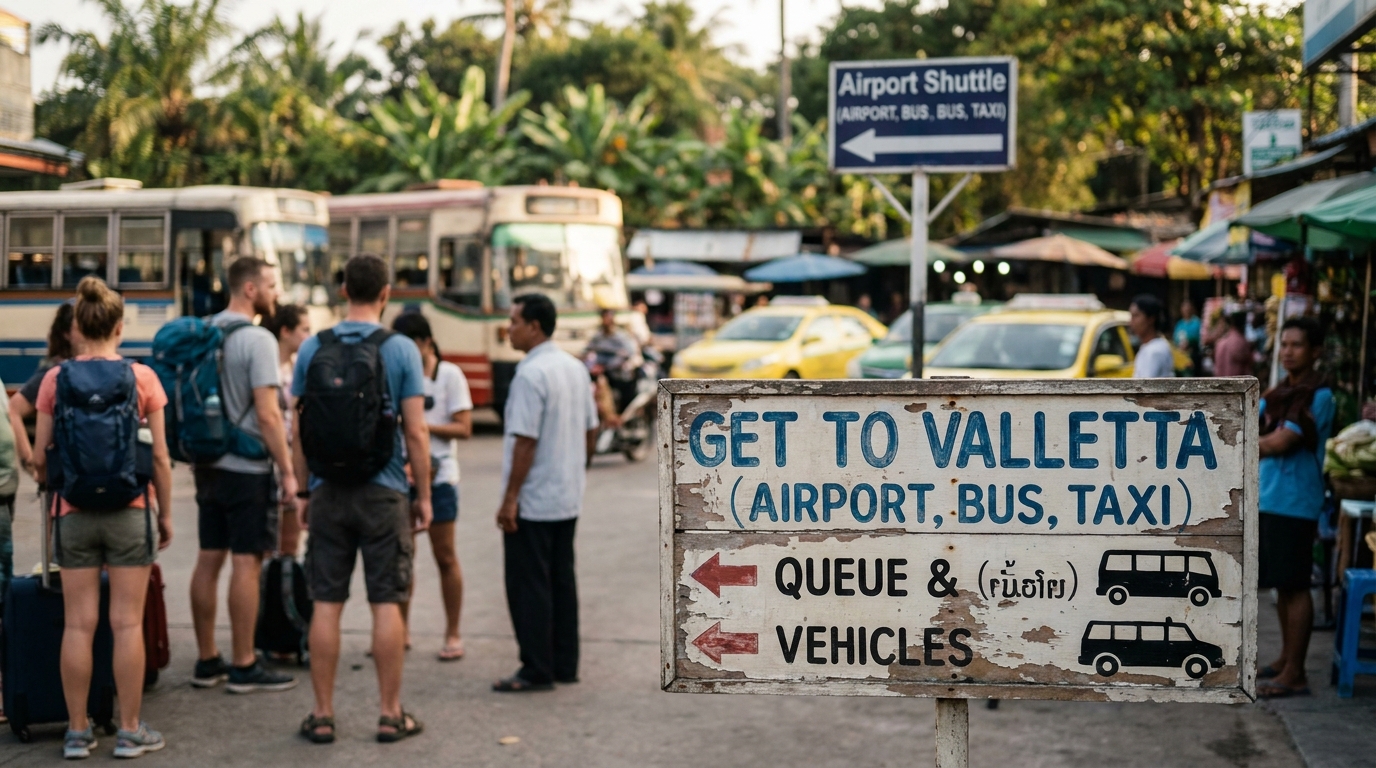
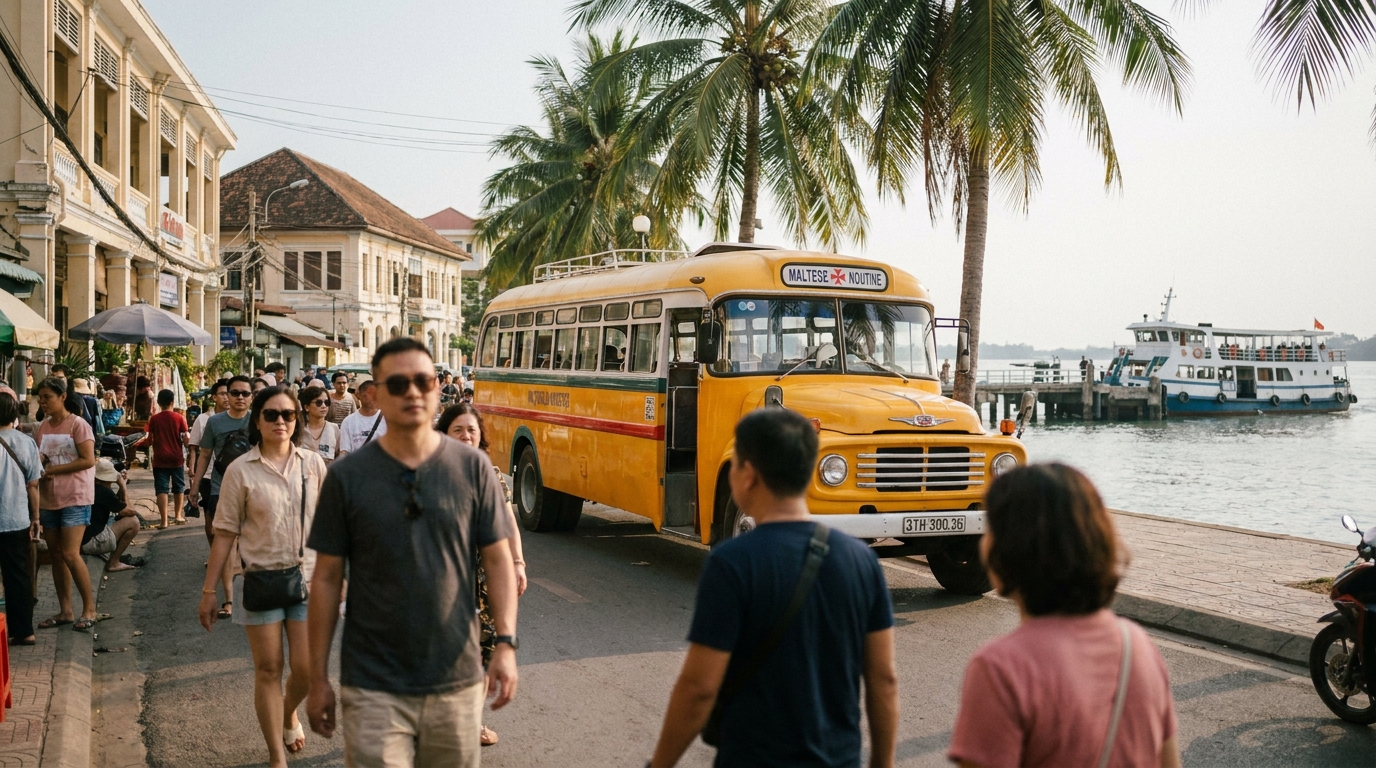
The cheapest way from Malta International Airport to Valletta is the Tallinja X4 bus, which runs directly to the city bus terminus in about 25 minutes for €2.50 per single trip. The airport (in Luqa) is only around 8 kilometers from the capital, so no transfer takes very long. The X-routes have extra luggage racks, which matters if you land with a suitcase.
| Option | Approx. cost | Journey time | Best for |
|---|---|---|---|
| Bus X4 (Tallinja) | €2.50 single | ~25 min | Budget travelers, light luggage |
| Bolt (ride app) | ~€12-18 | ~15 min | Groups, late arrivals |
| White taxi (fixed rate) | ~€20-25 | ~15 min | Fixed pricing at the rank |
| Airport shuttle | ~€6-9 | ~30 min | Door-to-hotel service |
Tips that saved us time and small change:
- Buy a Tallinja Explore card if you plan several bus days; single fares add up fast at €2.50 each.
- The X4 also serves Sliema and St Julian’s, so check the front display before boarding.
- Bolt fares show upfront in the app and are typically 20 to 40 percent cheaper than white taxis.
- Cars cannot enter much of central Valletta, so a taxi drops you at City Gate and you walk the last stretch in.
If you are still deciding how to split your days between the capital and the rest of the island, our 3-day Malta itinerary for first-timers lays out where transfers fit best.
Why go to Upper Barrakka Gardens and the Grand Harbour?
Upper Barrakka Gardens gives you the single best free view in Valletta, looking straight across the Grand Harbour to the fortified Three Cities. The gardens sit on top of the St Peter and St Paul Bastion, and admission is free. Below them, the Saluting Battery still fires a ceremonial cannon twice a day, a tradition kept alive from British colonial times.
What to know before you go:
- The gardens are free and open from early morning until late evening.
- The noon gun fires at 12:00, with a short commentary starting around 11:45; there is a second firing at 16:00.
- Watching from the garden terrace is free; entering the Saluting Battery itself for a closer view costs about €3.
- The Barrakka Lift connects the gardens to the waterfront 58 meters below for a small fee, saving a steep climb.
- Arrive by 11:40 for the noon gun in high season, because the railing spots fill quickly.
We came back three times over four days, mostly for the light, which turns the harbor bastions gold in the late afternoon. The Grand Harbour is one of the deepest natural harbors in the Mediterranean, and cruise ships, ferries, and traditional dghajsa water taxis all share the water below.
Should I visit the Three Cities from Valletta?
Yes, the Three Cities across the harbor are the easiest and most rewarding half-day trip from Valletta, reached by a 10-minute ferry. Birgu (Vittoriosa), Senglea (Isla), and Cospicua (Bormla) are older than Valletta itself and far quieter, with waterfront restaurants and the fascinating Fort St Angelo. The ferry leaves from the waterfront directly below Upper Barrakka Gardens.
| Detail | Info |
|---|---|
| Crossing time | ~10 minutes |
| Frequency | Roughly every 30 minutes at peak |
| Single fare | ~€2.00 winter / €2.50 summer |
| Day return | ~€4.80 |
| Tallinja Card | Free harbor ferry with a personalized card (since 2024) |
How we suggest structuring the visit:
- Take the ferry over in the morning when Birgu’s marina and backstreets are cool and empty.
- Walk Fort St Angelo, the Knights’ original stronghold and the heart of the 1565 siege defense.
- Have lunch on the Birgu waterfront, where the harbor-view tables cost roughly what a mid-street cafe in Valletta charges.
- Return by late afternoon to catch the golden hour from the Valletta side.
We did this on our second morning and were back in Valletta for the noon gun with time to spare. For how a Three Cities trip slots into a wider plan, our best things to do in Valletta list flags which sights pair well on the same day.
When is the best time to visit Valletta?
The best months to visit Valletta are April to June and September to October, when daytime temperatures sit between roughly 15°C and 25°C and the summer crowds thin out. July and August are hot and busy, with an average high of 30.7°C in the peak, while winter is mild but unpredictable, dropping to around 16°C in February.
| Season | Months | Typical daytime high | What to expect |
|---|---|---|---|
| Spring shoulder | Apr – Jun | 15-25°C | Warm, dry, ideal for walking |
| Summer peak | Jul – Aug | up to 30.7°C | Hot, crowded, festival season |
| Autumn shoulder | Sep – Oct | 20-25°C | Warm sea, fewer crowds |
| Winter | Nov – Mar | 15-17°C | Mild, some rain, lowest prices |
A season-by-season cheat sheet:
- April to June: the sweet spot for sightseeing, with reliable sun and comfortable heat.
- July and August: expect strong sun, book accommodation early, and plan indoor sights for midday.
- September and October: the sea is still warm from summer and hotel rates start easing.
- November to March: the quietest and cheapest window, though occasional rain and shorter days.
In the shoulder season, queues rarely run more than a few minutes, even at St John’s. If your dates are fixed for summer, front-load your outdoor walking to the morning.
How much does a trip to Valletta cost?
A mid-range day in Valletta runs roughly €70 to €110 per person, covering a couple of paid attractions, meals, and local transport. Malta uses the euro, and the average tourist spent €971 per capita across their whole trip in 2025 (National Statistics Office, 2026). The city itself is walkable, which keeps transport costs low.
| Expense | Budget | Mid-range |
|---|---|---|
| Attraction entry (per day) | €0-15 | €25-40 |
| Lunch | €10-15 | €20-30 |
| Dinner | €18-25 | €35-55 |
| Local transport (bus) | €2.50/trip | €2.50/trip |
| Coffee / snack | €2-4 | €4-7 |
Ways we trimmed the daily spend without missing much:
- Many top sights are free, including Upper Barrakka Gardens, the bastion walks, and the harbor views.
- A Tallinja Explore card caps repeated bus costs over several days.
- Lunch specials on side streets off Republic Street run well below the harbor-view tourist tables.
- Tap water is safe but tastes heavily of desalination, so many visitors buy bottled; a large bottle is under €1 from a grocery.
If you want a costed day-by-day framework, our 3-day Malta itinerary breaks the budget down across Valletta, the Three Cities, and a wider island day.
Find your Valletta hotel on the map
Live prices from Booking, Airbnb and more — move the map or change dates to compare stays around Valletta.
Frequently Asked Questions
How many days do you need in Valletta?
Two full days is enough to see Valletta’s main sights without rushing, plus a half-day ferry trip to the Three Cities. If Valletta is your base for the whole island, add extra days for Mdina, the Blue Grotto, and Gozo. Our 3-day Malta itinerary for first-timers shows how to balance the capital with day trips.
Do you need a car to visit Valletta?
No, you do not need a car for Valletta itself, and much of the walled city is pedestrian-only. Buses, ferries, and ride apps cover the capital and nearby towns easily. A car is only worth renting if you plan to explore the wider island, and even then you would park outside the walls.
Is Valletta walkable for first-time visitors?
Yes, Valletta is very walkable, measuring only about 0.8 square kilometers, so you can cross it on foot in around 20 minutes. The main challenge is the hills and stepped streets, which are steep in places. The Barrakka Lift and the harbor ferries help you avoid the biggest climbs.
What is Valletta best known for?
Valletta is best known as the fortified capital built by the Knights of St John after the Great Siege of 1565, and it is a UNESCO World Heritage Site. Its highlights include St John’s Co-Cathedral with its Caravaggio paintings, the Grand Harbour, and Baroque architecture in golden limestone.
Is Valletta expensive to visit?
Valletta is moderately priced by Western European standards, with a mid-range day costing roughly €70 to €110 per person. Many of its best experiences, including the gardens and harbor views, are free, and public buses cost €2.50 per trip, which keeps overall spending reasonable.
Valletta is one of the most concentrated capitals you can visit, where a fortress, a Baroque cathedral, and a working harbor all sit within a short walk. Plan around the shoulder-season months, start your mornings early, and give yourself time to simply wander the grid of golden streets between the paid sights.