Things to Do in Valletta: Best 2026 Malta Guide
By TravelguidestipUpdated 8 min readHow we earn
Hotel buttons open Stay22 (Booking.com, Agoda and others) and tour buttons open GetYourGuide. We may earn a commission at no extra cost to you.
In short
- St John’s Co-Cathedral costs 15 euro for adults (Monday to Saturday, 9:00 to 16:45, last entry 16:00) and holds Caravaggio’s largest signed canvas.
- The Saluting Battery fires at 12:00 and 16:00 Monday to Saturday, and you can watch for free from the Upper Barrakka Gardens directly above.
- Fort St Elmo and the National War Museum cost 10 euro for adults and open daily 09:00 to 18:00, the only major site open seven days a week.
- A 90-minute Grand Harbour cruise runs about 20 euro for adults, departing from Sliema across the water.
- August averages 27 to 28 degrees Celsius while February sits near 16 degrees by day, giving Valletta the warmest winters of any European capital.
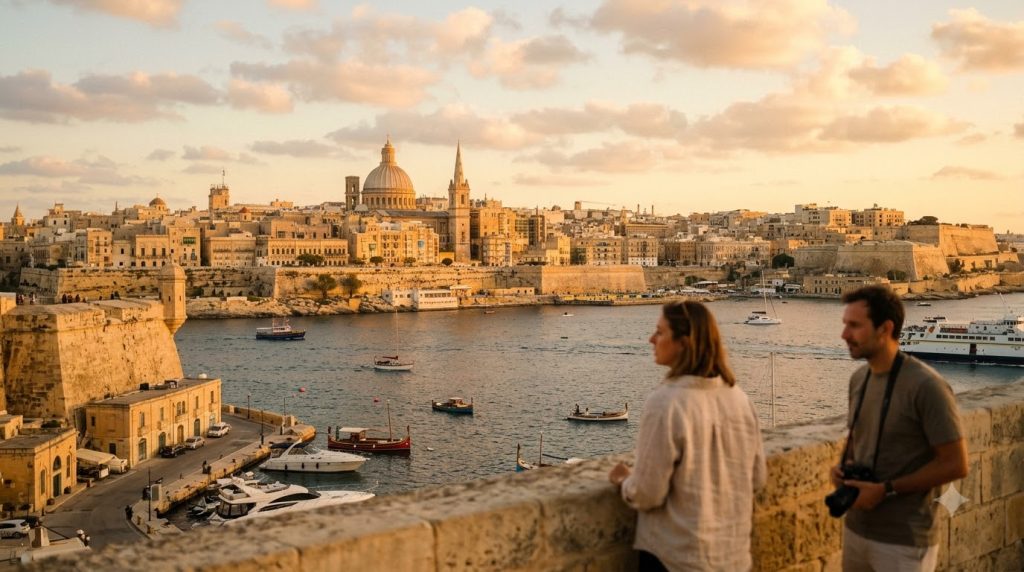
The best things to do in Valletta cluster inside a walkable golden-stone peninsula of just 0.55 square kilometres, which makes Malta’s capital the smallest in the European Union (UNESCO World Heritage Centre, listed 1980).
Start with St John’s Co-Cathedral and its two Caravaggio paintings, watch a cannon fire from the Upper Barrakka Gardens at noon, tour the restored Grand Master’s Palace, then walk the ramparts to Fort St Elmo and finish with a Grand Harbour cruise. You can cover the essentials in a single full day and still have time for a long lunch.
Valletta was founded in the 16th century by the Knights of the Order of St John, and the whole city is the World Heritage site, not just one monument. This guide covers the seven attractions worth your money in 2026, with current ticket prices, opening hours, and the timing tricks that keep you ahead of the cruise-ship crowds.
For a wider trip plan, pair this with our Valletta travel guide and, if you have limited days, our Malta 3-day itinerary.
Buy the St John’s Co-Cathedral ticket online the night before and aim to arrive at 9:00 sharp. The Oratory tends to be nearly empty for the first twenty minutes after opening, before the first tour groups arrive around 10:00.
What are the best things to do in Valletta?
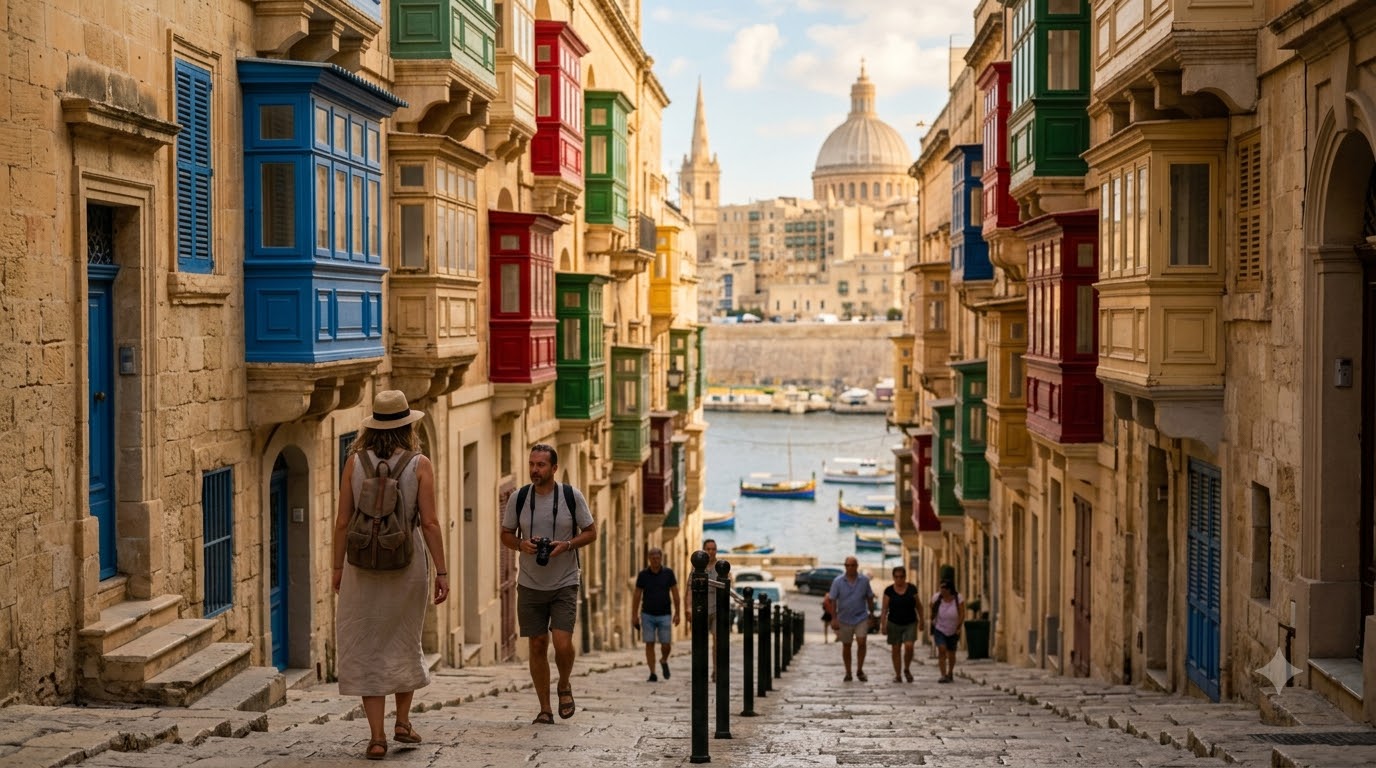
The best things to do in Valletta are seven sites within a ten-minute walk of each other, so route matters more than distance. The city is laid out on a grid, and every cross street eventually meets a bastion with a harbour view. The most efficient loop starts high, at the Co-Cathedral and the gardens, then drops down to the waterline forts before the afternoon heat.
Here is the short list, ranked by how much we would prioritise each if time is tight:
- St John’s Co-Cathedral: two Caravaggio masterpieces and a marble-floor nave, roughly 45 to 60 minutes inside.
- Upper Barrakka Gardens and the Saluting Battery: the best free view in the city, plus a noon cannon firing.
- Grand Master’s Palace and Palace Armoury: state rooms and a hall of Knights’ armour, recently reopened after restoration.
- Fort St Elmo and the National War Museum: the fort that held the 1565 Great Siege and Malta’s George Cross.
- Lower Barrakka Gardens and the Siege Bell Memorial: a quieter garden with a working memorial bell over the harbour.
- A Grand Harbour boat cruise: 60 to 90 minutes on the water, the only way to see the bastions from below.
- Republic Street and the side lanes: the main artery for cafes, the covered market, and the daily street life.
| Attraction | Adult price (2026) | Opening hours | Typical visit |
|---|---|---|---|
| St John’s Co-Cathedral | 15 euro | Mon to Sat, 9:00 to 16:45 | 45 to 60 min |
| Upper Barrakka Gardens | Free | Daily, dawn to late | 20 to 40 min |
| Saluting Battery | 6 euro | Mon to Sat, 10:00 to 16:30 | 30 min |
| Grand Master’s Palace (Armoury) | About 10 euro | Check Heritage Malta | 60 to 90 min |
| Fort St Elmo / War Museum | 10 euro | Daily, 09:00 to 18:00 | 90 min |
| Grand Harbour cruise | About 20 euro | Frequent departures | 60 to 90 min |
Prices reflect published 2026 rates from Heritage Malta and the individual sites; always confirm on the official page before you go, since Heritage Malta occasionally adjusts fees and closes rooms for state functions.
St John’s Co-Cathedral and its two Caravaggios
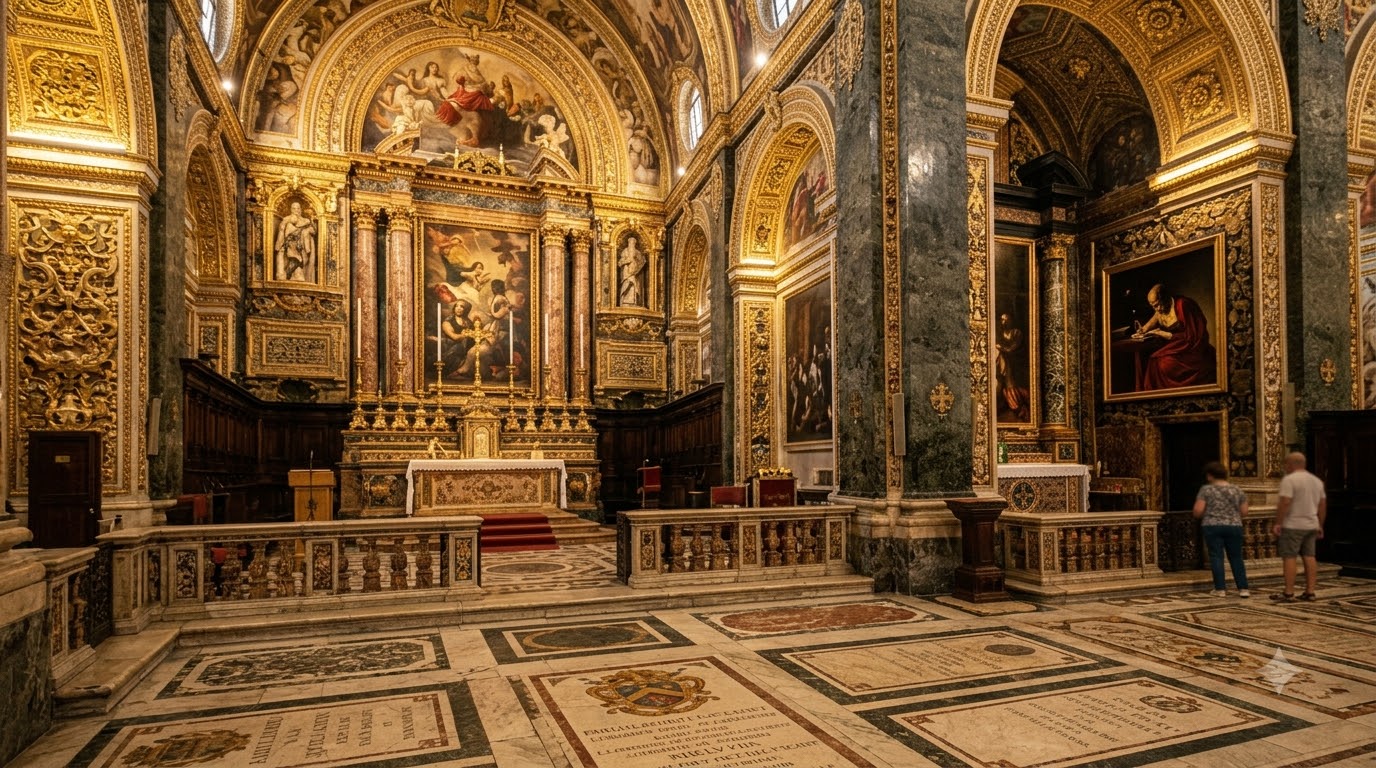
St John’s Co-Cathedral is the one paid attraction in Valletta we would never skip, because it holds Caravaggio’s “The Beheading of Saint John the Baptist,” the only painting the artist ever signed and the largest canvas he produced. It hangs in the Oratory alongside his “Saint Jerome Writing,” and photography rules there are stricter than in the main nave.
The plain exterior gives no hint of the gilded Baroque interior, where the floor is a carpet of inlaid marble tombstones marking the Knights of St John.
Admission in 2026 is 15 euro for adults, 12 euro for seniors and students, and free for children under 12 accompanied by an adult (St John’s Co-Cathedral, official visitor information). The ticket includes a 20-stop handheld audio guide, and a separate belfry tour is sold at the door for about 5 euro extra.
- Opening hours: Monday to Saturday, 9:00 to 16:45, with last admission at 16:00.
- Closed: Sundays and public holidays, plus occasional special closures, so check the date before travelling.
- Best time to arrive: right at 9:00, before cruise groups reach the Oratory around mid-morning.
- Dress code: shoulders and knees covered, and no stiletto heels, to protect the marble floor.
Budget more time here than the map suggests; even close to an hour can feel rushed.
Upper Barrakka Gardens and the noon cannon
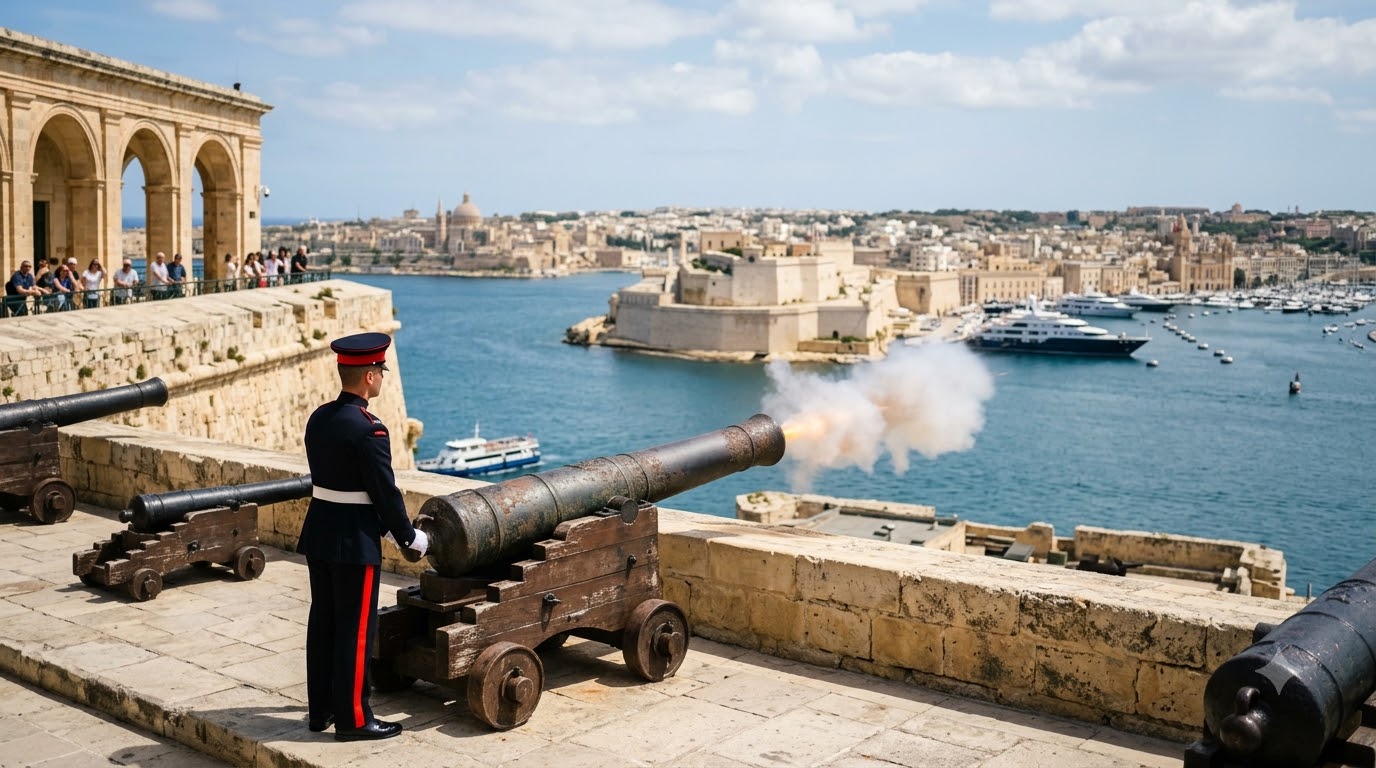
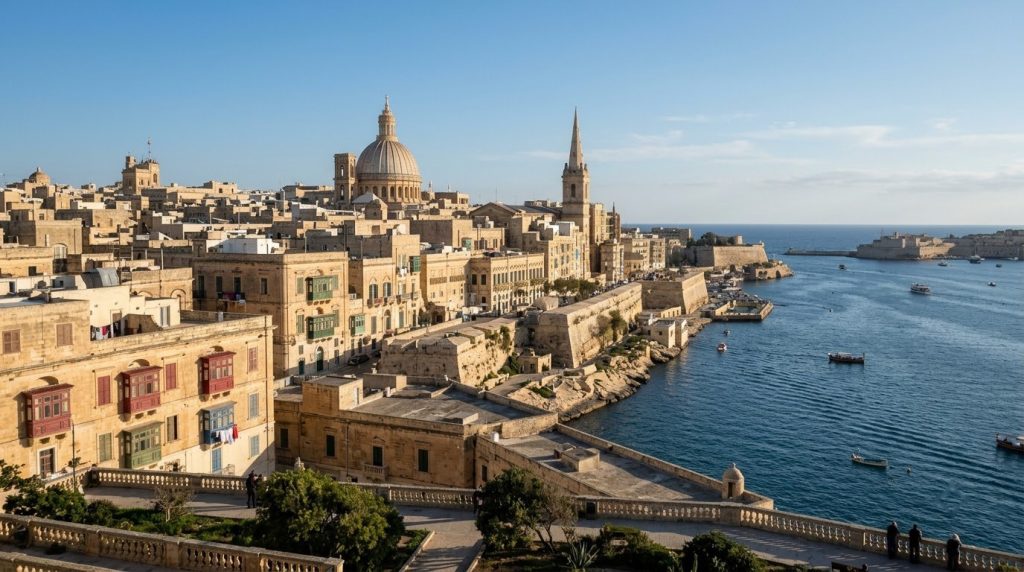
The Upper Barrakka Gardens give you the best panoramic view in Valletta for free, looking straight across the Grand Harbour to the Three Cities of Vittoriosa, Senglea, and Cospicua. The gardens sit on the upper tier of St Peter and St Paul Bastion, and a lift connects them down to the waterfront if you want to reach the harbour cruises without the climb.
Below the terrace is the Saluting Battery, a line of restored cannons that fire twice a day. The firing is a genuine ceremony, not a token gesture, and the sound rolls across the whole harbour.
- Firing times: 12:00 and 16:00, Monday to Saturday, with no firing on Sundays.
- Free viewing: from the garden terrace above, where crowds start gathering 15 to 20 minutes before each firing.
- Battery entry: 6 euro for adults, 3 euro for children aged 5 to 15, and 15 euro for a family of two adults and two children.
- Battery hours: Monday to Saturday, 10:00 to 16:30, with last entry at 16:00.
Arriving at the terrace by 11:40 for the noon gun can still get a front-row spot at the railing, but within ten minutes it gets three deep.
Grand Master’s Palace and the Palace Armoury
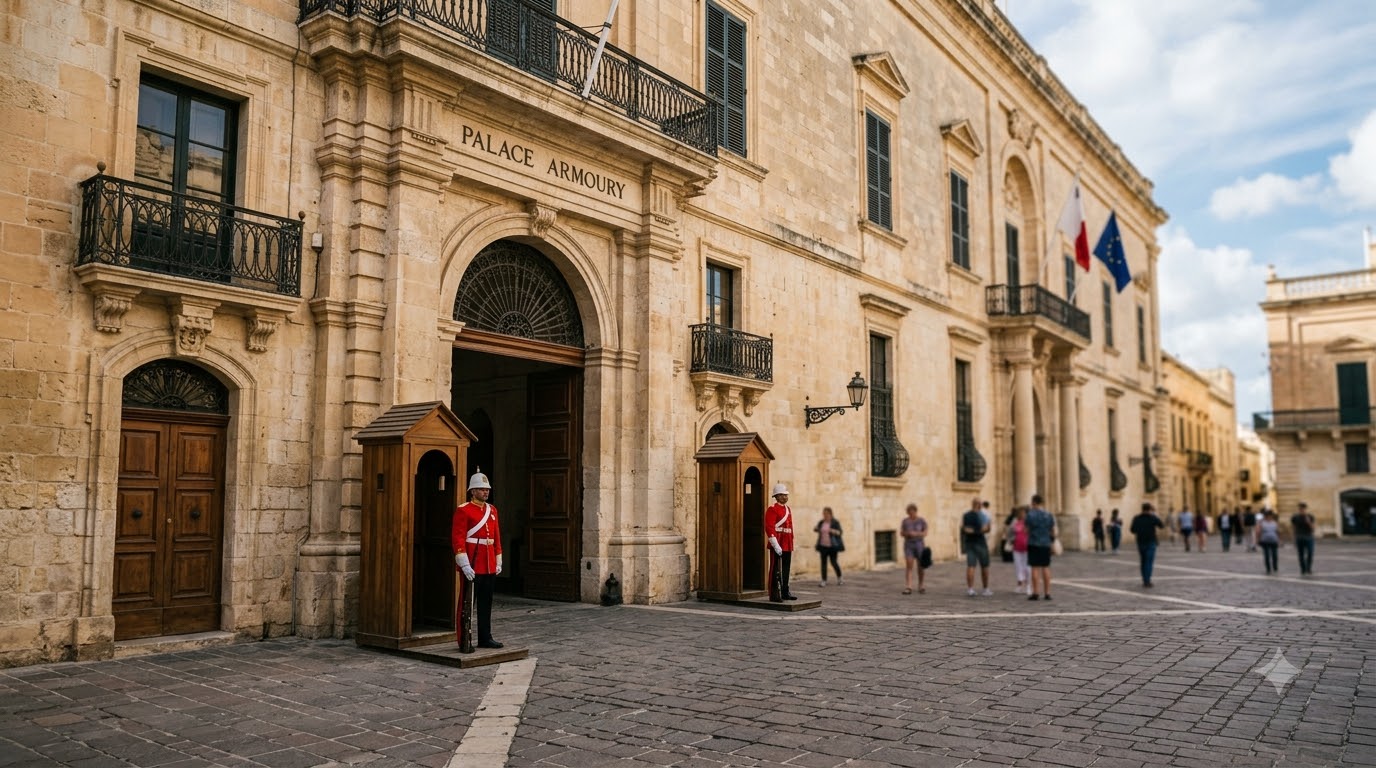
The Grand Master’s Palace reopened after a long restoration that now grants access to more than 85 percent of the building, including the Piano Nobile corridors and the rediscovered Uccelliera. This was the seat of the Knights’ Grand Masters for over two centuries and later the British governor’s residence, so the state rooms carry layers of Maltese history under one roof.
The Palace Armoury, on the ground floor, displays suits of armour and weapons collected from the Knights, including ceremonial pieces made for the Grand Masters themselves. Armoury-only admission runs about 10 euro for adults in 2026, while a combined ticket that adds the State Rooms costs more, and access to specific rooms can be restricted without notice when the palace hosts presidential or state functions.
- What to see first: the Armoury, then the State Rooms and the tapestry chamber, if both are open on your date.
- Booking tip: check the Heritage Malta website the morning of your visit for same-day room closures.
- Time needed: 60 to 90 minutes for both sections at an unhurried pace.
Fort St Elmo and the National War Museum
Fort St Elmo anchors the tip of the Valletta peninsula and tells Malta’s military story from the Bronze Age to the Second World War. This is the fort that held out during the Great Siege of 1565, and the National War Museum inside displays the George Cross awarded to Malta in 1942 for the island’s wartime endurance. The star-shaped ramparts alone justify the walk to the far end of the city.
Admission is 10 euro for adults, 7.50 euro for seniors, students, and youths, and 5.50 euro for children aged 6 to 11 (Heritage Malta, 2026 rates). It is the only major Valletta attraction open every day of the week.
- Opening hours: daily, 09:00 to 18:00, with last admission at 17:30.
- Closed: 24, 25, and 31 December, 1 January, and Good Friday.
- In Guardia days: the museum opens later, at 12:00, on dates when the historical re-enactment is staged.
- Pair it with: the Lower Barrakka Gardens and the Siege Bell Memorial nearby, both free.
Around 15:00 the seaward ramparts tend to be almost empty, since most day-trippers have already looped back toward Republic Street.
A Grand Harbour cruise from the water
A Grand Harbour cruise is the fastest way to understand why the Knights built Valletta where they did, because the scale of the bastions only makes sense from below. Most boats run a combined loop of the Grand Harbour and Marsamxett Harbour, passing the Three Cities, the fortified creeks, and the sheer curtain walls that rise straight out of the sea.
Standard cruises last about 60 to 90 minutes and cost around 20 euro for adults and 15 euro for children aged 4 to 11, with most departures leaving from Sliema across the water rather than from Valletta itself. Traditional wooden dghajsa boats offer shorter, more intimate crossings if you prefer a small vessel.
| Cruise type | Duration | Adult price | Departs from |
|---|---|---|---|
| Two Harbours cruise | About 90 min | About 20 euro | Sliema Ferries |
| One-hour harbour cruise | About 60 min | About 15 to 20 euro | Sliema |
| Dghajsa water taxi | 15 to 30 min | Varies by boat | Valletta / Three Cities |
To combine sights, take the Upper Barrakka lift down to the waterfront, then cross to Sliema for a cruise, an approach we cover in more depth in our Valletta travel guide.
When is the best time to visit Valletta?
The best time to visit Valletta is spring and autumn, roughly April to early June and September to October, when daytime temperatures sit in the comfortable low-to-mid 20s Celsius and the summer cruise crowds thin out. Valletta has the warmest winters of any European capital, so even January and February stay mild by day, though December is the wettest month with about 110 millimetres of rain.
| Season | Months | Avg daytime temp | What to expect |
|---|---|---|---|
| Spring | Apr to Jun | 18 to 25 C | Ideal walking weather, moderate crowds |
| Summer | Jul to Aug | 27 to 28 C | Hottest, busiest, book sites early |
| Autumn | Sep to Oct | 22 to 26 C | Warm sea, thinning crowds |
| Winter | Dec to Feb | 16 C | Mild days, some rain, quietest |
Temperature ranges are drawn from published Valletta climate averages. If you visit in July or August, front-load your sightseeing into the morning and reserve the harbour cruise or the shaded gardens for the afternoon.
How to plan a full day in Valletta
A single full day is enough to see the headline sights if you move in a loop rather than backtracking. Because the city is only 0.55 square kilometres, walking between any two attractions rarely takes more than ten minutes, and the flat central grid is easy underfoot apart from a few stepped side streets.
Here is the order we would follow to stay ahead of the crowds and the heat:
- 9:00 Enter St John’s Co-Cathedral at opening for a quiet Oratory.
- 10:30 Tour the Grand Master’s Palace and Palace Armoury.
- 11:45 Walk to the Upper Barrakka Gardens for the noon cannon.
- 13:00 Lunch on or near Republic Street.
- 14:30 Walk the ramparts to Fort St Elmo and the National War Museum.
- 16:30 Take the lift down and cross to Sliema for a late-afternoon cruise.
For travellers combining Valletta with the rest of the island, our Malta 3-day itinerary folds this loop into a wider route that adds Mdina and the Blue Grotto.
Frequently Asked Questions
How much does it cost to visit St John’s Co-Cathedral in 2026?
Adult admission is 15 euro, with reduced 12-euro rates for seniors and students and free entry for children under 12 accompanied by an adult. The ticket includes a 20-stop audio guide, and a belfry tour is an extra 5 euro sold at the entrance. The Co-Cathedral opens Monday to Saturday from 9:00 to 16:45 and closes on Sundays and public holidays.
Can you watch the Saluting Battery cannon fire for free?
Yes. The cannons fire at 12:00 and 16:00 Monday to Saturday, and you can watch for free from the Upper Barrakka Gardens terrace directly above the battery. Paying the 6-euro battery admission puts you on the gun deck itself. Crowds on the free terrace start forming 15 to 20 minutes before each firing, so arrive early for a railing spot.
Is one day enough to see Valletta?
One full day covers the main attractions because the city is compact and walkable, with every major site within a ten-minute walk. Start at St John’s Co-Cathedral at 9:00, work through the palace, gardens, and Fort St Elmo, and finish with a harbour cruise. If you want to slow down for museums, cafes, and the Three Cities across the harbour, two days is more comfortable.
What is the best time of year to visit Valletta?
Spring (April to June) and autumn (September to October) offer the best balance of warm weather and manageable crowds, with daytime temperatures in the low-to-mid 20s Celsius. Summer reaches 27 to 28 degrees and draws the heaviest cruise traffic. Winters are mild by European standards, near 16 degrees by day, though December brings the most rain.
Do you need to book Valletta attraction tickets in advance?
Booking St John’s Co-Cathedral online ahead of time is worth it to skip the queue and secure an early slot before tour groups arrive. Heritage Malta sites such as Fort St Elmo and the Grand Master’s Palace can be bought on arrival, but checking the official website the morning of your visit is wise, since rooms occasionally close for state functions.
Find your Valletta hotel on the map
Live prices from Booking, Airbnb and more — move the map or change dates to compare stays around Valletta.
Final Thoughts
Valletta rewards a slow pace despite its small size. The seven attractions here anchor a day, but the quieter pleasures, a coffee on a bastion, the light hitting the marble floor of the Co-Cathedral, the cannon echoing across the harbour, are the moments we remember most. Confirm 2026 prices and hours on each site’s official page before you go, then let the grid of golden streets do the rest.