Disclosure: Some links in this guide are affiliate links. If you book or buy through them, we may earn a small commission at no extra cost to you — it helps keep our guides free.
Best Things to Do in Tuscany 2026: Top Experiences
The best things to do in Tuscany in 2026 fall into three camps: Renaissance art in Florence, wine and food across the Chianti and Val d’Orcia countryside, and slow days inside walled medieval towns like Siena and San Gimignano. You can hit the headline sights in three days, but the region rewards a full week, because half of what makes Tuscany special happens on the back roads between the towns.
This guide covers twelve experiences we rate most highly, with current 2026 prices, opening quirks, and the practical details that decide whether a day goes smoothly. Tuscany’s regional tourism board reports the region draws well over 45 million visitor nights a year (Regione Toscana, Tourism Statistics), so the difference between a crowded morning and a calm one usually comes down to timing rather than luck. We wrote this after several trips built around a rental car, a handful of train days, and a lot of trial and error at ticket desks.
Key Takeaways
– Florence museums need advance booking: the Uffizi Gallery costs 25 euro at the door but 20 euro booked ahead, and drops to 16 euro after 4 p.m. from January 2026 (Uffizi Galleries, 2026).
– Michelangelo’s David sits in the Accademia, priced at 16 euro plus a 4 euro booking fee, with free entry on the first Sunday of every month.
– The Chianti wine road (SR222) runs roughly 40 km between Florence and Siena, threading Greve, Panzano, Radda, and Castellina, most cellar tastings run 15 to 35 euro.
– Siena’s Palio horse race happens twice a year, on 2 July and 16 August 2026, and lasts only 75 to 90 seconds around the Piazza del Campo.
– San Gimignano kept 14 of its original 72 medieval towers, the tallest, Torre Grossa, rises 54 m and was finished in 1310.**** We based ourselves in a farmhouse near Pienza for one trip and used Florence as a launchpad for another, and the two felt like different countries. On our last visit in spring we spent three mornings just driving the gravel lanes of Val d’Orcia before breakfast, when the cypress avenues near San Quirico were empty and the light was doing the thing every postcard promises. The cities are essential, but the countryside is where Tuscany stops being a checklist.
What are the top things to do in Tuscany?
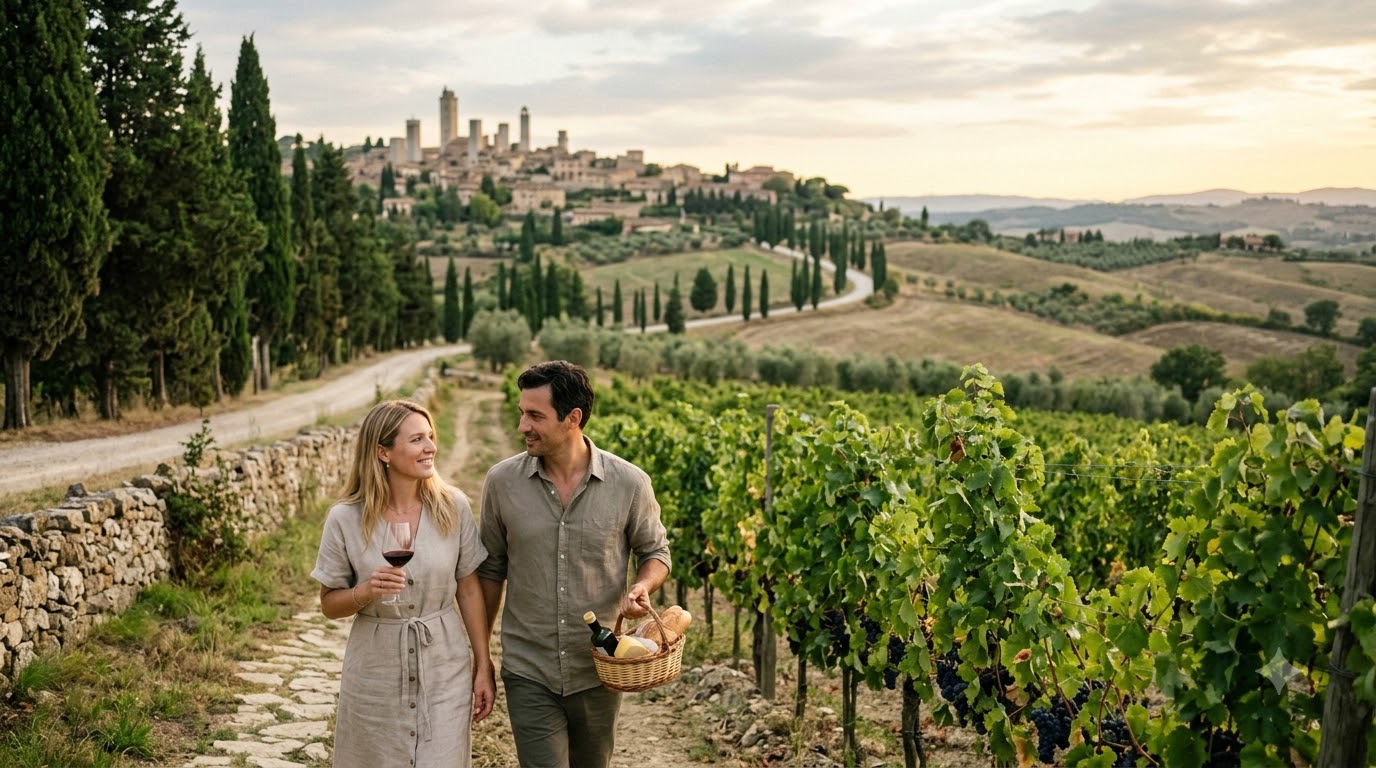
The top things to do in Tuscany combine one or two city-culture days with several countryside days, rather than trying to cram everything into museums. Here is the shortlist we hand friends before they go.
- Stand under the dome of Florence’s cathedral and climb Brunelleschi’s cupola for the rooftop view.
- See Botticelli’s “Birth of Venus” and “Primavera” at the Uffizi Gallery.
- Drive the Chianti Classico wine road between Florence and Siena, stopping for a tasting.
- Watch the sun rise over the cypress-lined hills of Val d’Orcia, a UNESCO World Heritage landscape since 2004.
- Sit in Siena’s Piazza del Campo with a coffee and take in one of Europe’s finest medieval squares.
- Climb a tower in San Gimignano, the “medieval Manhattan.”
- Soak in a free thermal spring at Bagno Vignoni or Saturnia.
- Take a half-day cooking class and learn to make fresh pici pasta.
For a full region-wide plan that ties these together, our complete Tuscany travel guide breaks the region into zones and seasons.
The 7-Day Tuscany Itinerary
The plan we use ourselves — sent straight to your inbox.
- Day-by-day route
- Where to stay
- Real 2026 costs
Free · No spam · Unsubscribe anytime
Explore Florence’s Renaissance art and the Duomo
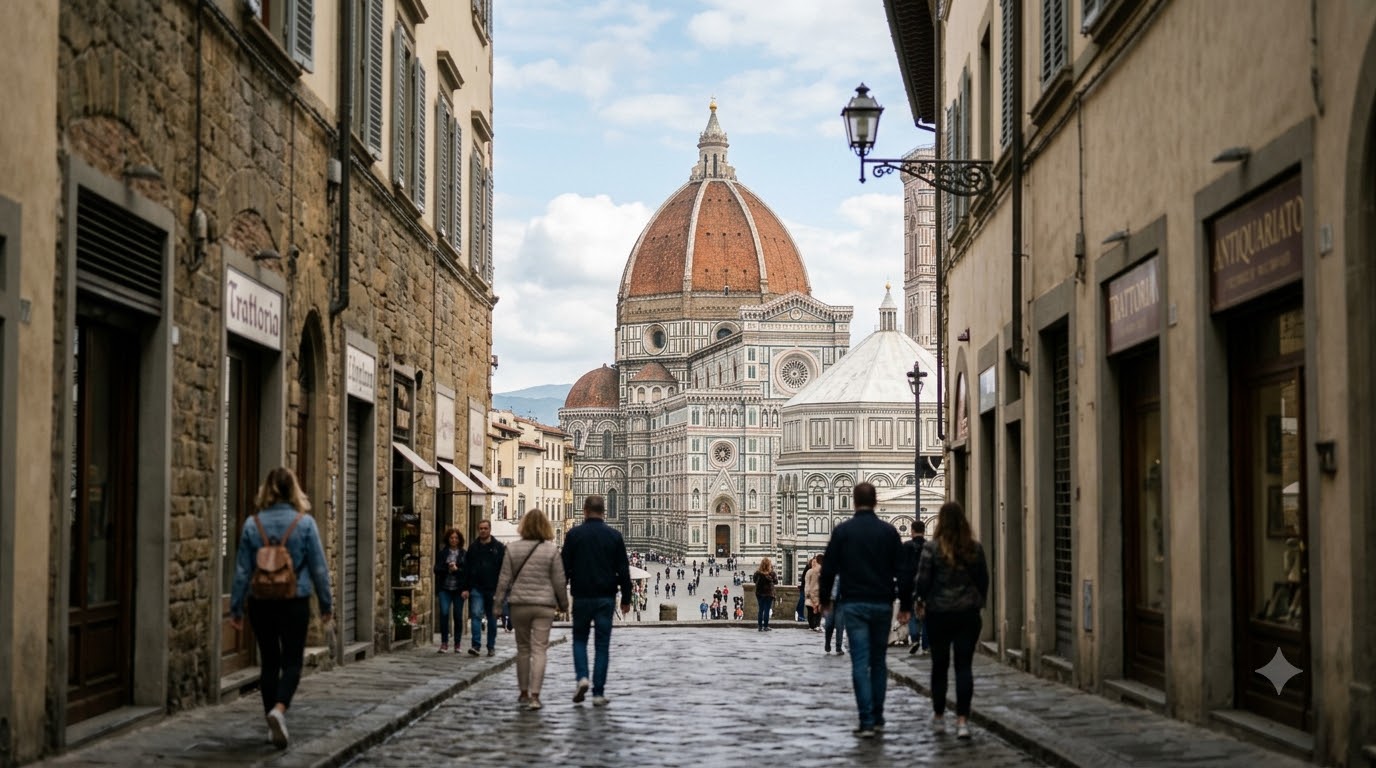
Florence is the single densest concentration of Renaissance art on earth, and two museums plus one cathedral cover most of what people come to see. The Uffizi Gallery holds Botticelli, Leonardo, and Caravaggio across roughly 100 rooms, while the Accademia exists largely for one 5.17 m marble figure: Michelangelo’s David, carved between 1501 and 1504.
Booking ahead is not optional in high season. Walk-up lines at both museums routinely run over an hour, and the timed-entry system means a same-day slot may simply not exist.
Florence ticket prices for 2026:
| Sight | Standard price | Advance / discount price | Notes |
|---|---|---|---|
| Uffizi Gallery | 25 euro (at door) | 20 euro advance; 16 euro after 4 p.m. | 4 euro booking fee; early slots ~19 euro |
| Accademia (David) | 16 euro | +4 euro booking fee (20 euro total) | Free first Sunday of the month |
| Duomo cupola climb | Part of a combined pass | Brunelleschi Pass covers cupola, baptistery, tower | Timed climb, 463 steps |
| Bargello museum | From 15 March 2026 unified with Accademia | 48-hr combined pass 26 euro + 4 euro fee | Sculpture collection |
Sources: Uffizi Galleries 2026; Accademia Gallery 2026 pricing.
A few practical notes we learned the hard way:
- Book the Uffizi for the first slot of the day (8:15 a.m.) or the last two hours, the midday crush is brutal.
- The after-4-p.m. Uffizi discount is genuinely good value and the late light in the corridors is worth it.
- The Duomo cupola climb is 463 steps with no elevator, wear real shoes and skip it if you dislike tight staircases.
- The Accademia’s free first Sunday is walk-up only, expect a long line by 9 a.m.
Drive the Chianti Classico wine road
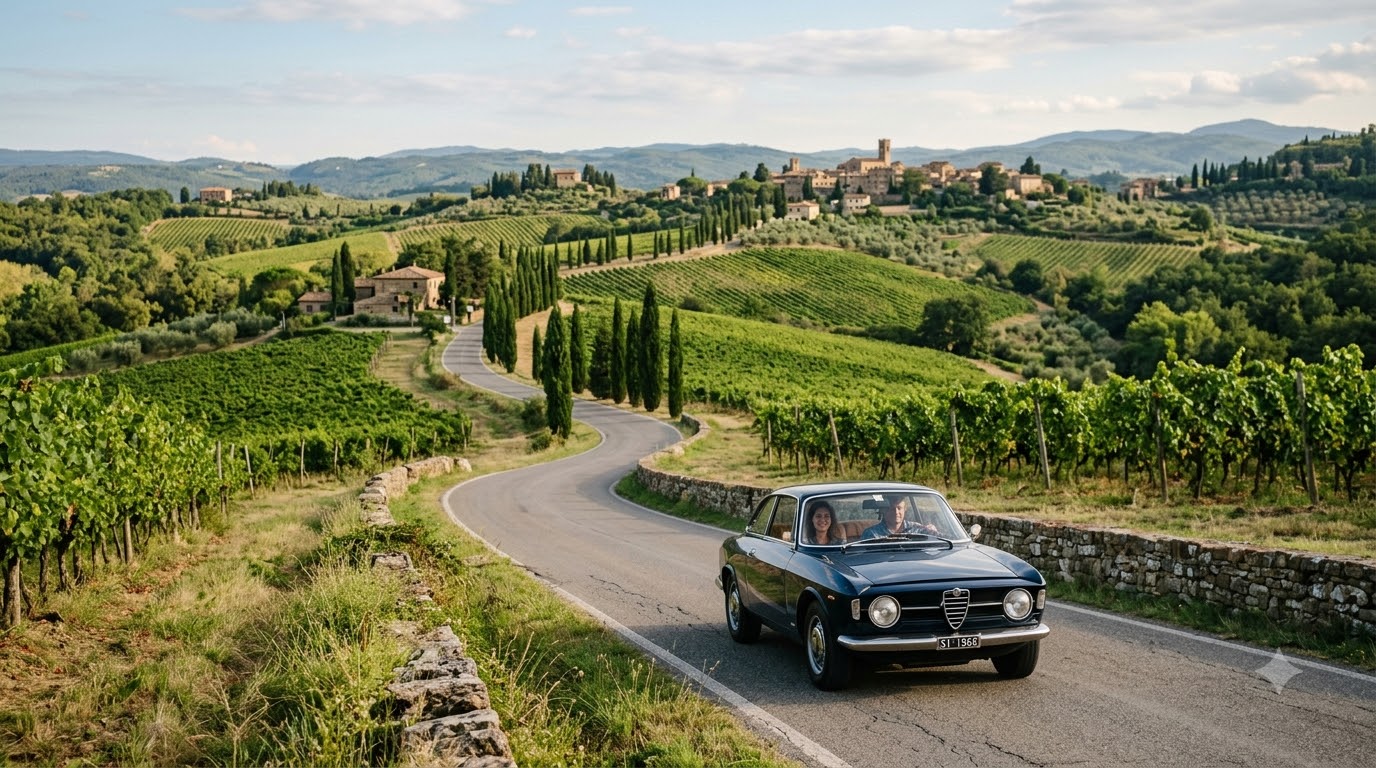
The Chianti wine road is the best half-day drive in Tuscany, and the SR222 “Chiantigiana” is the spine of it, running about 40 km from Florence to Siena through vineyards and stone villages. The Chianti Classico zone, marked by its black rooster (Gallo Nero) seal, sits between the two cities and produces the Sangiovese-based reds the region is known for.
You do not need to plan much, but you do need a designated driver or a tour, because tastings add up and the roads are narrow and twisting.
Villages worth a stop, roughly north to south:
- Greve in Chianti: the market town gateway, with a triangular piazza and a well-known butcher, Antica Macelleria Falorni.
- Panzano: home to celebrity butcher Dario Cecchini, book ahead if you want the beef.
- Radda in Chianti: a quiet hilltop village that once headed the medieval Chianti League.
- Castellina in Chianti: Etruscan roots and an atmospheric covered walkway, the Via delle Volte.
Typical Chianti tasting costs in 2026 run 15 to 25 euro for a standard flight of three to four wines, and 30 to 45 euro when paired with local pecorino, salumi, and olive oil. On our last drive we booked a mid-afternoon tasting at a family estate near Panzano and had the terrace to ourselves, most large groups clear out by 3 p.m.
The 7-Day Tuscany Itinerary
Hour-by-hour plan, where to stay and what it really costs — free PDF.
Free · No spam · Unsubscribe anytime
Watch the sunrise over Val d’Orcia
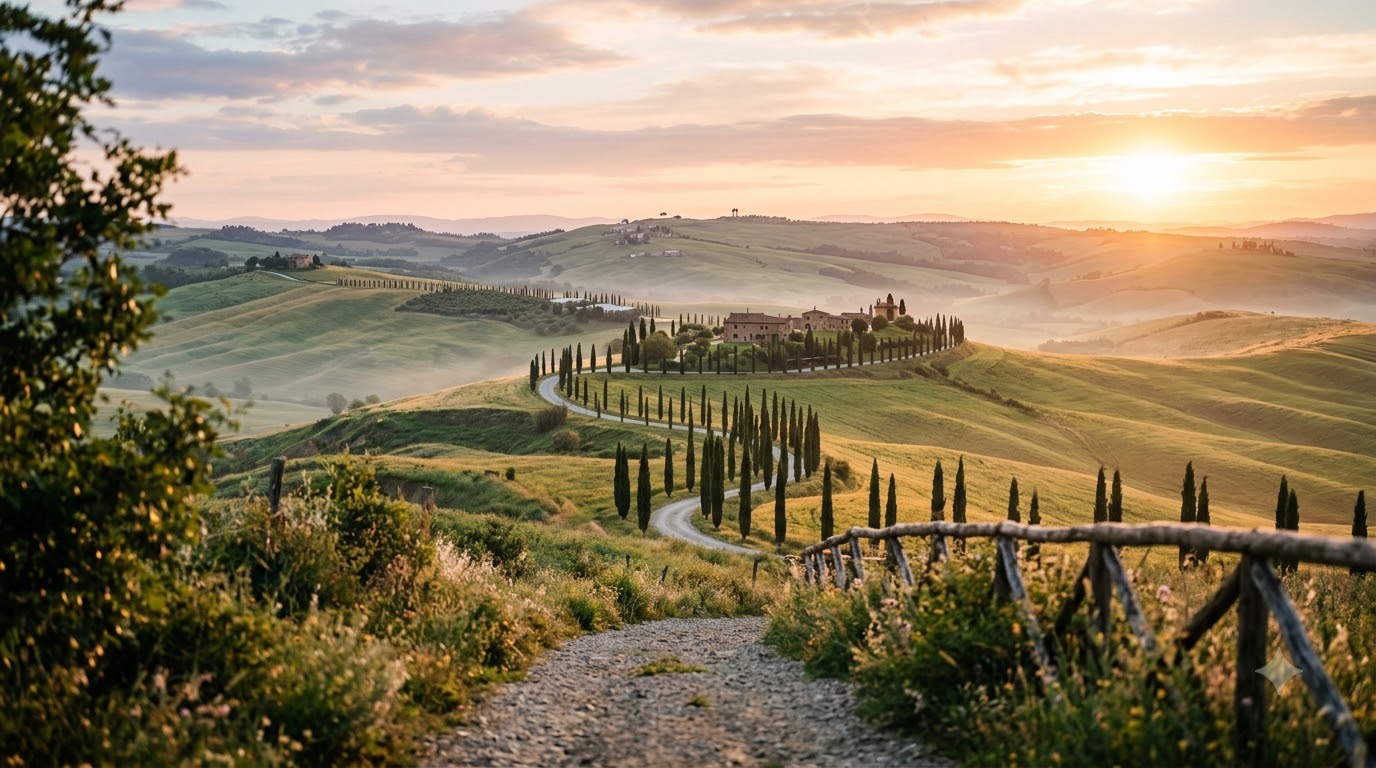
Val d’Orcia is the Tuscany of imagination: the rolling golden hills, solitary farmhouses, and cypress-lined roads that appear on every calendar. The valley was named a UNESCO World Heritage Site in 2004 for exactly this cultivated-landscape beauty, and it sits in the province of Siena, south of the city.
The photogenic core is small and drivable in a morning. We spent three sunrises here and never tired of it.
Icons to find, all within about 20 km of each other:
- The cypress avenue at Poggio Covili, just off the SR2 near Bagno Vignoni.
- The chapel of Vitaleta, framed between two hills on the walk from San Quirico d’Orcia toward Pienza.
- The winding cypress road below San Quirico d’Orcia, the most photographed lane in Tuscany.
- Pienza, the “ideal Renaissance town,” known for its pecorino cheese and panoramic wall walk.
- Montalcino and Montepulciano, hilltop wine towns producing Brunello and Vino Nobile respectively.
Go at first light. By mid-morning the roadside pull-offs fill with tripods, and the summer heat flattens the color. Golden hour after 7 p.m. in summer is the second-best window.
Sit in Siena’s Piazza del Campo
Siena’s Piazza del Campo is one of Europe’s greatest public squares, a shell-shaped, gently sloping space of red brick fanning out below the 88 m Torre del Mangia. Unlike Florence, Siena is compact, walkable, and largely car-free inside the walls, you can see the highlights in a day.
The city is also home to the Palio, a bareback horse race run twice each summer around the Campo itself. In 2026 the races fall on 2 July (Palio di Provenzano) and 16 August (Palio dell’Assunta). Ten horses representing ten of Siena’s 17 contrade (districts) run three laps in a frenzy that lasts just 75 to 90 seconds, though the pageantry and trial races fill the four days before.
What to prioritize in Siena:
- Piazza del Campo: free to enter, best at dusk when the brick glows.
- Siena Cathedral (Duomo): a striped marble Gothic masterpiece, entry around 8 to 16 euro depending on whether the Gate of Heaven rooftop is included.
- Torre del Mangia: climb 400-plus steps for the rooftop view over the terracotta city.
- Palio (if visiting in early July or mid-August): the central Campo is free but packed, book a balcony seat months ahead if you want comfort.
If hill towns are your main draw, we go deeper on the best walled villages in our guide to the best hill towns in Tuscany.
Climb the medieval towers of San Gimignano
San Gimignano is famous for its skyline of stone towers, and it earns its nickname of the “medieval Manhattan.” The town once bristled with about 72 towers built by rival wealthy families as displays of status, today 14 survive, and the tallest, Torre Grossa, rises 54 m and was completed in 1310.
You can climb Torre Grossa for one of the best panoramas in Tuscany. The town is small and gets very busy midday with coach tours, so arrive early or stay overnight to have the lanes to yourself after 6 p.m.
While there, do these:
- Climb Torre Grossa for the tower-and-hills view (ticket usually bundled with the civic museum).
- Try the world-champion gelato at Gelateria Dondoli on Piazza della Cisterna.
- Taste the local white wine, Vernaccia di San Gimignano, Tuscany’s notable white in a land of reds.
- Walk the full circuit of the medieval walls for free.
Soak in a natural thermal spring
Tuscany sits on volcanic geology, and free open-air thermal springs are one of its most underrated pleasures. Two stand out, and both cost nothing.
| Spring | Location | Water temp | Cost | Best for |
|---|---|---|---|---|
| Cascate del Mulino, Saturnia | Southern Maremma | ~37.5 C year-round | Free | Terraced waterfall pools |
| Bagni San Filippo | Near San Quirico, Val d’Orcia | ~48 C at source | Free | Woodland calcium formations |
| Bagno Vignoni | Val d’Orcia village | Warm | Free to view; paid spa pools | Historic thermal piazza |
Sources: Regione Toscana thermal-tourism information; on-site signage 2026.
Practical tips from experience:
- Saturnia’s Cascate del Mulino is busiest on weekends, we went at dawn on a weekday and shared it with a dozen people instead of hundreds.
- Bring water shoes, the travertine terraces are slick and hard.
- There are no lockers at the free springs, leave valuables in the car out of sight.
Take a Tuscan cooking class
A hands-on cooking class is the best rainy-day or arrival-day activity in Tuscany, and it doubles as dinner. Most half-day classes on a farm or in an agriturismo run 70 to 130 euro per person and teach fresh pasta, sauces, and often tiramisu, ending with a long lunch and local wine.
The signature pasta to learn is pici, a thick, hand-rolled spaghetti from the Siena and Val d’Orcia area, typically served with garlic-tomato (all’aglione) or wild-boar ragu.
What a typical class includes:
- A market or garden walk to gather ingredients.
- Rolling fresh pasta by hand (pici, pappardelle, or ravioli).
- Making a classic sauce and a dessert.
- A sit-down lunch or dinner with the food you made, paired with Chianti or Vernaccia.
How many days do you need in Tuscany?
You need at least four to five days to see Tuscany properly: one to two days in Florence, and two to three days for the countryside, Siena, and the hill towns. Three days is enough for a first taste, seven days lets you slow down and add the coast or the Maremma.
A rough time budget that works well:
- Days 1-2: Florence (Uffizi, Accademia, Duomo, wander the Oltrarno).
- Day 3: Chianti wine road drive to Siena, overnight in or near Siena.
- Day 4: Siena old town plus San Gimignano.
- Day 5: Val d’Orcia loop, Pienza, Montepulciano, and a thermal spring.
For a day-by-day version with driving times and where to sleep each night, see our full Tuscany itinerary. If you would rather build your own route around specific villages, the best hill towns in Tuscany guide pairs well with it, and the region-wide Tuscany travel guide covers transport and seasons.
When is the best time to visit Tuscany?
The best time to visit Tuscany is late April to June and September to mid-October, when temperatures are mild, the hills are green or golden, and the crowds are lighter than the July-August peak. Summer is hot and busy; winter is quiet, cheap, and often beautiful, but many rural agriturismi and restaurants close.
| Season | Months | Typical daytime temp | What it’s like |
|---|---|---|---|
| Spring | Apr-Jun | 16-26 C | Green hills, wildflowers, ideal walking |
| Summer | Jul-Aug | 28-35 C | Hot, crowded, Palio and festivals |
| Autumn | Sep-mid Oct | 18-27 C | Harvest, wine season, golden light |
| Winter | Nov-Mar | 5-13 C | Quiet, cheap, some rural closures |
Sources: regional climate averages; Regione Toscana seasonal data.
Season-by-season quick guidance:
- For photography: late May-June (green) or late September (harvest gold).
- For wine harvest (vendemmia): September into early October.
- For the Palio: early July or mid-August, accepting the heat and crowds.
- For low prices: November-March, but check that your countryside stay is open.
Frequently Asked Questions
Do you need a car to explore Tuscany?
You need a car to explore rural Tuscany properly, especially Val d’Orcia, the Chianti wine road, and the smaller hill towns, which have little or no public transport. Florence, Siena, Pisa, and Lucca are all well connected by train, so a car-free trip focused on cities is easy. Many travelers do a hybrid: trains between the main cities, then a two- or three-day car rental for the countryside.
How much does a day in Tuscany cost in 2026?
A mid-range day in Tuscany in 2026 runs roughly 120 to 200 euro per person, covering a mid-range hotel or agriturismo (80 to 150 euro), meals (30 to 50 euro), and one paid activity such as a museum or tasting (16 to 45 euro). Rural agriturismi and picnic lunches keep costs down, while Florence and peak-season August push them up.
Is Florence or Siena a better base for Tuscany?
Florence is the better base for art, nightlife, and train connections, while Siena is the better base for the countryside, the hill towns, and Val d’Orcia. Many visitors split their stay: two nights in Florence, then two or three nights in or near Siena or in an agriturismo in the south.
Can you visit the Uffizi and Accademia in one day?
Yes, you can visit both the Uffizi and the Accademia in one day, since they are a 15-minute walk apart in central Florence. Book the Accademia (David) for the morning and the Uffizi for the afternoon after 4 p.m. to use the 16 euro discount, and allow about 1.5 hours for the Accademia and 2.5 to 3 hours for the Uffizi.
When is the Siena Palio in 2026?
The Siena Palio runs on 2 July 2026 (Palio di Provenzano) and 16 August 2026 (Palio dell’Assunta). Both races take place in the Piazza del Campo and last only 75 to 90 seconds, but trial runs and processions fill the preceding four days. The center of the square is free but extremely crowded; balcony and grandstand seats sell out months ahead.
Final thoughts
Tuscany works best when you let the countryside set the pace and treat the cities as concentrated bursts of art. Book Florence’s museums ahead, keep a car for the back roads of Chianti and Val d’Orcia, and leave room in the plan for a slow lunch that turns into an afternoon. The famous sights deliver, but the quiet cypress lane at dawn and the tasting where you had the terrace to yourself are the parts you will actually remember.