Matterhorn Zermatt: Best Viewpoints Guide 2026
By TravelguidestipUpdated 10 min readHow we earn
Hotel buttons open Stay22 (Booking.com, Agoda and others) and tour buttons open GetYourGuide. We may earn a commission at no extra cost to you.
In short
- Gornergrat is the classic face-on view: CHF 132 return in summer, roughly 33 minutes each way by rack railway, station at 3,089 m.
- Riffelsee, one stop below Gornergrat at Rotenboden (2,815 m), holds the mirror-reflection shot of the Matterhorn on windless mornings.
- Matterhorn Glacier Paradise is the highest cable-car station in Europe at 3,883 m; summer return fares start around CHF 120 and reach CHF 207 for the full crossing toward Testa Grigia.
- Rothorn (3,103 m) on the Sunnegga side gives a quieter, side-lit view; the top cable car runs only 27 June to 4 October 2026.
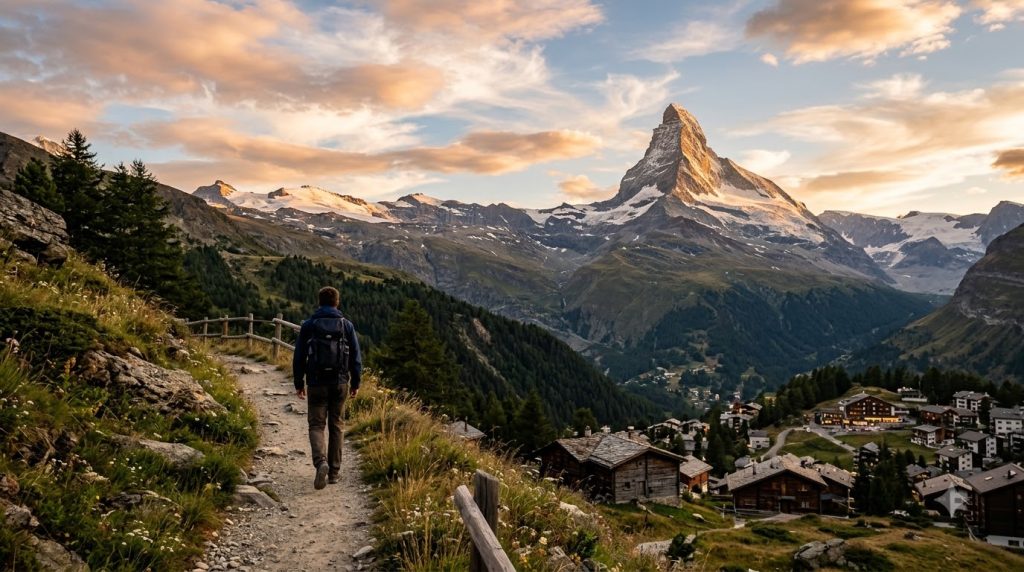
- Sunrise is the strongest light on the Matterhorn’s east face, so an early Gornergrat or Riffelsee trip beats a midday one for photos.
The best place to see the Matterhorn from Zermatt is Gornergrat, a 3,089-metre ridge reached by a rack railway that has run since 1898 (Gornergrat Bahn). From there the 4,478-metre pyramid stands almost dead ahead, framed by the Gorner Glacier.
But Gornergrat is one of four very different lookouts, and the “best” one depends on whether you want a reflection shot, a face-on portrait, or the highest cable-car station in Europe.
This guide covers the four main Matterhorn viewpoints above Zermatt: Gornergrat, the Sunnegga-Rothorn ridge, Matterhorn Glacier Paradise (Klein Matterhorn), and the Riffelsee reflection lake. For each we give the 2026 lift price, ride time, opening window, and the specific angle you get, plus a sunrise plan and photo settings. Zermatt itself is car-free, so every viewpoint here is reached by train or cable car, not by driving.
The Riffelsee reflection worked on only one of those four mornings, the single day with no wind before 8am, which is exactly why we tell everyone to build in a buffer day.
Where is the best view of the Matterhorn from Zermatt?
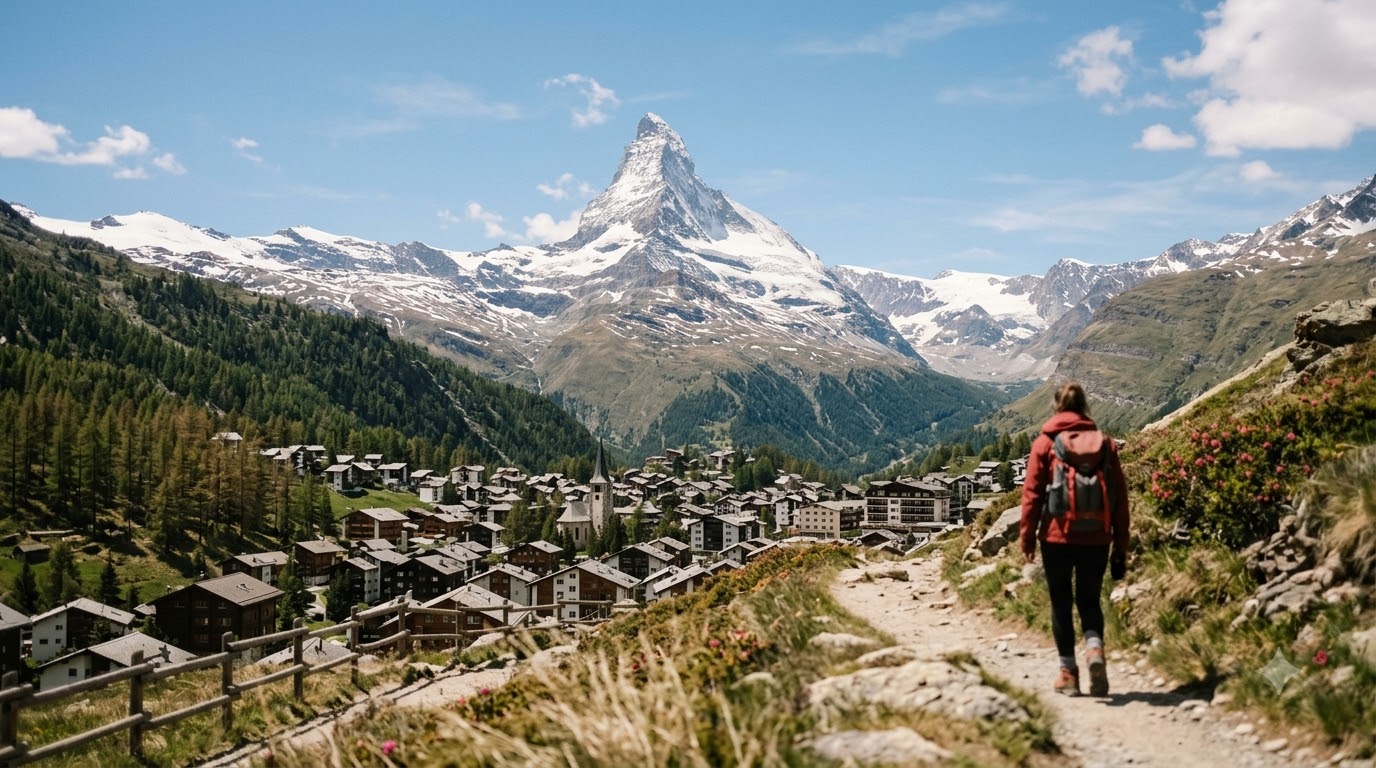
Gornergrat gives the most complete Matterhorn view from Zermatt, combining the peak with the Gorner Glacier and a 360-degree ring of 29 four-thousand-metre summits. The rack railway climbs from Zermatt village (1,620 m) to the Gornergrat station at 3,089 m, and the Matterhorn sits to the west across the valley, so it photographs well from mid-morning onward once the sun swings around.
We rank the four viewpoints by what they actually deliver, not just altitude:
- Gornergrat (3,089 m): widest panorama, glacier foreground, easiest to reach; best all-round first trip.
- Riffelsee at Rotenboden (2,815 m): the reflection shot; a short walk from the train, best before 8am.
- Matterhorn Glacier Paradise (3,883 m): highest and most dramatic, but the peak looks more distant and side-on from here.
- Sunnegga-Rothorn (up to 3,103 m): quietest, good afternoon light, strong for hikers who want space.
If you only ride one lift, make it Gornergrat. For a fuller picture of how these fit into a longer trip, see our complete Zermatt travel guide.
How much do the Zermatt lifts cost in 2026?
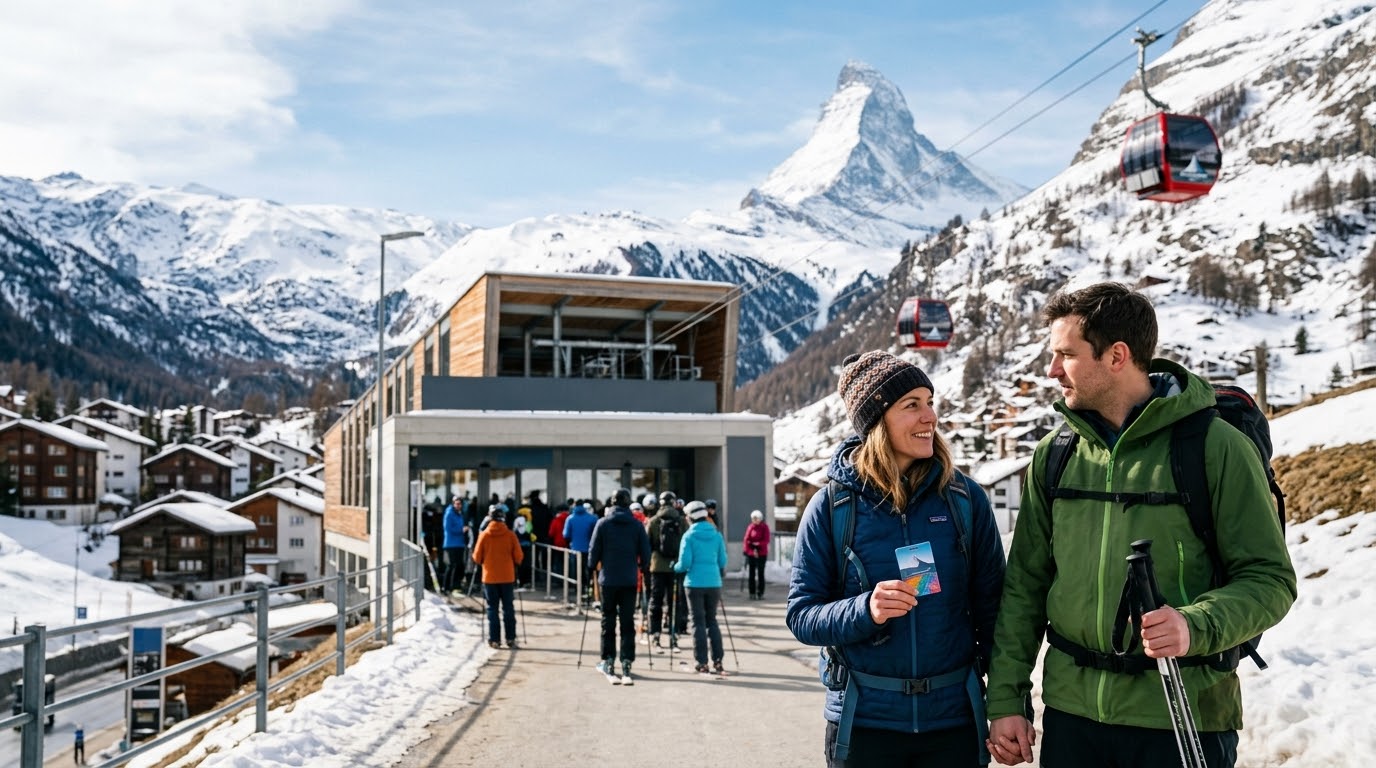
Expect to pay between roughly CHF 120 and CHF 207 for a return ticket to the main Matterhorn viewpoints in summer 2026, with Gornergrat at CHF 132 and Glacier Paradise the most expensive. Prices are set by Gornergrat Bahn and Zermatt Bergbahnen and shift by season, so the figures below are summer high-season rates.
| Viewpoint | Top station altitude | Ride time (each way) | 2026 summer return (adult) | With Swiss Travel Pass / Half Fare |
|---|---|---|---|---|
| Gornergrat | 3,089 m | ~33 min | CHF 132 | CHF 66 |
| Matterhorn Glacier Paradise | 3,883 m | ~45 min (multi-stage) | from CHF 120 (to CHF 207 full) | varies by segment |
| Sunnegga-Rothorn | 3,103 m | ~25 min (multi-stage) | from CHF 48 per segment | varies by segment |
| Riffelsee (Rotenboden stop) | 2,815 m | ~28 min | included on Gornergrat ticket | CHF 66 |
Practical money notes for 2026:
- Swiss Travel Pass and Swiss Half Fare Card both give 50 percent off Gornergrat, dropping the return to CHF 66 (Gornergrat Bahn).
- The Gornergrat alternative round trip (gondola up via Furi to Riffelberg, rack railway down) starts at CHF 141 for 27 June to 16 August 2026.
- Glacier Paradise fares rise in tiers: the CHF 207 figure is the peak-summer crossing all the way to Testa Grigia via Klein Matterhorn.
- Children and Junior cards cut fares sharply, so families should price the Junior Travel Card before buying individual tickets.
Budget the lift as the single largest daily cost in Zermatt; it usually beats what you spend on food. For more on planning spend and activities, see the best things to do in Zermatt.
Gornergrat: the classic Matterhorn view
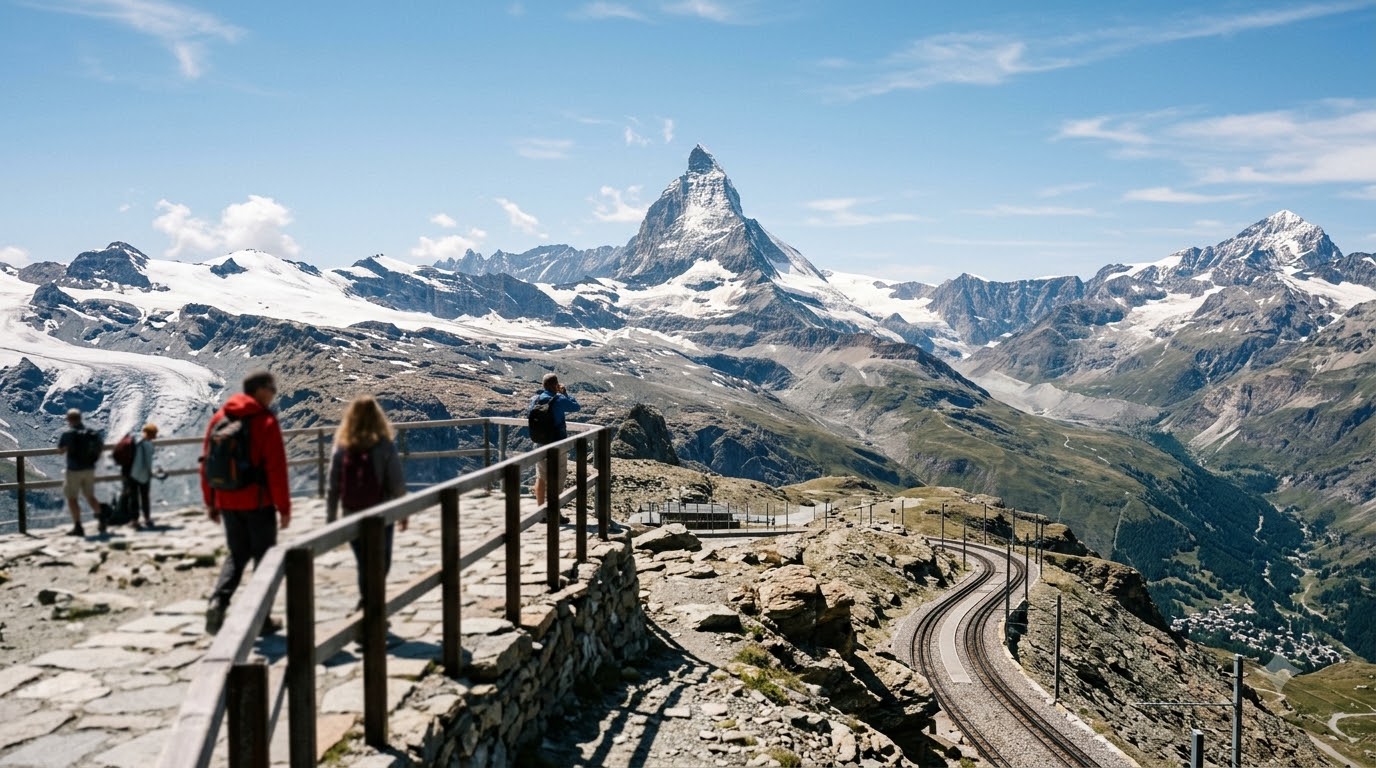
Gornergrat is the face-on Matterhorn viewpoint and the one most first-timers picture. The train leaves from Gornergrat Bahn station directly opposite Zermatt’s main railway station, climbs through three intermediate stops, and reaches the summit ridge in about 33 minutes. On our runs, the right-hand side of the carriage going up held the Matterhorn views, so we boarded early to claim those seats.
What you get at the top:
- A 360-degree panorama taking in the Matterhorn, Monte Rosa (Switzerland’s highest at 4,634 m), and the Gorner Glacier below.
- An open-air viewing terrace and the 3100 Kulmhotel, the highest hotel in the Swiss Alps, if you want to overnight for sunrise.
- Marked trails down to Rotenboden and Riffelberg, so you can ride up and walk part-way back for changing angles.
The best light tends to fall between 10am and noon in September, when the sun has moved enough to hit the east face directly. The first train of the day is worth catching in July and August simply to beat the crowds on the terrace.
Riffelsee: the Matterhorn reflection shot
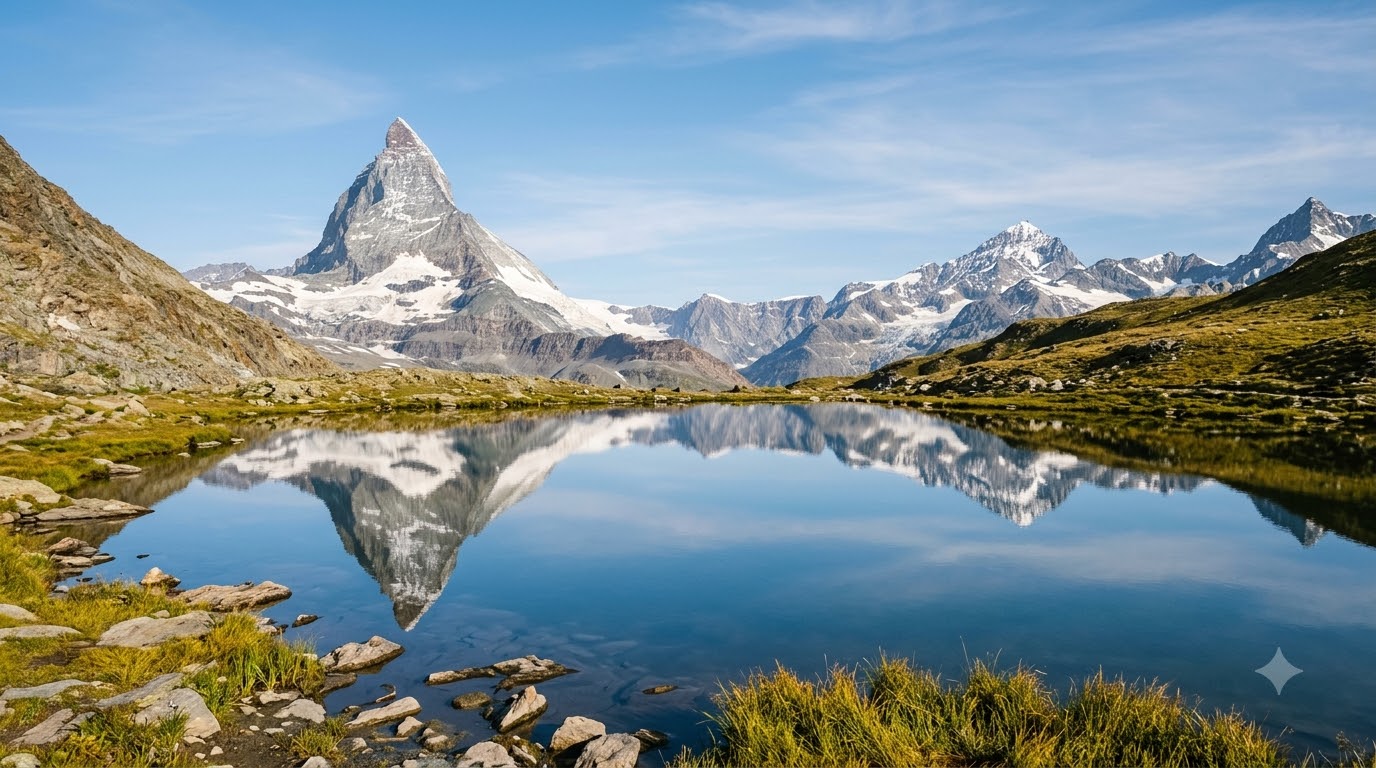
The Riffelsee is the place to photograph the Matterhorn reflected in still water, and it sits just a short signed walk from the Rotenboden station, one stop below Gornergrat at 2,815 m. There are actually two small lakes here; the upper one gives the cleaner mirror. The reflection only forms on windless mornings, which is the single biggest variable in this whole guide.
To improve your odds:
- Go at first light, before the valley breeze picks up; wind almost always builds after 8am to 9am in summer.
- Get off at Rotenboden, not Gornergrat, then walk two to three minutes downhill to the water.
- Shoot low, close to the surface, to double the peak in the frame.
- Check the forecast for wind, not just cloud; a clear but breezy morning ruins the mirror.
The Riffelsee stop is covered by the same Gornergrat ticket, so the reflection costs nothing extra beyond the CHF 132 return. Timing it for the right morning is the hard part, which ties directly into choosing the best time to visit Zermatt.
Matterhorn Glacier Paradise: the highest viewpoint
Matterhorn Glacier Paradise is the highest cable-car station in Europe at 3,883 m, reached by a multi-stage gondola and cable-car ride from the Zermatt edge of the village. From the summit platform on Klein Matterhorn you look across glaciers into Italy, and on a clear day the view stretches to Mont Blanc and the Mischabel range.
The Matterhorn itself appears more side-on and slightly more distant here than from Gornergrat, so treat this trip as an altitude and glacier experience first, a Matterhorn portrait second.
At the top you will find:
- The Glacier Palace, an ice cave carved into the glacier at over 3,800 m, kept just below freezing year-round.
- A viewing platform reached by lift, with a wind-exposed outlook toward the Italian Alps.
- Year-round snow, so bring warm layers even in July; summit temperatures often sit near or below freezing.
Return fares start around CHF 120 in summer and climb to CHF 207 for the full crossing toward Testa Grigia. Because the station tops 3,880 m, ascend slowly and give yourself time if you feel the altitude; the change from the 1,620-metre village is abrupt.
Sunnegga and Rothorn: the quiet alternative
The Sunnegga-Blauherd-Rothorn ridge is the least crowded Matterhorn viewpoint and the best one for afternoon light. The funicular to Sunnegga (2,288 m) leaves from the eastern end of Zermatt and takes only a few minutes, then cable cars continue to Blauherd (2,571 m) and Rothorn (3,103 m). This side of the valley faces the Matterhorn’s east flank, so the light is warmer later in the day.
Key facts for planning the Rothorn side in 2026:
- The Blauherd-to-Rothorn cable car runs only 27 June to 4 October 2026 in summer, so the very top is seasonal.
- The Five Lakes Walk (5-Seenweg) starts here and passes the Stellisee, another strong reflection lake, on a roughly two-hour route.
- Segment tickets start from CHF 48, letting you tailor how high you go rather than buying one fixed fare.
- Sunnegga alone is enough for a quick view if you are short on time, since the funicular runs frequently and fast.
We used this side on our windier afternoons when the Riffelsee mirror was off the table, and the Stellisee gave us a workable reflection when the light turned around 5pm. The Five Lakes Walk also ranks high on our list of the best things to do in Zermatt beyond the viewpoints themselves.
Getting to car-free Zermatt
Zermatt bans private cars, so the drive in only gets you as far as Täsch, about five kilometres short of the village. Park at the Matterhorn Terminal there, which has around 2,100 covered spaces plus over 1,000 more from private operators, then take the shuttle train the rest of the way.
Shuttle trains run every 20 minutes and take about 12 minutes to reach Zermatt, and a licensed taxi covers the same short route if you’d rather skip the train. Either way, factor this extra step into your arrival time rather than assuming you can drive straight to your hotel.
If you’re arriving by rail instead, Zermatt has direct train links from Switzerland’s main hubs, with the Zurich Airport run taking roughly three-and-a-half hours and Geneva or Basel airports around four hours, served by SBB and the Matterhorn Gotthard Bahn with departures about every half hour on the main routes.
Once you’re in the village itself, most hotels and the lift stations are an easy walk, and an electric bus runs two complimentary routes through town for anyone not keen on hauling luggage uphill. E-taxis, bikes and even horse-drawn carriages cover the rest of the in-village trips if you need them.
If you’re flying in from Australia, build in a buffer day either side of the Täsch-Zermatt leg, since most itineraries arrive into Zurich or Geneva after a long-haul flight and a same-day onward train plus shuttle can feel like a stretch after that much travel.
Luggage is the other practical detail worth sorting ahead of time. Porters are available at Zermatt’s station for a fee, and some hotels offer their own pickup from the platform, so check with your accommodation before hauling bags uphill yourself, especially if you’re staying somewhere above the main street.
When should you go, and what should you pack?
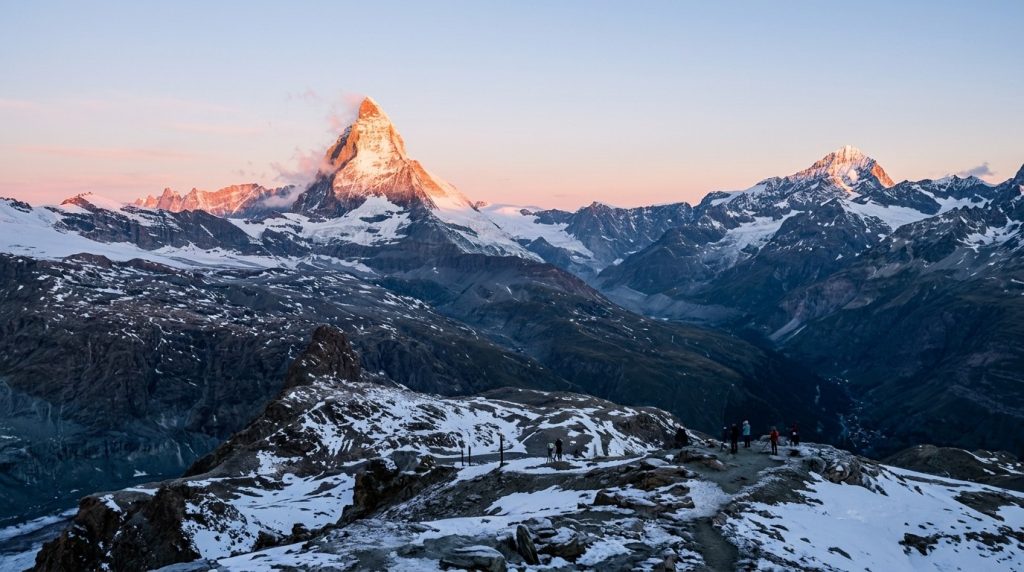
Go at sunrise for the strongest light on the Matterhorn, because the peak faces roughly east and its face lights up first while the valley is still in shadow. Midday flattens the mountain; late afternoon works better from the Sunnegga-Rothorn side than from Gornergrat.
A short field checklist we now follow every trip:
- Layers for freezing tops: even in July, Glacier Paradise and Gornergrat can sit near 0 C at dawn.
- Sun protection: at 3,000-plus metres the UV is intense; sunglasses and sunscreen matter more than in the valley.
- A wind check the night before: it decides whether the Riffelsee and Stellisee reflections are on.
- First-train tickets in July and August: the terraces fill fast by mid-morning in peak season.
- Cash-free payment: lifts and mountain restaurants take cards, so you rarely need Swiss francs in hand.
Weather is the wildcard. On our four mornings, two were fully clear, one had a cloud cap on the summit until 9am, and one stayed socked in, which is why a two-night minimum in Zermatt gives you a fair shot at one clean morning. Where you base yourself affects how easily you catch that first train; compare options in our guide to where to stay in Zermatt.
Find your Zermatt hotel on the map
Live prices from Booking, Airbnb and more — move the map or change dates to compare stays around Zermatt.
Frequently Asked Questions
Can you see the Matterhorn from Zermatt village without taking a lift?
Yes. The Matterhorn is visible from the main street and especially from the Kirchbrücke bridge over the Matter Vispa river, which is a popular free photo spot. But the village sits at 1,620 m and trees and buildings partly block the base, so the lift viewpoints at Gornergrat, Rothorn, and Glacier Paradise give the unobstructed, full-height views.
Which Zermatt viewpoint is best for the Matterhorn reflection?
The Riffelsee at Rotenboden is the classic reflection spot, reached on the Gornergrat railway and covered by the standard CHF 132 return ticket. The Stellisee on the Sunnegga-Rothorn side is the strong second option and often works in the afternoon. Both need a windless surface, so check the wind forecast rather than only the cloud forecast.
How long do you need to see the Matterhorn from Zermatt?
Plan at least two full days. One day covers Gornergrat and the Riffelsee, and a second covers either Glacier Paradise or the Sunnegga-Rothorn ridge. A two-night stay also buys a spare morning in case your first sunrise is clouded out, which happens often given the peak makes its own weather.
Is Matterhorn Glacier Paradise worth it over Gornergrat?
For a first-time Matterhorn view, Gornergrat is the better choice because the peak looks larger and more face-on and the ticket is cheaper at CHF 132. Choose Glacier Paradise if your priority is standing at Europe’s highest cable-car station at 3,883 m, seeing the glacier ice cave, and looking across into Italy. Many visitors with three or more days do both.
What is the best time of day to photograph the Matterhorn?
Sunrise gives the best light, because the Matterhorn’s main face points roughly east and catches the first sun while the valley stays dark, producing the pink-gold glow known locally as alpenglow. From the Sunnegga-Rothorn side, late afternoon around 5pm to 6pm in summer is the alternative, when the west-facing light warms up.
Seeing the Matterhorn from Zermatt is less about picking one perfect spot and more about matching the viewpoint to the morning’s weather and light. Gornergrat is the reliable anchor, the Riffelsee rewards a still dawn, Glacier Paradise delivers altitude, and Rothorn gives you space and afternoon warmth. Give yourself two mornings, watch the wind, and one of them will almost certainly hand you the mountain at its best.