Best Food in Bali 2026: 10 Must-Try Dishes + Warungs
By TravelguidestipUpdated 12 min readHow we earn
Hotel buttons open Stay22 (Booking.com, Agoda and others) and tour buttons open GetYourGuide. We may earn a commission at no extra cost to you.
In short
- Warung meals cost 15,000-35,000 IDR ($0.95-$2.20), making Bali one of the cheapest food destinations in Southeast Asia
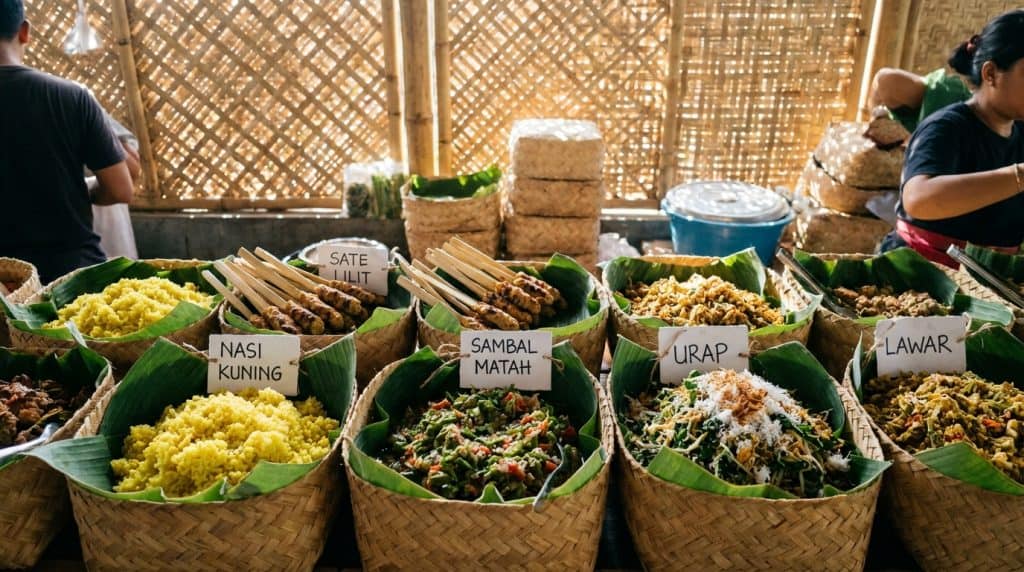
- Babi guling (suckling pig) and sate lilit (minced seafood satay) are unique to Bali
- Gianyar Night Market is the best single food destination for variety and price
- Food ranks as visitors’ #2 priority in Bali after beaches (Indonesian Ministry of Tourism, 2024)
- Bali food tours typically cover 6-8 tastings per session — compare options on GetYourGuide
Balinese cuisine is distinct from the rest of Indonesian cooking, shaped by Hindu traditions that include ceremonial dishes you won’t find on Java or Sumatra. According to a 2024 survey by the Indonesian Ministry of Tourism, food experiences rank as the second most important factor for visitors choosing Bali, behind only beaches (Indonesian Ministry of Tourism, 2024).
That tracks with what We’ve seen. People come for the views and stay for the babi guling.
We’ve eaten at warungs, night markets, and fine dining spots across Ubud, Seminyak, Canggu, and Sanur over multiple trips. This guide covers the 10 dishes you absolutely need to try, the best warungs by area, and restaurant picks at every budget level, all with current 2026 prices.
We only recommend services we genuinely trust. Learn more.
What Are the Must-Try Dishes in Bali? — Best Food Bali
Quick answer: Bali’s signature dishes are babi guling (spit-roasted suckling pig) and bebek betutu (duck slow-cooked for up to 12 hours), alongside everyday plates like nasi campur, sate lilit, and lawar. Balinese cooking leans on rice, coconut, and complex bumbu spice pastes, with pork featuring far more than in the rest of Indonesia. Most warung dishes cost 15,000-35,000 IDR (about $0.95-$2.20).
Balinese food centers on rice, spice pastes (bumbu), and coconut, with pork playing a much larger role than in Muslim-majority Indonesia. Warung prices across Bali average 15,000-35,000 IDR ($0.95-$2.20) per dish according to BPS Statistics Indonesia (2024), making it possible to eat extraordinary food for under $7 a day.
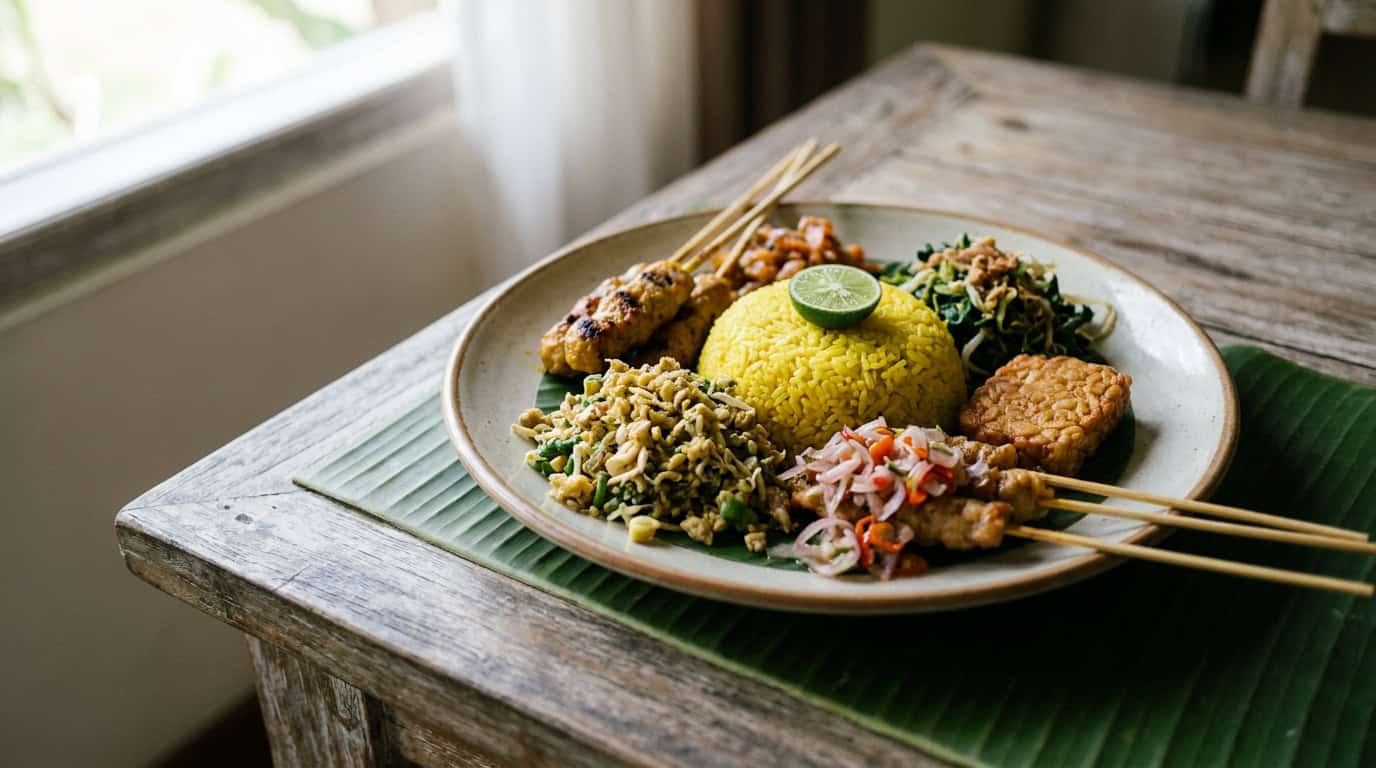
Warung meals in Bali average 15,000-35,000 IDR ($0.95-$2.20) per dish according to BPS Statistics Indonesia, and the island’s Hindu culinary traditions produce unique pork and ceremonial dishes unavailable elsewhere in the Indonesian archipelago.
1. Nasi Campur (Mixed Rice)
Bali’s everyday meal. A mound of steamed rice surrounded by small portions of vegetables, sambal, peanuts, egg, and your choice of meat. Every warung makes it differently. Expect to pay 20,000-35,000 IDR ($1.25-$2.20). The best nasi campur lets you taste 6-8 flavors in a single plate.
2. Babi Guling (Suckling Pig)
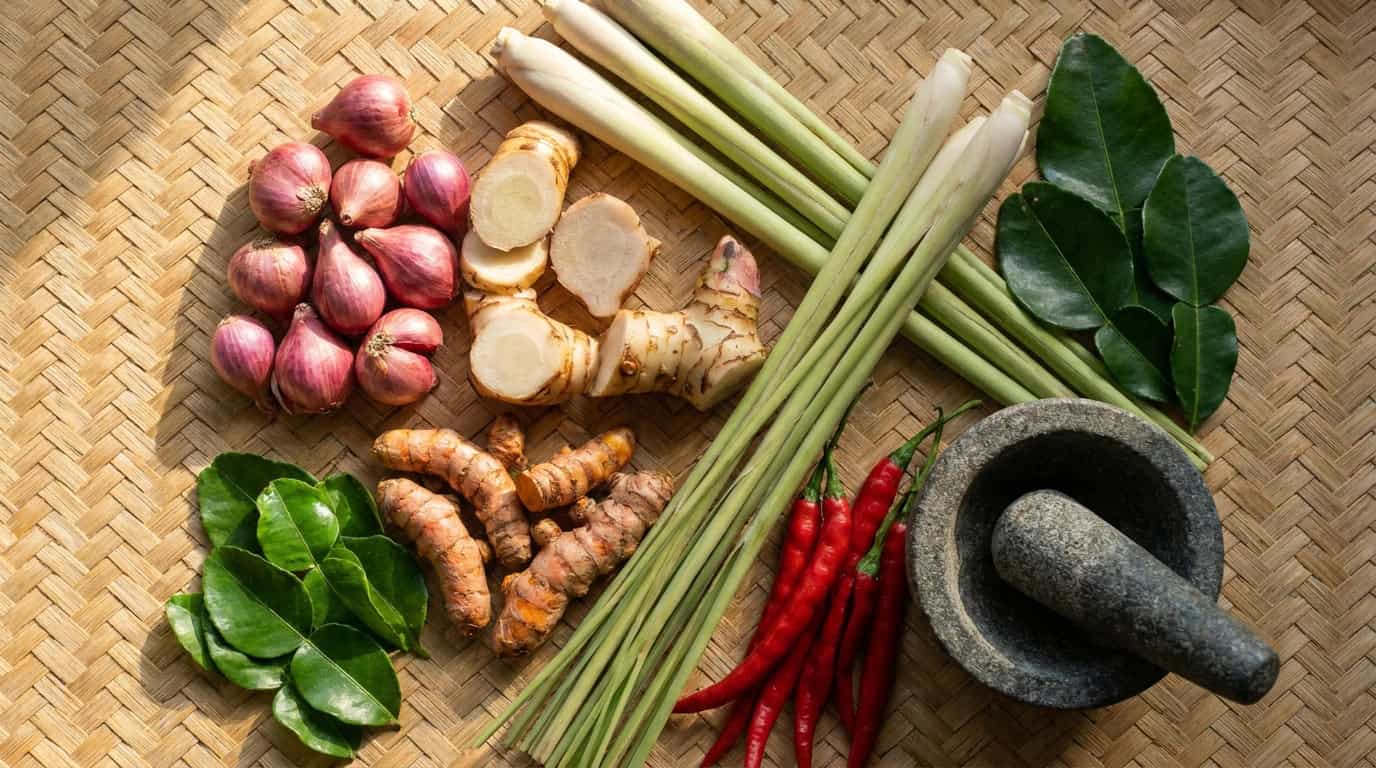
Bali’s signature dish. A whole pig stuffed with a spice paste of turmeric, lemongrass, and chili, then slow-roasted over a wood fire for hours. The skin crisps like crackling, and the meat falls apart. Ibu Oka in Ubud is the most famous spot (65,000 IDR / $4.05). Babi Guling Chandra in Denpasar is where locals go for better portions at lower prices (40,000-55,000 IDR / $2.50-$3.45).
We’ve eaten babi guling at six different spots across Bali. Ibu Oka gets the press, but Babi Guling Chandra on Jalan Teuku Umar in Denpasar serves better-seasoned meat at half the tourist-area price. Get there before 11 AM. They sell out daily by early afternoon.
3. Sate Lilit
Bali’s unique take on satay. Instead of threading cubed meat onto skewers, sate lilit uses minced fish or pork mixed with grated coconut, lime leaves, and lemongrass, then wrapped around lemongrass stalks or bamboo. You’ll find it at most warungs for 15,000-25,000 IDR ($0.95-$1.55) for 4-5 sticks.
4. Lawar
A traditional ceremonial dish made from finely chopped meat, grated coconut, vegetables, and spices, sometimes mixed with fresh blood (lawar merah) or without (lawar putih). The flavor is intensely savory and aromatic. Ask for lawar putih if the blood version sounds too adventurous. Usually served as part of a nasi campur plate.
5. Bebek Betutu (Slow-Cooked Duck)
A whole duck stuffed with a complex spice paste, wrapped in banana leaves, and slow-cooked for up to 12 hours. The result is incredibly tender, aromatic meat that falls off the bone. It’s traditionally a ceremonial dish, but several restaurants in Ubud serve it daily. Expect 50,000-80,000 IDR ($3.10-$5) per portion.
6. Nasi Goreng (Fried Rice)
Indonesia’s national dish appears everywhere in Bali. Sweet soy sauce, garlic, shallots, and chili paste coat fried rice topped with a crispy fried egg. Warung versions cost 15,000-25,000 IDR ($0.95-$1.55). Tourist cafes charge 50,000-80,000 IDR ($3.10-$5) for the same dish with fancier plating.
7. Mie Goreng (Fried Noodles)
The noodle cousin of nasi goreng. Yellow egg noodles stir-fried with vegetables, egg, and sweet soy sauce. It’s quick, filling, and available at every warung. Prices mirror nasi goreng at 15,000-25,000 IDR ($0.95-$1.55).
8. Soto Ayam (Chicken Soup)
A turmeric-yellow chicken broth served over rice vermicelli with shredded chicken, hard-boiled egg, and fried shallots. It’s Bali’s comfort food, served at breakfast stalls across the island. A bowl costs 15,000-20,000 IDR ($0.95-$1.25).
9. Pisang Goreng (Fried Banana)
Battered and deep-fried banana, crispy on the outside, molten on the inside. Vendors sell them in the afternoon for 5,000-10,000 IDR ($0.30-$0.65) for 3-4 pieces. Some stalls add palm sugar syrup or grated cheese.
10. Jamu (Herbal Tonic)
Not food, but essential to Balinese food culture. These traditional herbal drinks made from turmeric, ginger, tamarind, and honey are sold at markets and some warungs. A glass costs 5,000-15,000 IDR ($0.30-$0.95). The turmeric jamu (jamu kunyit) is the most popular.
Why does Bali’s food taste different from the rest of Indonesia? The answer is bumbu, the complex spice pastes that form the base of nearly every Balinese dish. Each family has its own variations, passed down through generations.
Find your Bali hotel on the map
Live prices from Booking & Airbnb — tap a pin to compare stays around Seminyak and Ubud and beyond.
Where Are the Best Warungs by Area?
Warungs are family-run restaurants that serve the best food in Bali at the lowest prices. The average warung meal costs 60-75% less than the same dish at a tourist-facing cafe (BPS Statistics Indonesia, 2024). Here are the top picks by neighborhood.
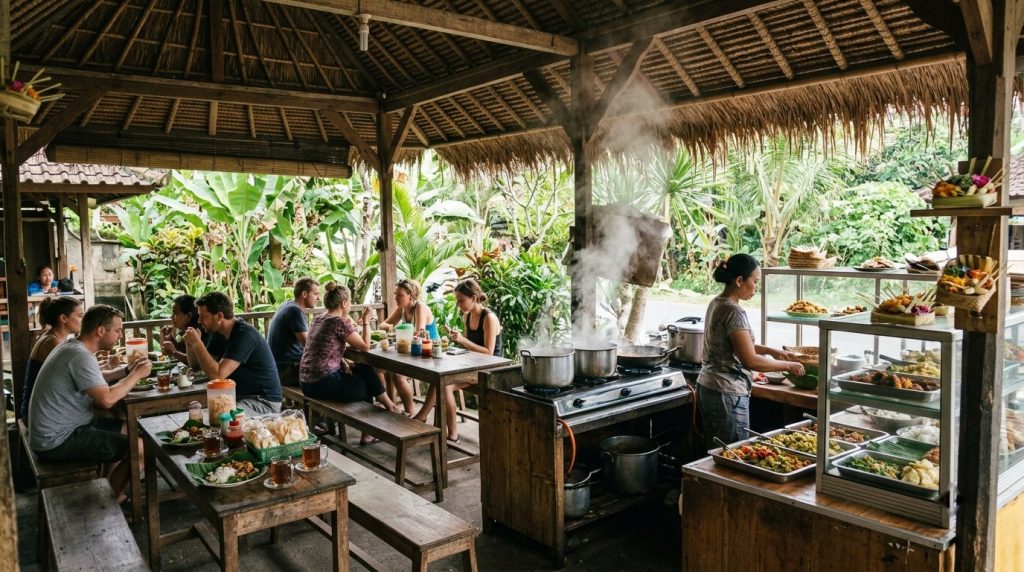
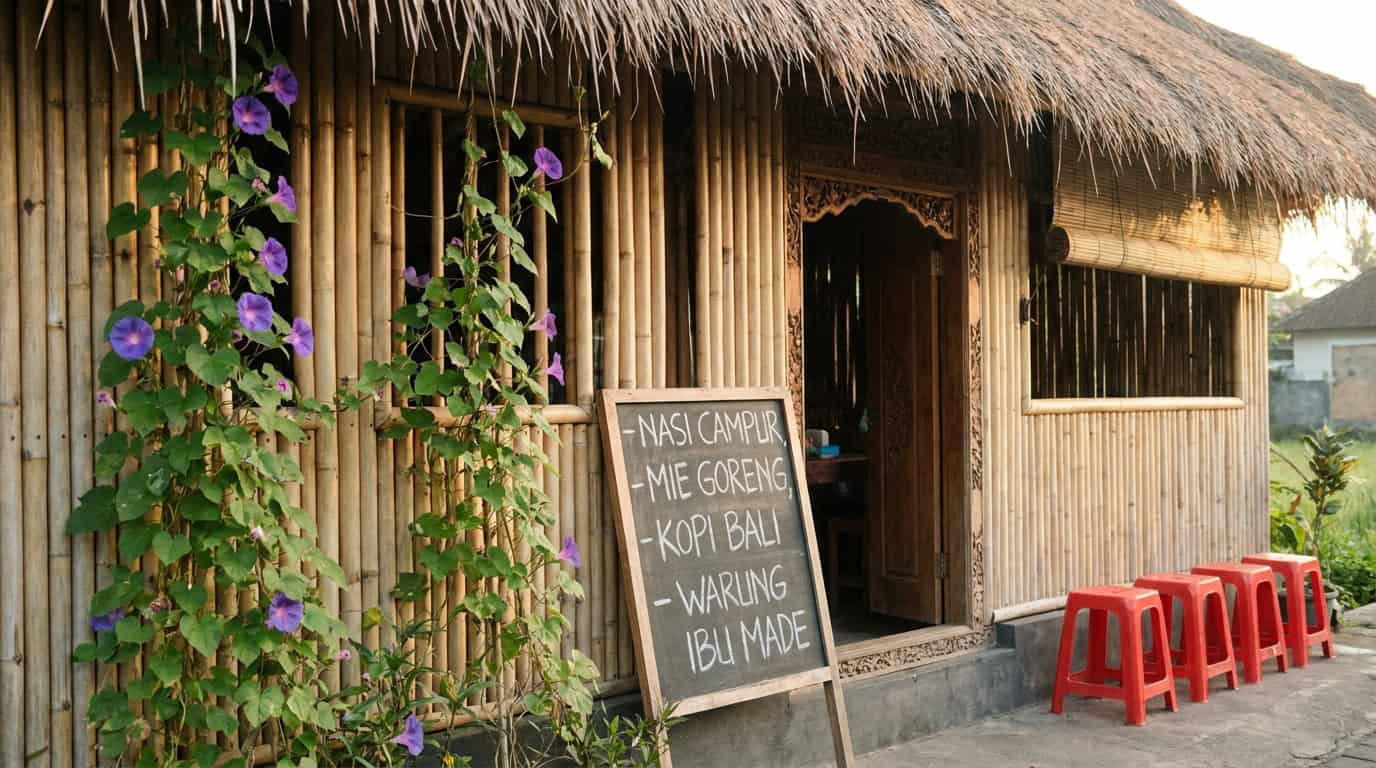
Warung meals in Bali cost 60-75% less than tourist-area restaurants for equivalent dishes, according to BPS Statistics Indonesia pricing data (2024). The best warungs cluster around Ubud, Denpasar, and local neighborhoods in Canggu and Sanur.
Ubud
Warung Biah Biah – Classic Balinese nasi campur with 8-10 side dishes. The babi guling here is excellent and cheaper than Ibu Oka. A full plate costs 35,000 IDR ($2.20). Located on Jalan Raya Ubud.
Warung Makan Bu Mangku – Tiny roadside spot loved by locals for their nasi campur and sate lilit. Portions are generous. Meals run 20,000-30,000 IDR ($1.25-$1.90).
Murni’s Warung – A step above the basics with a jungle valley view. The nasi campur is 45,000-65,000 IDR ($2.80-$4.05), pricier than street warungs but still a bargain for the setting.
Seminyak
Warung Made – An institution on Jalan Raya Seminyak. Their nasi goreng and mie goreng are consistently good. Mains cost 35,000-55,000 IDR ($2.20-$3.45). Open for lunch and dinner.
Warung Murah – “Murah” means cheap, and it delivers. Basic but well-prepared Indonesian staples for 15,000-25,000 IDR ($0.95-$1.55). Popular with local workers.
Canggu
Warung Dandelion – Indonesian and Balinese classics with a relaxed garden setting. Nasi campur runs 30,000-40,000 IDR ($1.90-$2.50). Popular with the digital nomad crowd.
Warung Local – No-frills roadside spot near Batu Bolong serving massive portions of nasi goreng and ayam betutu. Meals are 20,000-30,000 IDR ($1.25-$1.90).
Sanur
Warung Mak Beng – Famous for their single-menu fried fish with rice, sambal, and soup. Served since the 1940s. The meal costs 35,000 IDR ($2.20) flat. There’s no menu. You sit down and they bring it.
After eating at 25+ warungs across Bali over three trips, the price difference between identical dishes in tourist zones versus local neighborhoods averaged 55-65%. A nasi goreng that costs 15,000 IDR in a Denpasar warung consistently costs 50,000-80,000 IDR in a Seminyak cafe.
Which Night Markets Have the Best Food?
Bali’s night markets (pasar malam) offer the widest variety of food at the lowest prices. Gianyar Night Market attracts an estimated 2,000+ visitors nightly, making it the most popular food market in Bali (Gianyar Regency Tourism Board, 2024).
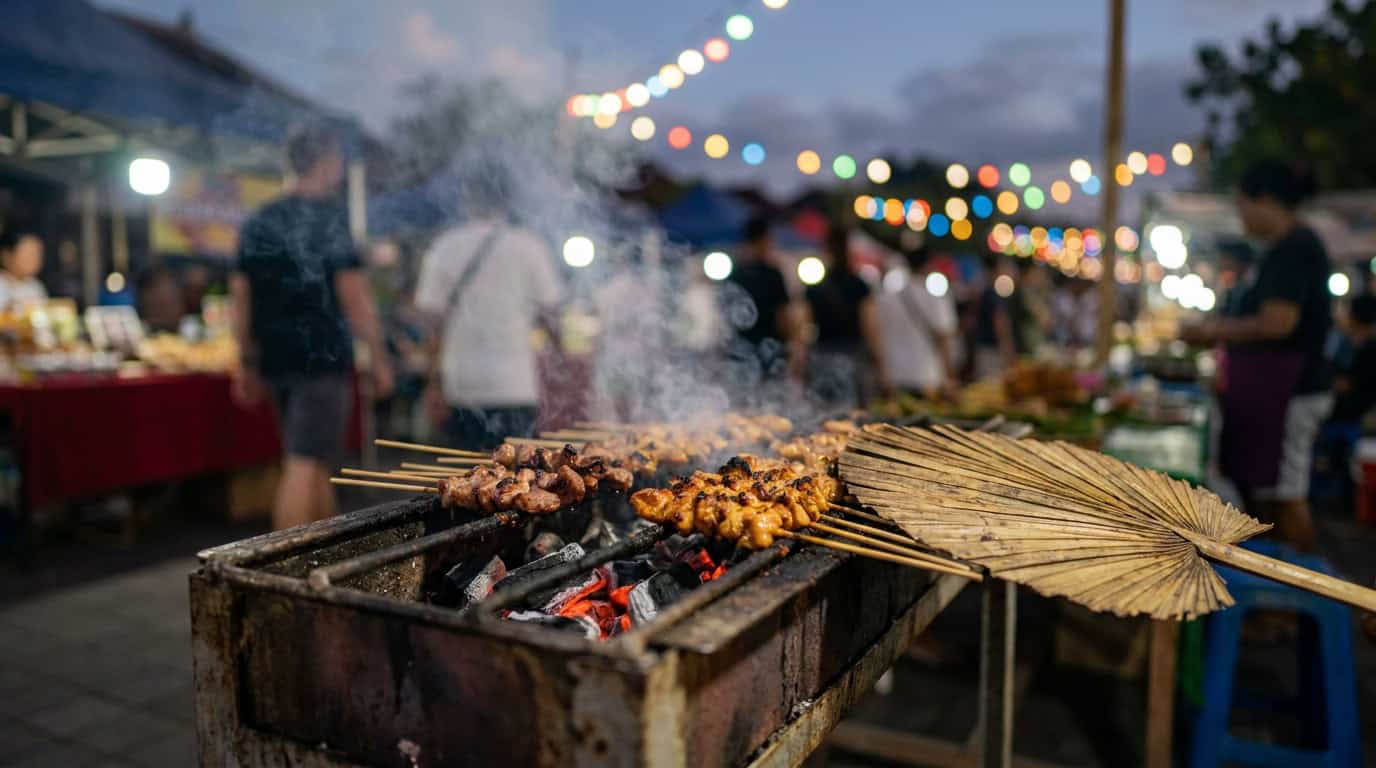
Gianyar Night Market draws over 2,000 nightly visitors according to the Gianyar Regency Tourism Board (2024), offering Bali’s widest variety of street food with prices averaging 10,000-25,000 IDR ($0.65-$1.55) per dish.
Gianyar Night Market (Pasar Senggol Gianyar)
Bali’s best night market. Located 30 minutes east of Ubud. Dozens of stalls serve babi guling, sate, nasi jinggo (small rice portions), martabak (stuffed pancakes), and grilled corn. Prices are 10,000-25,000 IDR ($0.65-$1.55) per dish. Open nightly from 5 PM.
Must-eat: Babi guling plate (20,000 IDR), sate lilit, martabak manis (sweet stuffed pancake).
Sindu Night Market (Sanur)
A smaller, more tourist-friendly market in Sanur. The seafood grills here are excellent. Grilled fish with rice and sambal costs 35,000-50,000 IDR ($2.20-$3.10). Smoothie stalls and dessert vendors line the edges. Open nightly from 6 PM.
Must-eat: Grilled whole fish, bakso (meatball soup), fresh fruit smoothies.
Sanur Night Market
Similar to Sindu but slightly more local in character. The nasi campur stalls here are particularly good. A full plate costs 15,000-25,000 IDR ($0.95-$1.55). Less crowded on weeknights.
What Are the Best Restaurants in Bali for Every Budget?
Bali’s restaurant scene spans from $1 warung meals to $100+ fine dining tasting menus. The island has 2 restaurants recognized in the Asia’s 50 Best Restaurants 2024 list (The World’s 50 Best, 2024), confirming that Bali’s food scene has grown well beyond tourist fare.
Bali has 2 restaurants on the Asia’s 50 Best Restaurants 2024 list, including Locavore in Ubud, which builds its entire menu around Indonesian ingredients sourced within 100 km of the restaurant (The World’s 50 Best, 2024).
What makes Bali’s food scene unusual is the price range within a single neighborhood. In Ubud, you can eat nasi campur for $1.25 at a warung, then walk 200 meters to Locavore for a $100 tasting menu. That kind of range doesn’t exist in most food destinations.
Street Food and Warungs ($1-3 / 15,000-50,000 IDR)
Ibu Oka (Ubud): Bali’s most famous babi guling, mentioned by Anthony Bourdain. 65,000 IDR per plate. Arrive before noon.
Warung Mak Beng (Sanur): Single-menu fried fish that’s been served since the 1940s. 35,000 IDR flat. No choices, just perfection.
Nasi Jinggo vendors (island-wide): Tiny banana-leaf wrapped rice packets with shredded chicken and sambal. 5,000-10,000 IDR ($0.30-$0.65). Bali’s cheapest meal.
Mid-Range Restaurants ($5-15 / 80,000-240,000 IDR)
Naughty Nuri’s (Ubud): Famous for their pork spare ribs and dirty martinis. Ribs cost 120,000-150,000 IDR ($7.50-$9.40). The atmosphere is boisterous and fun.
Mama San (Seminyak): Pan-Asian comfort food in a converted warehouse. Mains run 120,000-200,000 IDR ($7.50-$12.50). The dim sum selection is standout.
The Shady Shack (Canggu): Plant-based cafe with creative bowls and wraps. Mains cost 65,000-95,000 IDR ($4.05-$5.95). Popular with health-conscious visitors.
Fine Dining ($30+ / 480,000+ IDR)
Locavore (Ubud): Bali’s most acclaimed restaurant. A seasonal tasting menu built entirely from local Indonesian ingredients. Expect 1,500,000-2,000,000 IDR ($93.75-$125) per person. Book weeks ahead.
Mozaic (Ubud): French-Indonesian fine dining in a garden setting. Tasting menus from 1,200,000 IDR ($75). One of Bali’s longest-running upscale restaurants.
Sarong (Seminyak): Asian-inspired fine dining with a cocktail bar atmosphere. Mains cost 200,000-400,000 IDR ($12.50-$25). The duck curry is exceptional.
What Are the Best Food Tours and Cooking Classes?
Guided food tours in Bali cover more ground than most solo eaters manage in a week. Compare Bali food tours and cooking classes on GetYourGuide.
Ubud Food Tour by Scooter
A local guide takes you through Ubud’s backstreet warungs and market stalls on a scooter. Typical tours cover 6-8 tastings over 3-4 hours. You’ll try dishes you’d never find on your own. From $25.
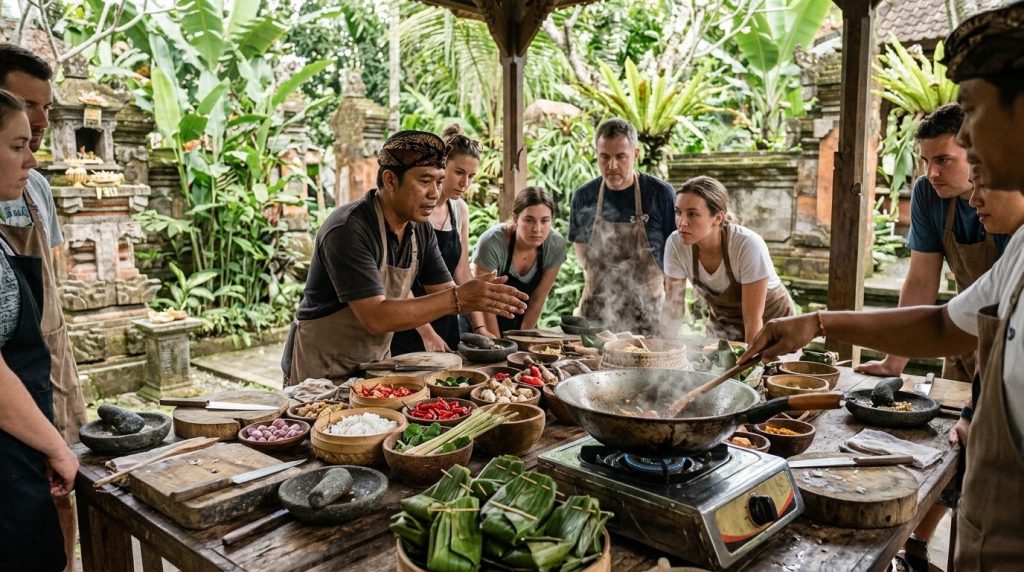
Balinese Cooking Class with Market Visit
Start with a morning visit to a traditional market to buy ingredients with your instructor. Then cook 5-7 dishes in an outdoor kitchen surrounded by rice paddies. You take the recipes home. Classes near Ubud start at $25-35.
Seafood BBQ Experience at Jimbaran
Some operators offer guided Jimbaran seafood dinner experiences with pre-selected fresh catches, beachfront seating, and sunset timing. From $30 including a seafood platter for two.
How often do you get to cook in a jungle kitchen and then eat with a view of rice terraces? That’s a normal Tuesday in Ubud.
I took a cooking class near Tegallalang and it was the highlight of my Ubud stay. The market visit alone taught me more about Balinese ingredients than any restaurant meal. The instructor’s grandmother joined us for lunch and shared family recipes that aren’t written down anywhere.
What Should First-Time Visitors Know About Bali Food?
Bali’s food safety standards have improved steadily, with the Bali Provincial Health Office reporting that over 75% of registered food establishments now meet national hygiene certification standards (Bali Provincial Health Office, 2024).
Spice Levels
Balinese food is spicy. Sambal (chili paste) accompanies nearly every meal. Ask “tidak pedas” (not spicy) if you want mild. Most warungs will adjust without judgment. Start with the sambal on the side and add gradually.
Food Safety Tips
Eat at busy warungs with high turnover. Look for food cooked to order rather than sitting in trays for hours. Drink bottled or filtered water. Ice in restaurants and cafes is generally safe as it comes from commercial factories.
Vegetarian and Vegan Options
Bali, especially Canggu and Ubud, is one of the most vegetarian-friendly destinations in Southeast Asia. Look for “sayur” (vegetable) options at warungs. The Canggu-Seminyak corridor has dozens of dedicated plant-based restaurants. Tempeh and tofu appear in traditional Balinese cooking naturally.
Pork and Dietary Restrictions
Unlike most of Indonesia, Bali’s Hindu majority means pork is common. Babi guling (suckling pig) is the island’s signature dish. If you don’t eat pork, make sure to specify “tidak babi” (no pork) when ordering at warungs where babi guling is the specialty.
Tipping
Tipping isn’t expected at warungs or street stalls. At sit-down restaurants, rounding up the bill or leaving 10,000-20,000 IDR is appreciated. Most upscale restaurants add a 10% service charge plus 11% tax.
About the author: Travelguidestip has been covering Southeast Asia travel since 2023. Read our editorial policy for how we research and verify our guides.
Book Your Bali Trip
Use these trusted platforms to book your Bali trip at the best prices:
- Tours & Activities: Browse Bali experiences on GetYourGuide — day trips, food tours, skip-the-line tickets.
- Hotels: Compare Bali hotels on Booking.com — free cancellation on most bookings.
- eSIM / Stay Connected: Airalo eSIM — affordable data plans, no roaming fees.
Frequently Asked Questions
Is Bali street food safe to eat?
Yes. Bali’s street food is generally safe if you follow basic precautions. Over 75% of registered food establishments meet national hygiene standards (Bali Provincial Health Office, 2024). Eat at busy stalls with high turnover. Avoid food that’s been sitting in warmers for hours. Stick to cooked dishes rather than raw preparations at market stalls.
How much does food cost per day in Bali?
Budget eaters spending exclusively at warungs and night markets can eat for $5-7 per day. Mid-range diners visiting a mix of warungs and restaurants spend $15-25 daily. Fine dining in Seminyak or Ubud can run $50-100+ per meal. The range is enormous, which is part of Bali’s appeal.
What is the most famous food in Bali?
Babi guling (suckling pig) is Bali’s most iconic dish. It’s unique to the island’s Hindu culture and unavailable in most of Muslim-majority Indonesia. Nasi campur, sate lilit, and bebek betutu round out the top tier of distinctly Balinese foods.
Where is the best food area in Bali?
Ubud offers the best combination of traditional warungs, fine dining, and cooking classes. For night markets, Gianyar is unmatched. Seminyak has Bali’s most diverse international restaurant scene. Canggu leads for healthy cafes and brunch spots. Each area has a distinct food personality.
Can you find vegetarian food easily in Bali?
Absolutely. Bali, particularly Canggu and Ubud, is one of Southeast Asia’s best destinations for vegetarian and vegan travelers. Traditional Balinese cooking includes tempeh and tofu dishes. The Canggu-Seminyak corridor has dozens of dedicated plant-based restaurants with creative menus.
Start Planning Your Bali Food Adventure
Bali rewards the curious eater like few islands can. From a 5,000 IDR nasi jinggo packet wrapped in banana leaf to a multi-course tasting menu at Locavore, the range of flavors and price points is staggering. The 10 must-try dishes above will give you a strong foundation, and the warung recommendations will keep your spending low.
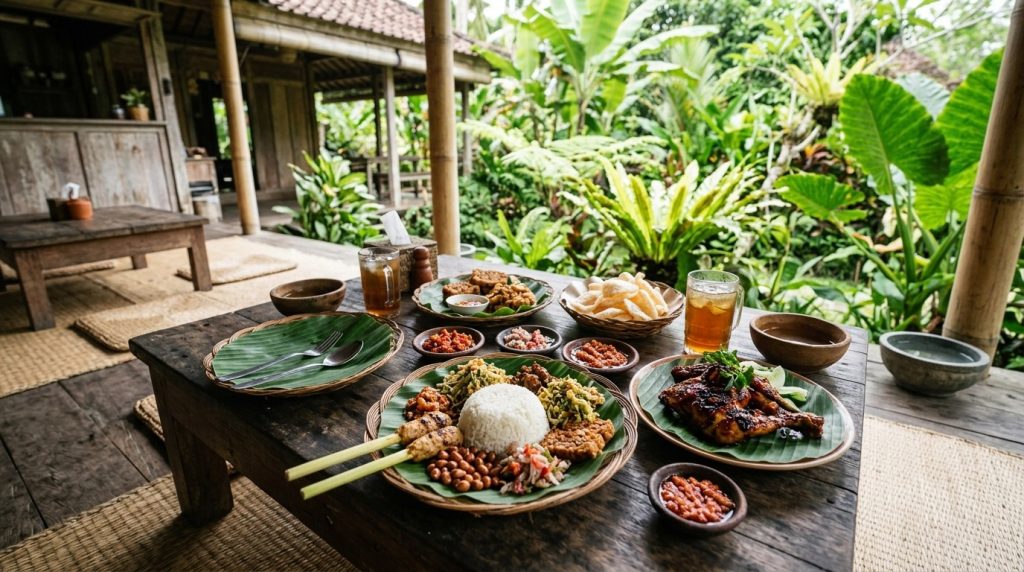
If you’re visiting for the first time, start with a food tour or cooking class to get oriented. After that, explore Gianyar Night Market and the backstreet warungs of Ubud on your own. Budget at least three full days for food exploration. Bali is a place where the best meal of your trip might come from a warung with no sign and two plastic chairs.