12 Best Bali Waterfalls: Insider Tips & Prices (2026)
By TravelguidestipUpdated 14 min readHow we earn
Hotel buttons open Stay22 (Booking.com, Agoda and others) and tour buttons open GetYourGuide. We may earn a commission at no extra cost to you.
In short
- Entry fees range from 10,000 IDR (~$0.60) to 50,000 IDR (~$3) — most are cheaper than a coffee
- Best time to visit is May–September for clear skies and full water flow
- Top pick for swimmers: Tibumana and Banyumala Twin
- Top pick for photos: Tukad Cepung (light beams 9–11am only) and Sekumpul
- Best adventure waterfall: Aling-Aling for cliff jumping and rock slides
- Most underrated: Leke Leke — you’ll likely have it to yourself
Quick answer: Bali’s best waterfalls split by what you want. For swimming, Tibumana and the turquoise pools of Banyumala Twin are the standouts; for photos, aim for Tukad Cepung’s cave light beams (9–11am) and multi-tier Sekumpul, widely rated the island’s most beautiful. First-timers near Ubud can start with easy-access Tegenungan or Kanto Lampo, while Aling-Aling is the pick for cliff jumping.
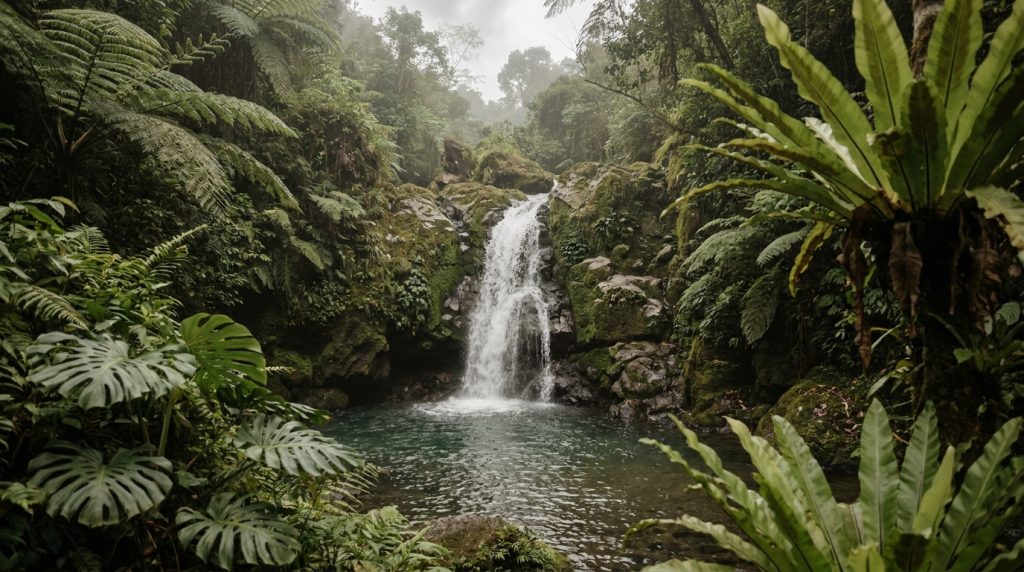
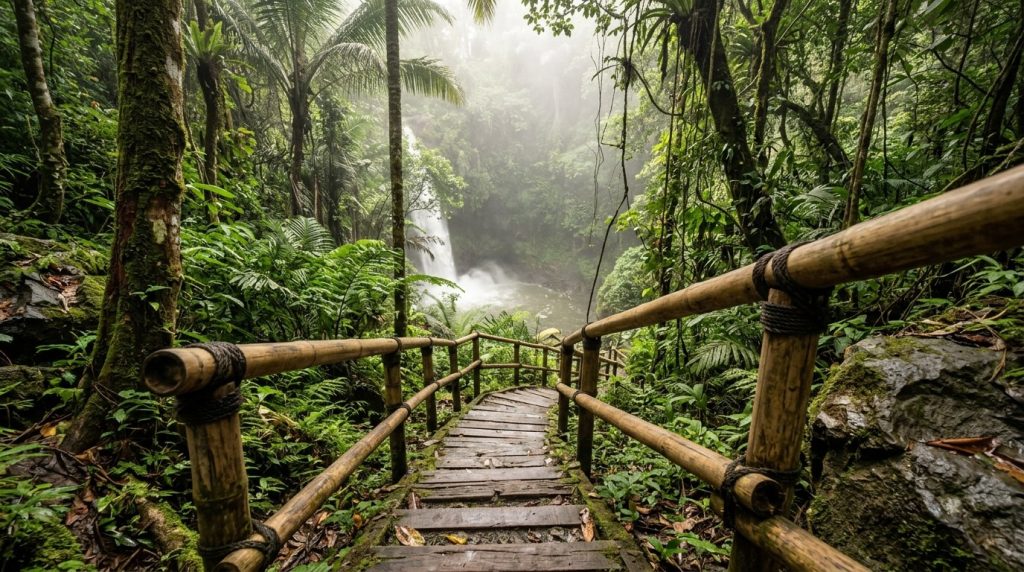
 The jungle-wrapped waterfalls of Bali are worth every muddy step.
Bali waterfalls number over 200 across the island, but let’s be honest — most aren’t worth the effort. Some are dry half the year, some are overrun with selfie sticks, and a few require guides who’ll lead you on a two-hour death march through unmarked jungle trails. We’ve done the legwork so you don’t have to.
The bali waterfalls that made this list were chosen for their actual swimming quality, photo potential, accessibility, and that rare feeling of standing somewhere genuinely special. Whether you’ve got one free morning near Ubud or you’re building an entire week around waterfalls, this guide tells you exactly what you’ll find — and what to skip.
Planning the full trip? Start with our complete Bali travel guide for logistics, visa info, and the best areas to stay. If you’re also hunting for off-the-beaten-path experiences, check our hidden gems in Bali guide.
Best Bali Waterfalls for First-Time Visitors
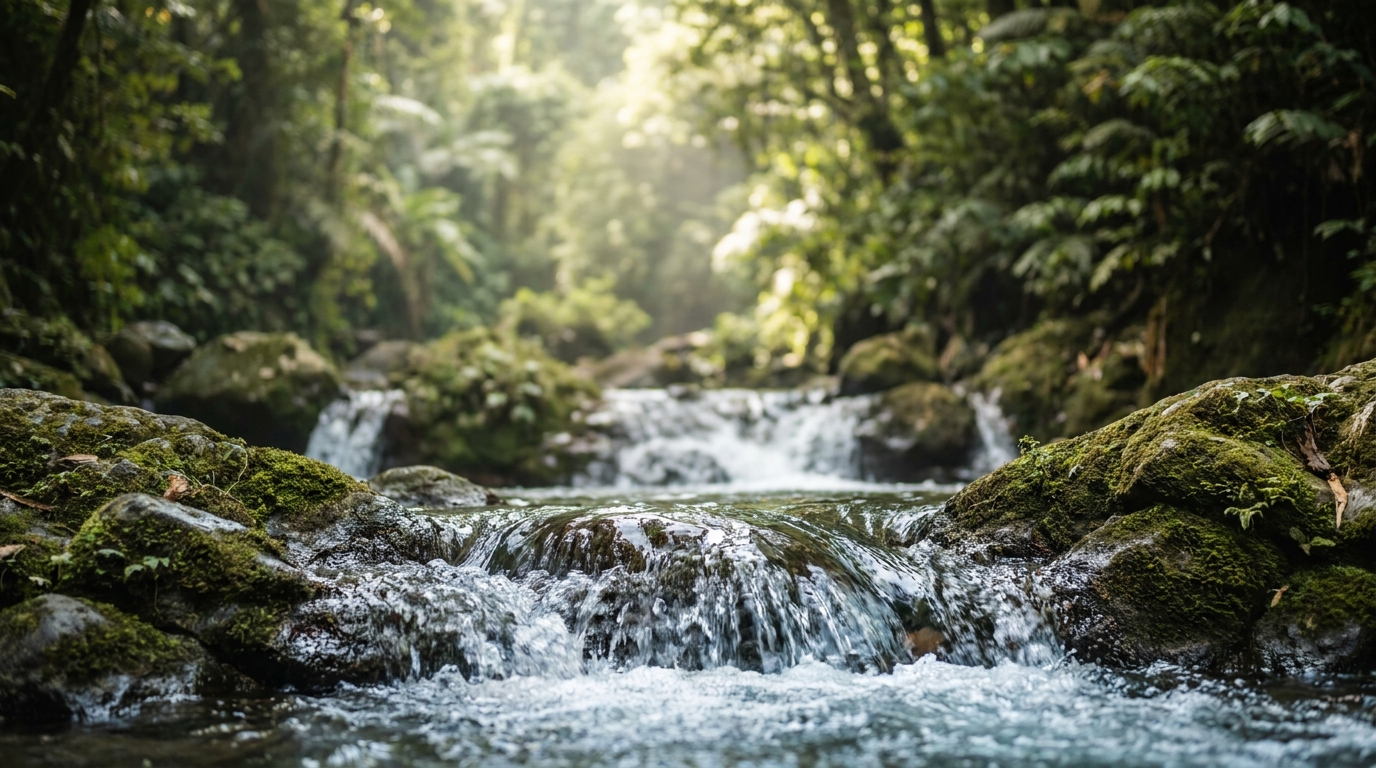
If it’s your first time chasing bali waterfalls and you don’t want to risk a 3-hour trek in the wrong shoes, these three are your best starting points. They’re accessible, beautiful, and won’t eat your whole day.
Tegenungan — The Classic (50m)
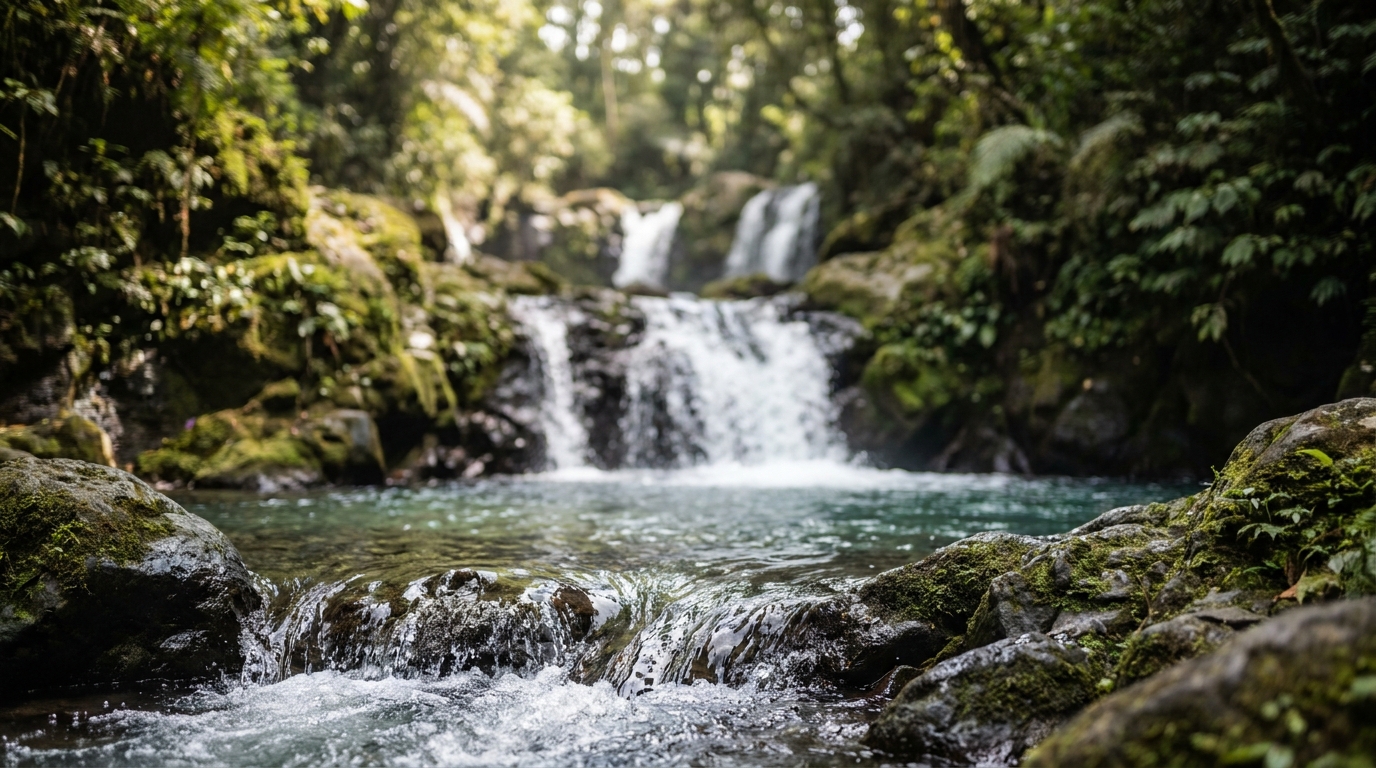
Tegenungan is Bali’s most visited waterfall, and it’s still worth it if you arrive early.
Located in Gianyar, just 20 minutes from Ubud, it’s a 50-meter drop into a wide swimming pool you can actually wade into. The 100-step descent is manageable, there’s a warung at the top selling cold drinks, and the backdrop is genuinely dramatic. The catch? By 10am it looks like a theme park queue.
- Entry fee: 15,000 IDR (~$1)
- Best time to arrive: 7–9am, before tour groups
- Can you swim? Yes — the pool at the base is accessible
- Difficulty: Easy
Don’t bother renting the float rings — they’re overpriced and the current near the falls is stronger than it looks.
Tibumana — Best Kept Secret Near Ubud (15m)
Tibumana’s twin streams and bamboo forest walk make it one of the best swimming spots in central Bali.
At just 15 meters, it’s not the tallest on this list. But the pool at the base is deeper and calmer than Tegenungan, the bamboo forest walk to reach it takes less than 10 minutes, and you’ll likely share it with fewer than a dozen people on a weekday. Entry is just 10,000 IDR.
It’s in Bangli regency — which means most drivers who do “Ubud day tours” don’t include it by default. Book a private driver and specifically ask for Tibumana, or it won’t end up on your itinerary.
- Entry fee: 10,000 IDR (~$0.60)
- Best time: Any time — it’s consistently uncrowded
- Can you swim? Yes, excellent swimming pool
- Difficulty: Easy — flat trail, 5-minute walk
Kanto Lampo — The Curtain Waterfall (10m)
Kanto Lampo’s tiered rock curtain looks like something from a movie set — and it’s only 10 minutes from central Gianyar.
It’s not tall, but that’s not the point. The water fans across a series of flat black volcanic rocks in a way that’s almost impossibly photogenic. You can walk right up to the face of it and stand behind the curtain of water. It’s one of the easiest bali waterfalls to access, with a short path from the parking area.
- Entry fee: 10,000 IDR
- Best time: Morning, before 10am for the best light
- Can you swim? Wading only — it’s shallow
- Difficulty: Easy
Most Photogenic Bali Waterfalls
These aren’t just pretty — they’re specifically photogenic in ways that require timing, angles, or unique natural features. If your Instagram matters to you, put these on the list.
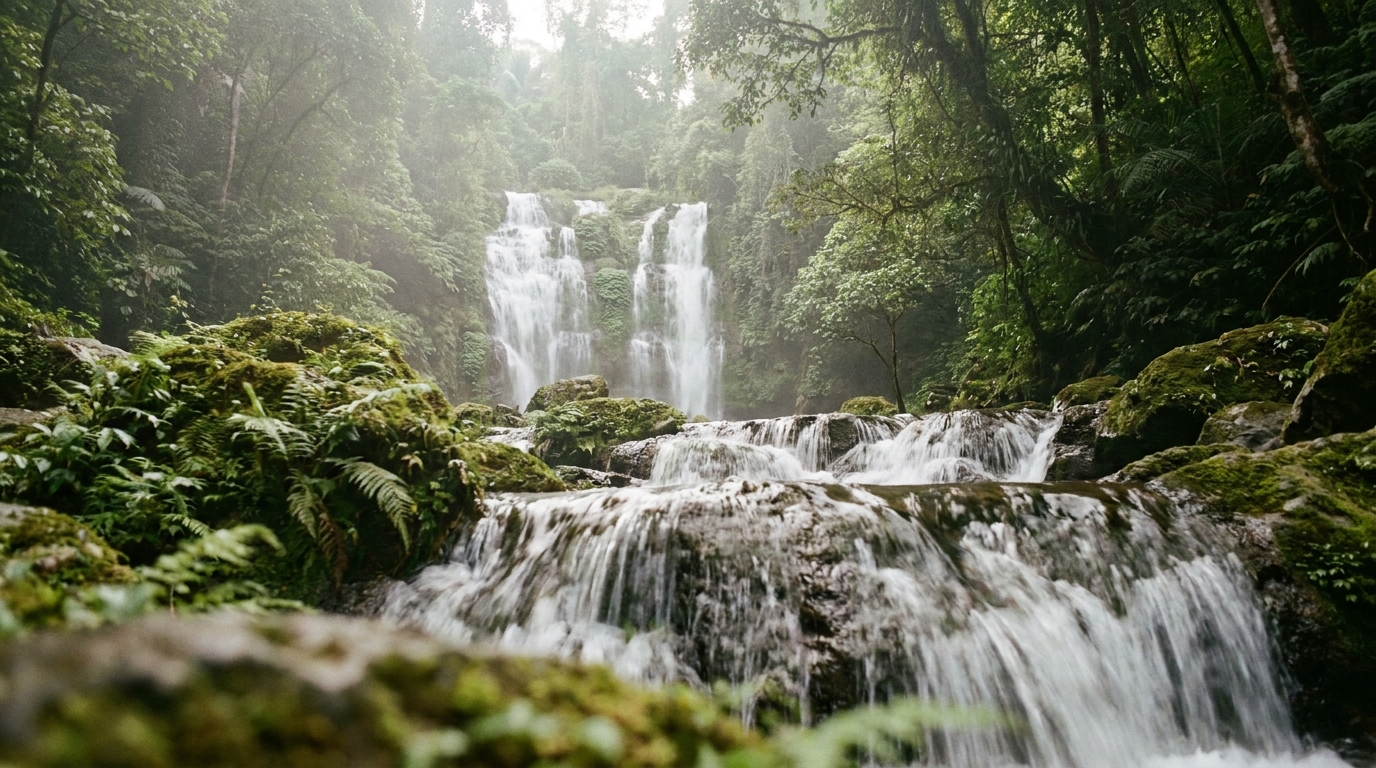 Tukad Cepung’s light beams only appear between 9 and 11am — don’t miss the window.
Tukad Cepung — The Cave Waterfall (20m)
You don’t just see Tukad Cepung — you walk through a canyon, wade a stream, and emerge into a cathedral of light beams hitting a waterfall inside a cave.
This is the single most unique waterfall experience in Bali. The water drops from a crack high above into a narrow cave system, and when sunlight angles through between 9am and 11am, the whole space fills with dramatic golden shafts. It’s unlike anything else on the island.
- Entry fee: 10,000 IDR
- Location: Bangli (about 45 minutes from Ubud)
- Light beams: 9–11am only — arriving at 10:30 is fine
- Difficulty: Moderate — you’ll wade through knee-deep water to reach the cave
- Pro tip: Wear shoes you don’t mind getting wet or bring sandals you can wade in
The wading section isn’t long — maybe 50 meters — but it’s slippery. Don’t wear flip flops. Closed-toe water shoes or old sneakers work best.
Sekumpul — Bali’s Most Beautiful Waterfall (80m)
Sekumpul isn’t just one waterfall. It’s a cluster of seven separate falls, the tallest at 80 meters, set in a valley so green it doesn’t look real.
This is consistently ranked the most beautiful waterfall in Bali, and honestly, that’s not exaggeration. The catch is the trek: 1.5km downhill through jungle, followed by a river crossing, followed by the same 1.5km back up. It’s not dangerous, but it’s genuinely hard, especially on hot days.
A mandatory local guide is required — budget 200,000–300,000 IDR on top of the 20,000 IDR entry fee. Most guides speak English well and they’ll point out the best angles for photos.
- Entry fee: 20,000 IDR + guide 200,000–300,000 IDR
- Location: North Bali (Singaraja area) — 3+ hours from Ubud
- Difficulty: Hard — steep trail, river crossing, requires guide
- Best season: May–September for full flow without heavy mud
If you’re staying in Ubud, Sekumpul is a long day trip. Consider staying a night in Lovina or Munduk to make the north Bali waterfall circuit easier. Our 7-day Bali itinerary breaks down how to structure that route.
Adventure Bali Waterfalls — Cliff Jumping & Swimming
Some bali waterfalls aren’t just for looking at. These three are for people who want to actually do something.
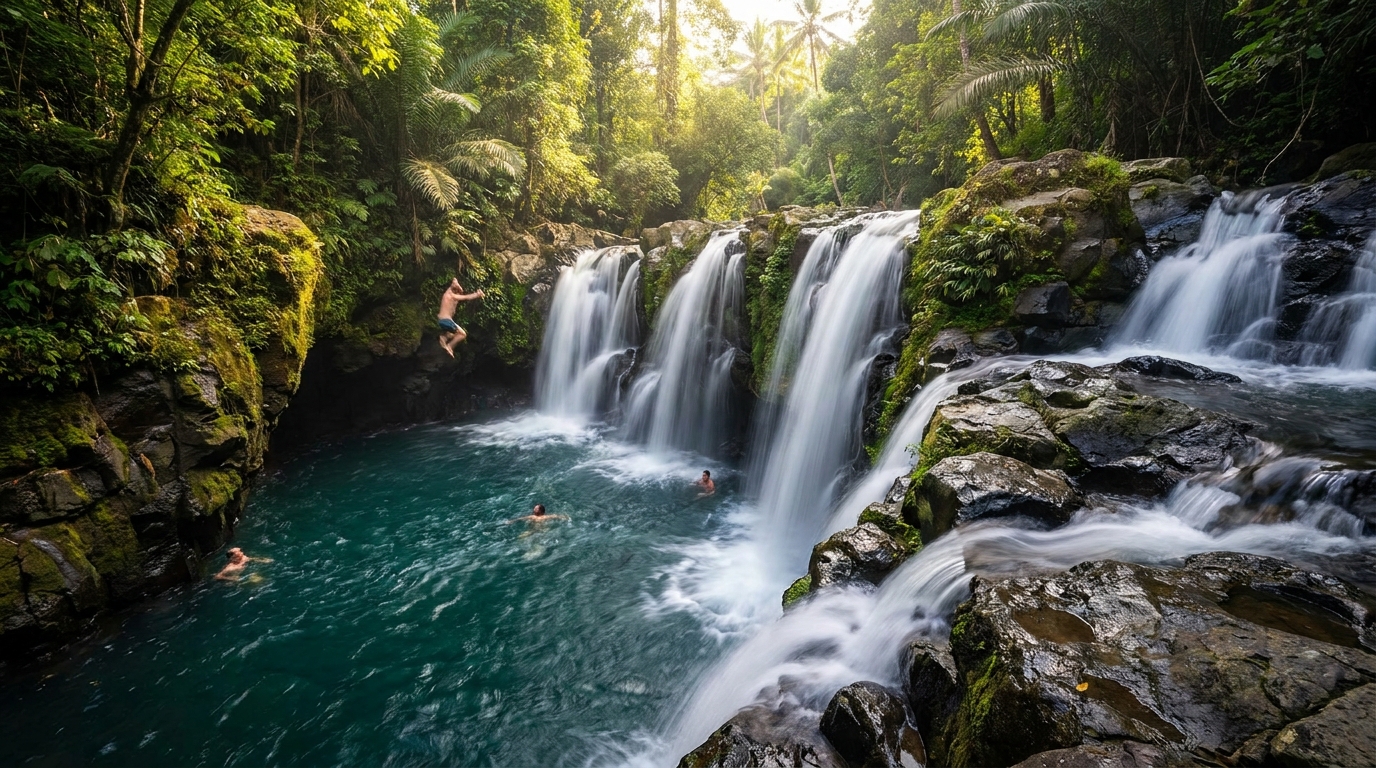
Aling-Aling — Cliff Jumping Capital of Bali (35m)
Aling-Aling has a mandatory guide, cliff jumps from 10m and 15m, and a natural rock slide that’ll leave you with a bruised tailbone and a massive grin.
This is the adventure waterfall in Bali, full stop. The main cascade is 35 meters and genuinely powerful. But the real draw is the jumping platforms — there’s a 10-meter jump that most people can handle with encouragement, and a 15-meter jump for the genuinely committed.
The natural rock slide at Kroya (a connected waterfall nearby) is slippery, steep, and absolutely ridiculous fun. Your guide will assess whether conditions are safe before you go.
- Entry fee: 20,000–50,000 IDR depending on activities + guide 125,000 IDR
- Location: North Bali (near Gitgit)
- Guide: Mandatory for cliff jumping activities
- Difficulty: Moderate trail, high adventure factor
- Don’t do it if: You’re not a confident swimmer — the pools are deep
Book a guided Aling-Aling adventure tour through GetYourGuide rather than going solo — solo drivers won’t always know the best spots or safety protocols.
Nungnung — The Powerhouse (50m)
Nungnung is one of the most powerful single-drop waterfalls in Bali. The spray will soak you from 20 meters away.
It’s also the hardest standard waterfall to reach — 500+ steps down, which means 500+ steps back up. By the time you’re climbing out, your legs will be questioning your life choices. But standing at the base of a 50-meter wall of water that shakes the air around it? Worth it.
- Entry fee: 10,000–15,000 IDR
- Location: Remote — between Ubud and Bedugul, about 90 minutes from Ubud
- Steps: 500+ down and back up
- Difficulty: Hard — the steps are steep and can be slippery
- Swimming: Possible but the current is strong near the base
Not ideal for anyone with knee problems or small kids.
Banyumala Twin Waterfalls — The Turquoise Pool (60m)
Two 60-meter cascades drop into the same turquoise pool — Banyumala is one of the most striking swimming spots in all of Bali.
This is the hidden gem of North Bali waterfalls. Most tourists on the Sekumpul circuit skip it, which means even during peak season you’ll often have the pool to yourself or close to it. The color of the water on a clear day is genuinely turquoise — not filtered, not exaggerated.
The descent is 300–400 steps and moderately challenging, but not nearly as hard as Nungnung.
- Entry fee: 10,000–20,000 IDR
- Location: North Bali (Buleleng)
- Steps: 300–400
- Swimming: Yes — pool is calm and the color is exceptional
- Difficulty: Moderate
Pair it with Sekumpul for a full North Bali day. They’re only 45 minutes apart.
Hidden Gem Waterfalls Most Tourists Miss
The best bali waterfalls aren’t always the ones on every tour itinerary. These four see a fraction of the visitors that Tegenungan gets, and that’s exactly why they’re worth seeking out.
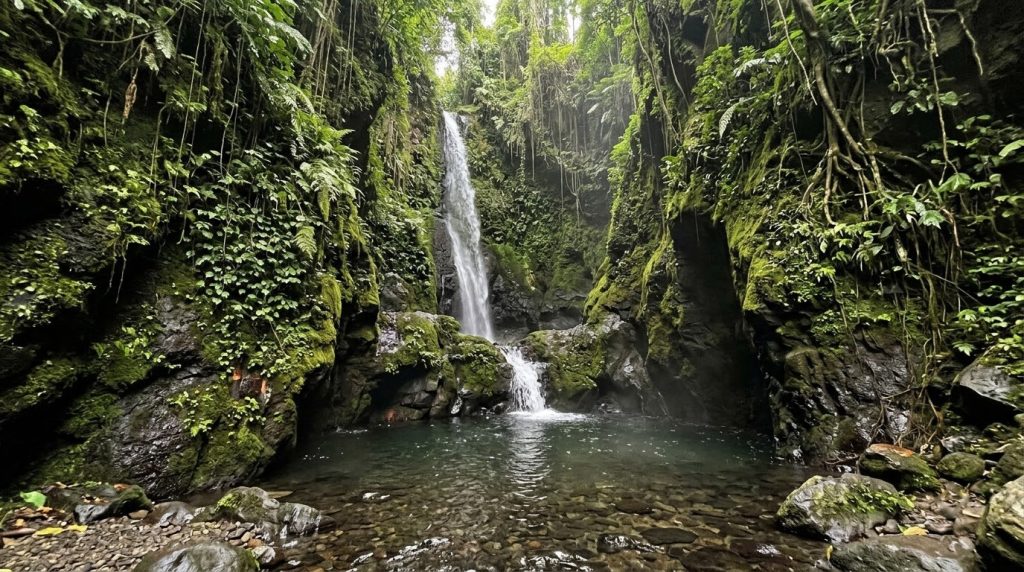
 Leke Leke’s narrow canyon feels like a private discovery.
Leke Leke — Narrow Canyon, Zero Crowds (25m)
Leke Leke drops 25 meters through a narrow canyon so enclosed by jungle canopy that it stays cool even at midday.
It’s in Tabanan regency — off the standard tourist trail — and that’s exactly what keeps it quiet. The trail winds through actual working forest, not manicured tourism infrastructure. You’ll likely share the falls with no more than 5 other visitors.
- Entry fee: 10,000–15,000 IDR
- Difficulty: Moderate — jungle trail with some uneven sections
- Crowds: Very few tourists
If you love the idea of discovering something yourself, Leke Leke is it. Add it to your Bali bucket list as the waterfall that still feels undiscovered.
Munduk — Coffee Plantation Waterfalls (20m)
Munduk sits at 900 meters elevation in Bali’s highlands, surrounded by coffee and clove plantations, and it’s cooler than anywhere in South Bali by about 10 degrees.
The waterfall itself is 20 meters — not massive — but the setting is what makes it special. The air smells different up here: woodsmoke, damp earth, and faintly of cloves. It’s one of the only bali waterfalls where the journey is as good as the destination.
Several walking trails connect the main waterfall with nearby smaller cascades. Budget 2–3 hours to do the full circuit.
- Entry fee: 10,000–20,000 IDR
- Location: North Bali highlands
- Elevation: 900m — bring a light layer
- Difficulty: Easy to moderate
- Best paired with: A night in a Munduk hillside lodge
Gitgit — Historic and Tall (35m)
Gitgit is one of the tallest easily accessible waterfalls in Bali — 35 meters, 340 steps, and one of the most established names on the island.
It’s been on the tourist trail longer than most bali waterfalls, so there’s actual infrastructure here: a well-marked path, warungs, and guides. The clove plantations surrounding it are beautiful, and the pool at the base is swimmable.
- Entry fee: 10,000–20,000 IDR
- Steps: 340
- Difficulty: Easy-moderate
- Swimming: Yes
It doesn’t get as much love as Sekumpul, but it’s a solid addition to any North Bali day and much less demanding.
Banyu Wana Amertha — Four Falls, Sacred Springs (multiple cascades)
Banyu Wana Amertha gives you four separate waterfalls in a single visit — plus sacred spring pools that the Balinese use for purification rituals.
It’s in Buleleng and it’s significantly less visited than comparable spots. The sacred springs add a dimension that most waterfall visits don’t have — you’re walking through a site of active spiritual significance, not just a pretty landscape. Be respectful and dress modestly.
- Entry fee: 20,000–30,000 IDR
- Location: Buleleng, North Bali
- What’s included: Four separate waterfalls plus sacred spring area
- Difficulty: Easy to moderate
Bali Waterfalls Entrance Fees & Quick Comparison
Here’s every waterfall ranked by difficulty, so you can plan your day around your fitness level and interests.
| Waterfall | Height | Entry Fee (IDR) | Difficulty | Can Swim? | Best For |
|---|---|---|---|---|---|
| Sekumpul | 80m | 20K + guide 200-300K | Hard | No | Photography |
| Tukad Cepung | 20m | 10K | Moderate | No | Light beam photos |
| Aling-Aling | 35m | 20-50K + guide 125K | Moderate | Yes | Adventure/cliff jump |
| Tegenungan | 50m | 15K | Easy | Yes | First-timers |
| Tibumana | 15m | 10K | Easy | Yes | Swimming |
| Kanto Lampo | 10m | 10K | Easy | Wading | Photography |
| Nungnung | 50m | 10-15K | Hard | Yes (careful) | Power/drama |
| Banyumala Twin | 60m | 10-20K | Moderate | Yes | Swimming + photos |
| Munduk | 20m | 10-20K | Easy-Mod | No | Scenery + hiking |
| Leke Leke | 25m | 10-15K | Moderate | No | Crowds-free |
| Gitgit | 35m | 10-20K | Easy-Mod | Yes | Accessibility |
| Banyu Wana Amertha | Multiple | 20-30K | Easy-Mod | Sacred springs | Culture + nature |
Entry fees are in Indonesian Rupiah. 10,000 IDR ≈ $0.60 USD. Fees can change — always carry some cash.
How to Plan Your Bali Waterfall Day Trip
The biggest mistake people make with bali waterfalls is picking one and driving there from Ubud, then driving back. That’s three hours of travel for 30 minutes of waterfall. Cluster them instead.
South/Central Bali Combo (Easy Day)
Tegenungan → Kanto Lampo → Tibumana
All three are within 30 minutes of each other. Start at Tegenungan at 7am before the crowds hit, head to Kanto Lampo mid-morning for the light, then finish at Tibumana for a swim. You’re back in Ubud by 1pm.
Ubud Full Day (4 Waterfalls)
Tibumana (8am) → Tukad Cepung (10am sharp for light beams) → Lunch in Bangli → Kanto Lampo (1pm) → Tegenungan (3pm)
This works if you’ve got a private driver for the day. You won’t be rushing, and the timing is built around Tukad Cepung’s light window.
North Bali Circuit (Overnight Recommended)
Day 1: Drive to Munduk, check in, afternoon walk to Munduk waterfall Day 2: Sekumpul (early, before 9am) → Banyumala Twin (afternoon)
This is the best bali waterfalls circuit for serious waterfall hunters. Add Gitgit on the drive up if you’re coming from the south. Check our 5-day Bali itinerary for a detailed version of this route.
Adventure Day
Aling-Aling (morning, 8–11am for cliff jumping) → Banyumala Twin (afternoon swimming)
These two are 30–40 minutes apart in North Bali.
Getting There: Transport Options
Private driver: $35–50 USD per day. Best option for waterfall hopping — they’ll know parking spots, trailheads, and good warungs for lunch. Ask your accommodation to arrange one.
Scooter rental: 30,000–80,000 IDR per day. Works well for the Ubud cluster (Tegenungan, Tibumana, Kanto Lampo) since the roads are manageable. Less ideal for North Bali — the roads are steep and potholed in places.
Organized tours: Group waterfall day trips and private tours are available on GetYourGuide; tour prices vary by operator. Good if you’re solo or don’t want to figure out logistics. Group tours often combine 2–3 waterfalls with rice terrace stops.
For the North Bali circuit, a private driver is worth the premium. The roads from Sekumpul to Banyumala aren’t well-signed and you don’t want to be reading Google Maps while negotiating a hairpin bend.
What to Bring to Bali Waterfalls
This isn’t a beach trip — gear up properly and you’ll have a much better time.
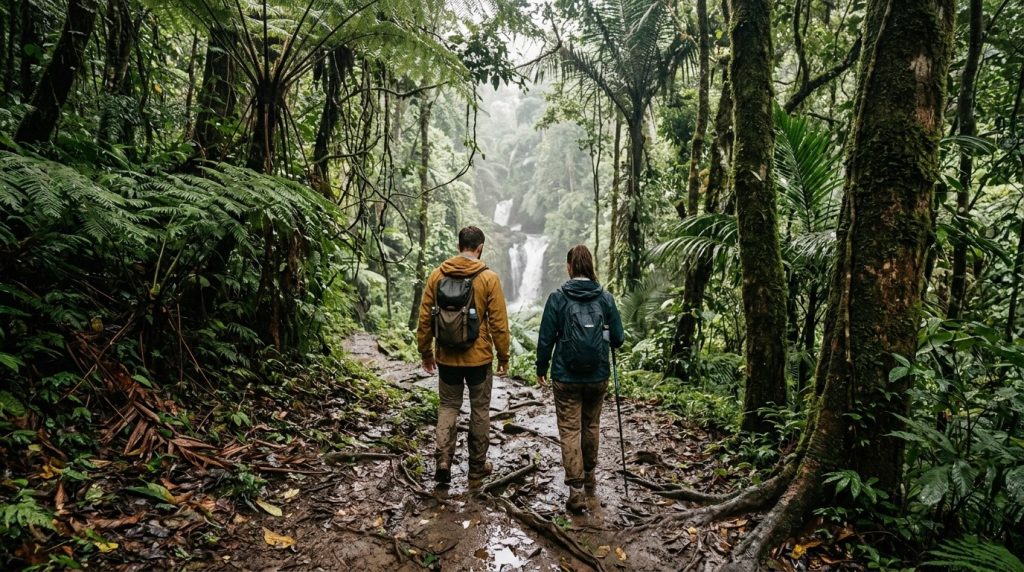
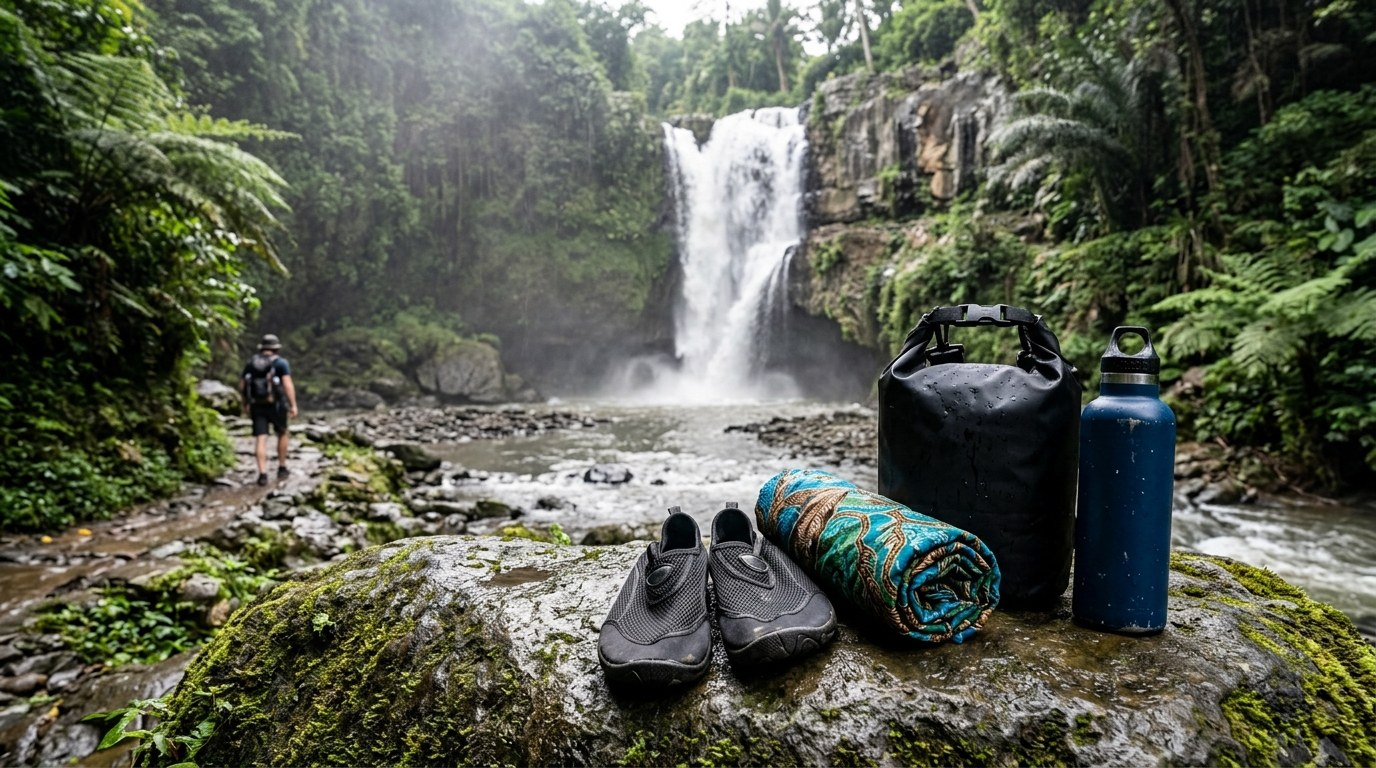
Footwear: Water shoes or old sneakers you don’t mind getting wet. Don’t wear flip flops at Tukad Cepung or anywhere with a river crossing. You’ll regret it.
Dry bag: A small 5L dry bag keeps your phone, wallet, and camera dry. Non-negotiable for Aling-Aling and Tukad Cepung.
Change of clothes: You’ll get wet at almost every waterfall, whether you plan to or not. Pack a dry set in your bag.
Cash: Entry fees are always cash-only. Carry small bills — 5,000 and 10,000 IDR notes. Guides prefer cash too.
Sunscreen and insect repellent: The jungle sections don’t need sunscreen but the open walks to trailheads do. Mosquitoes are active near standing water, especially at dawn and dusk.
Water: Bring your own — warungs charge tourist prices, and on hard treks like Nungnung you’ll drink more than you expect.
SIM card: You don’t want to be offline when you’re trying to find an unmarked trailhead in rural North Bali. An Airalo eSIM gives you data from the minute you land without hunting for a physical SIM at the airport.
Find your Bali hotel on the map
Live prices from Booking & Airbnb — tap a pin to compare stays around Seminyak and Ubud and beyond.
Frequently Asked Questions
What are the most beautiful bali waterfalls?
Sekumpul is consistently voted the most beautiful — seven separate falls in a jungle valley, tallest at 80 meters. For sheer photographic impact, Tukad Cepung with its cave light beams is unmatched. For swimming, Banyumala Twin has the best pool.
When is the best time to visit bali waterfalls?
May through September is dry season — trails are less muddy, water runs clear, and light beams at Tukad Cepung are more consistent. The waterfalls still flow year-round (wet season actually increases volume), but rainy season (November–March) makes some treks dangerous and visibility poor.
Do I need a guide for bali waterfalls?
Sekumpul and Aling-Aling require guides by local regulation. For most others, guides aren’t required but can be hired locally for 50,000–150,000 IDR — useful at remote spots like Leke Leke or Banyu Wana Amertha where trail markings are sparse. Check our best tours in Bali guide for vetted tour operators.
Can I swim at bali waterfalls?
Yes at several — Tegenungan, Tibumana, Banyumala Twin, and Aling-Aling all have designated swimming areas. Avoid swimming directly under heavy falls; the current can be dangerous. Tukad Cepung doesn’t have a proper swimming pool (it’s inside a cave). Nungnung has strong current near the base — wade carefully.
How much does it cost to visit bali waterfalls?
Entry fees are 10,000–50,000 IDR per waterfall ($0.60–$3 USD). The main cost is getting there — a private driver for a day runs $35–50 USD. Guided treks (Sekumpul, Aling-Aling) add 125,000–300,000 IDR. You can see 3–4 waterfalls in a day for under $60 total including transport, which makes bali waterfalls one of the best value experiences on the island.
Bali’s waterfalls don’t get the same marketing budget as the rice terraces or the temples, but for a lot of visitors they end up being the highlight of the trip. There’s something about standing at the base of a 50-meter drop, soaking wet, out of breath from the stairs, that resets everything.
If you’re planning a full trip, pair your waterfall days with the best beaches in Bali for a contrast — volcanic jungle one day, white sand the next. And if you haven’t sorted your accommodation yet, the best hotels in Bali guide covers options across every price range and region.
Start with the Ubud cluster on your first waterfall day. Tegenungan, Tibumana, and Kanto Lampo won’t disappoint. Then, if you’ve still got time, head north.
Sources: Bali Tourism Board for entry fee and permit information. Prices and conditions verified April 2026.