7 Days in Bali Itinerary: The Perfect One-Week Plan (2026)
By TravelguidestipUpdated 18 min readHow we earn
Hotel buttons open Stay22 (Booking.com, Agoda and others) and tour buttons open GetYourGuide. We may earn a commission at no extra cost to you.
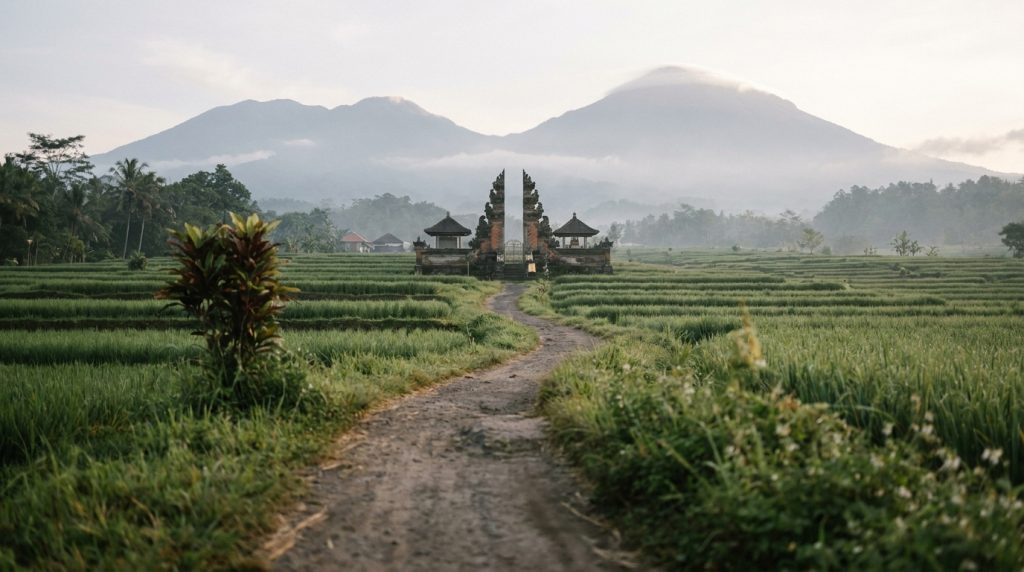
Seven days is enough time to do Bali right — not all of it, but the parts that matter. You’ll fit in Ubud’s rice terraces and temples, a sunrise hike up a volcano, a full day on Nusa Penida, and a sunset at Uluwatu — with time left over for beach clubs, warung meals, and proper recovery between moves.
Photographers should pair this itinerary with our list of the best Instagram photo spots in Bali to find the right location for each golden hour. If seven nights is more or less than you have, compare the alternatives in how many days you need in Bali.
This itinerary is built for first-timers who want a balanced week. You won’t rush. You won’t skip the highlights. And if you want a different pace, there are two alternate route options at the bottom.
Quick facts before you land:
- Visa on Arrival: ~$31 USD (500,000 IDR, valid 30 days)
- Bali Tourist Levy: ~$9 USD (mandatory for all foreign visitors since 2024)
- Daily budget: $32–61 (budget) | $94–146 (mid-range) | $149–197 (luxury)
- Best for 7 days: dry season (May–October)
Key Takeaways — Bali Itinerary 7 Days
- Day 1: Arrive, settle into Canggu or Seminyak, and visit Tanah Lot at sunset
- Days 2–3: Base in Ubud — rice terraces, Monkey Forest, Tirta Empul, Campuhan Ridge
- Day 4: Pre-dawn Mount Batur hike, Kintamani coffee, Pura Besakih
- Day 5: Full-day Nusa Penida — Kelingking Beach, Broken Beach, Crystal Bay
- Day 6: Uluwatu — clifftop beaches, Kecak Fire Dance at sunset
- Day 7: Slow morning, last beach club or spa, airport departure
- Entry costs: $40 mandatory fees (VOA + Tourist Levy) before spending a dollar
Is 7 Days Enough for Bali?
Seven days gives you a solid first experience — not exhaustive, but well-rounded. Bali received nearly 7 million international tourists in 2025, and the average foreign visitor to Indonesia stays 9–12 nights (BPS Central Statistics Agency). One week puts you in the lower end of that range, which means you’ll want to keep your itinerary tight without being rushed.
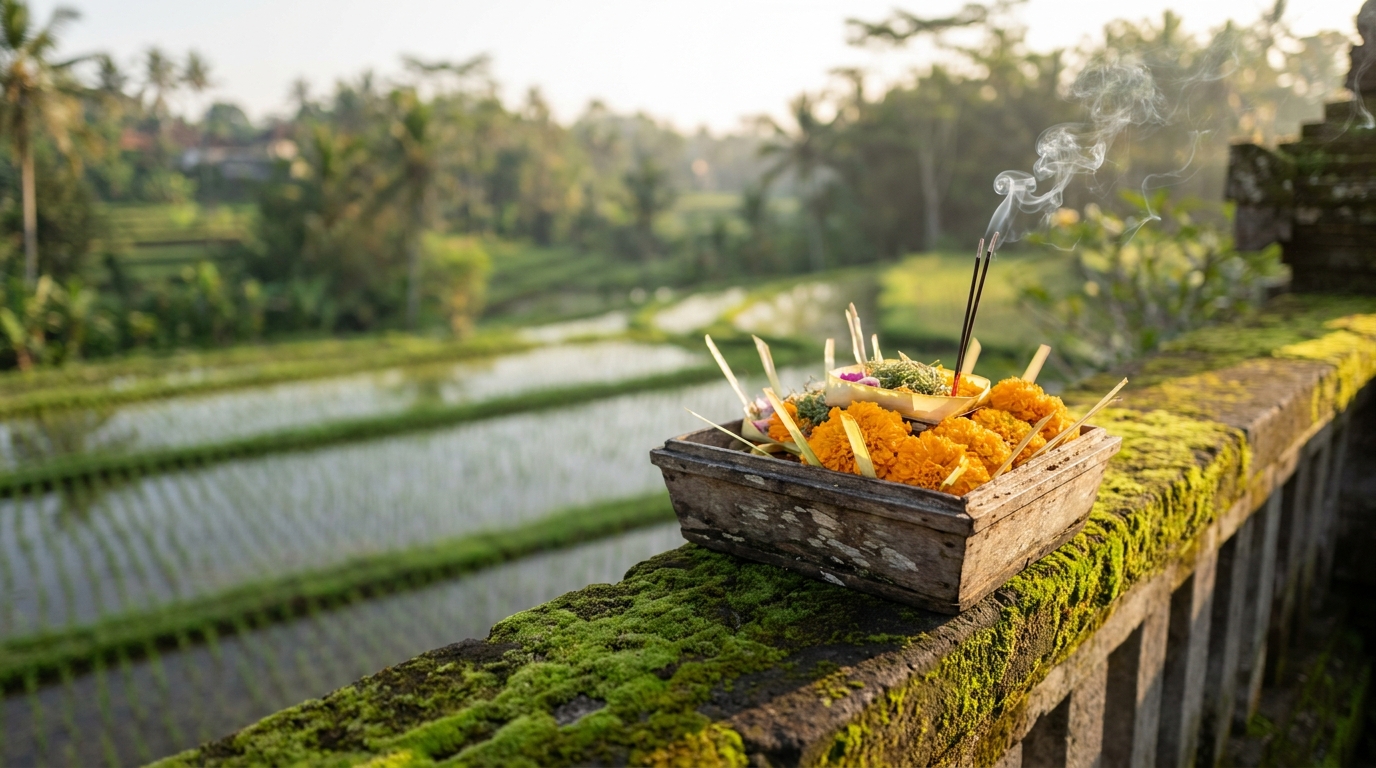
The island breaks into distinct regions that each feel different: the rice terraces and temples of central Ubud, the surf beaches and cafes of the south coast (Seminyak, Canggu, Kuta), the raw cliffs of the Bukit Peninsula (Uluwatu), and the offshore islands (Nusa Penida, Nusa Lembongan). A 7-day itinerary that hits all four of these zones leaves you with a complete picture.
What you’ll skip: North Bali (Munduk, Lovina), East Bali (Sidemen, Amed), and any serious slow travel. Those regions reward longer stays. If you’ve got 10+ days, scroll to the Extension Options section at the bottom. With two weeks, our 14-day Bali route adds 2 nights in Sidemen and 2 on Nusa Lembongan in one loop around the island.
Before You Go: Entry Requirements (2026)
Bali added a Tourist Levy of 150,000 IDR (~ USD) in February 2024 that catches most first-timers off guard. Combined with the Visa on Arrival fee, you’re paying roughly 0 before you step outside the airport.
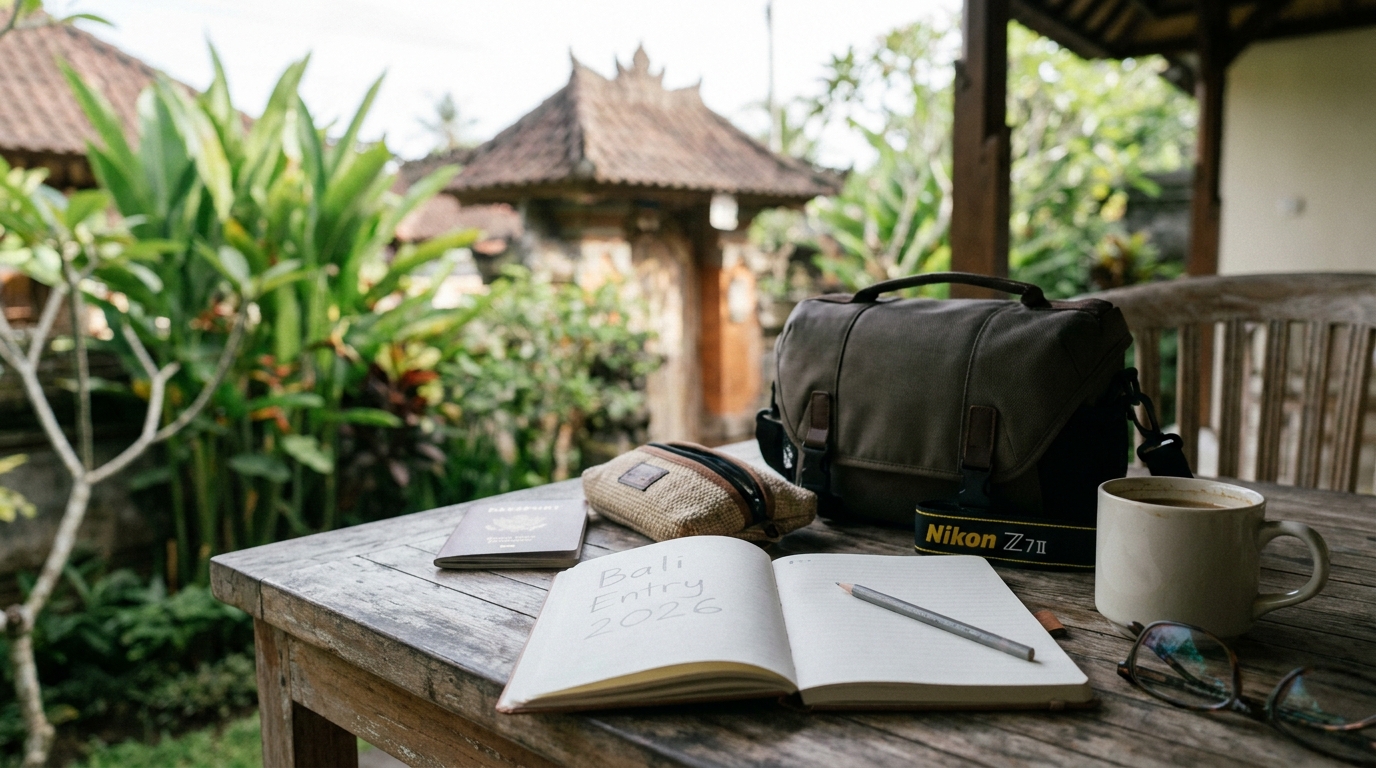
What you need at immigration:
- Passport with 6+ months validity and 2 blank pages
- Visa on Arrival (VOA): 500,000 IDR (~1 USD) — valid 30 days, extendable once to 60 days
- Bali Tourist Levy: 150,000 IDR (~ USD) — pay online at lovebali.baliprov.go.id before arrival or at kiosks in the terminal
- Onward/return ticket (may be checked)
- Proof of sufficient funds (rarely enforced but carry a card)
Overstay fine: 1,000,000 IDR per day (~2) — not worth risking.
Yellow fever vaccination certificate is required if you’re arriving from a country with yellow fever transmission risk (UK Government, 2025).
7-Day Bali Itinerary Overview
| Day | Region | Highlights |
|---|---|---|
| Day 1 | Arrival + Canggu/Seminyak | Settle in, beach club, Tanah Lot sunset |
| Day 2 | Ubud | Tegallalang rice terraces, Monkey Forest, art market |
| Day 3 | Ubud area | Tirta Empul, Campuhan Ridge Walk, Goa Gajah |
| Day 4 | Central Highlands | Mount Batur sunrise hike, Kintamani, Pura Besakih |
| Day 5 | Nusa Penida | Kelingking Beach, Broken Beach, Angel’s Billabong |
| Day 6 | Uluwatu / Bukit | Clifftop beaches, Padang Padang, Kecak Fire Dance |
| Day 7 | Departure | Seminyak, spa, Ngurah Rai airport |
Day 1: Arrival + Canggu or Seminyak
Your flight lands at Ngurah Rai International Airport (DPS), 10–15 km south of Seminyak. Don’t plan anything ambitious on Day 1 — Bali’s humidity hits hard after a long flight.
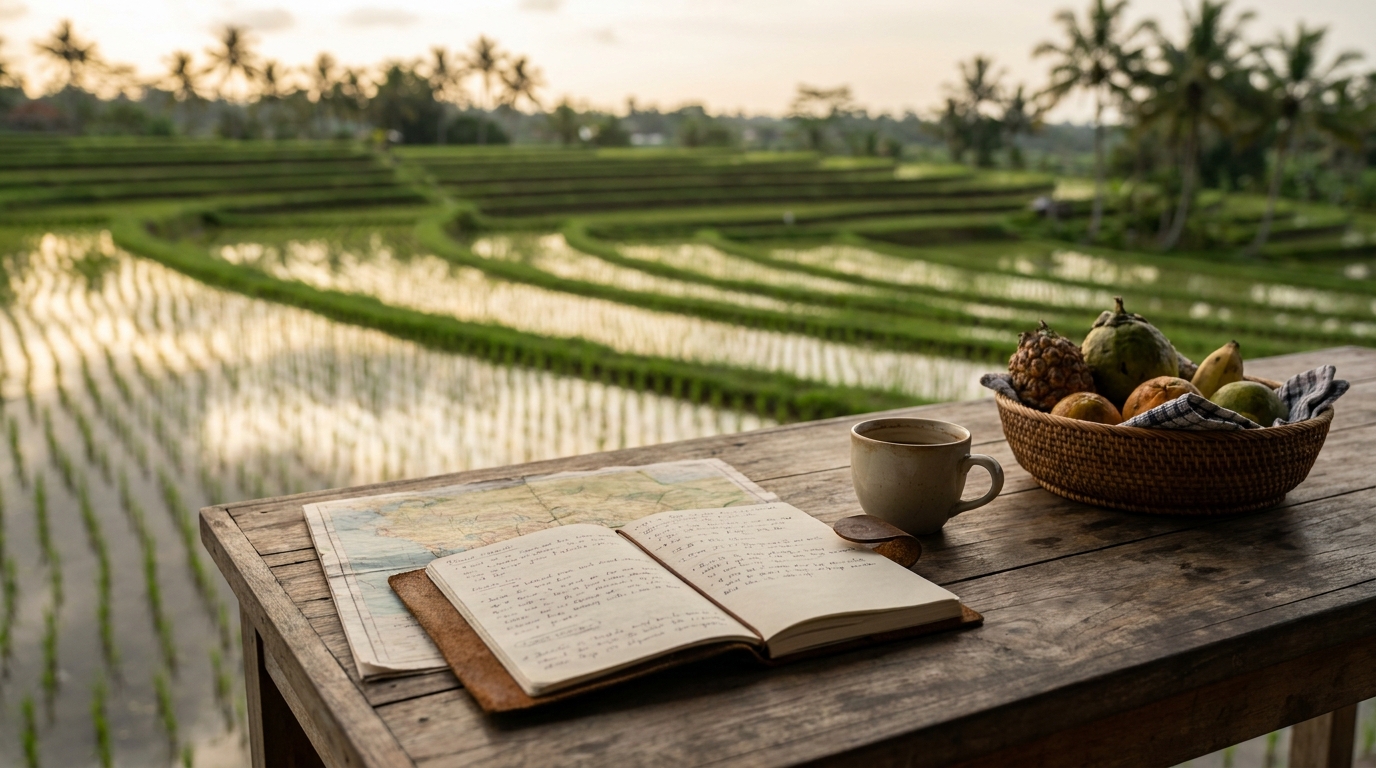
Getting from the airport:
- Fixed-price official taxi from the airport: 100,000–250,000 IDR (–15) depending on destination
- Grab/GoJek from outside the taxi zone: 60,000–120,000 IDR (–8) to Seminyak or Canggu
- Private transfer pre-booked: 5–20 to Canggu — worth it if arriving late with luggage
Where to stay:
- Budget: Echo Beach Inn (Canggu, ~0/night) or hostels along Legian St (Kuta, ~0–15)
- Mid-range: COMO Uma Canggu adjacent area guesthouses (~0–90/night)
- Luxury: The Layar private villa Seminyak or W Bali Seminyak (~50+/night)
Day 1 plan:
- Check in, shower, adjust to the heat
- Walk to the nearest beach — Batu Bolong (Canggu) or Seminyak Beach for the vibe
- Afternoon: grab a coffee at a Canggu cafe (Scallywags, The Lawn, Betelnut) — these are genuinely good
- Sunset: Tanah Lot Temple (35 min from Seminyak) — a Hindu sea temple on a tidal islet, best viewed from the clifftop at golden hour. Entrance: 60,000 IDR
- Dinner: Jimbaran seafood if you want a splurge, or a nasi campur at a local warung
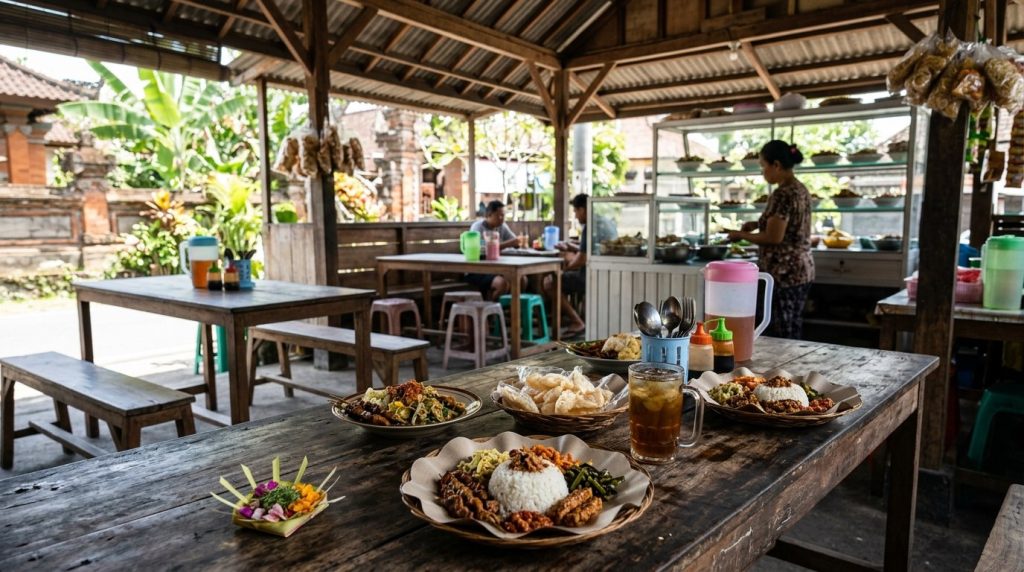
Local food pick: Nasi campur (mixed rice plate with small portions of meat, vegetables, sambal) from any roadside warung — .50–3. It’s the single best-value meal on the island.
Day 2: Ubud — Rice Terraces and Sacred Forests
Ubud is roughly 35–40 km north of the southern beach towns — plan on 60–90 minutes by scooter or car depending on traffic. Most visitors either stay in Ubud for 2 nights or do it as a long day trip. Staying overnight is worth it: mornings in Ubud before the day-trippers arrive are noticeably quieter and cooler. If Thursday to Monday is all you have, a four-day Bali itinerary still fits 2 Ubud nights by moving house once, in the middle of the day.
Getting there from Canggu/Seminyak:
- Private driver: 250,000–350,000 IDR (5–22) one way
- Scooter rental: 70,000–100,000 IDR/day (–6) — the most flexible option for the highlands, but you need to be comfortable on Bali roads
Day 2 plan:
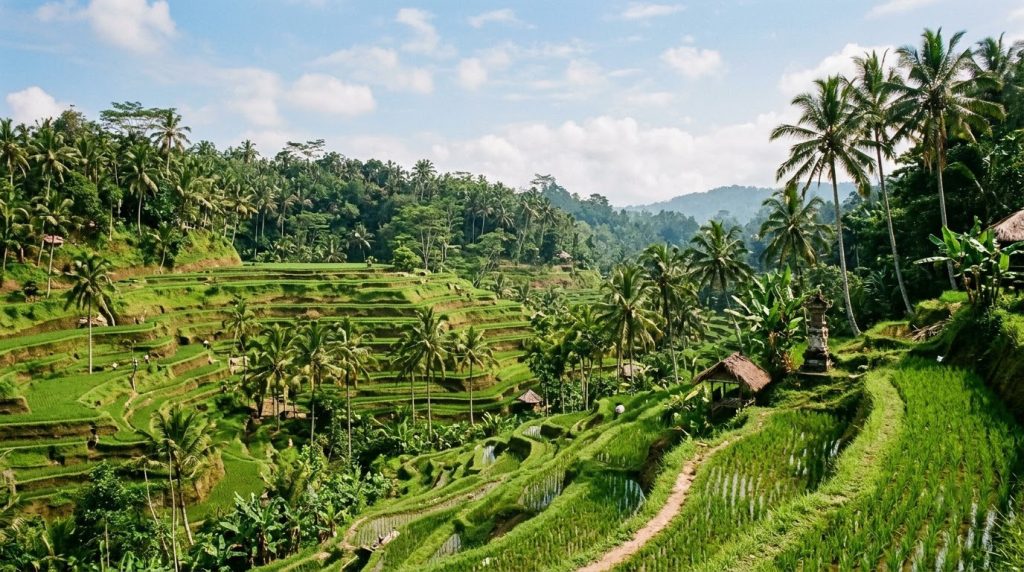
Morning — Tegallalang Rice Terraces: Start early (8 AM) to beat the crowds. The terraces are about 10 km north of Ubud center. Entrance: 15,000–20,000 IDR plus pressure to buy from vendors. The staircase descent through the paddies takes 30–45 minutes. Bring sunscreen — the reflection off water intensifies the heat.
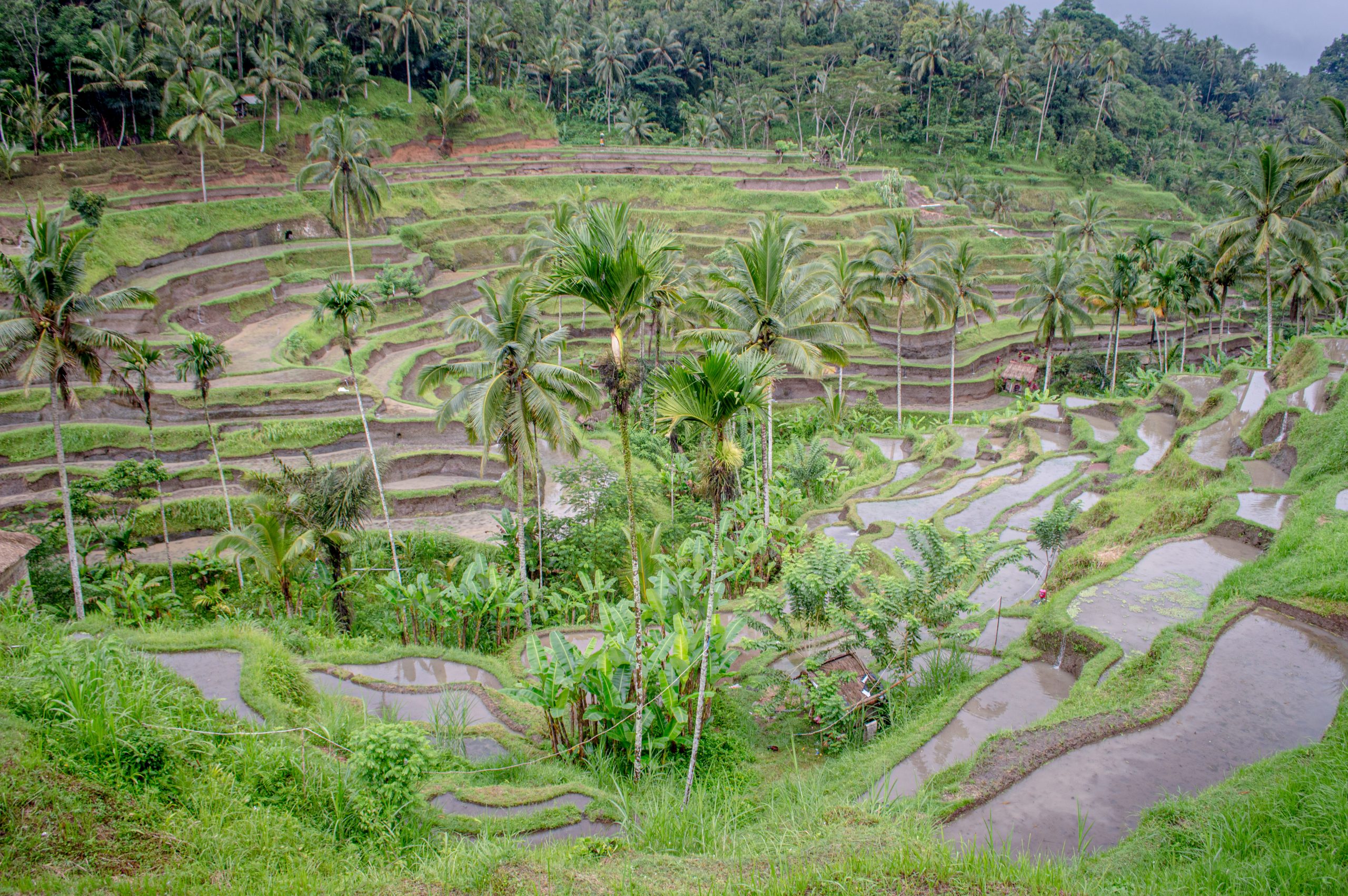 Photo: Philip Nalangan / Wikimedia Commons / CC BY 4.0
Late morning — Ubud Monkey Forest (Mandala Suci Wenara Wana): Home to ~1,000 long-tailed macaques across 14 hectares of sacred forest. Entrance: 80,000 IDR. Don’t bring food, keep bags zipped, and don’t make eye contact with dominant males — they’re not bluffing.
Afternoon — Ubud Art Market (Pasar Seni Ubud): Directly opposite the Royal Palace. Two floors of textiles, wood carvings, silver jewelry, and tourist goods. Prices start high — everything’s negotiable to 40–50% of asking price. Budget 1–1.5 hours.
Sunset — Campuhan Ridge Walk: A 2 km ridge walk through rice fields and jungle starting from Campuhan Bridge (10 min walk from central Ubud). Free entry. Best done 4:30–6 PM for golden hour light. This is underrated — most day-trippers miss it.
Dinner: Locavore (upscale, book ahead), Warung Babi Guling Ibu Oka (Bali’s most famous roast suckling pig — arrive before noon, sells out), or Warung Teges for cheap local rice plates.
Find your Bali hotel on the map
Live prices from Booking & Airbnb — tap a pin to compare stays around Seminyak and Ubud and beyond.
Day 3: Ubud Area — Temples and Holy Water
Keep your Ubud accommodation for a second night. Day 3 fans out into the surrounding countryside — slightly fewer crowds than the central sites, and much more interesting architecture.
Morning — Tirta Empul Temple: Bali’s most important water purification temple, 15 km north of Ubud. The spring pools have been used for ritual bathing since 960 AD. You can join the purification ritual (wear a sarong — rentals available at gate, 20,000 IDR).
Entrance: 50,000 IDR ($3). Arrive before 9 AM to beat tour groups. PERSONAL EXPERIENCE: The cold spring water hits about 15 degrees — it’s invigorating even in 32-degree heat.
Mid-morning — Pura Gunung Kawi: 900-year-old royal tombs carved directly into cliff face, reached via 300 steep steps down a ravine. One of the most atmospheric sites on the island — and chronically undervisited compared to Tirta Empul 5 minutes away. Entrance: 50,000 IDR ($3).
Afternoon — Goa Gajah (Elephant Cave): A 9th-century rock-cut cave temple with a carved demon face entrance near Ubud. The cave interior holds Hindu and Buddhist shrines. Entrance: 50,000 IDR ($3). Combine with the adjacent bathing pools and surrounding rice paddies — the whole site takes about 45 minutes.
Late afternoon — Ubud Palace (Puri Saren Agung): Free to enter during the day. The Royal Palace hosts traditional Kecak and Legong dance performances most evenings (80,000 IDR, starts at 7:30 PM) — a good alternative to saving it for Uluwatu.
Tip — temple etiquette: Cover shoulders and knees at all temple sites. Sarong rentals are available at every major temple entrance. If you’re menstruating, you’re not permitted inside some temples — this is taken seriously, not performatively.
Day 4: Mount Batur Sunrise Hike
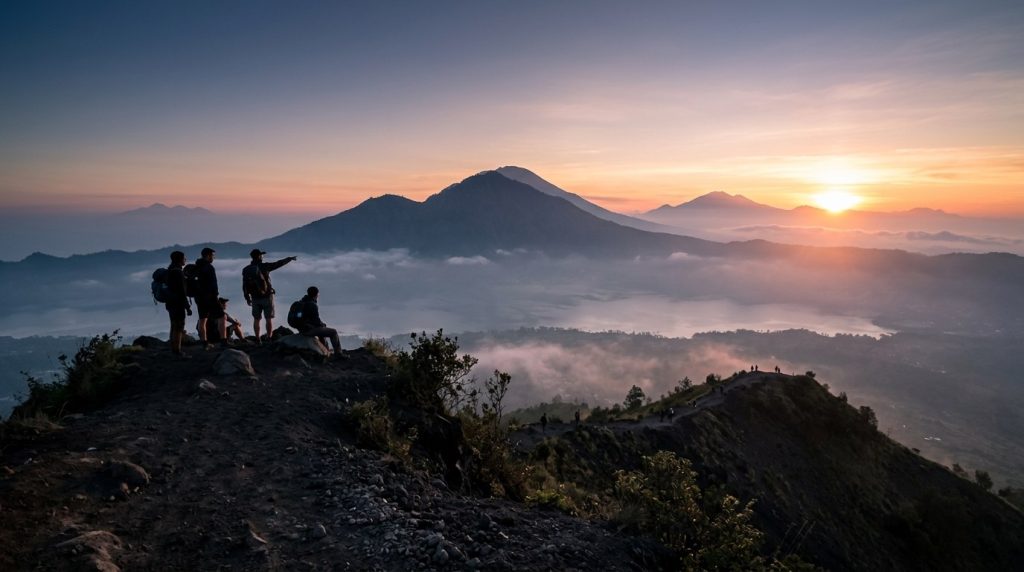
Mount Batur is an active volcano 1,717 metres above sea level in Bali’s highland interior, about 45 km north of Ubud. The pre-dawn hike is one of Bali’s signature experiences — and one that’s genuinely worth the 3 AM alarm.
Logistics:
- Wake up: 2:30–3 AM (most guides collect from Ubud hotels at 3 AM)
- Hike duration: 2 hours up, 1.5 hours down
- Difficulty: Moderate — steep and loose volcanic rock in the dark, no technical climbing
- Temperature at summit: 10–15 degrees C at sunrise — bring a fleece or light jacket
- Guided tour from Ubud: 250,000–400,000 IDR ($15–25) per person including guide, torch, and basic breakfast at summit
- Entry fee: 30,000 IDR ($2) payable at checkpoint
What to expect at the top: You’ll reach the crater rim just before sunrise (around 6 AM). On clear days, Mount Agung (Bali’s sacred peak) rises above the cloud layer to the east, and the caldera lake (Lake Batur) glows below. Guides cook eggs in volcanic steam vents — it’s a genuine quirk, not a gimmick.
After the hike:
- Kintamani Village: Overlooks the caldera — most tour stops include a buffet lunch here. The panoramic view of the lake and volcano is worth the stop even without eating
- Tirta Gangga Water Palace: A 1948 royal garden with carved fountains, stepping stone ponds, and koi pools, 35 km east of Batur. Entrance: 50,000 IDR ($3). One of Bali’s most photogenic and underrated spots
- Pura Besakih (optional): Bali’s holiest and largest temple complex, on the slopes of Mount Agung. Worth seeing but requires patience — aggressive guides offering “temple tours” can be persistent at the entrance
Return: Most people head back to south Bali (Seminyak, Canggu) or straight to Ubud to pack and check out. Plan on 2+ hours of driving plus rest.
Day 5: Nusa Penida
Nusa Penida is the wildest island in the Bali region — raw limestone cliffs, turquoise bays, and a fraction of the infrastructure of the main island. It’s a 45-minute fast boat from Sanur or Padang Bai. Most visitors do it as a day trip, which is doable but rushed. If you’ve got flexibility, one night on the island makes a big difference.
Getting there:
- Fast boat from Sanur Harbour: 250,000–350,000 IDR ($15–22) return, multiple operators (Rocky Fast Cruise, Mola Mola Express)
- First boats: 8 AM | Last return: 5:30 PM
- Book the day before in high season (June–August) — boats sell out
Day 5 plan (west coast circuit):
Kelingking Beach: The unmissable T-Rex cliff viewpoint. No beach access without serious climbing; the view from the top is the whole point. It’s a 15–20 minute drive from the port. Arrive early — parking gets chaotic after 9 AM.
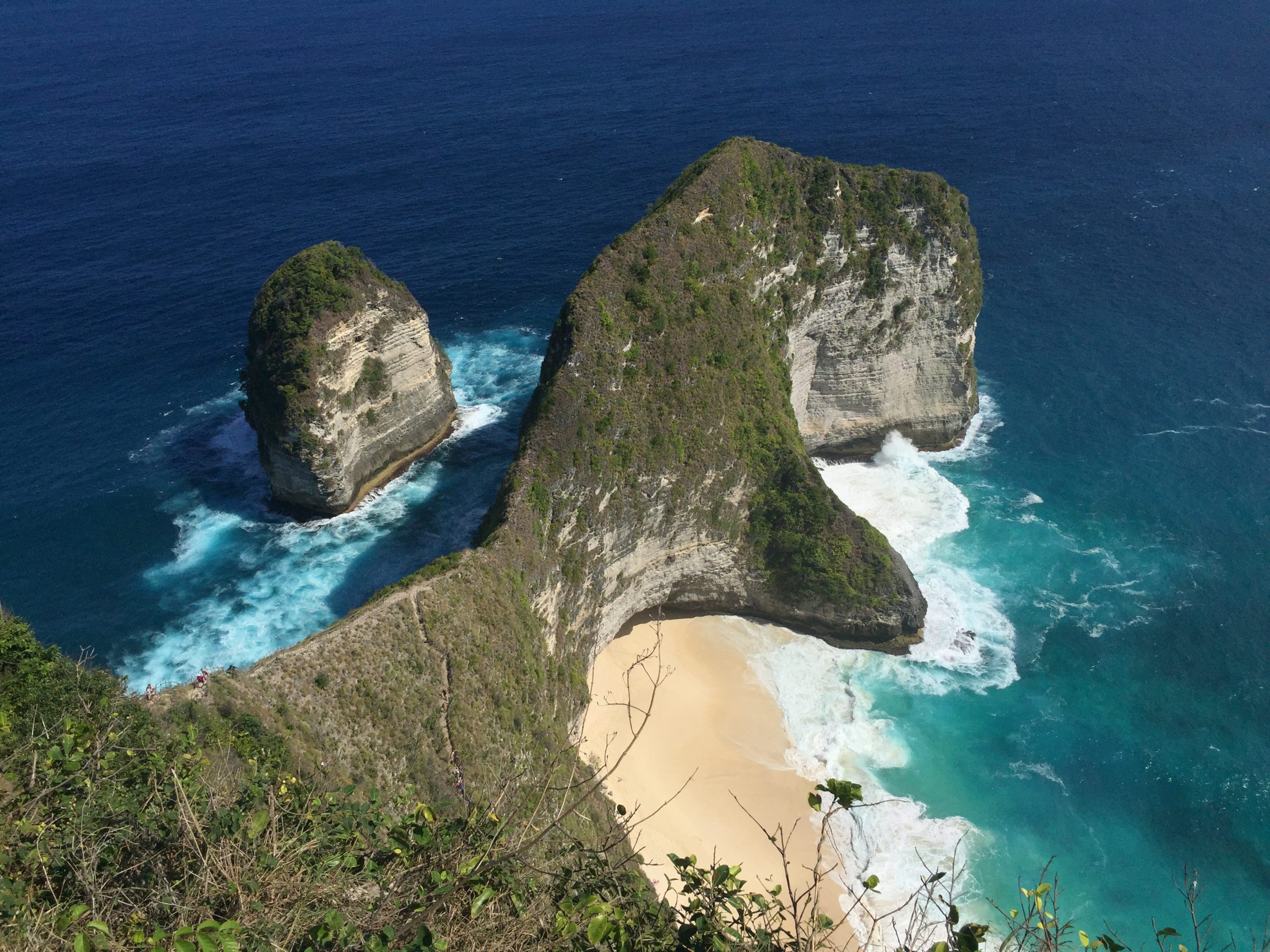 Photo: Wikimedia Commons / CC BY-SA 4.0
Broken Beach (Pasih Uug): A natural arch opening onto a turquoise cove — you can’t swim here, but it’s one of Bali’s most photogenic spots. 10 minutes from Kelingking.
Angel’s Billabong: A natural rock pool that fills at low tide — you can swim in it. Check tide times before you go; at high tide it’s not swimmable and the currents can be dangerous. 5 minutes from Broken Beach.
Crystal Bay: The best snorkelling on the island (manta rays September–October). Good swimming beach with clearer water than anywhere on the Bali mainland. Entrance: free.
Scooter rental on Nusa Penida: 100,000–150,000 IDR/day ($6–9). The roads are steep and some are unpaved — only rent if you’re confident on a scooter. Otherwise hire a local driver for the day: 300,000–450,000 IDR ($18–28).
Nusa Penida vs Nusa Lembongan: Penida has the dramatic scenery (Kelingking, Broken Beach). Lembongan is flatter, more developed, and better for casual snorkelling and beach time. If you’ve only got one day, Penida is the stronger choice for first-timers.
Day 6: Uluwatu and the Bukit Peninsula
The Bukit Peninsula is the southern tip of Bali — drier, more rugged, and dramatically different from the lush green interior. It’s home to Bali’s best surf breaks, some of its finest cliff-top dining, and Uluwatu Temple, one of the six directional temples of Bali.
Moving from the south coast: If you’re based in Seminyak or Canggu, Uluwatu is 45–60 minutes south by scooter or driver. Check out of Ubud before Day 6 and stay south (Seminyak, Uluwatu area) for the final two nights.
Day 6 plan:
Morning — beach time at Padang Padang or Bingin:
- Padang Padang: Famous left-hand reef break, small but beautiful cove accessed via steep stairs. Good swimming when surf is flat. Entrance: 20,000 IDR ($1.50)
- Bingin: Terraced cliff access to a sheltered bay with warungs at various levels. The walk down involves ladders — worth it
Afternoon — Uluwatu Temple (Pura Luhur Uluwatu): Perched on a 70-metre cliff above the Indian Ocean, this 11th-century sea temple is one of Bali’s most photographically striking sites. Entrance: 50,000 IDR ($3) plus mandatory sarong rental if you’re not wearing one. Watch the monkeys — they steal sunglasses, phones, and anything not held down.
Sunset — Kecak Fire Dance: Starts at 6 PM in the clifftop amphitheatre. Entrance: 150,000 IDR ($9). The Kecak is performed by 50–70 men chanting “cak-cak-cak” around a fire in unison — it’s a Hindu Ramayana story told through movement. The sunset backdrop behind the cliff temple is the photograph you’ll see in every Bali brochure.
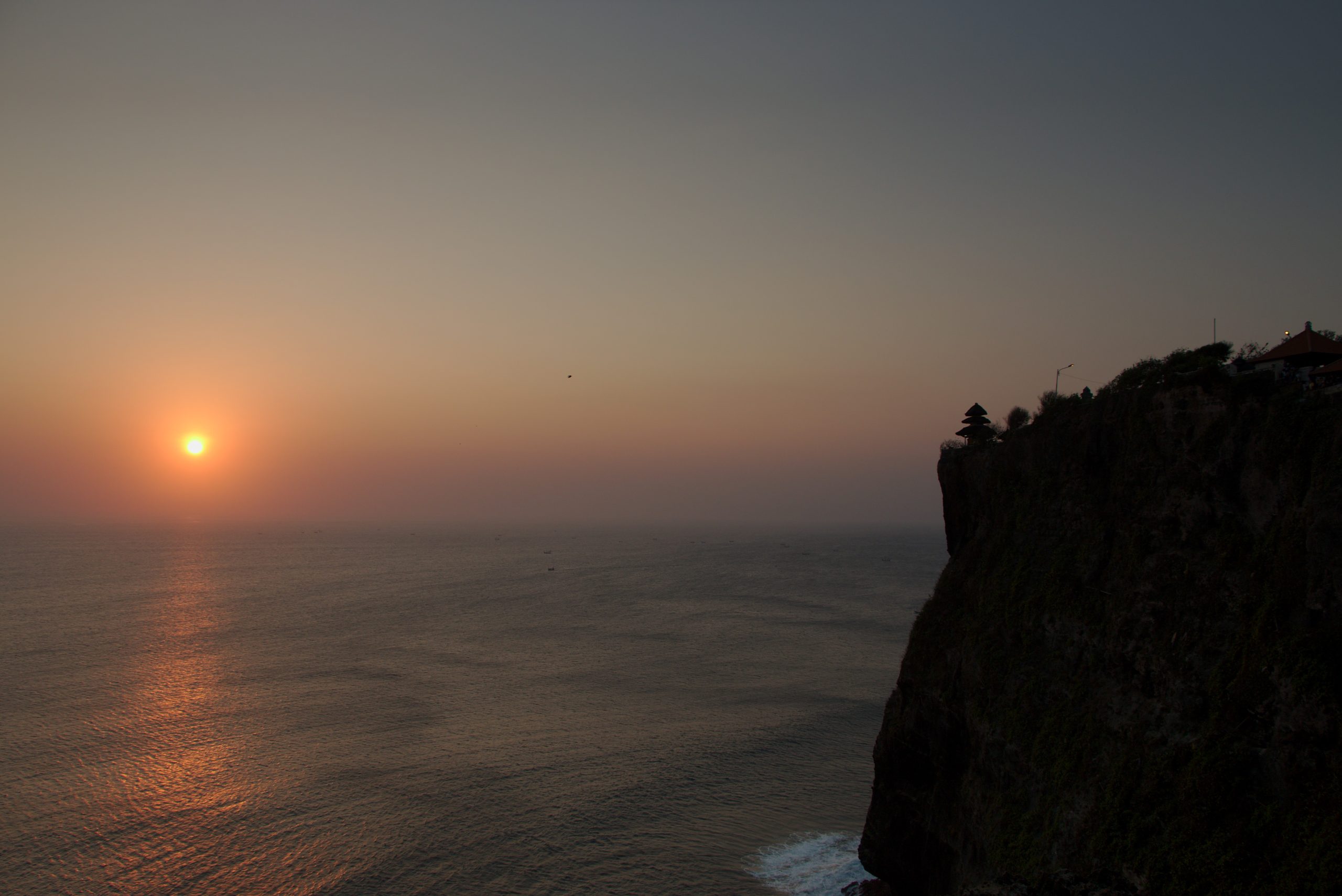 Photo: Wikimedia Commons / CC BY-SA 4.0
Dinner: Single Fin Bali (cliff-top bar with ocean view, gets busy at sunset), Nook (in rice paddies, 30 min from Uluwatu), or Warung Warung (local Indonesian in Jimbaran).
Jimbaran Seafood (optional): The beach seafood warungs along Jimbaran Bay are a bit touristy but genuinely fun — pick your fish from ice displays, priced by weight, grilled fresh. Expect to pay $15–30 per person including drinks.
Day 7: Departure Day
There’s no point in squeezing a major attraction into departure day — flight stress is real, and Bali’s traffic can turn a “quick 20-minute drive” into 90 minutes without warning. Use Day 7 for recovery, last-minute shopping, and a proper breakfast.
Morning options (depending on flight time):
- Late flight (after 6 PM): Take a morning spa treatment (60-minute Balinese massage: 150,000–250,000 IDR/$9–15 at quality spas), visit Seminyak Square for last shopping, or have a beach club lunch at Potato Head or Ku De Ta
- Afternoon flight (1–5 PM): Skip anything more than walking distance from your accommodation. Pack the night before
- Early morning flight (before 8 AM): Stay near the airport (Kuta or Jimbaran) on Night 6 and take a taxi at 5 AM
Airport logistics:
- Ngurah Rai International Airport (DPS) is chaotic — arrive 2.5 hours before international flights
- Grab/GoJek to airport: 80,000–180,000 IDR ($5–11) from most south Bali areas
- Airport Wi-Fi is unreliable — download boarding passes in advance
- Departure tax is included in ticket prices (it wasn’t always)
Last warung meal: Get one final nasi goreng or mie goreng at the cheapest-looking warung you can find before you leave. It’ll be better than anything you get in the departure lounge.
7-Day Bali Budget Breakdown
Real costs for three traveler types. All prices in USD, based on 2025 IDR exchange rates (~16,000 IDR per dollar). Source: Salt in Our Hair (March 2024 update), UK Government travel advisory.
Not included in daily costs:
- Flights (varies enormously by origin)
- Visa on Arrival: $31 (one-off)
- Tourist Levy: $9 (one-off)
- Mount Batur guided tour: $15–25
- Nusa Penida boat: $15–22 return
- Kecak dance at Uluwatu: $9
Honest budget note: Bali’s “budget” tier is generous. $200 for 7 days is very achievable if you rent a scooter, eat mostly from warungs, and stay in guesthouses. The mid-range tier ($735–1,260) covers comfortable hotels, a private driver for highland day trips, and eating at proper restaurants.
Best Time for a 7-Day Bali Trip
Bali has two seasons: dry (May–October) and wet (November–April). For a one-week trip, the dry season is the clear choice — lower humidity, more reliable beach and outdoor activity weather, and clear skies for the volcano sunrise. If December is your only option, see whether Bali is good in December: expect rain on about 16 days, but warm water and green rice terraces.
Month-by-month breakdown:
| Month | Season | Notes |
|---|---|---|
| January–February | Wet | Heavy afternoon rain; good for rice terrace greenness; fewer crowds |
| March | Wet/transition | Nyepi (Balinese New Year/Day of Silence) — airport closes for 24 hours |
| April | Transition | Less rain, reasonable prices, starting to warm up |
| May | Dry (start) | Good conditions, manageable crowds before peak season |
| June–August | Peak dry | Best weather, most reliable; busiest and most expensive |
| September | Dry | Strong month; manta rays off Nusa Penida; post-peak crowds |
| October | Dry (end) | Good conditions; prices start dropping |
| November | Transition | Occasional rain; green but can be grey for sunrise hike |
| December | Wet/peak | Christmas crowds + rain; prices spike over the holiday period |
UNIQUE INSIGHT: The best value week in Bali is mid-September to mid-October — dry season weather with post-peak prices. Scooter rentals, accommodation, and tour costs all drop compared to July-August rates.
Avoid if possible:
- Nyepi (March): The entire island shuts down for 24 hours, including the airport. Great if you want to experience it; terrible if you’re trying to depart
- Peak June–August: Prices 20–35% higher, key attractions are genuinely crowded (Tegallalang at 10 AM has hundreds of people)
Alternate Route Options
Route 2: Culture-First (Ubud Base)
Best for travelers who want depth over variety. You stay in Ubud the whole trip, use it as a base, and day-trip to the coast rather than moving accommodation.
| Day | Focus |
|---|---|
| Day 1 | Arrive in Ubud, Campuhan Ridge Walk, Ubud market |
| Day 2 | Tegallalang, Monkey Forest, Ubud Palace Kecak dance |
| Day 3 | Tirta Empul, Pura Gunung Kawi, Goa Gajah |
| Day 4 | Mount Batur sunrise, Tirta Gangga, back to Ubud |
| Day 5 | Nusa Penida day trip from Padang Bai (90 min from Ubud, 45 min boat) |
| Day 6 | Tanah Lot day trip + Seminyak beach clubs |
| Day 7 | Departure from DPS (2 hour drive from Ubud — factor this in) |
Best for: Couples, photographers, spiritual travelers, digital nomads extending the trip.
Route 3: Adventure-Focused
For travelers who want volcano + offshore island coverage and less time in temples.
| Day | Focus |
|---|---|
| Day 1 | Arrive, Canggu surf lesson or beach club |
| Day 2 | Ubud highlights (half day: rice terraces + Monkey Forest) |
| Day 3 | Mount Batur pre-dawn, Kintamani, Sidemen rice paddies (East Bali alt) |
| Day 4 | Transfer to Padang Bai, overnight on Nusa Penida |
| Day 5 | Full Nusa Penida (west + east coast — Atuh Beach, Teletubbies Hill) |
| Day 6 | Return to Bali, Uluwatu sunset Kecak |
| Day 7 | Seminyak beach day, departure |
Best for: Active travelers, couples, those who want to skip the “temple circuit.”
Bali Daily Budget by Traveler Type
Bali Tourism Growth (2010-2025)
Practical Tips for 7 Days in Bali
Transport:
- Scooter rental is the most flexible option ($4–8/day) — Bali roads are manageable if you’re comfortable on a motorbike. International driving permit required, though enforcement is inconsistent
- Private driver for a full day: $35–55 (Seminyak area), $50–70 (Ubud) — worth it for the volcano and highland day trips
- Grab/GoJek work well in the south coast (Seminyak, Canggu, Kuta) and increasingly in Ubud
Money:
- ATMs are widely available; BNI and BCA have the best international withdrawal limits
- Dynamic currency conversion (DCC) will offer to charge you in your home currency at the ATM — always decline and pay in IDR
- Many restaurants and mid-range hotels accept cards; warungs and markets are cash-only
- Budget: carry 500,000–1,000,000 IDR ($30–60) in cash at all times
Health:
- Drink bottled or filtered water only — even in good hotels and restaurants
- Bali Belly (traveler’s stomach) affects roughly 20–30% of visitors; carry oral rehydration salts and loperamide
- Mosquitoes and dengue fever: wear repellent after dark, especially in Ubud
- Travel insurance: mandatory for any smart trip to Bali — medical evacuation is expensive
Communication:
- Buy a local SIM card at the airport: Telkomsel (best coverage) or XL — 100GB data for ~$5–7
- WhatsApp is universal for contacting drivers, restaurants, accommodation
Cultural etiquette:
- Dress modestly at all temple sites — sarong required at most
- Don’t touch people’s heads (considered sacred)
- Use your right hand to pass or receive items
- If you’re visiting during Nyepi (Day of Silence), stay inside and be quiet — it’s serious, not atmospheric
Book Your Bali Trip
Use these trusted platforms to book your Bali trip at the best prices:
- Tours & Activities: Browse Bali experiences on GetYourGuide — day trips, food tours, skip-the-line tickets.
- Hotels: Compare Bali hotels on Booking.com — free cancellation on most bookings.
- eSIM / Stay Connected: Airalo eSIM — affordable data plans, no roaming fees.
Frequently Asked Questions
How many days do you need in Bali?
Seven days is enough for a solid first trip covering Ubud, a volcano hike, Nusa Penida, and Uluwatu. If you want north Bali, east Bali, or to slow down in one area, plan for 10-14 days.
What’s the best area to stay in Bali for a week?
Split your stay: 2 nights in Ubud (temples, rice terraces, volcano access), 5 nights in the south (Canggu or Seminyak for beaches and nightlife). A single base in Ubud works too if you don’t mind longer drives south.
Do I need a visa for Bali in 2026?
Most nationalities get a Visa on Arrival (30 days, ~USD 31) at Ngurah Rai Airport. You also need to pay the Bali Tourist Levy (~USD 9) before or on arrival. Check the Indonesian immigration website for your specific nationality.
Is 7 days enough for both Bali and Lombok?
No. Adding a ferry to Lombok and back eats 2 days. If you want both islands, plan 10-12 days minimum. For 7 days, choose one.
What’s the cheapest way to get around Bali for a week?
Scooter rental (USD 4-8/day) is the most cost-effective option. Grab/GoJek works well in the south coast urban areas. For day trips to Ubud or the volcanoes, a private driver (USD 35-55/day) is more practical than scooter on mountain roads.
Is Bali safe for solo travelers?
Generally yes. Bali has a well-developed tourist infrastructure and lower violent crime rates than most comparable destinations. Main risks are traffic (scooter accidents are the leading cause of tourist injuries), petty theft in crowded areas, and Bali Belly from contaminated food or water.
Related Bali Guides
- Best Beaches in Bali — Where to swim, snorkel, and surf
- Bali Travel Guide (2026) — Complete planning resource
- Best Time to Visit Bali — Month-by-month weather breakdown
- Bali Bucket List — 25 unmissable experiences
Sources & Further Reading: indonesia.travel, tripadvisor.com, wikitravel.org.
We only recommend services we genuinely use and trust. Thank you for supporting our work!
According to the Indonesia Tourism Board (2025), Bali continues to be one of the world’s most visited destinations, drawing millions of international travelers each year.