Koh Lanta Travel Guide 2026: Beaches, Diving & Everything You Need
By TravelguidestipUpdated 10 min readHow we earn
Hotel buttons open Stay22 (Booking.com, Agoda and others) and tour buttons open GetYourGuide. We may earn a commission at no extra cost to you.
Quick answer: Koh Lanta is a laid-back, 30km-long island in Krabi province built for slow beach days — families, couples, and divers rather than a nightlife crowd. Visit November–April for calm seas and open businesses; most of the island shuts down through the May–October monsoon. Reach it by minivan-and-car-ferry from mainland Krabi (year-round) or by high-season ferry from Krabi Town or Koh Phi Phi, then rent a scooter to explore Old Town, the beaches, and the national park.
Key Takeaways: Koh Lanta is Krabi province’s quieter alternative to Phuket and Koh Phi Phi — a 30km island with good beaches, world-class diving at Hin Daeng and Hin Muang, and a relaxed pace that appeals to families, divers, and travelers who want Thailand without the full-moon party crowds. Most businesses close May–October (monsoon season) — visit November–April.
Getting there: ferry from Krabi Town (1.5h) or Koh Phi Phi (1h). Budget travelers can live on $30–40/day; mid-range $60–90/day.
Koh Lanta Yai (the main island, commonly called “Koh Lanta”) is 30km long and 6km wide, part of Krabi province in southern Thailand. The island has a permanent population of approximately 25,000, mostly Malay-Muslim fishing families and Thai-Chinese Old Town residents. Koh Lanta National Park covers the southern third of the island.
Hin Daeng and Hin Muang, 40km south of Koh Lanta, are among Thailand’s top 5 dive sites — Hin Muang holds the record for deepest wall diving in Thai waters (70m+).
For activities, see Best Things to Do in Koh Lanta. For accommodation by area, see Where to Stay in Koh Lanta.
Why Visit Koh Lanta — Koh Lanta Travel Guide
Koh Lanta sits between two extremes: Koh Phi Phi (30 min by speedboat, party-heavy, overcrowded) and complete remoteness. Lanta gets enough tourists to support good restaurants and dive shops, but not so many that beaches feel crowded.
Compared to Koh Phi Phi: Lanta has better beaches, better diving, lower prices, and a genuinely quieter atmosphere. Phi Phi has more nightlife and the famous Maya Bay. If you’re choosing between the two for a week-long beach trip, Lanta wins for most travelers over 25.
Compared to Phuket: Phuket has better infrastructure, more restaurant options, and easier access. Lanta has better natural beach conditions and a fraction of the crowds. Phuket for first-timers and city-beach hybrids; Lanta for beach-focused stays.
Find your Koh Lanta hotel on the map
Live prices from Booking & Airbnb — tap a pin to compare stays around Long Beach (Phra Ae) and beyond.
Koh Lanta’s Key Areas
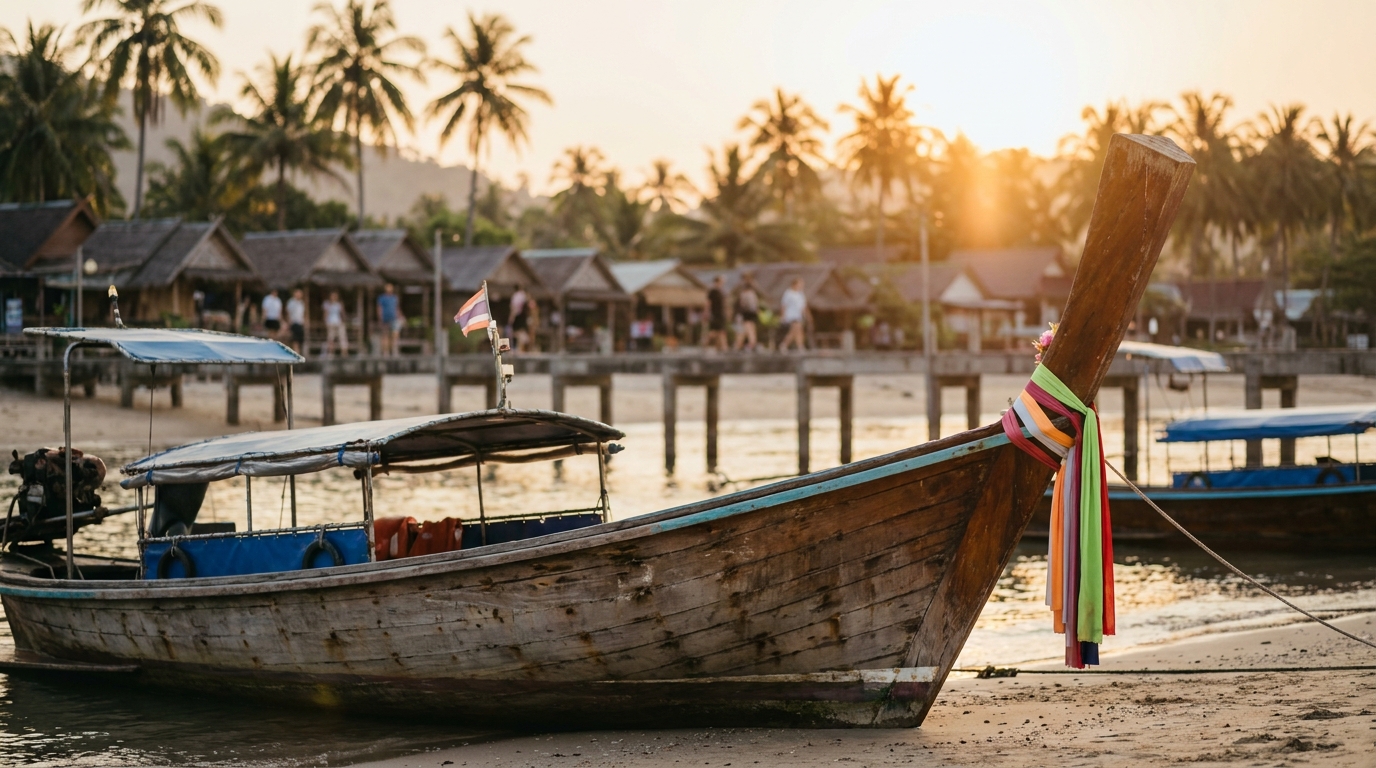
Klong Dao Beach (North)
The main family beach — widest sand on the island, gentle waves, good for swimming. Most mid-range resorts cluster here. The beach is long enough to absorb crowds without feeling packed. Sunsets are west-facing — most of Lanta’s beaches face the Andaman Sea.
Long Beach / Hat Phra Ae (Central-West)
The backpacker and mid-range hub. Restaurants, bars, dive shops, and massage places line the beachfront road. The sand is finer than Klong Dao, the vibe more social. Most popular single beach on the island.
Klong Khong and Klong Nin (Central-South)
Quieter residential feel, fewer tourists, better value accommodation. Klong Khong has a bohemian atmosphere — small guesthouses, reggae bars, hammocks. Klong Nin is cleaner and slightly more upscale.
Kantiang Bay (South)
The most scenic bay on the island — a curved bay with a steep headland, one of Koh Lanta’s best resorts (Pimalai), and calm water. Remote relative to the north. Worth visiting even if not staying here.
Koh Lanta Old Town (East Coast)
Baan Ko Lanta — a 200-year-old Chinese-Portuguese fishing village on stilts over the water. The island’s most historically interesting area: wooden shophouses, traditional coffee shops, a small fishing pier. The Old Town sits on the east coast — facing the mainland, no beach — but the atmosphere is distinct from any other part of Lanta.
Koh Lanta Quick Facts
| Category | Details |
|---|---|
| Currency | Thai Baht (THB). 1 USD ≈ 35 THB (2026) |
| Language | Thai, English widely spoken in tourist areas |
| Religion | Mix of Buddhist Thai and Muslim Malay communities |
| Power | 220V/50Hz, Type A/B/C plugs |
| SIM card | AIS, DTAC, or True — buy in Krabi or at ferry pier |
| Time zone | ICT (UTC+7) |
| Main access | Ferry from Krabi Town (1.5h) or Koh Phi Phi (1h) |
Getting to Koh Lanta
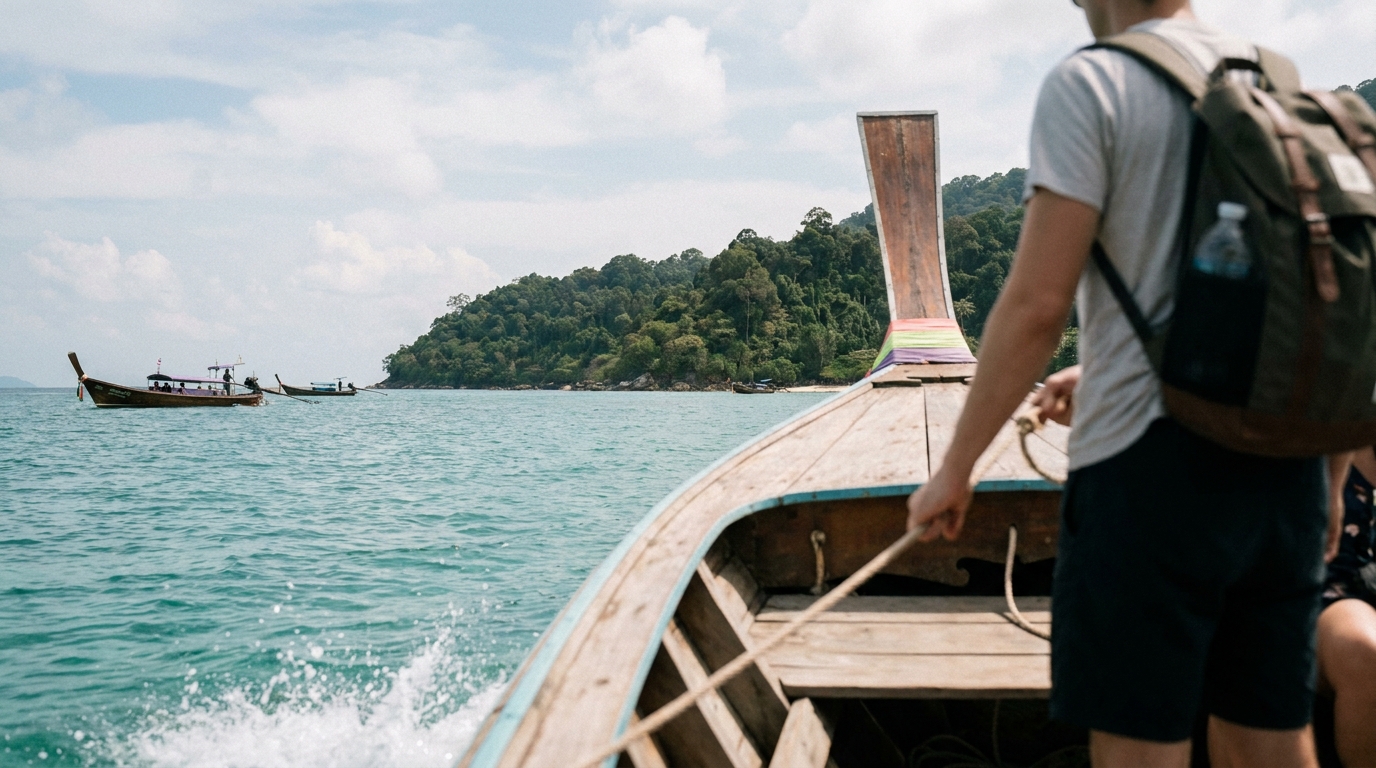
From Krabi Town: Minivan to Baan Hua Hin pier + ferry crossing (one short ferry, then the Siri Lanta Bridge). Total: 1.5h, 300–400 THB. Minivans depart from Krabi bus station area throughout the day.
From Koh Phi Phi: Speedboat or ferry, 1–1.5h, 350–500 THB. Multiple daily departures during high season (November–April). Limited or no service in monsoon season.
From Phuket: Minivan + ferry package, 3–4h, 500–700 THB. Departs from Phuket bus terminal area. Book through guesthouses or online the day before.
From Bangkok: Overnight train or bus to Krabi, then ferry to Lanta. Total: 12–14h. Flight to Krabi Airport (KBV) + 1h transfer + ferry is faster.
Krabi Airport (KBV): Served by Bangkok Airways, AirAsia, Thai Lion Air. 1h to Koh Lanta pier by minivan + ferry.
Getting Around Koh Lanta
Motorbike rental: 200–300 THB/day — the standard way to explore the island independently. Paved road runs the full west coast. The south (National Park area) has some rough stretches. Stay connected: grab a travel eSIM from Airalo before you go so you have data the moment you land.
Songthaew (shared taxi truck): Runs between beaches during high season. Flag one down on the main road. 50–100 THB per person.
Tuk-tuk / private taxi: For airport transfers and longer trips. Negotiate price in advance.
No Grab/Bolt: Ridesharing apps don’t operate on Koh Lanta — only local taxis and motorbike rentals.
Is Koh Lanta Safe?
Koh Lanta is one of the lower-risk islands in Thailand for general safety — it’s quiet, family-oriented, and doesn’t have the aggressive touts or nightlife-driven incidents of busier islands. The main real risk is self-inflicted: scooter accidents.
Rental scooters are everywhere and the island’s paved west-coast road is easy riding, but travellers without prior motorbike experience do crash here, often on sand or gravel patches, or on unfamiliar left-hand traffic. Treat a Koh Lanta scooter the same way you would at home — wear a helmet, don’t ride at night without working lights, and skip it entirely if you’ve never ridden one before.
Swimming is generally safe at the main beaches in the dry season (November-April), though conditions worsen once the monsoon arrives and ferries and boat trips get cancelled in rough weather. If in doubt, ask your guesthouse before swimming during the shoulder months.
If something does go wrong, Koh Lanta’s hospital is one of the larger regional facilities and has X-ray equipment on site — a meaningful reassurance on an island this size. For anything more serious, Krabi has fuller hospital services an hour or so away by road and ferry.
Koh Lanta Budget Overview
| Budget tier | Daily cost | What you get |
|---|---|---|
| Budget | 1,050–1,400 THB ($30–40) | Fan bungalow, local food, motorbike rental |
| Mid-range | 2,100–3,150 THB ($60–90) | A/C bungalow or hotel, mix restaurants, dive day |
| Comfort | 4,200–8,750 THB ($120–250) | Boutique resort, restaurant dining, guided tours |
Food is cheap at local restaurants: 80–150 THB for pad thai or rice dishes. Diving is the biggest single cost — a 2-dive day trip runs 1,500–2,000 THB.
For full cost breakdown, see Koh Lanta Travel Budget.
Food & Drink in Koh Lanta: What to Try and What It Costs
Eating well on Koh Lanta is affordable if you stay off the beachfront. Beach bars are fine for a sunset drink, but the more interesting food is usually a short walk inland on the main road, where locals eat.
Simple Thai dishes at roadside places start from around AUD 2 · USD 1.50 (about 50 THB), and a full main course at a casual sit-down restaurant typically runs under AUD 8 · USD 6 (under 200 THB). Seafood and anything imported, like Western breakfasts or wine, cost noticeably more than Thai dishes.
Dishes worth seeking out: khao soi (northern Thai curry noodle soup, available at a handful of Old Town cafes), southern Thai curries with roti for dipping, deep-fried papaya salad, massaman curry, and grilled fish cooked straight over charcoal at beachside stalls. Roti pancakes from roadside carts make a cheap, filling breakfast.
Koh Lanta Old Town, on the east coast, has some of the island’s best small cafes and restaurants, a byproduct of its history as a Chinese-Portuguese fishing settlement — worth timing a lunch stop here if you’re exploring by scooter.
Vegetarian and vegan travellers are well catered for — most restaurants, even basic roadside ones, run a vegetable or tofu version of the standard curries and stir-fries. Tap water isn’t safe to drink; bottled or filtered water is sold everywhere, including convenience stores and most guesthouses.
When to Visit Koh Lanta
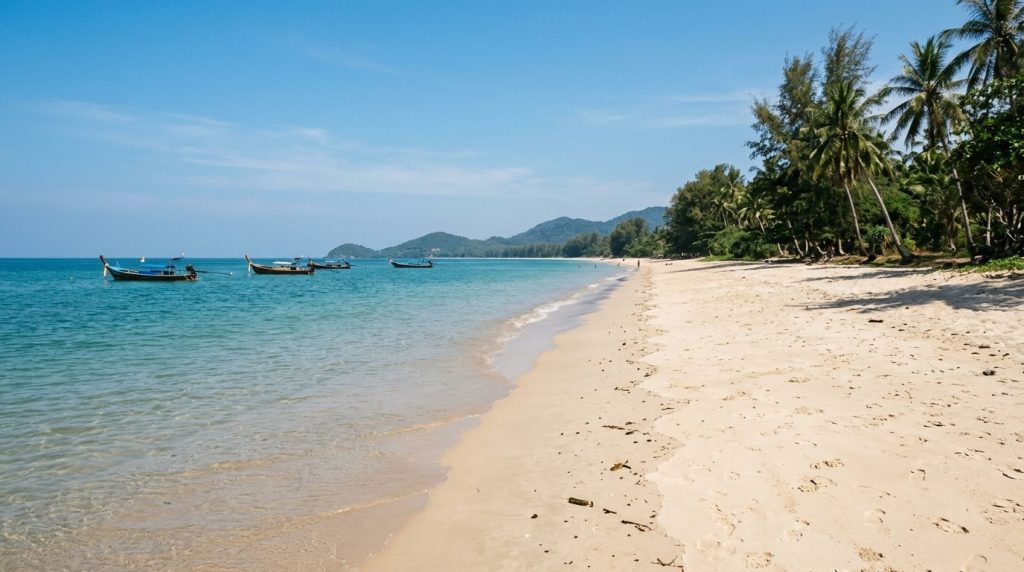
High season (November–April): Dry, sunny, calm seas. Best for diving, beach, and island hopping. December–January is peak — book ahead.
Avoid (May–October): Monsoon season. Most hotels, restaurants, and dive shops close. Rough seas make diving and boat trips impossible. The island essentially shuts down.
Best months: November and April — weather is excellent, crowds are manageable, prices are slightly below peak.
For month-by-month detail, see Best Time to Visit Koh Lanta.
Nightlife in Koh Lanta
Koh Lanta is not a nightlife island, and that’s largely the point. There are no nightclubs and nothing resembling Koh Phi Phi’s beach-bucket scene.
Evenings instead revolve around beachfront restaurants and bars that host fire shows on the sand after dark — a low-key, family-friendly version of the fire performances found on busier islands. Expect a few drinks and a show rather than a late-night crowd.
Long Beach has the highest concentration of bars on the island, though “bar” here usually means a beachfront spot with a fire pit and reggae music rather than anything resembling a club.
The main fixed gathering point is Saladan walking street, a night market that runs every day from about 5.30pm to 11pm near the pier at the island’s north end, with Thai food stalls and souvenir vendors rather than bars. It’s the closest thing Koh Lanta has to a nightly social hub.
If you want louder nightlife, Koh Phi Phi is a short ferry away in high season — plenty of travellers base on Lanta and day-trip to Phi Phi’s bars rather than the reverse.
What to Pack for Koh Lanta
Koh Lanta is low-key and tropical — pack for beach days, boat trips, and a visit to the island’s Muslim fishing villages rather than nightlife.
- Reef-safe sunscreen — look for a mineral (zinc oxide) formula, since Koh Lanta’s dive and snorkel sites include coral reefs that regular sunscreen can damage.
- A light cover-up or sarong — useful at Old Town and the Muslim fishing villages on the east coast, where modest dress is appreciated outside the main beaches.
- Cash in small baht notes — many guesthouses, roadside food stalls, and the Saladan night market are cash-only; ATMs cluster around Saladan and Long Beach but thin out elsewhere.
- A dry bag — for the ferry crossing from Krabi or Koh Phi Phi and for any snorkel or dive day trip to Hin Daeng and Hin Muang.
- Mosquito repellent — Koh Lanta is tropical and rural; repellent matters more here than in central Bangkok.
- A rain jacket if travelling May-October — monsoon downpours are short but heavy, and many boat trips get cancelled or rerouted in rough weather.
- Your own snorkel mask — optional, but day-trip rental gear is shared and basic; your own mask fits better for the Hin Daeng/Hin Muang sites.
Frequently Asked Questions
Is Koh Lanta worth visiting?
Yes — Koh Lanta offers some of Thailand’s best diving, genuine relaxed beach atmosphere, and lower prices than Phuket or Koh Samui. It rewards travelers who want a quieter pace and are willing to make the ferry journey. Not ideal for travelers who want resort infrastructure or nightlife comparable to Phuket.
How many days do you need in Koh Lanta?
Minimum 4 days to experience the beaches and one dive day trip. Five to seven days allows for exploring all the main beaches by motorbike, a Hin Daeng/Hin Muang diving day, a National Park visit, and the Old Town. Ten days or more for divers wanting to cover all the major sites.
Is Koh Lanta good for families?
Yes — Klong Dao Beach has calm, shallow water safe for children. The island has no nightlife pressure. Resorts at Klong Dao and Kantiang Bay have family rooms and pools. One of Thailand’s better islands for families who want beach without adult-entertainment-heavy tourism.
Sources:
1. Tourism Authority of Thailand — Koh Lanta destination profile, 2025
2. Krabi Tourism — island access and transport, 2025
3. Koh Lanta National Park — park information, 2025
More Koh Lanta Guides