Disclosure: Some links in this guide are affiliate links. If you book or buy through them, we may earn a small commission at no extra cost to you — it helps keep our guides free.
Best Time to Visit Krabi 2026: Month-by-Month Guide
Quick answer: Krabi is at its best from November to March, when the Andaman Sea is calm, skies are clear, and every island tour runs daily. December to February bring the finest weather but the biggest crowds and highest prices, while November and April are the value sweet spots. The May-October wet season cuts hotel rates 30-50% but adds afternoon storms and rougher seas.
The best time to visit Krabi is November to March — dry weather, calm seas, and clear skies. The shoulder months of April and October offer good price-to-weather ratios. Wet season (May-September) drops hotel prices 30-50% but adds afternoon storms and rough seas. Travellers weighing the Gulf against the Andaman can read Koh Samui vs Krabi first.
Across three trips spanning January, May, and August, I’ve experienced both Krabi extremes — the postcard dry season and the surprisingly green wet season. This guide breaks down each month’s weather, crowds, and prices with the trade-offs that don’t show up in averages.
For broader trip planning, see our Ultimate Krabi Travel Guide.
- Best overall: December-February (peak weather, peak prices)
- Best value: November or April (shoulder season; good weather, lower prices)
- Cheapest: June-September (wet season; 30-50% hotel discounts)
- Worst (rainiest): September-October (350+ mm rainfall, ferry disruptions)
- Average dry season temp: 28°C (82°F); wet season: 27°C (81°F)
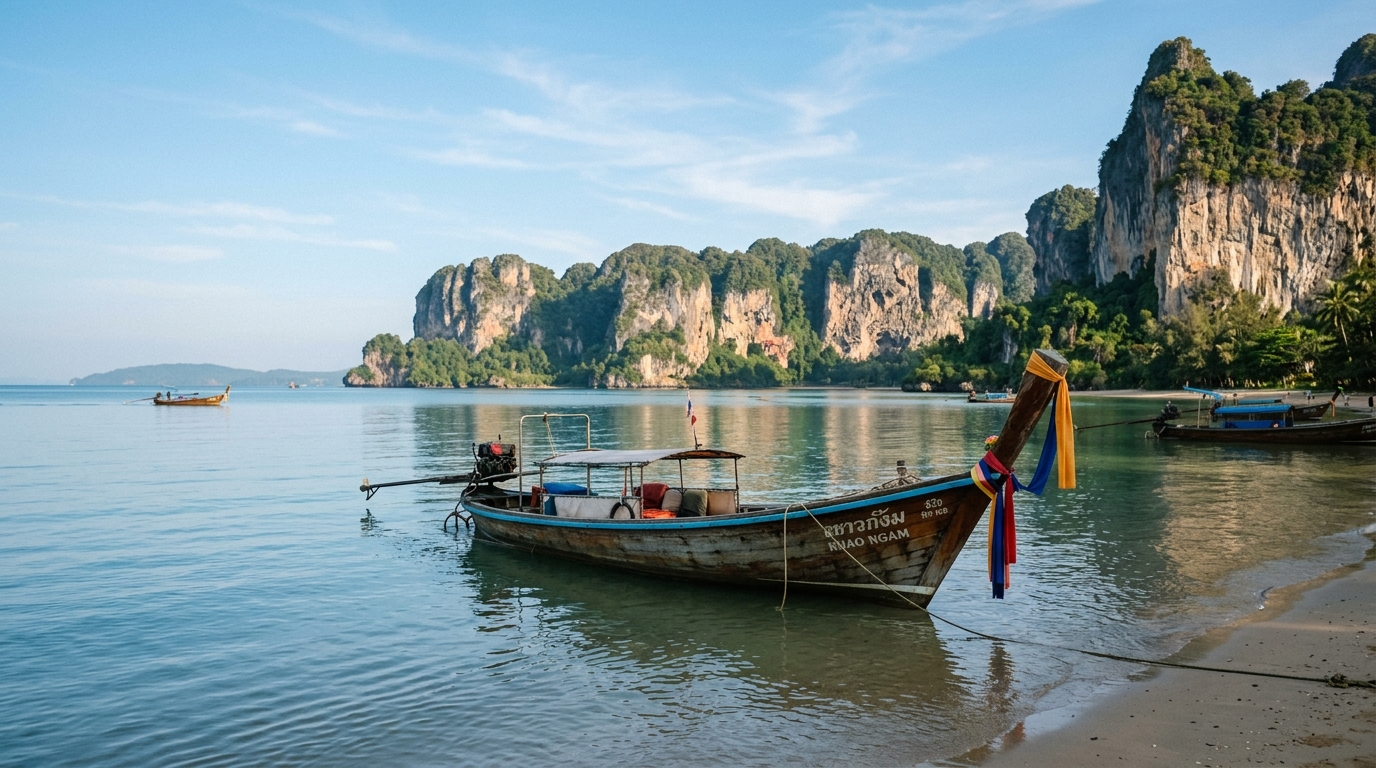
Krabi Weather Overview — Best Time To Visit Krabi
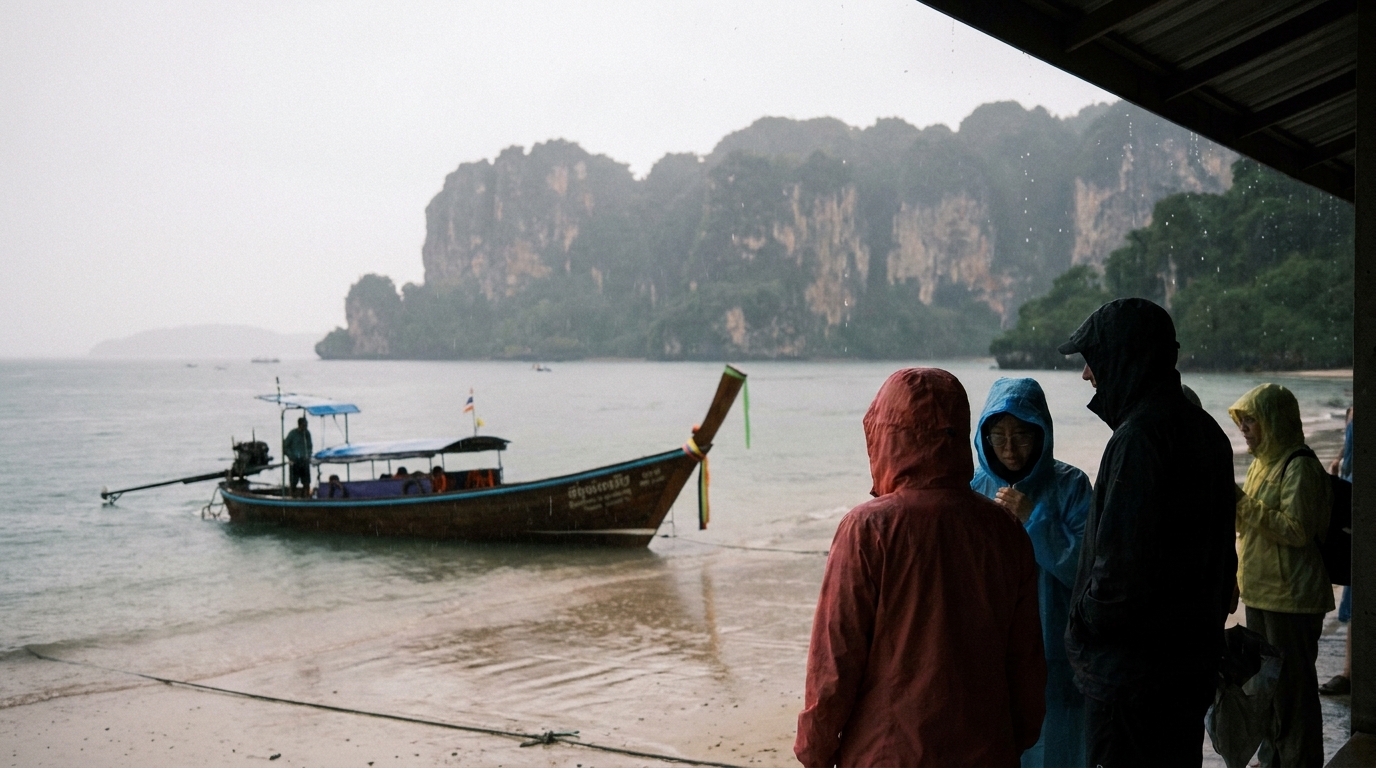
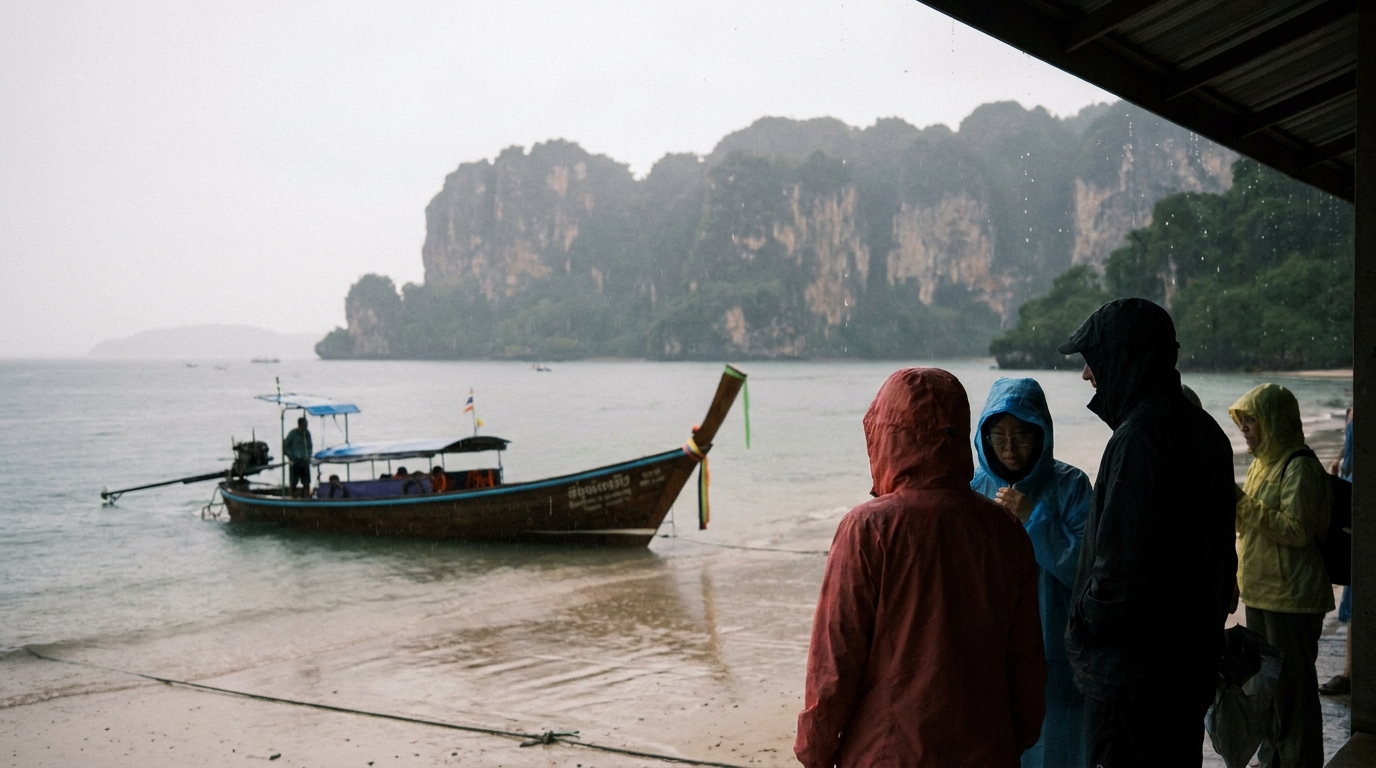
Krabi has a tropical monsoon climate with two main seasons. Average annual rainfall hits 2,400 mm (Thai Meteorological Department, 2024), 80% of which falls May-October. Year-round temperatures stay between 24-33°C (75-91°F).
The Two Seasons
- Dry season (November-April) — Calm seas, clear skies, low humidity. Best diving visibility. Peak prices.
- Wet season (May-October) — Afternoon thunderstorms, rougher seas, lower prices. Crowds halve.
The transition months (April-May and October-November) often deliver the best price-to-weather ratio for travelers who can flex.
Month-by-Month Krabi Weather
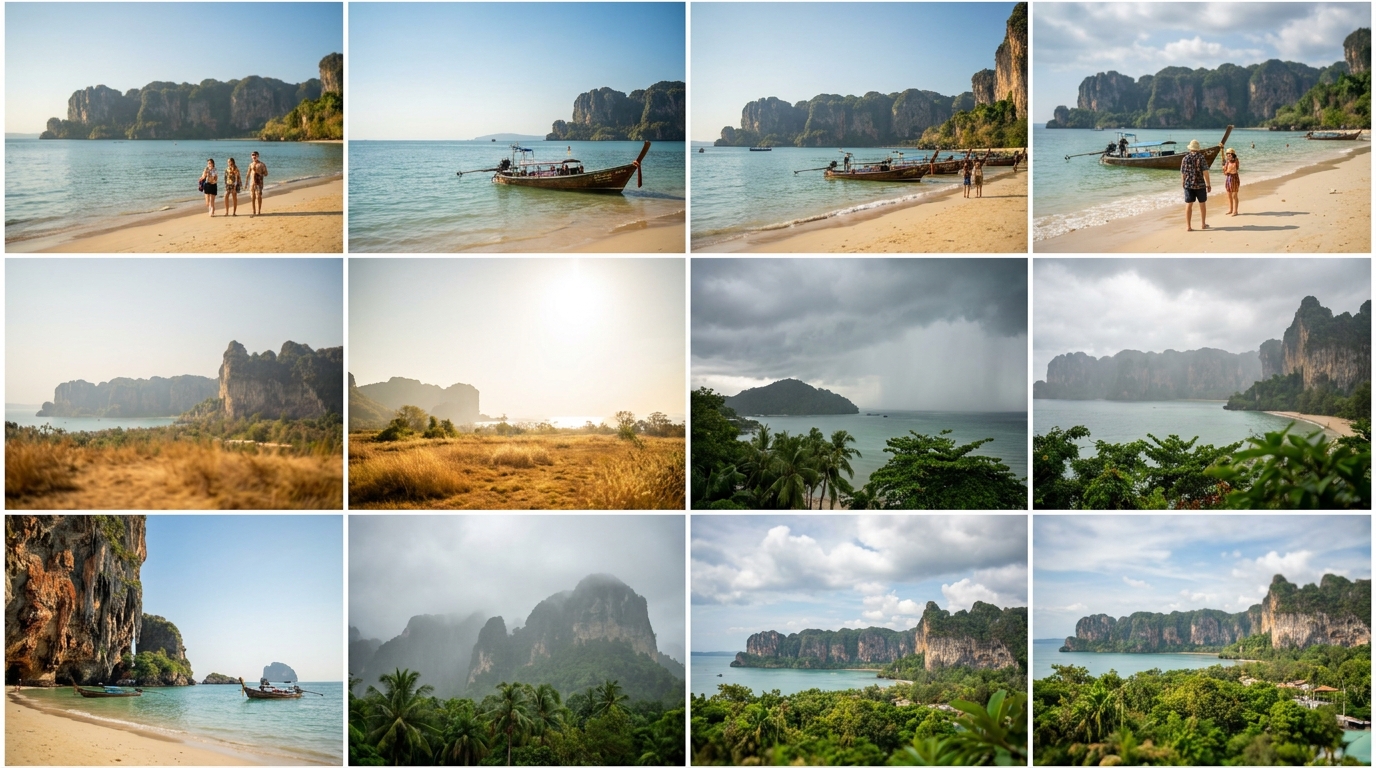
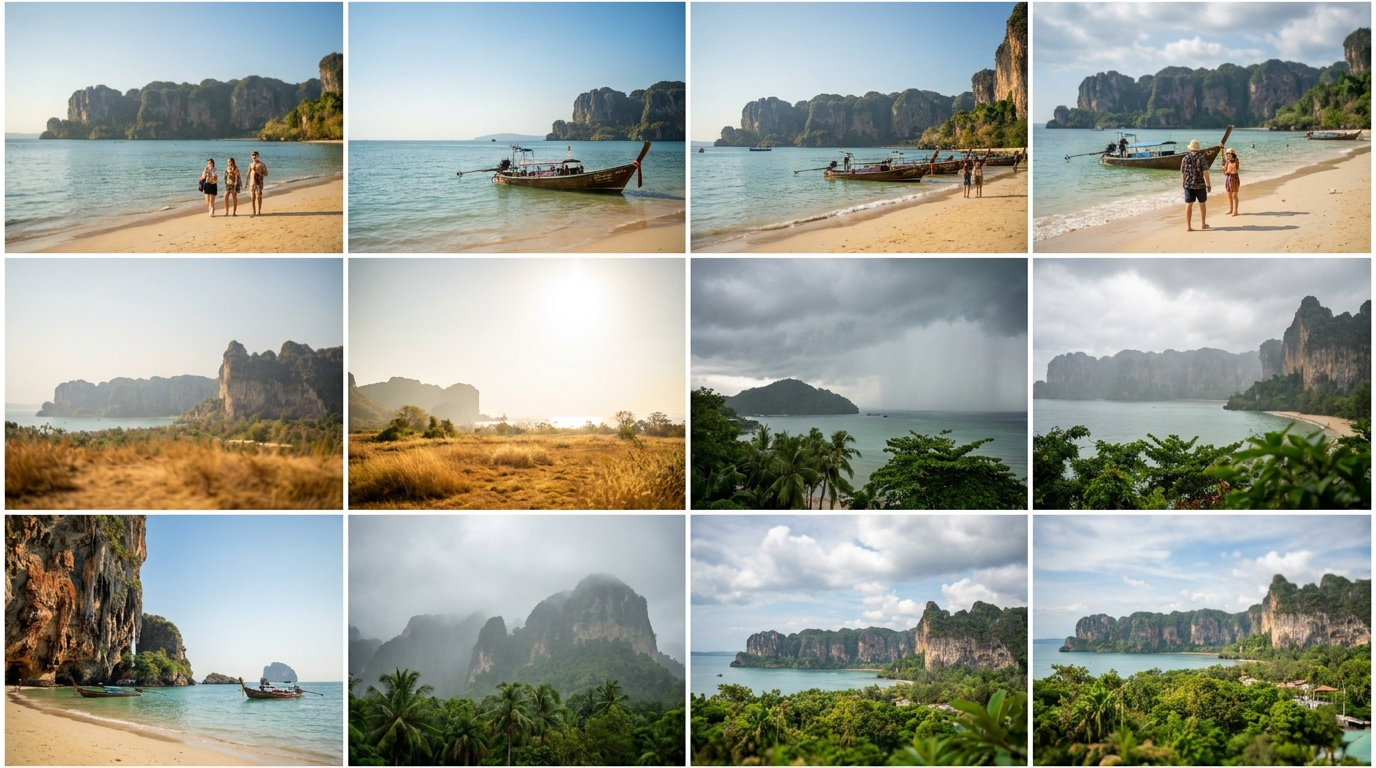
Here’s what to expect each month, including average temperatures, rainfall, and what’s open or closed.
January — Best Overall Month
January is Krabi’s driest, coolest month. Daily highs hit 31°C (88°F), lows drop to 23°C (73°F). Less than 60mm rainfall across the month. Sea visibility for snorkeling exceeds 18 meters.
- Crowds — Peak (Christmas/New Year week is busiest)
- Prices — Highest of the year (40-60% above wet season)
- Best for — Anyone who can afford peak rates and pre-books 6-8 weeks ahead
My January Krabi trip felt like a tourism brochure — every photo opportunity worked, the 4 Islands tour was glassy calm, and Phi Phi snorkeling visibility was the best I’ve experienced in Thailand.
February — Peak Continues
February closely mirrors January with slightly higher temperatures (highs 32°C / 90°F). Chinese New Year week (mid-late Feb in 2026) brings a brief crowd surge.
- Crowds — Peak through mid-month, still busy late
- Prices — Still peak; book 6 weeks ahead
- Best for — Travelers wanting reliably perfect weather
March — Heating Up
March keeps the dry weather but cranks the heat to highs of 33°C (91°F). Humidity stays manageable. Some travelers prefer March over February for slightly fewer crowds with similar weather.
- Crowds — Lower than Jan-Feb
- Prices — 5-10% under peak
- Best for — Budget-conscious peak-season travelers
April — Shoulder Season Sweet Spot
April is hot (highs 34°C / 93°F) but mostly dry. Songkran festival (April 13-15) brings nationwide water-fight celebrations. Sea conditions remain calm.
- Crowds — Low except Songkran week
- Prices — 20-30% under peak
- Best for — Best balance of weather, crowds, and price
April 2024 saw Krabi achieve its highest single-month tourist count outside the Dec-Feb peak (Tourism Authority of Thailand, 2024) — driven by Songkran travelers and shoulder-season bargain hunters.
May — Wet Season Begins
May marks the wet season’s start with first thunderstorms appearing late afternoon. Mornings stay sunny. Sea conditions remain mostly calm. Hotel prices drop 25-35%.
- Crowds — Significantly lighter than April
- Prices — 30-40% under peak
- Best for — Budget-conscious travelers willing to flex around afternoon rain
Plan your stay – krabi where to stay
June — Solid Wet-Season Choice
June’s rainfall pattern continues — sunny mornings, afternoon storms, often clear evenings. Sea conditions are typically swimmable but boat tours occasionally cancel due to swells. Excellent value.
- Crowds — Quiet
- Prices — 35-45% under peak
- Best for — Repeat Thailand visitors comfortable with rainy-season patterns
July — School Holiday Bump
July brings a slight crowd bump from European school holidays. Weather identical to June: morning sun, afternoon storms. Phi Phi tours sometimes cancel for weather.
- Crowds — Light to moderate
- Prices — 30-40% under peak
- Best for — European families with school-aged children
August — Heaviest Crowds in Wet Season
August has the highest crowds of the wet season due to European summer holidays. Weather similar to July. Book Phi Phi tours flexibly in case of cancellations.
- Crowds — Moderate
- Prices — 25-35% under peak
- Best for — Travelers locked into August dates by holidays
September — Rainiest Month
September is Krabi’s rainiest month, with 350+ mm rainfall typical. Many days have multi-hour storms. Some smaller tour operators close for renovations. Hotels offer their deepest discounts.
- Crowds — Lowest of the year
- Prices — 40-50% under peak
- Best for — Hardcore budget travelers; only if you accept high cancellation risk on boat tours
October — Transition Month
October starts wet but improves dramatically by month-end. The first week often has heavy storms; the last week can deliver pre-dry-season weather. Hotels open back up.
- Crowds — Light
- Prices — 35-45% under peak (early); 25% (late)
- Best for — Late-October trips for shoulder-season weather
November — Dry Season Begins
November marks the dry season start with weather improving daily through the month. Mid-late November is one of the best value windows of the year — close-to-peak weather at 25-30% lower prices. Sea calms steadily.
- Crowds — Light, building to moderate
- Prices — 20-30% under peak
- Best for — Best overall shoulder-season pick
December — Peak Weather, Peak Prices
December delivers picture-perfect weather with daily highs 31-32°C (88-90°F). Christmas/New Year week (Dec 24-Jan 4) is the busiest period with prices 60-80% above shoulder season.
- Crowds — Highest of the year (Christmas/NYE)
- Prices — Highest of the year
- Best for — Travelers willing to book 8+ weeks ahead and pay peak
When to Visit by Travel Style
Different travelers prioritize different things. Pick by what matters most.
For Best Weather
December-February. Reliable sun, calm seas, low humidity, excellent visibility. Book 6-8 weeks ahead.
For Best Value
November or April. Near-peak weather at 25-30% lower prices. Less crowded.
For Cheapest Prices
May-September. Hotel rates drop 30-50%. Accept afternoon storms.
For Phi Phi Day Trips
November-March for guaranteed sea calm. May-October has 15-20% tour cancellation rate due to weather.
For Diving
February-April has best visibility (15-20m). Whale shark season at Hin Daeng peaks late February to mid-April.
For Climbing
November-April dry season is essential — wet rocks are dangerous and most climbing schools reduce operations May-October.
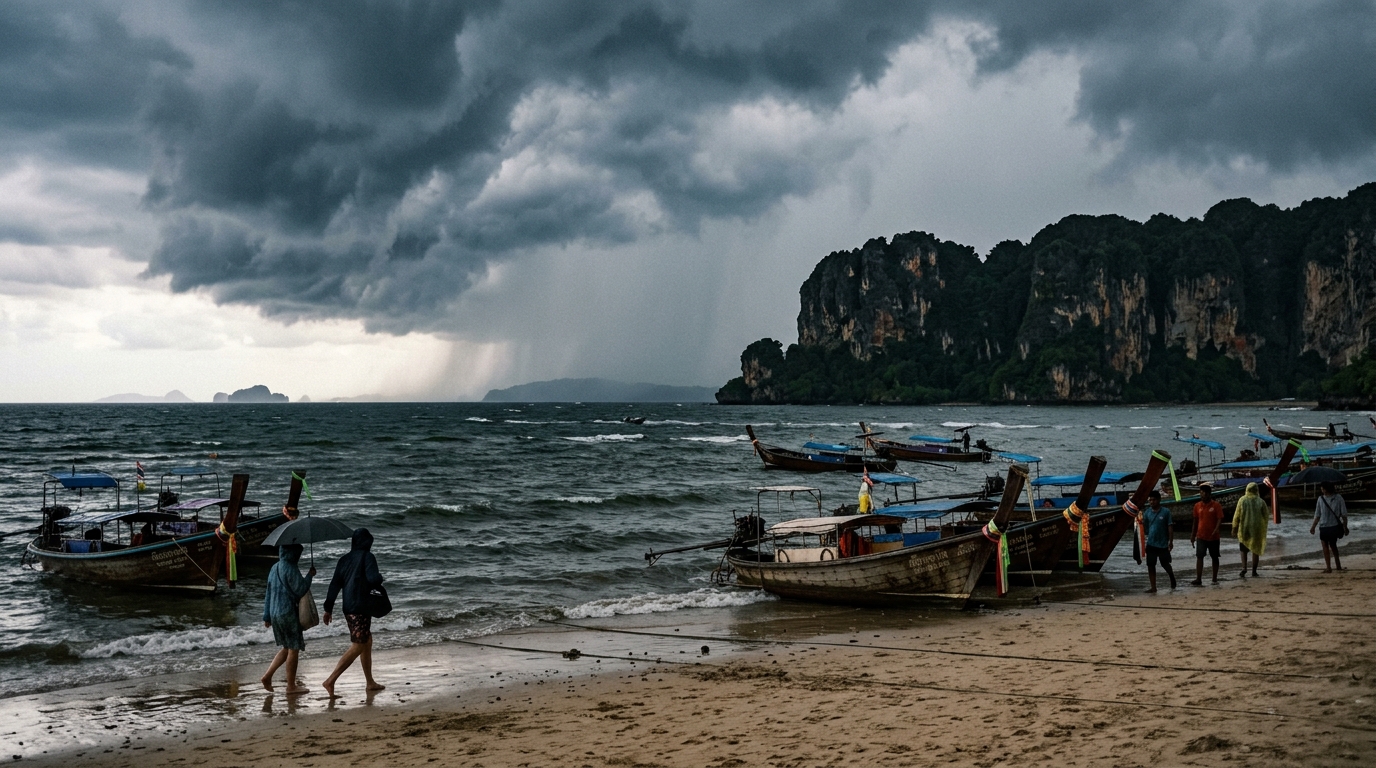
Across my three Krabi trips, the actual rainy-day count varied substantially within “wet season” — my August 2024 visit had 5 storm days out of 12 (manageable). My September 2023 visit had 9 storm days out of 11 (frustrating). Late August or early October is the wet-season sweet spot for most travelers.
How to Plan Around Crowds
Even within peak season, weekday vs weekend doesn’t matter much for Krabi (unlike Bangkok). What matters: festivals and school holidays.
Major Krabi Crowd Periods
- Christmas/New Year (Dec 24-Jan 4) — Highest prices, biggest crowds. Book 8+ weeks ahead.
- Chinese New Year (mid-late February 2026) — Brief surge from Asian travelers
- Songkran (April 13-15) — Thai New Year water festival; book hotels 4 weeks ahead
- Vesak Day (May full moon) — Buddhist holiday; minor surge
- European summer (mid-July to mid-August) — Wet-season crowd bump
- Australian school holidays (early July, late September) — Minor surge
Quietest Weeks
- Mid-September through mid-October (rainy peak; cheapest prices)
- Early May through mid-June (post-Songkran lull; great value)
- Mid-late November (dry season starting; before the Dec rush)
Plan your activities – krabi things to do
Find your Krabi hotel on the map
Live prices from Booking & Airbnb — tap a pin to compare stays around Ao Nang Beach and beyond.
Hotel Booking Strategy by Month
When you book matters as much as when you go.
Book 6-8 Weeks Ahead For
- December 24-January 4 (Christmas/NYE)
- January through mid-February
- April 13-15 (Songkran)
Book 3-4 Weeks Ahead For
- All other peak season (mid-Feb-March, late Nov-Dec)
- April shoulder
- Late October-early November transition
Book 1-2 Weeks Ahead For
- All wet season months (May-September)
- Most October dates
Browse all Krabi hotels with flexible cancellation on Booking.com.
For tour booking, Klook offers same-day to 24-hour cancellation on most Krabi activities, useful in wet season when you want to defer decisions until you see the weather.
What’s Open vs Closed by Season
Krabi tourism runs nearly year-round but some operations scale back in deepest wet season.
Year-Round (Always Open)
- All major hotels and resorts
- Ao Nang restaurants and night market
- 4 Islands tours (most operators)
- Krabi Town markets and temples
- Most Klong Muang/Tubkaek beach resorts
Reduced Operations (May-October)
- Phi Phi Islands tours — 15-20% weather cancellation rate
- Hong Islands tours — Similar weather risk
- Rock climbing schools — Some close completely September
- Diving operations — Reduced schedule; resume November
- Smaller boutique hotels — Some close for renovations July-September
Watch For (Wet Season)
- Ferry schedule changes between Phi Phi, Krabi, Phuket
- Weather-related boat cancellations (no refund on most longtail tours)
- Reduced beach restaurant hours
Frequently Asked Questions
What is the best month to visit Krabi?
December-February delivers the best weather, but November and April are the best value. November starts the dry season at 25-30% lower prices than peak. April keeps the dry weather with 20-30% lower prices and lighter crowds (except Songkran week April 13-15).
Is Krabi worth visiting in rainy season?
Yes, with caveats. Wet season (May-October) drops hotel prices 30-50% and crowds halve. You’ll get sunny mornings most days with afternoon storms. Phi Phi day trips have 15-20% weather cancellation rates, so book flexible. Avoid mid-September if you want to minimize storm exposure.
When is Krabi cheapest?
May through September, with September being the cheapest month for accommodation (40-50% below peak). The trade-off is rainfall — September averages 350+ mm. June and August are good middle-ground wet-season months with cheaper prices than May or October.
What month has the best Krabi weather?
January is statistically the driest (under 60mm rainfall) and coolest (highs 31°C / 88°F). Sea visibility for snorkeling exceeds 18 meters. The trade-off is highest prices and biggest crowds, especially the Christmas/New Year week.
Should I avoid Krabi in September?
Only if rain bothers you. September has Krabi’s heaviest rainfall (350+ mm typical) and the highest tour cancellation rates. Hotels are 40-50% cheaper, so budget travelers comfortable with weather flexibility can find great deals. For most first-time visitors, September is the worst month to plan a Krabi trip.
Final Recommendation
For 90% of first-time visitors, late November or early-to-mid December is the ideal Krabi window. You get peak-season weather (calm seas, sunny days) at 20-30% lower prices than the Christmas/New Year peak. Crowds are moderate. Book 4 weeks ahead.
If budget is the priority, target early November or late April for the best wet-season-meets-dry-season transition pricing. If money is no object and you want the absolute best weather, book mid-January through mid-February with 8 weeks of lead time.
For broader trip planning, see our Krabi travel guide and where to stay in Krabi breakdowns.
Related: 12 Best Krabi Hotels 2026: Top Picks by Budget & Area | 20 Best Things to Do in Krabi 2026: Top Activities & Tours | Where to Stay in Krabi 2026: Best Areas & Top Hotels