Is Kuala Lumpur Safe for Travellers? (2026)
By TravelguidestipUpdated 9 min readHow we earn
Hotel buttons open Stay22 (Booking.com, Agoda and others) and tour buttons open GetYourGuide. We may earn a commission at no extra cost to you.
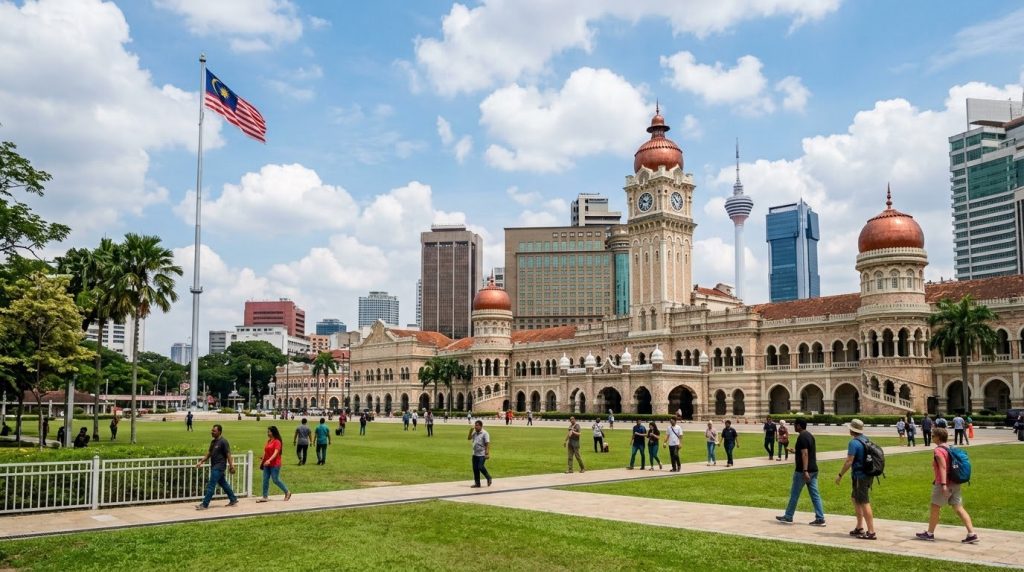
Yes for most visitors. Smartraveller keeps Malaysia at level 1 of 4, in advice updated on 4 August 2026, and no higher level applies anywhere in KL.
| Risk | Reality | What to do |
|---|---|---|
| Motorbike bag snatching | Common near busy kerbs and mall crossings | Crossbody bag on the side away from traffic |
| Taxi touts | Unregistered drivers overcharge | Book Grab or take the airport train |
| Drink spiking | Reported in KL tourist areas | Sealed, branded drinks only |
| Flash floods | Wet season, usually October to February | Wait out storms indoors |
| Smoke haze | Unhealthy readings in September 2026 | Check the API, carry P2 masks |
What is low-risk
- Low advisory level. Smartraveller keeps Malaysia at level 1 of 4, and no higher level applies anywhere in KL.
- Safer rides. Grab removes most of that risk: the fare is fixed upfront, the driver and plate are logged, and you can share the trip live.
- Comfortable alone. Women travelling alone generally find KL comfortable, with malls, stations and food streets busy until late.
What to watch
- Bag snatching. Wear a crossbody bag on the side away from the road.
- Airport taxi touts. Unlicensed drivers work the KLIA arrivals hall.
- Drink spiking. Reported in KL tourist areas; sealed, branded drinks only.
- Floods and haze. Smartraveller says flooding is common in the wet season, usually October to February.
Yes, Kuala Lumpur is safe for most visitors: Smartraveller keeps Malaysia at level 1 of 4, “exercise normal safety precautions”, in advice updated on 4 August 2026, and no higher level applies anywhere in KL.
The risks that actually catch Australians out are small and predictable: bags snatched by passing motorbike riders, unlicensed airport taxis, drink spiking in nightlife strips, afternoon flash floods and, in late 2026, seasonal smoke haze. Plan around those five and KL is an easy, low-stress city.
| Risk | Reality in KL | What to do |
|---|---|---|
| Motorbike bag snatching | Common near busy kerbs and mall crossings | Crossbody bag on the side away from traffic |
| Taxi touts | Unregistered drivers overcharge | Book Grab or take the airport train |
| Drink spiking | Reported in KL tourist areas | Sealed, branded drinks only |
| Flash floods | Wet season, usually October to February | Wait out storms indoors |
| Smoke haze | Unhealthy readings in September 2026 | Check the API, carry P2 masks |
| MDAC arrival card | Required before you land | Submit free within 3 days of arrival |
What Smartraveller actually says about Kuala Lumpur
The only higher-level zones in Malaysia are far from the capital, on the eastern Sabah coast and its offshore dive islands, where kidnapping risk lifts the rating to levels 2 and 3. Our country-wide Malaysia safety breakdown covers that corner.
The current Smartraveller Malaysia advice isn’t blank, though. It notes a risk of terrorism, says attacks “could be random and small-scale”, and lists tourist areas in Kuala Lumpur among possible targets. It also says Australians have been victims of violent crime in KL and Penang. In practice the everyday risk is opportunistic theft, and ordinary city awareness handles it. If safety is not the sticking point, our take on whether KL is worth visiting weighs cheap hawker food and good-value hotels against the heat and thin sights.
Bag snatching from motorbikes in Bukit Bintang and Chinatown
This is the crime worth planning for. Smartraveller says motorcyclists pulling bags from pedestrians “happens often” and often causes injuries, because victims get dragged or knocked over. It flags busy crossings near major malls, including around KLCC. KL police have previously named KLCC, Bukit Bintang and Pasar Seni, on the edge of Chinatown, as the city’s top snatch-theft areas.
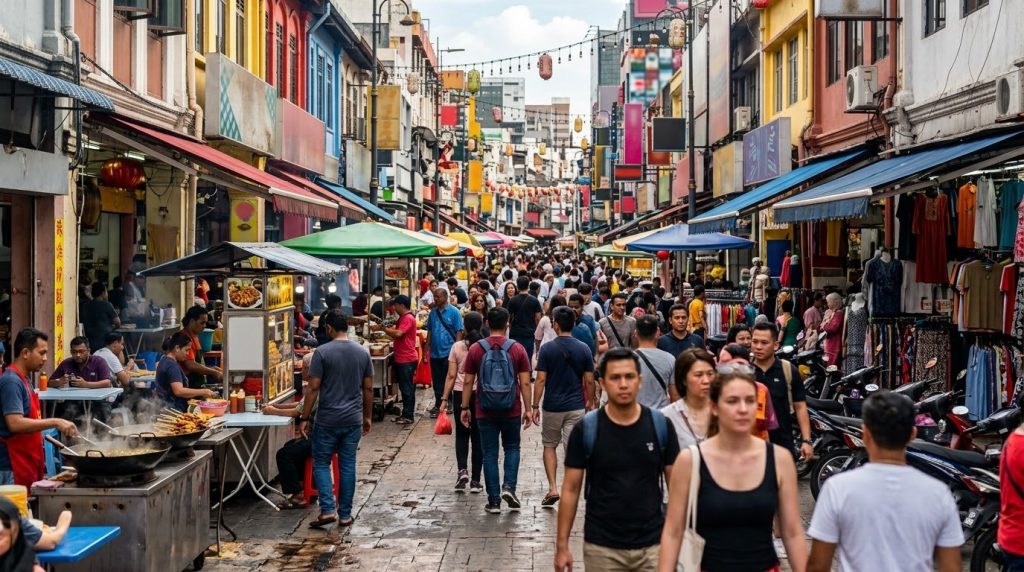
– Wear a crossbody bag on the side away from the road. – Walk away from the kerb, and keep your phone pocketed at crossings on Jalan Bukit Bintang and Jalan Sultan. – Carry ID or a photo of your visit pass, because Malaysian law requires you to show identification if police ask. – In malls, watch for distraction teams: one person tells a hard-luck story while others lift your belongings.
Taxi touts at KLIA versus Grab
Unlicensed drivers work the KLIA arrivals hall. Smartraveller links unregistered taxis to robbery, forced cash withdrawals and overcharging, and advises against hailing cabs on the street after dark.
Grab removes most of that risk: the fare is fixed upfront, the driver and plate are logged, and you can share the trip live. KLIA to Bukit Bintang or KLCC usually costs AUD 26–34 · USD 18–25 (MYR 75–100) including tolls, more late at night. Once you are settled in, our guide to whether KL is expensive shows where the money really goes, from RM 8 hawker plates to taxed beer.
The KLIA Ekspres train is the calmer option for solo arrivals, at AUD 19 · USD 13.50 (MYR 55) one way to KL Sentral in about 30 minutes, rising to AUD 22 · USD 16 (MYR 65) from 1 January 2027. For daily costs, see whether Malaysia is expensive for Australians.
If a taxi ride goes wrong, call the Malaysian taxi hotline on 1 800 88 7723.
The MDAC: the arrival-card step Australians skip
Since 1 January 2024, almost every foreign visitor must lodge a free Malaysia Digital Arrival Card within the 3 days before arrival. Use only the official Malaysian Immigration MDAC portal, because lookalike sites charge for a free form. The MDAC also unlocks the KLIA autogates if your passport has at least 6 months of validity.
Screenshot the visit pass emailed to you afterwards, since authorities may ask to see it.
Flash floods and haze: KL’s weather risks
Smartraveller says flooding is common in the wet season, usually October to February. In the city that means flash floods: on 4 December 2025, about an hour of heavy rain flooded parts of central KL, including Jalan Tun Razak near the World Trade Centre. Nobody was hurt, but roads and underpasses filled fast. Sit storms out in a mall and never wade through moving water. Storms like these are why our guide to days in Kuala Lumpur plans one big outing each morning and one each evening.
Smartraveller says smoke haze often happens from June to October. In late September 2026, dozens of Malaysian stations logged “unhealthy” Air Pollutant Index (API) readings, the 101–200 band, and Cheras in KL was still at 149 on 1 October. Check the Department of Environment API readings before outdoor days at Batu Caves, and pack P2 masks if anyone has asthma.
Solo female travel in KL
Women travelling alone generally find KL comfortable, with malls, stations and food streets busy until late. Smartraveller’s specific warning is that assault, sexual assault and drink spiking have occurred in tourist areas of Kuala Lumpur and Penang, so order sealed drinks and leave with people you trust.
The KTM Komuter has women-only coaches marked with pink stickers, and women’s coaches also run on the MRT Kajang and Putrajaya lines and the LRT Ampang/Sri Petaling line. In a Grab, sit in the back. Cover shoulders and knees at mosques. Our 3-day Kuala Lumpur itinerary keeps evenings in well-lit, busy areas.
Who should think twice about KL right now
– Travellers with asthma in September and October. Haze can sit in the unhealthy band for weeks. – Anyone carrying cannabis products. Malaysia can require a urine test on arrival, and drug trafficking carries the death penalty. – LGBTQIA+ couples expecting open affection. Same-sex acts are illegal, with penalties of up to 20 years’ jail. – Travellers who dislike big cities. Spend fewer nights in KL and more in Penang or Langkawi, as in our 7-day Malaysia itinerary.
Health: water, food and finding help if you need it
Stick to bottled or filtered water rather than the tap, even for brushing your teeth. Tap water quality in KL varies by building and area, since old pipework and rooftop tanks can recontaminate water that left the treatment plant clean, so bottled is the safer default for a short visit regardless of what locals in a given building say about their own supply.
Street food in KL is generally safe at stalls with a constant queue of locals, since high turnover means food isn’t sitting out for long. The usual precautions still apply: skip anything lukewarm that should be hot, and be more careful with raw seafood and ice made from untreated water than with cooked noodle and rice dishes.
Dengue is a real year-round risk rather than a seasonal one, carried by day-biting mosquitoes rather than the dusk-and-night type most insect advice assumes.
Malaysia’s 2026 case count was already running well ahead of the previous year, with national health data showing 65,979 cases and 62 deaths reported by 9 September 2026, an increase of 66.5 percent and 93.8 percent on the same period in 2025.
Mosquito repellent applied during the day, not just at dusk, is the main practical defence, since there is no vaccine routinely recommended for short-stay travellers.
For anything serious, call 999 for police, ambulance or fire, or 112 if dialling from a mobile with no local SIM, since it also connects internationally.
Private hospitals such as Pantai Hospital Kuala Lumpur and the university medical centres accept walk-in emergency cases and are generally faster for a tourist than a public hospital queue; confirm your travel insurance covers private treatment before you need it, since public cover alone can leave a large gap for foreigners.
Pharmacies such as Guardian and Watsons are easy to find in every mall and can handle minor ailments, over-the-counter medication and basic first aid without a doctor’s visit, which covers most short-trip health issues that do not need a hospital.
Scams beyond bag snatching: ATMs, fake gifts and street beggars
A free gift handed over on the street, a rose, a bracelet or a small trinket, is rarely free. The follow-up is a demand for a donation, and the person pushing it can turn aggressive if you try to hand the item back rather than pay. The simplest fix is to not accept anything offered unprompted on the footpath, however friendly the approach.
ATM skimming shows up occasionally in KL, either through a card-skimming device fitted over the slot or through a machine that retains the card so a scammer can collect it later. Use ATMs inside banks or shopping malls rather than standalone street machines, and give the card slot a wiggle before inserting your card.
Card skimming isn’t limited to ATMs either: a handful of KL taxi scams run through a tap-to-pay terminal that quietly captures card details during what looks like a normal transaction. Paying through the Grab app, where the card is charged automatically rather than tapped at a terminal, avoids this entirely, and cash remains a safe fallback everywhere else.
A stranger with a sudden sad story and a request for cash, and children sent out by adults to beg near tourist strips, both run on the same playbook: a polite but firm no and moving on works better than trying to verify the story on the spot.
Tour and ticket scams work the same way as the gift scam: an unusually cheap, too-good tour or ticket sold on the street, paid upfront, with the seller gone by the time it turns out not to exist. Book tours and tickets through the venue or a recognised operator rather than a stranger outside Petronas Towers or Batu Caves.
Driving and self-drive road rules if you rent a car
Malaysia drives on the left, the same side as Australia, which makes the basic layout familiar. The bigger adjustment is KL’s traffic itself: heavy congestion at peak times, inconsistent lane discipline, and motorbikes that weave between cars in ways that take getting used to behind the wheel.
Foreign visitors need an International Driving Permit alongside their home licence to drive legally in Malaysia; as of 19 May 2025, Malaysia’s Road Transport Department stopped converting foreign licences into a local one, so the IDP plus an Australian licence is the standard route for a short visit.
Rental companies generally require drivers to be at least 23 and to have held a full licence for at least a year, and will not accept a probationary licence.
For most visitors staying centrally, a car is more hassle than it is worth: parking in Bukit Bintang and KLCC is expensive and often full, and Grab or the rail network covers the same ground without the stress of KL traffic. Self-driving makes more sense once a trip extends beyond the capital toward Genting Highlands, Malacca or the west coast, where the road network is easier and parking is cheaper.
Where to stay: the safest KL areas at night
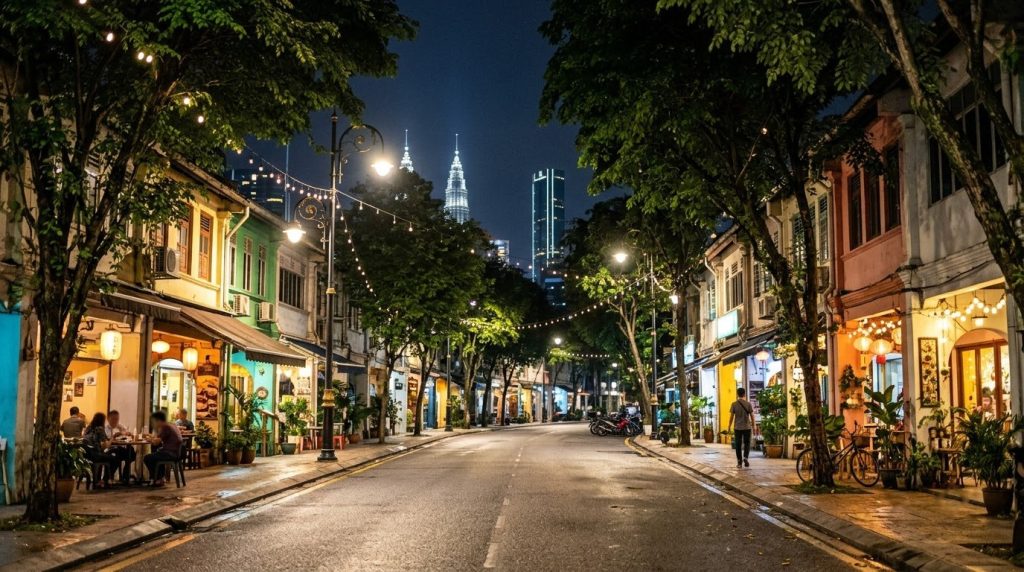
– KLCC. Wide footpaths, hotel security and the park around the Petronas Towers make it the calmest base for families and first-timers.
Take care at mall crossings. – Bukit Bintang. Busy past midnight around Jalan Alor, which suits couples and solo travellers who want to walk to dinner. – KL Sentral. Quieter and on the airport train line, handy for early flights. Avoid Chow Kit and the back lanes of Petaling Street on foot late at night.
Find your Kuala Lumpur hotel on the map
Live prices from Booking, Airbnb and more — move the map or change dates to compare stays across Kuala Lumpur.
Frequently Asked Questions
Is Kuala Lumpur safe at night?
Mostly, yes. KLCC and Bukit Bintang stay busy and well lit late into the night, and Grab makes getting home easy. The real night-time risks are snatch theft near roads, drink spiking in bars and unlicensed taxis hailed on the street. Avoid walking through Chow Kit or empty Petaling Street lanes after midnight.
Is Kuala Lumpur safe for solo female travellers?
Yes, with normal big-city care. Smartraveller has recorded assault and drink spiking in KL’s tourist areas, so stick to sealed drinks and trusted company on nights out. Use Grab rather than street taxis, sit in the back, and use the women-only coaches on KTM Komuter and several MRT and LRT lines.
Do Australians need an MDAC for Kuala Lumpur?
Yes. Australians must submit the free Malaysia Digital Arrival Card on the official immigration website within 3 days before arriving. It also lets you use the KLIA autogates if your passport has at least 6 months’ validity. Keep a screenshot of the visit pass emailed to you after the gate.
Is Grab safe in Kuala Lumpur?
Grab is the safer choice over street taxis, and Smartraveller advises sticking to official taxis or reputable rideshare apps. Fares are fixed upfront, drivers and plates are logged, and you can share your trip live. Check the plate matches the app before you get in.