Is Vietnam Expensive? An Honest Cost Verdict for Australians (2026)
By TravelguidestipUpdated 7 min readHow we earn
Hotel buttons open Stay22 (Booking.com, Agoda and others) and tour buttons open GetYourGuide. We may earn a commission at no extra cost to you.
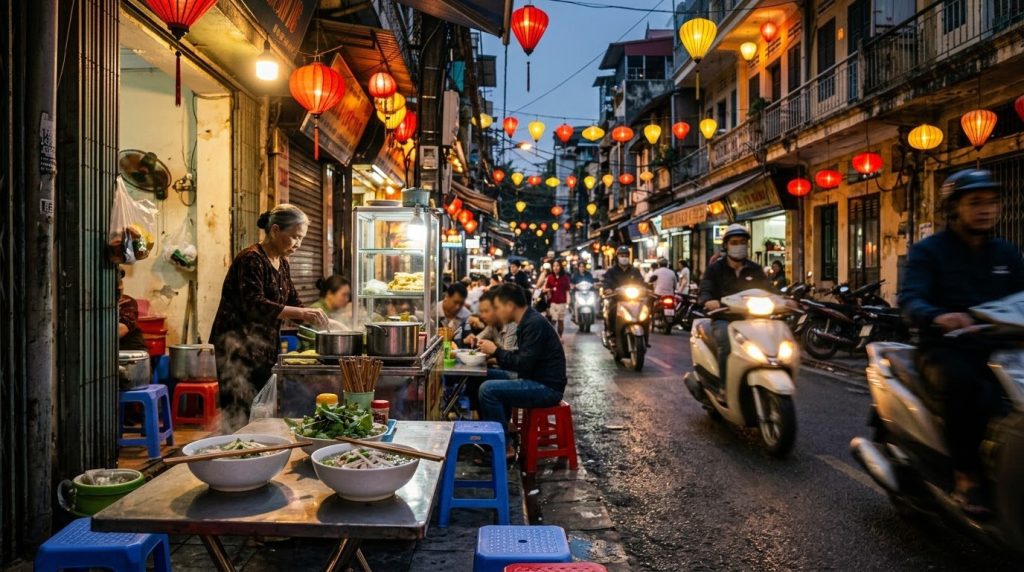
No, Vietnam is not expensive: most Australians spend AUD 35–70 · USD 25–50 a day as backpackers and AUD 70–210 · USD 50–150 mid-range, with the dong sitting around 26,000 to the US dollar (roughly 18,700 VND to AUD 1) in late September 2026. Street food, Grab rides and sleeper buses cost less than a Sydney coffee run.
The bill climbs on Ha Long Bay cruises, Phu Quoc resorts and anything booked around Tet, so the trick is knowing where those jumps sit.
| Cost | Reality in 2026 | What to do |
|---|---|---|
| Daily spend | AUD 35–70 · USD 25–50 backpacker, AUD 70–210 · USD 50–150 mid-range | Pick your tier, then add the one-off splurges |
| Street food | Pho AUD 2–3.50 · USD 1.50–2.50 | Eat where locals queue |
| Ha Long Bay overnight cruise | Mostly AUD 165–415 · USD 120–300 per person | Budget it as a separate line item |
| Tet (from 6 February 2027) | Transport fares can double or triple | Travel after about 12 February |
| E-visa | AUD 35 · USD 25 single entry | Apply only on the official portal |
The daily cost verdict by travel style
– Backpacker: AUD 35–70 · USD 25–50. Dorm beds at AUD 7–21 · USD 5–15, street food three times a day, sleeper buses and free sightseeing.
The low end is a quiet day in Hue or the Mekong; the high end is a Hanoi day with drinks and one paid activity. – Mid-range: AUD 70–210 · USD 50–150. A 3-star room at AUD 40–100 · USD 30–70, sit-down dinners, Grab everywhere and a cooking class or day tour.
A mid-range day in Hanoi’s Old Quarter or District 1 in Ho Chi Minh City runs AUD 160–255 · USD 115–185, while the same day in Hue costs AUD 75–140 · USD 55–100. – Comfort: AUD 140–485 · USD 100–350. Boutique 4-star hotels, private drivers, domestic flights and the better Ha Long boats.
For the line-by-line numbers (accommodation, transport, tours and money tips), our detailed Vietnam travel budget breakdown does the maths. This post only answers whether the country will stretch your Australian dollar. It will.
Add the fixed costs. The official e-visa is AUD 35 · USD 25 single entry or AUD 69 · USD 50 multiple entry, valid up to 90 days. Flights are the biggest single cost: Vietnam Airlines, VietJet and Jetstar fly non-stop from Sydney and Melbourne to Ho Chi Minh City in about 9 hours.
What is genuinely cheap in Vietnam
Food. A bowl of pho at a local shop is AUD 2–3.50 · USD 1.50–2.50 and a banh mi is AUD 0.70–2 · USD 0.50–1.50. Vietnamese iced coffee costs AUD 0.70–2.80 · USD 0.50–2, and a glass of bia hoi street beer is AUD 0.35–0.85 · USD 0.25–0.60 (VND 8,000–15,000).
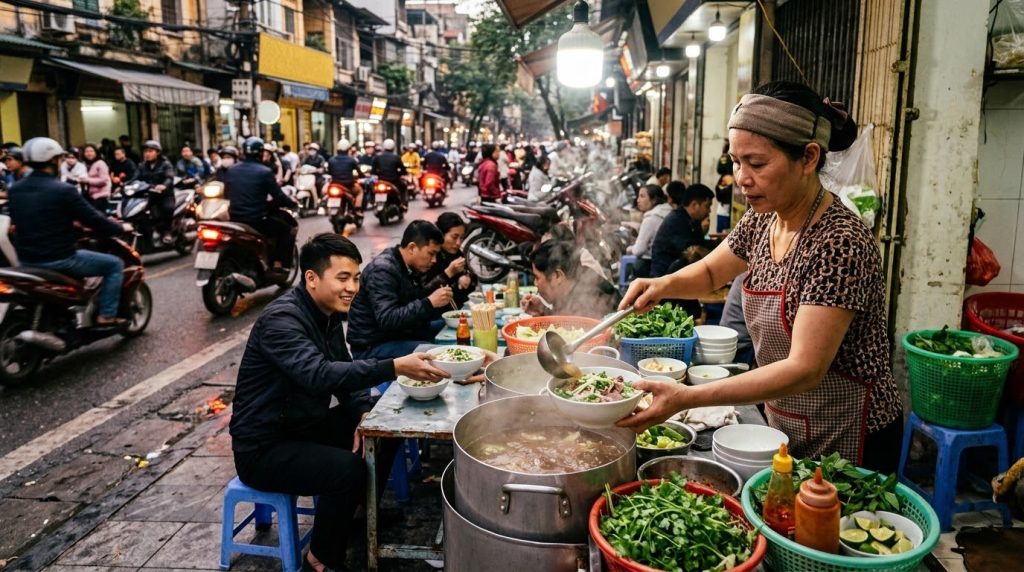
Getting around cities. Grab car and bike rides typically run AUD 1.10–4.20 · USD 0.80–3 per urban trip, with no haggling.
Long distances. A standard Hanoi to Sapa sleeper bus is AUD 11–19 · USD 8–14 (VND 200,000–380,000) for a 6 to 7 hour ride, and a private VIP cabin is AUD 25–35 · USD 18–25. Domestic flights start around AUD 28 · USD 20, and Hanoi to Ho Chi Minh City is commonly AUD 49–69 · USD 35–50 when booked two or more weeks out.
Staying connected. A 30-day local SIM is about AUD 10.40 · USD 7.50 (VND 200,000). Our Vietnam eSIM guide compares that with eSIMs you can install before leaving Australia.
Where Vietnam stops being cheap
Ha Long Bay cruises. This is the line that blows most budgets. Overnight two-day cruises mostly cost AUD 165–415 · USD 120–300 per person. Budget boats start around AUD 110 · USD 80, while 5-star ships run AUD 345–625 · USD 250–450, and transfers from Hanoi can add AUD 28–55 · USD 20–40 if they are not included. One night on the bay can equal four or five backpacker days. On a short trip, our week-long Hanoi and Hoi An plan allows exactly one night on the bay, then flies 1 hour 20 minutes south to Da Nang.
Phu Quoc resorts. Phu Quoc and Ho Chi Minh City are the priciest places in Vietnam to sleep. Mid-range rooms on the island run AUD 55–110 · USD 40–80 and luxury resorts AUD 210–835 · USD 150–600, against AUD 35–85 · USD 25–60 for mid-range in Hanoi. Food and drinks on the island cost more too.
Tet and peak dates: when to think twice
Tet in 2027 starts on Saturday 6 February. Around it, hotels and flights commonly cost 30–50% more, popular hotels and cruises sell out two to three months ahead, and sleeper fares can double or triple. Hanoi to Sapa berths have been reported at AUD 40–53 · USD 29–38 (VND 750,000–1,000,000). Many family-run restaurants and shops also close for several days.
December to January is peak season too. Locked into school holidays? Book transport and the Ha Long boat early. Flexible? Arrive after about 12 February, when prices ease.
Vietnam vs Thailand vs Bali on price
Comparison sites put Vietnam as the cheapest of the three:
– Backpacker: Vietnam AUD 35–55 · USD 25–40, Thailand AUD 42–62 · USD 30–45, Bali AUD 49–69 · USD 35–50. – Mid-range: Vietnam AUD 83–167 · USD 60–120, Thailand AUD 90–194 · USD 65–140, Bali AUD 97–208 · USD 70–150.
The gap is biggest on food and coffee. Bali costs more for accommodation and Western dining, and it adds a tourist levy of about AUD 12.50 · USD 9 (IDR 150,000). Thailand’s edge is paperwork. Australians enter without a visa, although the visa-free stay was cut to 30 days from 15 September 2026. Vietnam needs the AUD 35 · USD 25 e-visa.
Verdict: for budget travellers and food-focused couples, Vietnam wins. For families wanting a pool resort with minimal transfers, Bali or Phuket can work out similar once you add Vietnam’s internal flights and Ha Long costs.
Who should not expect Vietnam to be cheap
– Travellers cramming too much in. Every extra region adds a flight or a long bus ride.
Sizing the trip with our guide to how many days you need in Vietnam saves more money than hunting for cheap hostels. – Resort-only holidays. A week in a Phu Quoc 5-star costs close to the same as a week in a Thai or Balinese one. – Tet travellers who book late. You pay peak prices and find half the street food closed. – Anyone skipping insurance. Scooter accidents are the classic expensive mistake. Read whether Vietnam is safe for Australians before you hire a bike.
How much should you tip in Vietnam?
Tipping is not mandatory anywhere in Vietnam, but it is increasingly expected in tourism-facing jobs where wages are low: tour guides, drivers, massage and spa staff, and hotel porters.
For a private day tour, VND 100,000–200,000 (about AUD 5.50–11 · USD 4–8) per person is the commonly cited range for a guide, with the driver getting roughly half that; multi-day tours add up fast, so budget it as a daily line item rather than an afterthought at the end.
At restaurants, a service charge of 5–10% is often already added at higher-end places, so check the bill before tipping on top. At casual local spots, street food stalls and bia hoi corners, tipping is not expected at all, and rounding up small change is plenty. Taxi and Grab drivers do not expect a tip, since the fare is fixed and shown before you ride.
Carry small dong notes for this, since guides and drivers are rarely able to give change for a tip and nobody wants to hand over a 500,000 note expecting some back.
Hotel staff sit in a similar grey zone to guides: porters and housekeeping are not automatically tipped the way they might be in Australia, but a small note left for the room cleaner, or a tip for someone who carries bags up several flights in a budget guesthouse without a lift, is well received.
Spa and massage staff are closer to the “expected” end, since a share of the treatment price often does not reach the therapist directly; a flat VND 50,000–100,000 (about AUD 2.70–5.35 · USD 1.90–3.85), or roughly 10–20% of the treatment cost, is a reasonable guide if the venue does not already add a service charge.
Getting the best exchange rate and avoiding ATM fees
Withdraw cash from an ATM rather than exchanging Australian dollars at the airport, where rates are consistently worse. Most Vietnamese bank ATMs charge a flat fee of roughly VND 22,000 to 55,000 (about AUD 1.40–2.80 · USD 1–2) per withdrawal on top of whatever your Australian bank charges, and this is separate from the exchange rate itself.
VPBank machines are commonly reported as fee-free for foreign cards and allow some of the largest single withdrawals of any Vietnamese bank, which is why many travellers default to them when one is nearby.
Gold and jewellery shops, rather than generic “exchange” storefronts, are the local workaround for a better rate: Ha Trung Street in Hanoi’s Old Quarter and the streets around Ben Thanh Market in Ho Chi Minh City are the two areas most often recommended for this.
Bring clean, uncreased notes, since damaged or heavily worn bills can be refused or exchanged at a worse rate.
Whatever you use, count the notes before you walk away and decline any offer to be charged in Australian dollars or US dollars at a card terminal, since that conversion is almost always worse than letting your own bank convert from dong.
Where to stay in Vietnam
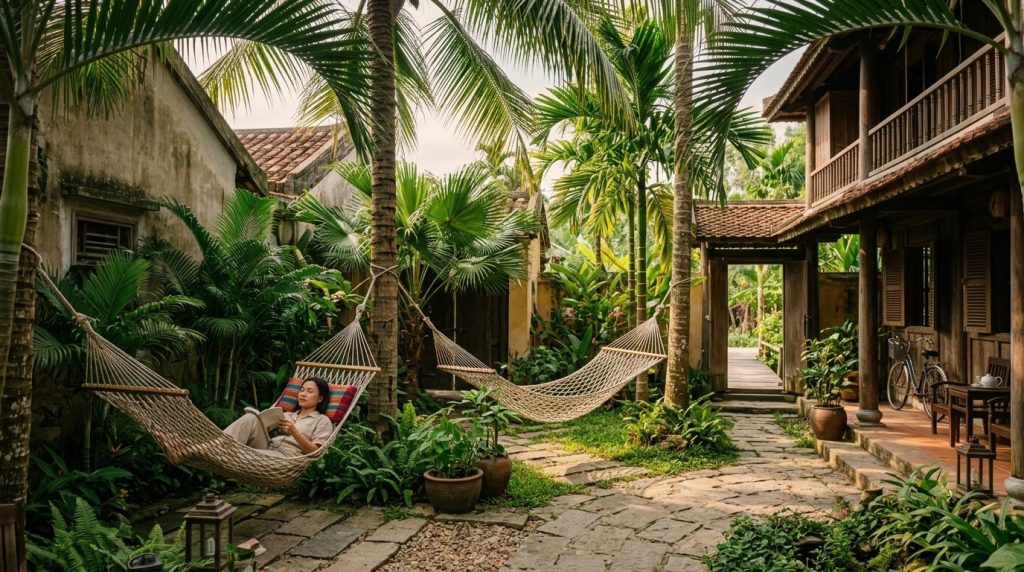
– Hanoi Old Quarter: best for first-timers and food lovers. Rooms are cheap by Australian standards, but it is noisy and pricier than the surrounding districts. – Da Nang: the best-value city for hotels, with beach access and an easy hop to Hoi An.
It suits couples and families. – Hoi An, outside the heritage zone: mid-range rooms cost less a short ride from the old town, and they suit slower travellers.
Find your Vietnam hotel on the map
Live prices from Booking, Airbnb and more — move the map or change dates to compare stays across Vietnam.
Frequently Asked Questions
How much money do I need per day in Vietnam?
Backpackers need AUD 35–70 · USD 25–50 a day for dorms, street food and sleeper buses. Mid-range travellers need AUD 70–210 · USD 50–150 for 3-star hotels, restaurant meals and Grab. On top of that, budget separately for flights from Australia, the AUD 35 · USD 25 e-visa and any Ha Long Bay cruise.
Is Vietnam cheaper than Thailand?
Usually, yes. Comparison sites put a Vietnam backpacker day at AUD 35–55 · USD 25–40, against AUD 42–62 · USD 30–45 for Thailand, and the gap holds at mid-range. Food and coffee show the biggest difference. Thailand saves Australians the e-visa fee, but its visa-free stay is now 30 days.
What is the most expensive part of a Vietnam trip?
After flights, it is usually a Ha Long Bay cruise. Overnight trips mostly cost AUD 165–415 · USD 120–300 per person, and luxury ships go higher. Phu Quoc resorts come next, at AUD 210–835 · USD 150–600 a night for luxury. Travelling over Tet raises almost everything.
Should I take cash or card to Vietnam?
Take both. Street stalls, bia hoi corners and small guesthouses want cash in dong, while hotels, Grab and bigger restaurants take cards or app payments. At the late-September 2026 rate of roughly 26,000 VND per US dollar, AUD 1 buys about 18,700 VND.