Is Hoi An Worth Visiting?
By TravelguidestipUpdated 6 min readHow we earn
Hotel buttons open Stay22 (Booking.com, Agoda and others) and tour buttons open GetYourGuide. We may earn a commission at no extra cost to you.

Yes, Hoi An is worth visiting. It earns its reputation as central Vietnam’s most rewarding stop, provided you time the visit around the wet season.
What makes it worth the stop
- UNESCO Old Town. Over 200 protected heritage buildings line streets that go lantern-lit every night.
- Tailoring. Quality shops genuinely can turn around a finished garment inside 24 to 48 hours.
- Easy beaches. Two beach options sit 15 to 20 minutes from the Old Town by bicycle or taxi.
The honest downsides
- Wet-season flooding. October and November bring the heaviest rain and the highest flood risk.
- Peak heat and crowds. June to August, when both temperature and tour-group density are at their highest.
- Not a beach holiday. An Bang and Cua Dai are pleasant add-ons rather than a standalone beach holiday.
Yes, Hoi An is worth visiting: its UNESCO-listed Old Town has held World Heritage status since 1999, over 200 protected heritage buildings line streets that go lantern-lit every night, and the Full Moon Lantern Festival on the 14th day of each lunar month turns the whole quarter reflective, car-free and free to walk.
Add same-day custom tailoring, two easy beaches and a genuine ancient ruin an hour away, and Hoi An earns its reputation as central Vietnam’s most rewarding stop, provided you time the visit around the wet season.
| Draw | Why it’s worth it | Practical note |
|---|---|---|
| UNESCO Old Town, nightly lanterns | 1999 World Heritage listing, car-free core, free to walk | Ticket AUD 7 · USD 5 (VND 120,000) covers 5 heritage-site entries |
| Japanese Covered Bridge | 16th-century Old Town landmark, included in the Old Town ticket | Best photographed early morning or after lantern-light |
| Custom tailoring | Genuine 24-48h turnaround, hundreds of shops to compare | Shirt from AUD 26 · USD 19 (VND 500,000); suit around AUD 267 · USD 192 (VND 5,000,000) |
| An Bang and Cua Dai beaches | Two easy beach options, 15-20 minutes from the Old Town | Free public access, sunbed rental only |
| My Son Sanctuary | 4th-13th century Champa temple ruins, genuine ancient site | Ticket AUD 8 · USD 6 (VND 150,000), half-day trip |
| Cooking classes | Hands-on, market visit plus a river crossing on most itineraries | From AUD 35 · USD 25 (VND 650,000) per person |
| Full Moon Lantern Festival | Electric lights off, silk lanterns and candle boats on the Thu Bon | Free; falls on the 14th night of the lunar month |
| Wet-season flooding | Genuine downside, Old Town streets can flood | Avoid October-November; best months are February-April |
The UNESCO Old Town earns its status
Hoi An’s Old Town has carried UNESCO World Heritage status since 1999, and it is one of the few historic port towns in Southeast Asia where the original wooden shopfronts, family chapels and merchant houses are still standing rather than reconstructed.
Every night, the town switches off much of its street lighting in the historic core and lets paper and silk lanterns carry the load instead, so the same streets that feel merely pretty at midday turn genuinely atmospheric after dark.
A single Old Town ticket, AUD 7 · USD 5 (VND 120,000), covers entry to five heritage attractions from a longer list, including the 16th-century Japanese Covered Bridge, the town’s most photographed single structure and the reason many visitors budget an extra hour just for photos at both ends of the day.

Tailoring that actually ships in a day
Hoi An’s reputation as a tailoring town is not hype: several hundred shops compete along Le Loi and Tran Hung Dao streets, and quality shops genuinely can turn around a finished garment inside 24 to 48 hours rather than the week or more standard elsewhere. Set realistic expectations on price.
A simple cotton shirt starts around AUD 26 · USD 19 (VND 500,000), while a proper two-piece wool-blend suit with one or two fittings runs closer to AUD 267 · USD 192 (VND 5,000,000).
Asking for the fastest possible 24-hour turnaround, rather than the standard 48 to 72 hours, usually adds a 10-20% rush fee on top, since it means the workshop finishing the piece overnight. Budget a fitting on day one and a collection on day two or three rather than gambling everything on a same-day rush.
An Bang and Cua Dai: two easy beaches
Two beach options sit 15 to 20 minutes from the Old Town by bicycle or taxi. An Bang is the livelier of the pair, with beach clubs, sunbeds and a stretch of casual restaurants that fill up for sunset; Cua Dai is quieter and closer to town, with a narrower strip of sand but fewer crowds.
Both are free public beaches, so the only real cost is a sunbed and a drink if you want one. Neither is a standalone beach-holiday destination on the scale of Da Nang’s My Khe or Phu Quoc, but as a half-day break between Old Town sightseeing and a cooking class, either works well.
My Son Sanctuary: a genuine day trip
My Son Sanctuary is a cluster of Hindu temple ruins built by the Champa Kingdom between the 4th and 13th centuries, roughly an hour’s drive from Hoi An, and it is one of the few sites in the region that delivers real archaeological weight rather than a reconstruction built for tourists.
Entry costs AUD 8 · USD 6 (VND 150,000), which includes an electric-car shuttle to the central temple cluster and access to the on-site Champa Museum. Go early, ideally before 8am, since the ruins sit in an open valley with little shade and the heat builds fast once the day-trip coach groups arrive from Da Nang.
Cooking classes and the Thu Bon river
A hands-on cooking class is one of the better-value things to do in Hoi An, typically including a market walk, a short boat crossing of the Thu Bon River to a herb village, and three or four dishes cooked and eaten as a group, from around AUD 35 · USD 25 (VND 650,000) per person.
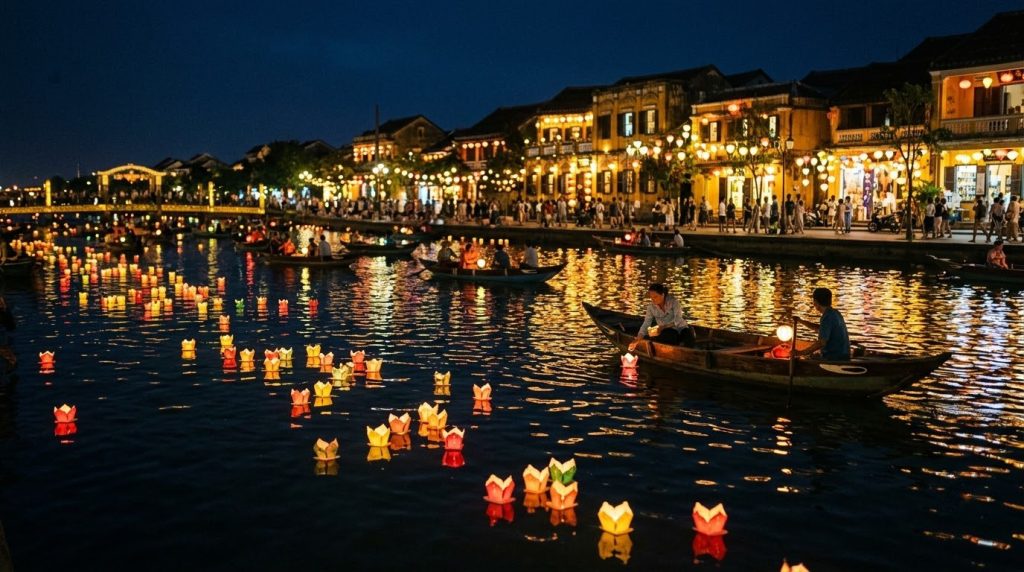
The Thu Bon itself is worth a slower look beyond the class: basket-boat rides through the Cam Thanh coconut forest and evening lantern-release boats both run directly from the riverfront, and a short paddle at dusk, when candle-lit paper lanterns drift downstream past the Old Town’s lit facades, is one of the more genuinely photogenic moments on a Vietnam trip rather than a staged one.
Full Moon Lantern Festival: time it if you can
On the 14th night of every lunar month, Hoi An switches off its electric street lighting entirely and lets the Old Town run on lantern and candlelight alone, a tradition known locally as Đêm Rằm Phố Cổ. Streets fill with performances, and vendors sell small candle boats to float on the Thu Bon.
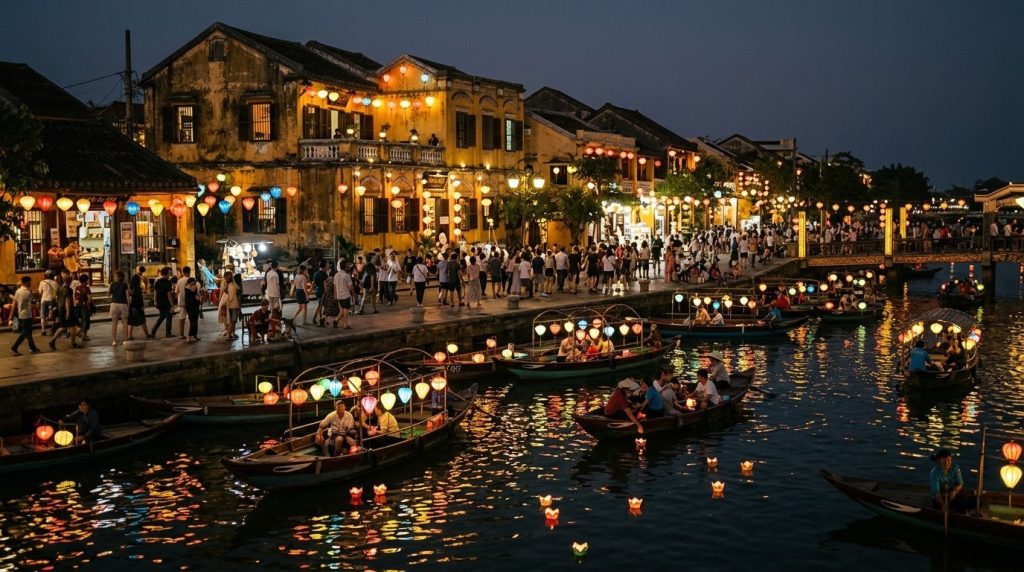
It is free to walk, though it is also the single most crowded night of the month, so book accommodation early if a festival date lines up with your trip. A Hoi An itinerary built around 3 to 4 days gives enough slack to catch a festival night without rearranging the rest of the trip if the dates shift.
The real downside: wet-season flooding
Hoi An’s honest downside is not crowds or cost, it is water. The Old Town sits low beside the Thu Bon River, and October and November bring the heaviest rain and the highest flood risk, with some years seeing Old Town streets under knee-deep water for a day or more and heritage buildings closing until levels drop.
This is not a rare fluke; it is a predictable seasonal pattern tied to central Vietnam’s monsoon. February through April is the more reliable window, with drier weather, cooler temperatures and a lower chance of a washed-out day.
Check month-by-month conditions in a best time to visit Hoi An guide before locking in dates, particularly if your trip falls in the back half of the year.
Who should skip Hoi An
Hoi An is a poor fit for a specific set of travellers, not a bad choice in general.
Anyone chasing big-city nightlife, late bars, live music venues and a longer list of restaurants beyond Vietnamese and tourist-Western fare should not centre a trip here; that experience sits half an hour away in Da Nang, and a Da Nang vs Hoi An comparison is worth reading before you split your nights between the two.
Beach-only travellers who want a resort strip with a wide, quiet beach and minimal walking should also think twice, since An Bang and Cua Dai are pleasant add-ons rather than a standalone beach holiday.
Travellers who dislike heat, humidity and crowds should avoid the Old Town in the dry-season peak months of June to August, when both temperature and tour-group density are at their highest, and should skip an October or November trip entirely given the flood risk.
None of this makes Hoi An a poor destination; it simply is not built for those specific trips.
Where to base yourself
Staying inside or on the edge of the Old Town keeps you within walking distance of the lantern streets, tailors and the Thu Bon riverfront, while a base further out toward An Bang trades that convenience for closer beach access and a quieter night’s sleep. Compare neighbourhoods in a where to stay in Hoi An guide before booking, especially around a lantern-festival date when Old Town rooms fill first.
Find your Hoi An hotel on the map
Live prices from Booking, Airbnb and more — move the map or change dates to compare stays across Hoi An.