Disclosure: Some links in this guide are affiliate links. If you book or buy through them, we may earn a small commission at no extra cost to you — it helps keep our guides free.
Hoi An Itinerary: 3-4 Days Step-by-Step Guide (2026)
Quick answer: Spend Day 1 exploring Hoi An’s Ancient Town on foot, Day 2 cycling to An Bang Beach for sand and water activities, and Day 3 on a My Son Sanctuary day trip; add an optional Day 4 for a cooking class and Tra Que vegetable village. Reach Hoi An via Da Nang International Airport, 30 km north, and budget roughly $45-120 per day depending on your comfort level.
Hoi An is one of Southeast Asia’s most rewarding destinations — a UNESCO World Heritage town where lantern-lit streets, bespoke tailors, and white-sand beaches exist within a few kilometers of each other. This step-by-step itinerary covers exactly what to do, where to sleep, and what it costs across 3 to 4 days.
If the town is still on the maybe list, our verdict on whether Hoi An is worth visiting makes the case. If you can only fit one stop, our Hanoi or Hoi An comparison weighs a slower town with a beach 3 to 5 km away against big-city buzz.
Key Takeaways
- Hoi An’s Ancient Town covers just 30 hectares but holds 1,107 UNESCO-listed heritage structures (UNESCO, 2024)
- Budget travelers average $45-60/day all-in including accommodation; mid-range runs $80-120/day (Numbeo, 2025)
- An Bang Beach is 3 km from the Ancient Town — a 15-minute bicycle ride
- My Son Sanctuary, a full-day day trip, sits 40 km west; most tours depart by 7:30 AM
- The best time to visit is February-April when rainfall is under 50 mm/month (Vietnam Meteorological Institute, 2024)
How to Get to Hoi An
Related: best food in Hoi An.
The fastest route into Hoi An is through Da Nang International Airport (DAD), located 30 km north. There is no direct train or bus into the Ancient Town itself, so your last leg is always a taxi or private transfer. Grab from the airport runs approximately $9-12 USD and takes 35-45 minutes depending on traffic.
Private airport transfers booked through Klook cost around $13-15 USD for a sedan and eliminate haggling entirely.
If you are arriving from Hanoi, the overnight sleeper train to Da Nang (roughly 16 hours, soft sleeper from $22 USD) is the budget-friendly option. From Ho Chi Minh City, budget airlines like VietJet Air and Bamboo Airways offer one-hour flights for $25-45 USD if booked 3-4 weeks ahead.
Pick up an Airalo Vietnam eSIM before departure — a 10 GB / 30-day data plan costs around $8.50 USD and activates instantly, which is useful the moment you land.
For reference on getting between Vietnam’s major cities, see da nang to hoi an how to get there for a detailed transport breakdown.
Find your Hoi An hotel on the map
Live prices from Booking & Airbnb — tap a pin to compare stays around the Ancient Town and An Bang Beach and beyond.
Where to Stay in Hoi An
Related: things to do in Hoi An.
| Budget Tier | Example Property | Location | Approx. Rate/Night |
|---|---|---|---|
| Budget | Hoi An Trails Resort (dorm) | Old Town edge | $12-18 USD |
| Mid-Range | Vinh Hung Riverside Resort | Ancient Town | $45-65 USD |
| Mid-Range | Hoi An Historic Hotel | Ancient Town | $55-80 USD |
| Upscale | Anantara Hoi An Resort | Thu Bon Riverside | $140-200 USD |
| Beach | An Bang Beach Hostel | An Bang Beach | $18-30 USD |
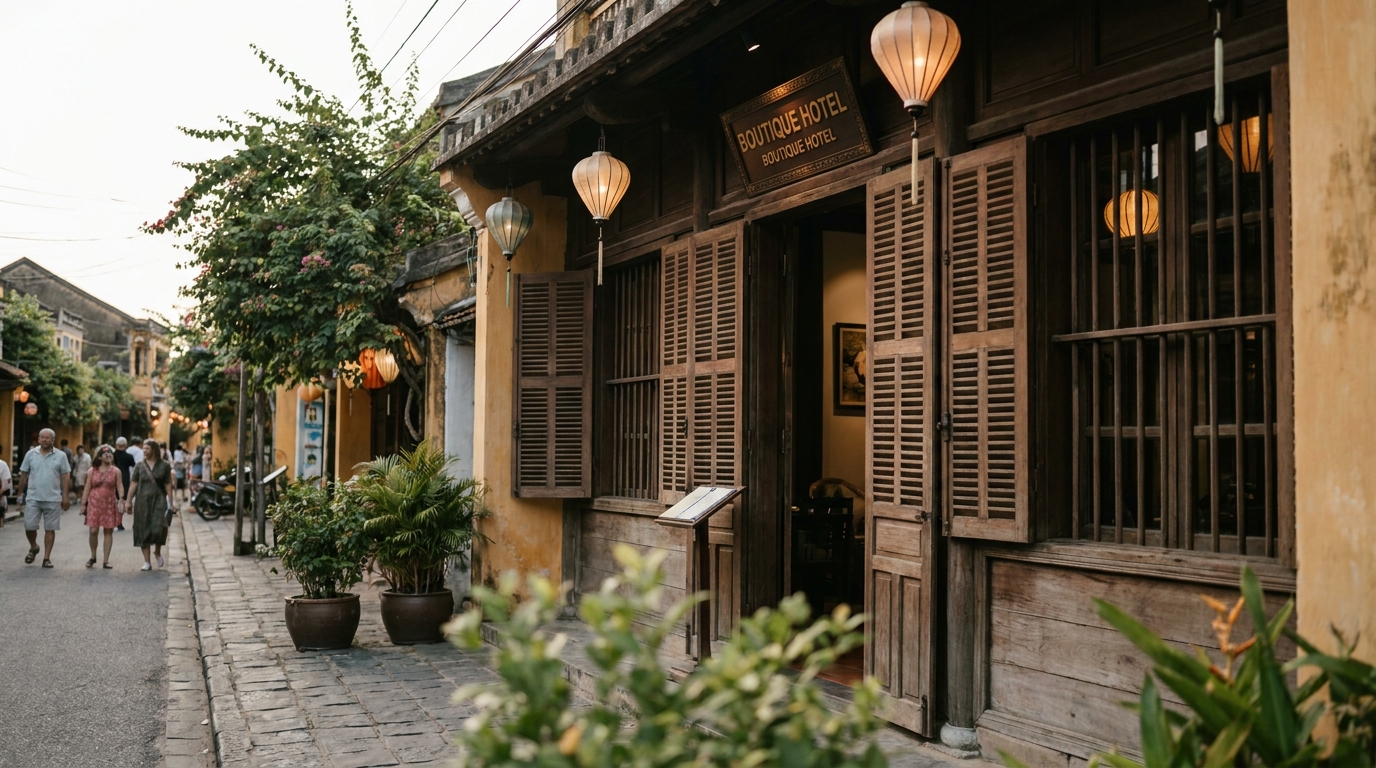
Staying within or just outside the Ancient Town perimeter gives you walking access to the heritage zone, which closes to motorbikes after 7 AM on weekdays. We recommend booking on Agoda for Vietnam properties — their last-minute deals often undercut other platforms by 10-15%.
For a curated shortlist with guest-review filters, Booking.com is equally reliable and offers free cancellation on most Hoi An properties. See best hotels hoi an ancient town for our full hotel guide.
Day 1: The Ancient Town on Foot
Related: Bali travel guide.

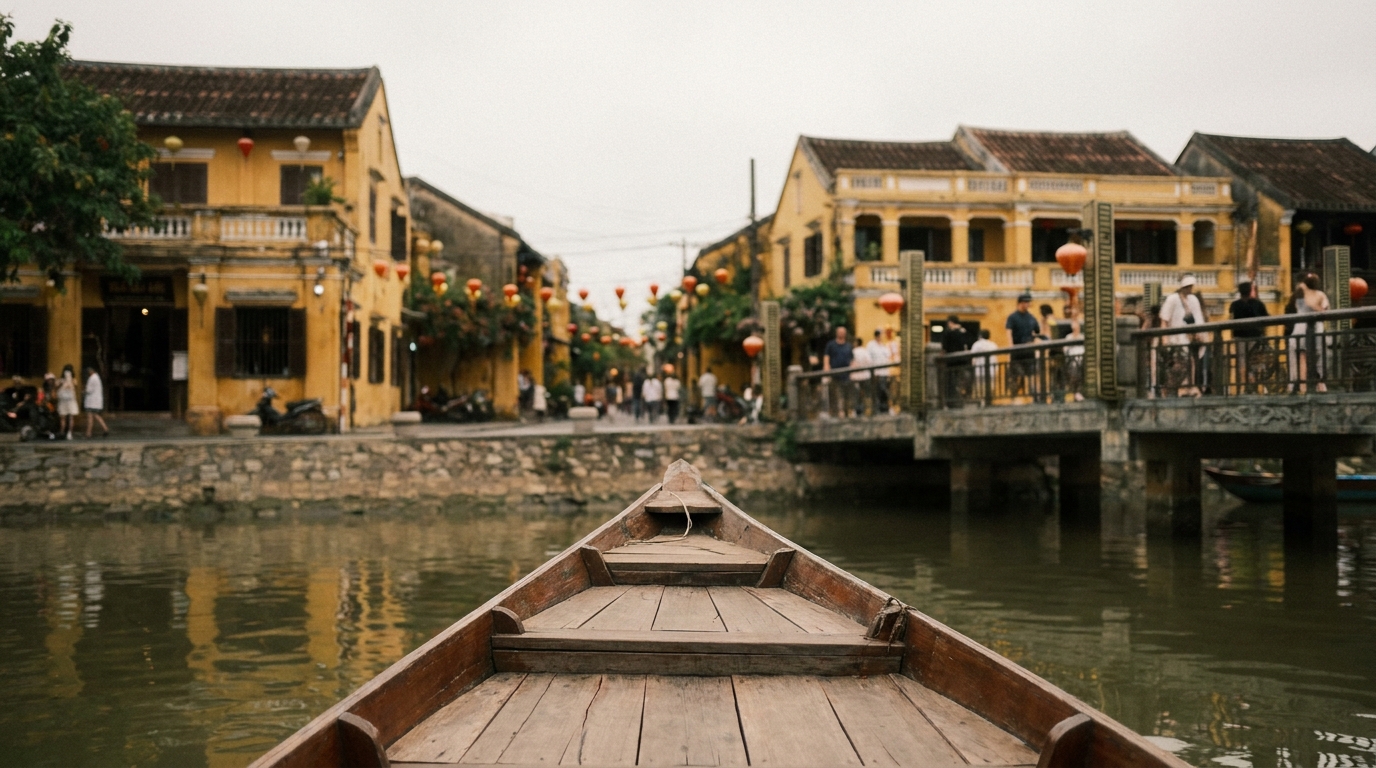
The Ancient Town rewards slow walking — the entire heritage core can be covered in 4-5 hours at a relaxed pace. Start at the Japanese Covered Bridge (Cau Nhat Ban), Hoi An’s most photographed landmark, which dates to the late 16th century.
Entry to the bridge is included in the Ancient Town ticket (120,000 VND / ~$4.80 USD as of 2025), which also covers five heritage sites of your choice from a list of 22.
Morning is the best time for the Hoi An Central Market, where local vendors sell banh mi from 40,000 VND (~$1.60) and fresh pho for around 50,000 VND (~$2.00).
By 11 AM the lanes behind Tran Phu Street fill with tailor shops; if you plan to order custom clothing, do it on Day 1 so you have two fittings before departure. Reputable shops like Yaly Couture and Thu Thuy charge $35-80 USD for a tailored dress or blazer with 24-48 hour turnaround.
Spend the afternoon at the Museum of Trading Ceramics (one of the 22 heritage sites on your ticket) and walk the riverside promenade along Bach Dang Street as the lanterns are lit after 5 PM. Dinner at a street-side restaurant along Nguyen Thai Hoc costs around $5-8 USD for a full meal of white rose dumplings, cao lau noodles, and a Huda beer.
Day 2: An Bang Beach and Water Activities
Related: Da Nang travel guide.
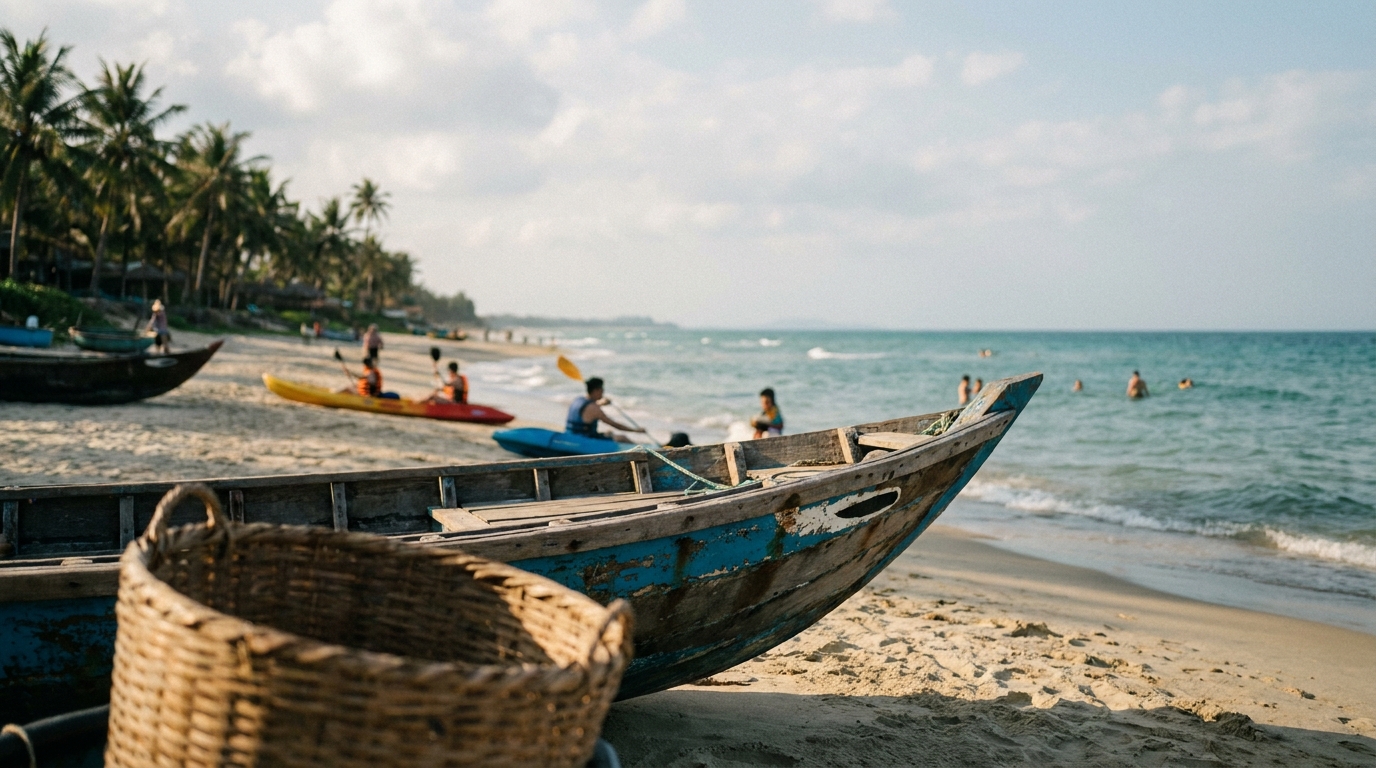
An Bang Beach, 3 km northeast of the Ancient Town, is Hoi An’s most accessible coast. Bicycle rental from any guesthouse in the Old Town costs 50,000-80,000 VND ($2-3.20 USD) per day, and the ride follows a flat road through rice paddies. Alternatively, a xe om (motorbike taxi) costs around 50,000 VND one way.
Sun lounger and umbrella rentals at An Bang run 80,000-100,000 VND ($3.20-4.00 USD) per set; most beach bars waive the fee with a drink purchase. Cua Dai Beach, 4 km from town, was historically more popular but has suffered significant erosion since 2014 — An Bang is now the better choice for swimming. Water visibility peaks between March and August when the sea is calm.
For a half-day on the water, the Thu Bon River kayaking tour (booked through Klook for $22-28 USD) departs at 2 PM and paddles past fishing villages and the vegetable farms of Tra Que. The round trip takes approximately 3 hours and includes a cooking class tasting. This is one of the most consistently rated activities in Hoi An, with over 4,000 reviews averaging 4.7/5 (Klook, 2025).
End the day with sunset cocktails at Soul Kitchen or La Plage on An Bang Beach — expect $4-6 USD per cocktail.
Day 3: My Son Sanctuary Day Trip
Related: best day trips from Hoi An.
My Son Sanctuary is a cluster of Hindu temple ruins built between the 4th and 14th centuries by the Cham Kingdom, located 40 km southwest of Hoi An. The site was declared a UNESCO World Heritage Site in 1999 and remains one of the most significant archaeological sites in Southeast Asia. Entrance fee is 150,000 VND (~$6.00 USD) as of 2025.
Most organized day tours depart Hoi An by 7:30-8:00 AM, include a guide, and return by 1-2 PM, leaving the afternoon free. Group tours via GetYourGuide or Klook run $18-25 USD per person including transport and entry.
Renting a motorbike and going independently is feasible if you are a confident rider — the road is well-paved and Google Maps navigation works reliably throughout (another reason to have your Airalo eSIM active).
Plan for 2-3 hours at the site itself. Group A is the best-preserved cluster; arrive before 9:30 AM to beat tour buses. Light cotton clothing and sun protection are essential — the temple grounds are fully exposed and midday temperatures in summer reach 35-37°C (95-99°F). See my son sanctuary day trip from hoi an for a detailed site guide.
Afternoons after My Son work well for returning to the Ancient Town for any remaining tailor pickups or browsing the art galleries along Le Loi Street.
Day 4 (Optional Extension): Cooking Class and Tra Que Village
If you have a fourth day, a morning Vietnamese cooking class is one of Hoi An’s signature experiences and should not be skipped. The standard format starts with a guided market tour (7:30-8:30 AM) at Hoi An Central Market to source ingredients, followed by 2-3 hours cooking 4-5 dishes — typically banh xeo (sizzling crepe), white rose dumplings, and pho.
Prices range from $28-45 USD per person. Cooking classes through Klook consistently book out 48-72 hours in advance during peak season (November-January).
Tra Que Vegetable Village, 3 km north of the Ancient Town, is a working organic farm that offers 1.5-hour farm experience tours for around $8-12 USD — you weed, water, and harvest, then sit down for a meal using the produce you worked with. The village is most photogenic in early morning light before 8:30 AM.
A fourth afternoon is well spent renting a bicycle and cycling the back-road loop through Cam Thanh Village (7 km round trip), which passes through a UNESCO-listed water coconut forest where basket boat tours operate for 100,000-150,000 VND ($4-6 USD) per person. See hoi an basket boat tour cam thanh for booking and timing tips.
For evening of Day 4, the Hoi An Memories Land show (a large-scale performance on Cam Nam Island depicting 400 years of Hoi An history) runs Tuesday-Sunday from 7:30 PM. Tickets start at 200,000 VND (~$8.00 USD) for general standing and up to 600,000 VND (~$24 USD) for premium seats. Book at least a day in advance during high season.
Hoi An Budget Breakdown
Related: Hoi An travel cost.
| Expense | Budget (USD/day) | Mid-Range (USD/day) |
|---|---|---|
| Accommodation | $14-20 | $50-70 |
| Food (3 meals) | $8-14 | $20-35 |
| Local transport | $2-4 | $6-12 |
| Activities/Entrance | $5-10 | $20-40 |
| Total/Day | $29-48 | $96-157 |
Currency: Vietnamese Dong (VND). As of June 2026, 1 USD = approximately 25,200 VND (XE.com, 2026). ATMs are plentiful in the Ancient Town; Agribank and Vietcombank ATMs charge the lowest withdrawal fees for foreign cards (around 30,000-50,000 VND per transaction). Avoid dynamic currency conversion (DCC) at ATMs — always choose to be charged in VND.
See hoi an travel budget cost breakdown for a full cost guide including tailoring, souvenirs, and nightlife.
Practical Tips and Getting Around
Hoi An’s Ancient Town core is closed to motorbikes between 7:00 AM and 9:00 PM on weekdays, which makes cycling and walking the primary transport modes inside the heritage zone. Bicycle rental (50,000-80,000 VND/day) is available from every guesthouse and is the most practical option for reaching An Bang Beach, Tra Que Village, and Cam Thanh.
For longer trips to My Son or Da Nang, hiring a private car via Klook ($35-55 USD per car one-way) is more comfortable than public buses.
Tipping is not mandatory in Vietnam but is appreciated — rounding up a restaurant bill or leaving 20,000-50,000 VND ($0.80-2.00 USD) for a tour guide is standard practice. Most shops in the Ancient Town accept USD alongside VND; paying in VND consistently gets you a better exchange rate.
For connectivity, the Airalo Vietnam eSIM (10 GB for $8.50 USD) is the simplest option — activate before landing. Physical SIM cards are also available at Da Nang Airport from Viettel or Vietnamobile for around 100,000-150,000 VND ($4-6 USD) including 5-10 GB of data.
See vietnam esim travel sim guide for a comparison of eSIM and physical SIM options in Vietnam.
Frequently Asked Questions
How many days do you need in Hoi An?
Three full days is enough to cover the Ancient Town, one beach day, and a half-day to My Son. Four days gives you room for a cooking class and more relaxed cycling. Five or more days are worth it if you want deep dives into tailoring, day trips to Da Nang, or full relaxation at the beach without rushing between sites.
Is Hoi An worth visiting in summer?
Yes, but with caveats. June through August is hot (34-37°C / 93-99°F) and the sea at An Bang Beach is calm for swimming. Rainfall is low compared to autumn. The major risk period is October-November, when typhoons and flooding can temporarily close the Ancient Town — not ideal for a first visit.
How much does 3 days in Hoi An cost?
Budget travelers typically spend $130-160 USD total for 3 days (accommodation, food, transport, one day trip, and the Ancient Town ticket). Mid-range travelers spending on nicer hotels and daily tours average $270-400 USD for the same period. Tailoring is the biggest variable — a full wardrobe can add $150-400 USD to any budget.
Is Hoi An safe for solo travelers?
Hoi An is widely considered one of the safest towns in Vietnam for solo travelers of any gender. The main risks are petty theft near busy night markets and aggressive tuk-tuk touts near the Covered Bridge. Keep valuables in your guesthouse safe and use Grab for after-dark transport rather than negotiating street taxis.
What is the best area to stay in Hoi An?
The Ancient Town perimeter (within 500 meters of Tran Phu Street) puts you walking distance from all heritage sites and the riverside lantern area — best for first-time visitors. An Bang Beach accommodations are better if you prioritize beach time over sightseeing. The two areas are close enough that either works for a 3-4 day trip.
Do you need a visa to visit Vietnam?
Citizens of 25 countries — including the UK, Germany, France, Italy, and Spain — receive 45-day visa-free entry as of 2023. US, Canadian, and Australian passport holders are also visa-free for 45 days under policy extended in 2023. Always verify your country’s current status on the Vietnam Immigration Department website before booking, as policies update periodically. See vietnam visa requirements guide for current entry rules by nationality.
Can you do Hoi An and Da Nang together?
Yes, and it is one of the most popular combinations in Central Vietnam. Da Nang is 30 km north, making it a feasible day trip or a logical first or last stop.
Most travelers spend 2 nights in Da Nang (Marble Mountains, Son Tra Peninsula, My Khe Beach, Dragon Bridge) and 3 nights in Hoi An, combining them into a 5-night Central Vietnam trip. See da nang hoi an itinerary 5 days for a combined itinerary.
Conclusion
Three days in Hoi An covers the essentials with no wasted time: one day for the Ancient Town, one for An Bang Beach and a river activity, and one for My Son Sanctuary. Add a fourth day if you want a cooking class, Tra Que Village, or the Memories Land show without feeling rushed.
Use bicycles inside the heritage zone, book your cooking class and boat tours through Klook at least 48 hours ahead during high season, and grab your Airalo eSIM before landing so navigation works from the moment you touch down.
Ready to plan your trip? Compare hotels on Agoda or Booking.com for the best rates in the Ancient Town, and browse Klook for cooking classes, My Son day trips, and river kayaking with instant confirmation. Hoi An rewards everyone who slows down — give it at least 3 nights and it will likely be one of the best stops of your Southeast Asia journey.