Disclosure: Some links in this guide are affiliate links. If you book or buy through them, we may earn a small commission at no extra cost to you — it helps keep our guides free.
Quick answer: Stay in Playa Carmen at the crossroads if it is your first time, because the restaurants, surf schools and supermarkets are all walkable from there. Couples and quiet-seekers should head south to Mal Pais.
Santa Teresa is not really a town. It is one long road running behind the beach, through four different villages, and figuring out where to stay in Santa Teresa comes down to one thing: where you sit on that road. Get the spot right and you barely need a scooter. Get it wrong and every meal is a dusty ride away.
Affiliate Disclosure: This post contains affiliate links. We earn a small commission if you book through our links, at no extra cost to you.
The areas at a glance
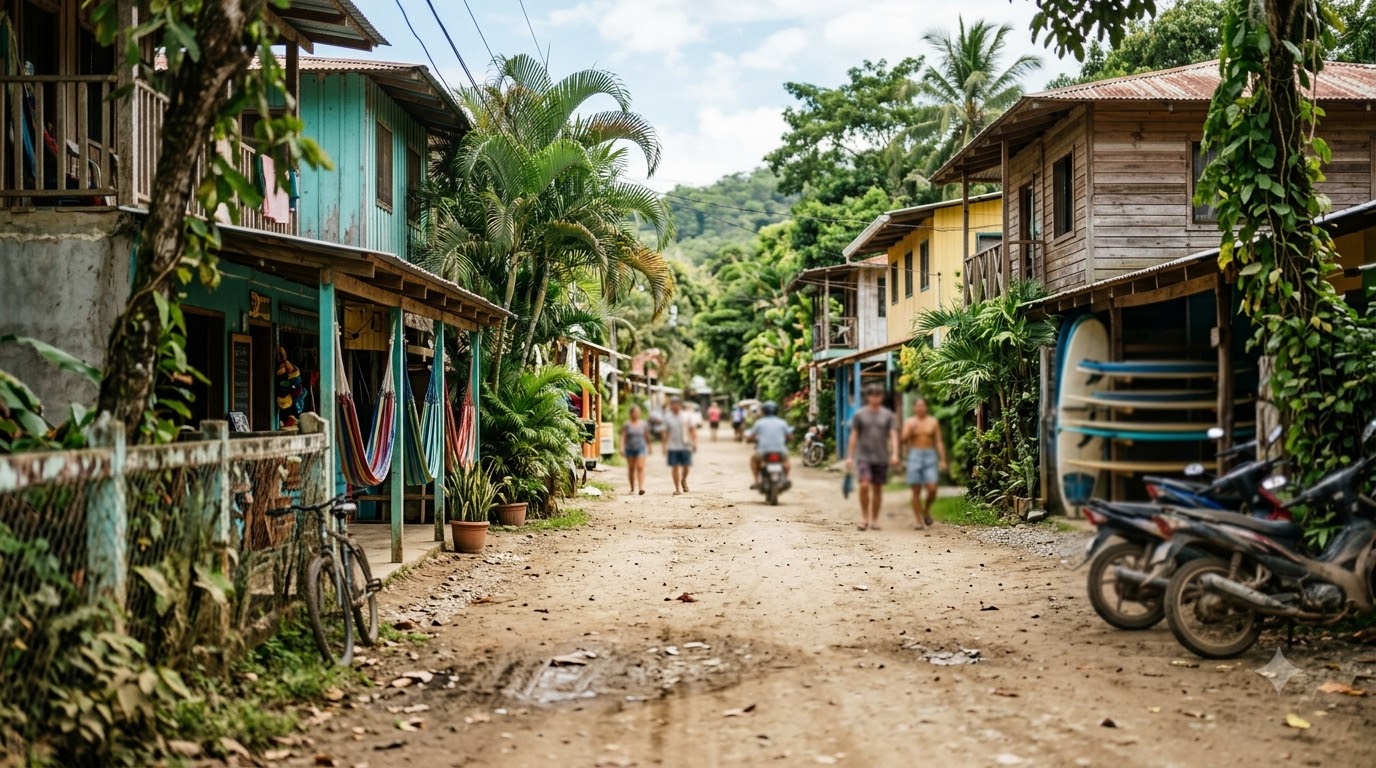
There is basically one main road, unpaved for most of its length, running parallel to the sand from south to north. Playa Carmen sits at the crossroads in the middle, where the road from the ferry meets the beach road. Head south from there and you reach Mal Pais, a working fishing village. Head north and the road passes Santa Teresa proper, then thins out into barely-built Playa Hermosa. The further you get from the Carmen crossroads in either direction, the quieter it gets and the more you need your own transport.
Playa Carmen
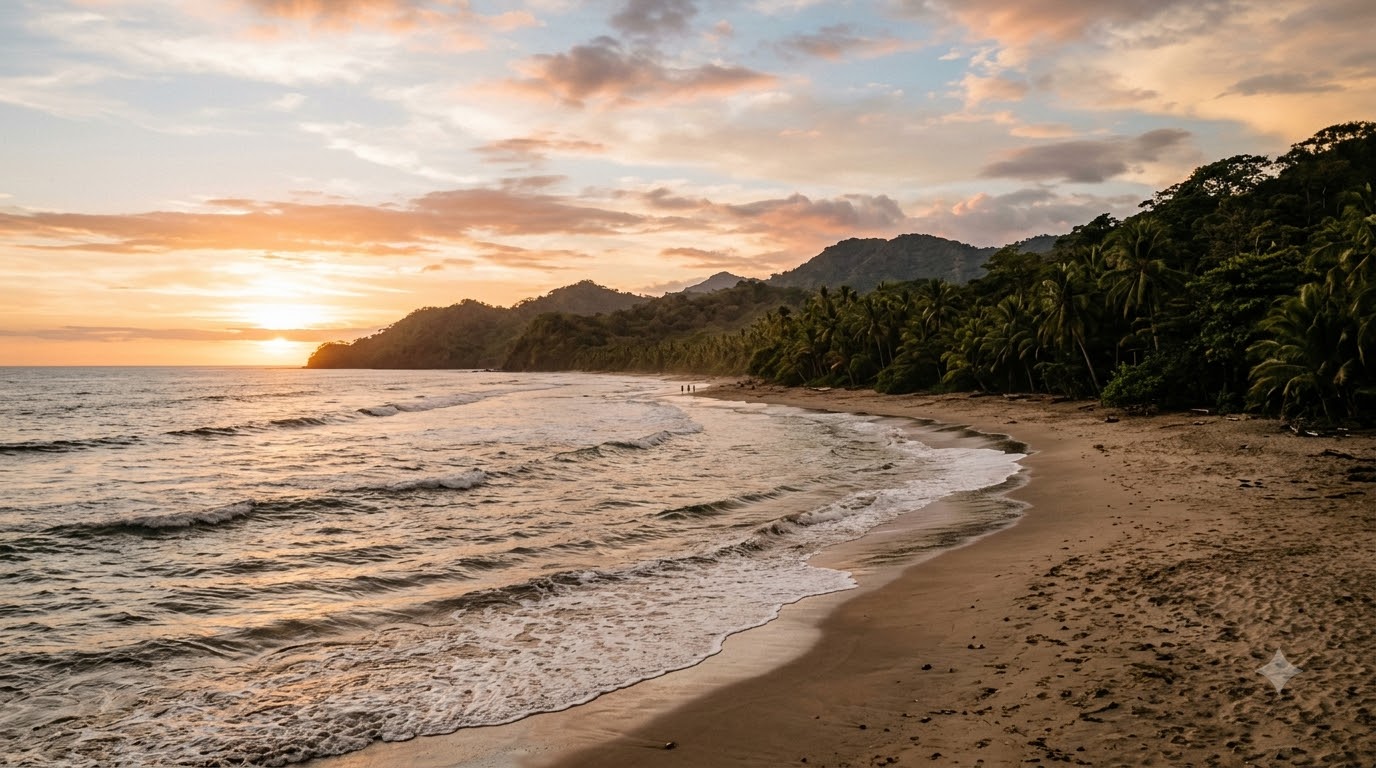
Playa Carmen is the crossroads and the single most walkable place to base yourself, which is why most first-timers land here. This is where the beach road meets the road in from the ferry, so you get the densest cluster of restaurants, surf schools, yoga studios and the two big supermarkets. You can eat somewhere different every night without starting the scooter.
The surf break here is one of the more forgiving ones on this stretch, which is why the surf schools cluster nearby. The trade-off that photos never show: the crossroads is also the busiest, dustiest spot on the whole road. Quad bikes and delivery trucks kick up dust in dry season, and the main junction hums until late. If you want to walk everywhere and do not mind a bit of noise, this is your pick. If you came for silence, keep reading.
Santa Teresa proper
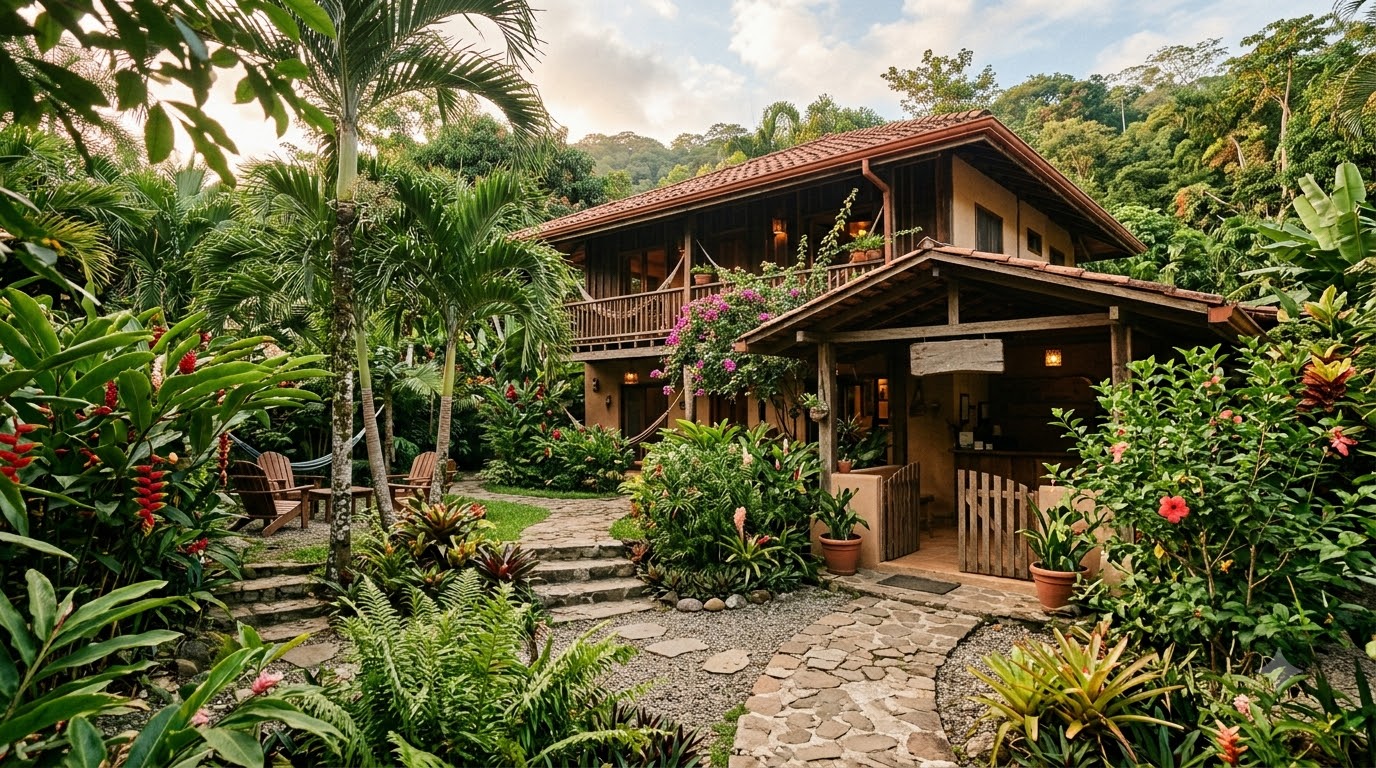
Santa Teresa proper stretches north of the Carmen crossroads and is the stretch most people picture when they hear the name. It is a compromise spot: still plenty of cafes, juice bars and boutique places along the road, but the density thins as you go north, so it feels calmer than the crossroads without cutting you off from dinner.
This is a good middle option if you want walkable food but a quieter bed. The catch is that “Santa Teresa” is long. A place described as being in Santa Teresa might sit a short stroll from the shops, or it might be a sweaty fifteen-minute walk along a road with no pavement and passing scooters. Before you book, check exactly where on the road it sits relative to the crossroads. The listing photos of the pool tell you nothing about the walk to breakfast. The live map further down plots real hotels against real nightly prices so you can see the spread.
Mal Pais
Mal Pais lies south of the crossroads and is still, at heart, a fishing village, which is exactly its appeal. The pace drops the moment you turn south. You get rockier, quieter beaches, a handful of good seafood spots pulling from the boats, and a lot less through-traffic. Couples and anyone chasing calm tend to gravitate here.
Because it is spread out and undeveloped, you will want a scooter or a car for everything, including most dinners back toward Carmen. That is the honest trade-off: you swap walkability for quiet. Mal Pais is also the gateway to the Cabo Blanco Absolute Nature Reserve, the oldest protected area in the country, managed by the national parks system (SINAC). If your ideal trip is early surf, a nap, and a nature hike rather than a night out, base yourself south.
Playa Hermosa
Playa Hermosa is the far north end of the road and the least developed of the four, a long open beach with room to breathe. Do not confuse it with the other, more famous Playa Hermosa up in Guanacaste; this one is a wide, mellow sweep of sand that stays quiet even when the middle of the road is busy. Long-stay surfers and people who genuinely want to disconnect end up here.
The trade-off is the sharpest of any area. You are committed to transport for absolutely everything, the road up here is at its roughest, and options for food and groceries are thin, so you plan ahead or you drive. In wet season the northern stretch of road can get properly rutted. Choose Hermosa when solitude is the entire point and you are happy to organise your days around a vehicle rather than your feet.
Which area is right for you
| Traveller type | Best area | Why |
|---|---|---|
| First-timer | Playa Carmen | Everything walkable from the crossroads, easy to find your feet |
| Couples | Mal Pais | Quiet, rocky coves, seafood, no through-traffic |
| Learning to surf | Playa Carmen | Surf schools cluster here beside a forgiving break |
| Nightlife and social | Playa Carmen / Santa Teresa | Densest run of bars and restaurants along the road |
| Long-stay and disconnect | Playa Hermosa | Least built-up, wide open beach, deep quiet |
| Nature and hiking | Mal Pais | Gateway to Cabo Blanco reserve, calm mornings |
What to book first
Book your room first, and book it by its exact position on the road, not by the pool photo. Once you know how far you are from the Carmen crossroads, decide on transport: near the crossroads you can often skip a vehicle, but anywhere in Mal Pais or Playa Hermosa you will want a scooter or 4×4 arranged before arrival. Only then sort tours and surf lessons, which are easy to book on the ground once you know your base. For planning the wider trip, the official tourism board at Visit Costa Rica is a solid starting point.
Live nightly prices from Booking, Airbnb, Hotels.com and more across every Santa Teresa area — move the map or change your dates to compare.
Related where-to-stay guides
- Where to Stay in Tortuguero
- Where to Stay in Samara
- Where to Stay in La Fortuna
- Where to Stay in Monteverde
- Where to Stay in Manuel Antonio
Frequently asked questions
Is Santa Teresa expensive?
It sits at the pricier end for Costa Rica, especially in dry-season high months when the crossroads fills up. That said, the range is wide: backpacker hostels and simple cabinas run cheap, while boutique and beachfront places climb fast. The live map shows the real spread of Santa Teresa hotels by night so you can match a budget to an area.
Do you need a car in Santa Teresa?
Not if you stay right at the Playa Carmen crossroads, where food, surf and shops are all walkable. Anywhere in Mal Pais or Playa Hermosa, you effectively do, because everything is spread along a rough road with no pavement. Many visitors compromise with a scooter, which handles the road and parks anywhere.
How many days should you spend in Santa Teresa?
Three to four nights is enough to surf, eat and see one beach sunset properly. Because the vibe is slow and the getting there is a bit of an effort, plenty of people stretch it to a week and settle into one village. If you only have a couple of nights, stay near the crossroads to lose no time to transport.
Which area is best for first-timers?
Playa Carmen, without much doubt. Being at the crossroads means you can walk to almost everything, learn the layout of the road quickly, and try different restaurants without organising a ride each night. Once you know the place, a return trip further south or north makes more sense.
When is the best time to visit Santa Teresa?
The dry season, roughly December through April, brings the most reliable sun and the biggest crowds. The green season is quieter and cheaper, with surf that many prefer, but the unpaved road turns rough after heavy rain, which matters most if you are basing yourself up in Playa Hermosa. Pick your season around how far from the crossroads you plan to stay.