Disclosure: Some links in this guide are affiliate links. If you book or buy through them, we may earn a small commission at no extra cost to you — it helps keep our guides free.
Quick answer: Stay in Tortuguero village if you want to walk to the beach, eat cheaply and come and go on your own; book a lodge across the water if you want quiet, guided tours and everything handled for you.
Tortuguero is a village of canals with no road in. You reach it by boat or by small plane, and once you arrive there are no cars at all. That single fact shapes every decision about where to stay in Tortuguero, so read the areas below before you book anything.
Affiliate Disclosure: This post contains affiliate links. We earn a small commission if you book through our links, at no extra cost to you.
The areas at a glance
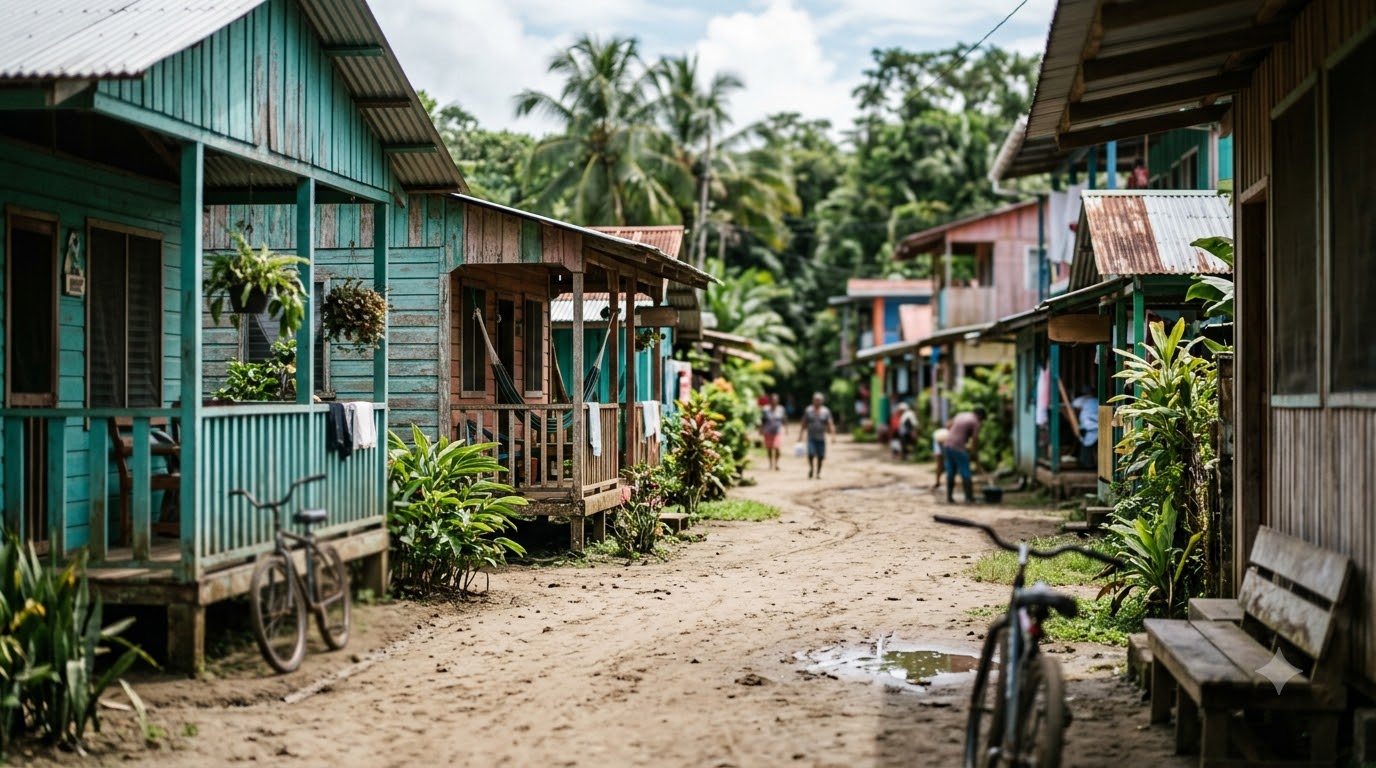
There are really two worlds here, separated by a strip of water. On one side sits the village itself, a thin sandbar between the canal and the Caribbean, packed with small guesthouses, sodas and tour desks. On the other side, along the north bank and up the side channels, sit the lodges: some modest and riverside, some large all-inclusive compounds. Most people arrive through La Pavona, the mainland dock where the boats leave. Where you sleep decides how you spend, how you move, and how much of the day is yours.
The village
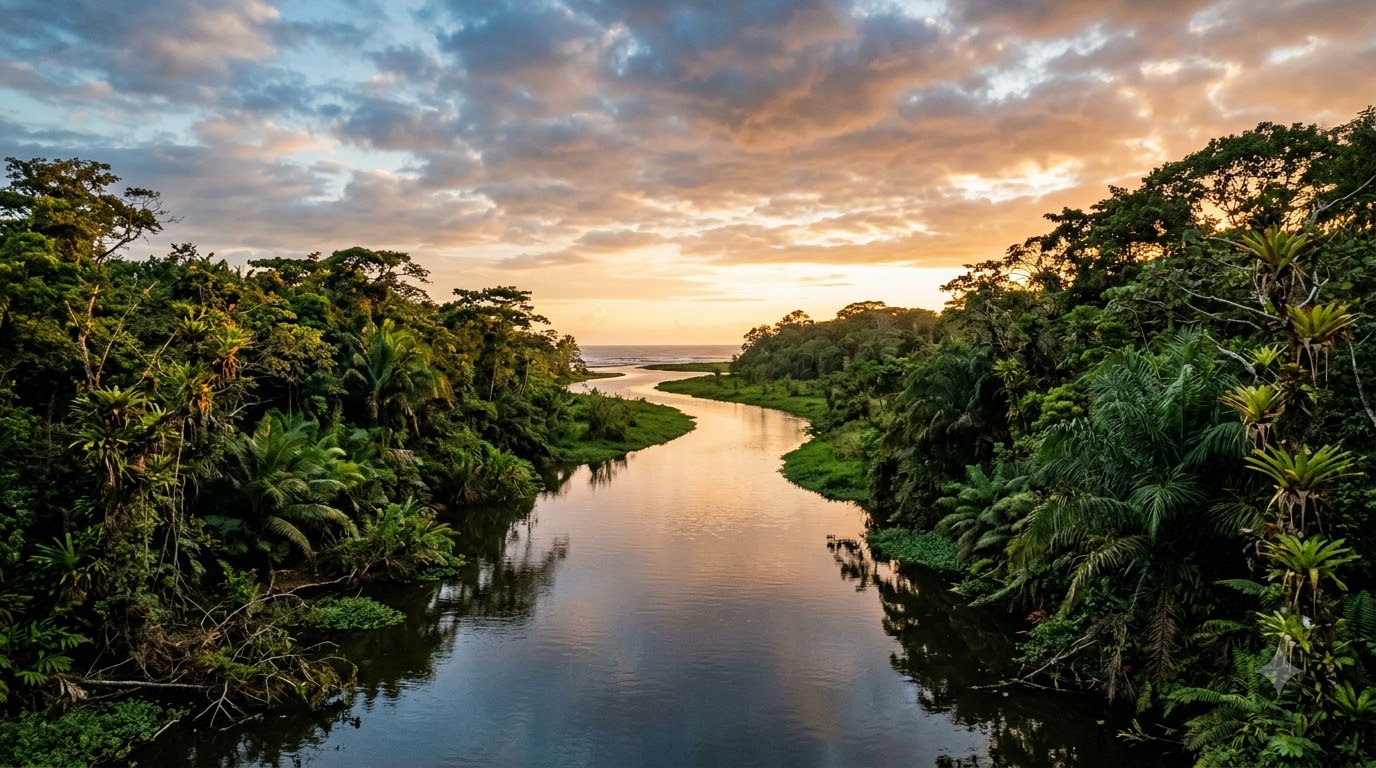
The village is the cheap, social, walkable choice, and it is the one I send most first-timers to. It runs along one sandy footpath maybe a few hundred metres long, with the national park beach on one side and the main canal on the other. You can walk to a turtle tour, a restaurant, a shop and the park entrance without a boat. Guesthouses here are simple and family-run, and Tortuguero hotels in the village sit firmly in the budget to lower mid-range band.
The trade-off that photos hide: the village is loud in a small-town way. Roosters, generators, dogs, music from the soda next door, church on Sunday. You are also in the weather. There is no pool to retreat to and rain here is heavy and frequent. If you want silence and comfort at the end of a wet jungle day, the village will not give it to you.
The lodges across the water (north bank)
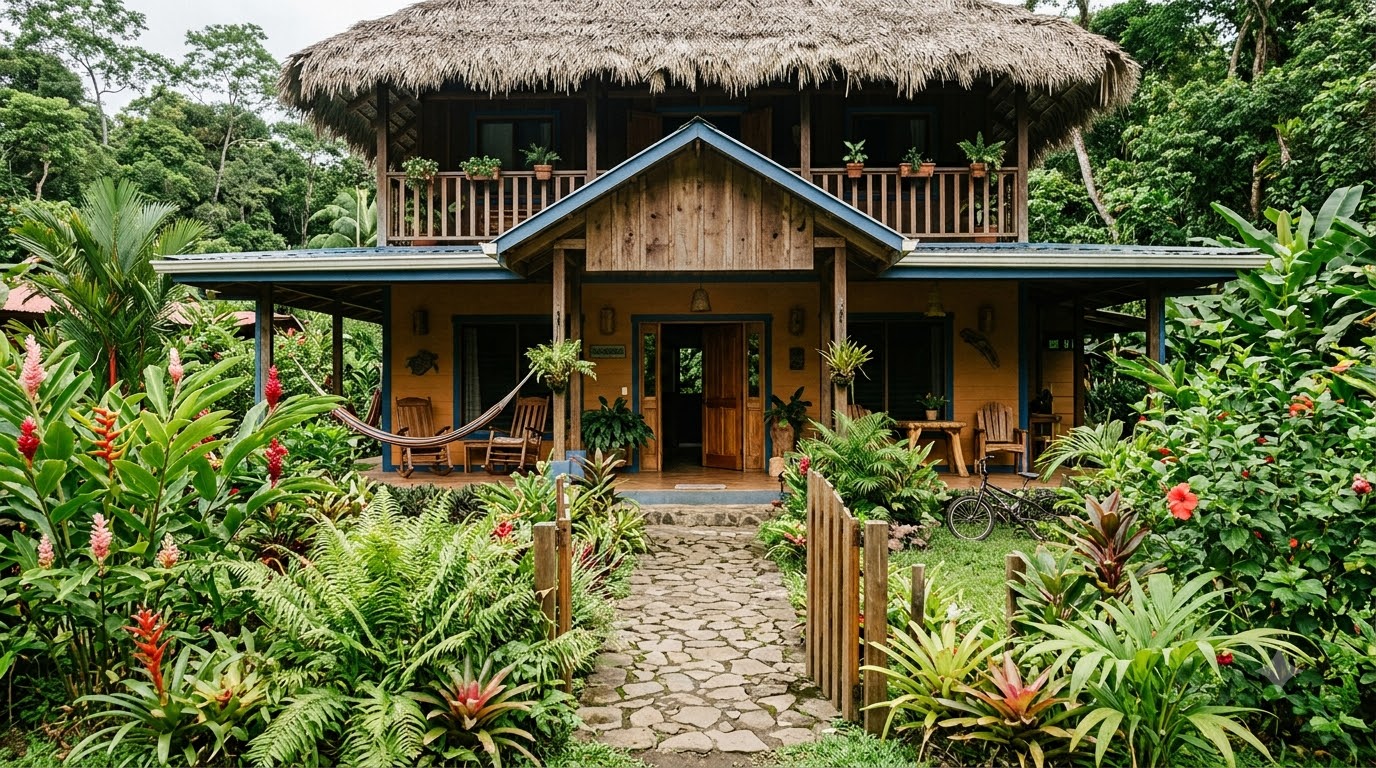
The riverside eco-lodges are the middle ground: quiet, green, and still fairly independent. They line the far bank and the smaller channels, a short boat hop from the village dock. Rooms tend to be wooden cabins under trees, often with a pool, a restaurant and a resident naturalist. You wake up to howler monkeys instead of generators, and the canal outside your deck is the tour.
The catch is that you cannot walk anywhere. Every trip to the village, the park entrance or a restaurant that is not the lodge’s own means arranging a boat. Many of these places run set shuttle times rather than on-demand rides, so your day flexes around their schedule. For couples and photographers who want early, calm mornings on the water, that is a fair deal. For people who like to wander, it can feel like being gently stuck.
The all-inclusive lodges
The large all-inclusive lodges are the hands-off, everything-booked option, and for a lot of visitors they are the whole trip. You buy a package, usually two nights, that bundles the boat transfer from San José or from the Pavona dock, all meals, and the guided canal and turtle tours. You show up, hand over the logistics, and follow a printed schedule. These sit at the high end of the price range and draw families, tour groups and anyone short on time.
What the brochure does not say is how packaged it feels. Meals are buffet, tours run in big groups on fixed clocks, and you rarely touch the village at all. That is the point for some travellers and a disappointment for others. If you came to feel a remote Caribbean settlement, a compound that could be anywhere in the tropics may miss the mark. If you just want turtles, monkeys and no decisions, it delivers exactly that.
La Pavona and the boat launch
La Pavona is not really a place to sleep, but it is a place to understand, because your rented car ends its journey here. La Pavona is the mainland dock most public boats use; you drive in, park in a guarded lot, and the car waits there until you come back. There is no accommodation worth planning around at the launch itself, and no reason to stay.
The practical point is timing. Boats run on a rough daily rhythm, not on demand, and the last departure is earlier than people expect. Miss it and you are sleeping in Cariari or Guápiles, a plain town well short of the jungle you came for. If your flight lands late, build in a buffer night on the mainland rather than gambling on the final boat. The alternative is the small plane into the airstrip near the village, which skips La Pavona entirely and saves hours, at a cost.
Which area is right for you
| Traveller type | Best area | Why |
|---|---|---|
| First-timer | The village | Walkable, cheap, and you see how the place actually lives |
| Couples | Riverside eco-lodge | Quiet cabins, pool, calm early mornings on the canal |
| Families | All-inclusive lodge | Meals, tours and transfers handled, safe fenced grounds |
| Budget / backpacker | The village | Simple guesthouses and sodas at the lowest prices in town |
| Comfort seekers | Riverside eco-lodge | A pool and a dry lounge to escape the heavy rain |
| No-fuss, short trip | All-inclusive lodge | One package covers boat, food and every tour |
What to book first
Book your boat or plane before your room, because the transfer is the hard part, not the bed. If you take a package, the lodge arranges the boat and your job is just picking the lodge. If you go independent to the village, lock your guesthouse next, then confirm the Pavona boat times for your travel day, and only then book turtle season tours, which run on quotas through the national park. Turtle nesting is seasonal, so check the Tortuguero National Park dates before you commit, and cross-check general timing with the Costa Rica tourism board.
Live nightly prices from Booking, Airbnb, Hotels.com and more across every Tortuguero area — move the map or change your dates to compare.
Related where-to-stay guides
- Where to Stay in Samara
- Where to Stay in La Fortuna
- Where to Stay in Monteverde
- Where to Stay in Manuel Antonio
- Where to Stay in Tamarindo
Frequently asked questions
Do you need a car in Tortuguero?
No, and you cannot use one here anyway. There are no roads and no cars in Tortuguero at all; you move by boat or on foot. If you drive from San José, you leave the car in a guarded lot at the La Pavona dock and pick it up on your way out.
How many days should you spend in Tortuguero?
Two nights is the standard and usually enough. That gives you a full day for canal tours and, in season, one night turtle walk, which is the reason most people come. A third night suits photographers or anyone who wants slow mornings without a schedule.
Is Tortuguero expensive?
It is more expensive than it looks, because everything arrives by boat. Village guesthouses and sodas stay cheap, but transfers, tours and the all-inclusive lodges add up fast. The live map shows real current prices so you can compare the village against the lodges before you book.
What is the best area for a first-time visitor?
The village. You can walk to the beach, the park entrance, restaurants and tour desks without arranging a boat every time, and it is the cheapest base. You also get a real feel for the settlement instead of a fenced resort that could sit anywhere in the tropics.
Is it better to fly or take the boat to Tortuguero?
The boat is cheaper and part of the experience; the wildlife starts on the canal ride in. The small plane costs more but saves several hours and skips the La Pavona drive entirely. Late arrivals into Costa Rica often fly to avoid missing the last boat of the day.