Disclosure: Some links in this guide are affiliate links. If you book or buy through them, we may earn a small commission at no extra cost to you — it helps keep our guides free.
Quick answer: Stay in Samara town if you want the calm swimming bay and everything on foot; pick Playa Carrillo next door if you want an emptier beach and don’t mind a short drive to dinner.
People pick Samara for one reason: a reef across the mouth of the bay knocks the swell down before it reaches shore. That makes it the calmest, most swimmable beach on this stretch of the Nicoya coast, and it’s why families and first-timers end up here. This guide covers where to stay in Samara by area, so you match the neighbourhood to how you actually want to spend the days.
Affiliate Disclosure: This post contains affiliate links. We earn a small commission if you book through our links, at no extra cost to you.
The areas at a glance
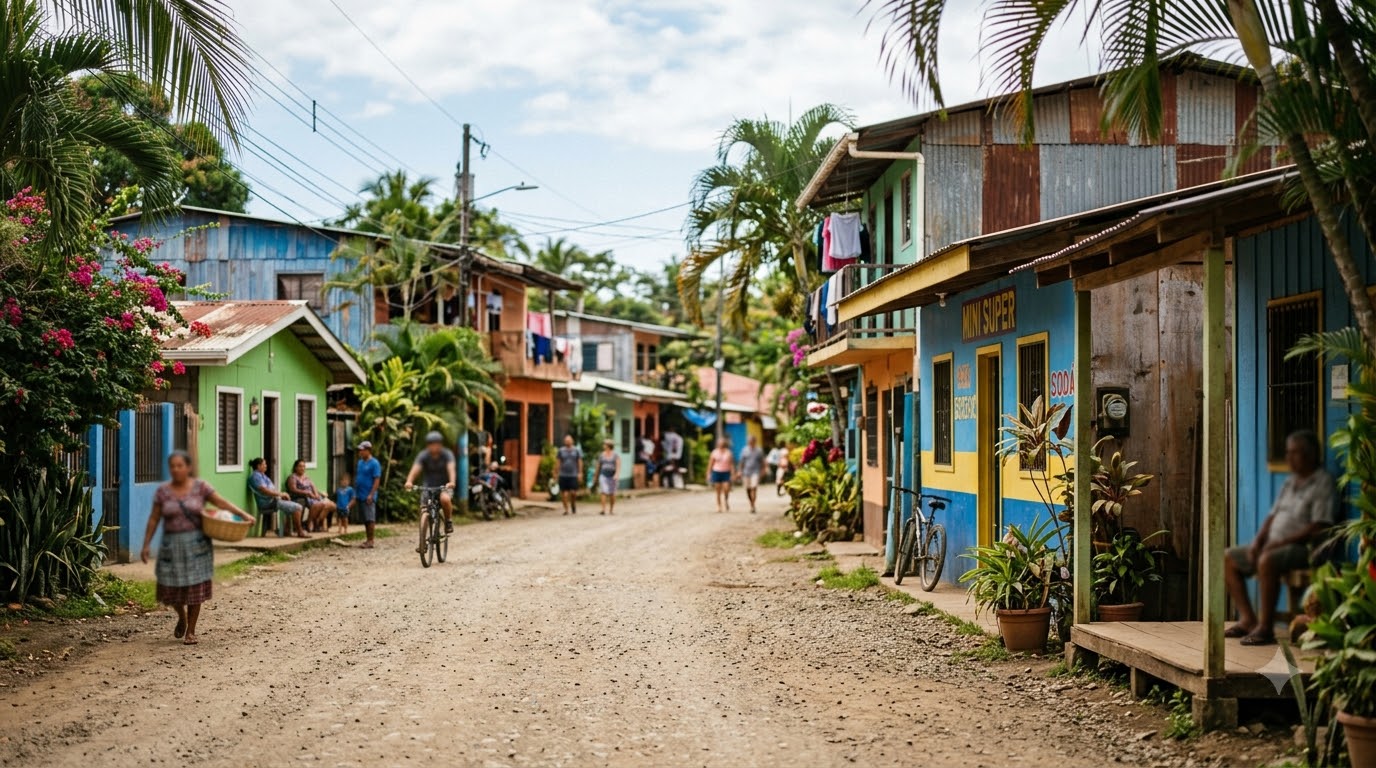
Samara is small. The whole place is a crescent bay with a town tucked behind the sand, a headland at each end, and a few residential pockets climbing the hills. Most visitors only need to choose between four things: the town itself, Playa Carrillo a few minutes south, the Cangrejal side on the north end, or the quiet hills behind everything. Carrillo sits south past a low headland; Cangrejal and the hills wrap the town on the inland side. Nothing here is far from the beach.
Samara town and beach
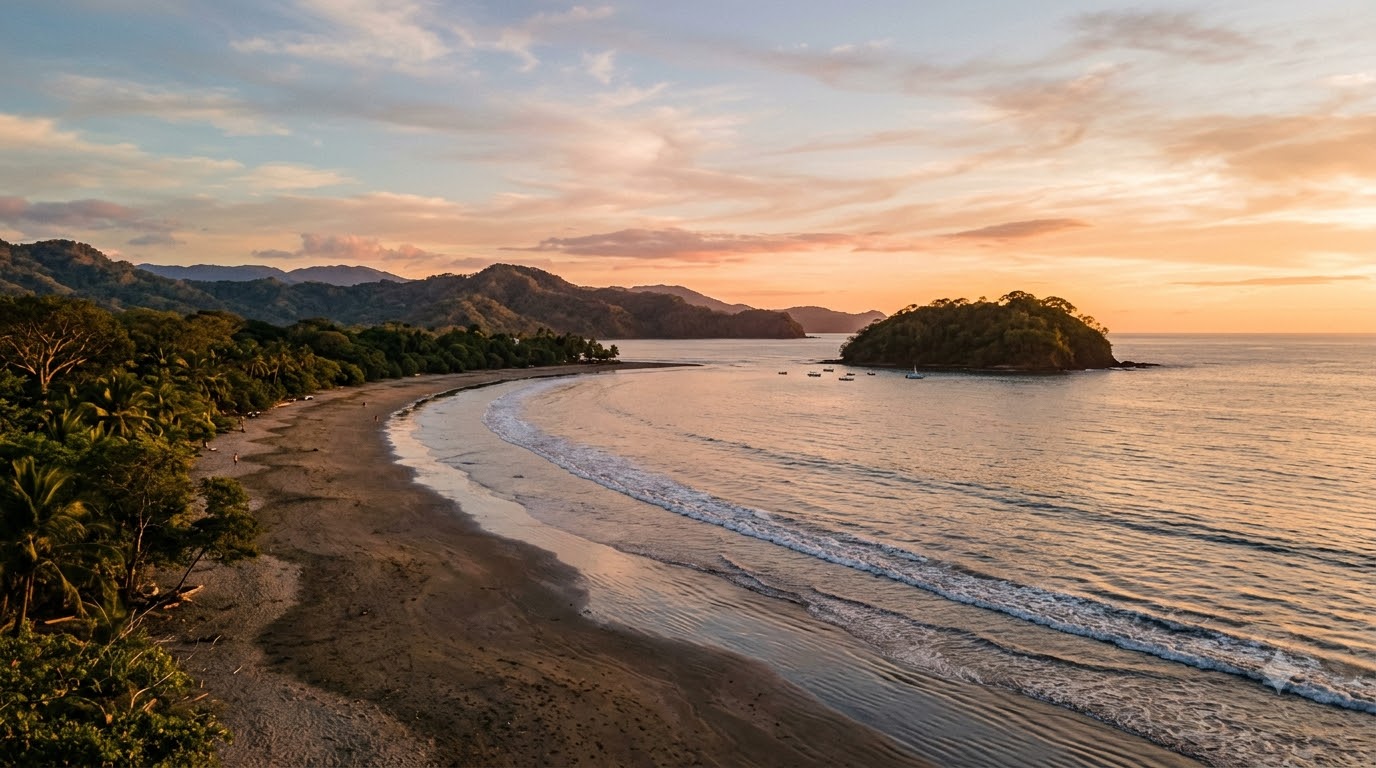
This is the default answer for where to stay in Samara, and for most people it’s the right one. The town runs a few blocks deep behind the sand, so you can walk from your room to breakfast, to the water, and to dinner without ever getting in a car. The reef-sheltered bay is the draw. Waves break gently, the water shelves slowly, and it’s one of the safest swimming beaches in Guanacaste, which is the whole reason nervous swimmers and parents with small kids come here in the first place.
You get soft-sand restaurants, surf schools that teach beginners in waist-deep water, and a small grid of streets with groceries, pharmacies and tour desks. It suits first-timers, families, and anyone who wants a car-free trip. The vibe is relaxed rather than sleepy; there’s a handful of bars but no real nightlife scene.
The trade-off that doesn’t show in listing photos: central means close to the road that runs behind the beach, and small-town road noise, motorbikes, early delivery trucks, the odd late bar, carries in the warm night air. A room one street back is often quieter for the same money. Samara hotels here span budget guesthouses to mid-range boutique places, with a few high-end options on the ends of the beach.
Playa Carrillo
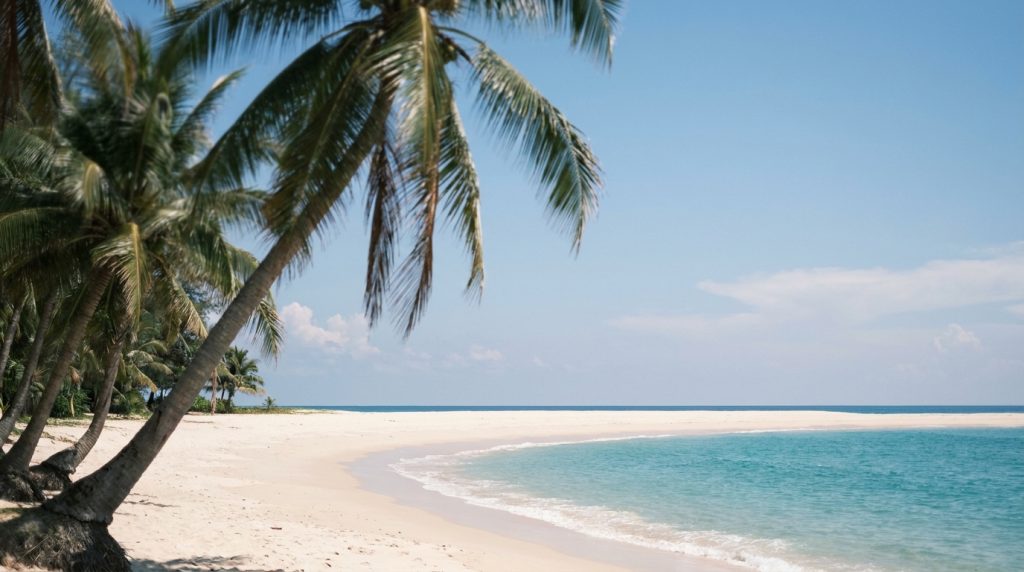
Carrillo is the postcard beach, a long curve of pale sand backed by a line of palms, and it’s usually close to empty. It sits just south of Samara over a small headland. There’s almost nothing built directly on the sand here, which is the point and also the catch: you get a wide, calm, palm-lined beach with barely anyone on it, but you’ll drive back into Samara for most meals, shops and tours.
Stay in Carrillo if you’re a couple or a family who prioritises quiet over convenience, and you’re comfortable renting a car. Accommodation clusters on the hillside above the beach, so many rooms come with a real ocean view, something Samara town rarely offers. The water is calm and good for swimming, similar to Samara but with a fraction of the crowd. Just south, the Camaronal Wildlife Refuge protects a turtle nesting beach, so evenings here stay dark and undeveloped on purpose.
Cangrejal
Cangrejal is the neighbourhood on the north end of the bay, the quieter residential side where the sand runs toward the river mouth and the northern headland. It’s still walkable to the middle of town, roughly the far end of the same beach, but it feels a step removed from the restaurant strip. This is a good middle ground: you keep the walk-everywhere convenience while sleeping somewhere calmer than the centre.
It suits couples and longer-stay travellers who want the town within reach but not right outside the window. You’ll find guesthouses, small B&Bs and rentals rather than beachfront resorts. The trade-off: the very north end of the beach near the river is less ideal for swimming than the reef-protected middle, so you may still walk down the sand to reach the calmest water. For sleeping and eating, though, it’s an easy, low-key base.
The hills behind town
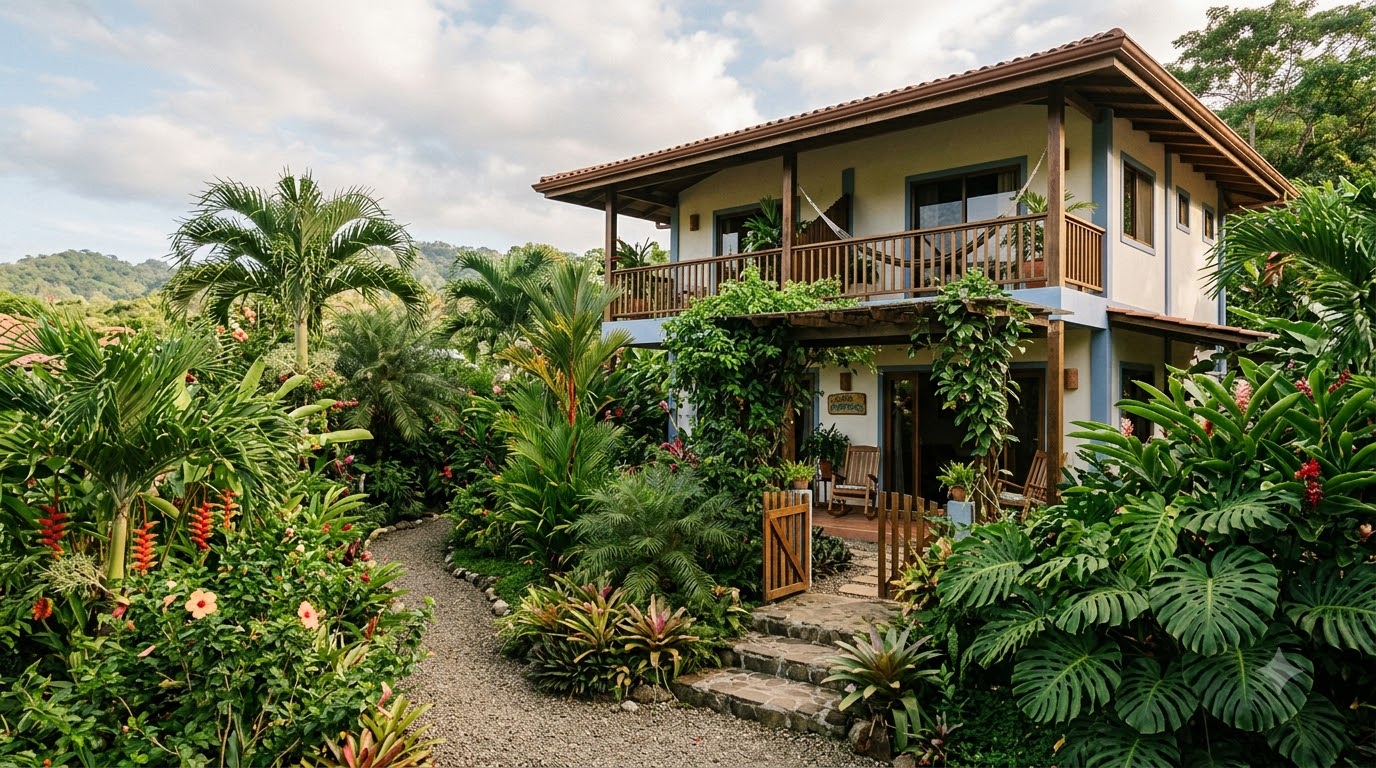
Climb the slope inland and the temperature drops a degree, the views open up, and the price per night often does something friendly. The hills behind Samara hold villas, rental houses and small lodges with sightlines over the whole bay. This is where you stay if you want space, a pool, a kitchen, and a sunset from your own terrace rather than a shared beach.
It suits families renting a house, remote workers settling in for a few weeks, and anyone travelling by car. That last part matters: up here you are committed to driving. Some access roads are steep and rough, and a standard sedan will struggle in the green season when the rain arrives, so this is the strongest case for a four-wheel-drive on the whole trip. The reward is the quietest sleep in Samara and views you don’t get at sea level.
Matapalo and the north
North of Samara, past Playa Buena Vista, the coast turns wilder around Matapalo, all long empty sand, scattered farms and a scattering of villas and small hotels. This is the choice for total quiet and, in season, for surfers who want more consistent waves than the sheltered bay delivers. It’s genuinely remote: you drive for everything, mobile signal thins out, and dinner options are limited to your hotel or the trip back into town.
Come here if you want isolation over convenience and you have reliable transport, ideally four-wheel-drive on the dirt access roads. It doesn’t suit first-timers or anyone without a car. But if the reason you booked Costa Rica was empty beaches and dark skies, this delivers them in a way the town never will.
Which area is right for you
| Traveller type | Best area | Why |
|---|---|---|
| First-timer | Samara town | Calm swimming bay, everything walkable, tour desks on hand |
| Families with young kids | Samara town | Safest swimming in the area, kid-friendly restaurants near the sand |
| Couples wanting quiet | Playa Carrillo | Empty palm-lined beach, hillside ocean views, still close to town |
| Car-free travellers | Samara town or Cangrejal | Walk to beach, food and shops without renting a vehicle |
| Groups renting a house | The hills behind town | Space, a pool, views, and room to spread out |
| Quiet and surf seekers | Matapalo and the north | Emptier waves and dark skies, if you’ve got a car |
What to book first
Book the room first, especially if you’re travelling in the dry high season from roughly December to April, when the good places in Samara town go early. Decide the car question next: you can happily stay car-free in town and Cangrejal, but Carrillo, the hills and the north all assume you’re driving, and in the green season that means four-wheel-drive. Book tours last, once you’re on the ground; surf lessons, snorkelling and the wildlife trips are easy to arrange from town and you’ll get better timing reading the daily conditions. Check the official Costa Rica tourism site for seasonal notes before you lock dates.
Live nightly prices from Booking, Airbnb, Hotels.com and more across every Samara area — move the map or change your dates to compare.
Related where-to-stay guides
- Where to Stay in La Fortuna
- Where to Stay in Monteverde
- Where to Stay in Manuel Antonio
- Where to Stay in Tamarindo
- Where to Stay in Nosara
Frequently asked questions
Is Samara expensive?
Samara is one of the better-value beach towns in Guanacaste. It draws more independent travellers and families than package resorts, so you’ll find budget guesthouses alongside mid-range boutiques and a few high-end villas. The live map shows real current prices by area, which shift a lot between the dry high season and the quieter green months.
Do you need a car in Samara?
Not if you stay in Samara town or Cangrejal, where the beach, restaurants and shops are all walkable and tours pick you up. You’ll want a car for Playa Carrillo, the hills and anywhere north, and a four-wheel-drive in the rainy green season, when some access roads get slick and steep.
How many days should you spend in Samara?
Three to four nights suits most people: enough to settle into the calm bay, take a surf lesson or a boat trip, and drive to Carrillo for a quiet beach day. Add nights if you’re renting a house in the hills or using Samara as a base to slow down for a week or more.
What’s the best area in Samara for first-timers?
Samara town, without much debate. The reef-sheltered bay gives you the safest swimming in the area, you can walk everywhere, and the tour desks, surf schools and restaurants sit right by the sand. It removes the two things first-timers worry about most: rough water and needing a car.
Is the swimming actually safe in Samara?
Yes, that’s the town’s whole reputation. The offshore reef breaks the incoming swell, so the water inside the bay stays calm and shelves gently, unlike the stronger surf beaches nearby. Conditions are gentlest in the protected middle of the bay; the river ends can be less predictable, so keep small kids toward the centre.