Disclosure: Some links in this guide are affiliate links. If you book or buy through them, we may earn a small commission at no extra cost to you — it helps keep our guides free.
Quick answer: The old town by the ruins is the best base for most people, since it is walkable, low, and a short stroll from the Machu Picchu train; travellers who want more restaurants and hotel choice sleep in Urubamba instead.
Ollantaytambo is one of the few Inca towns still laid out on its original street plan, and it happens to hold the main train station for Machu Picchu. Deciding where to stay in Ollantaytambo really comes down to one thing that first-timers get wrong: this town sits lower than Cusco, which makes it a far gentler place to spend your first night in the Andes.
Affiliate Disclosure: This post contains affiliate links. We earn a small commission if you book through our links, at no extra cost to you.
The areas at a glance
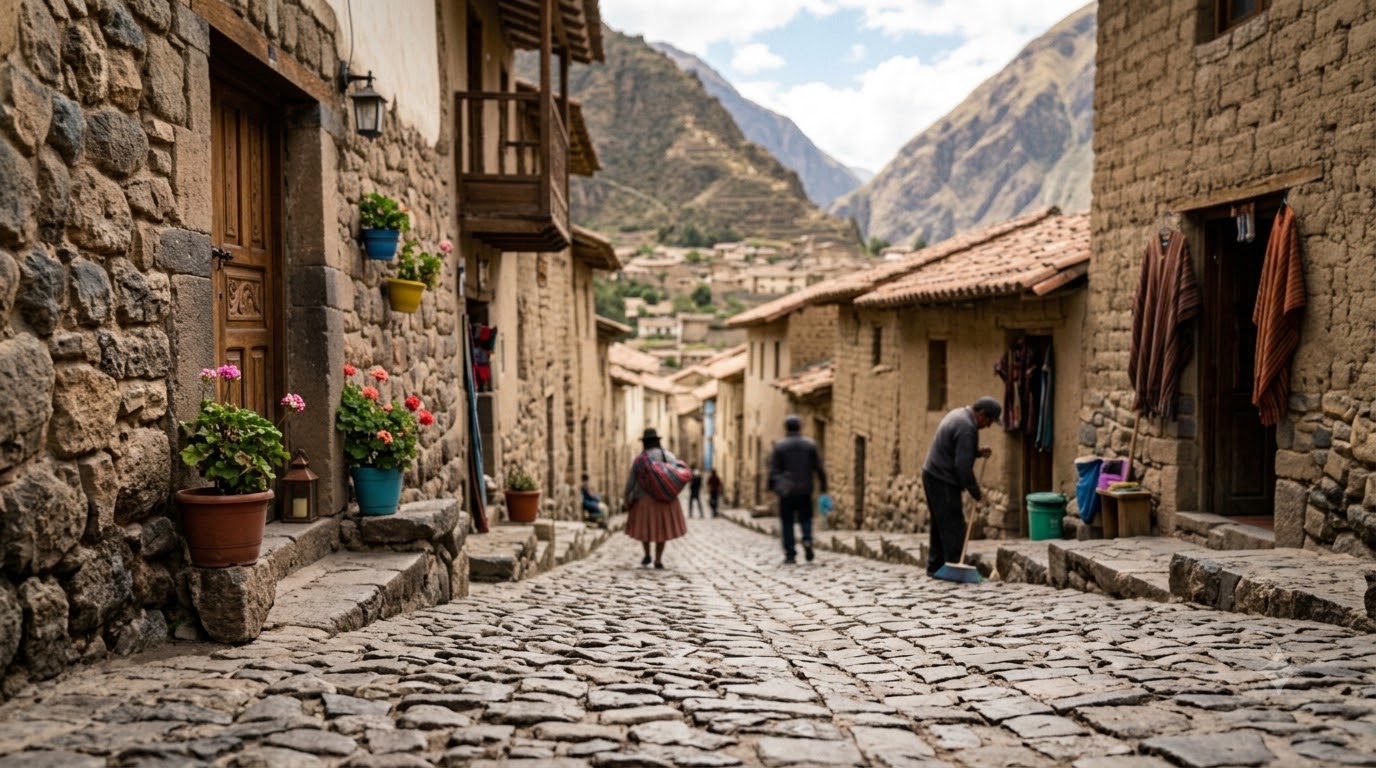
There are really four sensible bases here, and they spread out along the Sacred Valley rather than clustering in one spot. The old town wraps around the base of the ruins and holds the train station. A short way out you have the newer streets near the platform and the main road. Down-valley sits Urubamba, the biggest town in the area, and up the mountain sits Cusco, the region’s hub. The closer you sleep to the station, the less you have to think on the morning you catch the train.
The old town by the ruins
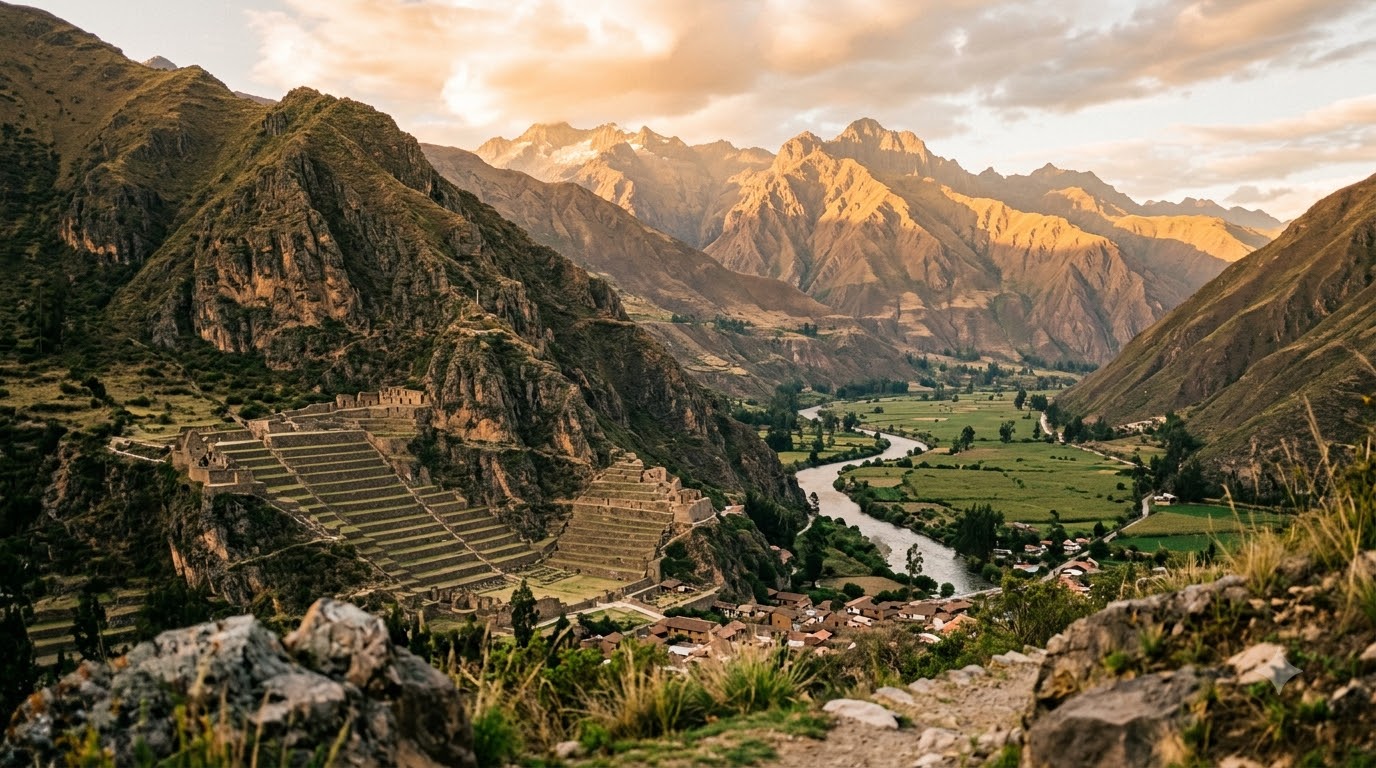
This is the postcard: cobbled lanes on the original Inca grid, water channels still running down the streets, and the terraces of the fortress looming over everything. It is compact, so you walk to the ruins, to dinner, and to the train platform without a taxi. The altitude here is the real draw, though. Because you are lower than Cusco, most people sleep and eat better on arrival, and that matters if you have just flown in.
The trade-off that photos hide: the old town is genuinely small, and the good rooms book out fast around train times and high season. Buildings are old stone, so some rooms are dim and cool, and a few sit up steep lanes with luggage to carry. It is also the most atmospheric spot, which means tour groups pass through by day. Mornings and evenings, once the buses leave, it goes quiet and it is lovely.
Best for: first-timers landing in the Andes, anyone catching an early train, and people who want to walk everywhere. The live map shows real prices across the old town, from simple guesthouses to a handful of high-end options in restored courtyards.
Near the train station and the main road
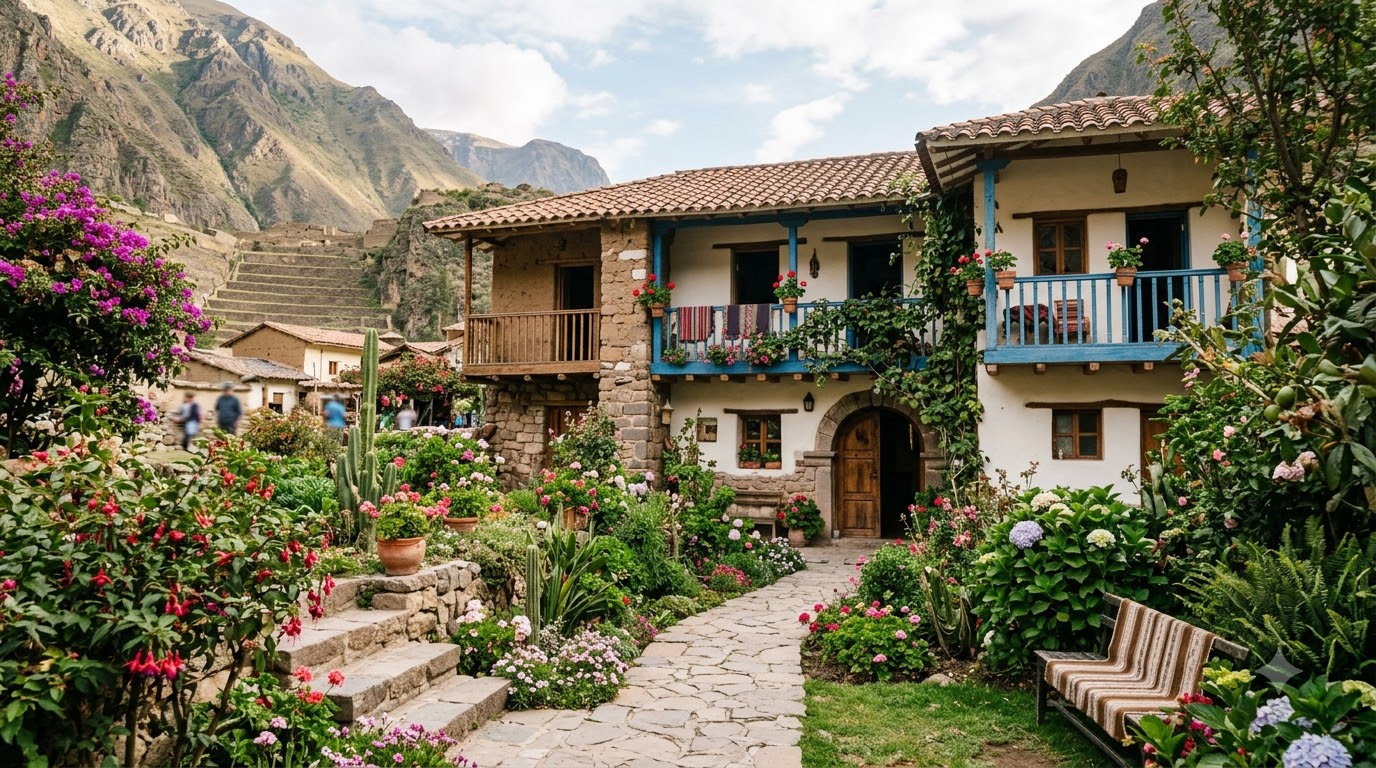
Just outside the old grid, the streets around the station and the main road into town are flatter, newer, and a little easier with a car or a lot of bags. You are still minutes on foot from the platform, so the early-train logistics stay simple, but you trade some of the cobbled charm for practicality. This is where several mid-range Ollantaytambo hotels sit, along with cafes that open early for the first departures.
What does not show in listings: this side of town is less scenic and can feel like a staging area, because everyone here is either arriving from Machu Picchu or leaving for it. It is quieter than the old town in one sense, no groups winding past your door, but the road itself carries taxis and collectivos through the day. If you value a short, flat walk to the train over storybook lanes, this is the smart pick.
Best for: travellers with an early train, anyone driving in from the airport, and people who want an easy exit without stairs.
Urubamba, down the valley
Urubamba is the largest town in the Sacred Valley, and it works as a base if you want more restaurants, more room types, and a bit more comfort than the old town offers. It sits lower and warmer than both Ollantaytambo and Cusco, and it is central to the valley, so day trips to Pisac, Moray, and the Maras salt pans are shorter from here. This is also where most of the valley’s upscale and resort-style properties are, spread out along the river.
The catch is distance. Urubamba is not walkable to the Ollantaytambo ruins or the train, so on Machu Picchu day you are booking a taxi or a shared van in each direction, and timing it against your departure. For a relaxed valley stay it is excellent. For a dawn train, it adds a moving part you have to get right.
Best for: couples and families who want space and food choice, travellers doing several valley sites, and anyone who wants a warmer, lower base.
Cusco instead
Cusco is the alternative base, and it is the one most people default to without thinking it through. It has by far the most hotels, restaurants, and nightlife, plus the airport, so it is the obvious landing point. The problem is altitude. Cusco sits noticeably higher than Ollantaytambo, and altitude sickness hits plenty of arrivals hard on the first night. That is exactly why guides suggest dropping into the Sacred Valley first and saving Cusco for the end of the trip, once you are acclimatised.
Cusco is also further from the Machu Picchu train. From here you have a longer transfer down to Ollantaytambo before you even board, which makes very early departures painful. As a city to explore it is superb. As the place to sleep the night before Machu Picchu, it is the harder option.
Best for: nightlife, the widest hotel choice, and travellers who have already acclimatised in the valley.
Which area is right for you
| Traveller type | Best area | Why |
|---|---|---|
| First time in the Andes | Old town by the ruins | Lower altitude, walkable, gentle first night |
| Early Machu Picchu train | Near the station | Flat, short walk to the platform |
| Couples | Urubamba | More restaurants and comfortable rooms |
| Families | Urubamba | Space, warmth, central for valley day trips |
| Budget / backpacker | Old town by the ruins | Guesthouses within walking distance of everything |
| Nightlife and city buzz | Cusco | Most bars, food, and hotel choice |
What to book first
Book your Machu Picchu entry and train before anything else, because both sell out and they lock your dates. Reserve the timed entry ticket through the official system, then a train seat, and only then your room, matching the hotel to the morning you leave. Decide next whether you want a car; if you are staying in the old town you do not need one, but for Urubamba and valley day trips it helps. Save tours like Maras and Moray for last, once your train times are fixed.
Live nightly prices from Booking, Airbnb, Hotels.com and more across every Ollantaytambo area — move the map or change your dates to compare.
Related where-to-stay guides
Frequently asked questions
Is Ollantaytambo expensive?
It is cheaper than Cusco for food and simple rooms, and cheaper than the resort side of Urubamba. You will find everything from basic guesthouses to a few high-end restored properties in the old town. The live map shows real current prices, which move with the season and with train demand.
Do you need a car in Ollantaytambo?
No, not if you stay in the old town or near the station, since you walk to the ruins, the restaurants, and the train. A car only helps if you base in Urubamba or plan to drive between several valley sites. Shared vans and taxis cover the routes most visitors need.
How many days in Ollantaytambo?
One or two nights suits most people: one before the Machu Picchu train and one to see the ruins and the valley without rushing. Because it sits lower than Cusco, many travellers spend their first Andes night here to acclimatise gently before going higher.
Is Ollantaytambo a good base for Machu Picchu?
Yes, it is the most convenient rail base in the valley, because the main Machu Picchu train departs from the edge of the old town. You can walk from many hotels straight to the platform, which removes the early-morning transfer that a Cusco base forces on you.
Should I stay in Ollantaytambo or Cusco first?
Sleep in Ollantaytambo or the Sacred Valley first, then Cusco. The valley is lower, so it is kinder on arrival, and altitude sickness is common for people who go straight to Cusco. Booking your entry ticket early lets you plan the valley days around it.