Where to Stay in Machu Picchu: Best Areas & Where to Book (2026)
By TravelguidestipUpdated 6 min readHow we earn
Hotel buttons open Stay22 (Booking.com, Agoda and others) and tour buttons open GetYourGuide. We may earn a commission at no extra cost to you.
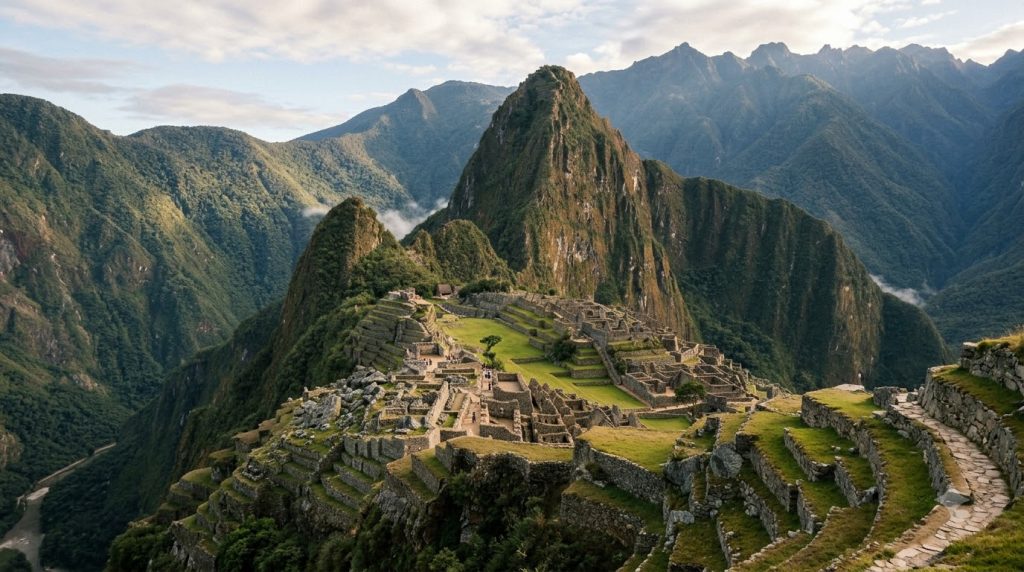
Our top choice
First time at Machu Picchu? Stay in Aguas Calientes.
Sleep at the base, catch the first bus up and beat the day-trippers to the gate.
Our pick there: El MaPi byInkaterra: Av. Pachacutec 109, Machu Picchu Pueblo, steps from the town centre
4 areas: where to sleep, what to book nearby
Just flew in, feeling the altitude
Ollantaytambo
Quick answer: Base in Aguas Calientes if you want to catch the first bus up before the crowds, or in Ollantaytambo if you’d rather sleep lower, in a nicer town, and take the train in on the day.
Check prices: live rates and availability for your dates
The first thing to understand about where to stay in Machu Picchu is that you can’t. There is no hotel on the ruins beyond one very expensive lodge at the gate. Everyone else sleeps in a town below and climbs up, so the real decision is which town you climb from.
The areas at a glance
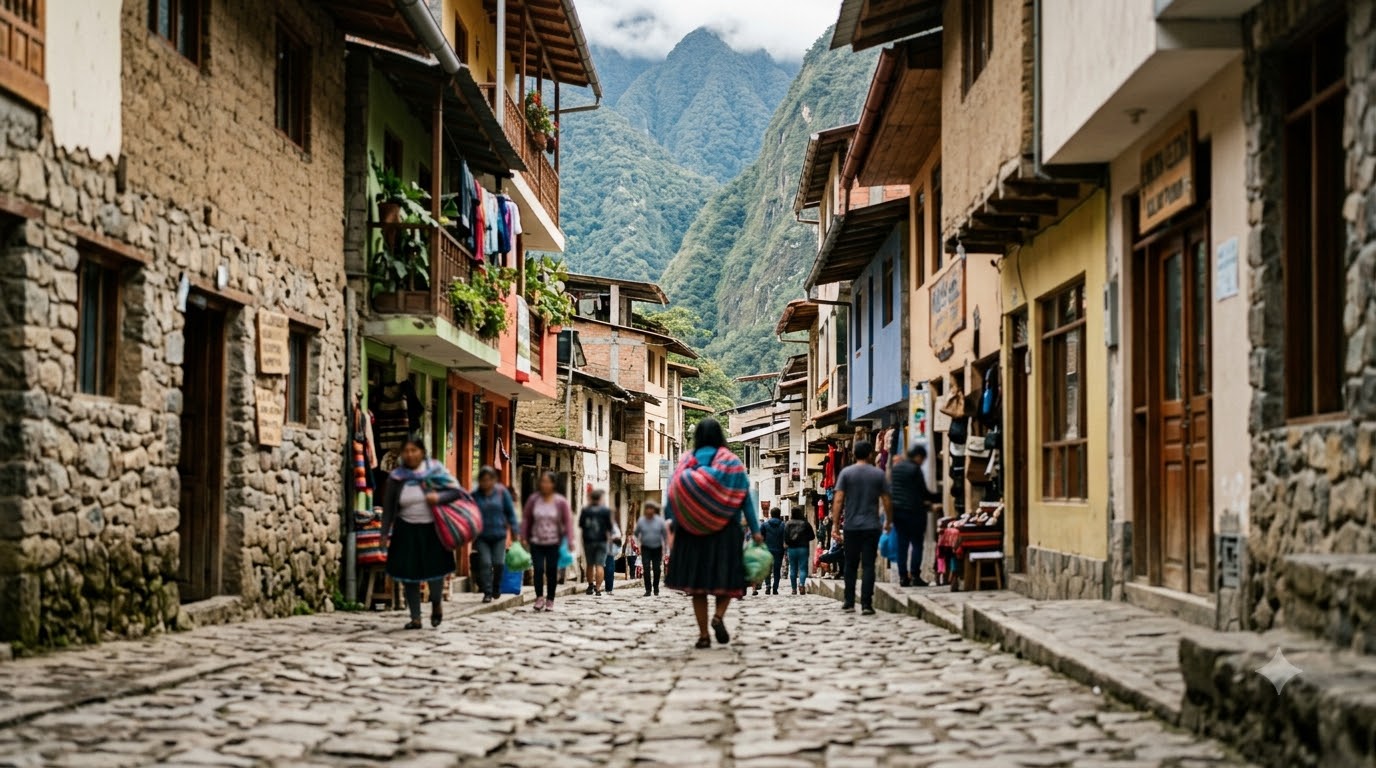
Machu Picchu sits on a ridge you reach by bus from the valley floor. Four bases matter, strung along one line. Aguas Calientes is the town directly under the site, the only place you can wake up and be first in the queue.
Ollantaytambo and the wider Sacred Valley sit further down the train line, lower and gentler. Cusco, the region’s hub, is the highest and furthest but has by far the most rooms and flights. Where you sleep decides how early you can stand at the gate.
Aguas Calientes at the bottom
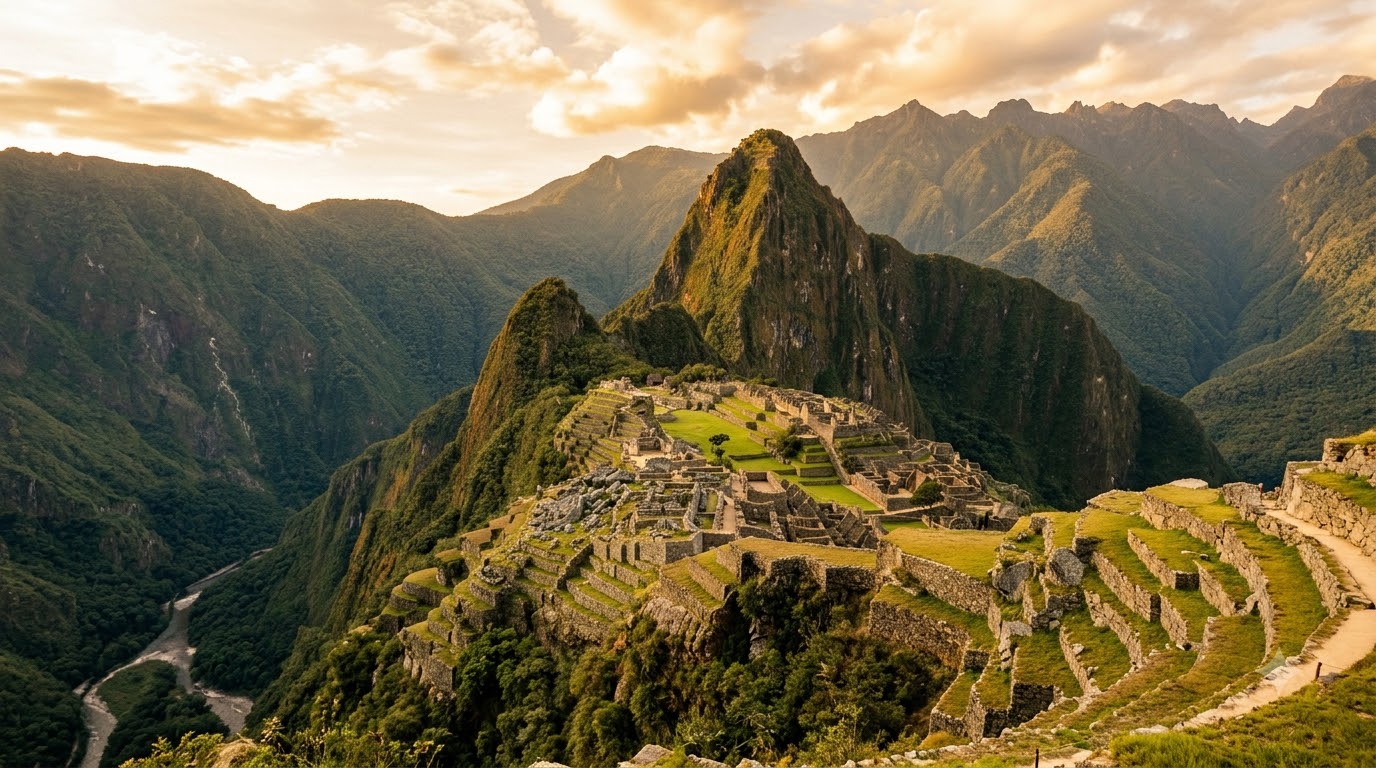
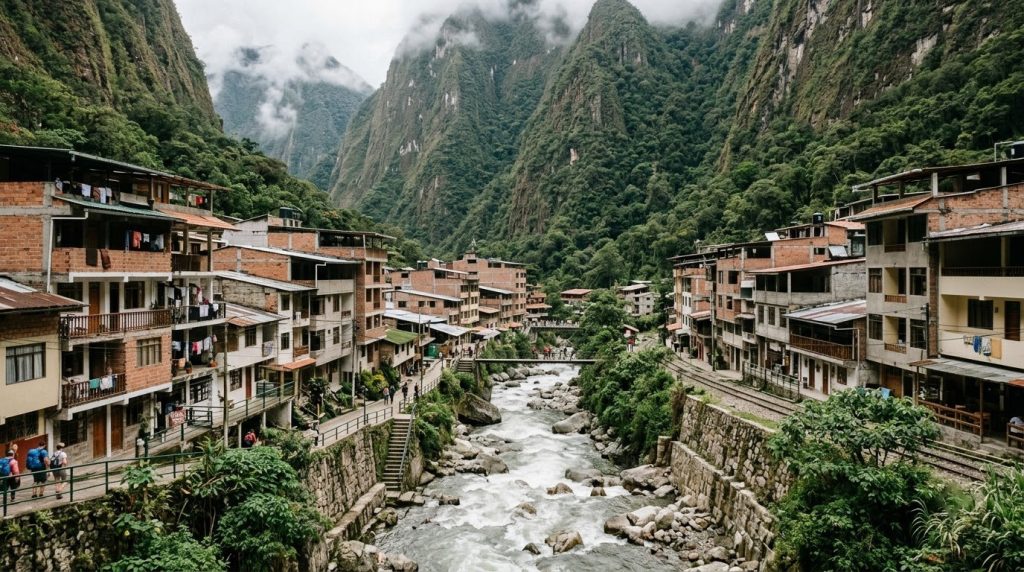
Aguas Calientes, officially Machu Picchu Pueblo, is the only town at the site, and its single advantage is enormous: the first buses up leave from here at dawn, so you can be inside the gate before the day-trippers arrive on the morning trains. That head start is the whole reason people put up with the place.
And there is a fair amount to put up with. It’s a cramped canyon town built entirely for one purpose, so Machu Picchu hotels here run pricier and plainer than anything of equal money elsewhere in Peru. Restaurants push tourist menus, the river is loud all night, and there’s little to do once you’re back down.
You come, you sleep, you climb, you leave. Pick a room close to the bus queue rather than one with a “view,” because the view here is a steep green wall, not the ruins. Everything is walkable; there are no cars in town anyway.
Note the current entry system before you commit. Tickets are timed and sold by the government, and both the ticket and the bus can sell out in peak months, so book those before your bed. The official portal is the Ministry of Culture’s site (Machu Picchu ticket portal, 2026).
Our pick in Aguas Calientes: El MaPi byInkaterra (Av. Pachacutec 109, Machu Picchu Pueblo, steps from the town centre).
Ollantaytambo in the valley
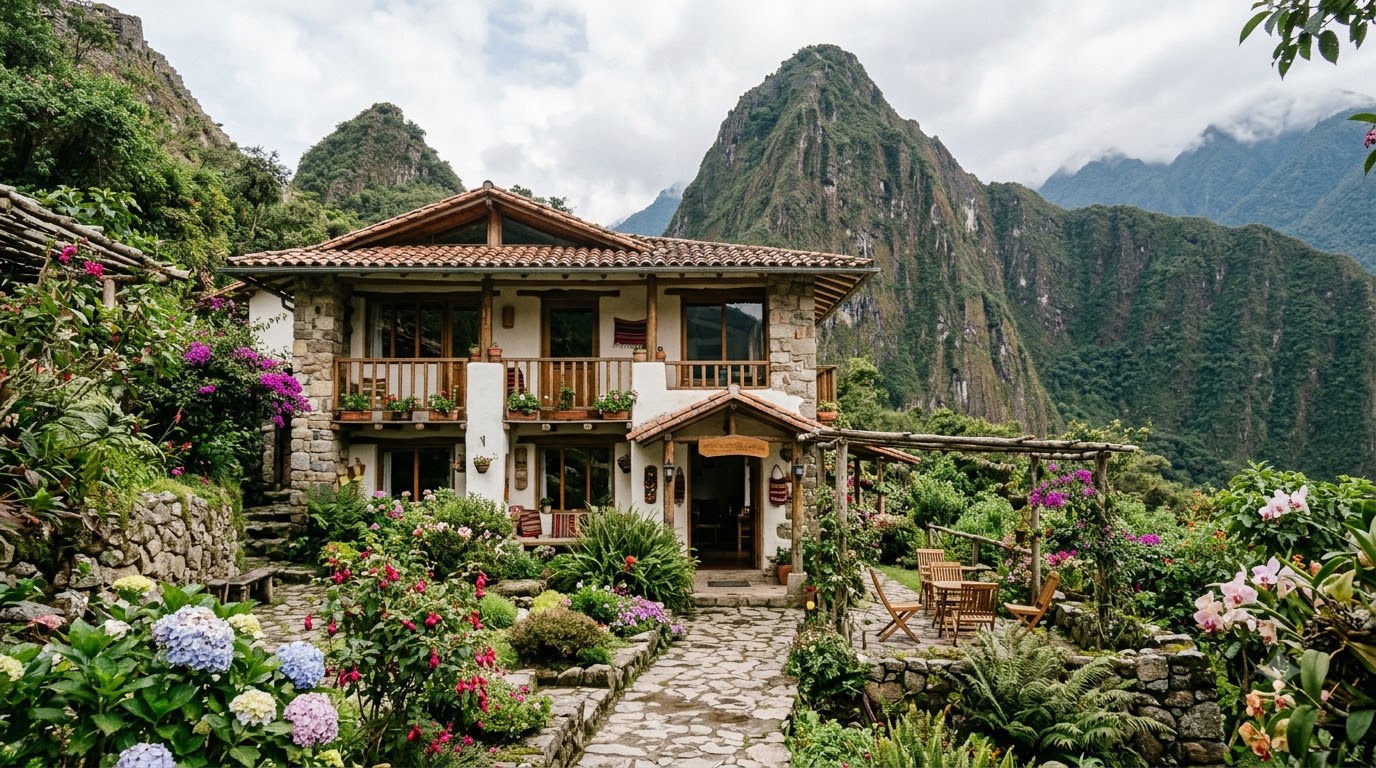
Ollantaytambo is the smarter base for a lot of people, and altitude is why. It sits well below Cusco, so if you’ve just flown in and feel the thin air, a night here is far kinder on your body than a night up top. It’s also a genuinely lovely Inca town, still laid out on its original grid, with its own ruins above the square.
The trade-off is the train. Ollantaytambo is the main station for the line into Aguas Calientes, so you don’t climb on the morning you visit; you ride in, then bus up, which means a later start and thicker crowds at the gate than the Aguas Calientes sleepers get. For a relaxed trip that’s a fine deal.
For dawn light on an empty citadel, it isn’t. Stay in the old town by the ruins and you’ll walk to the station, the restaurants and the market without a car. This is one of the calmest, most pleasant places to sleep in the whole valley.
Cusco, the regional hub
Cusco is where nearly everyone lands and where the choice, and the risk, is greatest. It has the airport, hundreds of hotels across every budget, real restaurants and nightlife, and the history to fill several days on its own. If you want one base for the whole region, this is it, and plenty of people day-trip to Machu Picchu from here on a long, early train.
But Cusco is high, roughly 3,400 metres, and that catches people out. Arriving off a flight and trying to sprint to the ruins the next morning is how the trip goes wrong; the altitude flattens you and the day gets rushed.
Most seasoned visitors sleep in Cusco a night or two to acclimatise, then move down to the valley before Machu Picchu, not up to it. Peru’s official tourism board has sensible acclimatisation notes worth reading first (Peru.travel, 2026). Base in the San Blas quarter for character and quiet, or near the Plaza de Armas to be central.
The wider Sacred Valley
The Sacred Valley towns beyond Ollantaytambo, mainly Urubamba and Yucay, are where the region’s calmest, greenest hotels sit, and where many upscale lodges and spa properties have clustered. It’s lower than Cusco, warmer than the mountains, and set among fields and river rather than traffic, which makes it the choice for couples and anyone wanting to slow the trip down.
The catch is distance. You’re further from both Cusco’s flights and the Machu Picchu train, so you’ll drive to Ollantaytambo to catch the line, and a car or a hired driver becomes genuinely useful here in a way it isn’t in the walkable towns.
Ruins like Pisac and Moray are close, which suits a two or three day valley stay rather than a quick dash. Come here to rest, not to be first at the gate.
Which area is right for you
| Traveller type | Best area | Why |
|---|---|---|
| First-timer, one visit | Aguas Calientes | Sleep at the base, catch the first bus, beat the day-trippers |
| Just flew in, feeling the altitude | Ollantaytambo | Much lower than Cusco, a gentle place to land |
| Couples wanting calm | The Sacred Valley (Urubamba) | Green, quiet, the nicest lodges in the region |
| Wants nightlife and choice | Cusco | Most hotels, restaurants and history, plus the airport |
| Car-free, no driving | Aguas Calientes or Ollantaytambo | Both are walkable, no car needed at all |
| Families on a slower plan | The Sacred Valley | Space, gentler altitude, easy day trips to nearby ruins |
What to book first
Book in this order, because the scarce thing here isn’t the room. First, buy your timed Machu Picchu entry ticket and your up-and-down bus; in peak season these sell out well before hotels do. Second, lock your train tickets between the valley and Aguas Calientes, since seats are limited and prices climb.
Third, choose your bed to match the plan, at the base for a dawn start or in the valley for altitude. Only then add guided tours or the extra Huayna Picchu climb. The live map below shows real, current prices across all four bases so you can compare where to stay in Machu Picchu against what each night actually costs.
Live nightly prices from Booking, Airbnb, Hotels.com and more across every Machu Picchu area — move the map or change your dates to compare.
Related where-to-stay guides
Frequently asked questions
Can you actually sleep at Machu Picchu?
Not really. There is a single lodge at the entrance gate that charges accordingly, and everyone else sleeps in a town below and rides up. In practice, deciding where to stay in Machu Picchu means choosing between Aguas Calientes, Ollantaytambo, Cusco or the Sacred Valley.
Is Machu Picchu expensive?
It’s the priciest part of a Peru trip. The entry ticket, the bus and the train each cost separately and add up, and Aguas Calientes hotels charge more for less because everything is trucked or trained in. The valley and Cusco give you far better rooms for the money.
How many days do you need?
Give it three at least. Most people spend a night or two acclimatising in Cusco or the valley, then a night near the ruins before the climb, then the visit itself. Trying to see it the day after landing rushes the altitude and the site.
What’s the best area for a first-timer?
Aguas Calientes, for the single reason that you can take the first bus up and stand inside a near-empty citadel before the trains arrive. It isn’t a charming town, but no other base lets you beat the crowds to the gate.
Do you need a car?
No, and in the walkable towns a car is a nuisance. Aguas Calientes has no roads in, and Ollantaytambo and Cusco are best on foot. A car or driver only earns its keep if you base out in the wider Sacred Valley and want to roam between the ruins.