Disclosure: Some links in this guide are affiliate links. If you book or buy through them, we may earn a small commission at no extra cost to you — it helps keep our guides free.
Quick answer: Stay in the historic centre around the Plaza de Armas if it is your first visit, because the monastery, the cathedral and most restaurants are all on foot from there. Choose Yanahuara if you want a quieter base and do not mind a short ride into the middle.
Arequipa is a city built in white volcanic stone, sitting under three volcanoes on the edge of the southern desert. Working out where to stay in Arequipa mostly comes down to how much you want everything within walking distance versus how much quiet you are willing to pay for in a short taxi ride. The one thing first-timers get wrong is timing: the city sits far lower than Cusco, so a lot of people build their whole trip around it.
Affiliate Disclosure: This post contains affiliate links. We earn a small commission if you book through our links, at no extra cost to you.
The areas at a glance
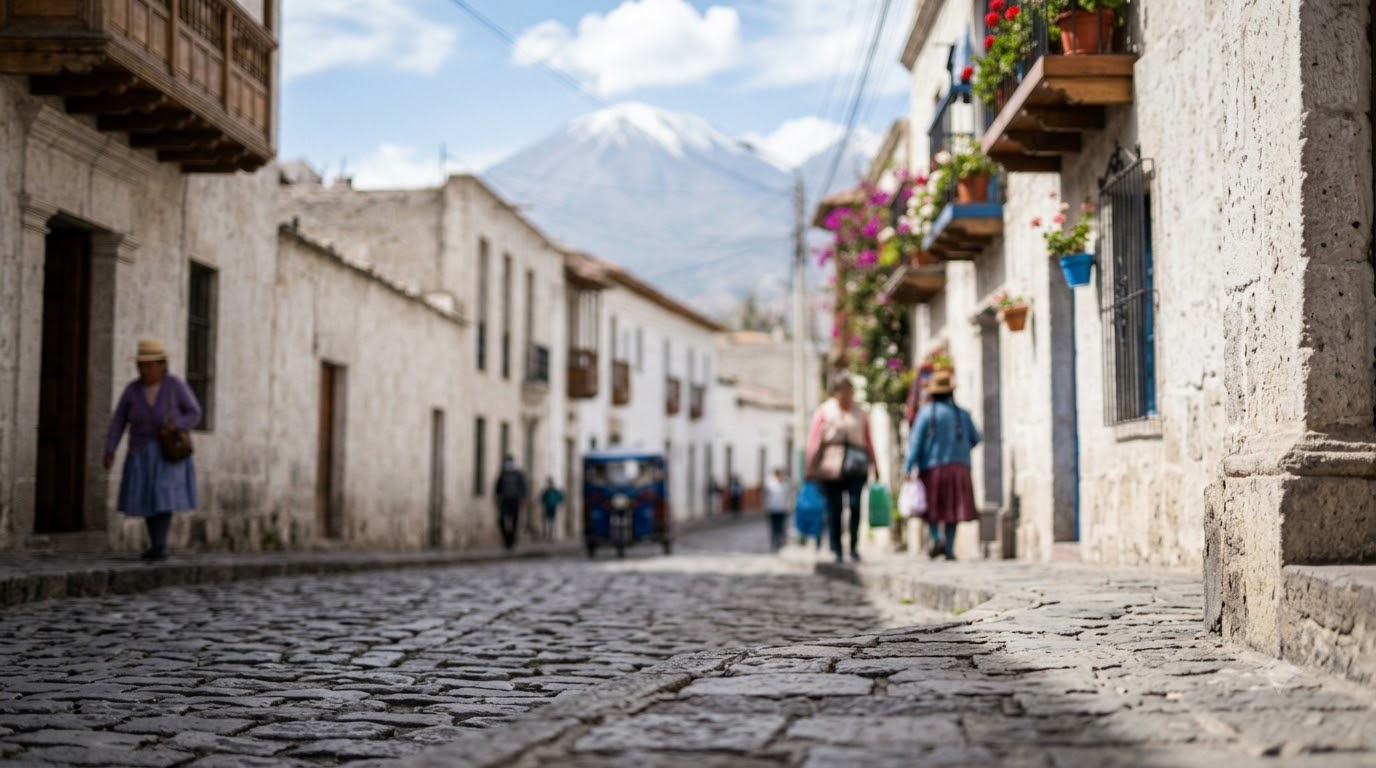
Arequipa is compact by South American standards, and almost everything a first visit needs sits inside or just beside the historic centre. The Plaza de Armas is the anchor. Yanahuara and San Lazaro sit within a short distance of it, one across a small valley and one folded into the old lanes right behind the plaza. Vallecito is a leafier residential pocket a little further out. You can walk between most of these, and a ride across the whole compact core is short.
The historic centre and Plaza de Armas
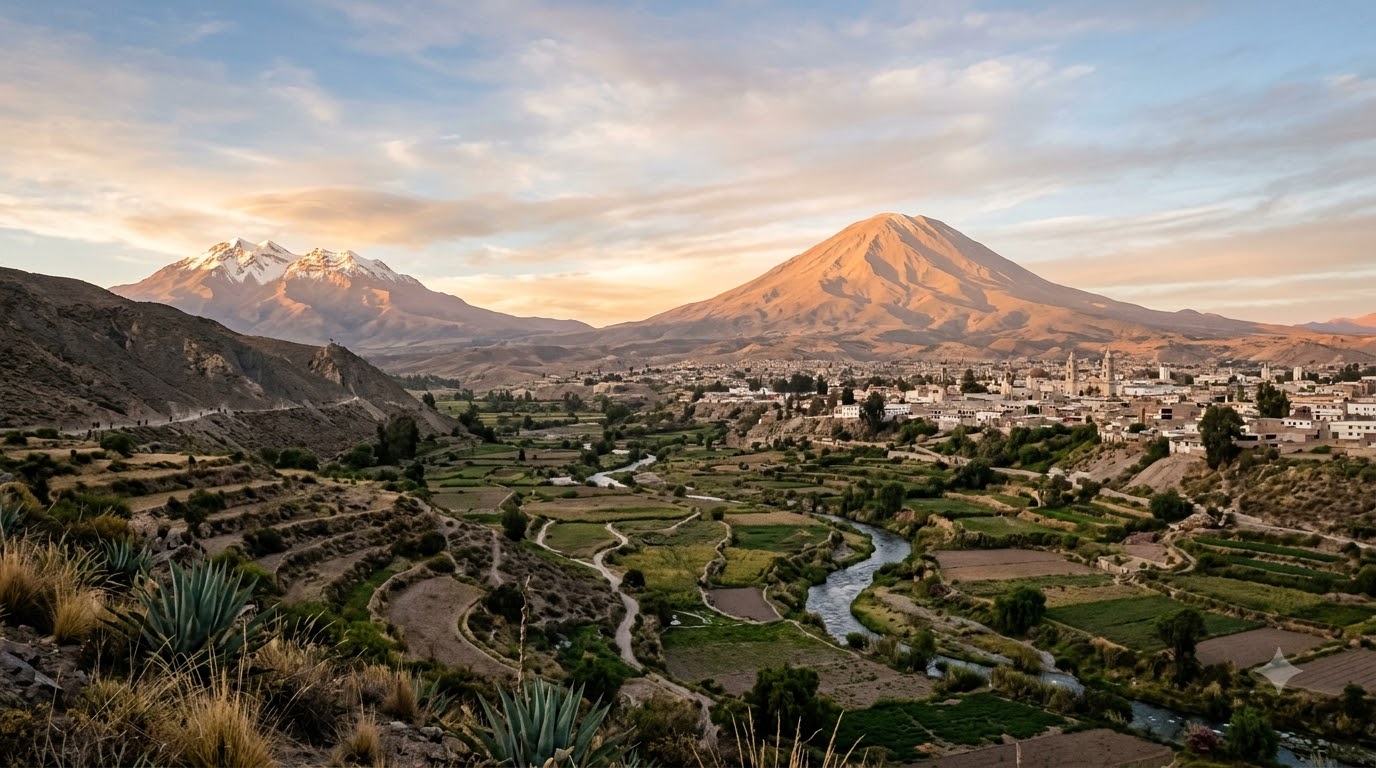
This is the postcard Arequipa, and for most visitors it is the right call. The Plaza de Armas, the cathedral, the Santa Catalina monastery and the bulk of the good restaurants all sit within a few blocks, so you can arrive, drop your bags and see the main things without ever getting in a car. The whole core is a UNESCO World Heritage Site, listed for its white sillar stone architecture (UNESCO).
Who it suits: first-timers, anyone on a short stay, and travellers who would rather walk than plan transport. The trade-off that does not show in listing photos is noise. The streets nearest the plaza carry traffic, church bells and late diners, and rooms facing the street can be loud. If you are a light sleeper, look for a room set back around a courtyard, which many of the old sillar buildings have.
Getting around here is simple: your feet. You will only need a taxi for the airport or a day trip out to the canyon country.
Yanahuara
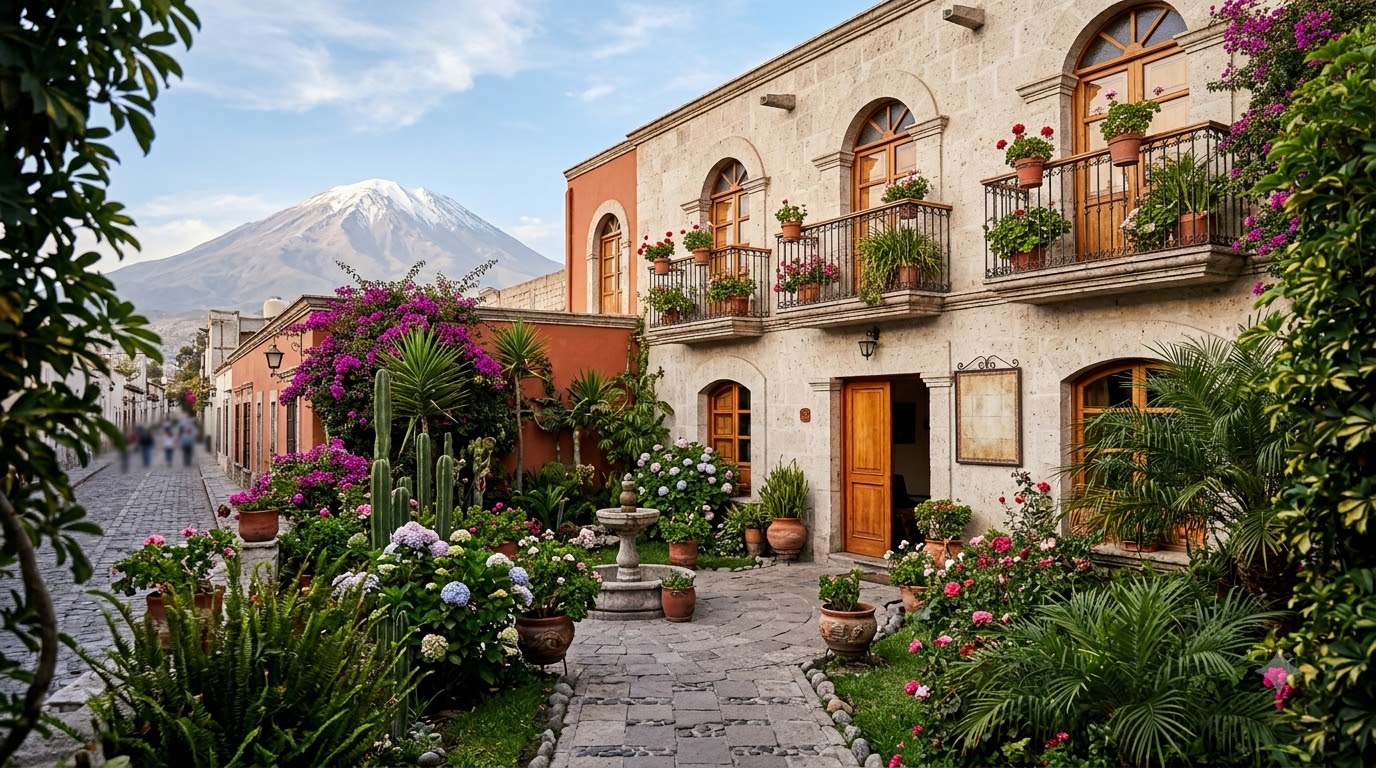
Yanahuara is the calmer alternative, and it is the area I point people to when they want the centre without the noise. It sits just across the small Chili river valley, close enough to walk to the plaza in a reasonable stroll, but with quieter residential streets and its own famous viewpoint looking back at the volcano El Misti. The mood is more local and more settled.
Who it suits: returning visitors, couples, and anyone staying more than two or three nights who wants somewhere to come back to that feels like a neighbourhood rather than a tourist strip. The trade-off is that you are slightly removed. At night you may prefer a short taxi back rather than the walk, and there are fewer places to eat right on your doorstep, though the ones that are there tend to be good.
This is a strong pick if you are using Arequipa to acclimatise before heading higher, because the streets are quiet enough to actually rest.
San Lazaro
San Lazaro is the oldest corner of the city, a knot of narrow white lanes tucked just behind the plaza where Arequipa first grew. It is walkable to everything the centre offers, but it feels a world away from the traffic, with small plazas, flowering walls and a slower pace. Some of the most characterful small guesthouses in the city sit in these lanes.
Who it suits: photographers, couples, and travellers who want charm and central access in one. The trade-off is practical. The lanes are steep and narrow, some are stepped rather than paved for cars, and dragging a large suitcase to your door can be a workout. Confirm how close a taxi can actually get before you book. For a lot of people that awkwardness is exactly why the area stays quiet and pretty.
Vallecito
Vallecito is a leafy residential district a short distance south of the centre, and it works for travellers who prioritise calm and value over being able to step out onto the plaza. It is greener and more spread out, with a more suburban feel, and rooms here often cost less than an equivalent spot right in the core.
Who it suits: longer stays, budget-conscious travellers, and anyone with a car who wants easier parking than the tight centre allows. The trade-off is distance. You will rely on short taxi rides more often, and there is less to walk to at night. If your plan is early starts for Colca Canyon trips and quiet evenings in, that is not much of a cost.
Which area is right for you
| Traveller type | Best area | Why |
|---|---|---|
| First-timer | Historic centre | Everything on foot, no transport to plan |
| Couples | San Lazaro or Yanahuara | Character and quiet, still walkable to the plaza |
| Families | Yanahuara | Calmer streets, space, an easy ride to the sights |
| Budget / backpacker | Vallecito or the centre | Lower rates, plenty of hostels near the plaza |
| Acclimatising before Cusco | Yanahuara | Quiet enough to rest, close enough to explore slowly |
| Car-free short stay | Historic centre | Walk to almost everything, taxi only for day trips |
What to book first
Book your room first, and pick the area before you compare properties, because in Arequipa location decides how much of the city you see on foot. Sort out transport second: most visitors do not need a rental car in the compact centre, so only add one if you plan to self-drive out to the canyons rather than take a tour. Book Colca Canyon and volcano trips last, once your dates and your base are fixed, since most run as organised day or overnight trips and can be arranged after you arrive. For planning routes and official visitor information, the national tourism board is a reliable starting point (PromPerú). The live map below shows real prices across these areas so you can compare.
Live nightly prices from Booking, Airbnb, Hotels.com and more across every Arequipa area — move the map or change your dates to compare.
Related where-to-stay guides
Frequently asked questions
Is Arequipa expensive?
No, it is one of the better-value cities in Peru, and generally cheaper than Cusco for a similar standard of room. You will find everything from backpacker hostels to restored colonial hotels, and the centre has the widest spread. The live map shows current rates so you can see where the value sits for your dates.
Do you need a car in Arequipa?
No, not for the city itself. The historic centre is walkable and taxis are cheap for the odd longer hop, so most visitors never rent. A car only makes sense if you intend to self-drive out to Colca Canyon or the coast, and even then many people prefer to join a tour and skip the mountain roads.
How many days do you need in Arequipa?
Two full days covers the city itself, the monastery, the plaza and the viewpoints without rushing. Add one or two more if you want to do Colca Canyon, which usually runs as a day trip or an overnight. Many travellers stretch it a little longer to acclimatise before heading up to Cusco.
Which area is best for a first time visit?
The historic centre around the Plaza de Armas. It puts the main sights, the restaurants and the transport connections within walking distance, so you lose no time working out how to get around. If you want it quieter, Yanahuara is only a short ride away and still close to everything.
Is Arequipa a good place to acclimatise?
Yes, and this is a big part of why people stop here. Arequipa sits well below Cusco and the usual highland routes, so a couple of nights here lets you adjust gently before going higher. Yanahuara or Vallecito are the calmest bases for actually resting, while the centre keeps you closest to Arequipa hotels and the sights.