Disclosure: Some links in this guide are affiliate links. If you book or buy through them, we may earn a small commission at no extra cost to you — it helps keep our guides free.
Quick answer: Stay in Sligo town if you want restaurants, pubs and live music you can walk to; base yourself in Strandhill or Rosses Point if you came for the beach, the surf and the mountain views.
Here is the thing most people get wrong: they come for what is around Sligo, not for the town itself. Yeats country, Benbulben, the surf breaks and the strands are the reason you booked the flight, so where to stay in Sligo really comes down to how close you want to sleep to the water and the hills. Get that call right and the rest of the trip falls into place.
Affiliate Disclosure: This post contains affiliate links. We earn a small commission if you book through our links, at no extra cost to you.
The areas at a glance

Sligo is a small town with a scattering of coastal villages within a short drive, all facing the flat-topped hump of Benbulben. The town sits inland on a river, a compact centre you can cross on foot. Strandhill and Rosses Point are the two beach villages, one on each side of the bay, both close enough for a day trip but nicer to actually stay in if the coast is your reason for coming. North of everything, out toward Benbulben and Yeats’ grave, the accommodation thins out into countryside. Four areas cover almost every kind of trip.
Sligo town
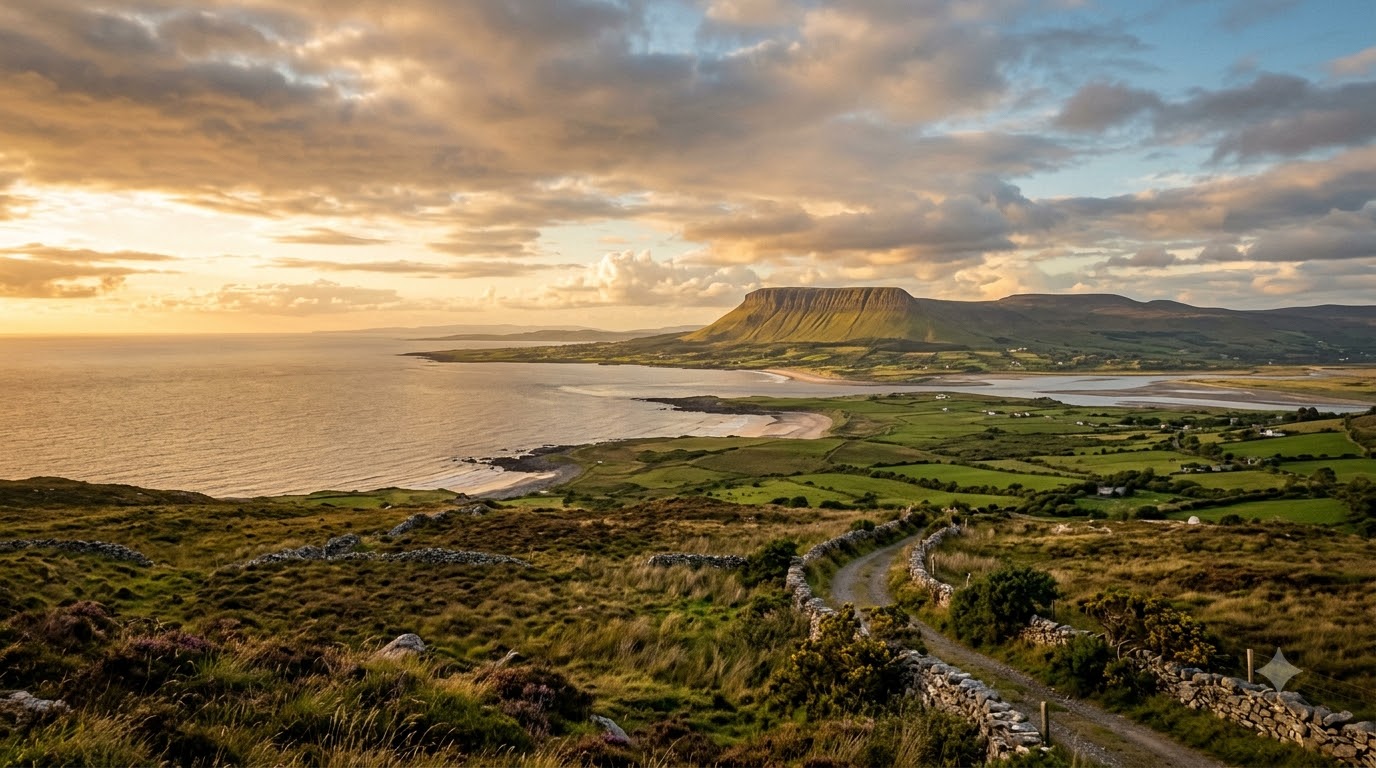
The town is the practical base and the one with the most rooms, food and Sligo hotels in one walkable patch. You get restaurants, a real pub-music scene, cafes for the morning, and a river running through the middle. If you are travelling without a car, this is the only area that works, because buses and onward trains leave from here and you can fill an evening without driving anywhere.
The trade-off does not show in the listing photos: the town itself is not the scenery. You are looking at streets and shopfronts, not mountains and sea. That is fine for a night or two and it is genuinely handy, but if you pictured waking up to a view, you will be driving to find it every morning. Couples who want dinner and drinks, and anyone arriving by bus, do best here. Ask whether parking is included, since the central streets fill up.
Strandhill
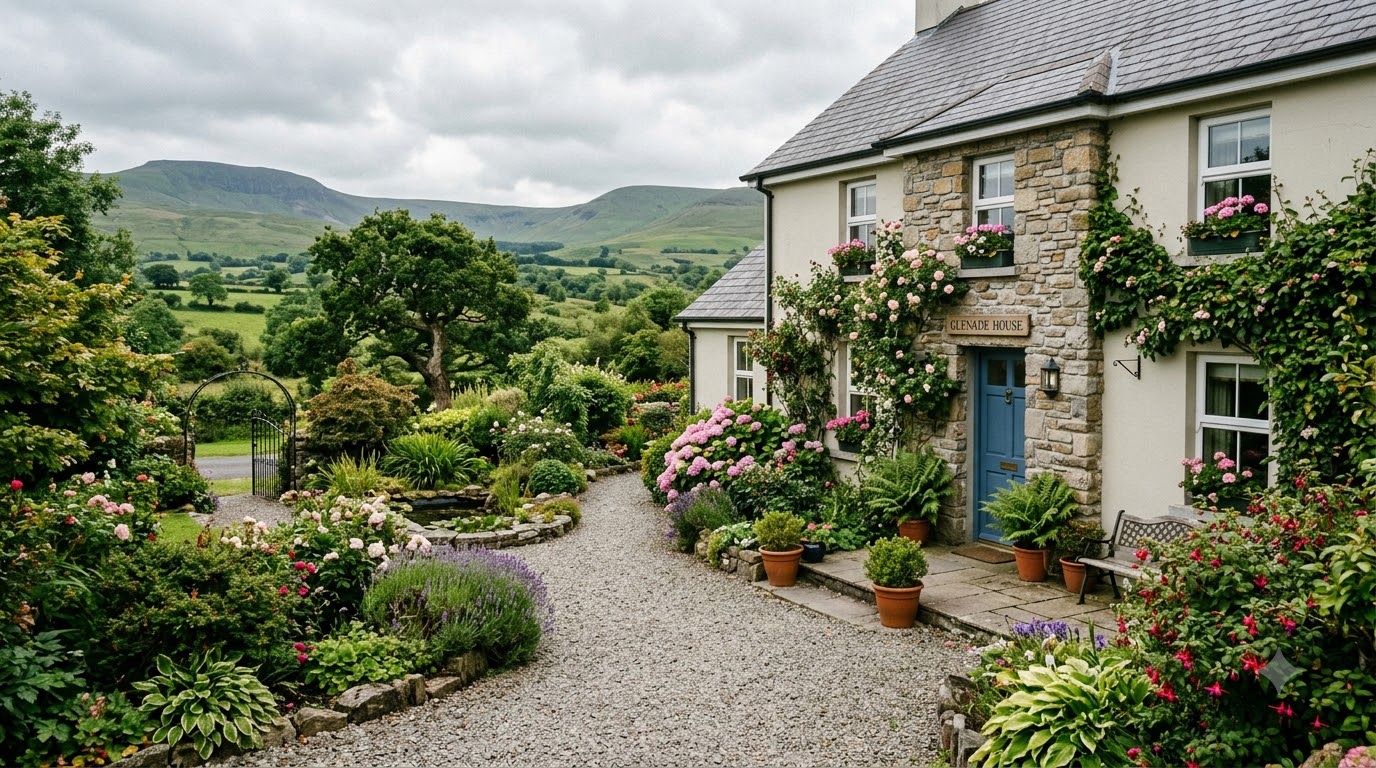
Strandhill is the surf side, a village strung along a beach that faces straight into the Atlantic swell. This is where you stay if you came for the waves, the wetsuit-and-board crowd, the seaweed baths and long walks with Knocknarea rising behind the dunes. It has a small cluster of cafes, a couple of pubs and food spots, so an evening here is easy without going back into town.
The catch is that Strandhill’s beach is a surf and walking beach, not a lazy swimming one; the currents are strong and it is not the place for small children to paddle unwatched. It is also small, so choice is limited and it books out in summer and around surf weekends. Surfers, active couples and anyone who wants to hear the sea from the room should look here first. A car helps but you can survive a few days without one.
Rosses Point
Rosses Point sits on the opposite arm of the bay, a quieter, greener village with two sheltered strands and a well-known links golf course. It suits families and calmer visitors better than Strandhill: the water is gentler, the beaches are the kind you can actually swim off on a good day, and the mood is more residential than party. You get views back across the bay to Benbulben that are hard to beat anywhere in the county.
Because it is residential, there is less to do in the evening, fewer places to eat, and you will likely drive into town or to Strandhill for a bigger night out. That quiet is exactly the point for some people and a drawback for others. Families, golfers and couples after calm all fit here. A car makes it comfortable, since the village is set apart from the rest.
Out toward Benbulben
North of town, the land opens toward Benbulben and the countryside that Yeats wrote about, with his grave at Drumcliffe under the mountain. Staying out here means guesthouses, B&Bs and the odd rural stay rather than a village with a main street, and it puts you closest to the walks, the forest trail loops and the big open views. The Benbulben Forest Walk is managed as public forest land by Coillte, so you can plan a morning on the trails before anything else opens.
This is the most scenic base and the least convenient one. You need a car, full stop, and you will drive for every meal, coffee and pint. There is no wandering out for dinner. People who want to walk, photograph the mountain at first light, or simply sleep surrounded by countryside get the most from it. If you like a village to stroll to in the evening, this is not it.
Which area is right for you
| Traveller type | Best area | Why |
|---|---|---|
| First-timer | Sligo town | Everything on foot, easy to fill an evening, central for day trips |
| Couples | Sligo town or Rosses Point | Good food and pubs in town, or quiet bay views out at the Point |
| Families | Rosses Point | Gentler beaches, calmer village, room to spread out |
| Surfers | Strandhill | On the break, wetsuit-and-board culture, sea from the door |
| Car-free | Sligo town | Buses and trains leave from here; the villages need wheels |
| Walkers and photographers | Out toward Benbulben | Closest to the trails and the mountain, best morning light |
What to book first
Book your room around the reason you came, not the other way round. If it is surf, start in Strandhill; if it is beaches and calm, Rosses Point; if it is food, music and no car, the town. Next, decide on transport, because everything except the town centre assumes you have a car, and Sligo works as a stop along the Wild Atlantic Way that rewards driving. Then slot in tours, seaweed baths or a surf lesson once the base is locked. The live map below shows real prices by area so you can compare what each part of the bay actually costs before you commit.
Live nightly prices from Booking, Airbnb, Hotels.com and more across every Sligo area — move the map or change your dates to compare.
Related where-to-stay guides
- Where to Stay in Donegal
- Where to Stay in Clifden
- Where to Stay in Kenmare
- Where to Stay in Adare
- Where to Stay in Howth
Frequently asked questions
Is Sligo expensive?
Sligo is generally cheaper than Dublin or Galway, with a spread from budget guesthouses to a few high-end coastal stays. The town has the widest range at the mid-range level, while the beach villages can climb in peak summer. Prices swing with the season, so the live map is the honest way to compare.
Do you need a car in Sligo?
For the town alone, no. To get the most out of Strandhill, Rosses Point, Benbulben and Yeats country, yes, a car makes a real difference. Bus links reach the main villages but they are infrequent, so a car turns a cramped itinerary into an easy one.
How many days do you need in Sligo?
Two nights covers the town and one beach; three or four lets you fold in the surf, a mountain walk and the Yeats sites without rushing. Sligo also works well as a base for a wider northwest trip, so many people stay longer and drive out each day.
What is the best area for a first-time visitor?
The town centre. It puts food, pubs and transport on your doorstep and sits central to every day trip, so you never feel stranded. Once you know you want beach or surf mornings, shift a night out to Strandhill or Rosses Point.
Which area is best for the beach?
Rosses Point for swimming and family strands, Strandhill for surf and big Atlantic walks. They sit on opposite arms of the same bay, so plenty of visitors split their stay, a night or two on each, and get both moods of the coast in one trip.