Disclosure: Some links in this guide are affiliate links. If you book or buy through them, we may earn a small commission at no extra cost to you — it helps keep our guides free.
Quick answer: Donegal town is the best base for most first-timers, central and easy to reach. Drivers chasing the coast should sleep further north around Dunfanaghy or out near Slieve League instead.
The first thing to sort out is the name. Donegal town is a small, tidy place around a triangular square; County Donegal is one of the largest counties in Ireland, and it wraps the whole north-west corner. When people ask where to stay in Donegal they usually mean the county, and that changes the answer completely. The county is big, and one base will not cover it.
Affiliate Disclosure: This post contains affiliate links. We earn a small commission if you book through our links, at no extra cost to you.
The areas at a glance
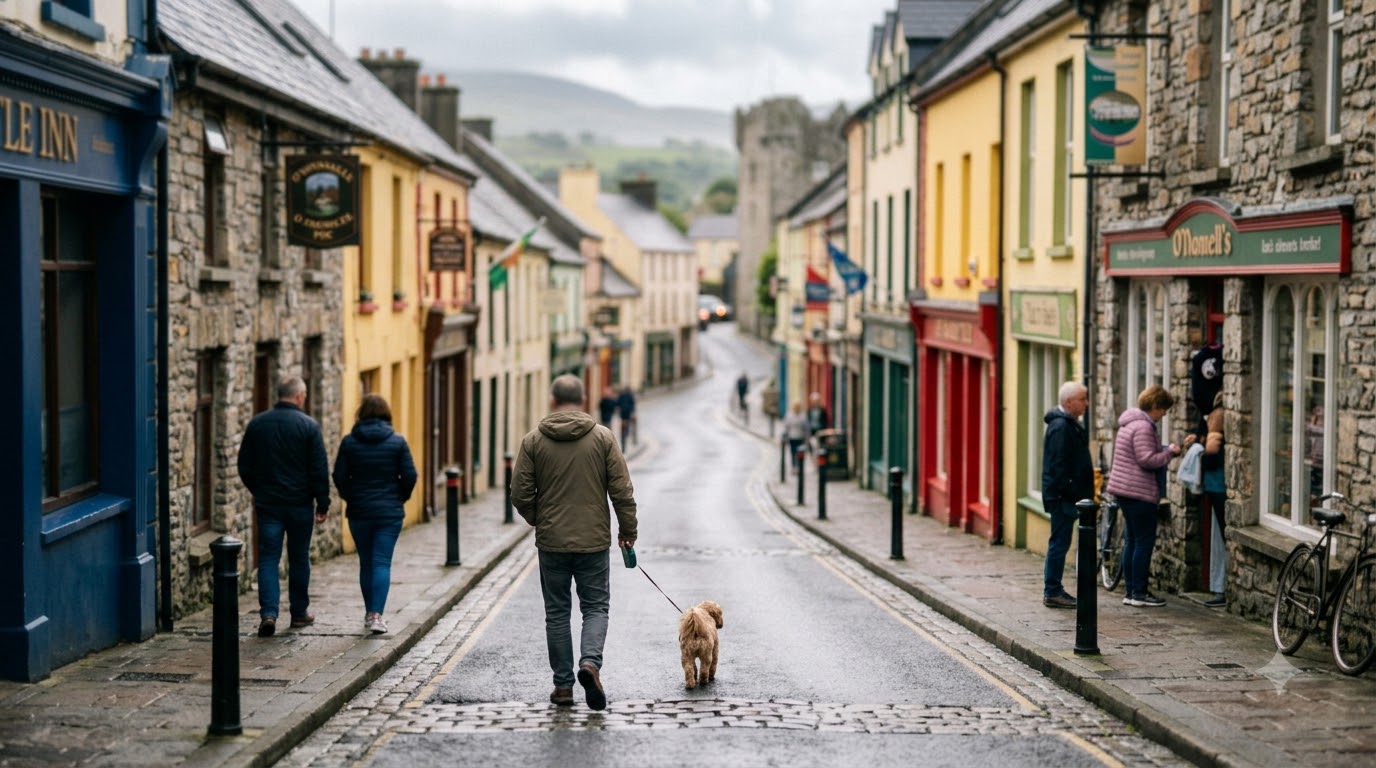
Think of Donegal as three or four trips stitched together. Donegal town sits in the south, near the border with Sligo and Leitrim, and it is where most visitors land first. West of it, the coast climbs toward Killybegs and the Slieve League cliffs. North of that lie Ardara and the weaving villages, then the far north around Dunfanaghy, Gweedore and the beaches of the Wild Atlantic Way. The distances between these are real, and the roads are slow and beautiful, so pick your base by which stretch of coast you actually want. A useful rule: decide whether the cliffs or the beaches matter more to you, because chasing both from one bed means most of the day in the car.
Donegal town
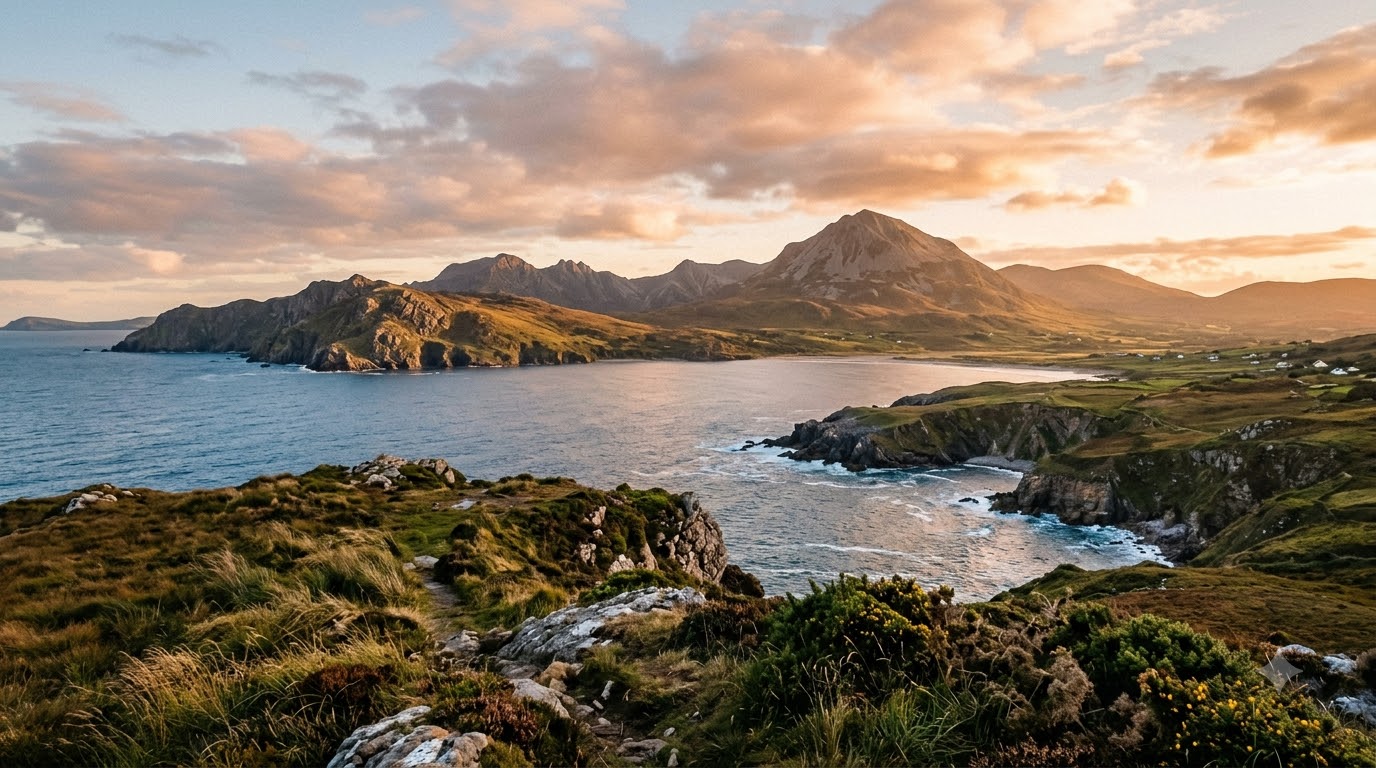
Donegal town is the easy first night, and for a short trip it may be the only base you need. Everything clusters around The Diamond, the central square, so you can park once and walk to dinner, a pub with music, and the old castle by the river. It suits first-timers, anyone arriving late, and people who want one fixed base and day trips out.
The trade-off does not show in photos: from here the best of the county is a long drive each way. You can reach Slieve League and back in a day, but you will spend real time in the car, and the far north is too far for a comfortable day return. Donegal hotels here run from simple guesthouses to a couple of larger places, and the live map shows real prices for your dates.
Slieve League and the Killybegs coast
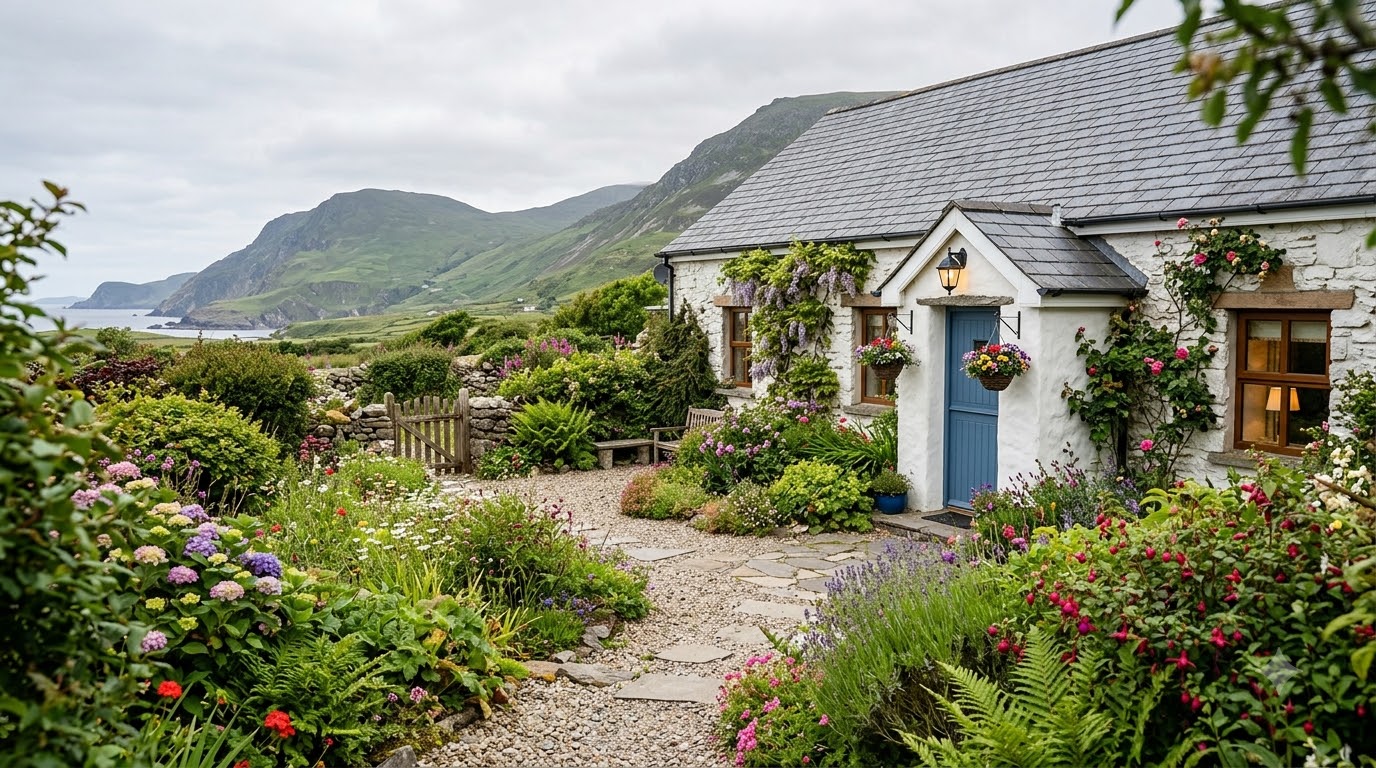
If the sea cliffs are the reason you came, sleep near them. The stretch from Killybegs, Ireland’s busy fishing port, out to Carrick and Teelin puts you at the foot of the Slieve League cliffs, which are among the highest in Europe. This area suits walkers, photographers, and anyone who wants to be at the viewpoint early before the coaches arrive. You will want a car; public transport out here is thin.
The catch is choice. Accommodation is scattered and books out fast in summer, so you trade the town buzz of Donegal for quiet, big views, and fewer dinner options. Check the official Wild Atlantic Way route notes before you commit, because some coastal roads are single-track and slower than the map suggests.
Ardara and the south west
Ardara is the heart of the south-west corner, an old weaving village known for tweed and a surprising number of pubs for its size. It works as a base for the loop around Glengesh Pass, Maghera Caves, and the empty beaches near Loughros. This is the pick for travellers who want a working Irish village rather than a tourist stop, and who like the idea of trad music within walking distance of the bed.
What the listings will not tell you: you are committing to slow, winding driving for everything beyond the village itself, and the weather here rolls in off the Atlantic without much warning. That is part of the appeal, but plan indoor fallbacks. It sits roughly between Donegal town and the far north, which makes it a decent middle base if you refuse to move twice.
Dunfanaghy and the north
Dunfanaghy anchors the north coast, and for many people this is the best part of the county. It is a small, walkable village near Sheephaven Bay, with the beaches at Marble Hill and Killahoey close by and the dramatic Horn Head loop on its doorstep. It suits beach walkers, families who want sand, and couples after somewhere pretty and low-key. Glenveagh National Park is within reach for a day out.
The honest trade-off is distance from the south. If you fly into Donegal, Knock or Belfast, this is a long haul to reach, so it rewards people who give the county several days rather than a weekend. For the park’s opening details and trail info, the official Glenveagh National Park site is the reliable source. This corner is quiet at night, which is the point.
Letterkenny and the inland base
Letterkenny is the county’s largest town, and it is a practical rather than pretty choice. It has the most shops, restaurants, and chain accommodation, plus the easiest bus links, so it works for anyone travelling without a car or arriving from the north. It puts you within striking distance of Glenveagh and the Fanad and Inishowen peninsulas.
The downside is character. Letterkenny is a service town, not a seaside village, so you sleep somewhere ordinary and drive out to the good stuff each day. For a car-free traveller, though, it is the one base in the county that half-works on public transport, and it is also handy if you are crossing from Northern Ireland. Treat it as a launchpad rather than a place to linger, and you will not be disappointed.
Which area is right for you
| Traveller type | Best area | Why |
|---|---|---|
| First-timer, short trip | Donegal town | Central, walkable, easy to reach and to leave |
| Couples chasing views | Slieve League coast | The cliffs and quiet, early access before the crowds |
| Families with beach in mind | Dunfanaghy | Safe sandy bays, low-key village, room to roam |
| Culture and pubs | Ardara | Real weaving village, trad music, working local feel |
| Car-free or bus-reliant | Letterkenny | Best links and services, though short on charm |
| Second base for a long trip | Dunfanaghy or Ardara | Splits the county so no drive is punishing |
What to book first
Book your first two nights in Donegal town while you decide how far north you are willing to drive, then lock a second base up the coast if you have three days or more. Sort the car next, because this is a driving county and skipping it strands you; only Letterkenny works without one. Leave tours and the Slieve League boat trip until last, once the weather forecast is clear. That order keeps your plans flexible while you settle where to stay in Donegal for the rest of the trip.
Live nightly prices from Booking, Airbnb, Hotels.com and more across every Donegal area — move the map or change your dates to compare.
Related where-to-stay guides
- Where to Stay in Clifden
- Where to Stay in Kenmare
- Where to Stay in Adare
- Where to Stay in Howth
- Where to Stay in Wicklow
Frequently asked questions
Is Donegal expensive?
Donegal is generally cheaper than Dublin or the tourist-heavy south-west, and you will find everything from budget guesthouses to a few high-end country houses. Prices climb in July and August and around festivals, so book early for summer. The live map shows real rates for your exact dates across every area.
Do you need a car in Donegal?
For almost everything, yes. The county is large, rural, and thinly served by buses, so the coast, cliffs, and beaches are hard to reach without your own wheels. Letterkenny is the one town where you can manage on public transport, but you will miss most of what people come for.
How many days do you need in Donegal?
Two days is enough for Donegal town and a single coastal day trip, such as Slieve League. To do the county justice, including the north around Dunfanaghy and Glenveagh, give it four or five days and plan on two bases. Trying to see it all from one is the classic mistake.
What is the best area for a first time visit?
Donegal town for a first, short trip, because it is central, walkable, and simple to navigate. If you have more time and a car, add a second night around Dunfanaghy or the Slieve League coast to see the county’s real draw. Splitting your stay beats one long base.
What is the difference between Donegal town and Donegal county?
Donegal town is one small town in the south of the county, built around a central square called The Diamond. County Donegal is the whole north-west region, one of Ireland’s biggest counties, stretching far up the Atlantic coast. Knowing which one you mean shapes where you should sleep.