Where to Stay in Gyeongju: Best Areas & Where to Book (2026)
By TravelguidestipUpdated 9 min readHow we earn
Hotel buttons open Stay22 (Booking.com, Agoda and others) and tour buttons open GetYourGuide. We may earn a commission at no extra cost to you.
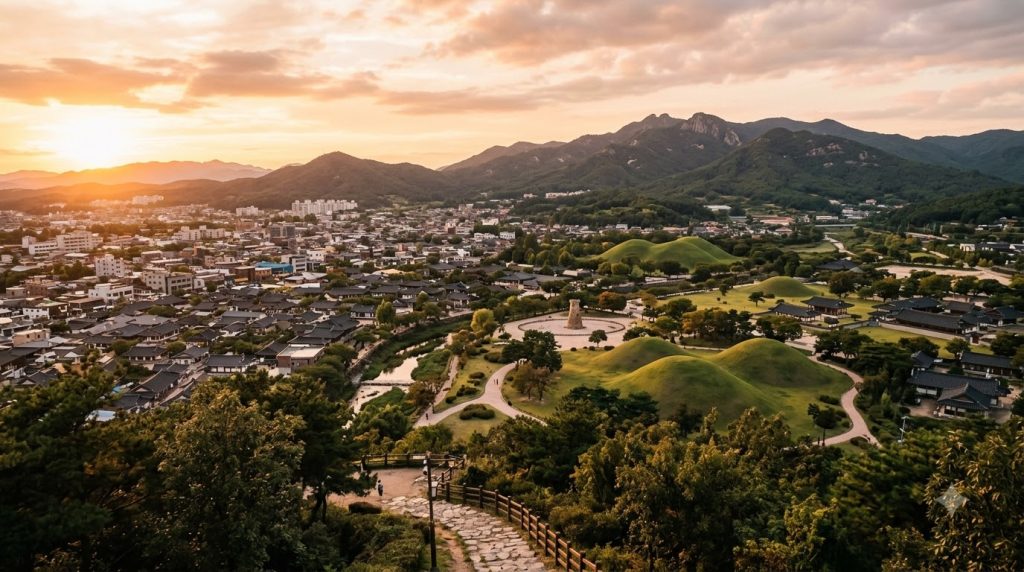
5 areas: where to sleep, what to book nearby
First-timer
Old town (Daereungwon / Hwangnidan-gil)
Families
Bomun Lake resort area
Near the station
Budget / backpacker
City centre near Jungang Market
Quick answer: Stay in the old town near Daereungwon and Hwangnidan-gil if you want to walk or cycle between the burial mounds and the night streets. Choose the Bomun Lake resort area if you want a quiet, hotel-style base and don’t mind riding a bus or taxi to the sights.
Check prices: live rates and availability for your dates
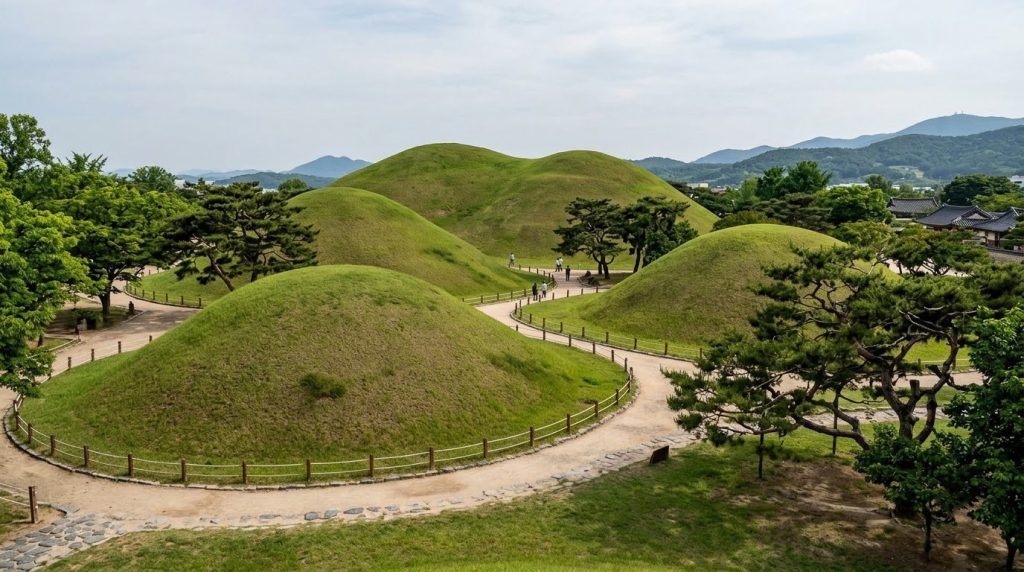
Gyeongju was the capital of the Silla kingdom for nearly a thousand years, and the odd thing about it is that the history never got fenced off. Grass-covered royal tombs sit between ordinary shops and cafes. Figuring out where to stay in Gyeongju really comes down to one decision: do you want the tombs outside your door, or a lake and a proper hotel a short ride away?
The areas at a glance
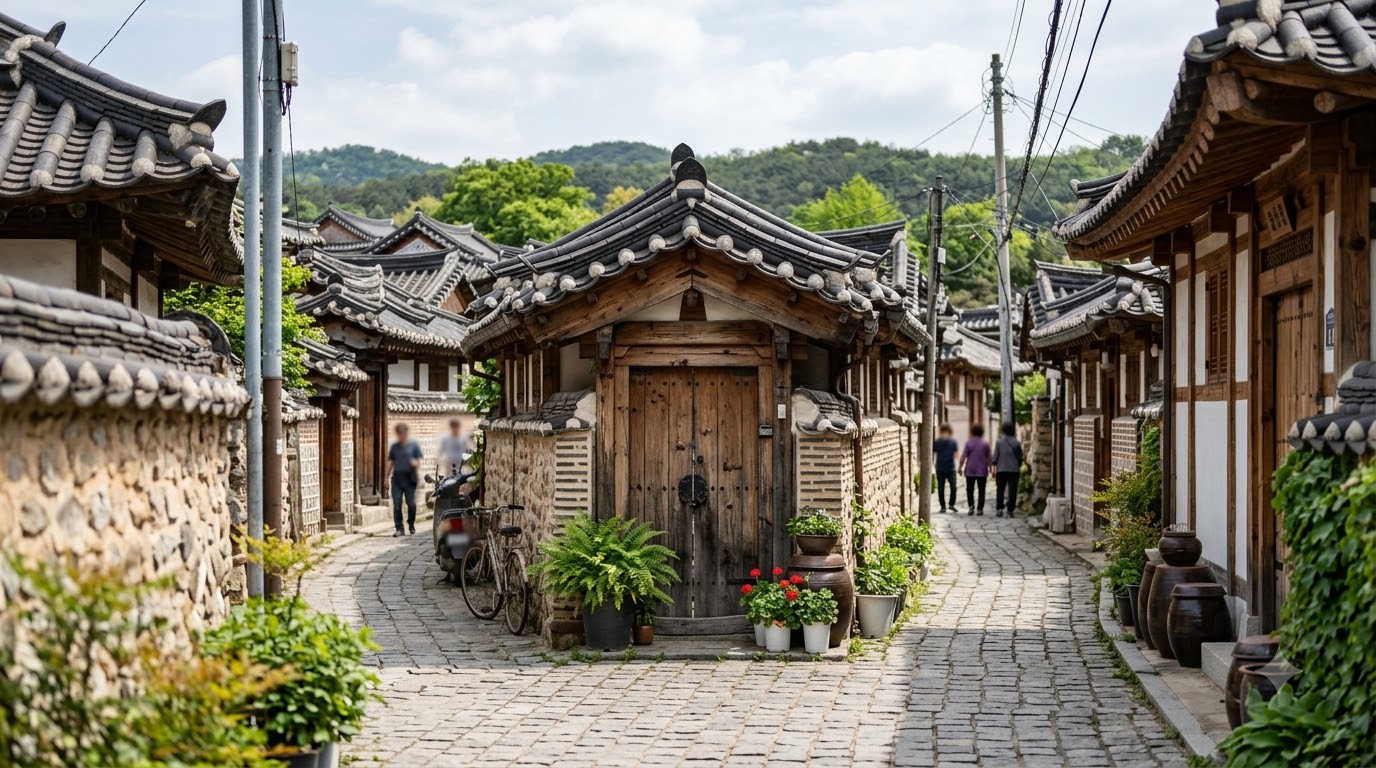
Think of Gyeongju as one compact historic core with a resort zone bolted on to the east. Most of what you came to see, the tombs, the old astronomical tower, the night-lit streets, clusters in a walkable old town on the west side. The Bomun Lake resort area sits a few kilometres east, built for hotels and calm.
The train station for fast trains lands you well outside the centre, and Bulguksa Temple sits further east again up a hillside. Here is the thing first-timers get wrong: almost everything historic is within walking or cycling distance, so a rental car is more of a liability than a help.
How Small Is Gyeongju, Really?
Gyeongju city’s population sits at around 245,000 people as of late 2024, and it has been shrinking rather than growing for years — a sharp contrast with Seoul or Busan.
That smaller scale is a big part of why the walk-or-cycle approach recommended above actually works: the historic core isn’t competing with a dense modern city centre the way heritage districts in bigger Korean cities often do. The tomb parks, the hanok streets, and the old commercial area around Jungang Market all sit close together rather than scattered across a sprawling metro area.
It also explains the gap between the old town and Bomun Lake: in a smaller city, “a few kilometres east” is enough to feel like a genuinely separate, quieter zone, rather than just another neighbourhood a short walk from the next one. Travellers used to navigating much larger Korean cities often overestimate how much time they’ll need to move between Gyeongju’s stay areas, when in practice a short bus or taxi ride covers most of them.
The old town (near Daereungwon and Hwangnidan-gil)
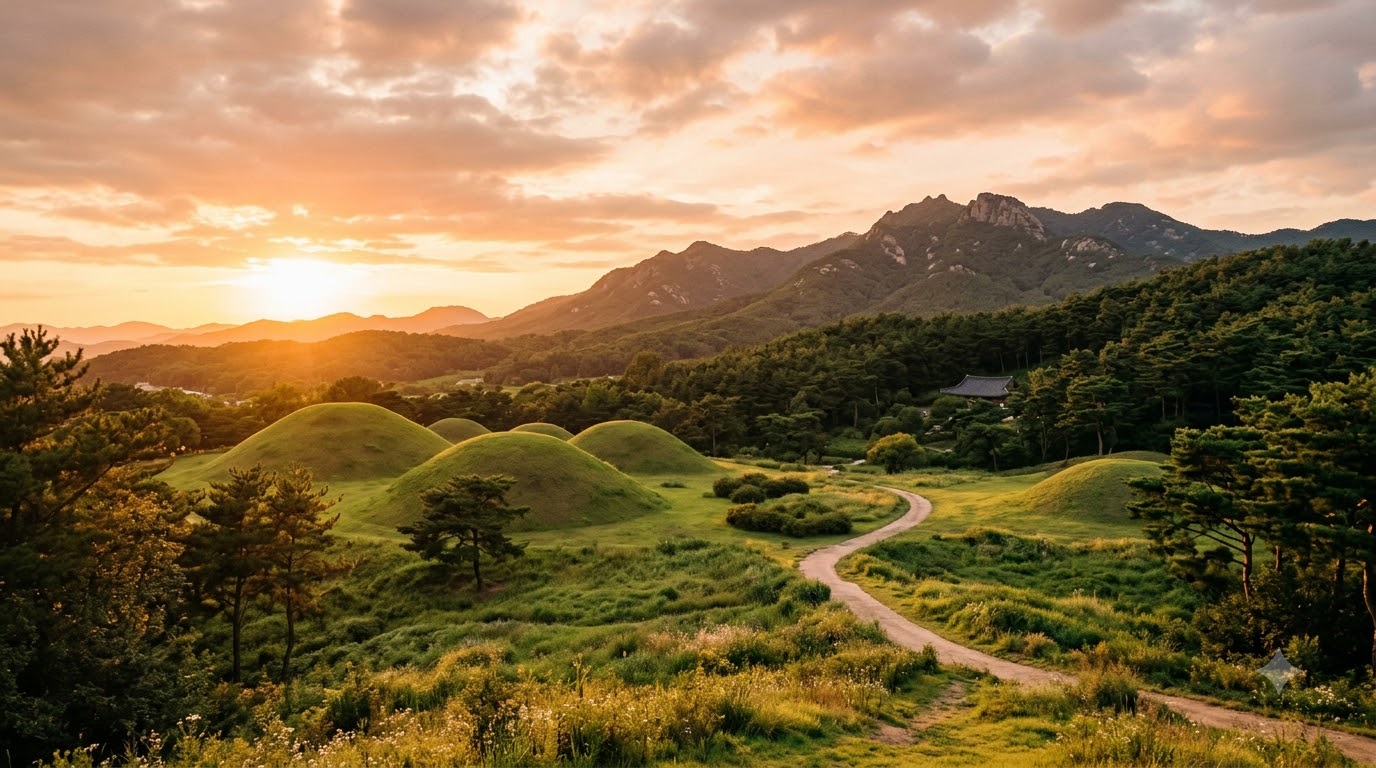
This is the base most visitors should book, and the reason is simple: you step outside and you’re already among the tombs. Daereungwon, the walled tomb park, sits right here, and Hwangnidan-gil, the row of restored hanok houses turned into cafes and restaurants, runs alongside it. Cheomseongdae, the old stone observatory, and Wolji pond are a flat walk or a short cycle away.
Who it suits: first-timers, couples, anyone travelling without a car. You can do a full day on foot and come back for another without ever boarding a bus. Bikes are everywhere for rent, and the ground is flat.
The trade-off that photos hide: Hwangnidan-gil has become genuinely popular, so the main strip gets loud and crowded in the early evening, especially on weekends. Rooms right on it can be noisy. Book a hanok guesthouse one or two lanes back and you get the atmosphere without the foot traffic passing your window. Gyeongju hotels here run from simple guesthouses to boutique hanok stays, so there’s range.
The Bomun Lake resort area
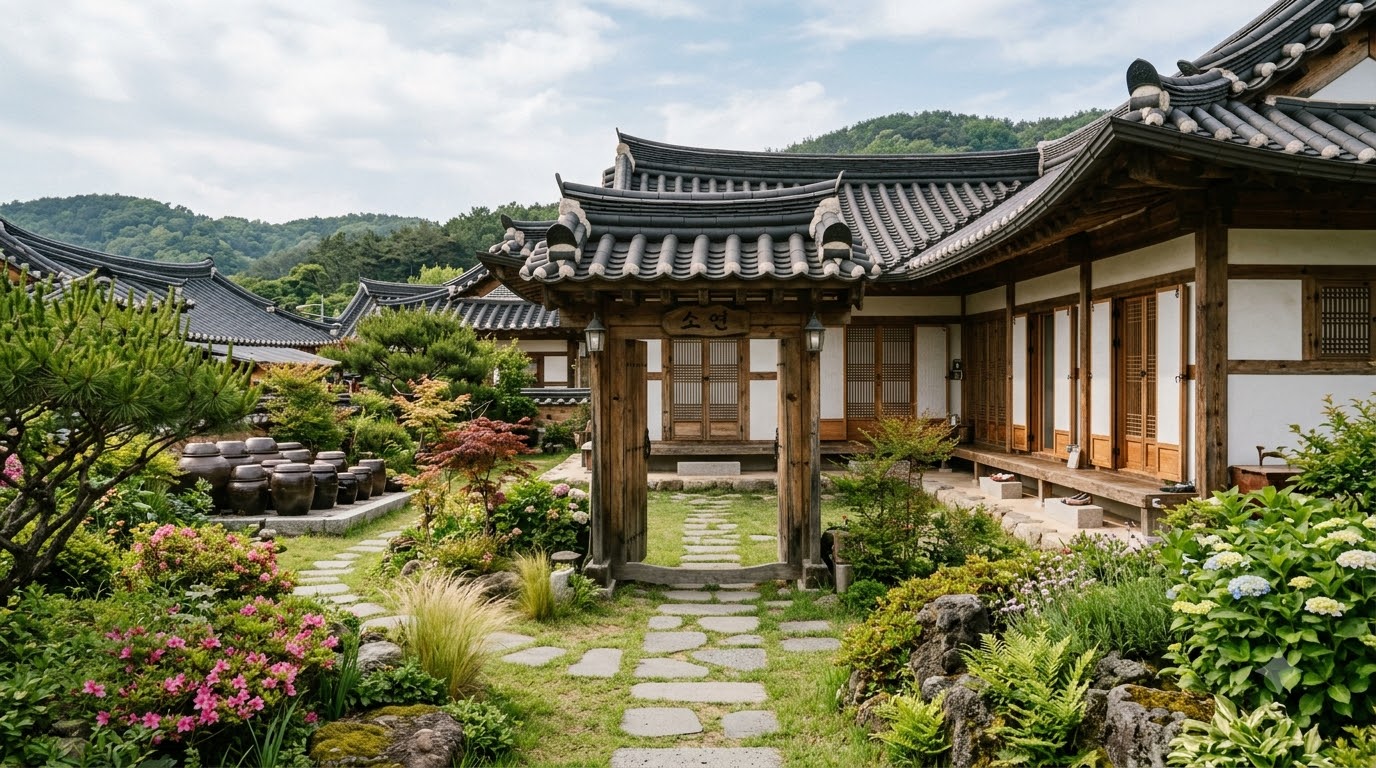
Bomun Lake is where Gyeongju put its bigger hotels, and it feels like a different trip entirely. The lake is ringed by a walking and cycling path, cherry trees line the water in spring, and the whole zone is quiet by nine. This is the calm, spread-out option.
Who it suits: families who want a pool and space, couples after a resort feel, and anyone who values a quiet night over walking to dinner. Rooms tend to be larger and more standardised than the old-town guesthouses.
The trade-off: you are not walking to the historic sites from here. Everything, Daereungwon, Hwangnidan-gil, the market, is a bus or taxi ride away. That’s fine if you plan around it, but people who book Bomun expecting to stroll to the tombs are disappointed. Local buses connect the two zones and taxis are cheap, so it works, it just adds a step to every outing.
Near the station
Gyeongju’s fast-train station, Singyeongju, sits well outside the old centre, and a small cluster of hotels and motels has grown up around it and around the older in-town station. This is a practical, not scenic, choice.
Who it suits: travellers arriving late or leaving early, and anyone treating Gyeongju as one night between other Korean cities. If your train gets in after dark and out at dawn, sleeping near the platform saves you a transfer at both ends.
The trade-off: there is little to do around the station itself, and you’ll commute into the old town every morning. It’s convenient for trains and inconvenient for everything else. For a two-night stay or longer, most people are happier in the old town and just take a taxi to and from the station.
Bulguksa and the Toham mountain side
Out east, up the wooded slopes of Toham mountain, sit Bulguksa Temple and the Seokguram Grotto, two of the reasons Gyeongju carries UNESCO listing. A handful of hotels and a spa resort cluster on this side, away from the town entirely.
Who it suits: travellers who specifically want to be near the temple for an early, crowd-free visit, and anyone after a hot-spring-style resort night in the hills. It’s peaceful and green.
The trade-off: you’re removed from the tombs and the night streets, and you’ll rely on buses or a taxi to reach the old town. This works best as a deliberate choice, one quiet night by the temple, rather than your whole stay. For details on the temple and grotto hours, the official Korea Tourism Organization site (english.visitkorea.or.kr) is the reliable source.
The city centre and Jungang Market
Just north of the tomb parks, around Jungang Market and the older commercial streets, is where Gyeongju’s residents actually shop and eat. It’s a slightly grittier, everyday-Korea base, and rooms here tend to be cheaper.
Who it suits: budget travellers and backpackers who want to spend less and don’t mind a plainer neighbourhood. You’re still within walking or short-cycling distance of Daereungwon.
The trade-off: less charm than the hanok lanes and fewer tourist-facing restaurants, though the market itself is a great cheap-eats stop. If saving money matters more than atmosphere, this is the smart pick, and you’re close enough to walk into the pretty part in ten minutes.
How to Get to Gyeongju
Gyeongju sits on the Gyeongbu KTX high-speed line, the same route that runs Seoul to Busan, with Dongdaegu the stop before Gyeongju heading toward Seoul and Ulsan the stop after heading toward Busan. That makes it an easy add-on to a Seoul-Busan itinerary rather than a detour.
The KTX station, still widely called Singyeongju by locals and on older signage, sits outside the old town — which is why the bus-or-taxi transfer covered above matters for anyone arriving by train.
By air, Gyeongju doesn’t have its own airport. Daegu’s airport sits roughly 55km to the west and Busan’s Gimhae airport roughly 50km to the south, with Ulsan and Pohang also within range for domestic connections. Most international visitors fly into Busan or Seoul and take the KTX the rest of the way rather than connecting through a smaller regional airport.
For a one- or two-night add-on to a Seoul-Busan trip, the KTX makes Gyeongju genuinely convenient — you can treat it as a stop along the main line rather than a side trip requiring its own transport plan. Slower Mugunghwa-ho trains and the Donghae Line also call at the station for travellers connecting from the east coast rather than the Seoul-Busan corridor.
Gyeongju’s Four UNESCO World Heritage Sites
Gyeongju holds four separately designated UNESCO World Heritage sites, among the first in Korea to be inscribed, back in 1995: Seokguram Grotto, Bulguksa Temple, the Gyeongju Historic Areas, and Yangdong Folk Village.
The first three sit within or close to the areas already covered above — the Gyeongju Historic Areas designation covers the old-town tomb parks and royal sites like Daereungwon and Cheomseongdae, while Seokguram and Bulguksa are the temple-and-grotto pair on the Toham mountain side.
Yangdong Folk Village is the odd one out: a centuries-old clan village of traditional houses that sits apart from both the old town and Bomun Lake, and isn’t covered by any of the stay areas discussed above. It’s a half-day trip rather than somewhere to base yourself, since it has little in the way of tourist accommodation of its own.
If ticking off all four UNESCO sites matters to your trip, plan Yangdong as a dedicated outing from the old town or Bomun Lake, rather than expecting to pass by it on the way to anything else — it sits on its own, off the usual loop between the tombs and the temple.
Which area is right for you
| Traveller type | Best area | Why |
|---|---|---|
| First-timer | Old town (Daereungwon / Hwangnidan-gil) | Walk to the tombs, the observatory and the night streets |
| Couples | Old town or Bomun Lake | Hanok charm on foot, or a quiet resort by the water |
| Families | Bomun Lake resort area | Bigger rooms, pools, space, calm evenings |
| Budget / backpacker | City centre near Jungang Market | Cheaper rooms, still a short walk to the sights |
| Car-free travellers | Old town | Everything reachable on foot or by rented bike |
| Quiet / temple focus | Bulguksa / Toham side | Peaceful hills, early access to Bulguksa |
What to book first
Lock in the room before anything else, especially for spring cherry-blossom season and autumn foliage, when Gyeongju fills up and the good old-town guesthouses sell out weeks ahead. Next, decide on transport, and for most people the honest answer is no car: the old town is walkable, bikes are cheap, and buses cover the gaps to Bomun and Bulguksa.
Only book tours last, and only if you’re heading to spread-out spots like Seokguram. Compare where the areas actually sit, and what real rooms cost on your dates, on the map below.
Live nightly prices from Booking, Airbnb, Hotels.com and more across every Gyeongju area — move the map or change your dates to compare.
Related where-to-stay guides
Frequently asked questions
Is Gyeongju expensive?
Gyeongju is one of the more affordable places to base in South Korea. Old-town guesthouses and city-centre motels are budget-friendly, while Bomun Lake resorts sit at the higher end. Food is cheap, especially at Jungang Market, and many historic sites charge only a small entry fee or none at all. The live map shows real nightly prices for your dates.
Do you need a car in Gyeongju?
No, and a car is often a liability here. The historic core is flat and walkable, rental bikes are everywhere, and local buses reach Bomun Lake and Bulguksa Temple. Parking in the old town is limited, so most visitors get around better without a car than with one.
How many days do you need in Gyeongju?
Two nights suits most first-timers: one day for the old town tombs and night streets, one day for Bulguksa and Seokguram out east. Add a third night if you want to slow down, cycle the tomb parks properly, or spend an evening at Bomun Lake. A single night only works if you’re passing through.
What is the best area for first-time visitors?
The old town near Daereungwon and Hwangnidan-gil is the clear pick for first-timers. You can walk or cycle between nearly every headline sight, eat on the hanok streets at night, and skip buses entirely. It’s the most efficient and most atmospheric base, which is why it’s the answer to where to stay in Gyeongju for most people.
How do you get from the train station to the old town?
The fast-train station sits outside the centre, so you’ll take a bus or a short taxi ride into the old town. Taxis are inexpensive and quick, and city buses run the route regularly. Plan for that transfer if you’re arriving by KTX; the official Korea Tourism site lists current bus routes.